
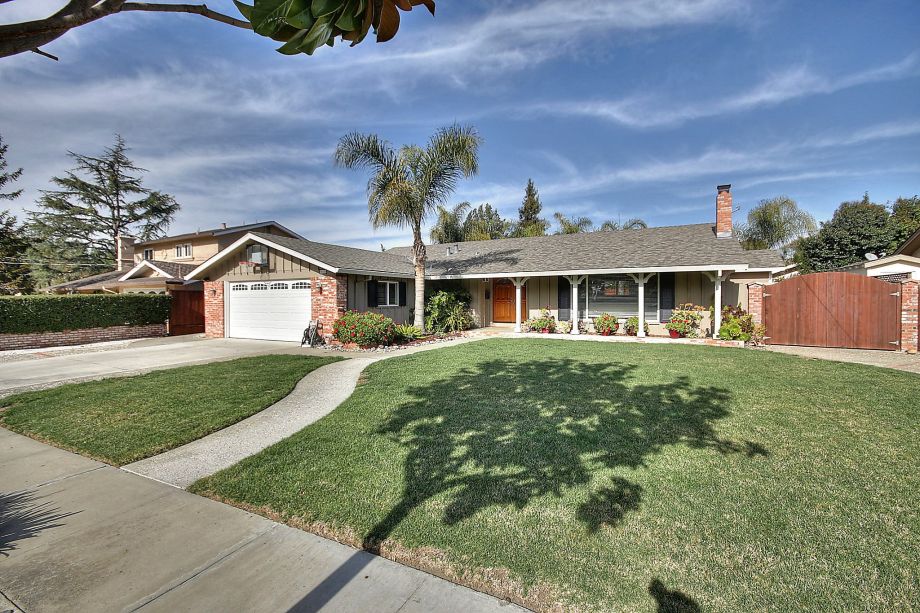
They say all real estate is local, and the same is true when it comes to those descriptions you see in real estate listings.
Article source: http://www.sfchronicle.com/business/networth/article/If-a-real-estate-ad-says-vertical-garden-6871373.php
They say all real estate is local, and the same is true when it comes to those descriptions you see in real estate listings.
Article source: http://www.sfchronicle.com/business/networth/article/If-a-real-estate-ad-says-vertical-garden-6871373.php


SAN FRANCISCO Uber’s [UBER.UL] new Oakland headquarters is nearly 70 percent bigger than Internet radio service Pandora Media’s (P.N) office nearby and will house about five times the number of employees that ride-hailing competitor Lyft has at its headquarters.
The on-demand ride service paid $123.5 million for Oakland’s historic Sears building last year and so far has filed building permits to complete at least $2 million in renovations, according to BuildZoom, a startup that compiles construction and remodeling contractor data for homeowners.
Across the bay in San Francisco, Uber has so far initiated $130 million in construction on a bigger office in the Mission Bay neighborhood, BuildZoom’s data shows.
The new building permit data from BuildZoom, provided exclusively to Reuters, underscores the mammoth growth in Uber’s real estate footprint and associated costs, overshadowing most other tech startups in San Francisco and Oakland.
Remodeling on the old Sears building will take another year, and the Mission Bay campus is still two or three years out, so construction costs will rise. Uber said it was also repairing damage on the Oakland building caused by the 1989 Loma Prieta earthquake.
Uber is the most highly valued venture-backed tech firm and has raised more than $7.4 billion from investors, a war chest that can help fund real estate purchases.
But its costly expansion in Oakland and San Francisco comes as the venture capital investing climate cools, with more investors wary that highly valued startups may not grow into their stratospheric valuation.
The iconic Oakland building, which opened in 1929 as a department store, will house between 2,000 and 3,000 Uber employees across 380,000 square feet (35,303 sq. m.).
By comparison, Ask.com, an Oakland-based search engine founded in the dot-com boom, has 200 employees in a 79,000-square-foot (7,339-sq.-m.) office it shares with other companies owned by parent IAC Publishing, spokeswoman Suraya Akbarzad said.
Sungevity, a solar design company that has raised close to $900 million from investors, occupies approximately 68,000 square feet (6,317 sq. m.) in Oakland, spokesman John Ordona said.
In San Francisco, Uber partnered with a real estate firm to purchase land for $125 million and develop a 423,000-square-foot (39,298-sq.-m.) campus that will house between 3,000 and 4,000 employees. That space is in addition to Uber’s 500,000-square-foot (46,452-sq.-m.) headquarters in downtown San Francisco, according to BuildZoom.
Other highly valued, fast-growing tech companies don’t come close. Lyft said it has 66,000 square feet (6,132 sq m.)while online accommodations company Airbnb said it occupies 169,000 square feet (15,700 sq m.) in San Francisco.
(This version of the story corrects size of Uber office in relation to Pandora in first sentence)
(Reporting by Heather Somerville; Editing by Clarence Fernandez and Bill Trott)
This story has not been edited by Firstpost staff and is generated by auto-feed.
Article source: http://www.firstpost.com/fwire/ubers-real-estate-footprint-unmatched-among-s-f-bay-area-startups-reuters-2651716.html
Home flippers got busy in 2015.
Across the United States, 179,778 single-family homes and condos were flipped last year, accounting for 5.5 percent of all sales, according to a new survey. It was the first yearly increase in the share of homes flipped since 2010.
And guess where flippers earned the highest gross profit per flip? Correct: In the San Jose and San Francisco metropolitan areas, where flippers averaged $145,000 per flip, topping the list of 110 metro markets studied.
“That’s a big take-home,” said Daren Blomquist, senior vice president at RealtyTrac, the real estate information company that crunched the numbers. The Bay Area’s high housing costs and super-tight inventory make it “hard to flip in those markets,” he said. “But for those who are successful, you get a big bang for your buck.”
At the bottom of the list was Detroit, where each flip reaped an average $22,000 profit: “You’d have to do about seven flips in Detroit to equal one flip in the Bay Area,” Blomquist said.
RealtyTrac, which specializes in tracking distressed properties, defines a flip as a home that’s bought and sold within a 12-month period.
In terms of the volume of flips, the Bay Area was low on the list: only 780 properties were flipped in Alameda County, 712 in Santa Clara County and a mere 163 in the County/City of San Francisco.
Hot sales states included Nevada (where flips represented 8.8 percent of all sales) and Florida (8 percent). Targeting areas with plenty of distressed homes — foreclosed or in bad shape — flippers were especially busy in cities including Memphis (11.1 percent of all sales) and Fresno (9.2 percent).
Markets with the highest average gross return on investment for flips were clustered in the Rust Belt, with Pittsburgh, Pennsylvania, topping the list with returns of 129.5 percent.
Overall, flipping increased in 75 percent of the markets studied. The number of individual flippers completing at least one home flip last year was 110,008, the highest number since 2007. That’s an indication, Blomquist said, of “widespread confidence in the housing market which is leading small investors to jump into the risky endeavor of house flipping.”
Still he noted that “flipping is one of those things where it’s good in moderation.”
Although flippers can fix up distressed homes and add value to neighborhoods, he said, there is “definitely such a thing as too much flipping that dominates a market and creates its own momentum that’s not based on real value. It’s based on speculation. As we see flipping rise, that is one concern that comes to mind.”
Contact Richard Scheinin at 408-920-5069, read his stories at www.mercurynews.com/richard-scheinin and follow him at www.twitter.com/RealEstateRag
Article source: http://www.mercurynews.com/business/ci_29589770/flipping-houses-2015-busy-year-u-s
Home flippers got busy in 2015.
Across the United States, 179,778 single-family homes and condos were flipped last year, accounting for 5.5 percent of all sales, according to a new survey. It was the first yearly increase in the share of homes flipped since 2010.
And guess where flippers earned the highest gross profit per flip? Correct: In the San Jose and San Francisco metropolitan areas, where flippers averaged $145,000 per flip, topping the list of 110 metro markets studied.
“That’s a big take-home,” said Daren Blomquist, senior vice president at RealtyTrac, the real estate information company that crunched the numbers. The Bay Area’s high housing costs and supertight inventory make it “hard to flip in those markets,” he said. “But for those who are successful, you get a big bang for your buck.”
At the bottom of the list was Detroit, where each flip reaped an average $22,000 profit: “You’d have to do about seven flips in Detroit to equal one flip in the Bay Area,” Blomquist said.
RealtyTrac, which specializes in tracking distressed properties, defines a flip as a home that’s bought and sold within a 12-month period.
In terms of the volume of flips, the Bay Area was low on the list: only 822 properties were flipped in Contra Costa County, 780 in Alameda County, 712 in Santa Clara County, 241 in San Mateo County and a mere 163 in San Francisco.
Hot sales states included Nevada (where flips represented 8.8 percent of all sales) and Florida (8 percent). Targeting areas with plenty of distressed homes — foreclosed or in bad shape — flippers were especially busy in cities including Memphis (11.1 percent of all sales) and Fresno (9.2 percent).
Markets with the highest average gross return on investment for flips were clustered in the Rust Belt, with Pittsburgh, topping the list with returns of 129.5 percent.
Overall, flipping increased in 75 percent of the markets studied. The number of individual flippers completing at least one home flip last year was 110,008, the highest number since 2007. That’s an indication, Blomquist said, of “widespread confidence in the housing market which is leading small investors to jump into the risky endeavor of house flipping.”
Still he noted that “flipping is one of those things where it’s good in moderation.”
Although flippers can fix up distressed homes and add value to neighborhoods, he said, there is “definitely such a thing as too much flipping that dominates a market and creates its own momentum that’s not based on real value. It’s based on speculation. As we see flipping rise, that is one concern that comes to mind.”
Article source: http://www.santacruzsentinel.com/business/20160303/real-estate-bay-area-flippers-get-more-bang-for-their-buck
SAN FRANCISCO Uber’s [UBER.UL] new Oakland headquarters is nearly 70 percent bigger than Internet radio service Pandora Media’s (P.N) office nearby and will house about five times the number of employees that ride-hailing competitor Lyft has at its headquarters.
The on-demand ride service paid $123.5 million for Oakland’s historic Sears building last year and so far has filed building permits to complete at least $2 million in renovations, according to BuildZoom, a startup that compiles construction and remodeling contractor data for homeowners.
Across the bay in San Francisco, Uber has so far initiated $130 million in construction on a bigger office in the Mission Bay neighborhood, BuildZoom’s data shows.
The new building permit data from BuildZoom, provided exclusively to Reuters, underscores the mammoth growth in Uber’s real estate footprint and associated costs, overshadowing most other tech startups in San Francisco and Oakland.
Remodeling on the old Sears building will take another year, and the Mission Bay campus is still two or three years out, so construction costs will rise. Uber said it was also repairing damage on the Oakland building caused by the 1989 Loma Prieta earthquake.
Uber is the most highly valued venture-backed tech firm and has raised more than $7.4 billion from investors, a war chest that can help fund real estate purchases.
But its costly expansion in Oakland and San Francisco comes as the venture capital investing climate cools, with more investors wary that highly valued startups may not grow into their stratospheric valuation.
The iconic Oakland building, which opened in 1929 as a department store, will house between 2,000 and 3,000 Uber employees across 380,000 square feet (35,303 sq. m.).
By comparison, Ask.com, an Oakland-based search engine founded in the dot-com boom, has 200 employees in a 79,000-square-foot (7,339-sq.-m.) office it shares with other companies owned by parent IAC Publishing, spokeswoman Suraya Akbarzad said.
Sungevity, a solar design company that has raised close to $900 million from investors, occupies approximately 68,000 square feet (6,317 sq. m.) in Oakland, spokesman John Ordona said.
In San Francisco, Uber partnered with a real estate firm to purchase land for $125 million and develop a 423,000-square-foot (39,298-sq.-m.) campus that will house between 3,000 and 4,000 employees. That space is in addition to Uber’s 500,000-square-foot (46,452-sq.-m.) headquarters in downtown San Francisco, according to BuildZoom.
Other highly valued, fast-growing tech companies don’t come close. Lyft said it has 66,000 square feet (6,132 sq m.)while online accommodations company Airbnb said it occupies 169,000 square feet (15,700 sq m.) in San Francisco.
(This version of the story corrects size of Uber office in relation to Pandora in first sentence)
(Reporting by Heather Somerville; Editing by Clarence Fernandez and Bill Trott)
Article source: http://www.reuters.com/article/us-uber-realestate-idUSKCN0W34EA