Uber’s real estate footprint unmatched among SF Bay Area startups


SAN FRANCISCO Uber’s [UBER.UL] new Oakland headquarters is nearly 70 percent bigger than Internet radio service Pandora Media’s (P.N) office nearby and will house about five times the number of employees that ride-hailing competitor Lyft has at its headquarters.

The on-demand ride service paid $123.5 million for Oakland’s historic Sears building last year and so far has filed building permits to complete at least $2 million in renovations, according to BuildZoom, a startup that compiles construction and remodeling contractor data for homeowners.

Across the bay in San Francisco, Uber has so far initiated $130 million in construction on a bigger office in the Mission Bay neighborhood, BuildZoom’s data shows.

The new building permit data from BuildZoom, provided exclusively to Reuters, underscores the mammoth growth in Uber’s real estate footprint and associated costs, overshadowing most other tech startups in San Francisco and Oakland.

Remodeling on the old Sears building will take another year, and the Mission Bay campus is still two or three years out, so construction costs will rise. Uber said it was also repairing damage on the Oakland building caused by the 1989 Loma Prieta earthquake.

Uber is the most highly valued venture-backed tech firm and has raised more than $7.4 billion from investors, a war chest that can help fund real estate purchases.

But its costly expansion in Oakland and San Francisco comes as the venture capital investing climate cools, with more investors wary that highly valued startups may not grow into their stratospheric valuation.

The iconic Oakland building, which opened in 1929 as a department store, will house between 2,000 and 3,000 Uber employees across 380,000 square feet (35,303 sq. m.).

By comparison, Ask.com, an Oakland-based search engine founded in the dot-com boom, has 200 employees in a 79,000-square-foot (7,339-sq.-m.) office it shares with other companies owned by parent IAC Publishing, spokeswoman Suraya Akbarzad said.

Sungevity, a solar design company that has raised close to $900 million from investors, occupies approximately 68,000 square feet (6,317 sq. m.) in Oakland, spokesman John Ordona said.

In San Francisco, Uber partnered with a real estate firm to purchase land for $125 million and develop a 423,000-square-foot (39,298-sq.-m.) campus that will house between 3,000 and 4,000 employees. That space is in addition to Uber’s 500,000-square-foot (46,452-sq.-m.) headquarters in downtown San Francisco, according to BuildZoom.

Other highly valued, fast-growing tech companies don’t come close. Lyft said it has 66,000 square feet (6,132 sq m.)while online accommodations company Airbnb said it occupies 169,000 square feet (15,700 sq m.) in San Francisco.

(This version of the story corrects size of Uber office in relation to Pandora in first sentence)

(Reporting by Heather Somerville; Editing by Clarence Fernandez and Bill Trott)

Article source: http://www.reuters.com/article/us-uber-realestate-idUSKCN0W34EA
Posted in SF Bay Area News | Tagged | Leave a comment

Uber’s real estate footprint unmatched among SF Bay Area startups

By Heather Somerville

SAN FRANCISCO (Reuters) – Uber’s new Oakland headquarters is about four times bigger than Internet radio service Pandora Media’s office nearby, and will house about five times the number of employees that ride-hailing competitor Lyft has at its headquarters.

The on-demand ride service paid $123.5 million for Oakland’s historic Sears building last year and has so far filed building permits to complete at least $2 million in renovations, according to BuildZoom, a startup that compiles construction and remodeling contractor data for homeowners.

Across the bay in San Francisco, Uber has so far initiated $130 million in construction on a bigger office in the Mission Bay neighborhood, BuildZoom’s data shows.

The new building permit data from BuildZoom, provided exclusively to Reuters, underscores the mammoth growth in Uber’s real estate footprint and associated costs, overshadowing most other tech startups in San Francisco and Oakland.

Remodeling on the old Sears building will take another year, and the Mission Bay campus is still two or three years out, so construction costs will rise. Uber said it was also repairing damage on the Oakland building caused by the 1989 Loma Prieta earthquake.

Uber is the most highly valued venture-backed tech firm and has raised more than $7.4 billion from investors, a war chest that can help fund real estate purchases.

But its costly expansion in Oakland and San Francisco comes as the venture capital investing climate cools, with more investors wary that highly valued startups may not grow into their stratospheric valuation.

The iconic Oakland building, which opened in 1929 as a department store, will house between 2,000 and 3,000 Uber employees across 380,000 square feet (35,303 sq. m.).

By comparison, Ask.com, an Oakland-based search engine founded in the dot-com boom, has 200 employees in a 79,000-square-foot (7,339-sq.-m.) office it shares with other companies owned by parent IAC Publishing, spokeswoman Suraya Akbarzad said.

Sungevity, a solar design company that has raised close to $900 million from investors, occupies approximately 68,000 square feet (6,317 sq. m.) in Oakland, spokesman John Ordona said.

In San Francisco, Uber partnered with a real estate firm to purchase land for $125 million and develop a 423,000-square-foot (39,298-sq.-m.) campus that will house between 3,000 and 4,000 employees. That space is in addition to Uber’s 500,000-square-foot (46,452-sq.-m.) headquarters in downtown San Francisco, according to BuildZoom.

Other highly valued, fast-growing tech companies don’t come close. Lyft said it has 66,000 square feet (6,132 sq m.)while online accommodations company Airbnb said it occupies 169,000 square feet (15,700 sq m.) in San Francisco.

(Reporting by Heather Somerville; Editing by Clarence Fernandez)

Read the original article on Reuters. Copyright 2016. Follow Reuters on Twitter.

Article source: http://www.businessinsider.com/r-ubers-real-estate-footprint-unmatched-among-sf-bay-area-startups-2016-3

Posted in SF Bay Area News | Tagged | Leave a comment

These 2 things will pop the housing bubbles in San Francisco and Silicon Valley

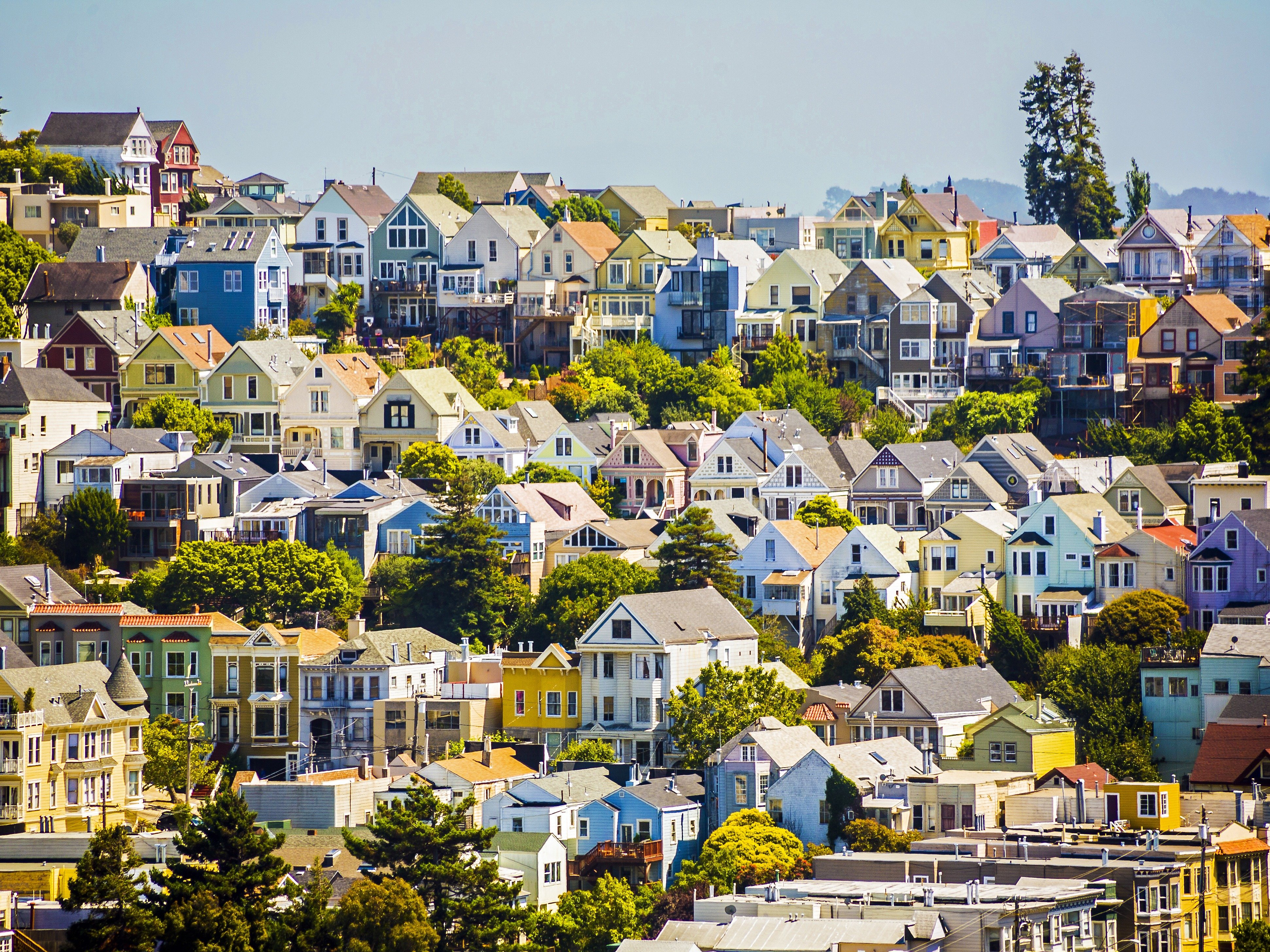
5149b shutterstock 154454792 These 2 things will pop the housing bubbles in San Francisco and Silicon ValleyShutterstockHomes in San Francisco.

In the city of San Francisco, the median condo price is $1.11 million and the median house price is $1.25 million, up 72% and 88% respectively from the first quarter 2012. Median means, 50% of the units cost more, and 50% cost less.

Which creates an absurd situation: only 11% of the households in San Francisco can afford to buy a median home, according to Paragon Real Estate’s report on “affordability.” In other Bay Area counties, it’s similar. In the Silicon Valley counties of San Mateo and Santa Clara, 14% and 20% of the households can afford a median home; in Marin (just north of the Golden Gate), 17%; in Napa 21%, Alameda (East Bay) 22%, Sonoma 26%. In the US overall, 58% can.

But the calculations assume that buyers are able to make a 20% down-payment, which on a median home in SF amounts to $240,000. And it also assumes the persistence of super-low interest rates and points for a 30-year mortgage.

Under these assumptions, households in SF wanting to buy that median home must have a minimum qualifying annual household income of $254,000, on top of the $240k in cash for the down-payment. And this is where the absurdity re-surfaces: the Census Bureau estimates that the median household income in San Francisco is $75,600 (it has gone up a little since that estimate).

The monthly costs – principal, interest, taxes, and insurance, but not including the benefits of income tax deductions – for this median home amount to $6,350. And this causes a little bit of a problem with “affordability”: If only 11% of the households can afford to buy a median home, who is going to buy the other homes?

Renting a median one-bedroom apartment will set you back $3,400 a month, parking not necessarily included. And a median two-bedroom will set you back $4,650 a month.

But kinks are already appearing. According to Zillow data, those rents are down 5.4% from the respective peaks in June and August last year. And just then, with impeccable timing, this housing market is now facing by two powerful forces.

5149b line%2520of%2520unicorns These 2 things will pop the housing bubbles in San Francisco and Silicon ValleyAlan Levine / FlickrUnicorns.

1. The startup boom has run aground.

Startup valuations are plunging, sometimes by as much as 50% overnight when new money needs to be raised. And the exit doors for investors are closing or getting very awkward to wriggle through. It’s easy during the boom for a few people behind closed doors to decide that a company with no revenues has a $1 billion “valuation.” Turns out, it’s much harder – or impossible – to turn that “valuation” into money via an IPO or a sale to a big corporation.

Those startups that did make it through the IPO window over the past year or two are getting punished. While the SP 500 is down only 5.6% so far this year, the Renaissance US IPO index is down 13.7% despite the rally over the past few days. It has plunged 29% from June last year. The 87 tech IPOs over the past two years have gotten hit hard: 80% are trading below their IPO price, and many of the stocks have essentially collapsed from their peaks.

Venture capital is getting nervous. And the flood of new money has become a trickle. As money dries up, startups have to tighten their belts and lower their burn rates in order to live another day. In the process, big hiring plans are shelved.

The formerly rosy scenario has turned grim. Companies like Twitter fell all over each other to lure tech gurus with blue-sky compensation packages that then allowed these folks to rent or buy whatever they wanted to, and drive up prices in the process. Now Twitter is laying off people.

Yahoo is laying off. Numerous other old and new companies in the area have started the same process. This makes laid-off tech workers available to companies that are still hiring. Those companies no longer have to bring as many new people into the area; they can hire more locally.

So the stream of new arrivals with big compensation packages slows down. As more companies are laying off, fewer of the tech workers can be absorbed locally. Down the road, given the expense of living in the area, some of these unemployed tech workers may well go back where they came from. That’s how it happened every time before.

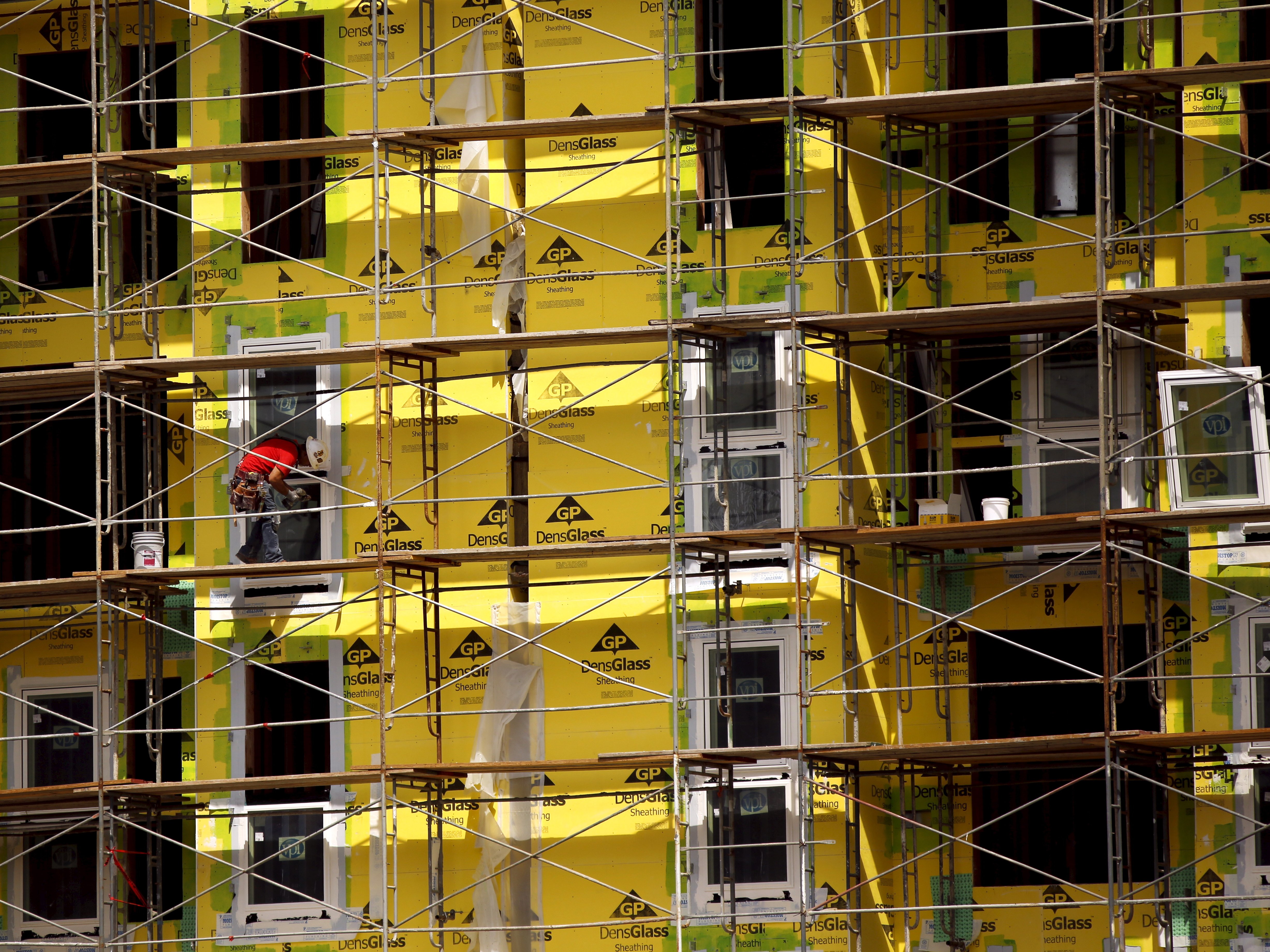
5149b rtr4yjwe These 2 things will pop the housing bubbles in San Francisco and Silicon ValleyReuters/Robert GalbraithA worker labors at a housing construction project in San Francisco, California.

2. Just then, a flood of new housing units hits the market.

San Francisco finds itself in one of its most phenomenal construction booms in history. High prices have lured the Big Money from all over the world. For example, Shenzhen-listed real estate company Oceanwide Holdings is planning to build a mega project with two million square feet of residential and commercial space in the center of the City. This project, its third in California, includes two towers, one of which will be the second tallest in the City.

The SF Planning Department’s new Pipeline Report lists 62,500 units at various stages in the pipeline, from “building permit filed” to “under construction.” Many will come on the market this year, on top of the thousands of units that hit the market in 2014 and 2015. Once they’re complete – if they ever get completed – they’ll increase the city’s existing housing stock of 382,000 units by over 16%.

Most of them are expensive units – because that’s where the money is. They need buyers and renters who can afford them. Homes in San Francisco are occupied on average by 2.2 people. At this ratio, the new supply would create expensive housing for 137,500 people, in a city with a population of 852,000!

Where are those people with big incomes going to come from? No one knows. Hence a vague sense of panic. Twitter and other companies better start re-hiring and offer big-fat compensation packages to lure tens of thousand of highly-paid workers to SF, and they better make sure their shares or “valuations” start re-skyrocketing for years to come, because that sort of miracle is required to make this math work. If not, that phenomenal boom, as it has always done before, will turn into a bust royale.

The US economy, at the worst possible time, is now facing a “significant risk” of “falling into contraction” with “worse to come.” Read…   Is This the Beginning of the Next Recession?

Read the original article on Wolf Street. Copyright 2016. Follow Wolf Street on Twitter.

Article source: http://www.businessinsider.com/popping-housing-bubbles-in-san-francisco-and-silicon-valley-2016-2

Posted in SF Bay Area News | Tagged | Leave a comment

Bay Area real estate: Coldwell Banker exec predicts upbeat 2016 market

Mike James is president of the Bay Area and Hawaii regions for Coldwell Banker, the real estate brokerage that was founded in San Francisco in 1906, in the aftermath of the great earthquake. We decided to ask James what’s happening in Bay Area real estate in 2016.

This interview has been edited for length and clarity.

Q How has the market been behaving lately? And give us your predictions for the coming year.

A Inventory is lower than it’s ever been. But there’s an old saying: “Everything picks up after the Super Bowl.” And that looks like it will be the case again this year. Most agents are sitting on at least a listing or two. And CAR (California Association of Realtors) predicts a 6.3 percent increase in units — we’ll sell more units this year, they say — and a price increase of about 3.2 percent.

 Bay Area real estate: Coldwell Banker exec predicts upbeat 2016 market

In the higher-end markets, the inventory is even tighter, so we may see even a little bit more of a run-up (in price) in those areas, as in San Francisco and on the Peninsula.

Q Overall, the Bay Area saw about an 8 percent rise in the median price of single-family homes in 2015. Is the market softening? Some agents say it is.

A In the last quarter we saw a little bit of what would be perceived as softening. Instead of getting 10 offers on a house, you’d get two, which the agents see as softening because they didn’t get their $100,000 over list price. But there’s a pattern: You go into the holidays, and inventory shrinks. Then you come out of the gates early in the year, and you get this huge pent-up demand, and it tends to drive prices again.

I think there will be less of an increase than there was last year — at some point it becomes unaffordable. But there will be an increase.

Q I imagine you’re concerned about world factors, including the Chinese market?

A It kind of goes day by day. A few days ago the Chinese government says, “Well, don’t worry, we’ll formulate some sort of bailout plan,” and the stock market did well that day. A few days later, it was something else, and the market didn’t fare as well.

I try not to pay too much attention to it, because the Bay Area seems to run a bit differently than the national market. But, look, if there was a stock market collapse, of course it would affect everything.

Q Short of that, you’re not seeing any kind of pinprick or puncture in the bubble?

A There’s always talk about the bubble, but, no, we don’t see that at all. We have no reason to believe that the (real estate) market will be anything less than great in 2016. We expect to see good steady increases in both units and prices.

Q Are many new agents coming into the pipeline, taking classes to get their licenses?

A Yes. We saw that slow down in the second half of last year. It almost seemed like people were anticipating, “OK, we’re probably nearing the peak. There’s no reason to get into this.” But now our new agent classes are full, and it seems like there’s a ton of interest. It kind of surprised me.

Q What advice would you give to a couple that wants to buy a house in the Bay Area with a combined income of $100,000?

A Pick your location.

Q What locations do you recommend?

A Certain areas of Santa Clara County: South San Jose, Morgan Hill, Gilroy. And up the East Bay, if you avoid Danville and certain pockets, most of the East Bay is certainly affordable — and the North Bay when you get up to Novato and places like that. But it always comes down to the same question: Everyone has to judge how far they want to commute.

Q The inland counties had the region’s highest sales increase in 2015, especially Solano County.

A That was a huge distress market previously, so there’s a lot of opportunity. Funny how the buyers always find the opportunity, isn’t it? They’re always good at it.

Q What most surprised you in 2015?

A The way inventory had not grown. You would think with the run-up in prices that there’d be a healthy group of people who’d say, “OK, it’s time to cash out” or, “Maybe I should move on this right now before it goes out of reach.” And some of that has happened. But not as much as you’d have expected.

Q Do you expect a shift in 2016? More inventory, finally?

A That’s the magical question. My guess is maybe fourth quarter this year. Who knows?

Contact Richard Scheinin at 408-920-5069, read his stories at www.mercurynews.com/richard-scheinin, and follow him at Twitter.com/realestaterag.

5 FACTS ABOUT MIKE JAMES

1. He’s a horrible golfer. “I love to do it, I’m just not any good.”
2. He went into real estate in the 1970s after learning that his mother, an agent, had cracked $100,000 in annual income: “Back then, that was a lot of money, and I was in the Air Force earning about two grand a month, so I went, ‘Wow, that’s what I’m going to do.’ “
3. He reads books about business and history, most recently “13 Hours: The Inside Account of What Really Happened in Benghazi” by Mitchell Zuckoff.
4. He is a fair-weather sports fan. “The Warriors, I love ‘em now. The Niners, God, I always have high hopes. But it’s hard to stay focused when they’re not winning.”
5. As a young man, he founded a pool company and ran a linen supply company. There was a time when he worked three jobs at once. “That’s the way you make it in this world: focus and hard work.”

MIKE JAMES

Age: 58
Job: Regional president for Coldwell Banker
Background: Grew up in Southern California
Residence: Walnut Creek
Military service: U.S. Air Force, 1975-79
Family: Married to wife Andrea; has two grown sons from previous marriage

Article source: http://www.mercurynews.com/business/ci_29450502/bay-area-real-estate-coldwell-banker-exec-predicts

Posted in SF Bay Area News | Tagged | Leave a comment

Lack of New Construction Pushes Bay Area to the Brink of a Bubble

The San Francisco Bay Area’s booming tech industry is transforming lives and changing habits around the world. But it is also deepening one of the nation’s worst income gaps, and setting up the region’s housing market for a potentially nasty correction.

Consider the latest numbers. Silicon Valley home sale prices rose for the third year in a row in 2015, to $830,000, more than double the median price of $411,000 in California. One-bedroom rentals are averaging $3,500 per month in San Francisco, the highest rent in the nation.

Looming behind the buzz over whether a bubble is primed to burst is the dysfunction: New construction in the Bay Area is not keeping up with job growth. Neither are salaries, as high as they seem for the tech crowd. Even as the clamor for more affordable housing gets louder, new development remains politically risky, and it’s tough to see where, when, or how relief will arrive.

Read the rest of this post on the original site »


7a7c9 01 RecodeDecode 640x180 Lack of New Construction Pushes Bay Area to the Brink of a Bubble

7a7c9 then theres this promo 640x180 Lack of New Construction Pushes Bay Area to the Brink of a Bubble


Article source: http://recode.net/2016/02/24/lack-of-new-construction-pushes-bay-area-to-the-brink-of-a-bubble/

Posted in SF Bay Area News | Tagged | Leave a comment