Bay Area real estate: those underwater mortgages are drying up

Going, going, but not quite gone.

We’re talking about homeowners whose mortgages are underwater. A new report from CoreLogic, the real estate information service, shows that 6.4 percent of properties in Alameda and Contra Costa counties remained in negative equity at the end of 2015.

But that was down from 9.3 percent a year earlier — and far removed from the end of 2009, when 36.3 percent of mortgages in those East Bay counties were in negative equity as the recession took hold and the housing market crashed.

“The decline in negative equity mainly reflects rising home values and people paying down their mortgages,” said Andrew LePage, research analyst for Core Logic. “As the economy has improved, fewer people find themselves underwater.”

The rest of the Bay Area gets an improved report card, too. Only 1.9 percent of homeowners were underwater in Santa Clara and neighboring San Benito counties at the end of 2015, compared with 3.6 percent the year before and 22.4 percent at the close of 2009, when 26 percent of the nation’s properties were upside down.

In San Francisco and San Mateo counties, just 0.7 percent of properties were in negative equity at the close of last year, down from 1.3 percent in 2014 and 10.4 percent in 2009.

Negative equity — colloquially described as “underwater” or “upside down” — refers to borrowers who owe more on their mortgages than their homes are worth. In the lead-up to the recession, risky aggressive financing got more homeowners in trouble in the inland East Bay counties than in coastal stretches of the Bay Area.

All in all, the report is an indicator of economic health. The drying up of underwater mortgages is “a pretty good sign that home equity is being created,” said Frank Nothaft, CoreLogic’s chief economist. “The bad news is that if you haven’t bought in the market yet and you’re looking to buy, home values have gone up a lot and it’s getting to be increasingly difficult.”

Statewide, 6.7 percent of California properties still were underwater at the end of 2015, improved from 9.3 percent in 2014 and a whopping 37.3 percent in 2009.

Around the Greater Bay Area, the lingering effects of the housing crash are especially dramatic in Solano County, which includes Vallejo and Fairfield. In Solano, 11.7 percent of properties still were upside down in the fourth quarter of 2015, though that was much improved from 2009 when more than two out of three mortgages — 67.3 percent — were in negative equity.

Nationally, CoreLogic’s latest numbers show that 4.3 million mortgages — 8.5 percent of all properties — remained in the negative at the end of 2015. One year earlier, 5.3 million homes were underwater: 10.7 percent.

Looking at selected metropolitan areas, Miami-Miami Beach-Kendall, Florida, had the highest percentage of underwater properties in the fourth quarter of 2015 — 22 percent.

The San Francisco-Redwood City-South San Francisco area had the highest percentage of mortgaged properties in a positive equity position — 99.3 percent.

There’s still room for improvement.

Contact Richard Scheinin at 408-920-5069, read his stories at www.mercurynews.com/richard-scheinin and follow him at www.twitter.com/RealEstateRag

Article source: http://www.mercurynews.com/business/ci_29627578/bay-area-real-estate-those-underwater-mortgages-are
Posted in SF Bay Area News | Tagged | Leave a comment

Buyers from Bay Area help fuel Portland’s hot real estate market

More Bay Area transplants moving to Portland

Article source: http://www.kgw.com/news/local/bay-area-buyers-help-fuel-portlands-hot-real-estate-market/78398528

Posted in SF Bay Area News | Tagged | Leave a comment

China Backs Away From SF Real Estate…Slowly?

The last few years have seen a dramatic spike in foreign ownership in the Bay Area (particularly among Chinese investors), but given the economic climate, what comes next? With China’s economy still reeling, California housing prices soaring, and the value of the dollar rebounding against the yuan, the recent big-money real estate tango between the Bay Area and the People‘s Republic might be breaking up, or at least slowing down.

So says the National Association of Realtors and the Wall Street Journal, at least. If true, it would mean potential relief for some, but the end of a once-in-a-generation boom for others. Of course, this is not the first time anyone has floated that particular forecast lately: The Wall Street Journal already said as much once before. So did Forbes, and local outlets like ABC7, just to name a few.

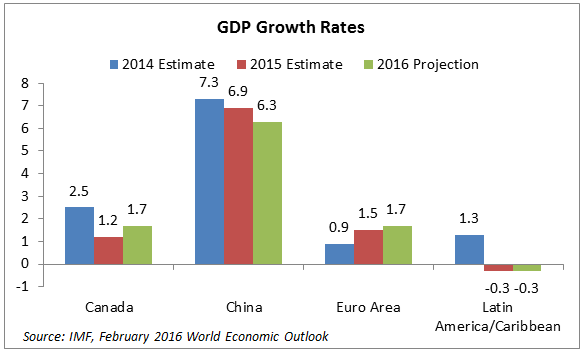
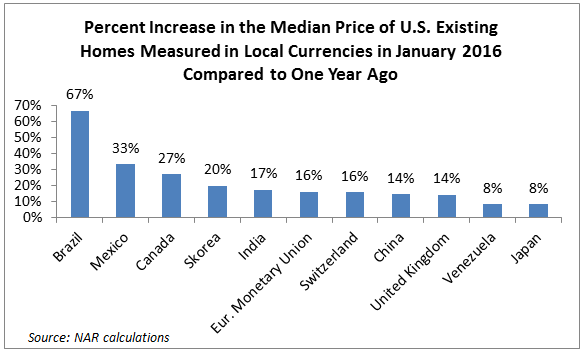
In fact, China Daily (one of mainland China’s prominent English-language newspapers) suggests that the great retraction began three years ago. NAR is only the latest in a line of doomsayers, but they do have a few numbers to back it up: China’s GDP growth is projected to shrink again this year, down to 6.3 percent (two years ago it was 7.3 percent.)

64f9a growth China Backs Away From SF Real Estate...Slowly?

NAR

099c8 percent increase China Backs Away From SF Real Estate...Slowly?

NAR

And while the median price of a U.S. house in Chinese yuan has risen 14 percent in the last year, home prices in China dropped six percent in the same period. China’s stock markets took a lot of hits in 2015, and investor morale isn’t what it used to be. Michael Repka, CEO of Palo Alto’s DeLeon Realty, points out that this can have a two-pronged effect on demand here.

“The ones who used to have $10 million and watched it become $6 million, they‘re not going to be buying $1 million homes in Silicon Valley,” says Repka. “But those who used to have $300 million and watched that become $250 million, that will drive a flight to safety, and I expect we’ll actually see demand go up in the $8 million range, because it will feel like a safe investment.”

Indeed, Mark McLaughlin, CEO of Pacific Union International, tells us that they recently got an offer to sponsor an investment fund for “high net-worth investors from China.”

“They’re definitely going to be looking at real estate as an investment deal,” says Brent Gullixson of Alain Pinel Realtors in Menlo Park. “And you’ll see people pulling out of China altogether and wanting to resuscitate themselves.”

But Gullixson also predicts that at least a moderate downturn is probably inbound anyway, if only because prices, particularly in Silicon Valley, are getting so insane that soon there’ll be nowhere to go but down. “I get a lot of questions about whether the market is softening. A better word for it would be normalizing.”

099c8 6036631859 da7089011a o China Backs Away From SF Real Estate...Slowly?

What goes up…

Flickr

That would be a relief to those who cite (or blame) overseas investors as the force inflating our bubble. “Chinese buyers are sitting on much of this property as housing in the Bay Area becomes increasingly scarce, causing its value to skyrocket,” the Diplomat wrote in 2014.

On the other hand, just a year ago Repka was marveling at Chinese buyers who pay in cash and close in seven days. You’ve got to think he’ll miss them when they’re gone. Local economies may end up missing the income too.

In the short term, there’s probably enough built-up momentum for things to cruise at status quo for a bit. Beyond that? Well, if you’re looking for guarantees, maybe investment is not your game.

Article source: http://sf.curbed.com/2016/3/10/11195928/china-sf-real-estate

Posted in SF Bay Area News | Tagged | Leave a comment

Uber’s real estate footprint unmatched among San Francisco Bay Area startups

By Heather Somerville

SAN FRANCISCO (Reuters) – Uber’s new Oakland headquarters is about four times bigger than Internet radio service Pandora Media’s office nearby, and will house about five times the number of employees that ride-hailing competitor Lyft has at its headquarters.

The on-demand ride service paid $123.5 million for Oakland’s historic Sears building last year and has so far filed building permits to complete at least $2 million in renovations, according to BuildZoom, a startup that compiles construction and remodeling contractor data for homeowners.

Across the bay in San Francisco, Uber has so far initiated $130 million in construction on a bigger office in the Mission Bay neighborhood, BuildZoom’s data shows.

The new building permit data from BuildZoom, provided exclusively to Reuters, underscores the mammoth growth in Uber’s real estate footprint and associated costs, overshadowing most other tech startups in San Francisco and Oakland.

Remodeling on the old Sears building will take another year, and the Mission Bay campus is still two or three years out, so construction costs will rise. Uber said it was also repairing damage on the Oakland building caused by the 1989 Loma Prieta earthquake.

Uber is the most highly valued venture-backed tech firm and has raised more than $7.4 billion from investors, a war chest that can help fund real estate purchases.

But its costly expansion in Oakland and San Francisco comes as the venture capital investing climate cools, with more investors wary that highly valued startups may not grow into their stratospheric valuation.

The iconic Oakland building, which opened in 1929 as a department store, will house between 2,000 and 3,000 Uber employees across 380,000 square feet (35,303 sq. m.).

By comparison, Ask.com, an Oakland-based search engine founded in the dot-com boom, has 200 employees in a 79,000-square-foot (7,339-sq.-m.) office it shares with other companies owned by parent IAC Publishing, spokeswoman Suraya Akbarzad said.

Sungevity, a solar design company that has raised close to $900 million from investors, occupies approximately 68,000 square feet (6,317 sq. m.) in Oakland, spokesman John Ordona said.

In San Francisco, Uber partnered with a real estate firm to purchase land for $125 million and develop a 423,000-square-foot (39,298-sq.-m.) campus that will house between 3,000 and 4,000 employees. That space is in addition to Uber’s 500,000-square-foot (46,452-sq.-m.) headquarters in downtown San Francisco, according to BuildZoom.

Other highly valued, fast-growing tech companies don’t come close. Lyft said it has 66,000 square feet (6,132 sq m.)while online accommodations company Airbnb said it occupies 169,000 square feet (15,700 sq m.) in San Francisco.

(Reporting by Heather Somerville; Editing by Clarence Fernandez)

Article source: https://finance.yahoo.com/news/ubers-real-estate-footprint-unmatched-among-san-francisco-122116267--sector.html

Posted in SF Bay Area News | Tagged | Leave a comment

If a real estate ad says ‘vertical garden,’ it’s probably in SF

  • 321e8 920x920 If a real estate ad says vertical garden, its probably in SF

Caption

Close


They say all real estate is local, and the same is true when it comes to those descriptions you see in real estate listings.

Compared with the rest of the country, home-for-sale ads in the Bay Area are far more likely to mention vertical gardens, easy freeway access, top-rated schools, side-yard access, dual or double-pane windows and architectural styles such as Mediterranean, Art Deco, Craftsman or Midcentury.


They are much less likely to mention finished lower levels or basements, which is understandable, since basements are common in states where the ground freezes in winter and rare in warmer climates. Bay Area ads are also less likely to mention fenced backyards, gas furnaces, porches, mudrooms, barns, bricks, lakes or water slides.

To come up with these numbers for The Chronicle, Zillow searched through all homes for sale that appeared on its website in 2015, checking for more than 300 terms.

For each term, Zillow calculated the percentage of times it came up in a Bay Area listing and the percentage of times it appeared in listings elsewhere across the United States. Zillow then divided the Bay Area percentage by the U.S. percentage to come up with relative frequencies. The Bay Area included San Francisco, San Mateo, Alameda, Contra Costa and Marin counties.

Zillow then compared the Bay Area with the rest of California, which turned up even more regional differences.

08474 920x1240 If a real estate ad says vertical garden, its probably in SF

Why did we do this? Mostly for fun, but also to see which features real estate agents think will hook Bay Area home buyers.

No catios

The study revealed a few surprises.

Despite our proclivity for pet pampering, the term “catio” — an enclosed patio for cats — did not come up in Bay Area ads last year. It was listed eight times in California and 29 times nationwide.

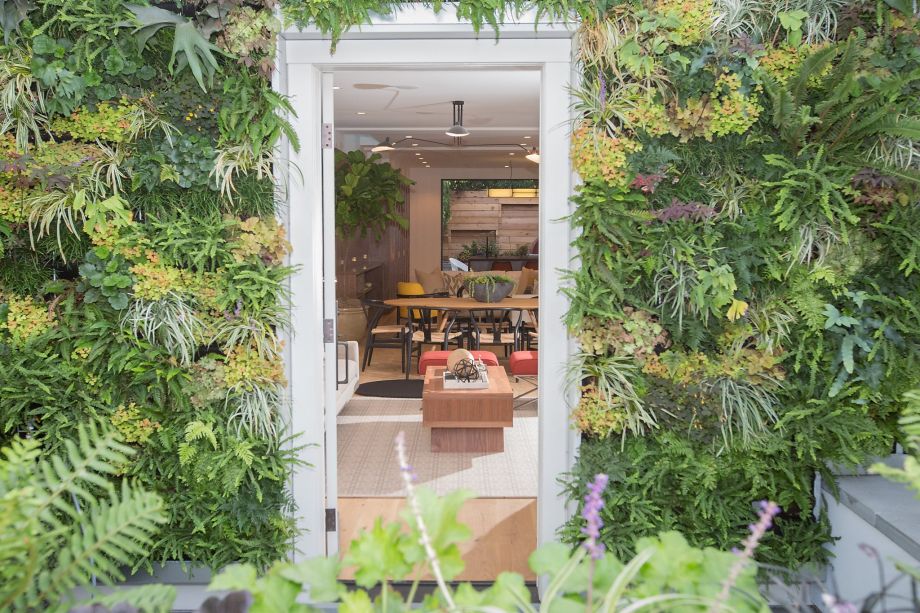
We’re doing much better with another hot trend, the vertical garden, which cropped up five times more often here than it did nationwide and twice as often as it did elsewhere in California.

In San Francisco, “The buildings are so dense, it’s hard to get sunlight and garden space,” said Katrina Schissle, a home stager with Gigi Park and a former real estate agent. “If you can get a wall and grow herbs or strawberries, it can get sun. I have seen a handful of homes with them. It’s something a listing agent would certainly talk up if they had it.”

Agent Lamisse Droubi listed a house with a vertical garden on Dorland Street in San Francisco that sold in December. “People loved it. It was definitely a high point,” she said. “It comes off as high end. It’s not inexpensive.” It cost $16,000 to install, including an irrigation system.

If you exclude geographic terms such as “Golden Gate Bridge” and generic terms such as “open house,” the term that came up with the greatest relative frequency in the Bay Area was “side-yard access.”

It appeared 80 times more often than in the rest of the country, and 20 times more frequently compared with the rest of the state, said Zillow spokeswoman Emily Heffter.


This term seems to exist primarily in the East Bay, where it means there is a gate in the fence large enough to drive a boat or recreational vehicle through.

“It’s for recreation enthusiasts,” said Nicole Causey, an agent with Legacy Real Estate in Fremont. “I’ve had clients who have specifically said, ‘I won’t buy the property unless I can get my RV in there,’” since many cities prohibit these vehicles from parking on the street. Causey sold two homes with side-yard access last year.

West Bay Realtors were unfamiliar with the term. “We put ‘RV parking’ or ‘boat parking,’” said Quincy Virgilio, a Realtor and chairman of MLSListings, the multiple listing service for the Peninsula and South Bay.

Jay Pepper-Martens, director of the San Francisco MLS, had not heard the term. He said he has seen the term “side-yard entrance,” used in San Francisco “which would mean access to a probably (unpermitted) suite, that doesn’t have a front or street entrance.”

Architectural styles

Pepper-Martens said architectural terms such as Mediterranean or Art Deco are common in San Francisco because “maintaining the character of these old homes is part of the value. When they renovate them, they want to keep the look and feel of the original construction. Here, character counts for a lot.”

Likewise, the relative popularity of “dual-pane windows” in Bay Area ads is probably a result of our older housing stock. “On older homes, single-pane was standard. It’s an upgrade that started after 1980,” Pepper-Martens said. It’s an expensive improvement that gives the dual benefit of energy efficiency and noise reduction.

Limestone and quartz are also more popular here than in the rest of the state or country.

Top-rated or award-winning schools came up with far more frequency in Bay Area ads than elsewhere. You’d think that good schools are important everywhere, but “I think here in Silicon Valley, because the big companies are attracting these extremely well-educated foreign nationals, education is paramount,” said Mattie Baker, co-founder of School Scout, an online service in Santa Clara that lets agents and buyers search for homes within a certain school’s boundaries.

She said international buyers “search out schools proclaimed to be great” based largely on their test scores.

Some features that are uncommon in the Bay Area compared to the nation are less so when compared to the rest of the state.

For example, although basements are rare in Bay Area listings, they are 2.4 times more common here than in the rest of California, perhaps because of a boom in building luxury basements in Palo Alto and other pricey cities.

Other terms that are more common here than the rest of the state: updated kitchen or bath, eat-in kitchen, public transportation, refinished hardwood floors, commute and top-floor.

Terms that are less common here than elsewhere in California: covered patio, RV parking, ceiling fan, pool, spa, gated community, beach, fire pit, walk-in closet, golf and barbecue.

Kathleen Pender is a San Francisco Chronicle columnist. Email: kpender@sfchronicle.com Blog: http://blog.sfgate.com/pender Twitter: @kathpender

Article source: http://www.sfgate.com/business/networth/article/If-a-real-estate-ad-says-vertical-garden-6871373.php

Posted in SF Bay Area News | Tagged | Leave a comment