True-blue Northern California greets the new president with a Bronx cheer

As Donald Trump took control of the White House on Friday, the true-blue residents of the San Francisco Bay Area braced for a hard landing, unleashing a barrage of protests, sit-ins, teach-ins and marches that many see as an antidote to their coming four-year funk.

While out-numbered Trump supporters in the redder reaches of the region celebrated with champagne, the new president’s detractors pulled out all the protest stops, despite another nasty winter storm. Their voices rang out from the federal building in San Jose to the streets of Oakland and the Caltrain tracks in San Francisco, topped off with thousands joining hands on the Golden Gate Bridge, turning the iconic span into an 8,981-foot-long stage of civil discontent.

“After talking with my students I felt like the best use of my day would be out of the classroom protesting here on their behalf,” Berkeley High math teacher Masha Albrecht said from a rally in downtown Oakland. “I have Muslim students, undocumented students. They were feeling a lot of anxiety, and so am I. I felt like today was a day to be disruptive for me and for them.”

Given the Bay Area’s legendary Democratic DNA — over the last four and a half decades the nine-county region voted for Republican presidential candidates only twice — Friday’s mass nose-holding was hardly a surprise. Protesters blocked Caltrain’s tracks at 16th Street in San Francisco, halting service for more than two hours. A group calling for 120 hours of action dubbed #HellNawguration said the shutdown was part of its demonstrations of Wells Fargo, Uber, the Israeli Consulate and the Trump-owned skyscraper at 555 California St.

Protests throughout the Bay Area could clog bus and rail service and tie up streets well into Saturday, when “Women’s Marches” take place from Walnut Creek to Santa Cruz.

ced73 sjm bayreact 0121 203 True blue Northern California greets the new president with a Bronx cheer
As Donald Trump prepares to be inaugurated, protesters march in front of the Ronald V. Dellums Federal Building in Oakland, Calif., on Friday, January 20, 2017 (Laura Oda/Bay Area News Group) 

While they didn’t take to the streets, plenty of Bay Area residents celebrated Friday’s power shift in Washington. Members of the Republicans of Rossmoor club clinked champagne glasses at the senior community in Walnut Creek as Trump was sworn in.


Reading this on your iPhone or iPad? Check out our new Apple News app channel here and click the + at the top of the page to save to your Apple News favorites.


The atmosphere was buoyant among the group of about 40 people who cheered on Trump’s speech, particularly when he spoke of fighting “radical Islamic terrorism.”

“It’s an exciting day for the country,” said Ed Manning, president of the group, which meets regularly and has about 450 members. Manning said he was disappointed that some Bay Area politicians boycotted the inauguration. “There will be plenty of time for arguing issues in the future.”

But much of the Bay Area was eager to get started. Demonstrations ranged from large-scale — more than 3,000 gathered on the Golden Gate Bridge — to more modest efforts like the Sacred Heart Community Service’s teach-in and “community action” training in San Jose. The event included hands-on training in “bystander intervention and solidarity with vulnerable communities.”

“We could’ve easily stayed home,” the Rev. Jon Pedigo of the Diocese of San Jose said, “but we did an act of resistance by getting up. We really are doing nothing short of saving democracy.”

Rosalie Eskew, 77, born and raised in San Jose, summed up how many felt: “I didn’t want to stay (at home) for the inauguration. It’s just upsetting to me. I feel alive. I feel like I’m where I belong, really.”

In Oakland, students, parents and educators marched by the hundreds as gestures of “equality and justice for all” at schools like Bridges Academy, a diverse kindergarten-to-fifth-grade school in East Oakland.

19bab sjm bayreact 0121 2081 True blue Northern California greets the new president with a Bronx cheer
Students at Bridges Academy prepare to march as Donald Trump is inaugurated, in Oakland on Friday. (Laura Oda/Bay Area News Group) 

At noon, about 300 people from the International Community School in Oakland’s Fruitvale neighborhood marched down the puddle-filled sidewalks along International Boulevard.

Third-grader Joshua Escobar said he didn’t think he could watch the inauguration, because it would make him cry. After the election, he wrote a letter to Trump begging him not to build a wall and separate families.

“It’s scary and I just pray to God we’re going to be fine,” Joshua’s mother, Sonia Escobar, said as she marched with her son and his 7-year-old sister, Allison. “‘It’s going to be OK,’ I keep telling my kids. I have to believe that. I don’t want to be scared for the next four years.”

In San Francisco, hundreds gathered near the Ferry Building and police shut down Market Street for a march. By late morning, police had arrested 29 people, including 11 who shut down Caltrain, and others outside of Uber’s headquarters on Market Street.

“We did anticipate people backing out and protesting, but not on our tracks,” Caltrain spokeswoman Tasha Bartholomew said.

Across the bay, only 10 percent of longshoremen showed up for work Friday in a work slowdown targeted at Trump. Port spokesman Mike Zampa said only about 35 workers showed up by the 8 a.m. starting time. “There were not enough people to work,” he said.

While many of the protests were high-profile, in-your-face affairs, many people fed up with the presidential campaign and turned off by Trump simply turned off their TVs. Some sought to head off conflict.

“We’ve had fights or almost fights over football games, so we just try not to put anything on that may incite anything,” said Michael Hill-Jackson, spokesman for the Palo Alto VA health care system.

San Jose general contractor Ned McIver set his TV to record something else during the inauguration: a survival show called “Naked and Afraid.”

“It’s a stupid show,” said McIver, 57, who posted his protest on his Facebook page, “but I thought if I could get a grass-roots movement to watch, it could unhinge our dictator-in-chief.”

“When I think of the people who have held the office of president,” he said, “from George Washington to Abraham Lincoln, people of that ilk, to think that this guy will take that office — pardon me, but quite frankly it makes me want to vomit.”

But Naweed Tahmas, a 20-year-old student at UC Berkeley, said he welcomed the new president because “our middle class is being gutted. We are building a middle class in Asia while losing one in the U.S.”

“I loved his speech this morning,” he said. “He made it clear that America should be first because for far too long we have been putting other countries ahead of ourselves.”

6f1aa sjm bayreact 0121 010 True blue Northern California greets the new president with a Bronx cheer
Trump supporter Bob Jackson of San Jose watches the inauguration from the Mini Gourmet in San Jose. (Dai Sugano/Bay Area News Group) 

Others cheered on Trump while watching the big screen at the Mini Gourmet restaurant in San Jose. Bob Jackson, a retired postal worker, pulled out his phone to show a countdown clock reading “Time left until Obama leaves office.”

At that moment, it read: 18 minutes, 57 seconds.

“I’m excited to see it’s finally happening and we’ll be moving forward,” said Jackson, 65, of San Jose.

Behind the sleek black glass doors of San Jose’s Casino M8trix, card players focused more on Texas Hold’em than the big screens televising the pomp and circumstance. They didn’t even look up when a casino employee yelled out “Hey!! Where’s Hillary when you need her?”

Kishia Glasper, a 38-year-old home care worker, had been watching at home before she stopped by to pick up her fried rice order from the casino’s Lotus Cafe. She said she just couldn’t watch anymore.

“I’m sure he’s not that bad,” she said, “but the way he acts, it’s like, this can’t be real. Is this the president of the United States of America? I keep thinking someone is going to say, ‘Just kidding! You’ve been punked! Or that it’s April Fool’s Day — in January.”’

Staff Writers Erin Baldassari, Aaron Davis, Harry Harris, Karina Ioffee, Kathleen Kirkwood, Laura Oda, Julia Prodis Sulek, Joyce Tsai, Tatiana Sanchez, Anne Sciacca and Tracy Seipel contributed to this report.


Article source: http://www.mercurynews.com/2017/01/20/bay-area-braces-for-a-trump-presidency/

Posted in SF Bay Area News | Tagged | Leave a comment

2016 in Review: A few cracks in Bay Area’s red-hot housing market

In the Bay Area housing market, supply and demand means not much supply and way too much demand. As a result, the cost of a single-family home has skyrocketed in recent years.

At least that’s been the pattern since the recession ended. And it seemed still to be the pattern as 2016 began. With interest rates low and job growth steady, buyers kept pushing up the cost of those single-family homes.

Yet there were cracks in the market’s red-hot edifice; the volume of sales was way down from the previous year. Some agents and experts even began to mention the “leveling” word. In March, when the median price for the region remained absolutely flat — zero uptick from the year before — the “softening” word was added to the conversation.

But the median price still stood at over $1 million in three counties (San Francisco, San Mateo and Marin), at $942,000 in Santa Clara County and at $680,000 in Alameda County. If this was a leveling, it didn’t bring much relief to middle-class buyers caught up in the housing crisis. They either gave up, overstretched their budgets, perhaps moved to the more affordable inland counties — or left the region entirely.

New peak prices were recorded in April, May, June and July — and then the “sluggish” word set in and didn’t go away for the rest of the year. Sales were down. Buyers were digging in their heels. By fall, outside of hotly contested areas, sellers were making price adjustments unseen in a long time. The market was losing some of its steam, and agents began to take a wait-and-see attitude as a new president was elected and the Fed talked about increasing interest rates.

The rental market followed a similar pattern: Double-digit, year-over-year increases had mostly vanished by early 2016. Consumer resistance had set in by spring. In the fall, a variety of analysts declared that rents were actually falling. Yet with an average apartment still renting for $2,500 in San Jose, $2,927 in Oakland and $3,499 in San Francisco, plenty of renters threw up their hands.

“You have to leave because you just can’t survive,” said renter Colin Jordan, who moved with his fiancee to Scottsdale, Arizona, and accomplished what had been unattainable in the Bay Area. They bought a house.


“Buyers are kind of digging in their feet and saying, ‘We’ve hit a threshold of pain in terms of affordability, and you’ve got to say no.’ ”

— Jennifer Branchini, past president of the East Bay Association of Realtors

Timeline:

January: About 17,000 families register interest in renting one of 115 units of new affordable housing in San Leandro. Given the dimensions of the housing crisis, there is “insatiable demand” for such projects, says Adhi Nagraj, director of development for Bridge Housing, the nonprofit developer of the units.

March: The median price of a single-family home for the Bay Area’s nine counties stays flat — no uptick at all from the year before.

April: The median price of a single-family home climbs to a new record peak in Santa Clara County ($1 million), as well as in San Mateo County ($1,211,500).

May: The median price of a single-family home for the entire nine-county region reaches a new peak: $751,000.

June: Homebuyers grow pickier, but many locales still report healthy year-over-year increases in the median price of a single-family home: up 7.4 percent to $550,000 in Contra Costa County; up 4.8 percent to $751,250 in Alameda County; up 7.1 percent to $1,225,000 million in San Mateo County; up 3.5 percent to $980,000 in Santa Clara County. The nine-county region’s median climbs to its all-time high: $752,000.

July: The median price of a single-family home in San Mateo County hits its all-time high: $1.25 million.

August: Kate Downing, a planning and transportation commissioner in Palo Alto, resigns from her position, citing the cost of housing. Posting her resignation online, she explains that after five years of “trying to make it work here in Palo Alto, my husband and I cannot see a way to stay in Palo Alto and raise a family here.”

September: Apartment-hunting websites and real estate information services begin to report month-over-month declines in rent costs around the Bay Area. California tenants gain a new arrow in their quiver: a law to protect them from being unfairly placed on rental blacklists that jeopardize their credit ratings and shut them out of the housing market. Gov. Jerry Brown also signs a new measure making it easier and less expensive to build so-called “granny units,” a potential boon to the region’s tight housing supply.

October: Kenneth Cole, director of San Mateo County’s department of housing, says, “We’re madly treading water.” He notes that from 2010-14, the county added 54,600 jobs but only 2,100 new housing units. “If we don’t increase the supply, the affordability will never come back.”

November: Santa Clara County voters approve $950 million in bond financing to build affordable housing. Rent control measures pass in Oakland, Richmond and Mountain View but fail in Alameda, Burlingame and San Mateo.


Article source: http://www.mercurynews.com/2016/12/29/2016-in-review-a-few-cracks-in-red-hot-housing-market/

Posted in SF Bay Area News | Tagged | Leave a comment

Why are home prices so high? Seattle has 2nd-lowest rate of homes for sale in U.S.

Why is it so expensive to buy a house in Seattle right now? Everyone seems to have someone to blame: Amazon, priced-out Californians, foreign buyers, developers tearing down old homes to build huge new ones.

But people in the real-estate industry point to a much broader problem: No one is selling their house.

Just 0.4 percent of all homes in the Seattle region were on the market at any given time last year — a lower rate than in any U.S. metro area except the San Francisco Bay Area, according to a new report from realtor.com.

In other words, just one of every 263 houses and condos in the Seattle area was for sale. That’s more than three times worse than the national average, creating a market heavily tilted against buyers.

e920d c72fc6c2 dd14 11e6 91ce fa700b868323 780x462 Why are home prices so high? Seattle has 2nd lowest rate of homes for sale in U.S.
 Why are home prices so high? Seattle has 2nd lowest rate of homes for sale in U.S.

Seattle homebuyers have known for a while how competitive the market is; 41 people recently made offers on a toxic West Seattle house that was too dangerous to enter and ultimately sold, as a likely teardown, for $427,000.

But the new data shows just how much fiercer the competition is here compared with other hot markets around the country.

The local region is the 15th-biggest housing market in the country. Yet there are 36 major U.S. markets that are smaller than Seattle but had more homes for sale, including Austin, Denver and San Diego.

Portland had about the same number of homes on the market as Seattle despite being half the size. Chicago and Miami, while bigger than Seattle, each had about nine times more homes for sale than Seattle.

You’d think homeowners would be eager to sell and cash in on their big profits: Home values in Greater Seattle have soared about 60 percent in the last half-decade.

However, brokers say homeowners don’t want to sell because they don’t want to have to turn around and buy another pricey home.

Those homes that do hit the market are often sold before the “for sale” sign is staked into the front yard. Seattle is the fastest home market in the country, with the average home selling in just 15 days, according to Redfin. That’s despite the fact that the region has the second-most bidding wars in the nation, again behind the Bay Area.

While the lack of housing “inventory,” as it’s known, has been a growing problem for years in and around Seattle, the pickings are especially slim right now.

The number of homes for sale in King County last month hit its lowest point on record: just 1,600 houses were on the market, mostly in the suburbs, down from 7,400 houses six years prior.

That doesn’t come anywhere close to meeting the demand.

Yet even the small number of homes doesn’t tell the whole story. A disproportionately high number of houses on the market are luxury homes, because those typically take the longest to sell.

As of this week, there were only 81 houses in all Seattle available for less than half a million dollars, and some of those are auctions and foreclosures, according to Zillow. The vast majority are on the northern and southern edges of town.

Seattle has only about 260 homes for sale under $1 million.

The problem has sparked stressful bidding wars, shifted home hunting into a marathon endeavor that can take six months to a year, and prompted families who set out with a long checklist of must-haves to just settle on whatever home is available.

But its biggest impact is on prices. Supply is dwindling at a time when demand keeps rising with job and population growth, and renters keep getting fed up with pricey apartments.

For the story to change in 2017, the region would need a big turnaround. Seattle’s inventory dropped 13.4 percent last year, the third-most among the top 20 markets.

Article source: http://www.seattletimes.com/business/real-estate/why-are-home-prices-so-high-seattle-has-2nd-lowest-rate-of-homes-for-sale-in-us/

Posted in SF Bay Area News | Tagged | Leave a comment

Wife of Orlando Mass Shooting Gunman Arrested in California

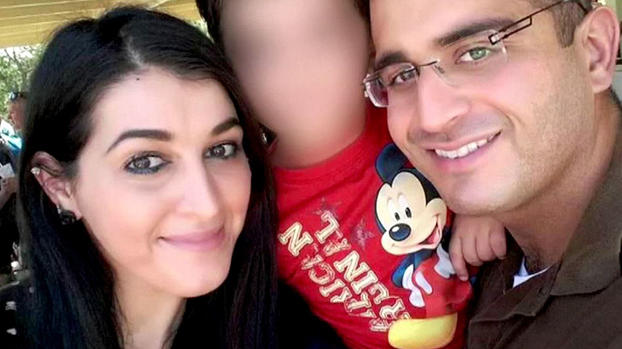
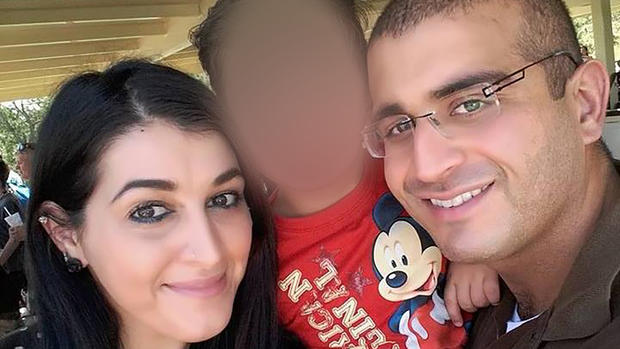
The wife of Orlando mass shooting gunman Omar Mateen was arrested on Monday in the San Francisco Bay Area in connection to helping her now-dead husband, thought to be behind the country’s deadliest gun massacre this summer.

The New York Times first reported, citing a law enforcement official, that 30-year-old Noor Salman was arrested at her family’s home outside San Francisco in connection with the June 2016 attack at at the Pulse nightclub.

Orlando police later clarified that she was arrested on charges of aiding and abetting by providing material support to a terrorist organization and obstruction of justice. In June, a source close to the family told NBC News that Mateen sent his wife a text message during the rampage, asking her, “Do you see what’s happening?” After swapping texts, she tried to call him.

NBC Bay Area obtained exclusive surveillance footage taken in the neighborhood of the moments before her arrest. The black-and-white video shot at 7:36 a.m. Monday shows two Alameda County sheriff’s deputies standing on the sidewalk as at least three men in plain clothes walk by quickly on the sidewalk.

Wife of Orlando Mass Shooting Gunman Arrested in Bay Area

aa276 Noor%2BZahi%2BSalman5 Wife of Orlando Mass Shooting Gunman Arrested in California

The case is being handled by the U.S. Central District Court in Florida. Neither charging documents nor federal affidavits were online on Monday.

Alameda County jail records, however, show Salman was being held on a witness tampering “etc.” charge. Online records indicate she was arrested Monday at 8:13 a.m. and was being held without bail at Santa Rita Jail.

Before heading to Florida, Salman is expected to appear in federal court in Oakland on Tuesday at 9:30 a.m.

“I am glad to see that Omar Mateen’s wife has been charged with aiding her husband in the commission of the brutal attack on the Pulse nightclub,” Orlando Police Chief John Mina said in a tweet. “Federal authorities have been working tirelessly on this case for more than seven months and we are grateful that they have seen to it that some measure of justice will be served in this act of terror that has affected our community so deeply.”

Pulse Gunman’s Wife Arrested

aa276 PulseWife0116 MP4 148460422262600001 Wife of Orlando Mass Shooting Gunman Arrested in California

Salman’s relative declined through a screen door to comment when a reporter knocked on her home in Rodeo, California, on Monday morning. Neighbors told NBC Bay Area that the family didn’t appear to be at home on Sunday, and there was no sign of police presence on Monday morning.

“I’m not really surprised because I felt like something might transpire,” neighbor Catherine Lawrence said. “If she was connected with this guy, then she may have known more than what she was saying.”

Forty nine people were killed and 53 wounded in the June 12 attack at the Orlando gay nightclub. Mateen, who pledged allegiance to ISIS during the attack, was killed in a firefight with police.  

Salman told the Times in an interview in November that she was “unaware of everything.”

Noor Salman’s Family Declines to Comment on Charges

aa276 noor blurred Wife of Orlando Mass Shooting Gunman Arrested in California

“I don’t condone what he has done,” she said then. “I am very sorry for what has happened. He has hurt a lot of people.”

Since the massacre, Salman was said to have been cooperating with the FBI.

Salman’s parents live in Rodeo, California, and the FBI has previously visited that location to interview her, NBC News reported. Rodeo is a small city, with a population of 8,600, in Contra Costa County near the San Pablo Bay — about 45 minutes from San Francisco.

Her mother’s neighbors in Rodeo have told NBC Bay Area that Salman was the daughter of Ekbal Zahi and Bassam Abdallah Salman, who died of a heart attack several years ago. The couple has three other daughters — the youngest is 14. Salman’s mother still lives at the home with her youngest but has not spoken out publicly about the shooting.

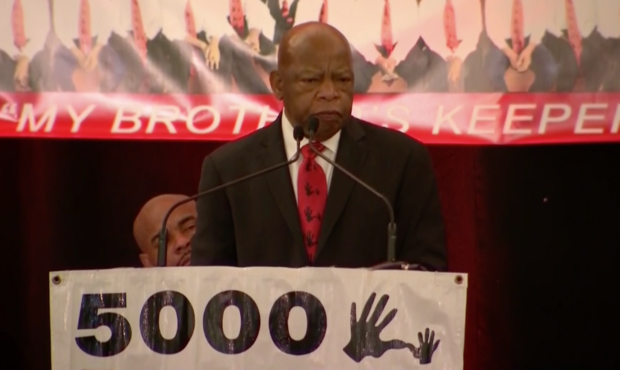
Democrats To Boycott Presidential Inauguration

aa276 Screen%2BShot%2B2017 01 17%2Bat%2B6.01.39%2BPM Wife of Orlando Mass Shooting Gunman Arrested in California

According to neighbors, Salman attended John Swett High School in nearby Crockett, California.

Salman married Mateen, neighbors said, and moved to Florida about five years ago.

Salman has a 4-year-old child and has filed court documents to change the boy’s name. A hearing is scheduled for February. 

NBC News’ Andrew Blankstein and NBC Bay Area’s Lisa Fernandez, Pete Suratos and Jodi Hernandez contributed to this report.

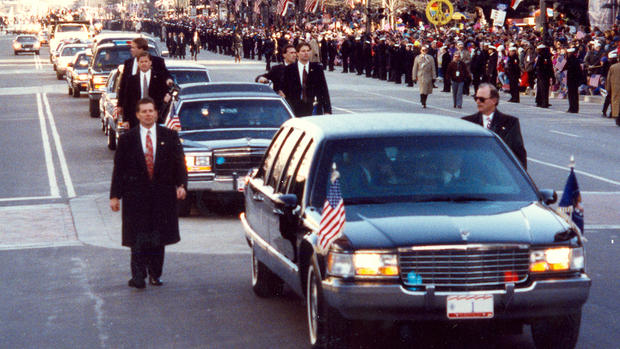
A History of the Presidential Inaugural Procession

9242b Clinton   1993 Inauguration USSS 0001 Wife of Orlando Mass Shooting Gunman Arrested in California

Posted in SF Bay Area News | Tagged | Leave a comment

A Silicon Valley down payment could buy you an entire house in much of the US

You’re probably used to hearing that Bay Area home prices are insane, unfair and punishing to potential buyers.

But here’s a new way to look at the dilemma faced by the region’s homebuyers:

The median 20 percent down payment on a house in metro San Jose is $192,320. Give or take a few bucks, that sum is equal to the median nationwide value of an entire house: $192,500.

Those numbers come from a new analysis of the national market by Zillow, the online real estate database company.


Reading this on your iPhone or iPad? Check out our new Apple News app channel here.


Here’s another way to break down the burden of home buying in the Bay Area:

The average buyer in the San Jose metro area (which includes Santa Clara and San Benito counties) must set aside 182 percent of his or her annual income — nearly two years’ worth of salary — to assemble the recommended 20 percent down payment. The median income in the metro area is $105,455; the median 20 percent down payment is $192,320, and the median home value is $961,600, according to Zillow.

In the San Francisco metro area (which includes San Mateo, Alameda, Contra Costa and Marin counties), the situation is similar. The average buyer must set aside 180 percent of annual income to come up with 20 percent down. The median income is $91,777; the median 20 percent down payment is $164,920; and the median home value is $824,600.

Compare that to the nation as a whole: The average American homebuyer has to set aside the equivalent of two-thirds of his or her annual income to make that 20 percent down payment.

Alex Wang, an agent with the Sereno Group in Palo Alto, chuckled at the idea that homebuyers in much of the U.S. can get into a house with a down payment of about $40,000 — roughly 20 percent of the national median house price.

“Wow, that’s interesting,” he said. And while most of his clients work in tech and can come up with the cash for the much higher down payment required in Silicon Valley — “they’re making decent salaries, a couple hundred thousand a year” — others do struggle.

Bidding on a 4-bedroom house in Sunnyvale that listed for just under $2 million, one of Wang’s clients — an engineer, married to a doctor — recently offered $2.15 million. But he lost to another bidder, who offered $2.25 million.

aa276 sjm house 0117 90 A Silicon Valley down payment could buy you an entire house in much of the US

“My client was maxed out,” Wang said. “He wanted to be self-sufficient: `I’m independent. I don’t want my parents to help me.’ But now he’s realized he’s got to have that conversation with his mother to borrow a couple of hundred thousand dollars, just in case that situation happens again.”

Around the region, it has “become more difficult to buy a home now, a first home,” said Margaret Garber-Teeter, an Alain Pinel agent based in Walnut Creek. “Unless they’re earning a top-tier income, they’re getting help from somebody or something, whether inheritance, stock, or getting money out of some other piece of real estate — somehow they’ve been given a lump sum of money.

“Two teachers,” she said, as an example, “they can’t buy a house unless somebody helps them.”

Where in the U.S. do buyers put aside the smallest share of income? In Pittsburgh, Indianapolis and Kansas City, where 48 percent of annual income covers a 20 percent down payment.

Zillow also reports that 25 percent of first-time homebuyers in the U.S. rely on gifts from family and friends to gather enough funds to buy a house. And the report finds that saving for a down payment is the biggest worry of a fifth of all buyers.

“While it’s possible to buy a house with a smaller down payment, 20 percent ensures the best rates,” said Jeremy Wacksman, Zillow’s chief marketing officer. “As important as it is to find a monthly payment you can afford, some buyers’ budgets will come down to the amount of cash they can bring to the table.”

Much of the down-payment analysis is derived from the Zillow Group Report on Consumer Housing Trends. (Income figures come from the U.S. Census, while Zillow has taken median home values from its own Zillow Home Value Index.)

Article source: http://www.mercurynews.com/2017/01/16/a-silicon-valley-down-payment-could-buy-you-an-entire-house-in-much-of-the-u-s/

Posted in SF Bay Area News | Tagged | Leave a comment