Bay Area housing: A down payment here costs as much as a whole …

You’re probably used to hearing that Bay Area home prices are insane, unfair and punishing to potential buyers.

But here’s a new way to look at the dilemma faced by the region’s homebuyers:

The median 20 percent down payment on a house in metro San Jose is $192,320. Give or take a few bucks, that sum is equal to the median nationwide value of an entire house: $192,500.

Those numbers come from a new analysis of the national market by Zillow, the online real estate database company.


Reading this on your iPhone or iPad? Check out our new Apple News app channel here.


Here’s another way to break down the burden of home buying in the Bay Area:

The average buyer in the San Jose metro area (which includes Santa Clara and San Benito counties) must set aside 182 percent of his or her annual income — nearly two years’ worth of salary — to assemble the recommended 20 percent down payment. The median income in the metro area is $105,455; the median 20 percent down payment is $192,320, and the median home value is $961,600, according to Zillow.

In the San Francisco metro area (which includes San Mateo, Alameda, Contra Costa and Marin counties), the situation is similar. The average buyer must set aside 180 percent of annual income to come up with 20 percent down. The median income is $91,777; the median 20 percent down payment is $164,920; and the median home value is $824,600.

Compare that to the nation as a whole: The average American homebuyer has to set aside the equivalent of two-thirds of his or her annual income to make that 20 percent down payment.

Alex Wang, an agent with the Sereno Group in Palo Alto, chuckled at the idea that homebuyers in much of the U.S. can get into a house with a down payment of about $40,000 — roughly 20 percent of the national median house price.

“Wow, that’s interesting,” he said. And while most of his clients work in tech and can come up with the cash for the much higher down payment required in Silicon Valley — “they’re making decent salaries, a couple hundred thousand a year” — others do struggle.

Bidding on a 4-bedroom house in Sunnyvale that listed for just under $2 million, one of Wang’s clients — an engineer, married to a doctor — recently offered $2.15 million. But he lost to another bidder, who offered $2.25 million.

4d20e sjm house 0117 90 Bay Area housing: A down payment here costs as much as a whole ...

“My client was maxed out,” Wang said. “He wanted to be self-sufficient: `I’m independent. I don’t want my parents to help me.’ But now he’s realized he’s got to have that conversation with his mother to borrow a couple of hundred thousand dollars, just in case that situation happens again.”

Around the region, it has “become more difficult to buy a home now, a first home,” said Margaret Garber-Teeter, an Alain Pinel agent based in Walnut Creek. “Unless they’re earning a top-tier income, they’re getting help from somebody or something, whether inheritance, stock, or getting money out of some other piece of real estate — somehow they’ve been given a lump sum of money.

“Two teachers,” she said, as an example, “they can’t buy a house unless somebody helps them.”

Where in the U.S. do buyers put aside the smallest share of income? In Pittsburgh, Indianapolis and Kansas City, where 48 percent of annual income covers a 20 percent down payment.

Zillow also reports that 25 percent of first-time homebuyers in the U.S. rely on gifts from family and friends to gather enough funds to buy a house. And the report finds that saving for a down payment is the biggest worry of a fifth of all buyers.

“While it’s possible to buy a house with a smaller down payment, 20 percent ensures the best rates,” said Jeremy Wacksman, Zillow’s chief marketing officer. “As important as it is to find a monthly payment you can afford, some buyers’ budgets will come down to the amount of cash they can bring to the table.”

Much of the down-payment analysis is derived from the Zillow Group Report on Consumer Housing Trends. (Income figures come from the U.S. Census, while Zillow has taken median home values from its own Zillow Home Value Index.)

Article source: http://www.mercurynews.com/2017/01/16/a-silicon-valley-down-payment-could-buy-you-an-entire-house-in-much-of-the-u-s/
Posted in SF Bay Area News | Tagged | Leave a comment

Sale fails are up all over the country, San Francisco included

  • 82c14 g1 Sale fails are up all over the country, San Francisco included


Caption

Close


On Jan 11, a new Trulia study examined the shadowy aspect of real estate sometimes called a “sale-fail,” when for-sale homes that fail to sell initially are placed placed back on the market later. Trulia’s main focus: those listings that return again to market after being listed as “pending” or “active contingent.” The study pulls national data from the 100 largest metro areas and shows this trend up everywhere, even right here at home.

Why sales fail

Generally, sales fail for these common reasons

  • Buyer fails to obtain financing after entering contract
  • Something comes up in the home inspection  that causes buyer or seller to balk over who will pay for/how serious the a repair the issue in question (in SF, that could be foundation problems, roof leaks, termite infestations, or any number of issues)
  • Sellers decides they can line up a better offer and tank the deal
  • Bank appraisal comes in significantly below asking price; and either seller not willing to lower price or buyer not able to cover the gap out-of-pocket
  • Seller simply decides not to sell, or buyer simply decides not to buy

Interesting national results

According to Trulia’s study, data show that deals to sell homes in the US are falling through at a faster rate than they were a year ago. Most at risk of all: agreements for starter homes. “The ‘sale fail’ phenomenon applies most commonly to starter homebuyers nationally, at a rate of 7.1percent of all listings in Q4 2016, up from 2.4 percent in Q4 2014,” says Trulia.

When asked what might be causing this particular trend, Felipe Chacón, Housing Data Analyst at Trulia, told On the Block that “fail rates have been increasing nationally, as first time home buyers are increasingly getting back into the market and inventories continue to be squeezed.”

Tight inventories create a more pressured buying atmosphere that can lead to missteps on either the seller or buyers’ part during the process. Additionally, first time home buyers face an added level of lending scrutiny and come to the table with smaller down payments and less equity.

Interesting local results

Specifically, in the San Francisco metro area, Trulia found that

  • San Francisco has experienced an unusually high jump in sale fails, jumping from 3.8 percent of all listings to 5.0 percent within the past year.
  • On a quarterly basis, the San Francisco market “a failed sale” rate in 5.3 percent of all unique listings in the most recent quarter of 2016.

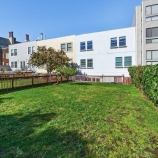
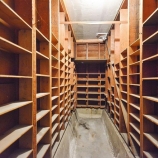
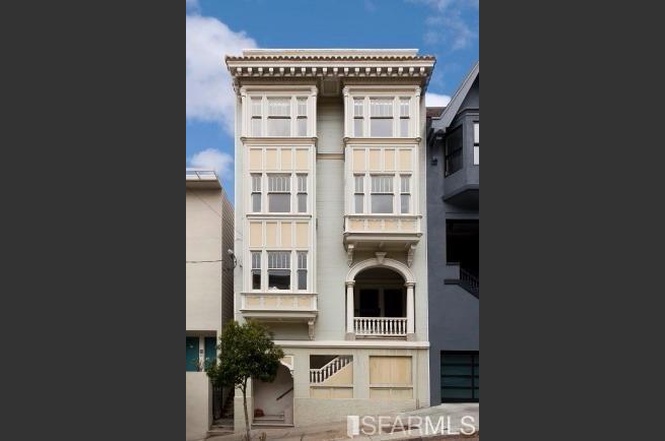
The gallery above shows three local homes as examples of initial sale fails that came back on market to finally sell or are still now active (one, in fact, failed to sell three separate times over the course of three months).  That such a phenomenon exists, and that it’s actually increasing in frequency, might surprise some readers who know SF’s real estate reputation.

Anna Marie Erwert writes from both the renter and new buyer perspective, having (finally) achieved both statuses. She focuses on national real estate trends, specializing in the San Francisco Bay Area and Pacific Northwest. Follow Anna on Twitter: @AnnaMarieErwert


Let me know if this is so

Article source: http://blog.sfgate.com/ontheblock/2017/01/16/sale-fails-are-up-all-over-the-country-san-francisco-included/

Posted in SF Bay Area News | Tagged | Leave a comment

It’s a fact: The Bay Area rental market has softened

After years of painful increases, the cost of renting an apartment in most Bay Area cities has hit a plateau.

In San Francisco, the median cost of a 2-bedroom apartment was $4,550 in mid-December — still an inconceivable sum for most wage earners, yet down 2.5 percent from a year earlier. Likewise, the San Jose median of $2,550 was down 0.7 percent.

The Oakland median of $2,500, however, was up a modest 0.8 percent.

That’s all according to a new report from ApartmentList.com that tracks rents through Dec. 16.

“After a couple of years of scorching rent increases, rents are stabilizing or actually declining in many parts of the Bay Area,” said Andrew Woo, data scientist for ApartmentList.com.

He attributed the cooling to three factors: the construction of thousands of units of new housing for renters around the region, the typical seasonal slowdown in rent growth at year’s end, and the fact that “the market has already gone up so much that it can’t sustain any more rent increases.”

There were a few exceptions to the general trend, especially in a handful of East Bay markets where renters have flocked in search of something affordable. The result: The new competition has driven up rents by 8.1 percent year-over-year in Pleasanton, where the median 2-bedroom was $2,770, and by 6.8 percent in Concord, where the median was $1,900.

But elsewhere, the market softened, with rents either declining or moving up a smidgen, the website reported.

The median 2-bedroom unit went for $3,600 in Palo Alto, down 2.0 percent; for $3,440 in Redwood City, down 4.8 percent; for $3,040 in Daly City, up 1.7 percent; for $2,750 in Santa Clara, down 1.1 percent; for $2,390 in Fremont, down 0.5 percent; and for $2,300 in Campbell-Saratoga, down 1.4 percent.

Statewide, the numbers followed the same trend, even in large cities with the fastest rates of increase. Among the 10 biggest municipalities, Los Angeles — with a median 2-bedroom rent of $2,600 — led the pack with a 1.8 percent increase from a year earlier. Sacramento 2-bedrooms were up 1.7 percent to $1,200, and Fresno 2-bedrooms rose 1.2 percent to $870.

San Franciscans, in particular, might want to pay attention to those numbers.

Get a load of these median rents for 2-bedroom apartments in neighborhoods around the City by the Bay: South Beach, $5,500; Mission Bay $4,910; Pacific Heights, $4,880; Mission, $4,650; Nob Hill-Russian Hill, $4,500; Noe Valley-Castro, $4,400; Bernal Heights, $3,800; and the Outer/Central Sunset, a mere $,3,350.

Article source: http://www.mercurynews.com/2017/01/03/its-a-fact-the-bay-area-rental-market-has-softened/

Posted in SF Bay Area News | Tagged | Leave a comment

Sound Off: Concerns about a commercial real estate crisis? – SFGate

  • d6e78 920x920 Sound Off: Concerns about a commercial real estate crisis?   SFGate

Caption

Close


A: Commercial buyers’ goals differ vastly from the wants and needs of personal residence home buyers. For commercial purchases, investors look almost exclusively at what the “numbers” tell them. Will the capitalization rate and/or gross rent multiplier (formulas that help determine value) give the buyer the intended results? What are the total rents, and expenses? Performing an income and expense analysis helps the investor understand the costs, cash flow, return on investment, debt service costs and potential increase in future revenue generation.


While perhaps not true for the entire country, there is still major demand for commercial purchases of all kinds in the Bay Area. Commercial loan originators largely expect strong borrowing demand for mortgages this year, although experts are a bit less enthusiastic than they were last year according to a survey conducted by the Mortgage Brokers Association. Concerns include higher interest rates, rent controls and governmental regulations.

Investors are always looking for solid returns, including many foreign-based buyers who want to invest in the relative stability of the U.S .economy and obtain higher returns than from U.S. Treasury notes. Due to the resurgence of the stock market, more investors have additional funds they can invest in real estate. Our Bay Area communities continue to attract strong demand and encourage investment in local commercial properties.

Jill Gumina, Hill Co. Real Estate, (415) 265-1717, jgumina@hill-co.com.

A: According to various sources, San Francisco’s commercial real estate market may be seeing a slow down in the city’s technology driven economy. Office subleasing is at the highest level since 2010.

A five-year frenzy for San Francisco office space may be cooling as venture capital investments decline and tech firms slow their hiring from record paces. The extra space is a warning sign that the growth rate for some companies was unsustainable. Some startups took more space than they needed in the hopes of expanding later, while others are moving to less expensive areas.

The trend isn’t entirely negative, however. Some companies that leased space in the early stages of the boom can rent it out at a profit, while others may be expanding and moving in to bigger offices, an indicator of growth. Subleasing also opens up more affordable space at a time rents are near record highs. – as the space on the market for sublease have asking rents about 17 percent below those of regular leases, according to Cushman Wakefield.

Kathleen Daly, Coldwell Banker, (415) 925-3205, kdaly@cbnorcal.com; Lisa Lange, Coldwell Banker, (415) 464-3318, lisalange@coldwellbanker.com.

A: Barring any sort of catastrophic event, it appears that the San Francisco commercial market will remain robust and become even more relevant on the international circuit.

The influx of overseas money to the Bay Area drives our markets. While everyone is watching what the economics of 2017 shall bring, the Bay Area may not be feeling a downturn in commercial markets simply because so much overseas cash is used for purchasing.

The Bay Area still has the technology industry driving Bay Area real estate in all markets–the commercial leasing and subleasing of space, residential rentals, record breaking commercial sales and astronomical residential sales. The leasing and buying pools are still strong. Based on the beginning of the year predictions, they state that commercial rents are going to continue in an upward motion, even with some decline in residential rents.

Believe it or not, the Bay Area is still considered a bargain compared to some of the other international cities of the world. Even with all of the appreciation in the last few years, both the commercial and residential markets are still performing at a lower cost for purchase in the most desirable worldly markets.

As we all know what goes up must come down; however, real estate is still a solid investment over time.

Jeannie Anderson, Pacific Union Real Estate, (925) 586-6621, janderson@pacunion.com.

Article source: http://www.sfgate.com/realestate/article/Sound-Off-Concerns-about-a-commercial-real-10856893.php

Posted in SF Bay Area News | Tagged | Leave a comment

Sound Off: Concerns about a commercial real estate crisis?

  • 10129 920x920 Sound Off: Concerns about a commercial real estate crisis?

Caption

Close


A: Commercial buyers’ goals differ vastly from the wants and needs of personal residence home buyers. For commercial purchases, investors look almost exclusively at what the “numbers” tell them. Will the capitalization rate and/or gross rent multiplier (formulas that help determine value) give the buyer the intended results? What are the total rents, and expenses? Performing an income and expense analysis helps the investor understand the costs, cash flow, return on investment, debt service costs and potential increase in future revenue generation.


While perhaps not true for the entire country, there is still major demand for commercial purchases of all kinds in the Bay Area. Commercial loan originators largely expect strong borrowing demand for mortgages this year, although experts are a bit less enthusiastic than they were last year according to a survey conducted by the Mortgage Brokers Association. Concerns include higher interest rates, rent controls and governmental regulations.

Investors are always looking for solid returns, including many foreign-based buyers who want to invest in the relative stability of the U.S .economy and obtain higher returns than from U.S. Treasury notes. Due to the resurgence of the stock market, more investors have additional funds they can invest in real estate. Our Bay Area communities continue to attract strong demand and encourage investment in local commercial properties.

Jill Gumina, Hill Co. Real Estate, (415) 265-1717, jgumina@hill-co.com.

A: According to various sources, San Francisco’s commercial real estate market may be seeing a slow down in the city’s technology driven economy. Office subleasing is at the highest level since 2010.

A five-year frenzy for San Francisco office space may be cooling as venture capital investments decline and tech firms slow their hiring from record paces. The extra space is a warning sign that the growth rate for some companies was unsustainable. Some startups took more space than they needed in the hopes of expanding later, while others are moving to less expensive areas.

The trend isn’t entirely negative, however. Some companies that leased space in the early stages of the boom can rent it out at a profit, while others may be expanding and moving in to bigger offices, an indicator of growth. Subleasing also opens up more affordable space at a time rents are near record highs. – as the space on the market for sublease have asking rents about 17 percent below those of regular leases, according to Cushman Wakefield.

Kathleen Daly, Coldwell Banker, (415) 925-3205, kdaly@cbnorcal.com; Lisa Lange, Coldwell Banker, (415) 464-3318, lisalange@coldwellbanker.com.

A: Barring any sort of catastrophic event, it appears that the San Francisco commercial market will remain robust and become even more relevant on the international circuit.

The influx of overseas money to the Bay Area drives our markets. While everyone is watching what the economics of 2017 shall bring, the Bay Area may not be feeling a downturn in commercial markets simply because so much overseas cash is used for purchasing.

The Bay Area still has the technology industry driving Bay Area real estate in all markets–the commercial leasing and subleasing of space, residential rentals, record breaking commercial sales and astronomical residential sales. The leasing and buying pools are still strong. Based on the beginning of the year predictions, they state that commercial rents are going to continue in an upward motion, even with some decline in residential rents.

Believe it or not, the Bay Area is still considered a bargain compared to some of the other international cities of the world. Even with all of the appreciation in the last few years, both the commercial and residential markets are still performing at a lower cost for purchase in the most desirable worldly markets.

As we all know what goes up must come down; however, real estate is still a solid investment over time.

Jeannie Anderson, Pacific Union Real Estate, (925) 586-6621, janderson@pacunion.com.

Article source: http://www.sfgate.com/realestate/article/Sound-Off-Concerns-about-a-commercial-real-10856893.php

Posted in SF Bay Area News | Tagged | Leave a comment