Bay Area housing crisis: Advocates call for action and creative solutions

SAN FRANCISCO — A forum Thursday on the Bay Area’s egregious housing situation — the high prices, the scarcity of new construction — brought together academics, developers, real estate agents, government officials and housing advocates, all in the name of seeking creative solutions to the crisis.

It was both a cry for help and a call to action.

“They have their crazies. We need our crazies,” said panelist Laura Foote Clarke, executive director of YIMBY Action, which advocates for housing growth. Yes, that’s YIMBY, as in “Yes In My Backyard,” and the “they” she referred to was the other side — the many and often well-organized “Not In My Backyard” NIMBY opponents of housing development and densification in neighborhoods around the region.

Held at LinkedIn San Francisco in front of an engaged audience of about 175 people, the forum was titled “California Housing Crisis: Examining the Impact on the Bay Area.” It was sponsored by the Center for California Real Estate, a spinoff institute of the California Association of Realtors, and the Bay Area Council. And while it brought many voices to the table, the NIMBYs were missing in action. Perhaps they weren’t invited.

Much of what was said has been said before.

The fact that service workers and the middle class are being displaced from the region and that a minimum household income of $179,000 is now required to qualify for a median-priced Bay Area home. The fact that hiring has slowed because so many potential employees can’t afford to move to such an expensive region — Katie Ferrick, director of community affairs for LinkedIn, cited “a 17 percent decrease in the speed, the velocity of hiring, by Bay Area employers.”

There is also the fact that between 180,000 and 200,000 new housing units would need to be built each year in order for the state to keep up with its growing population — “and we’re not coming anywhere close,” said Carol Galante, faculty director of the Terner Center for Housing Innovation at UC Berkeley, as well as a former assistant secretary of the U.S. Department of Housing and Urban Development.

There is “a structural disconnect” between Sacramento policymaking and local policymaking on the matter of housing, said Jonathan Scharfman, general manager of Universal Paragon Corp., which has been trying for 12 years to build on the 684-acre Baylands site in Brisbane. That’s how long planners of the controversial project have been seeking approvals — a showdown between regional and local interests over what would be a major new mixed-use housing development near transit.

“When you have 150 municipalities throughout the Bay Area, it’s difficult to have a unified voice,” said Scharfman. He condemned “the stonewall of local control” that he said creates a maze of regulatory hurdles and costly impact fees for developers.

Scharfman said that at some point a reckoning must come — and that an overhaul of Prop. 13 “is long overdue” in order to uncork property tax revenues and help fund local efforts to build affordable housing and improve schools.

The chances of that happening?

“Slim to none,” said Liam Dillon, a reporter who covers housing for the Los Angeles Times and spoke later on a different panel.

He did, however, say that state lawmakers — who have introduced scores of bills to address the housing crisis this session — seem to be getting behind several key bills. One would streamline regulatory processes for new development, another would create a multi-billion-dollar housing bond measure and yet another would institute a permanent funding source for new affordable housing by introducing a $75 fee on many real estate transactions.

There is “a lot of momentum to get them passed” in the coming weeks, he said.

Matt Regan, senior vice president of public policy and government relations for the Bay Area Council and one of the moderators, ended the forum by telling the audience to get behind the momentum.

“Laura Clark is organizing the YIMBYs,” he said. “You guys need to be organizing at the local level.”

Article source: http://www.mercurynews.com/2017/08/24/bay-area-housing-crisis-advocates-call-for-action-and-creative-solutions/

Posted in SF Bay Area News | Tagged | Leave a comment

This Silicon Valley tech leader wants to fix California’s housing crisis by scrapping the $64 billion bullet train …

<!– –>


VISIT CNBC.COM


Entrepreneurs

51 Mins Ago


3d759 104670884 makeit 08242017 sam altman train mezz.600x400 This Silicon Valley tech leader wants to fix Californias housing crisis by scrapping the $64 billion bullet train ...


For nearly five years, Sam Altman, a self-made multimillionaire and president of top Silicon Valley start-up incubator Y Combinator, had to live with his three siblings as roommates thanks to San Francisco’s astronomical housing prices.

“All of my siblings were living in my house in San Francisco because they couldn’t afford rent otherwise,” Altman tells CNBC Make It.

The tech boom has pushed real estate costs in Silicon Valley through the roof. The median home value in San Francisco is $1,204,700 and the median rent is $4,350, according to real estate data company Zillow. In the larger Bay Area, it’s $3,500. The surge is making it hard for even the most well-paid professionals to cover their expenses. Others, unable to afford the astronomical real estate prices, resort to living with untenable commutes.

But housing prices are a problem across California. The median home value in the United States is $200,400, according to Zillow. The median home value in California is $503,100. The corresponding median rent prices are $1,600 and $2,675, also according to Zillow.

Altman says he has an idea to fix this issue plaguing his state.

3d759 102484021 san francisco real estate.600x400 This Silicon Valley tech leader wants to fix Californias housing crisis by scrapping the $64 billion bullet train ...

One option he has publicly proposed is shutting down the construction of the $64 billion bullet train, which is expected to run from San Francisco to Los Angeles by 2029 (two extensions, one to San Diego and one to Sacramento do not have projected completion dates). Instead of building a super-fast regional train, Altman suggests redirecting those resources to build up more robust local train systems, enabling people to commute more efficiently.

“If we make it easier to quickly travel longer distances in/out of work hubs, the intense demand for housing can be diffused to communities that can handle it,” says Altman, in a blog post published in August, on what he terms the “big housing problem in California.” He gives Stockton, Calif. as an example of such a suburb — according to Google Maps, it’s about 80 miles and, with traffic, over a two-hour drive from San Francisco.

According to Altman, California traffic is some of the worst in the country, and local public transit systems “are not very good.” Los Angeles and San Francisco cinch the first and second top spots respectively on a ranking of the worst traffic congestion in the United States compiled by navigation company TomTom.

85957 104666953 35988612325 7543f3a1b1 z.600x400 This Silicon Valley tech leader wants to fix Californias housing crisis by scrapping the $64 billion bullet train ...

“When we went around the state and talked to people about what they really need, just regular middle class people, what they really would like is better local transit systems,” Altman tells CNBC Make It of the state-wide focus groups Y Combinator conducted in March through June of this year. “So they’d like the ability to live an hour outside of San Francisco in a much cheaper area but be able to get into the city to work. So there’s a lot of enthusiasm for a much better Bay Area transit system.”

Altman also argues the bullet train will be outdated before it is even built. “By the time it’s completed, we will have new and much better technology, like high-speed self-driving cars, electric airplanes, and maybe even Hyperloops,” he writes. The Hyperloop is a transport system that Elon Musk’s SpaceX is working to develop, where pods would whisk people through tubes at speeds over 700 miles per hour.

Altman knows there is not a pot of $64 billion sitting ready to be redirected from the bullet train. Although the first phase, running from Silicon Valley to Central California, is expected to begin passenger service in 2025, according to the 2016 business plan, much of the future construction is still unfunded. The California High-Speed Rail Authority, the state agency in charge, says it will seek additional money when the first phase is finished.

According to the Authority, some of the money will be used to improve smaller, local train systems so that they can connect to the high-speed rail system, but it will not be used for more widespread local transit system improvements.

Altman says the system is not yet fully funded because many investors aren’t on board with the project. “There are people that would be willing to invest in a transit system they felt more confident about,” like his local idea, he tells CNBC Make It.

Altman is asking for digital signatures on his petition to redirect bullet train funding of those who support the idea as a way to measure its popularity.

85957 104666939 GettyImages 813475150.600x400 This Silicon Valley tech leader wants to fix Californias housing crisis by scrapping the $64 billion bullet train ...

Easing California’s housing problem is only one of Altman’s 10-point agenda for the state. The ambitious plan also includes creating a “fair government,” improving education and access to health care and shifting defense spending to research and development for innovation research. He is looking to identify candidates for Governor, Lieutenant Governor and US Congress who he can support.

“The goal of all these proposals is not to say like, ‘Here’s the thing we should definitely do,’ but to start conversations,” he says.

Altman himself is not struggling to pay for housing. In 2005, he launched Y Combinator backed Loopt, a service that allowed people to share their location with other people on their smartphones. In 2012, Green Dot bought Loopt for $43.4 million. Since 2014, Altman has been the President of Y Combinator, which has funded top-tier tech companies including Airbnb, reddit and Dropbox. Collectively, the companies Y Combinator has funded are worth $80 billion.

But the tech executive professes a genuine interest in improving life for residents of the Golden State. “I like to be a responsible citizen. California is my home. I think [expensive housing is] one of our great threats as a state, as a prosperous state. I think it’s in the way of people having the lives they want. To my friends, my neighbors, my family…I care about that.”

See also:

This former minister expects to make $22 million next year selling marijuana

Fired engineer on being a conservative at Google: ‘Really, it’s like being gay in the 1950s’

Mark Zuckerberg shared epic total eclipse photos taken from atop Facebook’s Oregon data center


85957 104628086 4ED1 REQ TheProfitWeedClip5 080217.600x400 This Silicon Valley tech leader wants to fix Californias housing crisis by scrapping the $64 billion bullet train ...


Like this story? Like CNBC Make It on Facebook.

85957 103905216 20160824 4208 2197.60x60 This Silicon Valley tech leader wants to fix Californias housing crisis by scrapping the $64 billion bullet train ...

a:after {content: “203A”;font-size:1.25em;margin-left:1px;font-family:”Gotham Narrow Ssm 4r”}
@media screen and (max-width: 600px){
.video-wrapper {display: inline-block;width: 47%;}
}
@media screen and (max-width: 530px){
.wildcard .prime_promo_module {margin: 20px 10px!important;}
.wildcard .prime_promo_module .sourceName.top a {font-size: 14px;}
.video-wrapper { display: inline-block;width: 100%;}
.poster-wrapper {max-width: 100%;}
.video-info {margin-left: 0px;width: 100%;max-width: 530px;}
.prime_promo_module i.fa.fa-video {font-size: 3.5em;margin: 55px 105px;}
.prime_promo_module .top{margin:0px;}
body[id*=makeit] .show-name.top a {font-size: 14px;}
h3.content-title {font-size: 22px;line-height: 26px;}
.immersive article .tuneIn p {font-size: 15px;}
}
]]>

 This Silicon Valley tech leader wants to fix Californias housing crisis by scrapping the $64 billion bullet train ...

Playing

Share this video…

Watch Next…

Posted in SF Bay Area News | Tagged | Leave a comment

China’s Bay Area is a Property Mega-Market in Waiting

China wants its Pearl River Delta megalopolis, a global manufacturing engine with more people than France, to be even more dominant.

Policy makers plan to boost economic output of the region beyond that of greater Tokyo, New York and San Francisco by 2030 with factory upgrades and hubs for innovation, finance, shipping and trade, state media report.

The region of nine cities in Guangdong Province, including Guangzhou and Shenzhen, plus Hong Kong and Macau will grow from the current population of 68 million to 86 million people within 14 years, according to Morgan Stanley.

“Cities naturally expand outward as their populations grow,” analysts including Robin Xing and Jenny Zheng in Hong Kong wrote in a recent report. “But whether this expansion evolves haphazardly or is carefully planned makes a crucial difference to future economic growth. China’s central government is leaving little to chance in the Greater Bay Area.”

2a618 60x 1 Chinas Bay Area is a Property Mega Market in Waiting

They project the highest population and property market growth over that period will be in seven smaller satellite cities, such as Huizhou, Jiangmen and Zhaoqing, potentially creating there a real estate market worth 9.6 trillion yuan ($1.44 trillion) with some 640 million square meters of living space. The delta-area population rose by 1.24 million last year alone—about the size of Brussels or Dallas. 

Morgan Stanley’s stock analysts recommend shares of companies with high exposure to the region, citing Country Garden Holdings Co., China Overseas Grand Oceans Group, Yuexiu Property Co., Agile Group Holdings Ltd. and CIFI Holdings Group.

The nation’s top economic planners said last week they’ll release a Guangdong-Hong Kong-Macau Greater Bay Area master plan by year-end. Local and central government officials signed a development framework agreement on July 1, the 20th anniversary of Hong Kong’s return to China following British rule.

The former territory is increasingly integrated with mainland China, from connected stock and bond exchanges to a nearly complete high-speed rail link. Also under construction is a cross-bay bridge that will slash travel time between Hong Kong and Guangdong’s Zhuhai from three hours to 30 minutes.

China’s development model will “change from supercities to city clusters,” the analysts wrote. “It enhances the competitiveness of the region if the hub and satellite cities are positioned well.”

That approach will reduce overpopulation in hub cities, and urban railways will become a key means of transportation, saving energy, reducing pollution and easing traffic congestion, they wrote, citing initiatives such as Guangdong’s plan to quadruple its intercity urban rail network by 2030. 

Posted in SF Bay Area News | Tagged | Leave a comment

Mid-century modern time capsule in Berkeley is actually an incredible remodel

  • 1e87a a Mid century modern time capsule in Berkeley is actually an incredible remodel


Caption

Close


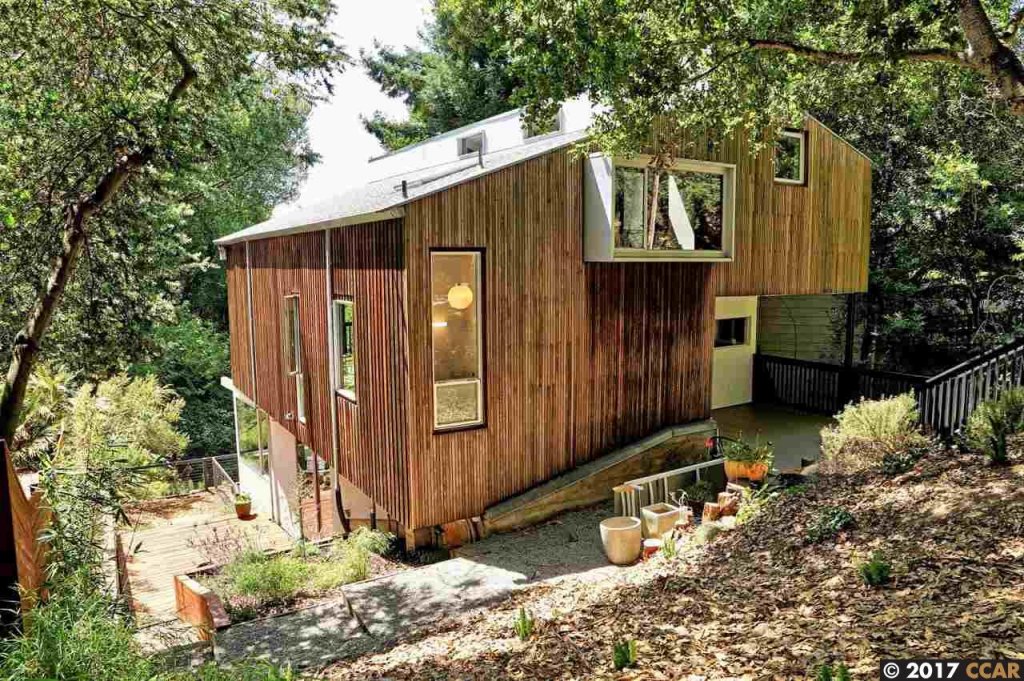
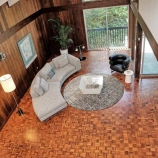
Looking at 1336 Campus Drive, which was built in 1968, we might assume it’s an example of a well preserved mid-century modern home. But what we’re looking at in this case is actually an extensive remodel, the work of award winning architect Douglas Burnham of Envelope Architecture and Design. The four bed, two and a half bath Berkeley home just listed for $1.325 million. 

Respect for the original

So organic is this remodel that the home seems like a time-capsule. But in fact, the changes Burnham made are substantial. “We loved the bones of the house, and we wanted to work with them and respect them, but we made some dramatic changes.”

When work began on this renovation, the house itself was in major disrepair. The clients, a museum curator and her family, wanted to rehabilitate the entire structure, including the revitalization of the exterior facade and the addition of modern details and amenities. The resulting renovation re-interpreted the two-level ‘hippie house’ into a three-level modern japanesque tree house.

Major changes

As part of the renovation,  the 1000-square-foot lower level—including bedrooms, a family room and a large shared bath/steam/sauna room—was added.

Also, the current facade pictured here is not original. “The entire façade was re-skinned with vertical cedar on a new stucco-concrete base. A series of metallic, galvalume-clad boxes project through the wood façade, creating openings to link the interior with the house’s lush forested surroundings,” said Burnham.

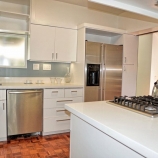
The kitchen, then orange, they left alone, because its mid-century design fit with the aesthetic of their renovation project.

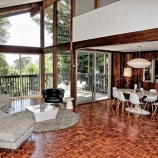
The current furnishings also fit perfectly to complete the time capsule effect.

All total, the home is over 3,000 square feet over three levels, much of it wood or glass. The latter material lets the sylvan setting become part of the home– a blending of outside and inside, and a hallmark of mid-century modern design.

History

The home last sold in 2015 for $1.240 million; now it’s listed at $1.325 million. But if you love 1336 Campus Drive (and it’s kind of hard not to), you should know that this Berkeley neighborhood is a hot one in terms of popular real estate. According to Estately, “81 percent of nearby similar homes sold for over asking price. Similar homes that sold in bidding wars went $220k above asking price on average, but some went as high as $810k over asking price.”

So what price will this incredible home ultimately fetch?

Anna Marie Erwert writes from both the renter and new buyer perspective, having (finally) achieved both statuses. She focuses on national real estate trends, specializing in the San Francisco Bay Area and Pacific Northwest. Follow Anna on Twitter: @AnnaMarieErwert


Article source: http://blog.sfgate.com/ontheblock/2017/08/21/mid-century-modern-time-capsule-in-berkeley-is-actually-an-incredible-remodel/

Posted in SF Bay Area News | Tagged | Leave a comment

$3 toll hike plan has Bay Area politicos dueling for dollars

“We are talking about an extra $700 a year,” Orinda Vice Mayor Amy Worth said of her suburban constituents.“These are working people who use the bridges to get to their jobs.”


Worth, who as a member of the Metropolitan Transportation Commission has a say in how transit dollars are allocated, has some prominent company in questioning how the proposed ballot measure is being put together. State Sen. Steve Glazer, an Orinda Democrat, and GOP Assemblywoman Catharine Baker of San Ramon say BART in particular needs to be well policed if it’s going to be trusted with millions of additional toll dollars.

“The current proposal falls well short,” said Glazer, who has been on a one-man crusade against BART ever since a pair of 2013 strikes at the transit agency made life miserable for riders in Orinda and everywhere else in the East Bay.

If approved by voters, the toll hike on the Bay Area’s seven state-run bridges — every cross-bay span but the Golden Gate — would raise $125 million a year for projects intended to ease traffic congestion.

More by Matier Ross

The proposal is being put together by Bay Area legislators, with state Sen. Jim Beall, D-San Jose, at the helm. Supporters of the toll increase say everyone will benefit from the plan, but Worth and other East Bay politicos say drivers from Alameda, Contra Costa and Solano counties — who use the bridges most often — are getting the short end of the deal.

The officials note that, while nearly two-thirds of toll payers come from the East Bay, they are in line to get only half the money being outlined in the spending plan.

And a big chunk of the overall cash would be earmarked for projects that would do little or nothing to directly ease bridge congestion like $400 million to help extend BART to San Jose and $350 million to run Caltrain underground into the heart of downtown San Francisco.

Beall conceded that Santa Clara County drivers would pay a little and get a lot. But he said that’s part of the political equation needed to pass the measure, which must win collective majority approval from the nine Bay Area counties.

“You have to give people a reason to vote,” Beall said.

He added that East Bay critics “don’t need to be attacking projects in my area — why not just tell us what projects are important to your area?”

That’s just what they did last week, bringing in a $500 million wish list of projects for Alameda and Contra Costa counties. It includes millions to improve the Interstate 80-San Pablo Dam Road corridor and $100 million to smooth drivers’ ride on the westbound Interstate 580 approach to the Richmond-San Rafael Bridge.

“If that happens, then we would not oppose the measure,” said Contra Costa County Supervisor Karen Mitchoff, who has raised objections to the plan as it stands.

Whether Glazer and Baker would come on board remains to be seen.

Beall said lawmakers have about two weeks to reach a deal if the measure is to make the ballot next year. Whatever eventually lands there probably has a decent chance of passing, regardless of whether the East Bay officials endorse it.

Just look at the math. On average, 378,000 Bay Area drivers a day cross the state-run bridges — compared with 3.7 million voters in the nine counties who would benefit from their extra toll dollars.

Alley oops: Presidio Terrace isn’t the only private San Francisco street that has been snapped up in a tax default sale — there was another road sold in 2015.

But unlike exclusive Presidio Terrace, whose homeowners are clamoring to get their street back, no one seems to want this one.

There are no street signs on the two-block alley, in an upscale part of the Richmond District near the southwest corner of the Presidio. It runs parallel to Lake Street and largely provides garage access to two dozen multimillion-dollar homes between 22nd and 24th avenues.

The company that developed the homes went belly up in 1922, which resulted in a long string of unpaid taxes on the alley. Finally, the San Francisco tax collector put it up for auction, and a New York real estate investor snagged it, sight unseen, in an online auction for about $5,000.

The investor then listed the street for $35,000, but finding any takers has been next to impossible because the homeowners have easement rights.

“You can’t build on it. You have to pay taxes, insurance and any other necessary items to maintain it,” local agent Fred Glick, who declined to identify his client, wrote in his pitch to sell the street. “But … you can impress your friends that you own real estate in the hottest market in California, beautiful San Francisco.”

And if that doesn’t convince you, Glick is also pitching the property as a tax break for anyone wishing to travel to San Francisco “to come and check on your investment.”

It’s not the first time Glick has worked a tough sale.

“I also had a warehouse back East with dead bodies in it,” he told us. “But I’m not allowed to say any more.”

San Francisco Chronicle columnists Phillip Matier and Andrew Ross appear Sundays, Mondays and Wednesdays. Matier can be seen on the KPIX-TV morning and evening news. He can also be heard on KCBS radio Monday through Friday at 7:50 a.m. and 5:50 p.m. Got a tip? Call (415) 777-8815, or email matierandross@sfchronicle.com. Twitter: @matierandross

Article source: http://www.sfchronicle.com/bayarea/matier-ross/article/3-toll-hike-plan-has-Bay-Area-politicos-dueling-11943800.php

Posted in SF Bay Area News | Tagged | Leave a comment