White nationalism on rise in California as Bay Area girds for rallies next weekend

OAKDALE — As the Central Valley’s flatlands give way to the rolling hills of California horse country, this quiet city that calls itself “the Cowboy Capital of the World” and features weekly rodeos seems but a blip on Highway 120, halfway between San Francisco and Yosemite National Park.

But Oakdale, a city of about 22,000 people in Stanislaus County, is facing a new and frightening renown: A few miles from downtown, Nathan Damigo, one of the most prominent new white nationalist leaders in America, runs a group that helped organize last weekend’s bloody rally in Charlottesville, Virginia.


From a five-acre compound on a winding road along the Stanislaus River, Damigo, a 31-year-old former Marine and ex-con, has launched Identity Evropa, which experts say is a growing hate group recruiting young people and college students. He also attends California State University, Stanislaus, in nearby Turlock, where students say he’s agitated on racial issues.

Ultra-blue California may seem to be the last place you’d find right-wing extremist group’s like Damigo’s. But experts say the Golden State is becoming a center of white nationalist activism, with more active hate groups than any other state.

“This is not getting better. It is getting worse,” said Brian Levin, a San Bernardino State University professor who studies extremist groups. “So many people are amped up. They are now emboldened.”

Oakdale residents interviewed this past week said they knew little about Damigo, who attended Liberty Baptist High School in San Jose, but they didn’t express surprise that the white nationalist movement had a presence in Oakdale, where Donald Trump won all five of the city’s precincts in November.

“There’s always been a lot of racial tension here,” mostly between Latinos and whites, said Clay Blakeman, 29, who grew up in the neighboring town of Ceres and belonged to a skinhead gang as a youth. Far-right views are common in the Oakdale area, he said.

“You used to see a ton of Confederate flags around here,” Blakeman said at a farmer’s market Wednesday night during a visit from San Diego, where he now lives. “This is a center for white boys.”

At Stanislaus State, biology major Ebone Qualls, 20, had a stern message for her fellow student: Stay away.

“He shouldn’t be allowed to go to school, especially at a diverse campus like this,” she said. “They are trying to start a race war. It makes me feel very unsafe.”

Not since Alabama Gov. George Wallace ran for president in 1968 have white supremacist groups surged as they have under President Donald Trump, Levin said.

Overall, hate crimes in California were up 14.2 percent in California’s nine largest cities in 2016, according to a report prepared by Levin, who has also seen a troubling trend in data from the first two months of this year, the latest data available. In San Jose, there were five hate crimes in January and February compared with 19 for all of 2016.

“Trump started it,” Levin said. “There were none of these white nationalist mega-rallies” before he announced his campaign for president in 2015. “Charlottesville was the biggest we’ve seen in decades.”

The White House did not respond to a request for comment.

Now, planned rallies in Berkeley and San Francisco next weekend threaten to attract hundreds of right-wing agitators to the region. They have local officials worried about another eruption of violence, following the death of 32-year-old Heather Heyer in Charlottesville. Heyer died when a white nationalist allegedly drove his car into a crowd of counter-protesters.

Predicting that violence will occur at the upcoming rally in Berkeley, where a similar gathering turned bloody in April, “is like predicting people are going to smoke weed at a Grateful Dead show,” Levin said.

White supremacist groups target liberal cities like Berkeley and San Francisco for protests and rallies because they want to attract opposition and spark more upheaval, said Joanna Mendelson, an Anti-Defamation League researcher in Los Angeles who studies right-wing groups. “These locations are lightning rods for their extremist views,” she said.

For decades, most white nationalists in California had fit into a “thuggish” model, sporting tattoos and focusing on petty street crime, Mendelson said. But today’s typical white supremacist “is essentially a repackaged, three-piece-suit-wearing racist who espouses the same hateful beliefs but with a seemingly more palatable veneer,” she said.

Damigo is one of the new generation of “alt-right” leaders who fit that model. But the slick image doesn’t mask his penchant for violence. At an April rally in Berkeley that quickly turned bloody, Damigo punched a woman in the face.

He joined the Marines at 18 and served in Iraq. He saw friends die, he told KQED radio earlier this year. After getting home, he suffered from post-traumatic stress disorder, which he blamed for his decision to rob a taxi driver at gunpoint, claiming he mistook the man for an Iraqi. Damigo spent a year in jail and four years in prison, where he started reading books by former KKK leader David Duke.

Frances Lodge, Damigo’s 75-year-old grandmother, said in a phone interview from her home in Maine that Damigo “came home from his second tour of duty in Iraq very much changed” and transformed even more after his time in prison.

“It’s very difficult,” she said. “The white supremacy movement is not something we could ever approve of — but he’s still the same good kid that I remember.”

Identity Evropa has distinguished itself from other white nationalist groups by focusing on college campus recruitment and trying to put an educated spin on the ideology. Damigo bans his members from getting tattoos on their face or neck, reported KQED, which has conducted extensive interviews with him. “They look at (college students) as their lifeblood,” Mendelson said.

On Thursday morning, Damigo paced back and forth in the driveway of his family’s compound in Oakdale, located just outside the city limits.

“I don’t have any comment,” he snapped across a locked gate as several large dogs barked nearby.

Dressed in blue shorts and a white shirt with visible tattoos on his legs, he walked back up the driveway toward a large red A-frame house, ignoring a reporter’s question about whether he felt responsible for Heyer’s death in Charlottesville.

From his Virginia hotel room after the violence, Damigo made a broadcast on the live video app Periscope. “This was a huge victory for us,” he said. “This is uniting us in a way I don’t think we ever could have been united before. We are not going to stop protesting the replacement of our people, our heritage and our culture.”

Bay Area law enforcement authorities plan to turn out in force to prevent violence at next weekend’s rallies. The first is set to be held at Crissy Field in San Francisco on Saturday and a second in Berkeley’s Martin Luther King Jr. Civic Center Park on Sunday. Police and local elected officials are struggling to respond and balance free speech rights while avoiding eruptions.

Berkeley Mayor Jesse Arreguín said this past week that the city hasn’t received any request for a permit from organizers of the “No to Marxism in America” rally. “This rally, and its hateful rhetoric, is not welcome in our city,” Arreguín said in a statement.

In San Francisco, the Aug. 26 rally — organized by a group called Patriot Prayer — is planned within Golden Gate National Recreation Area and has already received a permit from the National Park Service. But after a coalition of elected officials — including House Minority Leader Nancy Pelosi, Sen. Dianne Feinstein and San Francisco Mayor Ed Lee — urged the parks agency to reconsider, the superintendent of the park said she would review the permit and announce a decision sometime this week.

“I am deeply alarmed by the hateful and dangerous nature of the event, its timing so soon after the horrors in Charlottesville, and the serious questions over whether the National Park Service is at all equipped to ensure public safety during a white supremacist rally,” Pelosi said in a statement.

But Joey Gibson, the founder of Patriot Prayer and the organizer of the San Francisco rally, said in an interview that his group isn’t white nationalist — and he isn’t even white.

“We want to spread a good message of love and peace,” said Gibson, who is part Japanese.  “We’re not going to let white supremacists or Nazis or the Klan in.”

Gibson, a 33-year-old real estate investor and Trump supporter in Vancouver, Washington, said he wasn’t political at all until he watched the violent aftermath of Trump’s June 2016 rally in San Jose, after which Trump opponents attacked rallygoers.

“That day changed my life. That’s when I realized that our freedom is under attack,” Gibson said. “We have a poison culture. In these intolerant liberal cities, people are afraid to say what they believe in.”

Since then, he’s been organizing rallies up and down the West Coast. He admits that his rallies have attracted white nationalists, but said he denounces their ideology.

Whatever National Park Service officials decide on a permit, Gibson said, his rally is happening. “We’ll be coming down to San Francisco no matter what,” he said.

He said he is worried that violence will erupt at the rally, which he expects to attract about 500 supporters and “a few thousand” people protesting the rally. He said Pelosi’s statement painting his group as white nationalist increased the chance of violence by inciting counter-protesters.

People working to oppose white nationalist groups are divided on their best course of action. Some believe that a strong, vocal response to the protests is best — while others say counter-protesters should stay home, in part to avoid violence and not give white supremacists the attention and fireworks they’re looking for.

Arreguín encouraged Berkeley residents to avoid the park on the day of the rally and not to counter-protest. “The best way to silence the white nationalists is by turning your back on their message,” he said.

But others say a peaceful response is important and that white supremacist messages shouldn’t go unanswered.

“We will have people out there to show our opposition to that kind of thinking,” said Mansour Id-Deen, president of the Berkeley’s NAACP chapter. “We’re not going to tolerate that kind of divisiveness these people bring into our community.”

Article source: http://www.mercurynews.com/2017/08/19/white-nationalism-on-rise-in-california-as-bay-area-girds-for-rallies-next-weekend/
Posted in SF Bay Area News | Tagged | Leave a comment

Rob Jordan captures the magic of Bay Area real estate

http://www.sfgate.com/news/article/Rob-Jordan-captures-the-magic-of-Bay-Area-real-11943007.php

  • 71b8b 920x920 Rob Jordan captures the magic of Bay Area real estate

Caption

Close


Rob Jordan is relentless when it comes to improving himself and his skills.

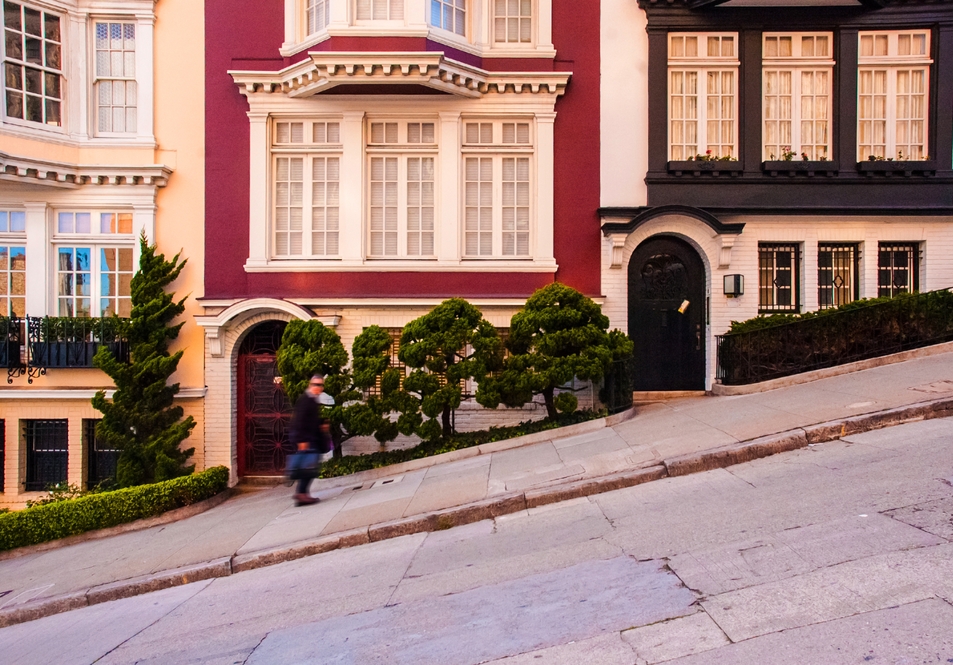
One of six siblings, Jordan grew up in Omaha, Neb., and became interested in photography and architecture at a young age. He thumbed through pages of Architectural Digest and marveled at the images. Trained as a graphic designer, Jordan always maintained an interest in photography. His career began serendipitously when a client in Nebraska needed photographs of a home. Jordan saw an opportunity and persuaded the Realtor to let him shoot the property.

She liked his work, and the agent began hiring him to photograph other listings. It wasn’t long before word of mouth spread and Jordan spent more time photographing and less time with graphic design.

Fast-forward a couple of years to 2011, and Jordan was looking for a change of pace. He moved to San Francisco at the urging of his sister, who sings in the San Francisco Opera Chorus. Jordan lived with her for six months as he set up his photography enterprise. Since then, his business has progressed to include dozens of clients for whom he shoots scores of properties.

In this interview with SFIsHomes, Jordan talks about technology, techniques and the time his photographs made a client weep.

Q: How do photography techniques differ when shooting for a Realtor and shooting for an architect or stager?

A: For Realtors, I’ll shoot across a room diagonally, corner to corner to show the space. You want to give the viewer a sense that they are standing in the room, so the techniques are aimed at making the photo feel immersive. The focal point will change depending on the angle and features of the room. It’s important to show views through the windows, to highlight a fireplace or kitchen appliances. I try to produce photos that are evenly lit and realistically portray a space in its best light.

If I’m shooting for designers or stagers, I compose shots to highlight the furniture and decor. Designers and stagers artfully combine colors, shapes, textures and finishes to turn a room into a scene, to create a specific feeling. So instead of shooting wide-angle photos, I use close-ups to let viewers see the design elements coming together.

For architects, I want to show the lines and design of the house. So I use more centered, straight-on angles for photos, which can create a more iconic image. Ultimately, for each client, I want to provide compelling photography.

Q: Why did you want to move to the Bay Area?

A: I came out here not only for a change of pace, but to grow and search for more out of myself. One of the things I love about San Francisco and the Bay Area is that if you want to be here, you have to deliver value and hustle. You have to constantly challenge yourself. One thing I really respect about people around the bay is that people are chasing their dreams.

Q: What’s your favorite place in the Bay Area to photograph?

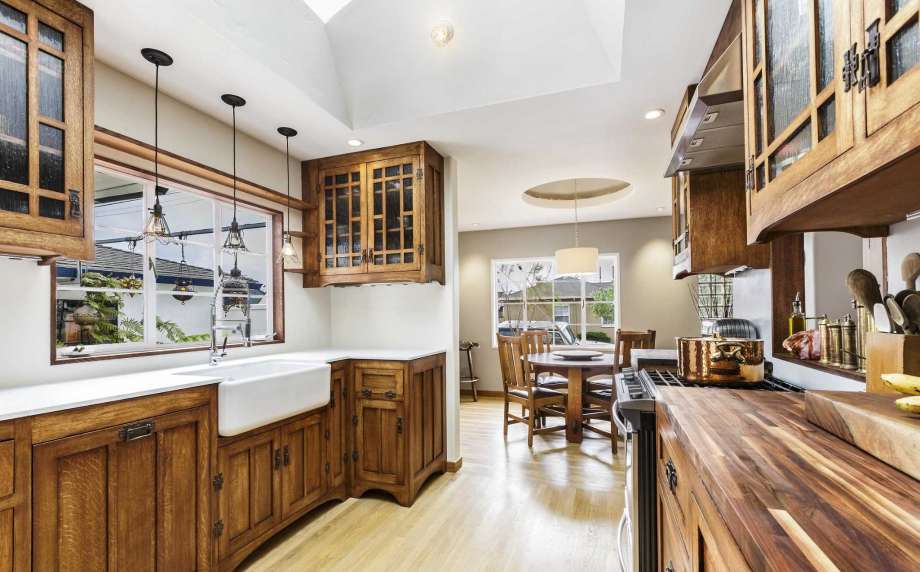
A: I do most of my work in Marin and Tiburon in particular. But I love the energy and bustle of San Francisco and the variety of building styles and neighborhoods. To get out of the city and go to Marin, it feels like a working vacation. One of my favorite places I shot was actually in Richmond of all places. It was a place where the owner/seller is an artist and a guy who built his own kitchen in custom metalwork and woodwork.

Q: What’s the most rewarding part of the job?

A: One of my favorite photo shoots was a house in Richmond that the owner remodeled himself. He thought he’d be living there for a while, but then life changed his plans. The highlight of the house is the kitchen, which has a beautiful combination of materials and great design overall. The owner did the design and build himself as that was his profession. The craftsmanship is gorgeous and, of course, I wanted to give him my best effort in portraying his artistry. During the shoot, I showed him the kitchen photos on my camera’s view screen and he got very emotional. He had never seen his work photographed this way, and he was amazed somebody cared enough to do it right.

Experiences like that client in Richmond are my favorite part of the job, and I love getting to meet different people. There’s lots of Realtors, designers and others whom I have a mutually beneficial relationship with. I’m now friends with quite a few of my clients ,and we talk outside real estate. I appreciate how it goes outside the business aspect.

Q: What’s the most important technological innovation in your line of work?

A: Digital photography. No doubt. If it was still necessary to use film and develop in a dark room first, I don’t know if I’d want to be doing photography. Editing software like Photoshop is a big help, but the digital photography is the most crucial innovation. It allows us to see photographs immediately. I can show them to my clients to make sure they like what they see and select photos for final editing. The immediate feedback is so important.

Q: What would you do if not photography?

A: People have suggested stand-up comedy or acting. My family members have a variety of artistic skills, and that has helped shape me. My mom and sisters are singers and musicians, one brother is a writer, and my father was a newscaster and photographer. All of them have been very supportive of my goals, and I’m so grateful to them.

Q: What’s next for you?

A: I’m trying to create my own imagery so I can do some gallery shows. I just returned from two months in Europe, where I visited nine countries. Besides immersing myself in different cultures, I went to broaden my work, to find beauty and celebrate it through photos. I mostly focused on depicting the architecture and charm of buildings and streets of Paris, London, Amsterdam, etc. I had some ideas about where I wanted to go, but there were several times I surprised myself by spending an hour photographing just a street corner, hidden alley or modest building. I guess you could say I’m looking to get out more to sharpen my creative vision and find new ways to contribute.

Details

Rob J. Photos: (415) 340-1111, www.robjphotos.com

Article source: http://www.sfgate.com/news/article/Rob-Jordan-captures-the-magic-of-Bay-Area-real-11943007.php

Posted in SF Bay Area News | Tagged | Leave a comment

‘Epic’ impact of Google’s downtown San Jose plans

Mike Kim grew up in San Jose and can deftly describe the transformation of the city’s downtown — its gradual, and at times painful, progress toward becoming an urban destination.

Planners and developers have been waiting for the day when there are enough feet in the street to create a big city vibe in the downtown core.

That day may be upon us now that plans are on the table to remake downtown San Jose into a massive, transit-centered Google village with up to 20,000 new jobs. Separately, Adobe Systems has announced its own expansion plans to bring 3,000 more workers downtown.

We turned to Kim to discuss the “sheer magnitude,” as he put it, of these proposed efforts.

As chief investment officer for Simeon Properties, Kim has skin in the game. Simeon developed the 21-story Centerra luxury apartment complex, which opened downtown last year. It plans to break ground by next spring on its 20-story Post Street Tower, bringing more luxury apartments to downtown. And Simeon continues to assess other development possibilities as Google advances with its plans.

Those plans “will forever change the trajectory of the city,” Kim said.

This interview has been edited for length and clarity.

Q: What’s your take on the Google proposal and its impact down the line?

A: It’s very difficult to wrap your head around the fact that in downtown San Jose — where the existing office stock is about 5 million square feet — Google is now proposing to build an additional 7 million to 8 million square feet. It is a game changer of epic proportions.

In real estate, the market makers are governments, capital markets and major employers. Employers such as Google make market opportunity because the instant they arrive and hire, that creates demand, and suddenly you’ve got to have real estate to live, work and play in. Look at the transformation in the Mid-Market district in San Francisco when Twitter moved in, or the Uber news in Oakland — and that’s only a fraction of what Google is proposing in San Jose. This Google news in San Jose is so big that it eclipses even the Adobe news, which is enormous — the addition of 717,000 square feet and 3,000 employees.

90534 sjm l svchat 0814 6 Epic impact of Googles downtown San Jose plans
Mike Kim meets with business manager Hope Reed at Centerra, a luxury apartment complex developed by Simeon Properties in downtown San Jose. (Patrick Tehan/Bay Area News Group) 

Q: What else do you see coming?

A: The strongest drivers of real estate are jobs and wage growth. Google is coming, Adobe is expanding, Apple is coming to north San Jose, Amazon is arriving – so locally, you have a pretty robust growth in jobs and income. This soon-to-arrive worker base — these are the same workers who created the massive housing shortage in SOMA (in San Francisco) and drove up rents and prices there. The same thing is going to happen in San Jose, but the impact will be more dramatic. Because in SOMA, it was already a fully built environment; it’s not like you could drop in 10 million square feet. But in San Jose, it can accommodate millions of square feet of new product, so the effect is going to be tremendous. And that same demographic that drove up prices across the board in San Francisco, whether in office, rent or retail, is going to do it again in San Jose.

Q: How quickly do all these changes happen?

A: If you drop 5,000 new workers who are well paid onto downtown San Jose, that creates instant demand for housing, office space and retail. But new real estate lags behind the hiring pace, because the development process is a lengthy and cumbersome process. So until supply can come online, the demand’s going to be ramrod straight, and there’s going to be very little to satisfy that demand. Which results in a rapid rise in prices in rent in the existing stock until the supply can catch up with the demand.

Q: I’m not hearing much about addressing the issue of affordability.

A: One of the best ways to mitigate the affordability issue is to have a robust housing supply across the income spectrum. Unfortunately the general plans for Silicon Valley cities are really job-centric, not housing-centric. Everybody’s still looking to have more jobs in their communities than housing; nobody wants to be the bedroom community for Mountain View or Palo Alto.

Q: Cities don’t necessarily want a lot more housing, because it strains services.

A: You have to pay for parks, schools. That’s the conundrum and the difficulty of this debate. The burden on the city’s general fund to service more residents is a challenge.

Q: But again, what’s the solution for “regular people” who already can’t afford to live in San Jose and the region, generally?

A: One of the reasons gentrification happens is because people who can afford to pay more don’t have any places to go, so they push out people in older neighborhoods. So the entire housing spectrum needs to be filled, but if you don’t supply for the people at the upper income, they’re inevitably going to push out people at the next tier down, and in turn they push out the following tier and so on.

Q: I’m not seeing much “mitigation” of the problem here. There are so many jobs being created at the top of the food chain.

A: Yes, where we are in the market cycle, excess demand is being created through the hiring by these large companies, and the supply is lagging. That’s true, but there will be a down cycle where the demand drivers — new jobs — will subside. And that will afford some price relief.


Mike Kim profile

Age: 48.

Grew up: San Jose.

Place of residence: Lafayette.

Positions: Chief investment officer, Simeon Properties; serves as a trustee for the Graduate Theological Union in Berkeley.

Previous jobs: Director of acquisitions, BRE Properties (now Essex), 2006-2008, San Francisco; vice president of development, Pulte Urban Group, 2000-2006, Pleasanton; naval officer, U.S. Navy, 1994-2000.

Education: United States Naval Academy, B.S. political science with concentration in general engineering, 1994; University of Southern California, master’s in public policy and urban planning, 2005.

Family: He lives with wife Sara and their seven children (one daughter and six sons).


5 Facts About Mike Kim

1. His first job was as a newspaper delivery boy for the San Jose Mercury News: “Old-school style, on a bike at the crack of dawn. At the peak of my game, I could fling the Sunday paper from the opposite side of the street and land it center on a tiny porch.”

2. While in the U.S. Navy, he “visited over 30 countries across five continents, captured pirates on the high seas, swam across the equator, scuba-dived all the major oceans and seas of the world, almost crashed into an iceberg in the North Atlantic, and logged enough nautical miles at sea to circumnavigate the globe four times.”

3. Best way to relax and recharge: “Sailing alone on the San Francisco Bay, one of the most scenic and challenging sailing conditions anywhere in the world.”

4. Personal hero: His wife Sara, who “does the lion’s share of the work in raising our seven kids, runs the family ranch in Lafayette, and founded a thriving co-op school.”

5. Favorite colors: Black, “because it comprises and absorbs all colors,” and green, “because there are near infinite shades of green observable in nature.”


Article source: http://www.mercurynews.com/2017/08/14/real-estate-a-developer-describes-the-epic-impact-of-googles-plans-for-downtown-san-jose/

Posted in SF Bay Area News | Tagged | Leave a comment

Study: The income needed to buy a home in the Bay Area has doubled in five years

ab0a3 920x1240 Study: The income needed to buy a home in the Bay Area has doubled in five years

The most arresting data point in a new report from the California Association of Realtors reveals that the income needed to buy a median-priced single-family home in the Bay Area has nearly doubled in five years.

Back in 2012, a minimum annual income of $90,370 was needed to purchase a Bay Area home at the median price of $447,970. Now, a home buyer needs to be bringing in $179,390 to afford a mean-priced house at $895,000, the report looking at second-quarter 2017 home sales data concludes.

This reality of skyrocketing real estate prices might seem rather unfair to those of us who haven’t seen our salaries shoot through the roof. If you’re trying to save for a home, it can be difficult to keep up with the rising prices unless you’re receiving significant raises at work.

Before you house-hunt, you’ve got to answer two questions. How much house can you afford, and how much house should you actually buy?


Media: Money Talks News

And even if you do achieve that golden salary of $179,390, don’t expect it to get you anything within San Francisco city limits where the median-priced home costs a staggering $1.45 million and requires a salary of $290,630.

 In fact, according to the report, only 12 percent of buyers in the city can actually afford a median-priced single-family home.

The outlook is also rather grim in San Mateo (14 percent ), Marin (17 percent), Santa Clara (17 percent) and Alameda (19 percent) counties, all among the least affordable spots in the Bay Area.

Solano County was the most affordable with 44 percent of buyers being able to purchase a median-priced home of $412,000 with a salary of $82,580. Here 44 percent of buyers can afford a home. Sonoma and Napa ranked the second most affordable with 25 percent of home buyers able to buy a home.


Article source: http://www.sfgate.com/realestate/article/Bay-Area-real-estate-income-required-buy-home-SF-11821004.php

Posted in SF Bay Area News | Tagged | Leave a comment

Bay Area buyers need double the income to buy a home from five years ago

Blaming a “severe lack of homes for sale and high demand,” the California Association of Realtors (CAR) claims in a report released last week that it now takes almost double the income to qualify to buy a home in California as it did in 2012.

The situation is even worse in the Bay Area.

CAR now recommends “a minimum annual income of $110,890” (before taxes) in order to purchase a single-family home in California selling for the median price of $533,260, based on a $2,770/month mortgage payment after 20 percent down and an interest rate of just over four percent.

That is if buyers stick to the time-honored (but for many unreachable goal) of only paying 30 percent of monthly income to housing. In the Bay Area, the association recommends bringing in $179,390/year, which would come out to nearly $15,000/month.


df38d PixHound Bay Area buyers need double the income to buy a home from five years ago

Photo by

To put that amazing sum in perspective, computer programmers in the Bay Area are averaging only $106,710/year, according to the Occupational Employment and Wage Estimates from the Bureau of Labor Statistics from May 2016.

Software developers are bringing in about $133,500/year. Cops somewhere around $105,540. And teachers $43,340.

Even more startling, five years ago the recommended income was $90,370. A pretty heavy sum in and of itself—median income nationwide was just over $51,000 that year according the US census—but just about half what it takes today.

These figure depend on CAR’s estimates about median housing prices, of course. The report pegs the average home in San Francisco at $1.45 million, for example.

Earlier in the summer, Paragon Real Estate Group estimated the same price between $1.4 million and $1.5 million, depending on the month. Sites like Trulia and Redfin put it at $1.19 million and $2.24 million respectively, although those aren’t scientific samplings.


c7c9e Burim Sirisanyalak Bay Area buyers need double the income to buy a home from five years ago

Photo by

Article source: https://sf.curbed.com/2017/8/14/16145314/income-buy-house-san-francisco-needed

Posted in SF Bay Area News | Tagged | Leave a comment