A new report from the CoreLogic real estate information service shows that September home prices were up 7 percent year-over-year across the nation.
In much of the Bay Area, the year-over-year increases were still higher: 11.7 percent in the San Jose-Sunnyvale-Santa Clara metro and 7.2 percent in the Oakland-Hayward-Berkeley metro. Trailing the national rate slightly was the San Francisco-Redwood City-South San Francisco metro, where prices rose 6.4 percent.
Frank Nothaft, CoreLogic’s chief economist, attributed the brisk pace of appreciation across most U.S. markets to the “low-for-sale inventory that is holding back sales and pushing up prices.” In other words, the supply of available homes is scant, which incites competition among buyers and drives prices upward.
According to CoreLogic, nearly half of the nation’s 50 largest markets are overvalued. Those markets include the Las Vegas, Denver, Los Angeles, Miami, Washington, D.C., New York and Houston metros. (CoreLogic defines an overvalued market as one where “home prices are at least 10 percent higher than the long-term sustainable level.”)
Interestingly, CoreLogic describes all three Bay Area metros — San Jose, San Francisco and Oakland — as being “at value,” despite the region’s widely discussed affordability problems.
The report projects that national prices will continue to rise. It forecasts a 4.7 percent increase between September 2017 and September 2018.
“While demand and home price growth is in a sweet spot,” said Frank Martell, CoreLogic’s president and CEO, the over-valuation of markets “will become more of an issue if prices continue to rise next year as we anticipate.”
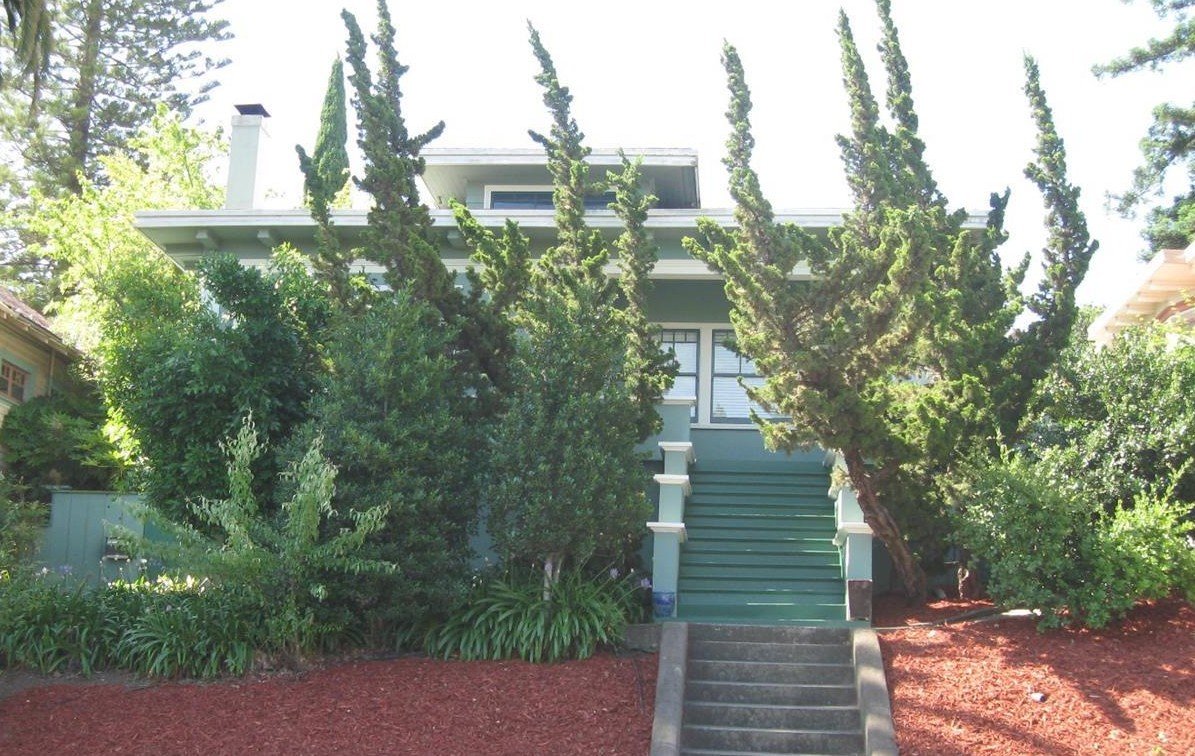
Photo: This 1,193-square-foot house in Vallejo, CA, recently sold for $410,500. (Courtesy of Skip Dodge/Kennon Realty)
“CAST is a proven model to address affordability—one of the biggest issues facing the Bay Area. In the most expensive US real estate market, CAST has created a solution adaptable to cities to ensure that the arts remain part of our community fabric. This innovative idea addresses financial equity issues by profoundly changing the dynamics,” said Jennifer Rainin, PhD, Rainin Foundation CEO. “We are continuing to invest in CAST, and invite other funders to join us, to help scale this bold solution that preserves our valued artists and cultural organizations.”
CAST is a first of its kind real estate holding company that serves the cultural sector. Launched in 2013 with a seed grant from the Rainin Foundation, this nonprofit’s earliest undertaking was securing permanent, affordable spaces for two San Francisco arts organizations with deep roots—The Luggage Store Gallery and CounterPulse. CAST’s collaborative approach has been essential to their continued growth and success. By working closely with real estate developers, city government, local arts commissions and other stakeholders, CAST helps arts nonprofits survive in a challenging real estate marketplace. Solutions include acquiring properties for lease/buy back by arts organizations, master leasing to sustain affordable rents, and building the capacity of nonprofits to help them gain a permanent asset without jeopardizing their core operations.
“In the midst of escalating real estate prices, CAST has forged key partnerships and raised the necessary capital to help stabilize spaces for Bay Area arts and cultural organizations,” said Moy Eng, CAST Executive Director. “Through training, funding, and ultimately permanent real estate solutions, we are ensuring that artists and arts organizations who are facing space challenges remain a vital part of our communities.”
With the initial $5 million grant from the Rainin Foundation in 2013, CAST took immediate and bold steps to provide real estate security for vital community arts organizations at risk. In 2016, the Rainin Foundation and William and Flora Hewlett Foundation awarded CAST an additional $1.3 million. CAST used this funding to start a capital fund to initiate an arts real estate acquisition program in Oakland and launch Keeping Space—Oakland, a pilot program that provides technical and financial assistance to arts groups.
“Our artists and cultural organizations are increasingly vulnerable to displacement due to Oakland’s rising real estate costs. As Oakland grows and changes, one of my key priorities is to keep Oakland’s creative voices as a significant and vital presence in our city,” said Oakland Mayor Libby Schaaf. “The partnership with CAST will help us provide long-term, affordable and safe spaces for Oakland’s arts organizations.”
About the Kenneth Rainin Foundation Kenneth Rainin Foundation is a family foundation that collaborates with creative thinkers in the Arts, Education and Health. At the Rainin Foundation, we believe in taking smart risks to achieve breakthroughs. We support visionary artists in the Bay Area, create opportunities for Oakland’s youngest learners, and fund researchers on the forefront of scientific discoveries. Since 2009, the Foundation has awarded over $30 million in funding to support artists and small to mid-size arts organizations in the Bay Area that are pushing the boundaries of creative expression. More information on the Rainin Arts Real Estate Strategy can be found at: krfoundation.org/artsrealestate.
An emerging group of local entrepreneurs is taking up arms against the sky-high cost of living in the Bay Area, hoping to end once and for all the housing crisis crippling the region.
These founders, intent on disrupting the housing market and bringing down costs, are stepping in as government officials and nonprofits struggle with the enormity of the problem. Some are launching startups focused on creating new housing units, while others are working to help people buy or rent.
It’s a potentially lucrative business opportunity, targeting a sector where experts agree change is sorely needed. In some places in the Bay Area, only one-quarter of potential first-time buyers can afford a median-priced home, according to Joint Venture Silicon Valley, which studies the area’s economy. It’s no better for renters: The median cost for an apartment is more than twice as high in San Francisco as in the rest of the country.
“It’s really exciting to the see the marketplace responding to the need,” said Rufus Jeffris, vice president of communications for the Bay Area Council.
It’s exciting for investors, too, who are touting real estate tech as Silicon Valley’s next hot trend. The past few years have seen an increase in housing-related startups, as founders rush to take advantage of a prime opportunity, said Tom Cole, managing partner of Palo Alto-based Hone Capital, which has funded at least five real estate tech startups since 2015.
“Real estate is an example of the type of thing that Hone Capital loves to find,” he said, “which is a huge, huge, huge industry that is rife with inefficiencies.”
San Francisco-based startup Landed, founded by two Stanford Business School alumni, is raising money to help teachers afford down payments on homes in their school districts. Starcity is creating new housing by buying and renovating abandoned buildings and converting them into long-term rental units. HomeSlice, founded by recent UC Berkeley grads, is building a platform where groups of people can purchase a home together — making the goal of home ownership more attainable. Oakland-based Roofstock, via an online marketplace, helps landlords buy and sell single-family rental homes without displacing tenants. And Haven Connect is trying to get more people into low-income, affordable housing by streamlining the onerous application process.
Troy and Maria Robinson unpack boxes as they settle into their new home, Sunday, October 29, 2017, in San Carlos, California. Maria, a school teacher, used the startup Landed that helps teachers qualify for Bay Area’s affordable housing. (Karl Mondon/ Bay Area News Group)
“There is a lot of will out there to try to figure this out,” said Landed co-founder Alex Lofton. “I think people should feel there’s reason to be hopeful as much as there is reason to continue to be alarmed about the issue.”
Fewer than 1 percent of homes for sale in San Francisco are affordable for someone making a typical teacher’s salary of $72,000, according to a report by real estate website Trulia. That’s a major problem to Lofton, who says his company’s ultimate goal is to keep local teachers from fleeing the area in search of cheaper housing.
“If they’re all pushed out,” he said, “there’s a question of who’s going to teach our kids, and what kind of communities we’re going to live in.”
Landed splits the down payment on a home with its teacher clients — the teacher typically pays 10 percent of the home’s value, and Landed puts in another 10 percent. That money comes from investors — private institutions, like foundations, which receive equity in the house in exchange for their contribution. When the teacher later sells the house, Landed’s investors get back the 10 percent they put in, plus 25 percent of any appreciation in the home’s value. So far the company, which received $5 million from the Chan Zuckerberg Initiative over the summer, has completed 16 home purchases in the Bay Area.
Landed helped get Maria Robinson, who teaches Spanish at Carlmont High School in Belmont, and her husband, Troy, an engineer, and their two kids out of a crowded, two-bedroom apartment and into a house. The couple makes close to $250,000 a year, enough to pay a mortgage, but they didn’t have the needed $200,000 cash on hand for a down payment on a typical home in the area.
“We wanted our own place,” Maria Robinson said. “We wanted to settle. We wanted to grow roots.”
They found a $1.1 million home in San Carlos, and with Landed contributing about $120,000 to the down payment, were able to move in Oct. 7. The 1,570 square-foot home, which has two bedrooms and a loft, wasn’t a bad deal for San Mateo County, where the median home price was $1.2 million in September, according to CoreLogic.
When they talk about their new house, the couple can’t help but get excited. It has a view of the entire Silicon Valley, Troy Robinson gushed. And it’s within walking distance of his wife’s school.
Meanwhile, Oakland-based Affordable Equity is re-imagining the landlord-tenant relationship. The six-month-old startup plans to offer its renters equity in the buildings it will buy. When Affordable Equity makes a windfall by selling property, the tenants can cash out too.
“There’s lots of wealth being created through gentrification, but if you’re a low-income renter, that’s extremely scary,” said founder Steven Taylor. “So this is a way to potentially build a boat so they can get in and have the rising tide lift their boat as well.”
Starcity is tackling the crisis from a different angle. The San Francisco-based startup buys defunct hotels, vacant commercial buildings and other unused properties, renovates them, obtains the proper city permits, and turns them into community housing, where residents have their own rooms but share common spaces. So far, the company has moved renters into two buildings in San Francisco and has another six under construction, including one expected to open in Oakland early next year.
There’s plenty of demand. The company has been in business for a year, and already has 1,800 potential renters on its waiting list.
An exterior view of one of Starcity’s properties at 650 Sacramento Street in San Francisco under renovation on Oct. 26, 2017. (Dai Sugano/Bay Area News Group)
UC Berkeley alum Anna Roumiantseva, 28, founded HomeSlice with two co-founders after the trio realized they had collectively spent about half a million dollars on rent over the past decade — and still couldn’t afford to own a home.
“We have a good education, we have good jobs, and we still can’t afford to buy,” she said. “So what does that mean for the majority of the population?”
Starting in mid-November, HomeSlice will help groups of potential homeowners navigate the hurdles and complications of collectively buying a home. HomeSlice’s website helps home buyersagree on details such as how the property will be maintained, how shares will be divided, and how decisions will be made, and then turns that information into a co-ownership agreement that can be made legally binding.
The company also helps connect clients with real estate agents and lenders, and plans to eventually roll out an online marketplace where users can buy and sell slices of homes.
“I think the notion of homeownership is going to change over the next couple years,” Roumiantseva said. “People are just fundamentally rethinking how they’re using assets, how they’re buying assets — getting more comfortable sharing.”
Startups taking on the affordable housing crisis
HomeSlice: This Berkeley-based startup makes it easier for groups of people to buy a home together. HomeSlice helps potential buyers draft a co-ownership agreement, and connects them with real estate agents and lenders.
The company plans to launch a beta test of the platform in mid-November. To learn more visit home-slice.io.
Landed: Launched in 2015 by two recent Stanford Business School grads, Landed helps Bay Area teachers afford a home in their school district. The startup connects a teacher with investors who contribute to their down payment and in return receive equity in the home. To learn more visit landed.com.
Roofstock: Oakland-based Roofstock runs an online platform where landlords can buy and sell properties in which tenants are already living. The unique business model prevents renters from getting displaced when a building changes hands.
So far the startup has sold about 1,000 homes in the Bay Area, and is operating in more than a dozen other markets around the country. To learn more visit roofstock.com.
Starcity: Starcity is tackling the Bay Area’s housing shortage by creating new rental units. The startup, launched about a year ago, buys vacant hotels, commercial buildings and other unused spaces, renovates them and converts them into communal housing. Renters have their own bedrooms, but share kitchens and other common areas. Starcity runs two buildings in San Francisco, and is developing another six. To learn more visit joinstarcity.com.
Haven Connect: This Berkeley-based startup, which launched its first pilot program in June 2016, streamlines the process of applying for affordable housing. Peoplecan apply online, quickly filling out paperwork for multiple properties at once. To learn more visit havenconnect.com.
Affordable Equity: Oakland-based Affordable Equity is pioneering a new type of landlord-tenant relationship. The startup, which is gearing up to buy single-family or small multi-unit, low-income buildings, will offer its renters equity in its properties. To learn more, or donate to help fund the project, visit chuffed.org/project/affordable-equity.
An emerging group of local entrepreneurs is taking up arms against the sky-high cost of living in the Bay Area, hoping to end once and for all the housing crisis crippling the region.
These founders, intent on disrupting the housing market and bringing down costs, are stepping in as government officials and nonprofits struggle with the enormity of the problem. Some are launching startups focused on creating new housing units, while others are working to help people buy or rent.
It’s a potentially lucrative business opportunity, targeting a sector where experts agree change is sorely needed. In some places in the Bay Area, only one-quarter of potential first-time buyers can afford a median-priced home, according to Joint Venture Silicon Valley, which studies the area’s economy. It’s no better for renters: The median cost for an apartment is more than twice as high in San Francisco as in the rest of the country.
“It’s really exciting to the see the marketplace responding to the need,” said Rufus Jeffris, vice president of communications for the Bay Area Council.
It’s exciting for investors, too, who are touting real estate tech as Silicon Valley’s next hot trend. The past few years have seen an increase in housing-related startups, as founders rush to take advantage of a prime opportunity, said Tom Cole, managing partner of Palo Alto-based Hone Capital, which has funded at least five real estate tech startups since 2015.
“Real estate is an example of the type of thing that Hone Capital loves to find,” he said, “which is a huge, huge, huge industry that is rife with inefficiencies.”
San Francisco-based startup Landed, founded by two Stanford Business School alumni, is raising money to help teachers afford down payments on homes in their school districts. Starcity is creating new housing by buying and renovating abandoned buildings and converting them into long-term rental units. HomeSlice, founded by recent UC Berkeley grads, is building a platform where groups of people can purchase a home together — making the goal of home ownership more attainable. Oakland-based Roofstock, via an online marketplace, helps landlords buy and sell occupied buildings without displacing tenants. And Haven Connect is trying to get more people into low-income, affordable housing by streamlining the onerous application process.
Troy and Maria Robinson unpack boxes as they settle into their new home, Sunday, October 29, 2017, in San Carlos, California. Maria, a school teacher, used the startup Landed that helps teachers qualify for Bay Area’s affordable housing. (Karl Mondon/ Bay Area News Group)
“There is a lot of will out there to try to figure this out,” said Landed co-founder Alex Lofton. “I think people should feel there’s reason to be hopeful as much as there is reason to continue to be alarmed about the issue.”
Fewer than 1 percent of homes for sale in San Francisco are affordable for someone making a typical teacher’s salary of $72,000, according to a report by real estate website Trulia. That’s a major problem to Lofton, who says his company’s ultimate goal is to keep local teachers from fleeing the area in search of cheaper housing.
“If they’re all pushed out,” he said, “there’s a question of who’s going to teach our kids, and what kind of communities we’re going to live in.”
Landed splits the down payment on a home with its teacher clients — the teacher typically pays 10 percent of the home’s value, and Landed puts in another 10 percent. That money comes from investors — mostly private individuals with connections to the local school districts, who receive equity in the house in exchange for their contribution. When the teacher later sells the house, Landed’s investors get back the 10 percent they put in, plus 25 percent of any appreciation in the home’s value. So far the company, which received $5 million from the Chan Zuckerberg Initiative over the summer, has completed 16 home purchases in the Bay Area.
Landed helped get Maria Robinson, who teaches Spanish at Carlmont High School in Belmont, and her husband, Troy, an engineer, and their two kids out of a crowded, two-bedroom apartment and into a house. The couple makes close to $250,000 a year, enough to pay a mortgage, but they didn’t have the needed $200,000 cash on hand for a down payment on a typical home in the area.
“We wanted our own place,” Maria Robinson said. “We wanted to settle. We wanted to grow roots.”
They found a $1.1 million home in San Carlos, and with Landed contributing about $120,000 to the down payment, were able to move in Oct. 7. The 1,570 square-foot home, which has two bedrooms and a loft, wasn’t a bad deal for San Mateo County, where the median home price was $1.2 million in September, according to CoreLogic.
When they talk about their new house, the couple can’t help but get excited. It has a view of the entire Silicon Valley, Troy Robinson gushed. And it’s within walking distance of his wife’s school.
Meanwhile, Oakland-based Affordable Equity is re-imagining the landlord-tenant relationship. The six-month-old startup plans to offer its renters equity in the buildings it will buy. When Affordable Equity makes a windfall by selling property, the tenants can cash out too.
“There’s lots of wealth being created through gentrification, but if you’re a low-income renter, that’s extremely scary,” said founder Steven Taylor. “So this is a way to potentially build a boat so they can get in and have the rising tide lift their boat as well.”
Starcity is tackling the crisis from a different angle. The San Francisco-based startup buys defunct hotels, vacant commercial buildings and other unused properties, renovates them, obtains the proper city permits, and turns them into community housing, where residents have their own rooms but share common spaces. So far, the company has moved renters into two buildings in San Francisco and has another six under construction, including one expected to open in Oakland early next year.
There’s plenty of demand. The company has been in business for a year, and already has 1,800 potential renters on its waiting list.
An exterior view of one of Starcity’s properties at 650 Sacramento Street in San Francisco under renovation on Oct. 26, 2017. (Dai Sugano/Bay Area News Group)
UC Berkeley alum Anna Roumiantseva, 28, founded HomeSlice with two co-founders after the trio realized they had collectively spent about half a million dollars on rent over the past decade — and still couldn’t afford to own a home.
“We have a good education, we have good jobs, and we still can’t afford to buy,” she said. “So what does that mean for the majority of the population?”
Starting in mid-November, HomeSlice will help groups of potential homeowners navigate the hurdles and complications of collectively buying a home. HomeSlice’s website helps home buyersagree on details such as how the property will be maintained, how shares will be divided, and how decisions will be made, and then turns that information into a co-ownership agreement that can be made legally binding.
The company also helps connect clients with real estate agents and lenders, and plans to eventually roll out an online marketplace where users can buy and sell slices of homes.
“I think the notion of homeownership is going to change over the next couple years,” Roumiantseva said. “People are just fundamentally rethinking how they’re using assets, how they’re buying assets — getting more comfortable sharing.”
Startups taking on the affordable housing crisis
HomeSlice: This Berkeley-based startup makes it easier for groups of people to buy a home together. HomeSlice helps potential buyers draft a co-ownership agreement, and connects them with real estate agents and lenders.
The company plans to launch a beta test of the platform in mid-November. To learn more visit home-slice.io.
Landed: Launched in 2015 by two recent Stanford Business School grads, Landed helps Bay Area teachers afford a home in their school district. The startup connects a teacher with investors who contribute to their down payment and in return receive equity in the home. To learn more visit landed.com.
Roofstock: Oakland-based Roofstock runs an online platform where landlords can buy and sell properties in which tenants are already living. The unique business model prevents renters from getting displaced when a building changes hands.
So far the startup has sold about 50 buildings in the Bay Area, and is operating in more than a dozen other markets around the country. To learn more visit roofstock.com.
Starcity: Starcity is tackling the Bay Area’s housing shortage by creating new rental units. The startup, launched about a year ago, buys vacant hotels, commercial buildings and other unused spaces, renovates them and converts them into communal housing. Renters have their own bedrooms, but share kitchens and other common areas. Starcity runs two buildings in San Francisco, and is developing another six. To learn more visit joinstarcity.com.
Haven Connect: This Berkeley-based startup, which launched its first pilot program in June 2016, streamlines the process of applying for affordable housing. Peoplecan apply online, quickly filling out paperwork for multiple properties at once. To learn more visit havenconnect.com.
Affordable Equity: Oakland-based Affordable Equity is pioneering a new type of landlord-tenant relationship. The startup, which is gearing up to buy single-family or small multi-unit, low-income buildings, will offer its renters equity in its properties. To learn more, or donate to help fund the project, visit chuffed.org/project/affordable-equity.
WASHINGTON – House Republican leaders on Thursday proposed legislation that would overhaul the U.S. tax code and jettison numerous tax breaks that Americans and businesses have used for years to limit their taxable income.
The release of the proposals launched into motion a frantic political effort that could impact almost every American. In a number of cases, the tax plan cuts back on tax benefits for families and individuals while expanding tax benefits for companies.
The Tax Cuts and Jobs Act would lower the corporate tax rate from 35 percent to 20 percent and collapse the seven tax brackets paid by families and individuals down to four. It could create giant new benefits for the wealthy, cutting business taxes, eliminating the estate tax, and ending the alternative minimum tax.
It would also jettison numerous tax breaks that Americans and businesses have used for years to limit their taxable income.
House Republicans are planning major changes to the U.S. tax system while looking to preserve current rules for retirement accounts popular with middle-class Americans and to retain a top income-tax rate for million-dollar earners. (Nov. 2)
It would cut in half the popular mortgage interest deduction used by millions of American homeowners, capping this tax deduction at new mortgages of $500,000 or less. Presently, Americans can deduct interest on mortgages of up to $1 million from their income.
This change could have a particularly big impact on high cost areas, such as San Francisco, New York, Boston, and the Washington D.C. area, and housing groups and lawmakers will likely try to defeat it. The bill would allow people to deduct their local property taxes from their taxable income, though this benefit would be capped at $10,000.
The bill’s true impact on the middle class will be difficult to immediately measure. The bill would create a new “Family Credit” and expand the child tax credit used by working families. The child tax credit would grow from $1,000 per child to $1,600 for each child.
The bill would nearly double the standard deduction that many Americans claim on their taxes, raising it from $12,700 to $24,000 per family. But this benefit would be partially offset by the personal exemption many Americans can claim, which can be large for families with multiple children.
Families would also no longer be able to deduct their state income taxes from their federal taxable income, another change that would have a particular impact on places like New Jersey and New York, where state taxes are higher than in other areas.
And Americans would no longer be able to deduct their medical expenses or property and casualty losses, according to a document outlining the plan.
The legislative fight over the tax bill has become the Trump administration’s biggest political goal, after failed attempts to repeal the Affordable Care Act. President Donald Trump wants the legislation to pass the House and the Senate by the end of the year, though they must resolve numerous differences.
The bill would add $1.5 trillion to the debt over 10 years, but Republicans believe the changes would trigger a surge in economic growth, higher wages, and job creation.
Other changes in the bill would be far reaching. It would, for example, make changes to college savings programs and have new requirements for tax-exempt organizations like churches and charities.