Republican tax plan would hit Bay Area home buyers hard

The deduction is heavily used in pricey cities like San Francisco, New York and Boston. Under current tax law, homeowners can deduct interest on mortgages of up to $1 million. But under the House plan unveiled Thursday, that cap would be reduced to $500,000.


San Francisco home buyers — where the median price was even higher at $1.1 million — would face particular difficulties in affording homes as a result.

If a buyer took out an $800,000 mortgage on a $1 million home under the current system, the interest on the entire mortgage would be deductible. At a 4.5 percent interest rate, the deductible interest on a 30-year mortgage would start out at roughly $4,000 a month. Under the new proposal, three-eighths of that payment — about $1,500 — would no longer be deductible.

More on taxes

“In parts of the country where home prices aren’t even at that price point, then it makes no difference whatsoever,” said Rick Turley, vice president and managing broker at Alain Pinel Realtors in San Francisco.

But this plan, he said, is aimed directly at coastal cities with pricey real estate.

The administration said the $1.51 trillion plan is an “important step toward providing massive tax relief for the American people.” Most Americans will not be affected by the proposed change because they have either already paid off their homes or have mortgages that are less than $500,000.

But, in the Bay Area, experts say the new plan would make the notoriously expensive and competitive housing market even less attractive for buyers.

According to a September report by Zillow, 99 percent of homes in the San Francisco metro area are worth enough money to make the mortgage interest deduction worth it. In Los Angeles, that number is 96 percent. In the St. Louis area, only 13 percent of homes are worth enough for the deduction. Around Pittsburgh, only 10 percent see a benefit.

Under the proposed tax bill, which includes an increase in the standard deduction, those percentages would drop significantly: 59 percent in San Francisco; 30 percent in Los Angeles; 1 percent in St. Louis; and less than 1 percent in Pittsburgh.

“Middle- and upper-middle-income people are going to be worse off,” said Ken Rosen, chair at UC Berkeley’s Fisher Center for Real Estate and Urban Economics, arguing that its backers are motivated by partisan concerns against heavily Democratic coastal cities. “This is a bait-and-switch plan. It is very anti-housing, it is revenge, and it is a big, big mistake.”

The National Association of Realtors refused to support the bill Thursday, saying that it threatens home values and will put homeownership out of reach for middle-class families.

In theory, the new tax code could deter buyers from overbidding for a home and therefore eventually bring prices down. But experts are pessimistic that would be the case in the Bay Area, where demand far outstrips supply.

Aaron Terrazas, a senior economist at Zillow, said that, in the short term, this lack of tax incentive may not change buyers’ behavior — but the effects will manifest in other ways.

“The reality is that when people go to buy a home, they are not exclusively thinking of the deduction,” he said. “They are not going to easily change where they live, but the effects will come out of consumer spending. They may have less savings or be less likely to buy a car.”

On Thursday, the Republican National Committee hailed the tax reform bill that “overhauls our nation’s outdated tax code.” The party organization said the bill would give families bigger paychecks, encourage small business growth and jump-start the economy.

But when it comes to housing in San Francisco, opinions on the bill are much bleaker.

“The rest of the country probably perceives our median purchase price (of $1.1 million) as a very luxurious home,” Turley said. “But that’s just our median home.”

Trisha Thadani is a San Francisco Chronicle staff writer. Email: tthadani@sfchronicle.com Twitter: @TrishaThadani

Article source: http://www.sfchronicle.com/business/article/New-challenges-for-Bay-Area-home-buyers-in-Trump-12327902.php

Posted in SF Bay Area News | Tagged | Leave a comment

Republican tax plan would hit Bay Area home buyers hard – San …

The deduction is heavily used in pricey cities like San Francisco, New York and Boston. Under current tax law, homeowners can deduct interest on mortgages of up to $1 million. But under the House plan unveiled Thursday, that cap would be reduced to $500,000.


San Francisco home buyers — where the median price was even higher at $1.1 million — would face particular difficulties in affording homes as a result.

If a buyer took out an $800,000 mortgage on a $1 million home under the current system, the interest on the entire mortgage would be deductible. At a 4.5 percent interest rate, the deductible interest on a 30-year mortgage would start out at roughly $4,000 a month. Under the new proposal, three-eighths of that payment — about $1,500 — would no longer be deductible.

More on taxes

“In parts of the country where home prices aren’t even at that price point, then it makes no difference whatsoever,” said Rick Turley, vice president and managing broker at Alain Pinel Realtors in San Francisco.

But this plan, he said, is aimed directly at coastal cities with pricey real estate.

The administration said the $1.51 trillion plan is an “important step toward providing massive tax relief for the American people.” Most Americans will not be affected by the proposed change because they have either already paid off their homes or have mortgages that are less than $500,000.

But, in the Bay Area, experts say the new plan would make the notoriously expensive and competitive housing market even less attractive for buyers.

According to a September report by Zillow, 99 percent of homes in the San Francisco metro area are worth enough money to make the mortgage interest deduction worth it. In Los Angeles, that number is 96 percent. In the St. Louis area, only 13 percent of homes are worth enough for the deduction. Around Pittsburgh, only 10 percent see a benefit.

Under the proposed tax bill, which includes an increase in the standard deduction, those percentages would drop significantly: 59 percent in San Francisco; 30 percent in Los Angeles; 1 percent in St. Louis; and less than 1 percent in Pittsburgh.

“Middle- and upper-middle-income people are going to be worse off,” said Ken Rosen, chair at UC Berkeley’s Fisher Center for Real Estate and Urban Economics, arguing that its backers are motivated by partisan concerns against heavily Democratic coastal cities. “This is a bait-and-switch plan. It is very anti-housing, it is revenge, and it is a big, big mistake.”

The National Association of Realtors refused to support the bill Thursday, saying that it threatens home values and will put homeownership out of reach for middle-class families.

In theory, the new tax code could deter buyers from overbidding for a home and therefore eventually bring prices down. But experts are pessimistic that would be the case in the Bay Area, where demand far outstrips supply.

Aaron Terrazas, a senior economist at Zillow, said that, in the short term, this lack of tax incentive may not change buyers’ behavior — but the effects will manifest in other ways.

“The reality is that when people go to buy a home, they are not exclusively thinking of the deduction,” he said. “They are not going to easily change where they live, but the effects will come out of consumer spending. They may have less savings or be less likely to buy a car.”

On Thursday, the Republican National Committee hailed the tax reform bill that “overhauls our nation’s outdated tax code.” The party organization said the bill would give families bigger paychecks, encourage small business growth and jump-start the economy.

But when it comes to housing in San Francisco, opinions on the bill are much bleaker.

“The rest of the country probably perceives our median purchase price (of $1.1 million) as a very luxurious home,” Turley said. “But that’s just our median home.”

Trisha Thadani is a San Francisco Chronicle staff writer. Email: tthadani@sfchronicle.com Twitter: @TrishaThadani

Article source: http://www.sfchronicle.com/business/article/New-challenges-for-Bay-Area-home-buyers-in-Trump-12327902.php

Posted in SF Bay Area News | Tagged | Leave a comment

New challenges for Bay Area home buyers in Trump tax plan

The deduction is heavily used in pricey cities like San Francisco, New York and Boston. Under current tax law, homeowners can deduct interest on mortgages of up to $1 million. But under the House plan unveiled Thursday, that cap would be reduced to $500,000.


San Francisco home buyers — where the median price was even higher at $1.1 million — would face particular difficulties in affording homes as a result.

If a buyer took out an $800,000 mortgage on a $1 million home under the current system, the interest on the entire mortgage would be deductible. At a 4.5 percent interest rate, the deductible interest on a 30-year mortgage would start out at roughly $4,000 a month. Under the new proposal, three-eighths of that payment — about $1,500 — would no longer be deductible.

More on taxes

“In parts of the country where home prices aren’t even at that price point, then it makes no difference whatsoever,” said Rick Turley, vice president and managing broker at Alain Pinel Realtors in San Francisco.

But this plan, he said, is aimed directly at coastal cities with pricey real estate.

The administration said the $1.51 trillion plan is an “important step toward providing massive tax relief for the American people.” Most Americans will not be affected by the proposed change because they have either already paid off their homes or have mortgages that are less than $500,000.

But, in the Bay Area, experts say the new plan would make the notoriously expensive and competitive housing market even less attractive for buyers.

According to a September report by Zillow, 99 percent of homes in the San Francisco metro area are worth enough money to make the mortgage interest deduction worth it. In Los Angeles, that number is 96 percent. In the St. Louis area, only 13 percent of homes are worth enough for the deduction. Around Pittsburgh, only 10 percent see a benefit.

Under the proposed tax bill, which includes an increase in the standard deduction, those percentages would drop significantly: 59 percent in San Francisco; 30 percent in Los Angeles; 1 percent in St. Louis; and less than 1 percent in Pittsburgh.

“Middle- and upper-middle-income people are going to be worse off,” said Ken Rosen, chair at UC Berkeley’s Fisher Center for Real Estate and Urban Economics, arguing that its backers are motivated by partisan concerns against heavily Democratic coastal cities. “This is a bait-and-switch plan. It is very anti-housing, it is revenge, and it is a big, big mistake.”

The National Association of Realtors refused to support the bill Thursday, saying that it threatens home values and will put homeownership out of reach for middle-class families.

In theory, the new tax code could deter buyers from overbidding for a home and therefore eventually bring prices down. But experts are pessimistic that would be the case in the Bay Area, where demand far outstrips supply.

Aaron Terrazas, a senior economist at Zillow, said that, in the short term, this lack of tax incentive may not change buyers’ behavior — but the effects will manifest in other ways.

“The reality is that when people go to buy a home, they are not exclusively thinking of the deduction,” he said. “They are not going to easily change where they live, but the effects will come out of consumer spending. They may have less savings or be less likely to buy a car.”

On Thursday, the Republican National Committee hailed the tax reform bill that “overhauls our nation’s outdated tax code.” The party organization said the bill would give families bigger paychecks, encourage small business growth and jump-start the economy.

But when it comes to housing in San Francisco, opinions on the bill are much bleaker.

“The rest of the country probably perceives our median purchase price (of $1.1 million) as a very luxurious home,” Turley said. “But that’s just our median home.”

Trisha Thadani is a San Francisco Chronicle staff writer. Email: tthadani@sfchronicle.com Twitter: @TrishaThadani

Article source: http://www.sfchronicle.com/business/article/New-challenges-for-Bay-Area-home-buyers-in-Trump-12327902.php

Posted in SF Bay Area News | Tagged | Leave a comment

Bay Area sees slowest September for real estate in three years

  • b5f1d m 1 Bay Area sees slowest September for real estate in three years


Caption

Close


Home sales are down both month-over-month and year-over-year across the Bay, according to new data released by CoreLogic. In fact, this was the area’s slowest September for real estate sales in three years.

In San Francisco, only 369 homes sold in the month of September, down 25.3 percent from August, 2017 sales. It’s also 32.5 percent fewer homes than sold in September of 2016.

First time buyers priced out

9f7ac table2monthovermonth 600x323 Bay Area sees slowest September for real estate in three years

Month over month data via CoreLogic

“With tight inventory and prices up significantly from last year, homes sales this September fell on a year-over-year basis in all but two of the San Francisco Bay Area’s nine counties – Marin and Santa Clara,” said Andrew LePage, research analyst with CoreLogic.

“The region-wide 7.5 percent year-over-year sales decline last month masks the severity of the decreases in the lower price ranges where many first-time buyers face a daunting challenge in one of the nation’s priciest housing markets.”

With the current median home prices up year-over-year across the Bay in September, competition for the few homes on the market is harder than ever for first-time buyers. Indeed, CoreLogic reports that absentee buyers bought 17.1 percent of all homes sold in September 2017. These absentee buyers are mainly investors, though second-home buyers figure in as well.

Fewer “affordable homes”

SFGate reported this weekend that  the number of homes selling for less than $500,000  in the Bay Area this September dropped 28 percent year-over-year, while the number of homes selling for less than $300,000 dropped 41.5 percent, according to CoreLogic data.

Confirming and compounding these data, a Metrostudy report shows that only 12 percent of new homes in the Bay Area are priced under $500,000 “because prices in suburbs are rising.”

New median for 9/2017: $1.130M

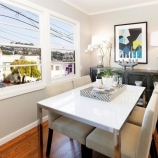
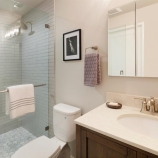
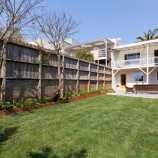
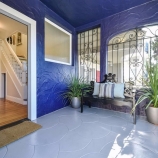
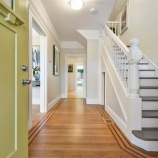
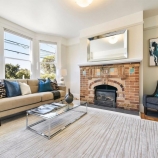
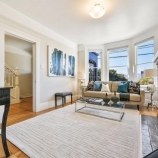
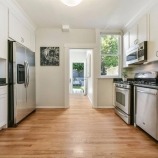
In the gallery above are three homes with listing prices near CoreLogic’s reported median for city of San Francisco — $1.130 million for homes sold this September, up 10.2 percent from September, 2016. This figure is actually down, however, month-over-month. August homes posted a median sale price of $1.223,75 million.

The Glen Park three-bedroom, two-bathroom at 39 Melrose sold for $875,000 in 2014 and is now listed at $1.195 million. Redfin, which tracks user interest and activity on available properties predicts that this “hot home” has a 75 percent chance of selling in the next nine days and estimates the value closer to $1.5 million.

A Potrero Hill two-bedroom, two bathroom at 1023 Kansas was built in 1906, and property records show the house last selling for $185,000 in 1995. Today, it’s listed at $1.195 million, though Redfin comparables put its value at $1.14 million, much closer to the current median price in the city.

And finally, 2614 39th is a Sunset four-bedroom, three-bathroom that last sold for $660,000 in 2003. Now, the home is listed at $1.095 million, but Redfin comps suggest $1.325 million is a more accurate valuation.

Anna Marie Erwert writes from both the renter and new buyer perspective, having (finally) achieved both statuses. She focuses on national real estate trends, specializing in the San Francisco Bay Area and Pacific Northwest. Follow Anna on Twitter: @AnnaMarieErwert


Article source: http://blog.sfgate.com/ontheblock/2017/11/02/bay-area-sees-slowest-september-for-real-estate-in-three-years/

Posted in SF Bay Area News | Tagged | Leave a comment

Oakland realtor tries to sell duplex as ‘house hacking,’ gets roasted online

http://www.sfgate.com/realestate/article/Oakland-realtor-landlord-house-hacking-duplex-12320667.php


Published 1:04 pm, Tuesday, October 31, 2017

  • 9d5d6 920x920 Oakland realtor tries to sell duplex as house hacking, gets roasted online

Caption

Close


An Oakland real estate agent is being called out for putting a Silicon Valley spin on one of his listings.

“Eager to invest in the hot Bay Area real estate market? Consider HOUSE HACKING,” the advertisement by Joe Dickerson reads for a duplex at 5401 Genoa St.

What is this “house hacking,” you ask?

It’s called being a landlord, Twitter user @anniefryman points out.

“Buy a multi-family home, live in one unit, and rent out the others,” the Facebook ad continues. “With the rents you collect, you could get PAID to live for FREE. #nojoke.”

The property is just one block removed from one of the hottest neighborhoods in the country, according to Redfin. 

LOOKING TO BUY? Homes less than $400,000 in the San Francisco Bay Area? It’s possible.

Dickerson apparently has first-hand experience with “house hacking.”

His website biography reads in part, “I purchased my first investment property in my early twenties. It was a duplex, formerly a brothel, that needed some TLC (and a good scrubbing!).”

VIDEO: Euphemisms you’ll only find in Bay Area housing posts


Are you looking for housing in San Francisco? If you’re not up to date with some of the code words created by realtors, leasing agents, or landlords, you might find yourself in an unfortunate tenant situation. Here are some translations of code words found in SF Bay Area housing posts.


Media: San Francisco Chronicle


Dickerson credits that experience with sparking his passion in real estate as a means of “helping people build wealth.”

The original Facebook post doesn’t seem to be on Dickerson’s Facebook page anymore. It seems to have been replaced with a more basic caption advertising the property’s open house. 

HOT MARKET: This sliver of the Bay Area might be the hottest neighborhood in the nation

Nonetheless, Dickerson appears to be taking the teasing in stride.

“Love it. Lots of funny in there. And some hate. And truth. Pretty good ratios overall,” the real estate agent commented on Facebook with smiley face. 

After all, he’s undoubtedly getting increased interest in the Oakland duplex from aspiring “house hackers.”

Read Alix Martichoux’s latest stories and send her news tips at amartichoux@sfchronicle.com

Article source: http://www.sfgate.com/realestate/article/Oakland-realtor-landlord-house-hacking-duplex-12320667.php

Posted in SF Bay Area News | Tagged | Leave a comment