Welcome to the San Francisco Bay Area, Merced!

Welcome to the Bay Area, Merced!

Welcome as well to Modesto, Sacramento, and Yuba City. Looking south, you’re invited, too, Santa Cruz, Monterey, and Salinas. And while you’re almost another state, don’t worry, Tahoe City!  The Bay waters are warm.

This expanded notion of the Bay Area’s reach isn’t a joke. It reflects the biggest thinking about California’s future. If you’re a smaller Northern California region that can’t compete with the Bay Area, why not join the Bay Area instead?

The Bay Area would benefit too. It is one of four connected Northern California regions — along with greater Sacramento, the Northern San Joaquin Valley, and the Monterey Bay area — that struggle with severe challenges in housing, land use, jobs, transportation, education, and the environment. Since such problems cross regional boundaries, shouldn’t the regions address them together as one giant region?

The Northern California Megaregion — a concept developed by a think tank, the Bay Area Council Economic Institute — includes 12 million people and 21 counties, extending from the Wine Country to the lettuce fields of the Salinas Valley, and from the Pacific to the Nevada border.

The pieces of the Megaregion are integrating as people search a wider geography for jobs, housing and places to expand their businesses. The trouble is that this growth is imbalanced. The Megaregion is home to the mega-rich in San Francisco and very poor cities like Stockton, Salinas, and Vallejo. And as high housing prices push people out of the Bay Area, its refugees flee deep into the  Megaregion, only to find they are too far away from their jobs and schools. The results: brutal traffic that produces greenhouse gases and longer commutes.

Figuring out how to rebalance the Megaregion and solve such problems is a high-stakes challenge, and not just for Northern Californians. The entire state relies heavily on the economic growth and tax revenues generated by the Bay Area, which represents one-third of the California economy  Megaregional planning could offer a vision for how the state might spread out its prosperity, creating a better distributed version of the California dream.

This does not mean allowing the Bay Area to colonize its neighbors. Rather, it’s mega-rethinking so that planning and development enables the Megaregion’s pieces — Bay Area technology, Sacramento government, San Joaquin Valley logistics and Monterey area farming — to magnify each other. One example: If new state research-and-development tax credits were to target inland companies, an infusion of technology and investment could allow the Northern San Joaquin to make its logistics industry more efficient and less polluting as it moves vegetables from Salinas to expanded ports in Stockton or Oakland.

A Bay Area Council Economic Institute report, and its co-author, Jeff Bellisario, a man whose colleagues call him “Mr. Megaregion,” suggest that Megaregional planning could create more high-tech jobs and companies outside of the Bay Area, by better connecting universities, laboratories, and research institutions with local entrepreneurs. Such planning should be performed by new economic development entities extending across the Megaregion; companies now leaving the Bay Area for Austin might be redirected to Sacramento or Santa Cruz. Such an effort would be strengthened if Bay Area entities jointly lobbied Sacramento to boost education levels in the Salinas and Central Valleys.

Of course, making such a shift would require a well-integrated set of transportation connections across the Megaregion, including more Amtrak service between San Jose and Placer County, new service to Salinas, and planned expansions of the Altamont Corridor Express train down to Merced and up to Sacramento. (Political note — the controversial gas tax increase produces $900 million for these ACE expansions.)

It’s easy to mock such mega-visions. For years real estate interests have done silly things, like touting a major San Joaquin County housing development as “Far East Bay.” (Local joke: Is that nearer Singapore or Hong Kong?)

But if the Megaregion could harness its power, it could even inspire imitators. Could L.A., San Diego, and Las Vegas further integrate into their own Megaregional triangle? Might Tijuana and Mexicali join in?

And could the Northern California Megaregion itself expand further south to the state’s fifth-largest city?

Welcome to the Bay Area, Fresno.

Joe Mathews writes the Connecting California column for Zócalo Public Square.

Article source: https://www.ocregister.com/2018/07/30/welcome-to-the-san-francisco-bay-area-merced/
Posted in SF Bay Area News | Tagged | Leave a comment

Home prices grew faster in Silicon Valley than anywhere else in US last quarter

Silicon Valley homeowners saw their wealth balloon faster than owners anywhere else in the country last quarter, according to a new study that underscores just how rich on paper property has made some residents here.

The median price of a home in the San Jose area, which includes Santa Clara and San Benito counties, jumped 25 percent from a year ago, according to ATTOM Data Solutions’ Q2 2018 U.S. Home Sales Report. The San Francisco area, which includes San Francisco, Alameda, Contra Costa, San Mateo and Marin counties, was fourth on the list, with gains of 14.2 percent compared to last year.

“The numbers are actually fairly astounding, even for San Jose,” said Daren Blomquist, senior vice president of ATTOM Data Solutions.

That’s great news for local residents who own homes and have watched their wealth soar in recent years. But for many struggling to buy in today’s turbocharged market, the latest increases push the dream of homeownership even further out of reach.

Property database ATTOM Data Solutions analyzed 122 metro areas in its report, and ranked the top five where prices are soaring. San Jose and San Francisco are seemingly obvious high-scorers, but two more surprising regions also made the list. Flint, Michigan ranked second, with median prices up 23.7 percent from a year ago. Seattle and Boise, Idaho tied for third, with prices jumping 14.3 percent.

In the Bay Area, homeowners who cash out make big bucks. Sellers in the San Jose region made average gains of 116.6 percent when they sold their homes — the highest of 147 metro areas analyzed. San Francisco was second, with sellers making average gains of 85 percent.

Wannabe homeowners who experience sticker-shock when looking at Bay Area prices have two options, said real estate agent Homa Saleh of Keller Williams, who mostly represents buyers in the San Jose area.

“I tell them just wait. If you can’t find a property that’s in your budget, I wouldn’t go too much above asking price because it might not appraise,” she said. “Or go for properties that may need a little bit of work.”

Blomquist credited the spike in Bay Area prices to the increase in the number of sales over $1 million, $2 million and even $5 million.

In the San Jose metro area, the median sale price for a single-family home or condo last quarter was $1.2 million, according to ATTOM. In the San Francisco metro area, it was $925,000.

But overall, U.S. home prices are increasing more slowly than in the past. The national median sale price for a home or condo was $255,000 in the second quarter of this year — that’s up 6.3 percent from a year ago, but it marks the slowest annual appreciation since 2016.

Eighty of the 122 metro areas studied saw their median home prices grow more slowly last quarter, including Los Angeles, Chicago, Dallas-Fort Worth, Houston and Philadelphia.

Not surprisingly for those who have been keeping track of sale prices in the Bay Area, San Francisco was one of 42 metro areas analyzed that bucked the trend, seeing appreciation accelerate faster than the previous quarter. New York, Washington, D.C., Boston and Detroit also made the list of outliers. Despite it’s sky-high year-over-year appreciation, the San Jose area’s prices actually grew more slowly last quarter than the quarter before.

Bay Area homeowners also are holding onto their properties longer than those in other parts of the country. The average seller in the San Jose area had been in the home 10.6 years before selling, and the average seller in the San Francisco area had been in the home 10.5 years, compared to a national average of eight years.

“People are just staying put longer and not selling,” Blomquist said. “It’s also contributing to the lack of inventory for … homebuyers who might otherwise move into those homes.”

Article source: https://www.mercurynews.com/2018/07/28/home-prices-grew-faster-in-silicon-valley-than-anywhere-else-in-u-s-last-quarter/

Posted in SF Bay Area News | Tagged | Leave a comment

Forget San Francisco. These two Bay Area cities have the most …


  • 21d65 920x920 Forget San Francisco. These two Bay Area cities have the most ...

Caption

Close

Compete Score data, via Redfin

Compete Score data, via Redfin

Photo: Redfin


Compete Score data, via Redfin

Compete Score data, via Redfin

Photo: Redfin


Compete Score data, via Redfin

Compete Score data, via Redfin

Photo: Redfin


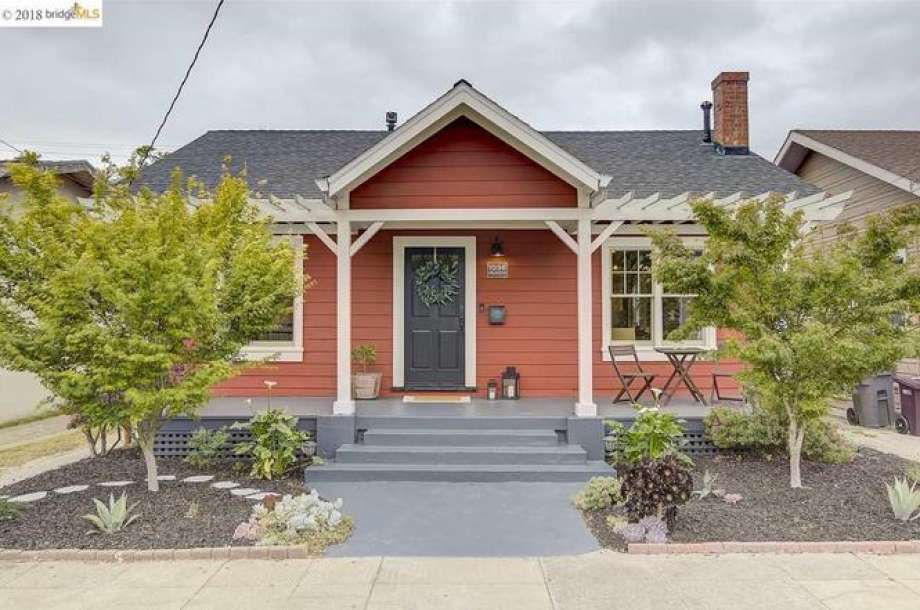
This San Jose home, via Redfin, listed for $749.999K June 5, went pending, June 15, and sold for 8.7K mid-July.

This San Jose home, via Redfin, listed for $749.999K June 5, went pending, June 15, and sold for 8.7K mid-July.

Photo: Redfin


This San Jose home, via Redfin, listed for $749.999K June 5, went pending, June 15, and sold for 8.7K mid-July.

This San Jose home, via Redfin, listed for $749.999K June 5, went pending, June 15, and sold for 8.7K mid-July.

Photo: Redfin


This Fremont home, via Redfin, listed for $850K June 12, went pending June 21, and sold in July for $935K

This Fremont home, via Redfin, listed for $850K June 12, went pending June 21, and sold in July for $935K

Photo: Redfin


This San Jose Home, via Redfin, listed at $725K in May, went pending two weeks later, and sold in July for $915K.

This San Jose Home, via Redfin, listed at $725K in May, went pending two weeks later, and sold in July for $915K.

Photo: Redfin


No surprises here. Four Bay Area cities fall in a list of the 10 most competitive real estate markets. Real estate website Redfin developed a new Compete Score and analyzed American cities with populations of 200,000 or more to determine where the market competition is stiffest.

In the topmost spots: San Jose, Fremont, Oakland, and San Francisco. Sacramento also made the list.

The data

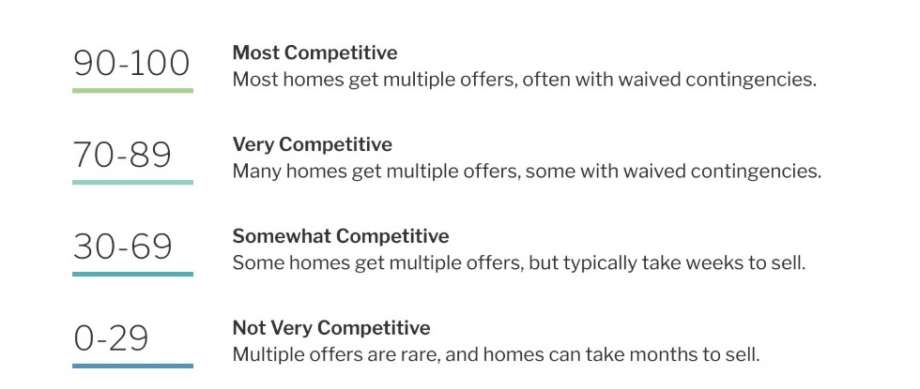
Redfin’s Compete Score ranges from 0 to 100, with 100 being the most competitive.

To calculate the figure, Redfin uses data from its site, including:

  • The number of competing offers and number of waived contingencies for homes sold by Redfin
  • Data from multiple listing services (MLSs), including the sale-to-list price ratio and number of days on market
  • Monthly updates to track competition over time to compare competition in different neighborhoods and cities


Knives out

According to these data, Fremont, San Jose and Seattle are the most competitive U.S. cities for homebuyers. In fact, on the score scale of 0 to 100, each of those cities scored a perfect 100.

For those who still hold out an “escape to the East Bay” fantasy, it might be saddening to learn Oakland is actually more competitive than S.F., by these numbers– though admittedly, not by much.

Redfin explains:

“Many of the most competitive cities are tech hubs that have attracted an influx of people moving to the area for jobs, unmatched by the creation of new homes. This has led to intense competition and rising home prices. In San Francisco, Seattle and Denver, homes have become so expensive that many people are moving elsewhere in search of more affordable and less competitive housing markets.”

Elsewhere, like… Oakland, or in the case of San Jose… Fremont.

It is not unusual in these competitive markets for homes to go into contract within a week, with multiple offers, and well over asking.

The gallery above denotes the 10 most difficult markets, as well as showcases sold homes that capture the true fierceness of the top three markets.

Buyer’s markets do exist

Those seeking reprieve from the hottest housing markets may want to consider the least competitive cities.

The gallery above includes that list, but the three least difficult markets are in New Orleans, El Paso, and Pittsburg. These cities earned a 43, 44, and 47 score, respectively, using Redfin’s analysis.

What does this look like for a buyer? In New Orleans, it looks like a six-week to two-month stint for a home on the market, which eventually closes with two or three competing offers, rarely over asking.

Want to know more about why your offer never gets accepted in the Bay Area, or where it might be more appreciated? Read the full study here. 

ALSO, A stately home on a huge San Francisco lot asking $1.9 million

Anna Marie Erwert writes from both the renter and new buyer perspective, having (finally) achieved both statuses. She focuses on national real estate trends, specializing in the San Francisco Bay Area and Pacific Northwest. Follow Anna on Twitter: @AnnaMarieErwert 

Article source: https://www.sfgate.com/realestate/article/Bay-Areas-most-Competitive-real-estate-markets-13106103.php

Posted in SF Bay Area News | Tagged | Leave a comment

Sound Off: How will Trump’s trade war affect Bay Area real estate, construction/remodeling costs?

A: The president making good on his earlier promise to enact tariffs is having a rapid affect.

According to the most recent Business Insider data, thus far 20 percent tariffs have been enacted on washing machines, 30 percent on solar energy modules and 25 percent on steel. Some of the goods also affected are electrical equipment, TV/video equipment, machinery for metals cement, construction vehicles. American steel and aluminum prices have increased drastically since the tariffs went into action. Midwest hot-rolled coil steel price, the US steel price benchmark, soared 36 percent between the start of the year and the start of July.

Developers are reporting higher prices for metal goods in an already expensive Bay Area market to build. We have had fires in the north bay that require rebuilding, ongoing office building construction along with several housing developments under construction. According to a March report from the UC Berkeley Terner Center for Housing Innovation, we have shortage of skilled construction workers due to high cost of wages. Many construction companies have quoted $500 per square foot for a high-end remodeling job in San Francisco in the past, but we are now seeing upward of $700 and more per square foot.

With the additional cost of tariffs in place (and more pending), I, unfortunately see cost of housing increasing even further.

Par Hanji, Paragon Real Estate Group, 415-307-5110, par@parhanji.com.

A: I was just finishing my undergraduate degree when I took Economics 101 on a lark. The principles of real life economics I learned then hold just as true today. If consumers pay more for one item they have less funds available for others.

We now have tariffs on the import of steel and aluminum, products used in real estate construction. As the cost of construction goes up so does the cost of housing, whether it is buying or remodeling. But it gets worse: tariffs elicit trade wars, and we already have the first victims, U.S. farmers, who are projected to lose $11 billion this year.

So now, for the first time since the Great Depression in 1929, U.S. farmers will receive, at tax payer expense, a $12 billion bail out, timed to arrive just before the mid-term elections. Tariffs are a self-inflicted wound that will not make America great again, just more expensive.

Astrid Lacitis, Vanguard Properties, 415-860-0765, astrid@vanguardsf.com.??

A: Once upon a time, there was a beautiful stretch of land surrounding a large, diverse and prosperous bay. This idyllic area experienced some growing pains, but innovation allowed many to flourish. People enjoyed owning and improving homes and recognized them as strong investment vehicles. This Area of The Bay had strong growth and the people saw “giving back” as a worthy endeavor. They also worked hard to preserve the environment for future generations.

One day, an unlikely emperor came to power and a lot of people were telling him things he believed were very unfair. He #tweeted to destroy everything his funders disliked. When tariffs were levied, all throughout the land, higher costs were passed on to the people. When those fearing deportation fled, labor costs increased. Builders became shorthanded and steel, sheetrock and other prices soared. Fires wreaked havoc and the short supply of homes got tighter. And the environment began to suffer…

Adam Gavzer, Compass, 415-505-0714, adam@gavzer.com.

Article source: https://www.sfchronicle.com/realestate/article/Sound-Off-How-will-Trump-s-trade-war-affect-13111353.php

Posted in SF Bay Area News | Tagged | Leave a comment

Forget San Francisco. These two Bay Area cities have the most competitive real estate markets, accor


  • d3187 920x920 Forget San Francisco. These two Bay Area cities have the most competitive real estate markets, accor

Caption

Close

Compete Score data, via Redfin

Compete Score data, via Redfin

Photo: Redfin


Compete Score data, via Redfin

Compete Score data, via Redfin

Photo: Redfin


Compete Score data, via Redfin

Compete Score data, via Redfin

Photo: Redfin


This San Jose home, via Redfin, listed for $749.999K June 5, went pending, June 15, and sold for 8.7K mid-July.

This San Jose home, via Redfin, listed for $749.999K June 5, went pending, June 15, and sold for 8.7K mid-July.

Photo: Redfin


This San Jose home, via Redfin, listed for $749.999K June 5, went pending, June 15, and sold for 8.7K mid-July.

This San Jose home, via Redfin, listed for $749.999K June 5, went pending, June 15, and sold for 8.7K mid-July.

Photo: Redfin


This Fremont home, via Redfin, listed for $850K June 12, went pending June 21, and sold in July for $935K

This Fremont home, via Redfin, listed for $850K June 12, went pending June 21, and sold in July for $935K

Photo: Redfin


This San Jose Home, via Redfin, listed at $725K in May, went pending two weeks later, and sold in July for $915K.

This San Jose Home, via Redfin, listed at $725K in May, went pending two weeks later, and sold in July for $915K.

Photo: Redfin


No surprises here. Four Bay Area cities fall in a list of the 10 most competitive real estate markets. Real estate website Redfin developed a new Compete Score and analyzed American cities with populations of 200,000 or more to determine where the market competition is stiffest.

In the topmost spots: San Jose, Fremont, Oakland, and San Francisco. Sacramento also made the list.

The data

Redfin’s Compete Score ranges from 0 to 100, with 100 being the most competitive.

To calculate the figure, Redfin uses data from its site, including:

  • The number of competing offers and number of waived contingencies for homes sold by Redfin
  • Data from multiple listing services (MLSs), including the sale-to-list price ratio and number of days on market
  • Monthly updates to track competition over time to compare competition in different neighborhoods and cities


Knives out

According to these data, Fremont, San Jose and Seattle are the most competitive U.S. cities for homebuyers. In fact, on the score scale of 0 to 100, each of those cities scored a perfect 100.

For those who still hold out an “escape to the East Bay” fantasy, it might be saddening to learn Oakland is actually more competitive than S.F., by these numbers– though admittedly, not by much.

Redfin explains:

“Many of the most competitive cities are tech hubs that have attracted an influx of people moving to the area for jobs, unmatched by the creation of new homes. This has led to intense competition and rising home prices. In San Francisco, Seattle and Denver, homes have become so expensive that many people are moving elsewhere in search of more affordable and less competitive housing markets.”

Elsewhere, like… Oakland, or in the case of San Jose… Fremont.

It is not unusual in these competitive markets for homes to go into contract within a week, with multiple offers, and well over asking.

The gallery above denotes the 10 most difficult markets, as well as showcases sold homes that capture the true fierceness of the top three markets.

Buyer’s markets do exist

Those seeking reprieve from the hottest housing markets may want to consider the least competitive cities.

The gallery above includes that list, but the three least difficult markets are in New Orleans, El Paso, and Pittsburg. These cities earned a 43, 44, and 47 score, respectively, using Redfin’s analysis.

What does this look like for a buyer? In New Orleans, it looks like a six-week to two-month stint for a home on the market, which eventually closes with two or three competing offers, rarely over asking.

Want to know more about why your offer never gets accepted in the Bay Area, or where it might be more appreciated? Read the full study here. 

ALSO, A stately home on a huge San Francisco lot asking $1.9 million

Anna Marie Erwert writes from both the renter and new buyer perspective, having (finally) achieved both statuses. She focuses on national real estate trends, specializing in the San Francisco Bay Area and Pacific Northwest. Follow Anna on Twitter: @AnnaMarieErwert 

Article source: https://www.sfgate.com/realestate/article/Bay-Areas-most-Competitive-real-estate-markets-13106103.php

Posted in SF Bay Area News | Tagged | Leave a comment