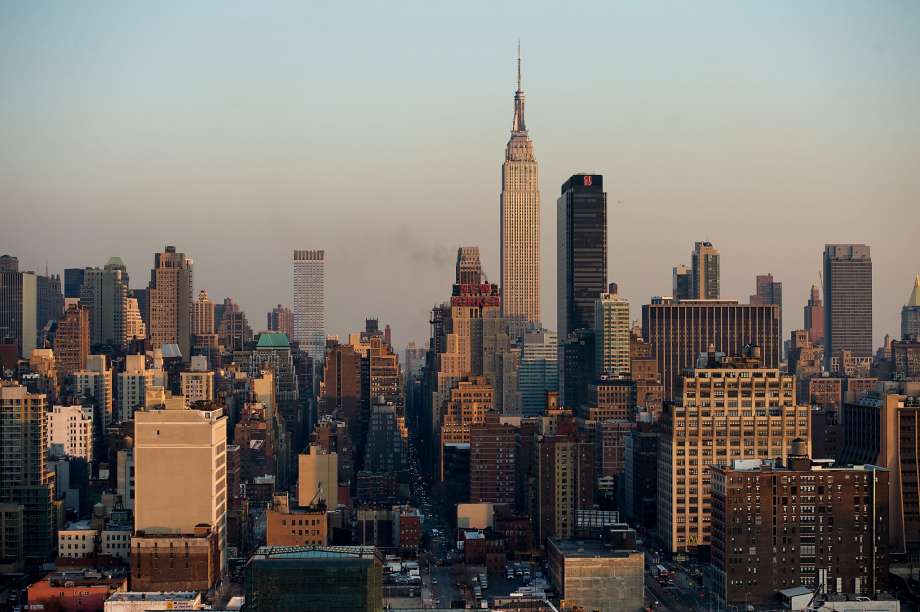
Manhattan real estate nearly twice the price of SF on this one metric …


  • 7bc04 920x920 Manhattan real estate nearly twice the price of SF on this one metric ...

  •  Manhattan real estate nearly twice the price of SF on this one metric ...
  •  Manhattan real estate nearly twice the price of SF on this one metric ...
  •  Manhattan real estate nearly twice the price of SF on this one metric ...
  •  Manhattan real estate nearly twice the price of SF on this one metric ...
  •  Manhattan real estate nearly twice the price of SF on this one metric ...
  •  Manhattan real estate nearly twice the price of SF on this one metric ...
  •  Manhattan real estate nearly twice the price of SF on this one metric ...
  •  Manhattan real estate nearly twice the price of SF on this one metric ...
  •  Manhattan real estate nearly twice the price of SF on this one metric ...
  •  Manhattan real estate nearly twice the price of SF on this one metric ...
  •  Manhattan real estate nearly twice the price of SF on this one metric ...
  •  Manhattan real estate nearly twice the price of SF on this one metric ...
  •  Manhattan real estate nearly twice the price of SF on this one metric ...
  •  Manhattan real estate nearly twice the price of SF on this one metric ...
  •  Manhattan real estate nearly twice the price of SF on this one metric ...
  •  Manhattan real estate nearly twice the price of SF on this one metric ...
  •  Manhattan real estate nearly twice the price of SF on this one metric ...
  •  Manhattan real estate nearly twice the price of SF on this one metric ...
  •  Manhattan real estate nearly twice the price of SF on this one metric ...
  •  Manhattan real estate nearly twice the price of SF on this one metric ...
  •  Manhattan real estate nearly twice the price of SF on this one metric ...

Caption

Close


Here’s some news that might surprise some: San Francisco didn’t land the top-spot in a new national home price list.

A report from real estate and data analytics firm NeighborhoodX looked at the average cost of a home on a per-square-foot basis in major cities around the world, and real estate in the borough of Manhattan came out as nearly twice as expensive when compared to San Francisco.

Using data compiled by the consulting firm Miller Samuel Inc., NeighborhoodX found the average price per square foot for homes and apartments in Manhattan to be $1,773 as of August 7, while San Francisco’s average is $902 per square foot.


Local real estate agents Patrick Carlisle and Lamisse Droubi explain the cycles in the housing market and how it applies to the Bay Area.


Media: San Francisco Chronicle


The Manhattan average was bumped up by some extremely expensive property listed in August 2018. “The upper end of the Manhattan price range breaks the $10,000 per square foot barrier” and is reflected in several units in the tony building at 432 Park Avenue South. In San Francisco, on the other hand, the most expensive property listed in August 2018 cost $4,401 per square foot.


ALSO: San Francisco is so expensive, its new mayor has never been able to afford a home there

The research team opted to hone in on the borough — itself nearly twice as large as San Francisco — rather than look at New York City as a whole to reveal the true high expense of living in the city’s costliest area. Real estate in the outer boroughs is significantly less than in the city center, and and this would bring the average price down and would obscure the true levels of Manhattan pricing,” the study authors wrote.

San Francisco famously sits at the top of most lists ranking the most expensive places to live in the country. Its housing costs have soared in the past decade, and rents and real estate is notoriously high. The median price of a home, according to Zillow, is $1.366 million, while the median in Manhattan is a little less at $1.315 million. The median in New York City — which has a larger population than the entire Bay Area — is significantly less at $672,000.

Article source: https://www.sfgate.com/realestate/article/Manhattan-vs-San-Francisco-real-estate-expensive-13194663.php

Posted in SF Bay Area News | Tagged | Leave a comment

Pacific Union, Compass CEOs weigh in on their mega real-estate …

Compass, a venture-backed real estate brokerage firm in New York, will buy 100 percent of San Francisco’s Pacific Union International to create the nation’s third-largest residential retail brokerage, the two companies confirmed Wednesday.

Compass will pay an undisclosed sum of cash and stock for Pacific Union, California’s largest residential brokerage firm. Pacific Union will change its name to Compass, and its CEO Mark McLaughlin will become Compass’ president of California.

The deal was “not driven” by Pacific Union’s majority owner, Fidelity National Financial, a Florida title-insurance giant, McLaughlin said. Fidelity owns about 62 percent of Pacific Union, McLaughlin owns 23 percent, Pacific Union President Patrick Barber owns 6 percent and “a number of people own the rest,” he said.

Just five years old and backed with $775 million from the Japanese fund Softbank and other investors, Compass has been raising the ire of competitors by gobbling up agents and whole firms, including Paragon Real Estate Group of San Francisco in early July.

Last month, Zephyr Real Estate asked a Superior Court judge in San Francisco to issue a restraining order preventing Compass from soliciting its personnel. Compass had expressed interest in buying Zephyr earlier this year, and while the two were in talks, Compass signed an agreement not to disclose Zephyr’s confidential information. It also barred Compass representatives with access to the confidential information from recruiting Zephyr people. Zephyr claimed that Compass violated the agreement by poaching its personnel, including two managers, while the talks were ongoing. The judge this month granted a temporary order preventing four Compass executives including its CEO, Robert Reffkin, from soliciting Zephyr agents and employees.

Even Pacific Union’s McLaughlin had been somewhat critical of Compass in the past. When it acquired Paragon, he said in a statement, “This move in San Francisco combines Paragon, a relatively conservative local firm, with Compass, a ‘stated’ technology firm.”

On Wednesday, however, McLaughlin lauded Compass’ technology. “I call it connecting the cloud with the street,” he said — the cloud being Compass’ technology and the street being Pacific Union’s traditional, people-oriented brokerage.

Unlike other brokerage firms that procure third-party technology for their agents, Compass has about 200 engineers developing proprietary tools, said Reffkin, who grew up in Berkeley.

“We have a mobile app that lets agents have their business in their pockets,” and a “collaboration tool that’s like Pinterest for real estate. You and your client can put in anything you like, add people to that collection and you are all commenting together.”

Randall Kostick, CEO of San Francisco’s Zephyr, contends that Compass “is not attracting agents and managers with their fabulous products and services. They are attracting them with money.” Traditional real estate agents are independent contractors affiliated with a brokerage firm that takes part of their commissions in exchange for marketing and other overhead services.

Kostick said Compass is offering “signing bonuses, marketing subsidies, technology subsidies, and exceptionally high agent splits,” with agents keeping 90 to 95 percent of their commissions. He said the average split at his and other firms is around 85 to 87 percent.

Reffkin wouldn’t say what compensation Compass is offering, but “people definitely think it’s much bigger than it is.” He said agents are joining Compass “because they want to be part of the company that is building the future of real estate.”

Pacific Union had lost agents to Compass, including “a pretty strategic team in Beverly Hills,” McLaughlin said. “Compass has grown aggressively by putting pretty significant financial incentives in front of people.” He said he thinks that will change with the acquisition of Pacific Union. “I think the credibility we bring in California will permit the balancing of some of the conventional versus new-wave recruiting techniques.”

This year, Pacific Union and Compass were the nation’s fifth and sixth largest residential brokerage firms, respectively, by dollar volume. Each did about $14 billion worth of transactions, according to industry consultant Real Trends. Combined, they would have ranked third, behind NRT (a conglomerate that includes Coldwell Banker, Sotheby’s International Realty and Climb) and Home Services of America (a Berkshire Hathaway affiliate.)

In San Francisco alone, Pacific Union, Paragon and Compass each ranked among the five largest brokerage firms in the first half of this year, according to the San Francisco Association of Realtors. Had they been combined, the three firms would have had 22.6 percent of the market by number of transactions and 27 percent by dollar volume.

Reffkin said Compass has “no intention to acquire more” firms in San Francisco. He said it is expanding throughout the Bay Area but is not talking to any other firms right now.

Zephyr’s Kostick said, “I think they are absolutely on the hunt, especially in the South Bay.”

The real estate industry “is seeing an influx of different business models,” such as brokerage firms that employ agents as employees or do away with agents that represent buyers, said Nancy Robinson, Coldwell Banker’s regional vice president for the Bay Area. She said the Compass-Pacific Union deal “reaffirms the traditional brokerage model. They are acquiring a known brand to expand their brand. That’s nothing new. We have grown by acquisition for decades.”

McLaughlin said the combined firm will be looking to expand its commercial brokerage business. He added that the Mark Co., a brokerage firm Pacific Union acquired that mainly markets new condo developments, might keep its name for a while.

J. Rockcliff Realtors, a brokerage based in Danville wholly owned by Fidelity National, was not part of the acquisition.

A previous version of this story gave an imprecise description of a recruiting agreement between Compass and Zephyr. The story has been updated with correct information.

Kathleen Pender is a San Francisco Chronicle columnist. Email: kpender@sfchronicle.com Twitter: @kathpender

Article source: https://www.sfchronicle.com/business/networth/article/It-s-official-Compass-buying-Pacific-Union-to-13192026.php

Posted in SF Bay Area News | Tagged | Leave a comment

Home prices stay hot in the Bay Area

The steadiest investment in the Bay Area remains outside of tech — and in real estate.

Bay Area median home sale prices surged in July, led by double-digit gains in Santa Clara, Alameda, and San Francisco counties, even as the runaway residential real estate market showed some signs of slowing nationally.

The median price for a resale home was $890,000 in the nine-county region, according to a survey released Friday by real estate data firm CoreLogic. The price fell short of the record $935,000 set in May, but still represented a nearly 10 percent gain from the same time last year.

Santa Clara, San Francisco and Marin counties all saw significant drops in sales.

CoreLogic analyst Andrew LePage said tight inventory and rising mortgage rates have meant “more would-be buyers are unable or unwilling to buy.”

Overall, the market has slowed in recent months. “Prices aren’t rising as fast they had been,” LePage said.

But all Bay Area counties continued to have strong increases in resale prices in July, year over year: Alameda County median home prices rose 11.8 percent to $920,000, Contra Costa  rose 9.1 percent to $638,000, San Mateo rose 5.1 percent to $1.48 million, Santa Clara soared 17.8 percent to $1.29 million and San Francisco increased 16.9 percent to $1.45 million.

Despite a decline in sales in the pricier communities, the overall number of homes sold across the region remained steady from last July.

Many buyers turned to a less expensive alternative — condominiums. Prices for the entry-level homes jumped 22.3 percent, led by units in Santa Clara County selling for nearly 25 percent more than the year before, according to CoreLogic data. The median resale price for Bay Area condos was $750,000.

Bay Area home prices have been on a record run, rising every month, year over year, since April 2012.

The number of existing Bay Area homes sold in July was 10 percent below the historic average for the month, according to CoreLogic.  New home and condo sales are down 42 percent from the historic average, reflecting the shortage of new home construction, LePage said.

Other indicators have pointed to a slowing market, and real estate watchers note that home prices can’t climb forever. Economists for home listing website Zillow noticed more price reductions in the San Jose metro in June, and said prices could continue to climb at a slower pace.

Executives at online brokerage Redfin expect an overall cooling of the U.S. housing market next year, with demand easing in the Bay Area and other hot metropolitan areas.

Interest rates have ticked up about a half-percent to 4.5 percent. CoreLogic estimates the combination of higher prices and interest rates means mortgage payments on Bay Area homes have increased 19 percent over the last year.

Agents say neighborhoods with good schools and around tech giants Apple, Google and Facebook continue to lead the way. Single family homes in Sunnyvale, Cupertino and parts of San Jose regularly have been selling for over listing prices.

William Doerlich, an agent with Realty One Group in San Ramon, sees limited supply and high demand leading to high prices in East Bay cities like Hayward and Dublin. The Bay Area economy has been at full employment for months and has shown few signs of slowing down.

Phyllis Carmichael, an agent with Coldwell Banker representing buyers and sellers in Los Altos, Palo Alto, Mountain View and San Jose, said the shortage of available homes has been frustrating for buyers.

She hasn’t seen any slowdown in the desirable Peninsula neighborhoods. “Google, Apple are hiring so many people,” she said. “There’s just no place to put them.”

Carmichael senses a growing frustration among homeowners and prospective buyers. Older clients would like to downsize, but can’t find suitable housing in the area. Younger clients are hunting in Santa Cruz and Hollister, she said.

“Everybody would like to move,” she said. “There’s no place to go.”

Article source: https://www.mercurynews.com/2018/08/31/home-prices-stay-hot-in-the-bay-area/

Posted in SF Bay Area News | Tagged | Leave a comment

Home prices stay hot in the Bay Area – The Mercury News

The steadiest investment in the Bay Area remains outside of tech — and in real estate.

Bay Area median home sale prices surged in July, led by double-digit gains in Santa Clara, Alameda, and San Francisco counties, even as the runaway residential real estate market showed some signs of slowing nationally.

The median price for a resale home was $890,000 in the nine-county region, according to a survey released Friday by real estate data firm CoreLogic. The price fell short of the record $935,000 set in May, but still represented a nearly 10 percent gain from the same time last year.

Santa Clara, San Francisco and Marin counties all saw significant drops in sales.

CoreLogic analyst Andrew LePage said tight inventory and rising mortgage rates have meant “more would-be buyers are unable or unwilling to buy.”

Overall, the market has slowed in recent months. “Prices aren’t rising as fast they had been,” LePage said.

But all Bay Area counties continued to have strong increases in resale prices in July, year over year: Alameda County median home prices rose 11.8 percent to $920,000, Contra Costa  rose 9.1 percent to $638,000, San Mateo rose 5.1 percent to $1.48 million, Santa Clara soared 17.8 percent to $1.29 million and San Francisco increased 16.9 percent to $1.45 million.

Despite a decline in sales in the pricier communities, the overall number of homes sold across the region remained steady from last July.

Many buyers turned to a less expensive alternative — condominiums. Prices for the entry-level homes jumped 22.3 percent, led by units in Santa Clara County selling for nearly 25 percent more than the year before, according to CoreLogic data. The median resale price for Bay Area condos was $750,000.

Bay Area home prices have been on a record run, rising every month, year over year, since April 2012.

The number of existing Bay Area homes sold in July was 10 percent below the historic average for the month, according to CoreLogic.  New home and condo sales are down 42 percent from the historic average, reflecting the shortage of new home construction, LePage said.

Other indicators have pointed to a slowing market, and real estate watchers note that home prices can’t climb forever. Economists for home listing website Zillow noticed more price reductions in the San Jose metro in June, and said prices could continue to climb at a slower pace.

Executives at online brokerage Redfin expect an overall cooling of the U.S. housing market next year, with demand easing in the Bay Area and other hot metropolitan areas.

Interest rates have ticked up about a half-percent to 4.5 percent. CoreLogic estimates the combination of higher prices and interest rates means mortgage payments on Bay Area homes have increased 19 percent over the last year.

Agents say neighborhoods with good schools and around tech giants Apple, Google and Facebook continue to lead the way. Single family homes in Sunnyvale, Cupertino and parts of San Jose regularly have been selling for over listing prices.

William Doerlich, an agent with Realty One Group in San Ramon, sees limited supply and high demand leading to high prices in East Bay cities like Hayward and Dublin. The Bay Area economy has been at full employment for months and has shown few signs of slowing down.

Phyllis Carmichael, an agent with Coldwell Banker representing buyers and sellers in Los Altos, Palo Alto, Mountain View and San Jose, said the shortage of available homes has been frustrating for buyers.

She hasn’t seen any slowdown in the desirable Peninsula neighborhoods. “Google, Apple are hiring so many people,” she said. “There’s just no place to put them.”

Carmichael senses a growing frustration among homeowners and prospective buyers. Older clients would like to downsize, but can’t find suitable housing in the area. Younger clients are hunting in Santa Cruz and Hollister, she said.

“Everybody would like to move,” she said. “There’s no place to go.”

Article source: https://www.mercurynews.com/2018/08/31/home-prices-stay-hot-in-the-bay-area/

Posted in SF Bay Area News | Tagged | Leave a comment

Summer home prices stay hot in the Bay Area

The steadiest investment in the Bay Area remains outside of tech — and in real estate.

Bay Area median home sale prices surged in July, led by double-digit gains in Santa Clara, Alameda, and San Francisco counties, even as the runaway residential real estate market showed some signs of slowing nationally.

The median price for a resale home was $890,000 in the nine-county region, according to a survey released Friday by real estate data firm CoreLogic. The price fell short of the record $935,000 set in May, but still represented a nearly 10 percent gain from the same time last year.

Santa Clara, San Francisco and Marin counties all saw significant drops in sales.

CoreLogic analyst Andrew LePage said tight inventory and rising mortgage rates have meant “more would-be buyers are unable or unwilling to buy.”

Overall, the market has slowed in recent months. “Prices aren’t rising as fast they had been,” LePage said.

But all Bay Area counties continued to have strong increases in resale prices in July, year over year: Alameda County median home prices rose 11.8 percent to $920,000, Contra Costa  rose 9.1 percent to $638,000, San Mateo rose 5.1 percent to $1.48 million, Santa Clara soared 17.8 percent to $1.29 million and San Francisco increased 16.9 percent to $1.45 million.

Despite a decline in sales in the pricier communities, the overall number of homes sold across the region remained steady from last July.

Many buyers turned to a less expensive alternative — condominiums. Prices for the entry-level homes jumped 22.3 percent, led by units in Santa Clara County selling for nearly 25 percent more than the year before, according to CoreLogic data. The median resale price for Bay Area condos was $750,000.

Bay Area home prices have been on a record run, rising every month, year over year, since April 2012.

The number of existing Bay Area homes sold in July was 10 percent below the historic average for the month, according to CoreLogic.  New home and condo sales are down 42 percent from the historic average, reflecting the shortage of new home construction, LePage said.

Other indicators have pointed to a slowing market, and real estate watchers note that home prices can’t climb forever. Economists for home listing website Zillow noticed more price reductions in the San Jose metro in June, and said prices could continue to climb at a slower pace.

Executives at online brokerage Redfin expect an overall cooling of the U.S. housing market next year, with demand easing in the Bay Area and other hot metropolitan areas.

Interest rates have ticked up about a half-percent to 4.5 percent. CoreLogic estimates the combination of higher prices and interest rates means mortgage payments on Bay Area homes have increased 19 percent over the last year.

Agents say neighborhoods with good schools and around tech giants Apple, Google and Facebook continue to lead the way. Single family homes in Sunnyvale, Cupertino and parts of San Jose regularly have been selling for over listing prices.

William Doerlich, an agent with Realty One Group in San Ramon, sees limited supply and high demand leading to high prices in East Bay cities like Hayward and Dublin. The Bay Area economy has been at full employment for months and has shown few signs of slowing down.

Phyllis Carmichael, an agent with Coldwell Banker representing buyers and sellers in Los Altos, Palo Alto, Mountain View and San Jose, said the shortage of available homes has been frustrating for buyers.

She hasn’t seen any slowdown in the desirable Peninsula neighborhoods. “Google, Apple are hiring so many people,” she said. “There’s just no place to put them.”

Carmichael senses a growing frustration among homeowners and prospective buyers. Older clients would like to downsize, but can’t find suitable housing in the area. Younger clients are hunting in Santa Cruz and Hollister, she said.

“Everybody would like to move,” she said. “There’s no place to go.”

Article source: https://www.mercurynews.com/2018/08/31/summer-home-prices-stay-hot-in-the-bay-area/

Posted in SF Bay Area News | Tagged | Leave a comment