Manhattan real estate nearly twice the price of SF on this one metric


  • 3c6d3 920x920 Manhattan real estate nearly twice the price of SF on this one metric

  •  Manhattan real estate nearly twice the price of SF on this one metric
  •  Manhattan real estate nearly twice the price of SF on this one metric
  •  Manhattan real estate nearly twice the price of SF on this one metric
  •  Manhattan real estate nearly twice the price of SF on this one metric
  •  Manhattan real estate nearly twice the price of SF on this one metric
  •  Manhattan real estate nearly twice the price of SF on this one metric
  •  Manhattan real estate nearly twice the price of SF on this one metric
  •  Manhattan real estate nearly twice the price of SF on this one metric
  •  Manhattan real estate nearly twice the price of SF on this one metric
  •  Manhattan real estate nearly twice the price of SF on this one metric
  •  Manhattan real estate nearly twice the price of SF on this one metric
  •  Manhattan real estate nearly twice the price of SF on this one metric
  •  Manhattan real estate nearly twice the price of SF on this one metric
  •  Manhattan real estate nearly twice the price of SF on this one metric
  •  Manhattan real estate nearly twice the price of SF on this one metric
  •  Manhattan real estate nearly twice the price of SF on this one metric
  •  Manhattan real estate nearly twice the price of SF on this one metric
  •  Manhattan real estate nearly twice the price of SF on this one metric
  •  Manhattan real estate nearly twice the price of SF on this one metric
  •  Manhattan real estate nearly twice the price of SF on this one metric
  •  Manhattan real estate nearly twice the price of SF on this one metric

Caption

Close


Here’s some news that might surprise some: San Francisco didn’t land the top-spot in a new national home price list.

A report from real estate and data analytics firm NeighborhoodX looked at the average cost of a home on a per-square-foot basis in major cities around the world, and real estate in the borough of Manhattan came out as nearly twice as expensive when compared to San Francisco.

Using data compiled by the consulting firm Miller Samuel Inc., NeighborhoodX found the average price per square foot for homes and apartments in Manhattan to be $1,773 as of August 7, while San Francisco’s average is $902 per square foot.


Local real estate agents Patrick Carlisle and Lamisse Droubi explain the cycles in the housing market and how it applies to the Bay Area.


Media: San Francisco Chronicle


The Manhattan average was bumped up by some extremely expensive property listed in August 2018. “The upper end of the Manhattan price range breaks the $10,000 per square foot barrier” and is reflected in several units in the tony building at 432 Park Avenue South. In San Francisco, on the other hand, the most expensive property listed in August 2018 cost $4,401 per square foot.


ALSO: San Francisco is so expensive, its new mayor has never been able to afford a home there

The research team opted to hone in on the borough — itself nearly twice as large as San Francisco — rather than look at New York City as a whole to reveal the true high expense of living in the city’s costliest area. Real estate in the outer boroughs is significantly less than in the city center, and and this would bring the average price down and would obscure the true levels of Manhattan pricing,” the study authors wrote.

San Francisco famously sits at the top of most lists ranking the most expensive places to live in the country. Its housing costs have soared in the past decade, and rents and real estate is notoriously high. The median price of a home, according to Zillow, is $1.366 million, while the median in Manhattan is a little less at $1.315 million. The median in New York City — which has a larger population than the entire Bay Area — is significantly less at $672,000.

Article source: https://www.sfgate.com/realestate/article/Manhattan-vs-San-Francisco-real-estate-expensive-13194663.php

Posted in SF Bay Area News | Tagged | Leave a comment

Before-and-after photos show dramatic transformation of Marin home


  • a78dd 920x920 Before and after photos show dramatic transformation of Marin home

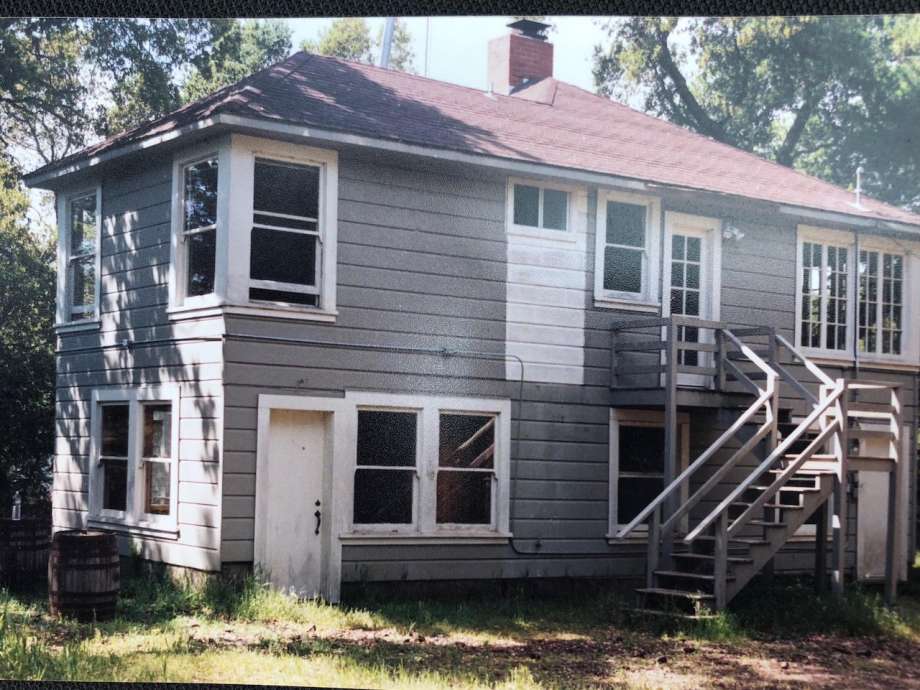
    Before and after journey for this Fairfax home is a trip to a tropical plantation. It’s yours for $1.395M.

    Before and after journey for this Fairfax home is a trip to a tropical plantation. It’s yours for $1.395M.


    Photo: Photo Credits: Jason Wells/Golden Gate Creative; Open Homes Photography; Christopher George

  •  Before and after photos show dramatic transformation of Marin home
  •  Before and after photos show dramatic transformation of Marin home
  •  Before and after photos show dramatic transformation of Marin home
  •  Before and after photos show dramatic transformation of Marin home
  •  Before and after photos show dramatic transformation of Marin home
  •  Before and after photos show dramatic transformation of Marin home
  •  Before and after photos show dramatic transformation of Marin home
  •  Before and after photos show dramatic transformation of Marin home
  •  Before and after photos show dramatic transformation of Marin home
  •  Before and after photos show dramatic transformation of Marin home
  •  Before and after photos show dramatic transformation of Marin home
  •  Before and after photos show dramatic transformation of Marin home
  •  Before and after photos show dramatic transformation of Marin home
  •  Before and after photos show dramatic transformation of Marin home
  •  Before and after photos show dramatic transformation of Marin home
  •  Before and after photos show dramatic transformation of Marin home
  •  Before and after photos show dramatic transformation of Marin home
  •  Before and after photos show dramatic transformation of Marin home
  •  Before and after photos show dramatic transformation of Marin home
  •  Before and after photos show dramatic transformation of Marin home
  •  Before and after photos show dramatic transformation of Marin home
  •  Before and after photos show dramatic transformation of Marin home
  •  Before and after photos show dramatic transformation of Marin home
  •  Before and after photos show dramatic transformation of Marin home
  •  Before and after photos show dramatic transformation of Marin home
  •  Before and after photos show dramatic transformation of Marin home
  •  Before and after photos show dramatic transformation of Marin home
  •  Before and after photos show dramatic transformation of Marin home

Caption

Close

Before and after journey for this Fairfax home is a trip to a tropical plantation. It’s yours for $1.395M.

Before and after journey for this Fairfax home is a trip to a tropical plantation. It’s yours for $1.395M.


Photo: Photo Credits: Jason Wells/Golden Gate Creative; Open Homes Photography; Christopher George


From an abandoned home with giant chunks of cement in the gardens to tropical plantation-style home, this unique Fairfax abode offers history and style for $1.395 million.

The home now

In its current incarnation, 84 Hillside Dr. is a five-bedroom, two-bathroom home with 2,260 square feet.

Under its peaked, wood-beamed ceiling are two levels.

In the late 1990s and early 2000s, the current owner, Christopher George, remodeled the original 1923 abode extensively. His design sensibilities are revealed in the modern kitchen, the sun-filled bedrooms, the second living room, and the wrap-around porch outside.

The remdodel

In 1999, Christopher George found 84 Hillside Dr. in a debilitated state, abandoned for years. Even so, there were multiple offers on the property. In fact, before finding this home, George was about to give up on finding a home in the overheated market of 1999.


But here, he finally succeeded. His offer beat out 10 over-asking bids, and he became the new owner.

The next battle was making the home livable.

“The house was a wreck and had been sitting vacant for a couple of years—there was nothing living on the property, except weeds and a couple dozen heritage oaks. It had become a hangout for local kids and everything of value had been stripped from the property,” George told SFGate.

George is well-qualified to make a home livable: At the time he bought the house, he was a realtor, and he has an undergraduate degree in architecture from UC Berkeley.

Together with licensed architect William Pashelinski, George designed the remodeled home we see today. “I got my inspiration from a book called ‘Caribbean Style,’ [and from it] the idea of the large wrap around verandah and bright colors.”

The result is a sort of coffee plantation–like aesthetic, both inside and out.


Local real estate agents Patrick Carlisle and Lamisse Droubi explain the cycles in the housing market and how it applies to the Bay Area.


Media: San Francisco Chronicle


The landscape 

The exterior was as important as the interior, given the sizable .37-acre lot.

Some sources suggest that in the 1920s, the property belonged to a cement company owner, which would perhaps explain numerous concrete and rock-retaining walls George encountered.

His goal for the land was something unique, with a tropical feel to complement the home’s design. He was also inspired by the lush landscaping of Golden Gate Park where he ran daily when he lived in San Francisco.


I hired a Marin landscaper, named Matt Farnsworth, and we did the entire 2/3 acre subtropical garden among the native oaks in eight days—including the installation of several full grown palm trees.. The landscape has nearly twenty years of growth on it now and it seems as if it’s always been there.

The gallery above includes before-and-after photos of the property’s transformation.

The deal

In 1999, when this home was basically a shell of the home we see now, it sold for $468,500. Years later, with every inch transformed, that price is $1.395 million.

And George may be on the opposite end of the seller/buyer relationship now: 1999 was a competitive year but so is 2018. In the last 30 days, Fairfax homes have sold for at a 108 percent sale-to-list ratio.

Want to throw you hat in the ring…. or over the verandah?

See the complete listing here. 

Anna Marie Erwert writes from both the renter and new buyer perspective, having (finally) achieved both statuses. She focuses on national real estate trends, specializing in the San Francisco Bay Area and Pacific Northwest. Follow Anna on Twitter: @AnnaMarieErwert 

Article source: https://www.sfgate.com/realestate/article/Before-and-afters-84-hillside-dr-fairfax-13180530.php

Posted in SF Bay Area News | Tagged | Leave a comment

SF Bay Area fall arts 2018: Jazz season packed with can’t-miss shows

The biggest jazz event of the season remains the same, year after year, decade after decade. But the rest of fall arts season’s jazz offerings features some promising shows, too. Here are some highlights.

Monterey Jazz Festival: The event debuted in 1958 and quickly became the stuff of legends. The 61st annual edition should be another epic affair, with a three-day lineup boosting such acclaimed talents as Dianne Reeves, Charles Lloyd, Christian McBride, Cécile McLorin Salvant, Bill Frisell, Norah Jones, the Spanish Harlem Orchestra, Lucinda Williams and the Jazz at Lincoln Center Orchestra with Wynton Marsalis.

Details: Sept. 21-23, Monterey County Fairgrounds; daily tickets $20-$174 (some tickets do not include headliners); ticket packages $50-$345; www.montereyjazzfestival.org.

SFJazz: The acclaimed arts organization is kicking off its epic 2018-19 season with many great shows in September this month at the SFjazz Center in San Francisco. One of the most exciting offerings is Joshua Redman: Still Dreaming, a tribute to the saxophonist’s late father, Dewey Redman, featuring trumpeter Ron Miles, bassist Scott Colley and drummer Brian Blade (Sept. 13-16). And there’s incredible vocalist and two-time Grammy winner Cécile McLorin Salvant, performing in a duo setting (Sept. 6-9). And don’t pass on the B-3 Organ Festival, featuring Dr. Lonnie Smith Trio, Joey DeFrancesco Trio, Tammy Hall Trio and other acclaimed groups (Sept. 20-23). SFJazz is also hosting an intriguing “Leading Women” series, with Jane Bunnett Maqueque, Katie Thiroux and others (Sept. 20-23).

Details: Prices vary per show; www.sfjazz.org.

Pat Metheny: The dazzling jazz guitarist is truly one of the genre’s all-time greats, having notched 20 Grammy victories and earning distinction as a 2018 NEA Jazz Master. He was also the fourth guitarist in history — following Django Reinhardt, Charlie Christian and Wes Montgomery — to be inducted into Downbeat magazine’s prestigious Hall of Fame. He’ll be hitting the Fox Theater in Oakland with his stellar band of drummer Antonio Sánchez, bassist Linda May Han Oh and pianist Gwilym Simcock.

Details: 8 p.m. Oct. 25; $36-$98, www.ticketmaster.com.

Jazz at Lincoln Center Orchestra with Wynton Marsalis: JLCO and Marsalis have more doing in the Bay Area this fall than a stop at Monterey Jazz. Marsalis will also lead this world-renowned orchestra in performances at Jackson Hall at Mondavi Center for the Performing Arts in Davis on Sept. 22, UC Berkeley’s Greek Theatre in Berkeley Sept. 23 and Bing Concert Hall in Stanford Sept. 26. The always fascinating Marsalis will also appear “in conversation” on Sept. 25 at Bing.

Details: 8 p.m. Sept. 22 at Jackson Hall, Davis; $13.50-$125, www.mondaviarts.org; 5:30 p.m. Sept. 23 at Greek, Berkeley, Berkeley; $50-$96; calperformances.org; “in conversation” 7:30 p.m. Sept. 25 at Bing Concert Hall, Stanford; $20, live.stanford.edu/; concert 7:30 p.m. Sept. 26 at Bing; $32-$102; live.stanford.edu/.

Tord Gustavsen: The brilliant pianist is a big star in his native Norway, where he hit No. 1 on the charts with 2005’s “The Ground” and has scored a number of other Top 10 albums. Gustavsen returns to the trio setting for his latest (and eighth overall) release, “The Other Side,” which he’ll support alongside bassist Sigurd Hole and drummer Jarle Vespestad during concerts at Stanford and Santa Cruz.

Details: 7 p.m. Sept. 27; Kuumbwa Jazz, Santa Cruz; $26.25-$31.50; www.kuumbwajazz.org; 7 and 9 p.m. Sept. 28 at Bing Studio, Stanford; $40; live.stanford.edu/.

Karrin Allyson: Over the course of 15 albums, and countless accompanying gigs, the great vocalist has made her mark as one of the best and most interesting interpreters of both jazz and pop standards. Her focus, however, turned to songwriting for the newly released “Some of that Sunshine,” Allyson’s first album of all original songs. The five-time Grammy nominee in the best jazz vocalist category supports the new album with gigs in Santa Cruz and Half Moon Bay.

Details: 4:30 p.m. Oct. 28 at Bach Dancing and Dynamite Society, Douglas Beach House, Half Moon Bay; $30-$45; www.bachddsoc.org; Oct. 29 atr Kuumbwa Jazz, Santa Cruz (details TBA, see karrin.com/live-dates/ for updates).

Article source: https://www.mercurynews.com/2018/08/29/fall-jazz-preview-check-out-these-cant-miss-shows-in-s-f-bay-area/

Posted in SF Bay Area News | Tagged | Leave a comment

California wine country fires leave homeowners struggling

Construction crews have already put up the frame on Cheri Sharp’s new house, but she still questions whether rebuilding was the right choice after California’s most destructive wildfire took her old home in wine country nearly a year ago.

She’s had to dip into retirement savings to cover a $300,000 shortfall in her homeowner’s insurance coverage.

“We just kind of thought we were taken care of,” Sharp, 54, said about her insurance policy. “If I had to do it over again, I’d probably change my mind and move.”

The wind-whipped wildfire that tore through Northern California in October 2017, killing 22 people and destroying more than 5,500 structures, left many people in Sharp’s position: underinsured and having to scramble for money to build a new home on their property.

Santa Rosa was the hardest-hit city, with entire neighborhoods burned to ashes. But as of late August, only nine of nearly 2,700 single-family homes lost here had been rebuilt, according to figures from the city’s permitting office. Another 520 or so were under construction.

Many homeowners say they are locked in negotiations with insurance companies for additional money to cover the cost of building a home at the edge of the San Francisco Bay Area, where a technology boom has sent home prices skyrocketing. That, coupled with competition among neighbors for construction crews and materials, has left many homeowners hundreds of thousands of dollars in the red.

For Santa Rosa native Alex Apons, 34, the insurance shortfall on his home in the tidy Coffey Park neighborhood was $200,000. He and his wife wanted to stay because they had a baby on the way and both have deep family roots in the area. They used every insurance dollar they received to pay off the mortgage of their 4-year-old home that burned. There was nothing left for a down payment on construction.

“We had to drain our bank account,” said Apons, now father to a 5-month-old boy, Etienne. “After everything is built, we’re looking at a monthly payment on that loan that’s $1,000 more than what our mortgage was before.”

Other fire victims are still torn by indecision that has kept them from committing to a rebuild — do they stay and bear the costs or start over elsewhere?

“The idea of leaving California is very hard, but on the other hand, I don’t know if I can recover from all the trauma of it without removing myself from all the stimuli,” said Katherine Gaynor, 67, also a former Coffey Park resident.

Besides the Santa Rosa blaze, several other major wildfires the same month took out thousands of homes elsewhere in Sonoma County and in neighboring Napa County. As of April, nearly two-thirds of those fire victims wanted to rebuild, but most had yet to settle insurance claims for their property and belongings, according to a survey by United Policyholders, a San Francisco-based nonprofit that helps people understand their insurance policies. Two-thirds of respondents reported being underinsured by an average of $317,000.

Insurance industry experts warn that many Californians whose homes have been destroyed in this year’s wildfires also will discover their policies will not cover the cost of a new home, leading to similar rebuilding delays. So far in 2018, wildfires have scorched about 1,000 square miles in parts of Shasta, Trinity, Mendocino, Lake, Colusa and Glenn; more than 1,200 homes have been destroyed, and nine people have died.

Insurance companies value homes using factors including their size, purchase price and the price of homes around them. Few homeowners update their policies annually to keep up with inflation, labor and material costs and home upgrades that increase the value. Insurance companies want to keep premiums low to compete with rivals and attract customers.

When Apons’ wife, Heather, called their insurance company this month to request a new homeowners’ insurance quote, the agent provided a figure that would pay them $340,000 less than the current price tag to reconstruct their house. The agent said better coverage would raise their premium considerably, she recalled.

“I’m like, ‘I don’t care. I don’t ever want to be underinsured again,’” she said.

After massive fires across Southern California over the past decade, the state Department of Insurance found that insurance companies often understated replacement costs to potential customers and omitted or misrepresented fees for permitting, architects, labor and zoning, California Insurance Commissioner Dave Jones said.

A false sense of security is common among the insured because most rely on insurance companies for details, said Amy Bach, executive director of United Policyholders, an advocacy group for insurance consumers.

“If anything, people suspect they’re over-insured,” she said.

Bach said out-of-town insurance adjusters often fail to properly value homes in the San Francisco area. In Sonoma County, property values increase about 10 percent every year, according to Pacific Union Real Estate, a leading real estate group in the region.

Jim Whittle, chief counsel for trade group the American Insurance Association, said it’s up to consumers to make sure they have enough insurance. After mass catastrophes, “there’s almost always going to be situations where people don’t have quite what they wanted or expected,” Whittle said.

Sharp and her husband, Paul, held hands on a recent morning as they surveyed construction of their new home on the Santa Rosa property where they raised their kids, held backyard parties and enjoyed the sunset. They know their use of retirement savings to fund the project will make it harder to live comfortably and travel as they age.

“Our life from here on out is very different going into our retirement years,” Cheri Sharp said.

Article source: https://www.cnbc.com/2018/08/28/california-wine-country-fires-leave-homeowners-struggling.html

Posted in SF Bay Area News | Tagged | Leave a comment

SF residential projects languish as rising costs force developers to cash out

Just 3 miles separate 2675 Folsom St., a vacant former restaurant equipment warehouse in the Mission District, and 160 Folsom St., a former parking lot near the Transbay Transit Center where a condo tower is under construction.

But in the current economic landscape of the San Francisco’s housing development, the two properties are a world apart.

While the next crop of luxury condo towers like 160 Folsom, which developer Tishman Speyer has branded as Mira, continue to rise in the fast-growing eastern end of South of Market, other approved housing projects across the city, like 2675 Folsom St., are stalled and on the market because of soaring construction costs and fees, developers and other industry sources say.

The growing number of developers seeking to cash out rather than risk losing money on building is fueling concerns that residential production will start to decline even as the Bay Area’s housing crisis worsens.

 SF residential projects languish as rising costs force developers to cash out

Last month Axis Development put 2675 Folsom up for sale. The 117-unit project was approved in 2017 after a contentious political battle but has not yet started construction. Other entitled projects that are languishing before work has even started include the 304-unit One Oak St., the 299-unit development at 1270 Mission St., the 186 units at 1028 Market St., and the 220-unit 1601 Mission St. Some are seeking new financial partners and some an outright sale.

“Most entitled projects in the city are for sale right now — either publicly or privately,” said Bill Witte, president of developer Related California, which has 1,300 units under construction in the city. “We’re at that point in the cycle.”

There are 6,750 units under construction in the city, about 1,000 units more than a year ago. While that is well above the historic average, there are another 15,000 units that have been approved by planning officials but have not started construction. Projects containing 6,690 of those units have secured all the permits needed to start construction but have not broken ground, Planning Department documents show.

 SF residential projects languish as rising costs force developers to cash out

Developer Eric Tao of AGI, which has completed about 1,200 units in SoMa, the Mission and Dogpatch over the past decade, said construction cost increases of 10 to 15 percent annually over the past five years is mostly to blame for the delays. He said his company is re-evaluating aspects of 1270 Mission St.’s design, hoping to reduce costs enough to make it pencil out.

“We are trying to make it work — it’s close but not quite there,” Tao said. “When we got 1270 Mission approved, if everything else had been frozen in time, we would be building right now. But construction costs went up. Time is not your friend when you are a developer.”

Chris Foley, a real estate investor and partner in brokerage firm Polaris Pacific, said that in the current construction environment a condominium developer needs to sell units for at least $1,400 a square foot for a wood-frame building and $1,800 a square for a taller, steel-frame midrise or high-rise. Even in a city where more than 80 percent of the population is priced out of the market, those numbers are a stretch, Foley said.

“The demand for condos is there, but construction costs are killing the industry,” he said. “Above $1,400 a square foot is a tough sell unless it’s an unusually good location.”

That’s the case with three buildings rising near the new Transbay Transit Center: Mira, the Avery at 400 Folsom St., and One Steuart Lane, which overlooks the Embarcadero at the foot of Howard Street. Unless there is a remarkable drop in the market, units in all three of those buildings will probably have an average sales price of more than $2,000 a square foot and penthouses could fetch $3,000 or even $4,000 a square foot. A 3,326-square-foot penthouse at 181 Fremont St., which opened last spring, recently sold for $15 million, or $4,500 a square foot.

Carl Shannon, managing director of Mira developer Tishman Speyer, said the project was “bought out” well before building started last year, meaning that the construction contracts were agreed to and materials purchased when costs were significantly lower than they are now. The project, a twisty tower designed by notable Chicago architect Jeanne Gang, includes 156 affordable units and 393 market rate condos.

“The job growth in San Francisco and the Bay Area is really strong, and we are building a fraction of the amount of housing that is needed,” Shannon said. “So if you build nicely amenitized, quality projects in downtown San Francisco next to transit you should be in good shape.”

As is often the case in San Francisco, the debate over the health of the housing development market is overshadowed by land-use politics. As the housing crisis has gotten more serious, lawmakers have moved to require private developers to include more “community benefits” — below-market units or inexpensive space for artists, nonprofits and manufacturing, all sectors that are being squeezed out in the city’s roaring job market.

In the case of 2675 Folsom, Axis development agreed to make the building 27 percent affordable, with 23 on-site affordable units and eight off-site. The builders also agreed to lease 5,200 square feet of ground-floor space to a community nonprofit for 55 years, for $1 per year.

Combine those costs with higher-than-expected materials, and labor and the project might no longer pass muster with the pension fund or financial institution providing the capital to build it.

While the city currently requires that 18 percent of rental projects and 20 percent of condominium developments be below market rate, builders of projects that could arouse opposition often agree to make more units affordable to win community and political support.

Developer Oz Erickson of the Emerald Fund said it would be impossible for his company to get financing for any project with a requirement of more than 15 percent affordable units. The group’s recently completed tower, 429 units at 150 Van Ness Ave., was approved when affordable housing requirements were 12 percent. It was financed by the International Brotherhood of Electrical Workers national pension fund, which mandates a certain return on investment, he said.

“It’s their property, their project,” Erickson said. “We are just the advisers, the experts in getting this done. They have a statutory requirements that they have to get a 6 percent return. If they don’t, they can’t pay their retirees.

“The combined increase in construction costs and extraordinary increases in affordable housing requirements makes building any project extremely difficult in San Francisco,” he added.

Todd David of the San Francisco Housing Action Coalition, an industry group representing residential developers, said city elected officials are prone to “Christmas tree effect” — weighing projects down with so many extra fees and obligations that it doesn’t get built. That’s the case of 2675 Folsom St., he said.

“All of these things sound great, but now we are getting zero,” he said. “When we demand all these community benefits we make housing economically infeasible. We end up with nothing.”

In the long run, however, the challenges market rate developers are facing may benefit builders who focus on affordable housing, said Mission Housing Executive Director Sam Moss. Moss said that his group, which develops and manages affordable housing, is teaming up with Related to bid on 2675 Folsom, which they would turn into a 100 percent affordable family complex.

Mission Housing and Related would pay for the development with a mix of financing tools not available to market-rate builders: affordable housing tax credits, tax-exempt bonds, and other sources of state and city money.

“Really 100 percent affordable is the only type of project that pencils out there with current construction costs,” Moss said. “It’s a fully entitled, ready-to-go project on a corner lot right by Parque Ninos Unidos. This is an example of the stars aligning for us.”

J.K. Dineen is a San Francisco Chronicle staff writer. Email: jdineen@sfchronicle.com Twitter: @sfjkdineen

Article source: https://www.sfchronicle.com/bayarea/article/SF-residential-projects-languish-as-rising-costs-13183841.php

Posted in SF Bay Area News | Tagged | Leave a comment