Bay Area home prices rose at slowest pace in nearly 2 years last month

Bay Area home prices rose at their slowest year-over-year pace in almost two years last month, another sign of a decelerating market.

The median price paid for a home or condo in the nine counties was $815,000 in November, down 3.8 percent from October and up 3.8 percent from November 2017, research firm CoreLogic said in a report issued Friday.

The median price is down 6.9 percent from its all-time high of $875,000 set in June.

Year over year, the median price had been rising in the double digits for 13 consecutive months until September, when it rose 9.3 percent. October’s gain was also 9.3 percent, so November’s 3.8 percent increase marks a significant slowdown in appreciation.

The Bay Area median price hasn’t fallen year over year since March 2012, when it dipped 0.6 percent to $358,000. Since then, it has risen for 80 straight months, said CoreLogic analyst Andrew LePage.

 Bay Area home prices rose at slowest pace in nearly 2 years last month

Sales of new and existing single-family homes and condos, meanwhile, totaled 6,147 in November, down 14 percent from October and down 15.2 percent from November of last year. Sales typically slow between October and November, but the average decline since 1988 is only 8.8 percent.

“November’s slowdown affected all major price categories, including a nearly 10 percent annual drop in $1 million-plus sales, which have fallen year over year in two of the last three months. Higher mortgage rates worsened affordability constraints this year, and in recent months, stock market volatility could have contributed to a high-end pullback,” LePage said in a press release.

On the bright side, the stock market correction drove investors into the safety of Treasury securities, driving their prices up and yields — which move in the opposite direction — down. The average interest rate on a 30-year mortgage, which tends to follow the 10-year Treasury yield, fell to 4.55 percent this week from almost 5 percent in mid-November, according to Freddie Mac.

Home prices rose last month on a year-over-year basis in all Bay Area counties except Napa and Sonoma, where they fell 6.8 and 5.3 percent, respectively. Those declines “likely reflect, at least in part, market-mix changes that occurred in November of last year following the October 2017 wildfires, which caused some deals to close in November 2017,” LePage said.

“That was the beginning of the rush to shelter,” said Rick Laws, regional vice president in Sonoma County with the Compass real estate brokerage. “Some people immediately went out and bought homes.”

Soaring prices lured more sellers into the market but caused some buyers to back off. That, “coupled with the falloff once everyone who was a fire victim found someplace to live, caused demand intensity to slack off,” Laws said.

“I think the market (in Sonoma County) is experiencing the same sentimental adjustment the rest of the Bay Area and nation are,” Laws said. “There has been a pullback by buyers that’s going to cause prices to settle back. I think buyers will stay back until spring.”

He predicts that in the spring, “there are going to be a lot of people in rentals who will have to make a decision about whether to rebuild, sell (their empty lot), buy an existing home or find a spec property because their rental money is going to run out.”

Most insurance companies provide up to two years of living expenses to people who lost homes in last year’s fire. Some are already reminding their policyholders of this, Laws said. In the spring and summer, “I think you will see increased activity, a mini-rush to shelter if you will.”

Jenny Romeyn and her husband, Ramin Ramhormozi, decided to sell their 3,800-square-foot home in the upscale Skyhawk area of Santa Rosa because they wanted to be closer to downtown, near both their jobs and their children’s school.

Romeyn said she figured “now is the time to get out of the bigger home market. I felt like once everything is rebuilt in Fountaingrove, it wouldn’t be a good time to sell. We will be up against all these brand-new homes. Right now there was nothing like ours on the market.”

They got their home ready to list, but buying a new home was “a bit harder than I thought it would be,” she said.

The couple found a 2,100-square-foot home in need of renovation that was originally priced at $905,000 in September. Romeyn considered that price “ridiculous” considering “it hadn’t been touched” since the 1950s, she said. It even had a carpeted rumpus room with an indoor grill.

The price had later been reduced to $699,000, and the sellers accepted their offer of about $623,000.

They immediately listed their large home at $1,395,000 and within a week had an all-cash offer for $1,350,000, which they accepted. The buyers even gave them two months of free rent so they could continue to live in it while they renovate and expand their new home.

Both deals closed last month.

Kathleen Pender is a San Francisco Chronicle columnist. Email: kpender@sfchronicle.com Twitter: @kathpender

Article source: https://www.sfchronicle.com/business/networth/article/Bay-Area-home-prices-rose-at-slowest-pace-in-13495864.php

Posted in SF Bay Area News | Tagged | Leave a comment

Mighty House: A new ‘tiny home’ for Bay Area’s exorbitant market

Frustrated with the Bay Area’s absurdly expensive housing market, Siena Shaw and her husband, Brian Rubin, spent two years parenting and working full-time jobs — and constructing the Mighty House.

The couple and their then 2-year-old daughter had relocated from New York and were living with Shaw’s parents in Menlo Park.

“We didn’t know where we were going to live and couldn’t figure that out right away because of housing costs,” she said. “We were like, ‘There has to be a better solution to this.’”

Their passion for building sustainable structures combined with a desire to get out of her parents’ house, Shaw said, resulted in the Mighty House, a 250-square-foot tiny home on wheels. The Mighty House sits on an 8×24-foot trailer and has a sitting area, kitchen with a fridge, stove and oven, a bathroom with a shower and toilet, plus a lofted area for a mattress. The median cost for a home or condo in the nine-county Bay Area was $815,000 as of November, but the Mighty House prototype cost just $45,000 to build, Shaw said.

She and her family have since settled in Santa Cruz while the Mighty House sits empty in Menlo Park, but the 36-year-old architect has ambitious plans for the structure.

Tiny homes have been cropping up around the Bay Area as an inexpensive way to house thousands of homeless people in the region. Advocates see the small domiciles as an interim solution, because they’re cheaper to build and maintain than permanent supportive housing, and they can be erected quicker. Officials in Oakland, San Jose and Sonoma County have embraced different versions of the tiny home movement in the form of sheds or villages to get more people off the streets.

Shaw has a passion for building energy-efficient homes, but it wasn’t until she met Gloria Berry, a former candidate for District 10 supervisor in San Francisco, that Shaw contemplated the Mighty House’s potential as a solution for the city’s housing crisis. Berry visited the Mighty House while she was on the campaign trail.

“The dignity it had, compared to the sheds in Oakland, the level of humanity that the Mighty House has, is through the roof,” Berry said. “A shower, toilet, kitchen — the houses in Oakland don’t have any of that.”

But not all advocates for the homeless are as excited about the tiny home movement.

Jennifer Loving, CEO of Destination: Home, a San Jose-based nonprofit aimed at ending homelessness, has questioned the tiny home trend as a tenable solution, in part because they do little to address premium land prices in the region.

“When you think about building tiny homes, that’s not a very densified development. Generally, those are one story,” Loving said. “Are tiny homes the best use of land in an area like the bay? Each acre of land is very precious.”

Instead, tiny homes should be used in the same way municipalities use shelters and navigation centers: temporary housing until people can secure permanent living spaces, she said.

As a compromise, officials and housing advocates have explored modular housing, or small units that can stack on top of one another to make better use of scarce real estate. In September, San Francisco Mayor London Breed committed $100 million to building modular units to house people living on the streets. Some modular housing already exists in San Francisco, but it’s market rate.

Though Berry didn’t win her race for District 10 supervisor, she wants to see Mighty Houses take root in her district, which has the second-highest number of homeless people in San Francisco, according to the city’s last count.

Berry and Shaw are working on obtaining a permit so they can move the Mighty House from Menlo Park to San Francisco. To scale the project, Shaw hopes to incorporate a sweat equity component for eventual residents, similar to Habitat for Humanity, an organization she’s worked with in the past.

In her work with Habitat for Humanity, Shaw learned that many of the first-time homeowners the organization helps have trouble maintaining the costs of living in a home, such as electricity, gas and garbage. What sets Shaw’s tiny home apart from other models is its energy efficiency, she said. The Mighty House consumes 90 percent less energy than standard homes, bringing those costs down, Shaw said.

“It’s really empowering to physically build a space and be able to walk away from it and be like, ‘I made that,’” she said. “People own the space and also feel like they’re responsible for it in some way I think could be powerful.”

Ashley McBride is a San Francisco Chronicle staff writer. Email: ashley.mcbride@sfchronicle.com Twitter: @ashleynmcb

Article source: https://www.sfchronicle.com/bayarea/article/Mighty-House-A-new-tiny-home-for-Bay-13496285.php

Posted in SF Bay Area News | Tagged | Leave a comment

Bay Area political events: Journalism, Indivisible

Upcoming political events in the Bay Area.

SUNDAY

Indivisible S.F.: General meeting. 4 p.m., St. Mark’s Church-Urban Life Center,1111 O’Farrell St., San Francisco. More information is here.

JAN. 1

Oscar Grant: Vigil marking the 10th anniversary of fatal shooting of Oscar Grant by a BART police officer. Noon, Fruitvale BART station, 3401 East 12th St., Oakland. More information is here.

JAN. 7

Jackie Speier: Rep. Jackie Speier, D-San Mateo, discusses her new book, “Undaunted: Surviving Jonestown, Summoning Courage, and Fighting Back.” Free. 7 p.m., Copperfield’s Books, 140 Kentucky St., Petaluma. More information is here.

JAN. 10

Basic income: Panel discussion on the limitations a guaranteed basic income as a response to poverty, unemployment and inequality. Free. Stanford Law School, Crown Building, Room 190, 559 Nathan Abbott Way, Stanford University. More information is here.

JAN. 11

Mike McGuire: State Sen. Mike McGuire, D-Healdsburg, discusses issues in the Legislature at a breakfast sponsored by the Marin Conservation League. $15 for members, $20 for nonmembers. 7:30 a.m., McInnis Park Golf Center, 350 Smith Ranch Road, San Rafael. More information is here.

JAN. 14

Nationalism: Political reporter and author John Judis discusses the underlying causes of the nationalist revolt and its global impact, at the Commonwealth Club. $20 for nonmembers, $8 for students. 6 p.m., 110 Embarcadero, San Francisco. More information is here.

Living off the land: Is it possible to live off the land, fully self-sufficient? A discussion with the general manager of Burning Man’s Fly Ranch. Free. 6:30 p.m., Manny’s, 3092 16th St., San Francisco. More information is here.

Gun violence in schools: A panel discussion with Professor Ron Avi Astor of the University of Southern California; Alisa Crovetti UC Berkeley Graduate School of Education; Alla Lefkowitz of Everytown for Gun Safety; and Emily Ozer of the UC Berkeley School of Public Health. Free. 11:30 a.m., Graduate School of Education, Room 1104, UC Berkeley. More information is here.

JAN. 15

Phil Ginsburg: San Francisco Recreation and Park General Manager Phil Ginsburg is featured in Manny’s Local Leaders series. Free. 6:30 p.m., 3092 16th St., San Francisco. More information is here.

JAN. 16

New citizen voting: Democracy Action volunteers will register new citizens to vote following swearing-in ceremonies. Two sessions, at 10 a.m. and 2 p.m. Paramount Theatre, 2025 Broadway, Oakland. More information is here.

Elections and democracy in digital age: A panel discussion and question-and-answer session with members of the Kofi Annan Commission on Elections and Democracy in the Digital Age. Free. 5 p.m., Koret-Taube Conference Center, Gunn-SIEPR Building, 366 Galvez St., Stanford University. More information is here.

JAN. 19

Women’s March: 2019 march and rally, starting at 11 a.m. at Civic Center in San Francisco. More information is here.

Race and education: A panel discussion on the impact of race on education, sponsored by the African American Community Health Advisory Committee and the African American Library Advisory Committee. Free. 2 p.m., San Mateo Public Library, 55 West Third Ave. More information is here.

JAN. 28

Feminist resistance in Brazil: A forum discussion with four feminist leaders of the resistance to the radical right in Brazil. Free. 4 p.m., 220 Stephens Hall, UC Berkeley. Registration and more information are here.

JAN. 29

We Rise Women: 2020 strategy session featuring Sister District co-founder Lala Wu, Lisa Bennett of Swing Left and Indivisible, Sarah Grewe of Sister District and Airlift.fund founder Danny Altman. 6 p.m. Zephyr Real Estate, 350 Bon Air Center, No. 100, Larkspur. More information is here.

Feminism in China: Journalist and author Leta Hong Fincher discusses the rise of feminism in China. Sponsored by the World Affairs Council. $20 for nonmembers, $7 for students. 6:30 p.m., 312 Sutter St., Suite 200, San Francisco. More information is here.

JAN. 30

Negotiating with terrorists: Joel Simon, author of “We Want to Negotiate: The Secret World of Kidnapping, Hostages, and Ransom,” discuss the conflicts and consequences of negotiating with terrorists and paying ransom, in a World Affairs Council event. $20 for nonmembers, $7 for students. 6:30 p.m., World Affairs Auditorium, 312 Sutter St., Suite 200, San Francisco. More information is here.

JAN. 31

Carbon neutral: Can California go carbon neutral? A conversation with Mary Nichols, chair of the California Air Resources Board, and Greg Dalton of Climate One. $20 for non-Commonwealth Club members, $7 for students. 6:30 p.m. 110 Embarcadero, San Francisco. More information is here.

FEB. 6

Robert Reich: Writer, public policy professor and former U.S. Labor Secretary Robert Reich discusses his new book, “The Common Good,” in a benefit for KPFA-FM. $12 advance tickets. First Congregational Church of Berkeley, 2345 Channing Way, Berkeley. More information is here.

To list an event, email Politics Editor Trapper Byrne at tbyrne@sfchronicle.com

Article source: https://www.sfchronicle.com/politics/article/Bay-Area-political-events-Rafael-Mandelman-13481326.php

Posted in SF Bay Area News | Tagged | Leave a comment

SF’s top 5 over-bids for 2018 show how crazy the market got this year


  • 0cac3 920x920 SFs top 5 over bids for 2018 show how crazy the market got this year

  •  SFs top 5 over bids for 2018 show how crazy the market got this year

Caption

Close


San Francisco list prices are already among the nation’s highest, but when people are willing to bid more than 75 percent over those list prices, things get a little crazy. And “a little crazy” defines San Francisco’s real estate year well.

Big first quarter spike

In April of this year,  San Francisco prices made news for hitting a median of $1.61 million, a double-digit increase from five years back. But then September rolled in, bringing in record slow sales, and with them, lower prices.

What was the overall effect on SF’s 2018 prices?

Charting prices from October of 2017 through closed deals in November of 2018, we see an overall price appreciation of 6.9 percent — these data include all sales types, whether a studio tenancy-in- common or a multi-unit apartment building.


Based on these sales, the new median home price for San Francisco is between $1.350,000 and $1.382,000, according to locally focused sources.

Bidding wars heat to boiling

Such an increase is clearly driven by over-bidding.


The current sale-to-list ratio in San Francisco is 107.4 percent, meaning sellers are not only getting asking price, but well over.

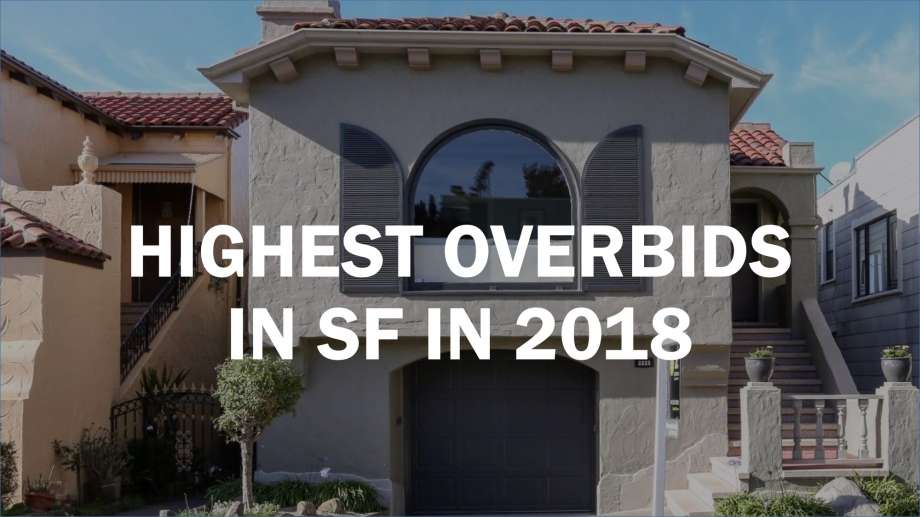
The gallery above displays the year’s top five over-bids.  According to data provided by The FrontSteps.com, the biggest over-bid was 75.71 percent. Moving down the list, the fifth-highest was 69.05 percent over-asking.

Clearly, as long as people are willing to bid (and they are: 2018 is littered with sales closing 60 percent or higher over asking), prices can keep climbing.

What’s on tap for 2019? We can’t be sure of exactly how much more real estate will cost than it did in 2018, but we’re pretty sure it won’t cost less.

Anna Marie Erwert writes from both the renter and new buyer perspective, having (finally) achieved both statuses. She focuses on national real estate trends, specializing in the San Francisco Bay Area and Pacific Northwest. Follow Anna on Twitter: @AnnaMarieErwert


Article source: https://www.sfgate.com/realestate/article/SF-s-top-5-over-bids-for-2018-show-how-crazy-the-13482104.php

Posted in SF Bay Area News | Tagged | Leave a comment

Here Are the Top 5 Bay Area Stories of 2018

The Bay Area has been through a lot in 2018. 

We’ve seen rising concerns about the dirty streets in San Francisco, the housing crisis across the region, wildfire smoke from Butte County and a horrific shooting in the heart of Silicon Valley. 

The stories below were the most viewed stories with unique visitors, according to Adobe Analytics. Here are NBC Bay Area’s top 5 stories of the year:

#1 - Suspect in YouTube Shooting Posted Rants About the Company Online

YouTube Shooting Suspect Posted Rants About the Company97f1e YouTube Shooting Suspect Posted Rants About the Company Here Are the Top 5 Bay Area Stories of 2018

The NBC Bay Area Investigative Unit has confirmed the identity of the shooter who opened fire on YouTube’s campus in San Bruno Tuesday. Nasim Aghdam, 38, lived in Southern California and appears to have had a robust presence on YouTube.

(Published Tuesday, April 3, 2018)

On April 3, Nasim Aghdam randomly opened fire at the YouTube headquarters in San Bruno, injuring four people.

One witness told NBC Bay Area he was at a fast-food restaurant nearby and heard at least 20 shots within two minutes. “I knew the shooter was right by me because you could feel the sensations of the bullet,” he said.

Aghdam died by a self-inflicted wound.

NBC Bay Area’s Investigative Unit later found that Aghdam felt that her videos were “discriminated and filtered” by the company.

#2 - Survey of Downtown San Francisco Reveals Trash on Every Block

Survey of Downtown SF Reveals Trash, Feces, Drug Needles97f1e Diseased%2BStreets1 Here Are the Top 5 Bay Area Stories of 2018

The NBC Bay Area Investigative Unit surveyed a section of downtown San Francisco to determine the amount of feces, hypodermic needles, and garbage littering the heart of the city. The results reveal a disgusting and potentially deadly mix of contamination that experts now believe could exceed some of the dirtiest slums in the world. Investigative reporter Bigad Shaban reports on a story that first aired Feb. 18, 2018.

(Published Sunday, Feb. 18, 2018)

The NBC Bay Area Investigative Unit surveyed 153 blocks of downtown San Francisco in search of trash, needles, and feces.

The investigation revealed trash littered across every block. The survey also found 41 blocks dotted with needles and 96 blocks sullied with piles of feces.

#3 - Photos of Raw Meat in Shopping Carts at San Jose’s 99 Ranch Market Go Viral

Photos of Raw Meat in Shopping Carts at San Jose’s 99 Ranch Market Go Viral97f1e Photos of Raw Meat in Shopping Carts at San Jose s 99 R Here Are the Top 5 Bay Area Stories of 2018

A local San Jose grocery store is under investigation after a customer witnessed raw meat being transported in Costco shopping carts. Anoushah Rasta reports.

(Published Friday, Jan. 26, 2018)

Loretta Seto was about to shop at 99 Ranch Market, a grocery store at Hostetter Road and Lundy Avenue in San Jose, when she witnessed raw meat being transported in shopping carts, took photos and posted them on Facebook.

The post didn’t just go viral, it caught the attention of the city’s Department of Environmental Health, and it also sparked a conversation on the unsanitary methods the meat vendor used to transport the meat.

#4 – SF Mayor: ‘There’s More Feces … Than I’ve Ever Seen’

SF Mayor: There’s More Feces … Than I’ve Ever Seen.97f1e SF Mayor   There s More Feces ... Than I ve Ever Seen.  Here Are the Top 5 Bay Area Stories of 2018

San Francisco Mayor London Breed, in her first one-on-one interview since taking office, said homeless advocacy groups that receive funding from the city need to better educate the homeless to “clean up after themselves.” Bigad Shaban from NBC Bay Area’s Investigative Unit reports.

(Published Saturday, July 14, 2018)

NBC Bay Area interviewed San Francisco’s then newly-elected Mayor London Breed about her plan to clean up the city.

In her first one-on-one interview since taking office, Breed said “There is more feces on the sidewalks than I’ve ever seen growing up here. That is a huge problem and we are not just talking about from dogs — we’re talking about from humans.”

#5 - Northern California Air Quality Currently the Worst in the World

Northern California Air Quality Currently Worst in the World328a1 Bay Area s Air Quality Currently the Worst in the World Here Are the Top 5 Bay Area Stories of 2018

Smoke from the Camp Fire continued to smother the Bay Area on Thursday, making the air quality in the Bay Area currently the worst in the world, according to PurpleAir, an air quality monitoring app. Jeff Ranieri, Sergio Quintana and Cheryl Hurd report.

(Published Thursday, Nov. 15, 2018)

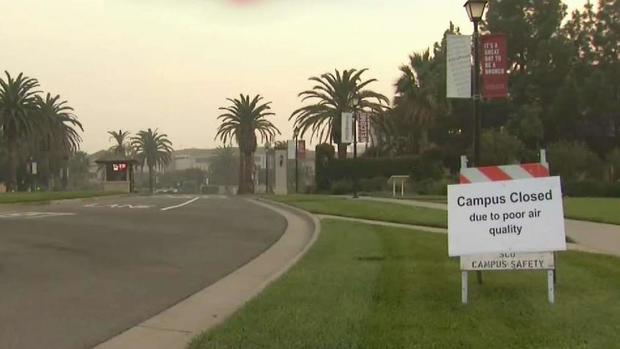
Smoke from the deadly Camp Fire smothered the Bay Area in November and dropped the air quality in Northern California to the worst in the world.

Skies were hazy and the scent of something burning could be smelled in the area for days. The air got so bad that it forced several schools to close campuses.

2018 Honorable Mentions:

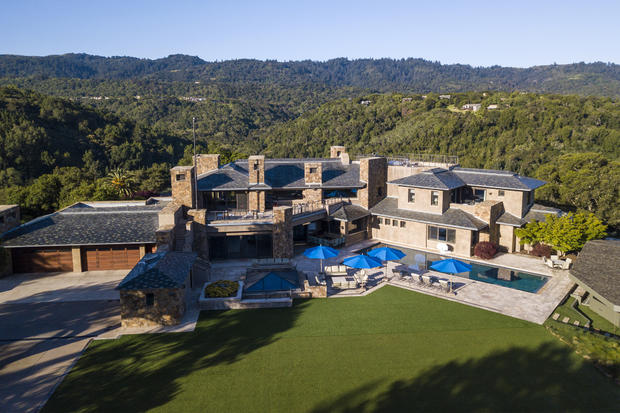
Take a Look Inside the Palo Alto Estate Listed for Nearly $100 Million

In June, an estate located at the Palo Alto Hills was listed for nearly $100 million and could set a new record if sold. It’s still on sale as of Dec. 26, according to the Palo Alto real estate’s website.

328a1 0626 PA Aerial Here Are the Top 5 Bay Area Stories of 2018Look Inside the Palo Alto Estate Listed for Nearly $100M

Fisherman’s Rescue of Entangled Whale Caught on Camera

A fisherman was being hailed as a hero after he jumped into the water off the Central California coast to free a humpback whale entangled in a rope.

Fisherman’s Rescue of Entangled Whale Caught on Camera328a1 Fisherman s Rescue of Entangled Whale Caught on Camera Here Are the Top 5 Bay Area Stories of 2018

A commercial fisherman is being hailed a hero after he jumped into the water off the the Central California coast to free a humpback whale entangled in a rope, a rescue that was captured on video in September. Sergio Quintana reports.

(Published Wednesday, Oct. 31, 2018)

Get the latest from NBC Bay Area anywhere, anytime

  • 328a1 bay area icon Here Are the Top 5 Bay Area Stories of 2018

    Download the App

    Available for IOS and Android

Posted in SF Bay Area News | Tagged | Leave a comment