Richmond ferry to SF begins Thursday, ushering new era for water travel in the Bay Area

Click here if you’re unable to view the gallery or video on your mobile device.

RICHMOND — For the first time in seven years, the Bay Area will inaugurate a new ferry route — part of an ambitious effort to harness one of the region’s most underutilized assets when it comes to getting people out of their cars: The San Francisco Bay.

Promising an alternative to the harrowing Interstate 80 grind from Hercules all the way down to the Bay Bridge, a new Richmond terminal will on Thursday begin offering weekday commuter service to San Francisco. It’s the latest upgrade in a series of expansions for the Water Emergency Transportation Authority (WETA), also known as the San Francisco Bay Ferry, which runs routes from Vallejo, Oakland, Alameda and South San Francisco.

For commuters braving what’s been dubbed one of the Bay Area’s worst commutes, it can’t come soon enough, said Richmond resident Sharon Butticci.

“I’ve been dreaming about this for years,” she said. Since moving to Richmond seven years ago, the former Sausalito resident has longed for the ease of access to San Francisco the Sausalito ferry offered. “I’ve been missing it. I just don’t want to drive across the bridge and deal with all that traffic.”

b037a EBT L RICHFERRY 0107 12 Richmond ferry to SF begins Thursday, ushering new era for water travel in the Bay Area
RICHMOND, CA – JANUARY 02: A ferry boat leaves the new San Francisco Bay Ferry terminal during a test run in Richmond, Calif., on Wednesday, Jan. 2, 2019. The Water Emergency Transportation Authority’s (WETA) new dock is located near the Craneway Pavilion and Rosie the Riveter Museum, and service will begin on Jan. 10. (Jane Tyska/Bay Area News Group) 

The San Francisco Bay Ferry may carry just a fraction of the total commuters — carting around 10,000 passengers daily compared to 270,000 drivers crossing the Bay Bridge and 432,000 riders hopping onto BART — but there was a time in the mid-1930’s when ferries ruled the bay waters, shuttling more than 150,600 passengers each day.

Those numbers petered out after the Golden Gate and Bay bridges were built and may never return, but there are plans to vastly expand the ferry network by growing the landings during peak-commute hours from five to 25 by 2040 and quadrupling the number of passengers — which actually might make a meaningful dent in traffic, said Arielle Fleisher, who studies transportation policy for SPUR, an urban planning think-tank.

“It’s about giving people more choices besides the car, and giving people better ways to get around the bay,” she said. “And, frankly, (the ferry’s) got a great view.”

Already, the water authority has opened two new maintenance facilities in Alameda and Mare Island and is expanding its downtown San Francisco terminal — all of which will allow more frequent service, said Nina Rannells, the agency’s executive director. Beginning Thursday, WETA will have 12 vessels operating on five separate routes, including the new Richmond line, with two more coming soon, but the goal is to eventually increase that to 44 ferries operating on 12 routes.

“Everything is coming together,” Rannells said. The number of riders boarding the ferries has doubled in the past six years as congestion worsens on Bay Area freeways and bridges, she said. “We can barely build boats fast enough.”

75994 EBT L RICHFERRY 0107 3 Richmond ferry to SF begins Thursday, ushering new era for water travel in the Bay Area
RICHMOND, CA – JANUARY 02: Workers put finishing touches on the new San Francisco Bay Ferry terminal in Richmond, Calif., on Wednesday, Jan. 2, 2019. (Jane Tyska/Bay Area News Group) 

Initially, the Richmond ferry is expected to handle around 400 daily round-trips, growing to between 1,700 and 1,800 when it’s fully utilized, said Chad Mason, WETA’s project manager for the Richmond terminal.

The ferry will also be a significant driver of development in a city that has largely been passed up by the Bay Area’s real estate boom, said Richmond Mayor Tom Butt. A private operator had tried to implement ferry service from Richmond to San Francisco in the early ’90s, he said, but a sluggish economy and the lack of public subsidies made it unfeasible. It didn’t help that the ferry was slow, Butt said, with trips lasting just shy of an hour. WETA’s ferry will shuttle passengers in roughly 35 minutes.

Brooke Maury and Sarah Rosen sold their San Francisco apartment for a condo in Richmond’s Marina Bay neighborhood, roughly a mile-and-a-half walk from the new terminal, in anticipation of the ferry’s opening. Both commute into San Francisco, packing themselves into overcrowded BART cars, an experience they’re looking forward to leaving behind.

“We’re really excited about it,” Maury said.

But the promise of more development is stoking fears that those who can afford to live in “one of the last bastions of affordability in the Bay Area” may see their rents rise, said Eduardo Martinez, a Richmond city councilmember. Rents for a one-bedroom apartment averaged $1,696 in Richmond in 2018, compared to $3,261 for San Francisco, according to the website, RentCafe.com.

Maury shares his commute on BART with a number of service workers heading into the city, and he wonders where they’ll go if rents grow.

“That is a concern, for sure,” he said

75994 EBT L RICHFERRY 0107 5 Richmond ferry to SF begins Thursday, ushering new era for water travel in the Bay Area
RICHMOND, CA – JANUARY 02: A view of the new San Francisco Bay Ferry terminal dock and Craneway Pavilion is seen from the wheelhouse of a ferry boat in Richmond, Calif., on Wednesday, Jan. 2, 2019. (Jane Tyska/Bay Area News Group) 

For the first time in 15 years, Richmond is seeing new construction that will increase the supply of housing, Butt said. But, Martinez said it’s also important to include affordable housing in new developments around the ferry terminal.

“There is a lot of interest from developers,” he said. “We need to prepare for these changes and make sure economic development doesn’t equal gentrification.”

Ultimately, the city and WETA would like to have weekend service to support events at the Craneway Pavilion and ferry tourists to the Rosie the Riveter-WWII Home Front National Historical Park. That had been in the plans thanks to Regional Measure 3, the $3 toll hike over six years that voters approved last year. But two lawsuits challenging the increases have held up the money. WETA would have received an additional $35 million annually to support additional services.

“It’s unfortunate,” she said. “We really have a lot of transportation needs in the Bay Area.”

0759d EBT L RICHFERRY 0107 2 Richmond ferry to SF begins Thursday, ushering new era for water travel in the Bay Area
RICHMOND, CA – JANUARY 02: A ferry pulls up to the new San Francisco Bay Ferry terminal dock during a test run in Richmond, Calif., on Wednesday, Jan. 2, 2019. (Jane Tyska/Bay Area News Group) 

Richmond ferry: What you need to know to ride

0759d EBT L RICHFERRY 0107 90 01 Richmond ferry to SF begins Thursday, ushering new era for water travel in the Bay AreaWhere’s the terminal? Located at the end of Harbor Way South, the terminal is directly adjacent to the Craneway Pavilion. Put 1414 Harbour Way South into your GPS device, and you can’t miss it.

When does it run? The first ferry leaves Richmond for San Francisco at 6:10 a.m., followed by morning departures at  7:10, 8:15 and 8:40. On the way back from San Francisco, the ferry leaves at 4:30 p.m., 5:20 p.m., 6:35 p.m. and 6:50 p.m. For those doing the reverse commute from San Francisco to Richmond, there are two morning departures at 6:25 and 7:55. In the evening, two ferries at 5:15 p.m. and 6:05 p.m. depart Richmond for San Francisco.

How much does it cost? A one-way, adult fare is $9, or $6.75 with a Clipper card. Clipper card users simply tap on and off on the gangways. Otherwise, you can buy your ticket on the ferry. Youth between the ages of 5 and 18, seniors aged 65 and over, and disabled passengers pay $4.50. Kids under 5 years old are free.

Can I park there? Yes. There is free parking with 362 spaces.

What about transit? AC Transit’s 74 bus stops right in front of the terminal and runs every half-hour, with arrivals roughly 10 minutes before the ferry takes off. The 74 bus also stops in front of the Richmond BART station and is about a 10-minute ride to the terminal. There’s a $2.25 discount for riders who take the bus to the ferry and vice versa, which makes your bus ride free. Yipee!

What if I want to bike? You sure can. There will be standard bike racks at the terminal, along with the more-secure BikeLink lockers, which you can unlock with a BikeLink card. There are also at least 20 spots for bikes on the ferry, so you can bring your bike aboard, too.


Article source: https://www.eastbaytimes.com/2019/01/04/richmond-ferry-service-to-sf-begins-thursday-ushering-new-era-of-expanded-water-travel-for-bay-area/
Posted in SF Bay Area News | Tagged | Leave a comment

December home prices drop across SF and East Bay

A few days after sources like the data firm Core Logic and the California Association of Realtors reported that home sales dropped across all nine Bay Area counties year over year for nearly half of 2018, new data from the listing aggregate site suggests that the actual price of a home is on a downward trajectory as well.

Released Thursday morning, figures from 500 U.S. cities include stats for San Francisco showing that the price of an SF home—both houses and condos—dropped 4.31 percent since the previous month and 3.72 percent year over year, for a median price of just over $855,000.

That’s based on 4,834 December listings on Realtor, a number which is up 73.83 percent since December 2017.

The average SF area listing sticks around 51 days on the site. Compare that to spring of 2018 when the same figure was just 21 days, or the summer of the previous year when it was 24.

Realtor’s San Francisco stats actually refer to the larger SF metro area, which includes Oakland and Hayward. In the South Bay prices are down an even more drastic 11.5 percent year over year for a median price of just over $1 million. Like SF and the East Bay, South Bay listings on the site last 51 days on average.

Note that Realtor does not carry every listing on the market and that its sample size is skewed toward those sellers and realtors that choose to list on that site.

These figures come on the same day that the San Francisco Chronicle reports that the most expensive 2018 homes sold in the East Bay had to knock millions off of their asking prices. That’s technically anecdotal, but still intriguing in the face of larger statistical declines.

In November, Realtor reported that the number of Bay Area homes taking prices cuts soared year over year, with spikes ranging from 89 percent in Marin County to 356 percent in Sonoma County. In SF it was 92 percent.

Article source: https://sf.curbed.com/2019/1/3/18166996/december-home-prices-sf-oakland-drop-2018

Posted in SF Bay Area News | Tagged | Leave a comment

San Francisco Bay Area home sales drop off again, says data firm

Orange County-based data firm Core Logic released more grim and/or encouraging news (depending on your point of view) about the Bay Area housing market last week, reporting that sales dropped across all Bay Area counties year over year and that “sales have fallen on a year-over-year basis the past six consecutive months.”

Core Logic has reported since summer that sales have stalled across the region. As always when it comes to statistics, it’s best to interpret the numbers conservatively; even a real decline can often turn out to be a temporary dip or fluctuation, and even the most aggressive market will eventually hit a lull sooner or later and will often rebound.

However, the longer the trend continues, the more likely it is to represent a significant downward trend. Which might be good news for anyone suffocating from the region’s towering cost of living, but could also have troubling ramifications for the local economy.

Here’s how Core Logic breaks down November:

  • The number of homes sold in the Bay Area declined more than 15 percent from last year: The total across nine counties was 6,147 houses and condos. This time last year it was 7,253, a drop of 15.2 percent. “Total November 2018 home sales in the San Francisco Bay Area were the lowest for that month since November 2014,” according to an emailed statement from the data firm.
  • A trend of declining sales dominated the last half of 2018: According to previous monthly reports, “[S]ales have fallen on a year-over-year basis the past six consecutive months,” starting with an 8.3 percent year over year decline in June and peaking with a 18.8 percent crash in September.
  • The effects spread across all types of homes: According to Core Logic analyst Andrew LePage, “November’s slowdown affected all major price categories, including a nearly 10 percent annual drop in $1 million-plus sales.” LePage adds, “Market corrections can spook high-end buyers.” Of course, in San Francisco most houses (but not condos) fall within the million-dollar plus range.

48e2c shutterstock 1271913661 San Francisco Bay Area home sales drop off again, says data firm

Marin County sales fell the hardest.

Photo by 

  • Nevertheless, prices are still up: Core Logic estimates the median price of a Bay Area home in November at $815,000. While that’s down from recent months—October was $847,000 and back in the summer when the declines began it hit $875,000—it’s still well up from November 2017’s average of $785,000.
  • Despite regional declines San Francisco itself came out relatively strong: In the city, sales were down six percent year over year—significant, but a small drop (the second lowest regionally) compared to most of the rest of the neighboring counties. Marin County fell hardest, down 32 percent, with San Mateo County declining 20.8 percent. Napa County had the smallest decline with 5.8 percent, although it also had the smallest sample size, selling just 114 homes compared to SF’s 498 and Santa Clara County’s regional high of 1,364 (down 11.9 percent from 1,548 last year).

The California Association of Realtors [CAR] reported a similar trend in its own November 2018 figures, with SF coming out notably worse than in the Core Logic numbers.

According to CAR, sales in SF dropped 12.2 percent compared to 2017, with the median price of a house in SF actually down year over year, from $1.5 million last year to more than $1.44 million now.

The discrepancy between the two source’s numbers are most likely due to the fact that CAR only compiles single-family home sales while Core Logic includes condo sales in its figures.

Both agencies agree that sales have declined consistently for months.

Article source: https://sf.curbed.com/2019/1/2/18165468/san-francisco-home-sales-drop-numbers-2018-figures

Posted in SF Bay Area News | Tagged | Leave a comment

Sound Off: What’s your prediction for Bay Area real estate in 2019?


  • d73c6 920x920 Sound Off: What’s your prediction for Bay Area real estate in 2019?

    Paul Ybarbo

    Paul Ybarbo


    Photo: Paul Ybarbo

  •  Sound Off: What’s your prediction for Bay Area real estate in 2019?

Caption

Close

Paul Ybarbo

Paul Ybarbo


Photo: Paul Ybarbo


A: What an exciting time to be in San Francisco real estate: adjusting interest rates, chaotic political environment, volatile stock market, short term rental restrictions.

Can anything else be added to the formula? Yes — low unemployment, limited construction, city-based IT/biotech/hi-tech companies and rumors of IPOs.


This seemingly incompatible recipe has created an extremely expensive market for renters and buyers. “Super commutes” are becoming more prevalent.

Buyers should consider a “hold” position of five to seven years, as we are at a nearly 10 year bull market and are seeing signs of “cooling” appreciation. Flip buyers should be particularly astute with purchase/remodeling costs to hedge against more modest gains. Sellers should be aware that buyers are price sensitive and “location location location” still rings true.


Though the holiday feast may suggest a lethargic market, those prepared to strike may find themselves with less competition or an opportunity to negotiate.

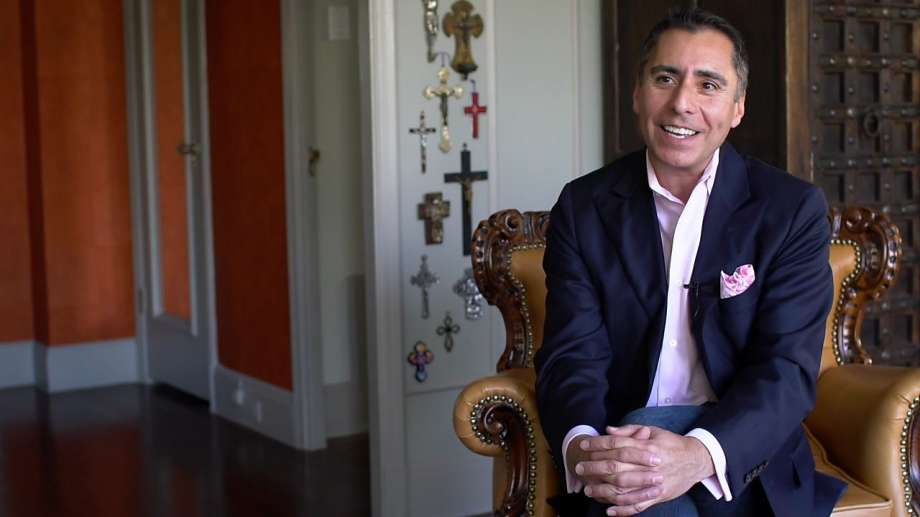
Paul Ybarbo, Sotheby’s International Realty, 415-640-7281, paul.ybarbo@sothebyshomes.com.

A: The Bay Area real estate market shifted in 2018 with buyers gaining a bit of control. The market will be more balanced in 2019, bringing stable prices and opportunities for both buyers and sellers.

Sellers will still be able to lock in profits, but higher interest rates and high prices will result in less demand and more days on market. Proper pricing and choosing an agent who is expert at marketing and making deals will be essential.

Cooling demand will give buyers more time to investigate and make an informed decision.

The Bay Area’s innovative companies will create wealth and buoy the market. Several local companies plan to go public in 2019, and each IPO event should create new millionaires who will diversify into real estate.

There are warning signs in other markets—including New York and Los Angeles—where the market has been slowing. Consumer confidence is up right now, but markets can turn by a terrorist attack or a natural disaster. There is also political risk, with a federal government that is stagnated and in chaos. Markets hate that unpredictability.

John Solaegui, Compass, 415-999-0673, john@havengroupsf.com.


A: Based on 2018 data I can extrapolate trends for the first quarter of 2019 but not beyond. Since the mid 2018, single family prices have decreased 2 to 10 percent. Smart sellers adjusted by lowering asking prices. Still, homes that sold within 30 days closed an average of 115 percent above list, or about $100,000 on a $900,000 home.

San Leandro has been the most active market recently. This is not surprising given it has the lowest average price per square foot and reasonable access to employment centers. No question buyers are out looking. One new listing in Montclair, which had its first open two days before Christmas, had around 40 buyers come through and is considering three offers.

More housing will come on the market in the first quarter of 2019, but there are still more buyers than sellers. Prices have already adjusted and rates are stable, thus there is no further downward pressure on prices.

Astrid Lacitis, Vanguard Properties, 415-860-0765, astrid.lacitis@gmail.com.


Article source: https://www.sfgate.com/realestate/article/Sound-Off-What-s-your-prediction-for-Bay-Area-13504629.php

Posted in SF Bay Area News | Tagged | Leave a comment

As retail withers, Bay Area gyms flex their muscles

Bay Area residents who have resolved to work out more in 2019 have plenty of options.

National chains and boutique studios alike are bulking up with new locations, fueled by health-conscious customers with growing appetites for tangible experiences, according to operators and retail experts.

Fitness operators signed 28 San Francisco leases from 2016 to 2018, according to real estate firms Cushman Wakefield and CoStar. A city retail study in February found that traditional retail growth has slowed but fitness providers and restaurants are still eager to expand. Across the Bay Area, 53 fitness leases were signed in the past three years. That’s nearly twice as many as a decade earlier, when 27 leases were signed between 2006 and 2008, according to CoStar.

“It’s really representative of a cultural shift. The Millennials, for all their disdain for regular retail, they all go eat and work out like crazy,” said Matt Holmes, principal of brokerage Retail West, which works with fitness tenants. “It’s all about community.”

Nationwide, fitness memberships grew to 60.9 million last year, up 6.3 percent from the prior year and up 33.6 percent since 2008, according to the International Health, Racquet Sportsclub Association, an industry group.

 As retail withers, Bay Area gyms flex their muscles

The upscale fitness club Equinox leased two new San Francisco locations this year and is opening in the new City Center Bishop Ranch shopping center in San Ramon. It already has three locations in San Francisco, along with one each in Berkeley, Palo Alto and San Mateo.

The Bay Area is one of the company’s “top growth opportunities” along with New York and Los Angeles, said Jeff Weinhaus, president and chief development officer of Equinox, which opens in big cities and nearby affluent suburbs.

Equinox is expanding into an under-construction housing tower at 1500 Mission St., developed by Related California, whose parent company also owns Equinox.

The company also leased former upper-floor office space at San Francisco’s 50 Beale St. — once the headquarters of two major corporations, Bechtel and Blue Shield, which are both moving out. A club will open in the middle of next year.

Having an Equinox in an office building makes other tenants happy and drives office rents up, said Weinhaus. That’s motivated landlords to convert upstairs work space into fitness space even in pricey office markets like San Francisco, he said. In contrast, some upper-floor stores in San Francisco’s Union Square and Mid-Market have struggled and building owners have sought to convert retail space into offices.

 As retail withers, Bay Area gyms flex their muscles

Being near, or even in the same building, as housing and office uses is deliberate. “It’s really about convenience and daily need,” said Weinhaus. “People are coming to us day in and day out.”

Gyms and fitness centers can thrive in upper floors and basements, where traditional retailers might struggle, said Helen Bulwik, a veteran retail consultant and senior partner at the Newport Board Group. A local operator, Fitness SF, recently leased second-floor space at the new Transbay Transit Center.

The difference is gyms draw members who are more dedicated, rather than casual shoppers who might overlook an upper-level retailer, said Bulwik. They can also offer different services like yoga, Pilates, strength training or cardio, which means they don’t cannibalize each others’ sales, she said.

“You can kind of stick a gym anywhere. It’s kind of like Starbucks.”

Some operators are finding it harder to expand in San Francisco. 24 Hour Fitness, the large national gym chain based in San Ramon, has been growing mostly in suburbs.

“We haven’t really been able to find a new location in the city in a long time,” said Frank Napolitano, president of 24 Hour Fitness. “Dense downtown cores tend to have the boutique-type operators. They don’t need as much space.”

24 Hour Fitness seeks a minimum of 15 years in lease terms and spaces of 38,000 square feet and more, which are more available in the suburbs.

Retail struggles have presented an opportunity: 24 Hour Fitness opened in the past year in El Cerrito, where it took over a long-vacant space formerly occupied by Safeway. It also opened in Milpitas in a former Mervyn’s department store.

Fitness operators are grappling with some of the same challenges as retailers. Construction costs are at all-time highs in the Bay Area and finding labor is difficult.

“It’s challenging to find the right real estate,” said Adam Shane, a partner at Barry’s Bootcamp, which offers group classes with high-intensity interval training, weights and running. The company prefers ground-floor spaces, with high ceilings of 14 feet and rectangular, clean spaces.

In the coming weeks, Barry’s Bootcamp will open new locations in the Castro neighborhood, in Palo Alto’s Stanford Shopping Center and in Burlingame.

The Castro location, in a former CVS, cost more than $1.5 million to build, Shane said.

The upside of being in the Bay Area is there are a lot people who are willing to spend a premium on fitness. Equinox costs nearly $200 per month in its San Francisco locations. Barry’s Bootcamp costs $35 per class in San Francisco, with discounts for multiple classes, close to its highest rates in the country, said Shane.

Alicia Kjeldgaard, a 15-year resident of the Marina district, has been attending the local Barry’s Bootcamp since February 2016. She said the communal aspect of the class draws her in.

“I never thought I was a group fitness person,” said Kjeldgaard, who has attended more than 500 classes. “I really feed off the energy from the group and from other people.

“It’s a like-minded community,” she said. “I made a really good friend just from running next to her on the treadmill three times a week.”

Kjeldgaard prefers paying for each class rather than a monthly gym membership because it gives her more flexibility — she can take time off to travel — and motivates her to show up.

 As retail withers, Bay Area gyms flex their muscles

Another growing group fitness brand is Rumble, which offers boxing-inspired, 45-minute classes focused around punching bags and weights. Its first Bay Area location opened last month in San Francisco’s Financial District, with four more locations planned in the next two years in the Marina, South of Market and Palo Alto.

Sixty students, most of them women, gathered in a dark studio on opening day, where thumping electronic music was reminiscent of a nightclub.

Seventy percent of customers are women, said Andy Stenzler, CEO of Rumble, which opened its first location in January 2017 in New York.

“This is their night out,” he said. “Boxing has always been a great full-body workout. We made it accessible, so it’s fun.”

There’s no sparring with other people, other than practicing punches with a trainer wearing mitts, he said. The workouts cost $34 per session, with discounts for multiple classes.

Will Keightley, who started going to classes the first week Rumble opened in San Francisco, also credits the workout community for drawing him in.

“You see them day in and day out. It holds you accountable. They become your friends,” he said. “When someone is panting and sweating and jabbing the heck out of a bag hanging next to you, you can’t help but want to match that same intensity.”

Rumble spent $3 million on its new San Francisco location, which has a single studio. It was formerly occupied by Beal Bank and is across the street from an Equinox, which is Rumble’s largest investor. Other backers include pop singer Justin Bieber and actor Sylvester Stallone, who played fictional boxer Rocky Balboa.

Stenzler expects to recoup the costs in less than a year.

“Downtown San Francisco’s challenging right now if you’re a traditional retailer,” said Stenzler, who was formerly CEO of restaurant chain Cosi. “You really have to create a need or something that customers really desire.”

Gyms aren’t vulnerable to online shopping in the way that clothing or electronics stores are. But some tech fitness companies are trying to bring the workout home, with both hardware and monthly subscriptions for digital lessons.

San Francisco startup Tonal has designed an in-home, $2,995 training system that uses electromagnetics to create precise weight resistance. New York tech company Mirror has a $1,500 reflective screen that incorporates digital lessons. Peloton, the New York maker of $2,000 stationary bikes, reached a $4 billion valuation last August and said it is on track to generate $700 million in annual revenue.

Shane of Barry’s Bootcamp doesn’t see those offerings as threats, and said they could encourage users to join a gym as well.

“Anything that gets anybody interested in fitness helps the fitness industry,” he said. “What you can’t get online is the feeling of belonging and the emotional connection you have with people.”

Roland Li is a Chronicle staff writer. Email: roland.li@sfchronicle.com Twitter: @rolandlisf

Article source: https://www.sfchronicle.com/business/article/As-retail-withers-Bay-Area-gyms-flex-their-13502233.php

Posted in SF Bay Area News | Tagged | Leave a comment