Bay Area political events: Swearing-in celebrations, Swing Left

Upcoming political events in the Bay Area.

TUESDAY

New S.F. supervisors: Inauguration celebration for new San Francisco Supervisors Shamann Walton, Gordon Mar and Matt Haney. Free. 6 p.m., Great American Music Hall, 859 O’Farrell St., San Francisco. More information is here.

WEDNESDAY

Swing Left: Swing Left San Francisco holds its January meeting. 6:30 p.m., Noe Valley Ministry, 1021 Sanchez St, San Francisco. More information is here.

THURSDAY

Basic income: Panel discussion on the limitations a guaranteed basic income as a response to poverty, unemployment and inequality. Free. Stanford Law School, Crown Building, Room 190, 559 Nathan Abbott Way, Stanford University. More information is here.

Public bank: Strategy session for organizing a San Francisco public bank. 6 p.m. The Women’s Building, 3543 18th St., San Francisco. More information is here.

FRIDAY

Mike McGuire: State Sen. Mike McGuire, D-Healdsburg, discusses issues in the Legislature at a breakfast sponsored by the Marin Conservation League. $15 for members, $20 for nonmembers. 7:30 a.m., McInnis Park Golf Center, 350 Smith Ranch Road, San Rafael. More information is here.

Progressive strategy: S.F. Party for Socialism and Liberation discusses opportunities for progressive gains from current events in Washington. $3-$10 donation. 7 p.m., 2969 Mission St., San Francisco. More information is here.

SUNDAY

The ‘Forever War’: Journalist Peter Byrne on U.S. military strategy and its identification of much of the rest of the world as “the enemy.” Organized by Peace Action of San Mateo County. Contributions welcome. 7 p.m., Unitarian Universalists of San Mateo, 300 East Santa Inez Ave., San Mateo. More information is here.

MONDAY

Nationalism: Political reporter and author John Judis discusses the underlying causes of the nationalist revolt and its global impact, at the Commonwealth Club. $20 for nonmembers, $8 for students. 6 p.m., 110 Embarcadero, San Francisco. More information is here.

Living off the land: Is it possible to live off the land, fully self-sufficient? A discussion with the general manager of Burning Man’s Fly Ranch. Free. 6:30 p.m., Manny’s, 3092 16th St., San Francisco. More information is here.

Gun violence in schools: A panel discussion with Professor Ron Avi Astor of the University of Southern California; Alisa Crovetti UC Berkeley Graduate School of Education; Alla Lefkowitz of Everytown for Gun Safety; and Emily Ozer of the UC Berkeley School of Public Health. Free. 11:30 a.m., Graduate School of Education, Room 1104, UC Berkeley. More information is here.

JAN. 15

Phil Ginsburg: San Francisco Recreation and Park General Manager Phil Ginsburg is featured in Manny’s Local Leaders series. Free. 6:30 p.m., 3092 16th St., San Francisco. More information is here.

JAN. 16

New citizen voting: Democracy Action volunteers will register new citizens to vote following swearing-in ceremonies. Two sessions, at 10 a.m. and 2 p.m. Paramount Theatre, 2025 Broadway, Oakland. More information is here.

Elections and democracy in digital age: A panel discussion and question-and-answer session with members of the Kofi Annan Commission on Elections and Democracy in the Digital Age. Free. 5 p.m., Koret-Taube Conference Center, Gunn-SIEPR Building, 366 Galvez St., Stanford University. More information is here.

JAN. 17

“The Iron Wall”: Screening of “The Iron Wall,” a documentary with interviews ofr Israeli and Palestinian peace activists and political analysts, as well as Israeli settlers and soldiers, and Palestinian farmers. Followed by discussion with Dalit Baum, director of economic activism for Palestine at the American Friends Service Committee. Sponsored by Mount Diablo Peace and Justice Center. $10 in advance, $15 at the door. 6 p.m., Our Savior’s Lutheran Church, 1035 Carol Lane, Lafatyette. More information is here.

JAN. 19

Women’s Marches: Third annual San Francisco Women’s March and rally begins at 11 a.m. at Civic Center. More information is here. Marches will also be held in several other Bay Area cities; times and locations are here.

Libertarian convention: Libertarian Party of San Francisco holds its annual convention. Agenda includes activist training, speakers and socializing. Free. 1 p.m., ClickUp, 580 Howard St., Suite 101, San Francisco. More information is here.

Race and education: A panel discussion on the impact of race on education, sponsored by the African American Community Health Advisory Committee and the African American Library Advisory Committee. Free. 2 p.m., San Mateo Public Library, 55 West Third Ave. More information is here.

JAN. 21

Bringing the Noise: 22nd annual event Martin Luther King Jr. Day event featuring young poets and multidisciplinary artists who focus on justice issues. Free; advance registration recommended. 7 p.m., Nourse Theater, 275 Hayes St., San Francisco. More information is here.

MLK Day in Piedmont: Celebration features Oakland’s youth poet laureate, Leila Mottley; Black Sheroes of Young Gifted and Black; Oakland Jazz Workshops; Together We Slam of Piedmont High School; and Oakland Interfaith Youth Choir. Free. Noon, Piedmont Veterans Memorial Building, 401 Highland Ave., Piedmont. More information is here.

JAN. 23

Indivisible Sausalito: Inaugural 2019 meeting of Indivisible chapter. 7 p.m., Studio 333, 333 Caledonia St., Sausalito. More information is here.

JAN. 24

Female Shariah judge: Screening of “The Judge,” a documentary about Kholoud Al-Faqih , the first woman to be appointed to the Middle East’s Shariah (Islamic law) courts. Benefit for Middle East Children’s Alliance. $15-$50. 7 p.m., Berkeley City College, 2050 Center St., Berkeley. More information is here.

JAN. 27

Restorative justice: A panel discussion on implementing restorative justice, sponsored by the American Civil Liberties Union of Northern California. Free. 2 p.m., Embassy Suites by Hilton, 101 McInnis Parkway, San Rafael. More information is here.

JAN. 28

Feminist resistance in Brazil: A forum discussion with four feminist leaders of the resistance to the radical right in Brazil. Free. 4 p.m., 220 Stephens Hall, UC Berkeley. Registration and more information are here.

JAN. 29

We Rise Women: 2020 strategy session featuring Sister District co-founder Lala Wu, Lisa Bennett of Swing Left and Indivisible, Sarah Grewe of Sister District and Airlift.fund founder Danny Altman. 6 p.m. Zephyr Real Estate, 350 Bon Air Center, No. 100, Larkspur. More information is here.

Feminism in China: Journalist and author Leta Hong Fincher discusses the rise of feminism in China. Sponsored by the World Affairs Council. $20 for nonmembers, $7 for students. 6:30 p.m., 312 Sutter St., Suite 200, San Francisco. More information is here.

JAN. 30

Negotiating with terrorists: Joel Simon, author of “We Want to Negotiate: The Secret World of Kidnapping, Hostages, and Ransom,” discuss the conflicts and consequences of negotiating with terrorists and paying ransom, in a World Affairs Council event. $20 for nonmembers, $7 for students. 6:30 p.m., World Affairs Auditorium, 312 Sutter St., Suite 200, San Francisco. More information is here.

“Watergate” documentary: Screening of the film “Watergate” and an appearance by director Charles Ferguson. Sponsored by Center for Latin American Studies at UC Berkeley. Free. 7 p.m., Sibley Auditorium, Bechtel Engineering Center, UC Berkeley. More information is here.

JAN. 31

Carbon neutral: Can California go carbon neutral? A conversation with Mary Nichols, chair of the California Air Resources Board, and Greg Dalton of Climate One. $20 for non-Commonwealth Club members, $7 for students. 6:30 p.m. 110 Embarcadero, San Francisco. More information is here.

FEB. 6

Robert Reich: Writer, public policy professor and former U.S. Labor Secretary Robert Reich discusses his new book, “The Common Good,” in a benefit for KPFA-FM. $12 advance tickets. First Congregational Church of Berkeley, 2345 Channing Way, Berkeley. More information is here.

Chris Christie: Former GOP governor of New Jersey discusses his new book, “Let Me Finish,” and his relationship with President Trump. $30 for non-Commonwealth Club members, $10 for students. 6:30 p.m., 110 Embarcadero, San Francisco. More information is here.

Stacey Abrams campaign: Ashley Robinson, political director of Stacey Abrams’ campaign for Georgia governor, and Genny Castillo, director of the campaign’s Latinx constituency efforts, discuss the lessons they learned and how to engage people of color in the political process. Sponsored by Democracy Labs. Free. 6:30 p.m. at Manny’s, 3092 16th St., San Francisco. More information is here.

To list an event, email Politics Editor Trapper Byrne at tbyrne@sfchronicle.com

Article source: https://www.sfchronicle.com/politics/article/Bay-Area-political-events-Swearing-in-13514516.php
Posted in SF Bay Area News | Tagged | Leave a comment

Snag a home on an overlooked stretch of Bay Area shoreline for $635,000


  • f1d68 920x920 Snag a home on an overlooked stretch of Bay Area shoreline for $635,000

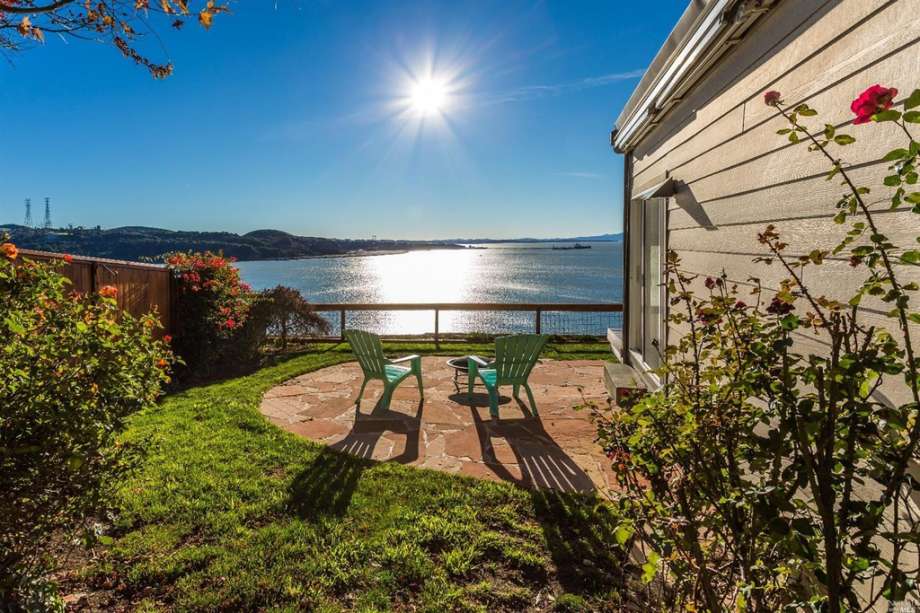
    A three-bedroom, three-bathroom waterfront home at 339 Jade Circle in Vallejo, Calif., is listed for $635,000.

    A three-bedroom, three-bathroom waterfront home at 339 Jade Circle in Vallejo, Calif., is listed for $635,000.


    Photo: Claude Capozzo

  •  Snag a home on an overlooked stretch of Bay Area shoreline for $635,000

Caption

Close

A three-bedroom, three-bathroom waterfront home at 339 Jade Circle in Vallejo, Calif., is listed for $635,000.

A three-bedroom, three-bathroom waterfront home at 339 Jade Circle in Vallejo, Calif., is listed for $635,000.


Photo: Claude Capozzo


A three-bedroom, three-bathroom home sits on an often overlooked stretch of Bay Area shoreline where you can snag waterfront property for less than many other places around the San Francisco region.

The sunny abode with jaw-dropping water views is located in the city of Vallejo at 339 Jade Circle on a point of land overlooking the confluence of the Napa River, the Carquinez Strait and the bay.

“It’s really unique because so few properties in the area have a waterfront view,” says listing agent Kevin Ortega of Napa River Realty. “Less than one percent of properties in California have waterfront views. Here you get views from the bridge to Mare Island.”

With 1,617 square feet, the 1991 home is listed for $635,000. That price is considerably less than what you would pay for a property with a comparable view in say the tonier communities of Sausalito or Tiburon, where townhouses peaking at the bay through trees sell for over $1 million.


For further comparison, the home is less than the median price of a home or condo in the Bay Area, currently standing at $855,000. But it’s more than the median price of a home in Solano County, where Vallejo is located. Here, the average price is about $430,000.

ALSO: $2.15 million waterfront house in a central Bay Area town that’s a ‘hidden secret’

The two-story home takes full advantage of the view with picture windows overlooking the water. The downstairs features an open layout with the living room, dining room and kitchen with bright, teal-colored cabinets providing a cheery space.


But no doubt, the property’s best spot is on the patio outside, which is surrounded by grass extending to the cliffs that drop down to the water. It’s the perfect place to end a day, watching the sun sink into San Francisco Bay.

Article source: https://www.sfgate.com/realestate/article/vallejo-home-with-view-solano-county-393-jade-circ-13515149.php

Posted in SF Bay Area News | Tagged | Leave a comment

9 Astonishing Numbers On The Bay Area Housing Crisis In 2018

(CBS SF) — With home prices and rents continuing to rise, affording a place to live continued to be one of the biggest issues of Bay Area life in 2018.

There were so many jaw-dropping figures over the last 12 months, here is a roundup of some of the more astonishing numbers linked to the housing crunch.

$117,400 That is what is considered “low income” for a family of four in Marin, San Mateo and San Francisco counties, according to the Department of Housing and Urban Development. The amount, which is nearly twice the national household median income, jumped 10 percent from the previous year. In a report by the California Association of Realtors, they found a prospective buyer would need an income of nearly $350,000 to buy in San Francisco or San Mateo counties.

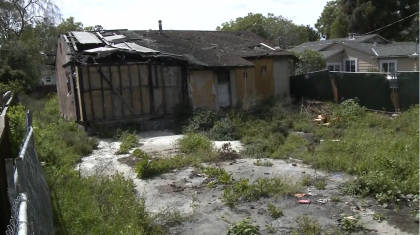
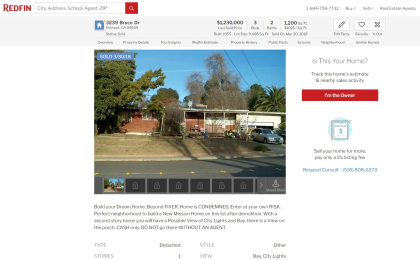
$1.23 million: That is what a teardown in Fremont sold for in March. Despite a listing that read “Beyond FIXER, Home is CONDEMNED, Enter at your own RISK,” the home sold above its $1 million asking price.

fbea9 fremont condemned 041618 01 9 Astonishing Numbers On The Bay Area Housing Crisis In 2018

Listing on Redfin.com of a condemned home in Fremont being sold for $1.23 million. (Redfin)

And it wasn’t the only uninhabitable property that fetched a high price tag, with a burned out home site in San Jose selling for $930,000 and a burned out Mountain View property selling for $1.6 million, above its $1.48 million asking price.

c04a6 burned out san jose home 051018 9 Astonishing Numbers On The Bay Area Housing Crisis In 2018

Burned out home in San Jose’s Willow Glen neighborhood sold for $938,000. (CBS)

22 years  The amount of time it would take for a median-income family ($118,000) to save up for a 20% down payment on a median-priced $1.2 million home in Silicon Valley, according to Zillow. A generation ago, a median-income San Jose family only needed 10.6 years to save up for a down payment.

3.5 : 1  The ratio of new jobs to housing units in the Bay Area, the MTC reported in September. Much of the housing crunch has been blamed on housing construction not keeping up with job creation. On the Peninsula, the housing / jobs imbalance is even worse. A report by the San Mateo Housing Leadership Council found San Mateo County added 72,000 jobs in the first half of the decade, but permitted the construction of less than 4,000 housing units, a ratio of 19 jobs for one new home.

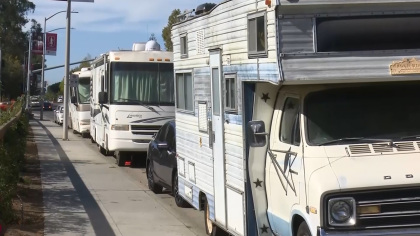
$400/month  That’s what a new kind of landlord is charging to rent out RV’s and park on the streets of Palo Alto, sources told KPIX 5’s Len Ramirez back in October. These landlords buy old, used-up RVs and rent them to homeless people or low-income workers, who then live on the streets.

c04a6 rv palo alto 101018 9 Astonishing Numbers On The Bay Area Housing Crisis In 2018

RVs parked along El Camino Real in Palo Alto. (CBS)

4,300  The number of students at San Jose State University who have experienced homelessness this past year, a school with a student body of 33,000. Earlier this month, students camped outside on campus to raise awareness.

46 percent  The percentage of Bay Area residents that have considered leaving the Bay Area, according to a Bay Area Council survey released in June. The housing crisis was cited as the top reason why so many desire to leave for the fourth year in a row.

48  The number of Bay Area zip codes that are on a list of the 100 most expensive in the U.S. Five of the 10 most expensive zip codes were in Silicon Valley, including Atherton (94027), which topped the list with a $6.7 million median sale price.

90 minutes  Length of time commuting one-way that constitutes a “super commute.” Modesto and Stockton, which is just beyond the Bay Area, lead the country in super commutes, according to an analysis by Apartment List. Lengthy commutes stretching several hours have even gone up among Bay Area residents, with San Francisco having the 6th highest percentage of super commuters in the U.S.

Other Notable Bay Area Housing Stories Of 2018:

• Once affordable East Palo Alto has joined the Bay Area’s million-dollar home club.

• San Francisco City Attorney Dennis Herrera is suing a couple who are accused of illegally renting out a below market rate unit (BMR), while they lived in a $2.8 million home on the Peninsula.

• In response to the housing crunch, one startup is offering dorm-style living, with shared kitchens and living rooms. The company, Starcity, told KPIX 5 claimed it had thousands of people on its waiting list and had plans to build dorm-style residences in San Francisco and San Jose.

• The housing crisis is prompting numerous bills that will be considered in the state legislature. State Sen. Scott Wiener (D-San Francisco) has signed onto multiple proposals in the upcoming year, including Senate Bill 50, a revival of his previous proposal which aims to increase housing near transit.


Tim Fang is a digital producer for CBS San Francisco and a native of the Bay Area. Follow him on Twitter @fangtj.

Article source: https://sanfrancisco.cbslocal.com/2018/12/18/astonishing-numbers-2018-bay-area-housing-crisis/

Posted in SF Bay Area News | Tagged | Leave a comment

San Francisco area lighthouse offering couple $130G to operate island inn

1a135 DSC 0219 e1546808448838 San Francisco area lighthouse offering couple $130G to operate island inn

A lighthouse in the San Francisco bay is looking for new keepers.
(Courtesy of Frederick Deabler)

A lighthouse in the San Francisco Bay Area is looking for a new couple to run the unique digs – and is offering a sizable paycheck to accompany it.

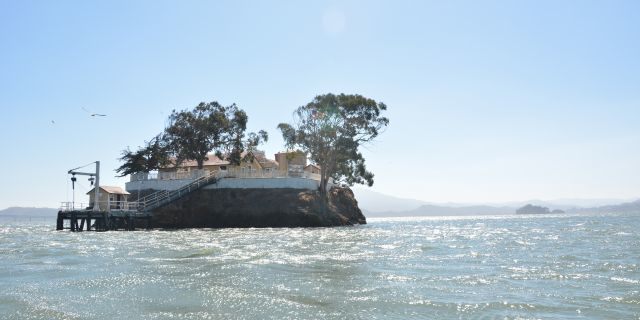
East Brother Light Station, on a 0.7 acre island between San Pablo and San Francisco bay, operates as a bed and breakfast, open four days a week. The Victorian light house built in 1874 was converted into a five-bedroom inn in 1979, Fox 23 reported.

OKLAHOMA’S MOST EXPENSIVE HOME IS RIGHT ACROSS FROM AN ART MUSEUM

69593 DSC 0186 San Francisco area lighthouse offering couple $130G to operate island inn

The lighthouse is between San Pablo and San Francisco bay off the coast of Richmond, Calif.
(Courtesy of Frederick Deabler)

Since then, it has been a tourist destination. But come April, this hotspot will be without a caretaker.

Che Rodgers and Jillian Meeker, the current operators, are leaving their post this spring, and are looking for someone to take over the daily operations – as well as the $130,000 salary.

However, before you start updating your resume, you might want to note the very specific requirements.

ba857 DSC 0212 San Francisco area lighthouse offering couple $130G to operate island inn

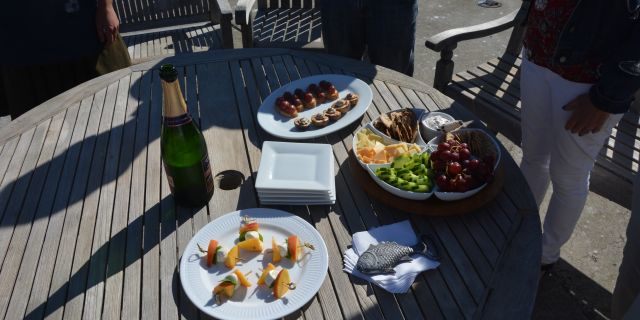
The keeper’s are responsible for cooking and providing snacks for guests.
(Courtesy of Frederick Deabler)

“The successful candidates will be a couple, one of whom must possess a Coast Guard commercial boat operator’s license,” the not-for-profit which operates the location wrote in a press release. “They will operate the five-room inn, serving both dinner and breakfast, as well as providing ferry service for guests and all other tasks from chef to maid. High quality culinary experience and capability will be a critical qualification. The inn is open four days a week, and the island is also available for day use and special events. The new keepers will start in mid-April 2019, allowing two weeks for training.”

ELVIS PRESLEY’S PALM SPRINGS HONEYMOON HOME HAS LINGERED ON MARKET FOR YEARS

Richmond Mayor Tom Butt, who is the president of the nonprofit that oversees the light station, says there has been a lot of interest in the position since posting the job. However, Butt concedes that many of the applications have been from unqualified people, SF Gate reported.

Though Butt also points out that the $130,000, which is split between the couple, is not the most the keepers can make.

ba857 DSC 0185 San Francisco area lighthouse offering couple $130G to operate island inn

Current keepers Che Rodgers and Jillian Meeker are leaving in April.
(Courtesy of Frederick Deabler)

“If they work hard to market and book the inn and operate efficiently, there is potentially more income for them. Over the last couple of years, the innkeepers income has been about $130,000. It is split between them. The corporation’s share is used for insurance, maintenance, capital improvements, etc. We also have lots of volunteers who do maintenance and management,” said Butt to SF Gate.

FOLLOW US ON FACEBOOK FOR MORE FOX LIFESTYLE NEWS

If cooking, cleaning and operating a boat – while bringing in six-figures – sounds like your idea of a good time, the application can be downloaded here.

Article source: https://www.foxnews.com/real-estate/san-francisco-lighthouse-offering-couple-130g-to-operate-island-inn

Posted in SF Bay Area News | Tagged | Leave a comment

How the Bay Area will eat in 2019: Convenience, CBD and more chicken

January is here, which means it’s time to prognosticate about the new year — and specifically, how we in the Bay Area will be eating over the next 12 months and beyond. We don’t need to look into a crystal ball to see the future. All it takes is a long look at local market shelves — and maybe a little bit of analysis from the pros — to realize what we will be seeing in the coming year.

1. Convenience, convenience, convenience.

When it comes to how we shop, dine and cook, to paraphrase Freddie Mercury, we want it all and we want it now. This on-demand attitude is influencing nearly every aspect of the food industry and will have the largest effect on how the Bay Area eats in 2019.

First, there’s the food delivery market. which is projected to grow over 630 percent by 2020. In September, Chicago-based Grubhub agreed to acquire San Francisco’s college food ordering service Tapingo for $150 million. Nipping at GrubHub’s heels are UberEats, Caviar and Postmates, all based in San Francisco and trying to make online delivery more commonplace.

In terms of retail, San Francisco now boasts two AmazonGo locations — cashierless stores that sell everything from gum to prepared lunch. More are undoubtedly coming to the Bay Area, as the company plans to open 3,000 more around the country by 2021. As consumers demand more quick and convenient fare, look for more prepared-meal options in grocery stores. Food halls are cropping up around the country at lightning speed, according to a report released by real estate developers Cushman Wakefield. By 2020, the marketplace is expected to triple in size from just five years ago.

On the home cooking front, the popularity of Instant Pot won’t slow anytime soon. The ultimate in quick, no-fuss home cooking gadgetry, its fans are legion. The Instant Pot has given the multicooker appliance category a massive jolt and for the past two years has been one of the fastest-growing product categories in the retail sector. Beyond the Instant Pot, more convenience-focused smart appliances have hit the market, like a countertop pizza oven from Breville that produces Neapolitan-style pizzas in two minutes and the Brava Home smart oven that uses infrared energy to cook food faster.

 How the Bay Area will eat in 2019: Convenience, CBD and more chicken

2. Faux meat is here to stay.

About 18 months ago, The Chronicle explored the future of meat and how the Bay Area has become a global hub for meat alternatives. The movement has only intensified. While plant-based meats are proliferating through American restaurants and supermarkets, cell-based or cultured meats are quickly approaching legalization and public consumption as well.

Redwood City’s plant-based Impossible Burger, a.k.a. the “veggie burger that bleeds,” has hit the mainstream and can now be found in thousands of restaurants around the United States, including chains like Applebee’s and the Cheesecake Factory. Earlier this fall, Impossible’s major competitor, Southern California-based Beyond Meat, announced its intent to go public and file for an IPO.

On a more basic level, a growing number of chefs are experimenting with plant-based alternatives to meat, from tomato lox and watermelon ham to smoked pulled jackfruit and coconut bacon.

Given the shift from consumers toward reducing meat consumption — whether for personal health, concerns over animal welfare or environmental reasons — we expect the popularity of meat alternatives to snowball in 2019.

3. Who gives a cluck about chicken? We all do, apparently.

The number of chicken restaurants in San Francisco seems to have exploded in recent years. In a way, it makes sense; we are the home of the famous Zuni Cafe chicken after all.

When it comes to chicken dinner, rotisserie chicken joints have boomed the past couple of years. 2018 saw Piri Pica and Isla Vida join the 2017 class that included Tacolicious’ delivery-only spinoff, MF Chicken, and Rich Table sister restaurant RT Rotisserie. For consumers, rotisserie chicken is an easy, affordable way to get a decent meal on the table. And for restaurant operators, these kinds of chicken-centric restaurants are appealing because of their streamlined menus and operating systems.

Then, of course, there’s the Southeast Asian chicken and rice dish, khao mun gai. In addition to established Thai restaurants like Kin Khao and Hawker Fare serving their own versions of Hainanese chicken rice, there are now fast-casual joints dedicated to the dish. Syhabout opened Hawking Bird in Oakland, and there’s also What the Cluck on Haight Street and multiple locations of Rooster Rice.

With this kind of abundance, it’s easy to believe National Chicken Council stats that chicken is the No. 1 one protein consumed in the U.S., and that Americans consume more chicken than anywhere else in the world (more than 92 pounds per capita in 2017).

To keep up with demand, Costco — home of the $4.99 rotisserie chickens that grace many a family table across the country — broke ground on a massive poultry plant outside of Omaha, Neb., in June. The plant will process more that 2 million chickens a week, supplying as much as 43 percent of its rotisserie birds and a third of the raw chickens on the retailer’s shelves. It’s a move that, according to sustainable agriculture website Civil Eats, will allow the national retailer to gain independence from poultry manufacturing titans like Tyson and Pilgrim’s Pride by raising and processing its own birds — and could serve as a “watershed moment” for the relationship between retailers and the larger food chain.

 How the Bay Area will eat in 2019: Convenience, CBD and more chicken

4. Green light for matcha.

We saw matcha everywhere in 2018. Matcha-centric cafes like Stonemill Matcha on Valencia Street and Japantown’s Matcha Cafe Maiko upped the Bay Area’s matcha game. Meanwhile, San Francisco sweets shops U:Dessert Story and Sue’s Kitchen made matcha desserts fun. This winter, Chinese chain Amausaan Uji Matcha, which has shops around the globe, will open its first U.S. outpost in Berkeley.

According to a study released in December by marketing firm Future Market Insights, consumer demand for matcha is anticipated to experience a “meteoric rise.” Between 2018 and 2028, the global market for matcha is expected to register growth of 10 percent in terms of value. Organic certified matcha is projected to experience 12.3 percent growth in revenue.

Don’t be surprised if even more matcha specialty shops appear on the horizon. It’s a tasty alternative to coffee, and in the age of Instagram, it makes a stunningly photogenic latte.

 How the Bay Area will eat in 2019: Convenience, CBD and more chicken

5. Drink up the booze-free booze.

According to Pinterest’s 2019 trends report, searches for sober living are up 746 percent. Meanwhile, searches for infused waters have seen a 353 percent increase. As “young people” — Millennials and Generation Z — are reported to be drinking less, there’s a growing movement toward bars that serve cocktails sans alcohol. Though the Bay Area has yet to see any completely booze-free bars of note, a number of cocktail destinations, like the Interval at Long Now and ABV, have quietly been offering a range of teetotaling and zero-proof menu options.

The movement is gaining traction. In the media push for Sebastopol’s Fern Bar, which opened in December, “free-spirited cocktails” were given equal billing with higher octane drinks. Fern Bar’s zero-proof cocktails are made with Seedlip, a nonalcoholic spirit from the United Kingdom, which is made by distilling herbs, spices and other aromatics inspired by remedies found in a 17th century book called “The Art of Distillation.” You’ll now find the spirit-free spirit used at bars around town, like Mourad, Bon Voyage and True Laurel.

There are a growing number of retail options, too. Dutch beer brand Heineken is set to release a nonalcoholic version of its namesake beer this year, and Anheuser-Busch InBev hopes to have low-alcohol and nonalcohol business represent 20 percent of global sales by 2025, per data tracker CB Insights.

 How the Bay Area will eat in 2019: Convenience, CBD and more chicken

6. Yes we can-nabis.

Teas, candies, cocktails, you name it, we predict CBD, hemp and cannabis-infused products will rule the food and drink categories (in states where it’s legal) in 2019 and gain strength in subsequent years.

Bridging the gap with the previous category, Petaluma brewery Lagunitas, which is owned by Heineken, announced it was launching a nonalcoholic IPA-inspired hopped sparkling water infused with THC called HiFi Hops. It will join a CBD-infused version in the Lagunitas lineup.

Earlier this year, Constellation Brands spent more than $4 billion to increase its holdings in Canadian cannabis company Canopy. Also hopping on the Canadian nonalcoholic/cannabis-infused beverage train, Molson Coors.

In the coming months, Napa Valley’s women-run company House of Saka will release what is dubbed the world’s first luxury line of cannabis-infused, alcohol-free sparkling brut and still rosé wines.

One can now find CBD-spiked lotions, teas and candies with greater ease, whether at upscale markets or at cannabis shops.

In California, CBD derived from regulated and taxed cannabis is legal. However, Congress voted to legalize industrial hemp as part of its farm bill in December. Though the bill only deals with hemp and won’t legalize pot for recreational or medical uses, some expect that this will give the already booming CBD industry even more of a boost.

Sarah Fritsche is a San Francisco Chronicle staff writer. Email: sfritsche@sfchronicle.com. Twitter/Instagram: @foodcentric

Article source: https://www.sfchronicle.com/food/article/How-the-Bay-Area-will-eat-in-2019-Convenience-13509413.php

Posted in SF Bay Area News | Tagged | Leave a comment