Bay Area home sales fell sharply in June — prices mostly fell, too

The Bay Area housing market showed continuing signs of sluggishness in June, with slower sales and mixed but overall lower prices.

The median price paid for all new and existing homes and condos sold in the nine counties last month was $855,000, down 0.3% from May and down 2.3% from a record high of $875,000 in June 2018, according to a report issued Friday by research firm CoreLogic.

The total number of homes sold fell sharply last month to 7,357, down 11.4% from May and down 12.6% from last June. Normally, sales rise between May and June — since 1988 they’ve gone up 3.6% on average.

 Bay Area home sales fell sharply in June — prices mostly fell, too

June a year ago is when the Bay Area’s red-hot market began to show signs of slowing.

“Many buyers began backing out of the market last spring and summer due to a tight inventory, rising prices and increasing mortgage rates,” CoreLogic analyst Andrew LePage said in a news release. “This year, prices have flattened or dipped on a year-over-year basis in many markets, and thanks to lower interest rates many home shoppers face at least slightly lower monthly mortgage payments than they would have a year ago.

“Despite the lower cost for some, plus a healthy economic backdrop, the housing market remains sluggish with activity dropping across the home-price spectrum. This suggests many would-be buyers are still priced out or are concerned about buying near a possible price peak.”

Census data released Thursday seems to bear that out. The homeownership rate in the San Francisco metro area dropped to 51.7% in the second quarter, its lowest rate since 2012. It was 56.4% in the same quarter last year and 57% in the second quarter of 2015. This area includes San Francisco, San Mateo, Marin, Alameda and Contra Costa counties. Nationally, the homeownership was 64.1% in the second quarter, down slightly from 64.3% the same quarter last year.

Although the median home price in June for the whole Bay Area was down from last year, it was up in five counties — Contra Costa, Marin, Napa, San Francisco and San Mateo — and unchanged in Alameda and Solano. Only Santa Clara and Sonoma posted decreases.

So why was the Bay Area median price down? It’s based on sales in the nine counties together. It can be down, even when most counties are flat to up, “if there’s a significant shift in market mix, such as a higher share of homes selling in more affordable areas this year versus last,” LePage explained.

This June, for example, Contra Costa, Napa and Solano counties made up 30.8% of regional sales, versus 29.8% last year, so a larger share of sales this June were in the more affordable counties. Meanwhile, the high-cost counties of Santa Clara, San Francisco and San Mateo made up 39.5% of regional sales this June versus 41.5% last year.

Shifts toward more or less of a particular home-type category — such as new home sales, which tend to be more expensive — can also influence the regional median, he said.

In Santa Clara and Sonoma counties, June was the fifth consecutive month of lower sales compared with the same months last year.

The median price paid for a resale, detached home fell from 2018 levels for at least the third consecutive month in Alameda, Marin, Santa Clara and Sonoma counties.

“If demand wanes and inventory mounts, prices could soften more. However, lower mortgage rates might still help trigger stronger buying, putting upward pressure on prices. So far, the inventory level indicates the Bay Area has transitioned from a seller’s market to a more neutral market, but not an outright buyer’s market,” LePage wrote.

In a separate report focusing on the second quarter, Compass noted that while Bay Area home sales were about 5% lower than last year’s second quarter, sales of homes above $3 million surged, bringing them in line with last year’s historical peak.

This could be a reflection of this year’s increase in the number of initial public offerings, as well as the “general accumulation of wealth,” Compass chief economist Selma Hepp said.

Peninsula Realtor Ken DeLeon noted that foreign buyers, especially from China, are still active in the $10 million-and-up range. However, their purchases of homes in the $2 million to $4 million range “has tapered off, almost to zero,” The imposition of more stringent capital controls has made it hard for most people to get money out of China, unless you’re “uber wealthy,” DeLeon said. Most Chinese buyers purchasing high-priced homes in the Bay Area are doing it through their companies, he added.

Kathleen Pender is a San Francisco Chronicle columnist. Email: kpender@sfchronicle.com Twitter: @kathpender

Article source: https://www.sfchronicle.com/business/networth/article/Bay-Area-home-sales-fell-sharply-in-June-prices-14188212.php

Posted in SF Bay Area News | Tagged | Leave a comment

Bay Area homeownership hits seven-year low. Are out-of-control prices to blame?

Homeownership in much of the Bay Area hit a seven-year low last quarter, according to new Census data released Thursday, suggesting that even though the market has cooled slightly, high prices continue to keep many residents from buying.

In a wide swath of the Bay Area that includes San Francisco, Alameda, Contra Costa, San Mateo and Marin counties, 51.7 percent of residents owned their home during the second quarter of this year — the lowest rate since 2012. That’s down from 56.4 percent a year ago, according to Census Bureau data. But in the South Bay, including Santa Clara and San Benito counties, 51.4 percent of residents owned their homes last quarter, up from 50.2 percent a year ago.

The slump in homeownership in some of the Bay Area, which bucks the national trend, comes as prices remain staggeringly high across the region. Residents who can’t afford to pay a premium end up renting, while many who already own property are cashing out and moving away.

7ecaa SJM L CENSUS 0726 90 01 Bay Area homeownership hits seven year low. Are out of control prices to blame?“After several years — six, seven, eight, years of consistent, in some cases double-digit price appreciation — buyers are finally saying, ‘Hey, this is it. We’ve reached my pain point,’” said David Stark, spokesman for the Bay East Association of Realtors.

Homeownership rates are lower in the Bay Area than elsewhere in the state, and in the rest of the country. In California, 53.2 percent of residents owned their homes last quarter, according to the Census Bureau. Nationwide, 64.1 percent of residents were homeowners in the second quarter of this year — a rate that has stayed almost flat since the second quarter of 2018.

After years of record-setting highs, Bay Area home prices have started to inch down. Year-over-year median sale prices for existing homes fell 5.9 percent in Santa Clara County, 3.2 percent in Alameda County and 1.5 percent in San Francisco in May, according to the most recent data available from real estate data firm CoreLogic.

But even after a few months of cooling, prices remain too hot for many buyers. The median sale price in San Mateo County was $1.58 million in May, according to CoreLogic. It was $1.53 million in San Francisco, $1.27 million in Santa Clara County and $912,500 in Alameda County.

As a result, more people — even those making comfortable salaries — are renting instead of buying. In San Jose and San Francisco, the number of renters making more than $150,000 has tripled since 2007, according to a recent survey by Rent Cafe. Those cities now have the highest percentage of wealthy renters in the country.

The trend away from homeownership also has to do with the type of homes that are being built, according to Chris Salviati, a housing economic with Apartment List.

“Throughout the Bay Area, job growth has been outpacing new housing construction for years, and among the new housing that has been built, multi-family rental units are making up an increasing share,” he wrote in an email. “As rental units make up an increasing share of the overall housing stock, the homeownership rate will consequently fall.”

Meanwhile, even residents who want to buy are taking their time about it, Stark said. Homes are sitting on the market longer, racking up fewer offers and selling for less than they did several months to a year ago. In May, sales of existing single-family homes dropped 10 percent year-over-year in San Mateo County, and 6 percent in Santa Clara County, according to CoreLogic.

“For the first time in many years, we’re seeing homes on the market in the 30-day range, where just a year ago it would have been half that time,” said Stark, who attributes the market slump to buyer fatigue.

Even so, homeownership remains the goal for many. Nearly half of renters wish they owned their homes, according to a recent Zillow survey of residents in 20 of the country’s largest metro areas.

“Homeownership is still very desirable in the San Francisco Bay Area,” Stark said. “I think it’s interesting to see these rates go down. But they’re not dropping by 10 percent.”


Article source: https://www.mercurynews.com/2019/07/25/bay-area-homeownership-rate-hits-seven-year-low-are-out-of-control-prices-to-blame/

Posted in SF Bay Area News | Tagged | Leave a comment

Tear down that wall: Bay Area millennials want homes with open floor plans


  • 5c99e 920x920 Tear down that wall: Bay Area millennials want homes with open floor plans

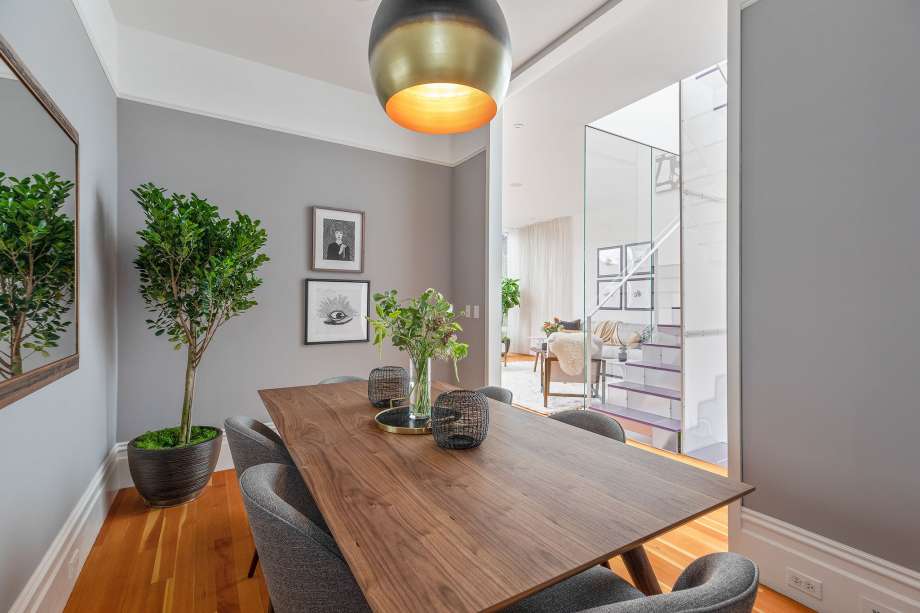
    Real estate agent Lamisse Droubi said that most of the prospective buyers of this modernized Victorian on 23rd Street in Noe Valley did not like the partially enclosed dining room. They asked about taking out the walls. (Photos courtesy of Open Homes Photography.)

    less

    Real estate agent Lamisse Droubi said that most of the prospective buyers of this modernized Victorian on 23rd Street in Noe Valley did not like the partially enclosed dining room. They asked about taking out

    … more


    Photo: Open Homes Photography

  •  Tear down that wall: Bay Area millennials want homes with open floor plans

Caption

Close

Real estate agent Lamisse Droubi said that most of the prospective buyers of this modernized Victorian on 23rd Street in Noe Valley did not like the partially enclosed dining room. They asked about taking out the walls. (Photos courtesy of Open Homes Photography.)

less

Real estate agent Lamisse Droubi said that most of the prospective buyers of this modernized Victorian on 23rd Street in Noe Valley did not like the partially enclosed dining room. They asked about taking out

… more


Photo: Open Homes Photography


Pity the poor interior wall. For decades, home improvement gurus and do-it-yourselfers have been smashing it to smithereens.

If you’ve turned on HGTV any time in the last decade, you’ve probably seen that tearing out a kitchen or dining room wall (or two) is often the first fix suggested. Why? Because you can’t have the coveted, spacious open floor plan with all those pesky walls getting in the way.


Recently, though, push-back has been mounting against open floor plans. Kate Wagner, author of the popular McMansion Hell blog, wrote in a CityLab article that it’s time to end the “tyranny” of open-concept interior design, a first-person piece in the New York Times in April was topped with the headline “I’m over open-concept design,” and an Atlantic essay last year decried, “The Curse of an Open Floor Plan.”


The Philadelphia Inquirer asked, “Is 2018 the beginning of the end of the open-concept floor plan?” and suggested that millennials might turn to closed floor plans as they head into their child-rearing years because of the privacy that rooms afford.

But before they put away their sledge hammers, Bay Area homeowners might want to consider what local real estate agents and interior designers say: Walls aren’t making a comeback anytime soon. At least not here.

Steve Belluomini, real estate broker at Better Homes and Gardens, which serves San Francisco and the Peninsula, says the majority of prospective buyers want open-concept layouts. That’s especially true, he says, of his younger clients, who are used to free-flowing spaces at work devoid of offices and cubicles.

Lamisse Droubi, real estate agent with the Droubi Team in San Francisco, agrees.

“I’d say maybe 10 percent of the buyer pool likes to see a dining room that’s really separated from the living space,” Droubi says. “But overall and definitely even in the younger, millennial pool of buyers, they all want to see an open kitchen at minimum.”

Megan Nordin, an interior designer and home staging consultant, says she has not seen any evidence of millennials abandoning open plans: “They love having the space and freedom.”

American homes began moving toward the open floor concept as horizontally oriented ranch and split-level models gained popularity in the 1940s and ’50s. First, doors disappeared and then the space-dividing walls — with the exception of the kitchen wall, which kept the mess involved with food preparation, cooking and cleanup out of sight.


By the 1970s, the kitchen joined the open-concept party. The resulting multi-use room, incorporating living room, dining room and kitchen — often under a cathedral ceiling — was sometimes called the “great room” or “family room.” While you fixed dinner, you could watch your spouse and children watching the evening news with Walter Cronkite.

Today, virtually all new home construction embraces airy open floor plans, especially in townhomes, which are usually smaller than suburban homes.

Open floor plans provide more natural light and clear sight lines, and can accommodate more furniture and larger pieces of furniture. But they also afford less privacy, and less space for artwork and bookcases. Noise can be an issue — for example, clanging pans drowning out a TV. A messy kitchen can be seen and smelled by all.

Closed floor plans limit natural light, hinder circulation and may make smaller furniture necessary. On the other hand, they provide privacy and intimacy, keep unwanted smells and sounds from spreading through the house and allow more space for wall decoration and shelving.

“If closed floor plans are considered such a nuisance these days, why did they prevail for almost 100 years in single-family working- and middle-class suburban housing?” Wagner writes. “The answer: Closed floor plans make a lot of sense, from both an environmental and a living perspective.”

She argues that the closed floor plan can help save energy simply by heating and cooling rooms that are not currently in use. It’s also more efficient in enabling the family’s cook to perform tasks without hiking from one end of a long chef’s galley to the other.

MORE: ‘Hobbit village’ with a bomb shelter in Silicon Valley mountains listed for $3.4M

Compounding the inefficiency, she says, is the craze of designing homes around “entertaining” that might occur only a few times each year.

But Droubi has found that none of these arguments resonate with with Bay Area buyers, who seem to find homes without full commitment to the open concept flawed.

“I just closed a property on 23rd Street and this house did have an open kitchen and an open living room and the sellers decided to keep the dining room fairly separated from the open kitchen,” Droubi says. “I think two-thirds of the (prospective) buyers came in and said, ‘Why didn’t they just open this whole thing up. Could you still open this thing up? Could you take down this wall and reorg the kitchen?’

“So even though it still felt that it was an open concept, people were still talking about how to take down walls.”

MORE: South Bay Eichlers offer atriums, A-frames and other original mid-century touches

Even if you are among the few who favor a more traditional floor plan, before you purchase a house with that design it might be wise to consider how difficult it would be to convert it to an open plan, especially if you foresee selling the house within five years.

“I would say if there’s potential for the kitchen to be opened to the living space that’s a property that’s easily sellable,” Droubi says. “If there’s a complete separation between kitchen and living — let’s say one of those older Victorians where the kitchen is in the back and the living room is in the front — that’s definitely a harder floor plan to sell.”

About those Victorians: Think twice before you rip up their floor plans, remodelers.

“In San Francisco, a lot of the developers bought the Victorians and just blew out every single wall … you walk in and you see everything,” Droubi says. “There is no dimension or separation between some space that makes sense. I don’t think that is on trend in the same way.”

She says huge open spaces without well-defined areas — for example, a niche for a cozy couch — can be overwhelming and less attractive to buyers.

Mike Moffitt is an SFGATE Digital Reporter. Email: moffitt@sfgate.com. Twitter: @Mike_at_SFGate.


Article source: https://www.sfgate.com/realestate/article/Open-floor-plan-millennial-home-buyers-14092168.php

Posted in SF Bay Area News | Tagged | Leave a comment

I bought a foreclosure in San Francisco. Here are six tough lessons I learned.


  • 77c62 920x920 I bought a foreclosure in San Francisco. Here are six tough lessons I learned.

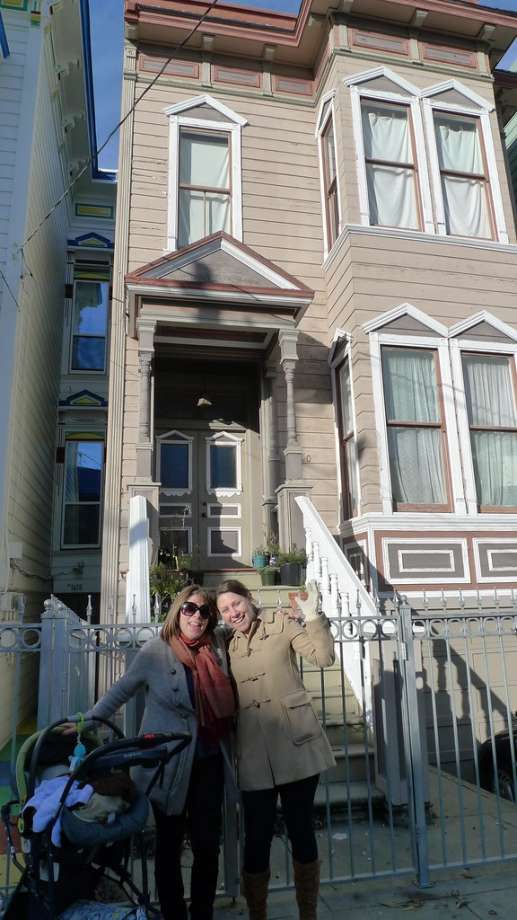
    Me (in sunglasses), my sister and my then-infant son shortly before taking possession of the property.

    Me (in sunglasses), my sister and my then-infant son shortly before taking possession of the property.


    Photo: Emily Landes

  •  I bought a foreclosure in San Francisco. Here are six tough lessons I learned.

Caption

Close

Me (in sunglasses), my sister and my then-infant son shortly before taking possession of the property.

Me (in sunglasses), my sister and my then-infant son shortly before taking possession of the property.


Photo: Emily Landes


With the real estate market just now beginning to take a breather after a years-long sprint, it’s a good time to remember that a decade ago the Bay Area was not immune to the foreclosure crisis facing the rest of the nation. After the financial collapse of 2008, California saw record foreclosures, with lenders taking hold of more than 35,000 homes in the Bay Area in that year alone.

Repossessions were less likely in San Francisco, which didn’t see the huge drops in value that other areas did. Still, as time went on and the job market and economy didn’t improve, the city became more and more impacted. In 2010, the city actually saw an increase in foreclosures, even as other areas had started to improve.

That’s when my husband and I bought a foreclosure. Though it was almost a decade ago, there were many lessons I learned then that I’ve carried with me to today.


Lesson 1: Keep an open mind

My husband and I weren’t really looking to buy a foreclosure that year. I was just a very desperate, very pregnant woman looking for any single-family home that might fit our needs and our budget before our first child was due that fall.

For months, we had mostly been touring homes in the Sunset and West Portal, which gave us more space for the money than our then-neighborhood of the Lower Haight, still had the historic homes I loved and kept us close to transit lines to get to work.

We had found nothing and I was getting increasingly, infuriatingly close to my due date when perhaps the ugliest house I had ever seen popped up on the MLS.

Lesson 2: Look past the surface 

 The colors on the facade were a mix of faded pinks and browns, and the paint was peeling everywhere. The ill-chosen triangular trim made the home look it had an arched eyebrow over every window.

Still, the idea of owning a real San Francisco Victorian just off the bustling Divisadero corridor was enough to get me waddling the 10 blocks over to the open house, where it was evident the interior was also in dire need of repair. Before losing the property to the bank, the owner had rented it to a revolving group of art students, who hung their work across all the cracked walls.


But where others saw an overcrowded living space with locked doors, a fake wall and even a hanging sheet to create additional “bedrooms,”  I noticed the original moldings, ceiling medallions and 14-foot ceilings. Where others saw a crumbling brick foundation, I saw — well, I saw the crumbling brick foundation, but figured that was par for the course in a home of this vintage.


A few days later, I brought my husband over. A few days after that, we were the only ones to put in a bid.

Lesson 3: Buying from a bank is… different.

Yes, it was well below the asking price, but we were still surprised that the bank apparently didn’t know how to handle a noncompetitive offer situation. Instead of coming back to us with a counter, they just lowered the asking price by $50,000. When that still failed to elicit multiple bidders, they tried it again. Finally they realized we might be the best — and only — game in town and came to the table.

We went into escrow weeks before our son was born.

Lesson 4: With tenants, tread thoughtfully.

Now that we had the home, there was the small matter of actually moving into it. We hired an experienced landlord-tenant attorney so we didn’t make any missteps and paid out the appropriate relocation expenses so they could find a new home. We also gave the federally required 90-day notice.

Despite the perpetual landlord-tenant drama in this city, our tenants moved out without complaint. (We sensed they had a feeling the notice was coming when we saw a bottle of homemade “Eviction Ale” in the garage.) We tried to make the transition as smooth as possible for them.

Just before we finally got possession of the home, one of the tenants let us know that the owner had gotten in touch with her to see if he could get some of the items he still had stored in the garage. He came with a friend and a truck and took away photo albums, furniture and other memorabilia that meant a lot to him.

Lesson 5: The work never ends.

We ended up needing to rent a debris box for everything he, plus the tenants, left behind. After that was cleared out, the contractors came in, spending a month fixing and repainting every wall in the house. An ambitious friend with a hammer took down the surprisingly well-reinforced fake wall.

This was only the first of many renovations we’ve now done on the home, including a stone patio, redwood planter boxes and benches, and landscaping in the backyard; double-paned wood windows throughout the home; an almost entirely new facade (except for the original redwood siding and front door); and, yes, a new, definitely needed foundation.


Lesson 6: It’s all worth it.

Our son, five months old when we moved in, is now entering third grade at our local public school, where he will be joined in another year by his little sister. We love our neighborhood and our neighbors, many of whom are the parents of his classmates.

There are still things I want to do — don’t get me started on the kitchen — but overall I feel very lucky to have been looking for a single-family home in the city at a time when buying one for under seven figures was still a briefly available option.

Emily Landes is a writer and editor who is obsessed with all things real estate.

Article source: https://www.sfgate.com/realestate/article/foreclosure-home-san-francisco-sf-tips-real-estate-14080132.php

Posted in SF Bay Area News | Tagged | Leave a comment

The San Francisco neighborhoods where home prices actually fell

This month, sources like the California Association of Realtors and real estate group Compass took a look at the second quarter of 2019 and concluded that, across the board, home prices in San Francisco went up compared to the same time last year, despite some recent short-term declines.

A citywide or countywide median, though, assesses a city’s housing market from what might be called a pretty significant elevation. For comparison, real estate group Sotheby’s circulated a report this week assessing median prices on something closer to a neighborhood-by-neighborhood scale.

Sotheby’s divvies up the city into ten “districts,” each composed of about half a dozen to a dozen adjacent neighborhoods and compiles condo and house sales in each. This is still not particularly granular, as each district is a huge stretch of San Francisco, but it does provide a closer look nevertheless.

It also means that, for the most part, prices are up compared to the second quarter of 2018, we can break out a few areas where the trend reversed, albeit barely in some cases:

  • In Sotheby’s configuration of district four (not to be confused with D4 and so on), the median price of a single-family home dropped from $1.81 million-plus in 2018 down to $1.79 million this year, based off of 100 sales in 2018 and 101 for 2019. Unfortunately, district four covers a voluminous number of neighborhoods including (deep breath) Balboa Terrace, Diamond Heights, Forest Hill, Ingleside Terrace, Midtown Terrace, Miraloma Park, Monterey Heights, Mt. Davidson, Sherwood Forest, St. Francis Wood, Sunnyside, and West Portal. So, it’s difficult to pin this trend down to any particular region.
  • In Sotheby’s district six, which spans Alamo Square, Hayes Valley, the Western Addition, NoPa, and Lower Pac Heights, single-family home prices declined from a median of $3.57 million to just $2.9 million. That would be a pretty huge shift, but unfortunately, only 11 houses sold in this area in 2019. And at this time last year, that number was just eight—not enough to make any change significant on this timeline. However, condo sales proved much more robust—80 this year and 84 last year. And on that end, prices declined too, albeit by a less drastic turn of $1.24 million down to an even $1.2 million.
  • Almost the exact same story played out in Sotheby’s district eight, where fewer than 20 houses sold this quarter either this year or the year before, making the seeming downturn in those neighborhoods (i.e., Civic Center, Financial District, North Beach, Russian Hill, Nob Hill, Telegraph Hill, and the Tenderloin) from $3.56 million to $3.25 million pretty much meaningless. On the other hand, 153 condos sold in Q2 2019 and 130 sold in 2018. The median declined as well, but again, albeit barely, from $1.08 million to just less than $1.01 million.
  • Sotheby’s district nine covers a huge swath of mostly eastern waterfront neighborhoods, spanning Bernal Heights, Dogpatch, Mission Bay, Potrero Hill, the Mission, South Beach, and SoMa, and across those fronts medians for single-family homes declined from more than $1.67 million to approximately $1.6 million. The sample size here isn’t huge—68 houses in 2019 and 76 the year before. More than 300 condos sold this quarter during both years in these neighborhoods, but the price year over year actually increased a bit.
  • The price for a house also dropped a bit (from $5.8 million to $5.6 million) in the ultra-tony district seven, which covers the Marina, Cow Hollow, Pacific Heights, and Presidio Heights. But again, there’s not enough houses sold in a single quarter here to draw major conclusions.

Overall, none of these depreciations seem particularly drastic, and for the most part represent stalling momentum rather than reversals.

For the record, all of these areas are still up significantly compared to this time in 2017. With the sole exception of district six, all of the 2017 medians showed increases over 2016.

Article source: https://sf.curbed.com/2019/7/23/20707348/san-francisco-house-condo-median-price-drop-2019

Posted in SF Bay Area News | Tagged | Leave a comment