Economic Fallout Ahead From California’s Housing Market?

9f72b california1 300x198 300x198 Economic Fallout Ahead From Californias Housing Market?

A report by the Santa Barbara Independent  says that California’s housing market has turned into a “major crisis that may soon turn into a statewide economic downturn,” and few industries are safe from the state’s real estate market. 

The report states that the market is hampered by a lack of supply and rising costs. The Legislative Analyst’s Office (LAO) estimated the shortage is between 3.5 million to 4 million housing units. 

“The lack of housing has not only driven up prices by 24.9% (for two-bedroom homes) since 2010, but it has also had a noticeable effect on migration. In another report, the LAO found that between 2007 and 2016, net migration in California was negative one-million individuals,” the report states. 

The Santa Barbara Independent also states that the housing market will not only impact low-impact earners, but high-income earners as and tech firms and financial service businesses of Silicon Valley and San Francisco will “be the first to feel the effects.” 

A report by CoreLogic, however, showed the California housing market showed signs of recovery in May. 

The report states that existing homes sales increased by 10.6% month-over-month in Los Angeles, Riverside, San Diego, Ventura, San Bernadino, and Orange Counties.

While this is an increase from April, home sales are down 2.7% from 2018, and the 22,300 homes sold for the month was the lowest for that month since 21,754 were sold in May 2015.

Home sold in the San Francisco Bay Area saw an increase of 18.9% from April 2018, but still down 2.7% year-over-year. 

Total home sales in San Francisco in May were the lowest for that month since 8,038 were sold in May 2016. CoreLogic states sales have been declining in the double digits from November 2018 to March 2019, but May’s decline was reported at just 2.7%. 

The average price of homes sold in San Francisco in May 2019 was $860,000—a slight increase of 1.2% from April 2019.

Article source: https://themreport.com/daily-dose/07-08-2019/who-will-be-impact-by-californias-housing-market

Posted in SF Bay Area News | Tagged | Leave a comment

Bay Area Home Sales Suffer June Swoon

FREMONT (KPIX) — Bay Area home sales in June were the lowest for that month in 11 years, according to the latest data from CoreLogic.

“I think that people are going to look at that data and think the sky is falling but it is not, the sky is not falling,” said real estate broker Nancie Allen. “We’re not in the same place we were back in 2007, where we had all the bad loans and everything else, that’s what created that. This is just an adjustment.”

Allen, who is also president of Bay East Association of Realtors, tells us that last year’s red-hot real estate market, particularly in the East Bay, hasn’t been able to sustain itself. Overall, there are more homes on the market and prices have slumped a bit. Still, there is plenty of activity but the market is more gentle.

In the East Bay, Allen says Fremont, Pleasanton and Alameda remain strong markets.

The Lakharas were busy moving into their new home Friday evening. They are first time home buyers and closed on a 3-bedroom, 2-bathroom town home in Fremont at $790,000. They paid $25,000 dollars over asking.

“It’s about the locality as such so Fremont is between San Francisco and San Jose. From a work perspective, I can always go to San Francisco or San Jose wherever I work,” said homeowner Nathan Lakhara.

Allen says the home sold in a week and received three offers — a sign of a healthy market.

CoreLogic says that, despite low mortgage rates and a strong economy, Bay Area home sales this June dropped nearly 13 percent below June 2018 sales.

“Last year was a frenzy … and people were jumping in and getting whatever they could. This year buyers are much more relaxed, more calm, they’re going in, they’re looking at the property,” said Allen. “If they really love it then they’re going to put an offer in, otherwise they’re being more particular.”

The inventory level in the Bay Area has gone from a seller’s market to a more neutral market, according to CoreLogic.

“This was within our budget so we went for it. We just hope prices don’t drop anymore because now we have a house,” said Lakhara.

Article source: https://sanfrancisco.cbslocal.com/2019/07/26/data-bay-area-drop-home-sales/

Posted in SF Bay Area News | Tagged | Leave a comment

What one new homeowner learned from the Bay Area’s crazy real estate market


  • ff073 920x920 What one new homeowner learned from the Bay Area’s crazy real estate market

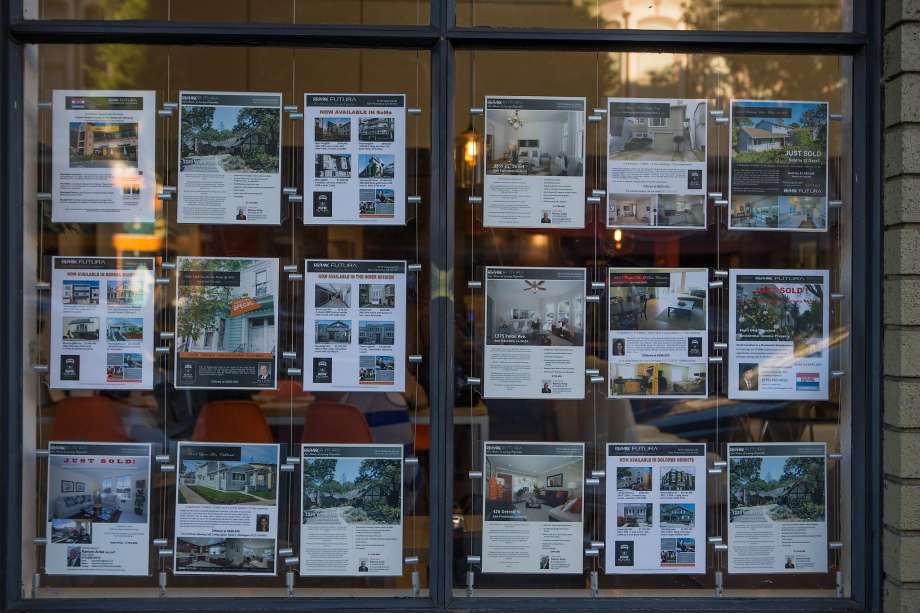
    FILE — A real estate agent on Valencia Street near 20th Street displays homes for sale on Wednesday, Sept. 9, 2015 in San Francisco. A Bay Area couple who recently made the leap to homeowners share a few of their tips for landing a house in this pricy real estate market.

    less

    FILE — A real estate agent on Valencia Street near 20th Street displays homes for sale on Wednesday, Sept. 9, 2015 in San Francisco. A Bay Area couple who recently made the leap to homeowners share a few of

    … more


    Photo: Nathaniel Y. Downes, The Chronicle

  •  What one new homeowner learned from the Bay Area’s crazy real estate market

Caption

Close

FILE — A real estate agent on Valencia Street near 20th Street displays homes for sale on Wednesday, Sept. 9, 2015 in San Francisco. A Bay Area couple who recently made the leap to homeowners share a few of their tips for landing a house in this pricy real estate market.

less

FILE — A real estate agent on Valencia Street near 20th Street displays homes for sale on Wednesday, Sept. 9, 2015 in San Francisco. A Bay Area couple who recently made the leap to homeowners share a few of

… more


Photo: Nathaniel Y. Downes, The Chronicle


After five-plus years of aggressively putting money away in savings, Jason Baker and his wife recently accomplished the seemingly impossible and purchased a four-bedroom house in a high-performing school district in the Bay Area.

The process to find a home base for their growing family took three months. They considered both the East Bay and North Bay and quickly learned the competition is tough in communities with desirable schools such as Lafayette and Mill Valley.

The couple made offers on four houses that they didn’t get, before finally uncovering an unlisted home in Marin County and making an offer that was accepted.

“The three months when we were looking was the most stressful time of our life,” said Baker, 38, who works as an engineering manager. “It was more stressful than the wedding, more stressful than the first month at home with a newborn.”


Open houses at properties that were affordable by the Bay Area’s crazy standards were mob scenes.


“When you went to a house and there was a crowd, you just set your expectations to know you’re not going to get the house,” Baker said. “When there were a lot of people, you knew the odds were high someone is going to make a really high offer.”

Through this ordeal, Baker got an inside look at the buyer’s side of the Bay Area’s real estate market and below he shares what he learned. (We’re also hoping readers will share what they have learned from their house-hunting experiences.)


1. Listing prices are just “marketing” prices. In a region where homes frequently sell for well over asking and agents often list homes with low prices to encourage bidding wars, you can’t trust that a listing price reflects a home’s value. Buyers can find the true value of a home by looking at recent comps, said Baker. “Redfin and Zillow do an OK job of estimating these,” he says. “One of the problems is there is so little turnover in good school districts that there may only be two or three comps in the last one or two years.”

2. Money wins over everything. Love letters to the sellers are nice, but moot within the Bay Area’s market of high price points. “Unless your bid is significantly higher than the second place bid (more than $50,000), expect the seller to ask you to go into a bidding war,” he shared.

3. Forget about contingencies. “We lost a bid on a house that had no inspection report in its disclosures packet, very rare for the Bay Area,” said Baker. “The seller was not willing to accept any offers with an inspection contingency, and there was water in the basement.”


4. All-cash offers win. If you want the slight edge of all-cash, and you don’t have it, Baker suggested a service called Flyhomes that makes all-cash offers on your behalf.  “They buy the house, then sell it to you immediately after closing with a traditional mortgage,” he said. “Ultimately we did not end up buying with them, because they don’t have knowledge of Marin like they do San Francisco and the East Bay, but I would recommend them if you were looking there.” They act as the buyers agent, and their fee is paid by the seller.

6. The price point where the crowds thin out at open houses is about $1.5 million. Priced below that, hordes of people will go to the open house. Above that, it’s more like one or two dozen families.

7. Look for unlisted homes. Try to find a well-connected agent who has knowledge of upcoming listings, and use sites like aaltohomes.com to find unlisted properties, advised Baker. “Some sellers don’t want to deal with listing on the MLS or open houses,” he said. “The house we bought was unlisted, and there was only one family bidding against us instead of six.”

8. Get fully underwritten by your lender, not just pre-approved. “Many houses go on/off the market in a matter of days, so you’ll want a letter ready to go in your offer packet with the bank saying ‘Yes, we are prepared to loan them the money,’” Baker shared.

9. You will most likely lose your first offer, and it will crush you. “It will be sadness on the level of a pet dying,” he said. “Try to remember the family that just outbid you is no longer in the market, and you just moved up a spot.”

This is one person’s story and advice. We’d love to hear yours. Please share in the comments.

(Note: This story was inspired by a comment in a Reddit thread.)


Article source: https://www.sfgate.com/realestate/article/new-homeowner-Bay-Area-real-estate-lessons-how-to-13810858.php

Posted in SF Bay Area News | Tagged | Leave a comment

Here’s how Atherton became the Bay Area’s most expensive city for housing — by far

Atherton has had the Bay Area’s highest home prices for at least a decade, but in recent years it has surged way ahead of its peers to become the most expensive ZIP code in the nation, a fact that’s often touted in real estate listings.

The town’s ascendance stems largely from its single-family zoning, 1-acre-minimum lot sizes, flat land, streamlined permits and changing buyer demographics — which have translated into soaring house sizes and skyrocketing prices.

“It’s a whole new level of money, since I was a kid,” said Keri Nicholas, a real estate agent who grew up in Atherton in the 1970s. “Now people have drivers, have chefs.” Her 5,000-square-foot childhood home is surrounded by ones that are “10,000-plus.”

The median price of a home sold in Atherton in the first half of this year was nearly $8.1 million, according to CoreLogic. That’s almost twice as much as the Bay Area’s next most expensive cities: Los Altos Hills, with a $4.5 million median, and Hillsborough, at $4.25 million. Ten years ago, Atherton’s median price was only 9% and 19% higher than those two cities, respectively.

 Here’s how Atherton became the Bay Area’s most expensive city for housing — by far

The three Peninsula cities have much in common. Their populations are similar, ranging from about 7,000 in Atherton to 11,500 in Hillsborough. They all have no land zoned for multifamily housing or commercial activity, although they do have private country clubs in areas zoned for open space or recreation.

This is unusual, but not unheard of: 28 California cities and unincorporated county areas that responded to a survey by the Terner Center for Housing Innovation said they had almost no land (5% or less) zoned multifamily. They represented 10.5% of respondents.

Historically, Hillsborough is where the families of San Francisco’s 19th century business tycoons built grand estates. Its architectural landmarks include mansions built in the early 1900s by banking magnate and railroad scion William Crocker, railcar heiress Harriett Pullman Carolan and George Hearst, son of newspaper publisher William Randolph Hearst.

Atherton is also an old town, incorporated in 1923, but its real wealth came later, from Silicon Valley and the venture capitalists who funded it.

“Atherton was a sleepy town,” said Coldwell Banker agent Pierre Buljan. He recalls having a hard time selling eight lots on Valley Road in the late 1980s. “Hillsborough was always the preferred town because it was closer to San Francisco, until the last 10 or 15 years, as Facebook and Google went public. You had so many buyers coming out of Google they called Atherton Avenue Google Avenue for a while.”

Today, buyers include a mix of “foreign money, tech money, doctors and lawyers, and inherited money,” said Elyse Barca, a Compass agent and Atherton resident. It’s also popular with sports figures, including Jerry Rice, Willie Mays and Warriors majority owner Joe Lacob. Several agents said Stephen Curry has bought a property there.

Atherton’s flat, shady streets are lined with majestic oaks and towering redwoods. Nearly all the big homes have gates, and more than a few display American flags. Caltrain ended weekday train service at the Atherton station in 2005 because of financial constraints and low ridership.

Atherton is warmer and less windy than Hillsborough. But unlike Hillsborough, which has its own highly rated K-8 schools, Atherton has no public school district. Its kids are assigned to either Redwood City or Menlo Park districts, although many go to the private Menlo School and Sacred Heart Schools in the city.

In the 1990s, when Silicon Valley was dominated by computer hardware companies, monied buyers “wanted acreage, separation” and preferred suburbs with a rural feel such as Woodside, Los Altos Hills and Portola Valley, Peninsula Realtor Ken DeLeon said. “As Silicon Valley became more search and social networking,” companies recruited from urban areas and buyer demographics changed. Along with privacy, they wanted “walkability and centrality.” Atherton is minutes from downtown Menlo Park, Palo Alto and Redwood City.

The wealthy are also drawn to Atherton because its police force is “almost like private security,” DeLeon said.

Atherton Mayor Bill Widmer said about half the town’s residents have their alarm systems wired into the police station, and when they’re on vacation, officers will drive by to check on their homes.

 Here’s how Atherton became the Bay Area’s most expensive city for housing — by far

A big reason for Atherton’s soaring median home price is an increase in gargantuan homes, made possible by its building and zoning regulations and flat terrain.

Atherton requires that homes be on at least 1 acre, except on a few streets with smaller lots that existed before the requirement. Hillsborough’s minimum lot size is generally a half acre. Los Altos Hills also has a 1-acre minimum, but it and Hillsborough are hilly, making it harder and more expensive to build massive homes, especially in earthquake country.

“The allowable square feet and lot coverage is more generous in Atherton” than in many surrounding cities, Peninsula architect Roger Kohler said.

There are five homes for sale in Atherton ranging from 11,155 to 15,600 square feet. By comparison, Hillsborough has no homes larger than 11,000 square feet on the market and Los Altos Hills has only one — a 21,000-square-foot megamansion. (This excludes homes not advertised on a Multiple Listing Service. In San Mateo County, almost 20% of homes sold in the first quarter were not marketed on the service, according to MLSListings.)

These homes are small compared with two 30,000-square-foot homes under construction on Tuscaloosa Avenue in Atherton. One is being built by Pacific Peninsula Group. The luxury home builder is also building two spec homes at 336 and 338 Walsh Road that will be 17,582 and 11,399 square feet, respectively. This month, it bought 46 Linda Vista Avenue, an older home on 1 acre for $7.2 million, according to public records.

In an article last year, De Leon wrote, “Atherton’s building codes and regulations are much less restrictive than nearby cities such as Woodside.” As evidence, he pointed to Stockbridge Avenue west of Alameda de las Pulgas. “The southern side of the street is Atherton and is almost completely rebuilt. Whereas the northern side of the street is Woodside and consists primarily of the original 1950s ranch-style homes. It is not a coincidence that Atherton has appreciated at a much more rapid rate than Woodside.”

Widmer said Atherton requires builders to follow California uniform building codes. But it does not impose more stringent standards, such as “reach codes” that require greater energy conservation and less greenhouse gas emissions.

The privacy-obsessed town does require homeowners to screen their side yards from neighbors and allows 6-foot solid walls along the front of homes, which is higher than many cities permit.

It does not have an architectural design review committee. In many cities, these committees can demand or recommend changes to designs that are not compatible with the community’s character. Hillsborough and Woodside have them; Los Altos Hills disbanded its committee in the 1980s.

In Atherton, “a culture of private property rights prevail,” said Lisa Costa Sanders, the town planner. As long as you meet zoning, setback and height requirements, “you can build whatever home you want.”

The lowest-priced sale in Atherton this year was an 8,900-square-foot vacant lot at 307 Walsh Road that just sold to a developer for $2 million. The next-lowest was 286 Selby Lane, a 1,290-square-foot home on 5,000 square feet in one of the few areas with lots that small. It went for $2.2 million.

The highest sale was 58 Tuscaloosa Ave., a 12,494-square-foot spec home that sold in March for $23.1 million, then again in June for $25 million.

About half the homes being purchased in Atherton are being torn down and replaced with bigger ones, “the highest ratio in the region,” DeLeon said. “Prime lots cost $8 million just for the dirt. I’ve had clients tear down homes of 8,000 square feet” to build a bigger one, De Leon said.

A big, new home raises the value of surrounding homes and creates an incentive to knock them down and build bigger ones. “It feeds on itself, almost,” DeLeon said.

“The 1950s, ’60s, ranch homes, they are going through those like cigarettes,” said Peninsula real estate broker Denis Morrissey.

Over the last four years, WhatsApp co-founder Jan Koum paid $57 million in five transactions “to assemble a monumentally scaled Atherton compound,” Variety reported last month. “All five of the houses he acquired have either been razed entirely and replaced with all-new structures, or radically reimagined.”

Atherton City Manager George Rodericks said the lots appear to be at Polhemus Avenue and Fleur Place, and it’s not the only compound in town.

Like all California cities, Atherton is supposed to create new housing for people of all incomes — from very-low to above-moderate income — under what’s known as the Regional Housing Needs Assessment. That’s hard to do when your land is zoned almost exclusively for single-family homes on 1-acre lots, and people are tearing down houses to create compounds.

Atherton’s goal for the current cycle — 2014 through 2022 — is 93 units. That consists of 61 units for people of very low to low income, 29 moderate-income units and three above-moderate homes. The town has to identify sites without development barriers where these units could be built, but doesn’t have to build housing itself, Sanders said.

For the three high-end homes, it identified more than 110 parcels, mostly multi-acre lots that could be subdivided.

All other categories, it said, could come from the creation of 79 units for students and faculty at Menlo College, 11 for faculty at Menlo School and 40 second units, such as backyard cottages. Its zoning allows multifamily housing on school property and second units of limited size on single-family lots.

“Second dwelling units in Atherton provide needed extremely low income and very low income housing,” it said in its housing plan, because “occupied second units in Atherton tend to be made available at low or no cost to family members or domestic employees.”

Through 2018, the town had approved 40 units of very-low and low-income housing, three moderate-income units and 59 for above-moderate income.

It wouldn’t say where or what kind of low- and moderate-income housing has been created, but it’s not at Menlo College. The college wants to create more on-campus housing, “but we don’t have funding or detailed drawings,” its President Steven Weiner said.

Kathleen Pender is a San Francisco Chronicle columnist. Email: kpender@sfchronicle.com Twitter: @kathpender


Article source: https://www.sfchronicle.com/business/networth/article/Here-s-how-Atherton-became-the-Bay-Area-s-14188989.php

Posted in SF Bay Area News | Tagged | Leave a comment

Bay Area home sales tumble to recession levels

Bay Area home sales swooned in June, tumbling to recession levels of a decade ago as buyers grew increasingly weary of sky-high prices and scant choices.

Sales of existing homes in the Bay Area fell 13 percent last month from the previous year, according to real estate data firm CoreLogic. Last month’s sales were the lowest for June since 2008, when the real estate market collapsed and the U.S. economy dove into a deep recession.

116d8 SJM L HOMES 0727 90 01 Bay Area home sales tumble to recession levels

Year-over-year sales dropped 14.6 percent in Santa Clara County, 21.6 percent in Contra Costa County, 14.9 percent in Alameda County, 8.9 percent in San Mateo County, and 21.7 percent in San Francisco County, according to a CoreLogic report released Friday.

“Across the board, prices have hit a point where people have stopped responding,” said CoreLogic analyst Andrew LePage. Despite lower interest rates and more homes for sale, transactions have become sluggish, he said.

Median sale prices in June for existing homes dropped 2.2 percent in the nine-county Bay Area from the previous year, the biggest dip since February 2012, according to CoreLogic.

Santa Clara County home prices led the retreat, falling 5.3 percent in June and marking the fifth straight month of declining prices in the tech-heavy county.

Even as prices cooled across the region for the second straight month, the median sale price was $900,000, among the tops in the country. It’s down from a peak of $928,000 last May.

“We’ve shifted from a sellers’ market to a more neutral market,” LePage said.

The region’s slipping home prices were led by a drop to $1.25 million in Santa Clara County, a 2 percent fall to $926,000 in Alameda County, and 1.6 percent drop to $625,000 in Sonoma County.

But buyers had less sticker shock in Contra Costa, San Mateo and San Francisco counties. Median sale prices rose 2.3 percent to $665,000 in Contra Costa, grew 3.3 percent to $1.55 million in San Mateo, and increased 1.9 percent to $1.58 million in San Francisco.

Local agents say the market has remained soft but stable in recent months. Brokers report price drops on some properties, as sellers have been forced to ratchet down expectations. More buyers have taken a wait-and-see approach since prices peaked last year.

New wealth from tech IPOs has not jolted the market, and many economists and real estate veterans say any effects are likely to be small and localized.

Alan Wang, an agent based in Santa Clara, said the Peninsula market has remained steady — with a few standouts and fallbacks. Sunnyvale, Cupertino and Los Gatos homes remain a favorite destination for tech workers, he said.

But Wang has seen buyers avoiding townhomes and condos in favor of single-family homes, even if they have to stretch their budgets and mow their own lawns. Homeowner association dues can add significant monthly costs to the properties, he said.

Condo sales in the region fell 10 percent, and the median sale price dropped about 6 percent to $720,000, according to CoreLogic.

“They’re not selling,” Wang said.

Wang sold a two-bedroom townhome in Campbell last year for $915,000. This year, a neighbor in the townhome community asked him to sell a similar unit. Wang listed the property at $899,000 and had little interest for months, he said.

Finally, they advertised the property at a below-market “teaser price” of $499,000, designed to ignite a bidding war. The price drew plenty of interest, but only 2 of 18 offers came in over $700,000. The property sold for $722,000.

Alan Barbic, an agent and president of the Silicon Valley Association of Realtors, said some sellers are still yearning for last year’s peak prices. Many are finding the reality of this year’s market quite different, he said.

Despite the recent doldrums, Barbic says homebuyers must be prepared for a competitive market, getting pre-approved for a loan and willing to bid quickly on a property they like.

“When you find that house,” he said, “you have to be ready to go.”

In the East Bay, agent Nancie Allen said high prices have meant more renters staying put, and adult children living with parents. “They really are getting priced out of the market,” said Allen, president of the Bay East Association of Realtors.

Homes are sitting longer, she said. For example, homes in Pleasanton last June took an average of two weeks to sell. This year, a typical Pleasanton sale took 30 days.

After seven years of frenzy and higher prices, “it’s almost like a lack of drama,” Allen said. “It’s just a little more relaxed.”


Article source: https://www.mercurynews.com/2019/07/26/bay-area-home-prices-sales-tumble/

Posted in SF Bay Area News | Tagged | Leave a comment