
Home Truths: Point Richmond — One of the East Bay’s best kept secrets

14bed Point Richmond lead 900x225 Home Truths: Point Richmond — One of the East Bays best kept secrets
Point Richmond provides a bay-front lifestyle at a relatively affordable price. Photo: Red Oak Realty

14bed Red Oak Realty logo March 2018 150x150 Home Truths: Point Richmond — One of the East Bays best kept secretsHome Truths, a quarterly report on the state of the Berkeley real estate market, is brought to you by Red Oak Realty.

There are few places in the Bay Area that offer a bay-front lifestyle with Golden Gate Bridge views that do not require IPO money. Point Richmond, the peninsula at the East Bay’s most northwest point, offers a marina and a small-town experience that comes at a relatively affordable price.

And with its walkability and out-of-the-way-yet-connected vibe, it is perhaps one of the East Bay’s best kept secrets.
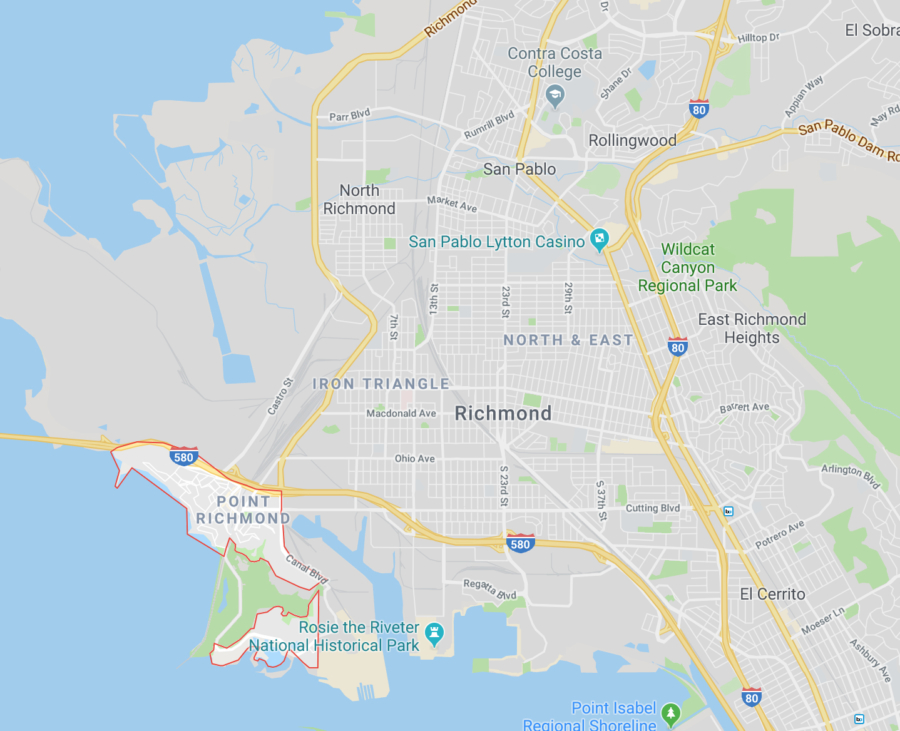
14bed Point Richmond map 900x731 Home Truths: Point Richmond — One of the East Bays best kept secrets
Point Richmond lies at the East Bay’s most northwestern livable point.

The area became even more attractive this January, when the San Francisco Bay Ferry began operations between Point Richmond and the San Francisco Ferry Building. Right now the ferry route focuses on serving commuters with four Richmond-to-SF rides each weekday morning and two SF-to-Richmond rides in the evening. It also has a few weekend routes running through Nov. 3.

As those who ride the ferry know, it’s the Bay Area’s best commute — featuring beautiful views of the city and East Bay, fresh bay wind in your hair (if you choose to sit or stand outside) and wine and beer on board!

14bed Richmond Ferry copy 900x597 Home Truths: Point Richmond — One of the East Bays best kept secrets
The Richmond ferry. Photo: courtesy Red Oak Realty

The Richmond ferry offers more than a glorious ride — it opens up Point Richmond to more professionals by short-circuiting a long BART or traffic-plagued car commute to San Francisco. It’s now easier to get to San Francisco from Point Richmond than from many places in Marin.

And there’s more. Point Richmond offers close proximity to the wine country, Marin and easy highway access to Berkeley and Oakland (outside of peak traffic times).

Red Oak Realty agents know that the area is on an upswing, so we asked some of our experts in the area to share their insights.

Small-town, waterfront lifestyle

On the water: Point Richmond, the waterfront section of Richmond (population of over 110,000, according to 2017 U.S. Census data), separated from the city by Highway 580 as it proceeds north to the Richmond-San Rafael Bridge, has the elements of a small town and then some, including one of the East Bay’s best natatoriums and the standout waterfront Bay Trail.

The Plunge: The Plunge in Point Richmond features year-round indoor swimming, swim lessons and family swim events.

Hiking and biking: The Bay Trail through Point Richmond connects the area via hiking and biking trails for miles north to Point Pinole and south to the Bay Bridge and beyond.

The marina: The area has two private marinas, including one in Marina Bay just to the south of Point Richmond, and the Bay Area’s premier racing yacht club, the Richmond Yacht Club. Many residents own kayaks, boats, paddle boards and other water toys for an enjoyable  evening moment on the water.

Food and drink: After swimming, hiking and boating, residents can walk to happy hour at 100-year-old hotel Hotel Mac, local brewery East Brother, relatively new New York City-style pizza joint Raymond’s Pizzeria and the area java-powered gathering point Kaleidoscope Coffee.

74370 East Brother 1 900x510 Home Truths: Point Richmond — One of the East Bays best kept secrets
East Brother taproom features locally brewed beer and live music. Photo: East Brother

How to join the Point Richmond lifestyle

Point Richmond features predominantly single-family homes, some of which have been converted into duplexes or triplexes. It also includes some condo developments.

Demand is increasing because of the new ferry route and an increasing awareness of the area’s great walkability and quality of life. Prices have risen substantially over the last couple of years, yet Point Richmond remains one of the best-priced areas in the East Bay for what you’re getting.

Some standout homes for sale include the following:

The three-bed, 2-and-a-half bath single-family home with Mount Tamalpais and Bay views just blocks from the water for $995,000.

74370 504 Bridge Court  900x563 Home Truths: Point Richmond — One of the East Bays best kept secrets
504 Bridge View Court. Photo: Red Oak Realty

Another great Point Richmond opportunity is the beautiful three-bedroom, 2.5-bath home with high ceilings and bay views at 528 Seacliff Place going for $995,000

74370 528 Sea Cliff 900x531 Home Truths: Point Richmond — One of the East Bays best kept secrets
528 Seacliff Place. Photo: Red Oak Realty

Just steps from the Miller/Knox Regional Shoreline park, the four-bedroom, 2.5-bath home at 203 Seapoint Place offers bay living near its best for $1.025 million.
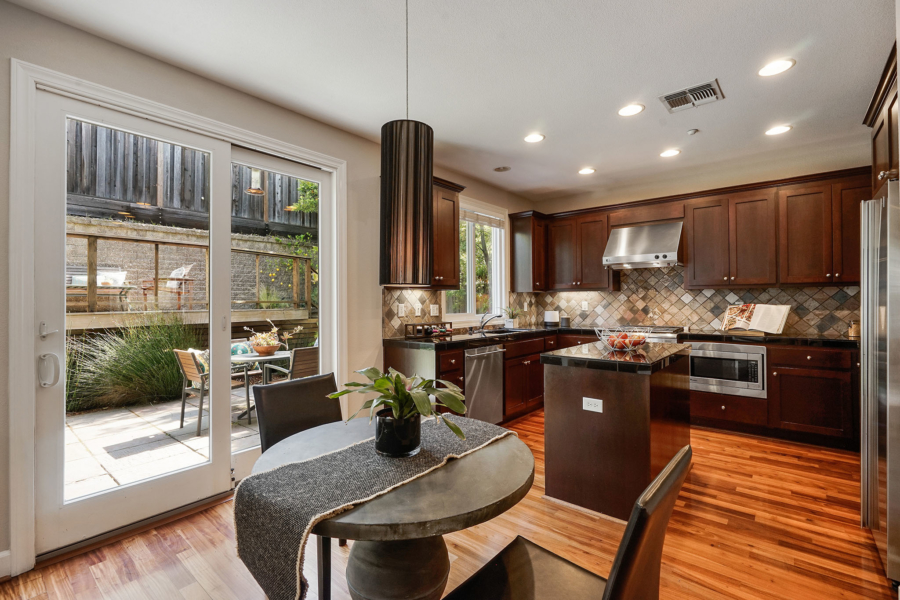
7214c 22 900x600 Home Truths: Point Richmond — One of the East Bays best kept secrets
203 Seapoint Place. Photo: Red Oak Realty

Any questions about these homes or other Point Richmond opportunities, reach out to us!

14bed Red Oak Realty logo March 2018 150x150 Home Truths: Point Richmond — One of the East Bays best kept secretsHome Truths is written and sponsored by Red Oak Realty, the largest independent real estate broker in the East Bay, serving the community since 1976. Read more in this series. If you are interested in learning more about the local real estate market or are considering buying or selling a home, contact Red Oak at hello@redoakrealty.com, 510-250 8780.

Article source: https://www.berkeleyside.com/2019/10/09/home-truths-point-richmond-one-of-the-east-bays-best-kept-secrets

Posted in SF Bay Area News | Tagged | Leave a comment

2nd most valuable U.S. startup to leave SF as city loses another headquarters

San Francisco is losing one of its most valuable tech startups.

Stripe, the payment processing company valued at $35 billion, signed a lease Wednesday for a 421,000-square-foot headquarters in South San Francisco. The company will move more than 1,000 employees just 10 miles south of its current South of Market headquarters, which it plans to vacate.

The move, expected in the second half of 2021, will be one of San Francisco’s largest corporate departures and the largest by a tech company during the current boom. Stripe is the second-most valuable private U.S. startup behind Juul, which was last valued at $38 billion, according to data firm PitchBook. It’s raised over $1 billion from venture capitalists and has over 2,000 employees globally.

Stripe said the city’s lack of office space was the primary reason for the move, with the vacancy rate below 5% downtown. Stripe’s new home at Kilroy Oyster Point in South San Francisco has a total of 2.5 million square feet of approved space, giving Stripe plenty of room to expand further.

“We’re really fortunate to have found a new home just a few miles down the road in South San Francisco. The new development at Oyster Point will allow us to keep growing our team in the Bay Area for many years,” said Peter Travers, Stripe’s head of workplace.

In the past year, pharmaceutical company McKesson Corp. and construction and engineering firm Bechtel both moved out of San Francisco, while tech has continued to expand. But Stripe decided to join the exodus.

The move is an alarm bell, said Jay Cheng, public policy director at the San Francisco Chamber of Commerce.

“Stripe is just tip of the iceberg. If we’re not thoughtful about our local business policies, this could be part of a trend,” Cheng said. “Ironically, we’re making it tougher, not easier, for companies to stay.”

He cited potential new restrictions on office development and a proposed office fee increase as new obstacles.

The demand for San Francisco office space continues to grow while supply isn’t sufficient. There are 168 tenants looking for 7.1 million square feet in San Francisco, according to brokerage Cushman Wakefield. Only two major office projects, 5M and Oceanwide Center, are under construction.

Stripe looked around the region and found South San Francisco to be the most compelling location. Travers said the company wants to keep all its Bay Area employees in one location, which is why it doesn’t plan to keep the San Francisco office.

Though Stripe also strongly opposed last November’s Proposition C, which raised business taxes to fund more homelessness services, the company said that wasn’t a major factor for the move. Another major opponent, Square, expanded to Oakland after Prop. C passed but remains headquartered in San Francisco.

South San Francisco has no gross receipts or payroll taxes, said Mike Futrell, its city manager. It has a business license fee up to $125,000 per year and relies on mostly its property, sales and hotel taxes, he said.

“We are ‘The Industrial City.’ We take that heritage seriously to be business-friendly,” Futrell said. “We focus on that. We still value good jobs.”

Alex Tourk, spokesman for sf.citi, a tech business group, said San Francisco needs to consider changes to its business taxes. The city is currently reviewing the tax system, which brings in a total of $1 billion annually. But those taxes could climb higher under the revised system.

“Unfortunately, Stripe choosing to leave town is not an anomaly,” he said. “The membership of sf.citi would prefer a more holistic strategy per the mayor’s suggestion that we work together as a collective business community to fix the gross receipts tax once and for all and establish a fair and equitable tax system that we can all rely on.”

Chris Thornberg, founder of Beacon Economics, said businesses leaving San Francisco has more to do with real estate costs and high wages than taxes.

“Taxes don’t have a lot of impact on business decisions. It’s something that has been exaggerated for years,” Thornberg said. Stripe is staying in the Bay Area, so its departure isn’t a blow to the region, he said.

Stripe focuses on digital payments and its success is tied deeply to rest of the technology sector’s boom.

Brothers John and Patrick Collison grew up in Ireland and founded Stripe in 2010 in Palo Alto. It moved to San Francisco in 2012. They distilled the complex, creaking infrastructure of online payments into a handful of lines of code that could be inserted into a client’s website to enable online payments. The company has millions of clients, including tech giants Google, Amazon and Uber, and traditional retailers like Target and brands like Under Armour.

Stripe declined to disclose its rent on its 12-year lease, but another recent deal in an adjacent building at Oyster Point — with muscle treatment company Cytokinetics — starts at $65.40 per square foot annually. That’s below San Francisco’s average rent, which is above $80 per square foot and can exceed $100 per square foot in new projects.

“The speed at which this project has come together speaks to the state of the current commercial real estate market, where demand remains strong and supply is extremely limited,” John Kilroy, CEO of project developer Kilroy Realty, said in a statement. “This is true up and down the entire West Coast, but it’s especially acute in the San Francisco Bay Area.”

Stripe signed the Bay Area’s fourth-largest lease of 2019, according to brokerage Cushman Wakefield, behind Google and Verizon deals in San Jose and Pinterest’s lease in San Francisco.

Futrell, South San Francisco city manager, said Stripe is now the city’s biggest tech tenant.

“We’re known for being the largest biotech hub in the world,” he said. “We welcome the diversity.”

Stripe’s future office is farther from Caltrain and other public transit compared to its current office at 510 Townsend St. in South of Market. But the new office is close to a ferry terminal with service to Alameda, Oakland and Richmond.

Alexander Quinn, Northern California research director at real estate brokerage JLL, said South San Francisco gives Stripe more growth potential.

“It creates a campus environment that they can’t necessarily have in Oakland or in San Francisco,” he said.

But he said he thinks that San Francisco will continue to thrive.

“As long as the tech industry and startup scene exists in San Francisco, we’ll continue to have a vibrant, healthy market,” he said.

Roland Li is a San Francisco Chronicle staff writer. Email: roland.li@sfchronicle.com Twitter: @rolandlisf

Article source: https://www.sfchronicle.com/business/article/2nd-most-valuable-U-S-startup-to-leave-SF-as-14558067.php

Posted in SF Bay Area News | Tagged | Leave a comment

Bay Area real estate shows signs of softening

‘+

‘+__tnt.truncateStr(oAsset.title.replace(/(]+))/ig,”"),iTextTrun,’…’)+’

‘+

‘+

Article source: https://www.smdailyjournal.com/news/local/bay-area-real-estate-shows-signs-of-softening/article_59ad5788-e3fe-11e9-a7a6-235314be4e8c.html

Posted in SF Bay Area News | Tagged | Leave a comment

Los Gatos Broker Julie Wyss Awarded the #29 Spot Among the Top 100 Real Estate Professionals in the Bay Area

Julie Wyss of Los Gatos, CA BRE# 01350871

Jump on these low interest rates because as soon as the market stabilizes, mortgage rates will likely rise.

The Leading 100, REAL Trends’ annual guide to the top 100 Bay Area real estate professionals has, in conjunction with LuxeSF, San Francisco magazine, and Silicon Valley magazine, named Julie Wyss the #29 top professional in the SF Bay Area.

With over $100,000,000 in sales in 2018, Julie has a deep understanding of the local market. She knows what it takes to buy and sell homes at the best possible price, even in a market fraught with anxiety.

“Inventory has increased, and interest rates are low, so it’s very buyer-friendly—but it’s not technically a buyer’s market. If anything, inventory levels still point to a seller’s market,” says Julie. “Baby boomers are moving out in droves. They’re escaping the traffic, long lines, and the high intensity of Silicon Valley, which opens up the market to an influx of qualified millennial buyers. That, coupled with low mortgage interest rates, makes this a key time to snap up property close to the biggest tech employers in the world.”

But many buyers are nervous about jumping into the market as it ebbs from its height of $1.7M in some Bay Area counties. “The tech industry is bringing in buyers from all over the world,” says Julie. “These buyers—young, dual-income tech couples—want homes that are as close as possible to leading employers like Google and Apple because they work extraordinarily long hours and don’t want to waste time sitting in commute traffic. They also want access to great schools, and they’re willing to pay top dollar for that.”

This means the smartest people in the world who command top salaries from the world’s most coveted tech employers are the buyer’s competition. Buyers who wait out the market to save a few thousand dollars on asking price could spend those same thousands on higher interest rates or a longer commute. “Jump on these low interest rates,” advises Julie. “Because as soon as the market stabilizes, mortgage rates will likely rise.”

In other words, it’s still a good time to buy.

Julie has advice for sellers too, “Sellers are worried their home will sit on the market and go through multiple price reductions before selling—and that is happening—but it’s a byproduct of overpricing. Sellers are frustrated that they missed the peak of the market, and they’re having a hard time letting go of the higher home prices of 2018.”

But Silicon Valley real estate prices are no longer at their zenith, and homes are only worth what buyers will pay for them. “Despite a certain level of anxiety, buyers are feeling more powerful with the higher levels of inventory, so negotiations are fierce,” Julie warns. “The best thing sellers can do is face the fact that they missed the peak of the market and just enjoy the high sales prices their homes will bring them simply because of their prime location in Silicon Valley.”

To contact Julie, call 1.408.687.2026. http://www.juliewyss.com

About Julie Wyss:

Julie offers full-service residential real estate services to buyers and sellers around the San Francisco Bay Area. She is nationally recognized in the Wall Street Journal as one of the elite top 1,000 agents in the country and consistently ranks in the top 100 Bay Area agents by The Bay Area Leading 100. Learn more at juliewyss.com. BRE# 01350871.

###

Article source: https://www.prweb.com/releases/los_gatos_broker_julie_wyss_awarded_the_29_spot_among_the_top_100_real_estate_professionals_in_the_bay_area/prweb16660628.htm

Posted in SF Bay Area News | Tagged | Leave a comment

Bay Area housing, traffic have Facebook looking elsewhere for expansion

Facebook CEO Mark Zuckerberg said during a publicly broadcast QA with employees that his company is looking elsewhere for growth because of the Bay Area’s housing and traffic issues.

“The infrastructure here is really tapped,” Zuckerberg said Thursday. “Housing prices are way up. Traffic is bad.” He added that while Facebook is trying to do what it can to help with what he called the region’s policy challenges, “at this point we’re primarily growing outside of the Bay Area.”

The social networking giant has a huge footprint in the Bay Area, where it was founded. In addition to the company’s massive headquarters in Menlo Park, it also has offices in Fremont, Mountain View and San Francisco, and plans to open offices in Burlingame next year. Last month, it opened a new campus in Sunnyvale, leasing 1 million square feet that can accommodate thousands of employees.

Facebook’s largest locations outside the Bay Area are in Seattle, Austin and New York City, a spokesman said Friday. Other major cities where the company has offices include Los Angeles, Boston, Chicago, Denver and Washington, D.C.

Facebook has tried to address the Bay Area housing crunch by proposing mixed-use space in Menlo Park and subsidizing apartments for teachers, funding housing for low-income residents and more. The foundation by Zuckerberg and his wife, Priscilla Chan, earlier this year partnered with Facebook, Genentech and others to pledge $500 million to build or preserve more than 8,000 homes in the Bay Area over the next 5 to 10 years.

Zuckerberg addressed the Bay Area’s infrastructure woes as part of his answer to an employee’s question about why Facebook isn’t friendlier to remote work. The CEO said he prefers big hubs where Facebook engineering teams could be around one another, and that he doesn’t want to have a lot of small offices around the world, except for where sales teams need to be in the markets they’re serving.

Zuckerberg’s comments come as other tech companies, including Apple and Google, expand their presence in the Bay Area.

Facebook isn’t the only tech company that’s looking to grow elsewhere, though. Commercial real estate brokerage Cushman Wakefield said this week that 58 of the 89 biggest — with headquarters of 100,000 square feet and above — tech and life science companies based in the Bay Area have leased 30.4 million square feet of office space in other U.S. cities since January 2010. Outside the Bay Area, the five markets with the most square footage leased by those types of companies are Austin, Seattle, New York, Southern California and Chicago.

Facebook’s CEO live-streamed the internal meeting this week after audio of a previous meeting was leaked to the Verge. At that meeting, Zuckerberg said Facebook would fight Sen. Elizabeth Warren’s efforts to break up the company if she became president. At Thursday’s meeting, Zuckerberg said he would try not to “antagonize” Warren further.


Article source: http://www.mercurynews.com/bay-area-housing-traffic-have-facebook-looking-elsewhere-for-expansion

Posted in SF Bay Area News | Tagged | Leave a comment