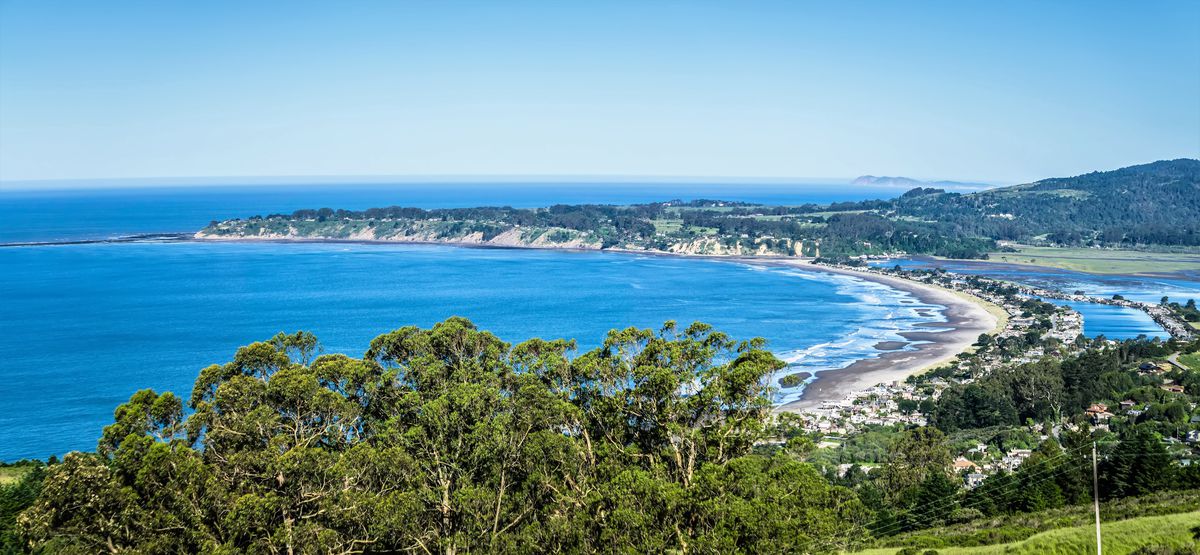
California housing crisis: Residents flee San Francisco because of costs

CLOSE

Nine of the ten highest-rent cities in the U.S. are in California.
USA TODAY

SAN FRANCISCO – Social media influencer Sarah Tripp and her husband, Robbie Tripp, moved to San Francisco in 2016 brimming with optimism. 

“We thought, here’s a city full of opportunities and connections where you go to work hard and succeed,” says Tripp, 27, founder of the lifestyle blog Sassy Red Lipstick.

But after a year-long hunt for suitable housing in San Francisco only turned up “places for $1 million that looked like rundown shacks and needed a remodel,” the couple packed up and moved to Phoenix.

They went from paying San Francisco rents of $2,500 for a one-bedroom, one-bath apartment that was far from shopping and other amenities, to purchasing a newly constructed 3,000-square-foot, four-bedroom, four-bathroom home where they’ll raise their newly arrived baby boy.

“It was cool to be living near all those high-tech startups,” Tripp says of her time in the Bay Area. “But you quickly saw that if you weren’t part of that, you’d be pushed out. It’s just sad.”

For the better part of two decades, the Bay Area has been a magnet for newcomers lured by a modern-day technology Gold Rush. But increasingly only those who have struck it rich can afford to stay.

Once a bohemian mecca that welcomed the Beat poets and ’60s hippies, San Francisco now lays claim to the most expensive housing in the West, with a median home price of $1.4 million. There’s also $5 a gallon gas, private schools priced like universities and chic restaurants that cost nearly double the national average.

Earlier this year, the San Francisco Bay Area was second only to New York – and ahead of Los Angeles, Washington and Chicago – when it came to people leaving major U.S. cities. More than 28,190 departed in the second quarter of 2019, almost double 2017′s rate, according to a regular Migration Report from real estate brokerage Redfin.

The most popular in-state option for San Franciscans fleeing high costs is Sacramento, where the median home price is $350,000. Out of state, Seattle, at a $580,000 median, offers the biggest draw, Redfin data shows.

Yet another popular destination is even farther afield: Austin, a capital city with no state taxes and a booming tech scene that is home to Apple’s latest HQ. The most recent quarter, which ended July 30, saw Austin receive 5,403 newcomers, the majority of whom came from San Francisco, Redfin says.

California overall also is losing residents. In 2018, 38,000 more people left the Golden State than entered, the second year in a row for this negative trend, according to the U.S. census. A recent Edelman Trust Barometer survey found 53% of residents and 63% of millennials were considering leaving because of the high cost of living.

“The great tragedy is this place was a middle-class paradise, and now you’ve got the flight of the middle class with all their aspirations, leaving the poor, the rich and a transient population,” says Joel Kotkin, presidential fellow in Urban Futures at Chapman University in Orange, California. 

In the Bay Area, median household income is around $100,000, a tidy sum in most cities. But after federal and state taxes, residents have to cover rents that range from $3,600 a month in San Francisco to $4,600 in Silicon Valley, according to rental site Rent Cafe. That economic reality has left many of the city’s low-income residents living in their cars or on the streets.

“I don’t recognize my city, to be honest,” says Shannon Way, executive director of HomeownershipSF, a nonprofit umbrella group that helps residents secure housing. “When you only have people at the extremes, it tears at the very fiber of what it means to live in a community.”

Way says her organization does what it can to steer locals toward the city’s few below market rate housing options, as well as a city down payment assistance loan program. “We focus on those who really want to stay,” she says. “But it’s getting harder and harder to survive here.”

That desire to leave also hits the wealthiest of San Francisco residents, some of whom are perched in Pacific Heights mansions that fetch as much as $39 million.

Over the past year, a wave of initial public offerings have involved San Francisco-based tech companies such as Lyft, Uber and Slack (and, coming soon, Airbnb). Some of those newly minted millionaires aren’t keen to lose “a lot of their windfalls to state taxes, so they start looking elsewhere,” says Daryl Fairweather, chief economist at Redfin. Typical tax-free landing spots include Jackson Hole, Wyoming, and Incline Village, Nevada.

California’s biggest challenge

Business and political leaders – from Salesforce billionaire Marc Benioff to Gov. Gavin Newsom – have sounded the alarm over the growing housing crisis.

Last year, Benioff lobbied to pass a controversial San Francisco corporate tax to fund homelessness initiatives. And Newsom, who in his State of the State address early this year called housing “our most overwhelming challenge,” has committed $1.75 billion to fund new building projects.

During a statewide tour in October, Newsom signed various housing bills, including one that puts an annual cap on rent increases at 5% plus inflation, and another that aims to block predatory evictions.

“We’re living in the wealthiest as well as the poorest state in America,” Newsom said as he signed the bills at a ceremony in Oakland. “Cost of living. It is the issue that defines more issues than any other issue in this state.”

San Jose natives Halie and Jim Casey assumed that by getting into the housing market they could keep costs under control. They had purchased a small house well suited to the two of them and were happy. But then Halie got pregnant.

“We quickly saw we couldn’t afford anything bigger,” she says.

Their appreciating asset served as a ticket out. The couple had purchased their home for $700,000, and two years later it was worth $1 million thanks in part to Google buying up land in San Jose.

Jim, 40, decided to become a stay at home dad for a spell, while Halie, 32, arranged to transfer in May 2018 with her employer, Apple, to the company’s new Austin offices.

“We got a great house with a nice yard, have great schools, and all for less money which allowed us to pay off our debts,” she says. “There’s also a flexible, family-friendly nature to life here that doesn’t exist in the intense, pressurized world of Bay Area tech.”

Housing threatens booming economy

For some experts, families opting to leave the state foreshadows larger problems. They worry a lack of affordable housing could jeopardize a state growth rate – one fueled in large part by Bay Area tech giants – that typically outpaces the national average. That could mean fewer jobs for those who stay.

“The Bay Area’s strength is also its greatest weakness,” says Jordan Levine, deputy chief economist of the California Association of Realtors. “The area has a strong economy and some of the most innovative companies in the nation, but it’s also a poster child for housing supply issues that haven’t kept up with growth.”

Chapman University’s Kotkin says he’s alarmed by the growing number of California companies moving to states where cheap housing and sometimes no state taxes make it easier to pay middle-managers a living wage. These include automakers (Mitsubishi leaving L.A. for Tennessee), defense contractors (Parsons leaving Pasadena for Washington, D.C.), and technology enterprises (Apple building in Austin). 

“In the end, you want a middle class in your state,” Kotkin says. “Because a society without one is unstable.”

Solutions will have to come from public officials and citizens alike, says Dowell Myers, professor of policy, planning and demography at the University of Southern California’s Sol Price School of Public Policy.

“I’m not despondent, but it requires many people to see how their interests are negatively impacted,” he says. “If you own a house, you benefit as your value goes up in a housing shortage. But your children and grandchildren will be impacted, they may not be able to live and work here. So that’ll be the way things will change.”

The alternative is bleak, says state Sen. Scott Wiener, D-San Francisco.

“We’re headed to a future where the middle class won’t be able to raise families here, where restaurants increasingly will close because they can’t hire workers, where teachers and police officers can’t live anywhere near where they work,” he says. “We need a much greater sense of urgency.”

Wiener, who has been criticized by housing activists who claim his various housing bills haven’t been accommodating enough to low-income residents, says, “it’s easy to just blame someone else when we need to look in the mirror.”

He notes that tech companies such as Facebook and Google have put forth plans to build housing near their headquarters, only to be stopped by local zoning laws.

“Tech companies didn’t cause our housing problems or create bad housing laws,” Wiener says. “This whole thing won’t be easy politically or financially, and it won’t happen fast.”

West Seattle = New California

But time is of the essence. Many young, educated, upwardly mobile workers in San Francisco say they can’t afford to wait around for government officials and business leader to come up with solutions.

Deborah Neisuler, 42, never really thought she would leave her beloved San Francisco.

In 2006, she and her husband Justin, 44 – he’s in banking, she’s a curriculum developer – bought a small house south of town that had easy access to local freeways leading to Silicon Valley.

As the years passed, two children arrived, and suddenly the house started to feel cramped. What’s more, the prospect of private school tuition loomed given the city’s lottery system doesn’t guarantee a first-choice public school. 

That’s when a real estate agent friend offered to quietly test the waters for a sale, given their house had gone up in value 66%. Although “no one had heard of our neighborhood when we bought there, it was close to the freeway and offered a good commute to Silicon Valley,” Deborah Neisuler says.

The house sold quickly. Since both worked largely from home, their options were wide open. The couple didn’t want to move back East, where they are both from, and Bay Area suburbs did not appeal. 

“We are city people,” she says.

Instead, lured by a body of water and a sense of community, the family chose West Seattle. The area has become so popular with newcomers from down south “people call it New California, because it seems people from there are taking over,” Neisuler says with a laugh. “And I’m like, ‘Yup, that’s us.’”

Although over the past few years she has longed for San Francisco’s hip urban culture and sometimes struggles with Seattle’s dark winters, Neisuler is thrilled with the change.

“I do really miss San Francisco, it holds a special place in my heart and we were there 13 years,” Neisuler says. “But I know it’s not the best place for my family.”

Follow USA TODAY national correspondent Marco della Cava: @marcodellcava

Article source: https://www.usatoday.com/story/news/nation/2019/10/19/california-housing-crisis-residents-flee-san-francisco-because-costs/3985196002/
Posted in SF Bay Area News | Tagged | Leave a comment

Bidding wars are taking a strange turn in the fall housing market

Cooler weather historically means a cooling off period in the housing market, but that is not the case this fall. After dropping to the lowest level in eight years, bidding wars are creeping back.

In September, 11% of offers written by Redfin, a national real estate brokerage, faced a bidding war. That is down dramatically from 41% a year ago, but up from the 10% reading in August.

That might not seem like a big deal, but in the past four years, the bidding war rate has dropped — not increased — from August to September.

The bidding war rate usually falls about 15 percentage points from the height of the housing season in March to the beginning of the slow season in September, at least according to seasonal patterns from 2013 to 2018.

That has not been the case this year. The rate fell just 4 percentage points during that same period. Part of the reason for that is that the spring season was unusually slow, so there was no great height from which to decline. High home prices, higher mortgage rates and low supply kept competition at bay, even though housing demand is still elevated.

“After the coolest spring home-selling season in at least eight years, homebuying competition didn’t have far to fall, but low mortgage rates ultimately drove a modest uptick in bidding wars in late summer when they typically become less common,” said Redfin’s chief economist, Daryl Fairweather. “With mortgage rates likely to remain near historic lows, I expect the bidding war rate to continue to level off—rather than follow its typical end-of-year descent—as 2019 comes to a close.”

Article source: https://www.cnbc.com/2019/10/08/bidding-wars-are-taking-a-strange-turn-in-the-fall-housing-market.html

Posted in SF Bay Area News | Tagged | Leave a comment

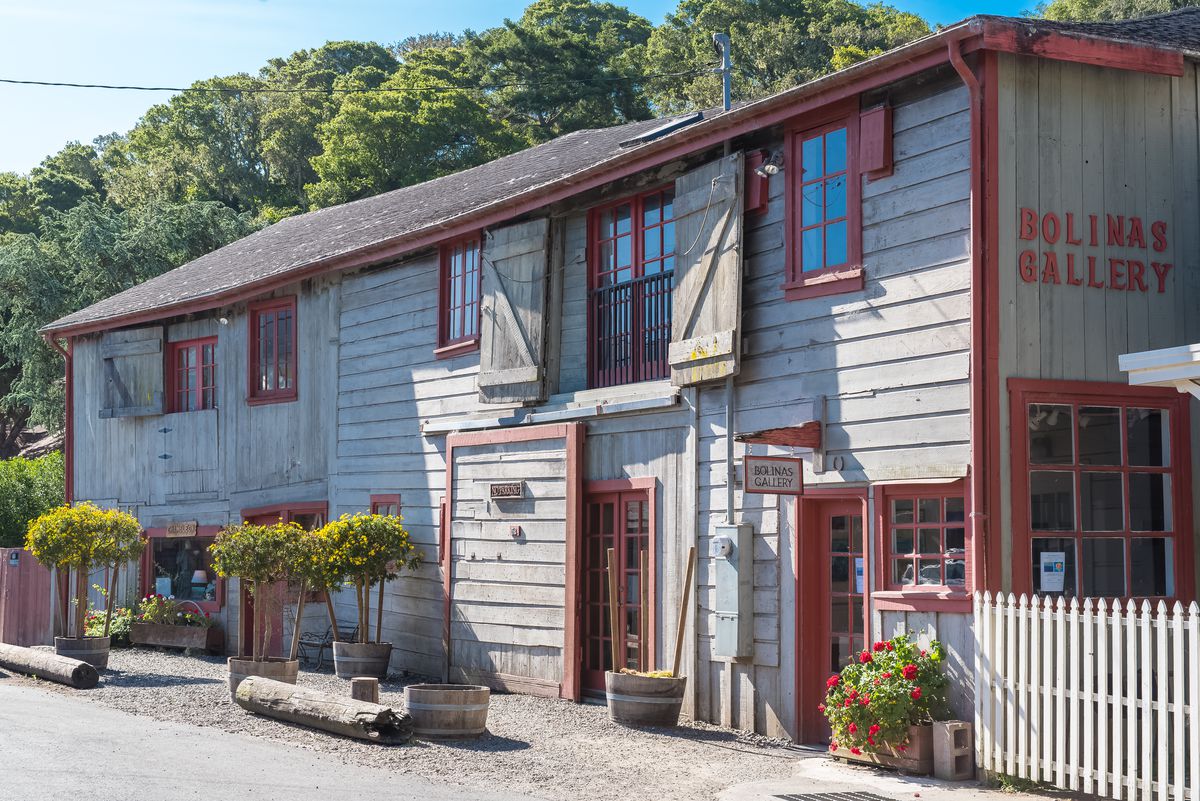
Bolinas wanted to stay hidden—then came the internet

It was a seasonably warm Sunday afternoon in Bolinas, which meant parking was going to be tough.

Around a dozen cars idled along Brighton Avenue leading to the beach, their drivers waiting for a spot as surfers peeled off their wetsuits and loaded longboards into hatchbacks and Sprinter vans. Stylish weekenders from San Francisco and the East Bay dotted the sidewalk, sipping kombucha from the Bolinas People’s Store and walking their dogs; others put down their names for a table on the crowded patio at Coast Cafe, the only full-service restaurant serving lunch in town.

Unlike many California coastal communities, this unincorporated township in western Marin County never meant to become a tourist hotspot. In fact, Bolinas has a reputation for keeping out visitors, thanks to locals who, in acts of prankish civil disobedience, for years repeatedly cut down the road signs along Highway 1 heading into town.

In 1975, after residents successfully halted major development plans for the area—an effort chronicled in journalist Orville Schell’s local history, The Town that Fought to Save Itself—Bolinas even convinced the county to adopt a legally binding community plan aimed at limiting growth and ensuring the secluded beach town “remain primarily and foremost a resident community” that maintains “a healthy balance between tourist and resident.”


33976 shutterstock 1166503381 Bolinas wanted to stay hidden—then came the internet

But with the onset of travel blogs, Google Maps, and short-term rental sites such as Airbnb, Bolinas is anything but hidden. And many long-time residents say that balance is quickly approaching a tipping point.

“We’re the ‘town that fought to save itself’ by tearing down all its signs and hiding,” says Evan Wilhelm, managing director at the nonprofit Bolinas Community Land Trust. “But now, we have to put up signs to let people know our situation because the internet has just torn through.”

Along with the 40,000-plus Instagram posts hashtagged #bolinas has come an intensifying housing crisis, accelerated by an apparent growing demand for second homes and short-term vacation rentals that residents say is pushing many permanent families out of town. And as the residential population shrinks, locals fear their close-knit, fiercely eccentric community could give way to something resembling a resort village.

It’s a common concern for destination communities across California and beyond grappling with how to accommodate a surge in tourism while also facing a housing crunch. Cities from Pacific Grove in Monterey County to South Lake Tahoe have reportedly seen rental costs spike and local residents displaced.

In Bolinas, the permanent population has dropped by nearly a quarter since 2010 to around 1,200 residents, according to the most recent available census estimates.


33976 shutterstock 1188691192 Bolinas wanted to stay hidden—then came the internet

Bordered by state and national parks, Bolinas has always had its share of vacation home owners drawn to the area’s natural beauty and rustic lifestyle. But Stew Oakander, a 30-year-old Bolinas native, says the town has become difficult to recognize.

“The population of Bolinas feels completely different from what it was 10 or 15 years ago,” he says. “Most of the working families that I’ve known and grown up with are gone.”

Oakander lived in town nearly his entire life until the house his parents rented was sold as a vacation home for almost $2 million in 2015. The family, which had been paying around $2,200 a month, couldn’t find anything in the area within their price range. They decided to move to Cotati in Sonoma County, even though his parents continued to work in Bolinas, an hour-long commute.

Last year, Oakander landed a job with the local water utility district and moved into a small in-law unit on a family friend’s property in town with his partner, April, and their 2-year-old son. Living in these accessory units—many of them unpermitted and not up to code—is common among young families who aren’t lucky enough to inherit homes, residents say.

Although Oakander’s housing situation is more livable than the converted storage sheds some go home to, he says it’s not a place to raise a family, and he expects to eventually follow his parents to Sonoma, where rent is cheaper.

“It’s definitely shrinking, because my son is almost 3 now,” he says. “It’s just a one-bedroom, one-bath studio.”


33976 shutterstock 713366227 Bolinas wanted to stay hidden—then came the internet

Oakander’s parents moved to Bolinas in the 1970s, when, as the town’s origin story goes, the sleepy dairy hamlet an hour north of the city was discovered by San Francisco flower children who had come to clean the Bolinas Lagoon after an oil spill off the coast. They purchased plots of land, set up artist colonies and communes, and established an ethos of back-to-the-earth environmentalism that the town still prides itself on.

Today, the current average home price in Bolinas has climbed to over $2.5 million, a nearly 40 percent increase from just the month prior, according to Trulia.com, suggesting a rush of the same tech money that has inflated real estate prices throughout the Bay Area.

Terry Donohue, an agent with Bolinas Real Estate, said in recent years, her buyers have included more tech workers seeking second homes. She added that after decades of stability in the number of available homes on the market, more properties in town are coming up for sale. “Long-time owners have aged or passed away, which is contributing to the inventory,” she wrote in an email.

While increased supply may bring prices down, it could also lead to more full-time residents being displaced as owners look to take advantage of the hot real estate market by selling homes they had been renting out.

Nowhere is displacement felt more strongly than at the Bolinas-Stinson School, where K-8 enrollment is down to just 90 students, a more than 25 percent drop since 2014.

“Enrollment sizes saw a drastic shift as the town turned into—I hate to call it a resort community—but as fewer families live here,” says John Carroll, Bolinas-Stinson Union School District superintendent. “As class sizes get smaller, schools feel less like schools.”

To accommodate smaller classes, the school has begun combining grades for certain subjects. Still, teachers and school employees say some classrooms continue to be “dysfunctional” because of their small size, prompting parents to pull students from the district.

Art teacher Nuria Lee says the family of one of her students was recently given a 60-day eviction notice for the home they rent in town. The uncertainty families experience around housing can take its toll on her students. “That’s a very real concern families have to face,” she says.


33976 shutterstock 1166517910 Bolinas wanted to stay hidden—then came the internet

In addition to an influx of outside wealth, short-term rental services such as Airbnb and VRBO may have contributed to the squeeze on available rentals.

“The transition to short-term rentals has been very acute in Bolinas,” says Dennis Rodoni, a Marin County supervisor and West Marin native. “It’s really affected the permanent rental market there.”

The main issue, Rodoni says, is that second homeowners are increasingly turning to short-term rental apps instead of leasing to local caretakers, a long-standing practice in Bolinas. Owners may see listing on these sites as a more lucrative option or prefer the flexibility of home-sharing to a long-term lease.

Studies back up these trends. A 2017 paper from researchers at UCLA, USC, and the National Bureau of Economic Research found that an increase in short-term rentals in a neighborhood leads to higher rents and a reduction in the long-term rental supply.

According to county data, 38 properties in Bolinas are registered with the county as short-term rentals. Although likely not a complete count, the number represents a marked portion of Bolinas’s housing stock. The Bolinas Community Land Trust estimates there are around 600 to 700 homes in town, but it says only half of those homes are occupied by full-time residents, meaning that each house taken off the rental market has a tangible impact on the total supply.

“I know so many people right now looking for houses, and they’re [finding] all Airbnbs,” says Pam Springer, a mother of two who came to Bolinas in the early 1990s after a friend she met while following the Grateful Dead on tour asked Springer to move in with her.

Springer now pays $3,500 a month to lease the three-bedroom house her family moved into last summer, but struggles to make rent and expects to move out of state once her lease expires in a few years. Like other residents on the town’s gridded Mesa, a mostly dirt road peninsula overlooking the Pacific with stunning views of Mount Tamalpais State Park, she’s noticed an uptick in homes that sit empty for significant periods of time.


33976 shutterstock 158026646 Bolinas wanted to stay hidden—then came the internet

Airbnb contests that short-term rentals have a sizable impact on the permanent rental market in Bolinas and nearby Stinson Beach.

“Vacation rentals have been a part of the Stinson Beach and Bolinas economies for decades and represent a small portion of the housing stock in both cities,” the company said in a statement. “For generations these short-term rentals have created supplemental income for families, supported neighborhood businesses and helped protect access to California’s coast by providing affordable accommodations.”

Next year, Rodoni says the board of supervisors expects to discuss a pilot program in Bolinas that would require at least one full-time occupant live at any property used as a short-term rental. The program, which could be rolled out to other West Marin communities, may also provide subsidies to homeowners who agree to build and rent permitted second units on their property, a strategy that’s being adopted by local governments across California.

A local housing nonprofit is already helping some West Marin homeowners repurpose bedrooms or cottages as studio apartments to rent out at affordable rates. The program is also available in Bolinas through a partnership with the Bolinas Community Land Trust, but local regulations around septic tanks dissuade most homeowners from creating the inlaw units, an issue the trust says it is working to address.

The land trust, which rents out 15 residential units in Bolinas, receives a mix of public grants and private donations to fund its operations. Its main goal is to purchase homes and commercial spaces that it redevelops and leases to low-income renters.


Building in Bolinas is made difficult, however, by a moratorium on issuing new water meters that connect buildings to the town’s water supply. In addition to severely curbing new development, the restriction has the effect of limiting the number of units that can be added to an existing property.

Imposed by the local water board in 1971, the moratorium is often viewed as a purely anti-development policy. Don Smith, a member of the Bolinas Community Utility Water District Board, who also advises the land trust, pushed back against that belief. He said that the rule is necessary because the town is not connected to the county water district and relies on a local creek that is prone to drought.

“That’s a perennial misunderstanding that just won’t go away,” Smith says. “The water moratorium would never have stood up in court if that was the reason.”

But as a result, when a new water meter does come up for auction every few years, it can go for as much as $225,000. And the limiting effect the moratorium has on new building only serves to further raise property values.


ef3b5 shutterstock 232615366 Bolinas wanted to stay hidden—then came the internet

All of this puts a strain on the land trust to raise enough money to compete with wealthy buyers. The organization is currently in the middle of a $2 million capital campaign, which relies in large part on donations from affluent vacation homeowners. Wilhelm, the trust’s managing director, says it can at times be difficult to approach potential donors without making them feel like they’re to blame for the town’s housing shortage. But she believes engaging with new part-time residents can lead to a solution.

“At this point, we’re trying to make relationships with some of these wealthier people and hoping they become supporters of the land trust,” Wilhelm says. “If we can designate enough housing in town for affordable housing, then we can sustain ourselves and Bolinas can also be the vacation rental town.”

One second homeowner, who declined to be named for this article, describes an ongoing tension between part-time residents and “Old Bo” locals who don’t want to see the town change. Still, the homeowner said many part-timers are creatives and artists who make an effort to contribute to the community. Some serve on the boards of local nonprofits including the Bolinas Museum, which hosts public events in town.

The homeowner, who rents a unit to a local resident, also points to contributions made to the land trust by second homeowners, including possibly an anonymous donation of two vacant plots of land, on which the organization plans to develop permanent housing.

Of course, more part-time residents and weekenders also means new business opportunities, and a handful of locals have set up new shops and eateries that cater to the changing crowd.

Tyrone Brendel, a 29-year-old Bolinas native, opened a health food restaurant, Bovida, last year. It serves colorful acai bowls, grilled panini sandwiches, and fresh smoothies. “I wouldn’t have been able to open this business 10 years ago,” he says.

The store stays busy during the warmer summer and fall months, but once tourist season ends, it struggles to rely on a shrinking local clientele. After a difficult first winter, Brendel plans to close the restaurant for a month or two at the start of next year to avoid taking a loss.

“In the wintertime, it’s such a ghost town,” Brendel says. “It’s hard to make it through those times because there’s no one here.”

While new visitors may spur business, residents say tourists are also overburdening nearby trail systems and nature preserves. After local blogs and travel sites began writing about a day hike to Alamere Falls, a scenic, highly Instagrammable beach waterfall in the Point Reyes National Seashore, the trail has become, at times, nearly impassable.

“There’s garbage all along the hike, and you can’t even go on the weekends anymore,” says resident Katie Weber. “People park illegally along the road all the way to the fire department, which is, like, miles from the hike.”

Article source: https://sf.curbed.com/2019/10/1/20880275/bolinas-homes-housing-bay-area-short-term-rentals-displacement

Posted in SF Bay Area News | Tagged | Leave a comment

Uber to sublease SF offices as it moves to Mission Bay

Uber plans to vacate its four large offices along Market Street in San Francisco as it moves to a new Mission Bay headquarters next year.

The Chronicle has learned that the ride-hailing company is seeking subtenants for a total of 729,352 square feet across four buildings: 71 Stevenson St., 555 Market St., 685 Market St. and its current 1455 Market St. headquarters. The spaces have room for 5,439 employees, according to a new marketing brochure.

Uber’s listings are the city’s largest blocks of available space, excluding office buildings under construction, and could provide some relief for other tenants, said Jesse Gundersheim, director of Bay Area market analytics at CoStar, a real estate data firm.

“The space will be welcomed in a market where vacancy has remained around 6%. However, sublease availability, and the office market’s elevated level of unprofitable tenants, are rising concerns,” he said.

Uber has a new, four-building headquarters nearing completion next to the Golden State Warriors’ Chase Center. At 1 million square feet, it is larger than the buildings Uber is vacating.

Uber declined to comment beyond confirming that it had put the space up for lease. Its plans hadn’t been previously disclosed.

The spaces are available between September 2020 and December 2020, with terms expiring between 2022 and 2025. Asking rents weren’t disclosed, but the market average is around $85 per square foot annually.

With 1.73 million square feet leased, Uber is currently San Francisco’s second-largest private tenant behind only Salesforce, according to brokerage Cushman Wakefield. If it vacates the four buildings it’s subleasing, Uber would drop to the city’s seventh-largest tenant with about 1 million square feet.

The company has faced challenges after years of rapid expansion. Since July, Uber laid off more than 1,100 of its 27,000 employees worldwide.

Uber’s stock price is down over 20% since its public debut in May, though it is still worth almost $56 billion. In the second quarter, the company reported a $5.2 billion loss, including $3.9 billion in stock-based compensation expense, a non-cash charge that many Wall Street analysts ignore.

Still, the company continues to expand in the Bay Area. Uber leased 290,000 square feet in Sunnyvale in June, San Jose Spotlight reported. The company also leased a Palo Alto office in 2016, but scrapped another large office planned in Oakland. It recently signed major leases in Chicago and New York.

Uber’s offices, which feature sleek black color schemes and abundant cafeterias, will be appealing for other companies, said Robert Sammons, Northwest research director at Cushman Wakefield.

“It opens up some prime space for expanding tenants in any industry including, of course, tech,” he said. “Having these blocks available in a still strong market is not a bad thing.”

Roland Li is a Chronicle staff writer. Email: roland.li@sfchronicle.com Twitter: @rolandlisf

Article source: https://www.sfchronicle.com/business/article/Uber-to-sublease-SF-offices-as-it-moves-to-14563416.php

Posted in SF Bay Area News | Tagged | Leave a comment

Yes, even the Warriors get San Francisco sticker shock: ‘It doesn’t feel real’

Warriors guard Jacob Evans’ welcome-to-San Francisco moment came in late August.

While calculating his expenses, he realized that, between utilities and rent, he will spend about $7,900 each month on housing. That might not seem steep for someone set to earn $1.9 million this season, but Evans grew up in a three-bedroom, two-bathroom house in Baton Rouge, La., that cost $575 a month.

“You hear about the crazy prices out here,” said Evans, who leased a two-bedroom apartment in San Francisco’s Rincon Hill neighborhood. “But until you actually see those numbers add up on paper, it doesn’t feel real.”

Reality set in for dozens of Warriors employees in recent months. To be close to the team’s new Mission Bay headquarters inside the $1.4 billion Chase Center, everyone from front-office executives to video interns scoured the country’s most expensive housing market for affordable places to live.

They found that avoiding traffic on the Bay Bridge requires concessions. As forward Glenn Robinson III put it, “You’re paying more for less.” And he would know. While with the Pistons last season, Robinson said he rented a three-bedroom “mansion” outside Detroit for $3,500 a month. Now, fresh off signing a two-year, $3.9 million deal with the Warriors, he pays well more than twice that for a fraction of the space.

That hasn’t deterred the Warriors, whose season began Thursday, in their search for short commutes and easy access to the practice facility. Thirteen of their 14 players have moved to San Francisco, with Stephen Curry, who bought a $31 million estate on the Peninsula, the exception. Nine of the new San Franciscans signed with Golden State this past offseason. The other four moved from the East Bay, where prices were much cheaper.

The median monthly rent for a one-bedroom apartment in Oakland is $2,320, compared to $3,690 in San Francisco, according to rental website Zumper. That’s roughly 30% higher than the median for a one-bedroom in New York City and 105% more than the census median in the U.S.

Those in the organization looking for a more long-term commitment were forced to navigate a market in which the median price for a house or condo is $1.35 million, according to the San Francisco Association of Realtors. Center Kevon Looney considered buying a house in San Francisco after he signed a three-year, $15 million extension in July, only to decide that he was better off waiting a couple seasons.

“Got to let those paychecks pile up a little more,” said Looney, who is renting a three-bedroom row house near Fisherman’s Wharf. “I told my dad, who’s from Tennessee, about the housing prices out here and he was just like, ‘You can’t pay that. You’d be nuts.’”

Apartment hunting has been a popular topic among the Warriors’ nine players on contracts at or near the league minimum, which starts at nearly $900,000.

It wasn’t that they struggled to afford homes in San Francisco, where residents making nearly $200,000 a year are considered middle class. Thanks to an influx of wealthy tech employees, luxury apartments in San Francisco are at a premium, leaving some players to tour numerous places before landing a lease.

The Warriors’ front office helped connect prospective renters with real-estate agents. Because most players didn’t touch down in the Bay Area until late August or early September, they had limited time to find a place to live before training camp opened Oct. 1.

In one day, Robinson looked at six apartments near Chase Center before settling on a two-bedroom next to Salesforce Tower. He was surprised his complex required a short bio and a rental recommendation.

“I’ve never had to do anything like that before,” said Robinson, whose previous stops in Minnesota, Pennsylvania, Indiana and Michigan hadn’t prepared him for San Francisco’s housing crunch. “I was just like, ‘Is this really how competitive it is? That’s crazy.’”

Curry, who has three young children, chose to live in the suburbs because he wanted — needed — a big yard. But by staying 30 miles south of Chase Center, he runs the risk of getting stuck in rush-hour traffic on Highway 101. Before a preseason game on Oct. 10, Curry arrived 25 minutes late to the arena, forcing him to adjust his pregame routine on the fly. He still scored 40 points.

Most of Golden State’s younger players prioritized proximity to Chase Center. Rookies Eric Paschall and Alen Smailagic, as well as second-year forward Omari Spellman, live in a high-rise apartment complex just a few blocks from the practice facility.

After asking Paschall for recommendations, forward Alfonzo McKinnie signed a nine-month lease in that same complex that would take him through the season. Last week, the Warriors waived him to clear a roster spot for center Marquese Chriss. McKinnie, who signed Monday with the Cavaliers, must pay a sizable fee to break his lease.

“That was brutal,” Paschall said of McKinnie’s situation. “Lease agents out here aren’t too forgiving.”

The move to San Francisco has signaled a lifestyle change for some players.

Because his new apartment doesn’t have the space he enjoyed at his old house in Sacramento, center Willie Cauley-Stein gave his 2018 Chevy Silverado and $150,000 lake boat to his brother in rural Kansas. Robinson is relying on Uber until he finds a place to park his Porsche Panamera. Paschall and Smailagic, neither of whom has a driver’s license, have taken to walking tours of the city.

“Where I used to live, you could live there for three years for the price it takes for one month’s rent here,” said Smailagic, who grew up sharing a one-bedroom apartment in Belgrade, Serbia, with his parents and younger sister. “But at the same time, you can see why it’s so expensive out here. It’s beautiful.”

Connor Letourneau is a San Francisco Chronicle staff writer. Email: cletourneau@sfchronicle.com Twitter: @Con_Chron

Article source: https://www.sfchronicle.com/warriors/article/Yes-even-the-Warriors-get-San-Francisco-sticker-14560779.php

Posted in SF Bay Area News | Tagged | Leave a comment