Move over San Jose — with an influx of new high-rise apartments, Oakland is now a more expensive city for renters.
Oakland one-bedroom rents rose 5.1 percent last year, edging past San Jose in November as the second most expensive Bay Area city behind San Francisco for apartment dwellers, according to real estate listing site Zumper.
The median price for a one-bedroom in Oakland climbed to $2,470 a month, and a two-bedroom hit $2,990, topping San Jose metro apartment prices in both categories.
San Francisco remained the most expensive city in the U.S., with the median one-bedroom going for almost $3,500 a month, according to Zumper. Year-over-year prices dropped in both S.F. and San Jose. Zumper analyst Crystal Chen said the rise in the Oakland market could be attributed to renters looking to escape high prices in San Francisco.
The higher rents also reflect the surge of new luxury apartment towers going up in Oakland, housing advocates and analysts say. Still missing — the affordable units for middle and low income residents.
In the last two years, about 2,700 apartments have opened in Oakland, according to an analysis of largecomplexes by Rent Cafe. About 90 percent of new Oakland apartments are considered either luxury or high-end, with some units having modern appliances, sweeping views, high-tech exercise rooms, rooftop decks and fire pits.
Although some buildings offer one- or two-month rent discounts, prices for the new units quickly exceeded rates in older buildings. Rent Cafe found demand for luxury apartments drove up prices in that category by 3 percent during the last year.
The number of high-income renters in Oakland earning more than $150,000 grew by 173 percent between 2014 and 2018, according to a Rent Cafe analysis. But overall, the total number of renters grew just 2 percent during the same period — suggesting high-income renters are pushing out low-income residents.
“The spillover effect caused by the sky-high prices in the metro area’s core city is quite visible, as more and more renters try to relocate to more affordable nearby cities,” said Rent Cafe analyst Sanziana Bona.
As the high rise building boom has pushed the Oakland skyline upward, long-time residents’ angst over gentrification has grown.
Eduardo Torres, a regional coordinator for Tenants Together, said pressures on low-income residents have been growing in recent years. The renter-rights organization has seen more complaints and pleas from East Bay residents facing evictions and simply being priced out of the homes, he said.
The new apartments and condos have added to the city’s limited housing stock yet driven up prices for long-term residents. “You see more and more families being pushed out to other parts of the state,” he said. “This past year has been very busy for us.”
In other parts of the Bay Area, rents have largely stabilized from the previous year, according to a Zumper analysis. Rents in San Jose fell 1.2 percent to $2,450 for a one-bedroom and remained flat at $2,900 for a two-bedroom. San Francisco rents fell 2 percent to $3,490 for a one-bedroom and dropped 4.7 percent to $4,500 for a two-bedroom.
San Francisco rents are roughly 18 percent higher than New York and 40 percent higher than Boston — the second and third priciest cities in the U.S.
Across the country, apartment costs increased slightly this year. The national average is about half what Bay Area residents pay: The median price for a one-bedroom checked in at $1,230, with a two-bedroom listed for $1,465, according to Zumper.
San Francisco and its surrounding counties are flush with employment, the housing supply is tight, so conventional economic wisdom has it that demand should drive offers across the board.
Instead, the listing aggregate site Realtor.com reported this week that both SF and San Jose areas saw huge declines in the number of listings year over year in November, continuing the region’s weird 2019 trends.
According to figures released by the site on Tuesday, the San Jose metro area saw the fourth biggest decline in the “active listings count” metric in November, down 22.2 percent compared to the same time last year.
The SF-Oakland-Hayward area (which encompasses all of SF, San Mateo, Contra Costa, Alameda, and Solano counties) saw a less drastic but still marked drop, down 17 percent from 2018.
The declining inventory isn’t unusual relative to the rest of the country—Realtor notes that “only four of the 50 largest metros saw inventory increase year over year” that same month.
However, the decline in and around SF has been long-term; in July of this year, Orange County-based data firm Core Logic (whose figures represent more homes than Realtor’s, as Realtor reports reflect only homes listed on that particularly site) said that the number of homes sold—not just listed—in SF dropped 12 months in a row.
Still, the fact remains that most of the time, housing demand doesn’t seem to be driving a frenzy in 2019.
The Realtor figures also estimated that for the San Jose area, a median-priced listing (not sale) in November was just less than $1.1 million, up 1.5 percent from 2018.
In the SF area, median asking price was roughly $933,000, up 5.1 percent.
Once again this year, you could not afford to buy a home in San Francisco or most of the Bay Area. Alas. But at least you could see what you, and so many others, were missing.
While this year’s aesthetic offerings weren’t nearly as striking as what we saw in 2018 or 2017, the stock for sale was still none too shabby. Rare abodes designed by William Turnbull, Albert Farr, and Bernard Maybeck landed on the market. There were even a few contemporary houses, like this polarizing Atherton construction from Stanley Saitowitz, that cleaned up. We even saw a conversation pit.
And now, in no particular order, here are the homes for sale that made us stop and say, “Whoa.”
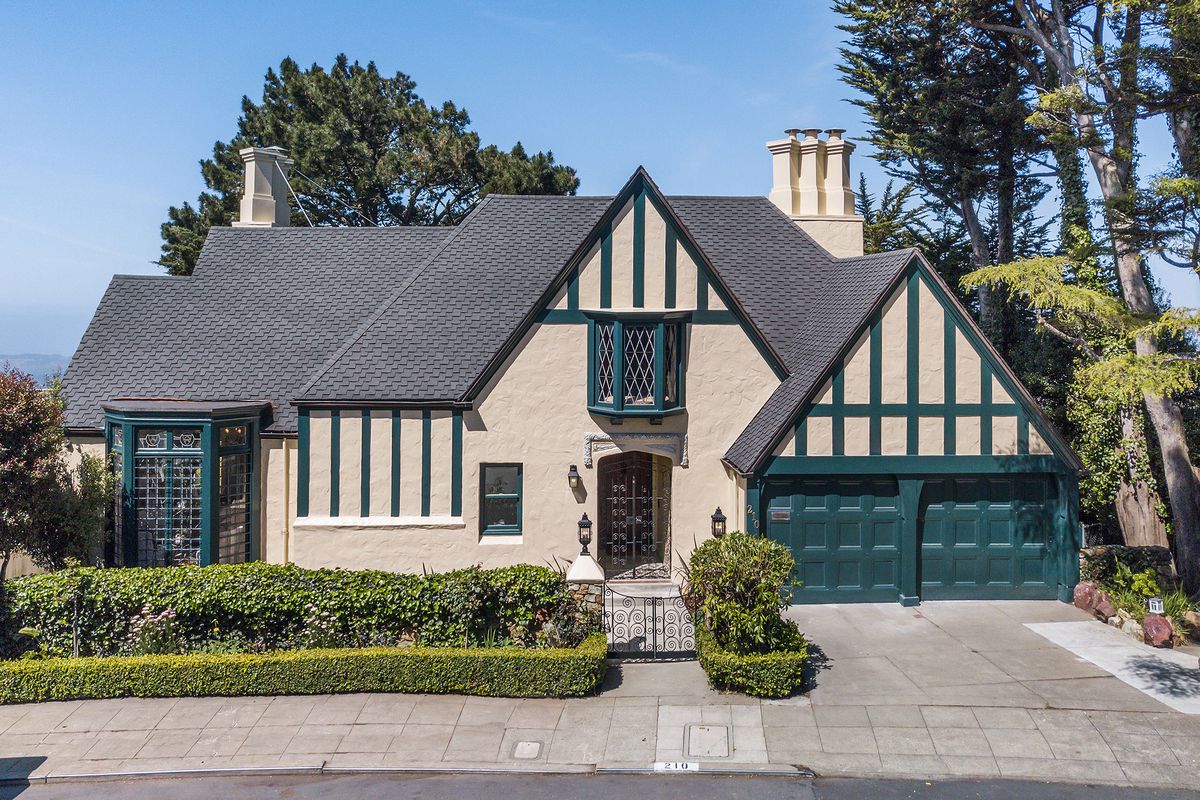
Featuring five bedrooms, five bathrooms, and approximately 4,315 square feet, this circa-1931 Tudor in San Francisco’s smallest neighborhood measured four stories tall. It came with 18-foot vaulted ceilings, leaded glass windows, oakwood arches, coved ceilings, and five—five!—outdoor decks. It sold for $3,100,000.
Photo by Open Homes Photography, courtesy of Compass
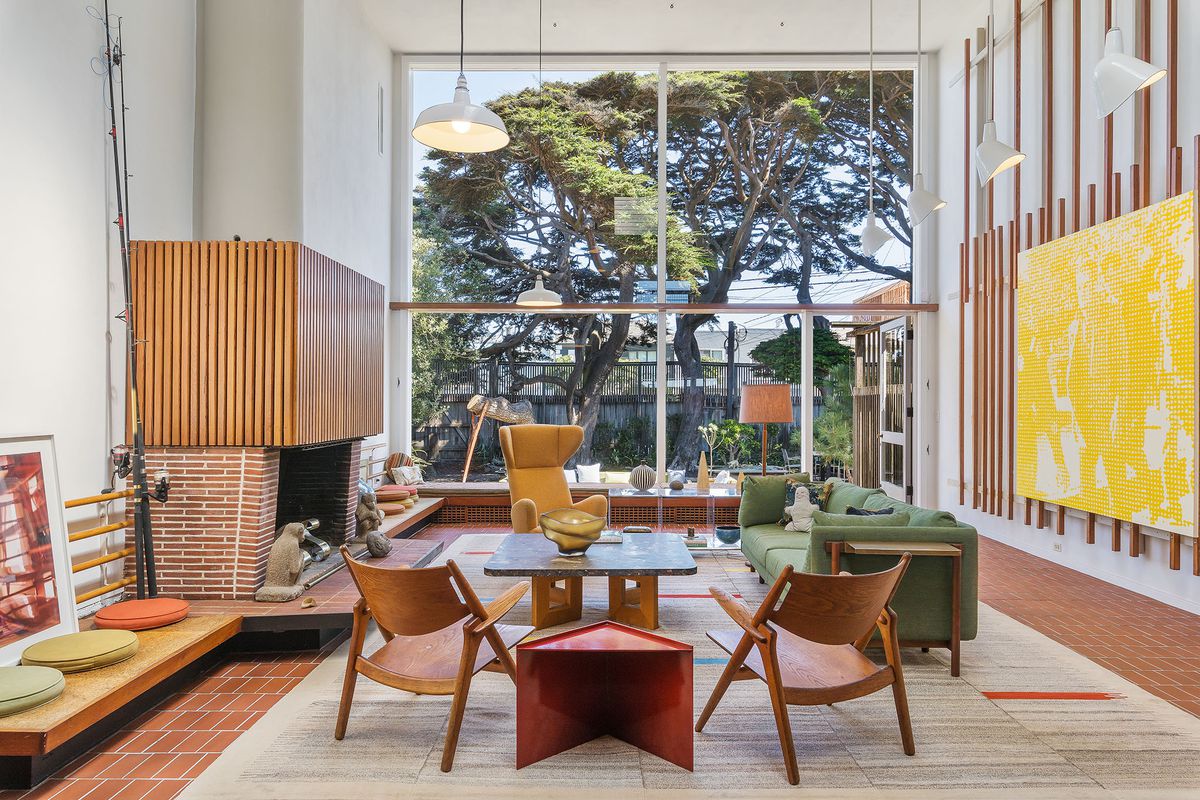
Designed by Ernest Born in 1949—one of the masterminds behind the Glen Park BART Station—this Great Highway home in the Outer Sunset came with a living room that wowed with 21-foot ceilings, a brick fireplace, and a wooden pole structure affixed to the wall for hanging art.
Fanny Osbourne Stevenson, a magazine writer and former wife of Robert Louis Stevenson, commissioned Willis Polk to design this Mediterranean- and Tudor-style mansion near the top of Russian Hill around 1900. Among the home’s many highlights—including a marble-floored foyer and a sweeping staircase with carved bannisters—was a stained-glass window, designed by Polk himself, depicting the ship Hispaniola, which was featured in Stevenson’s Treasure Island. The house remains on the market for $13.8 million.
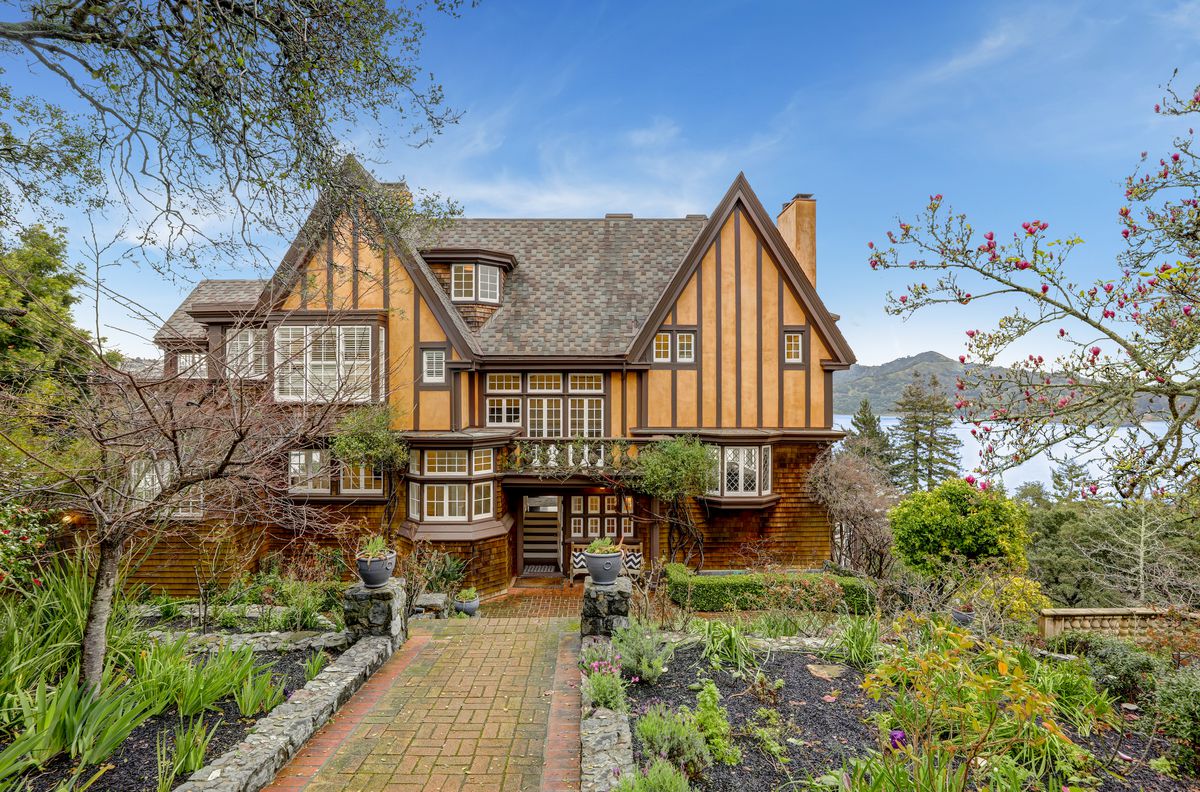
This gingerbread-style house with double gables, perched high on the hill in Belvedere, scored top marks for curb appeal alone. Designed by Albert Farr, this six-bed, five-and-a-half-bath, 5,574-square-foot home at 334 Golden Gate Avenue asked $7.995 million before being temporarily pulled off the market.
The biggest homes for sale weren’t always the best. Take, for example, this darling little Victorian in Bernal Heights, which landed on the market just under the one-million-dollar mark. Set away from a series of sidewalk steps, this home came with gardens in the front and back. Downright adorable. It sold for $1.1 million.
“This house is so much fun to sell because there is just nothing like it,” said Mary Thomson of Marin Home Team, who was in charge of this Sausalito home’s listing. Indeed, there aren’t many A-frames in the seaside town. When this geometrical specimen hit the market, people swooned over its peaked roof. But this home, which sold for $1.31 million, also offered clean white interiors that provided much needed positive contrast to its dark facade.
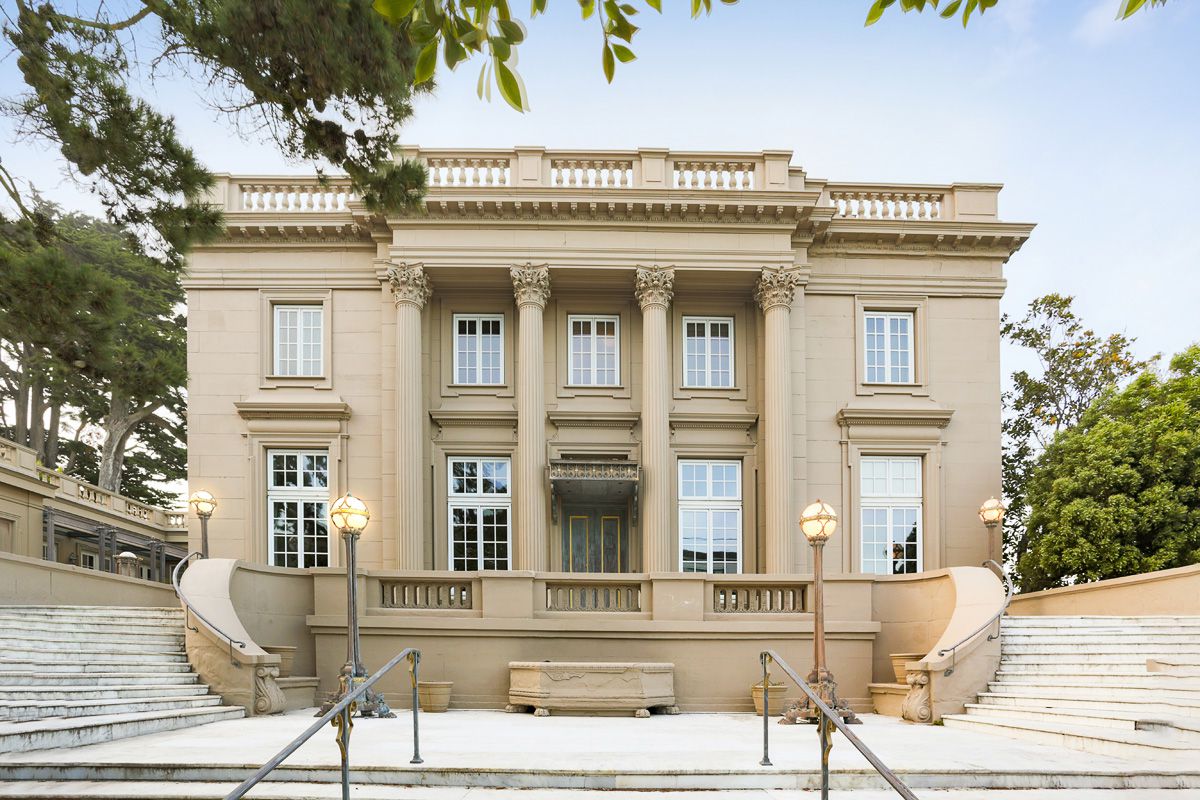
Then again, sometimes big is better. This noted number in Presidio Heights came with headlines galore even before it hit the market—it played host to the 2019 SF Decorator Showcase; housed an uninvited squatter, who lived in the long-vacant home and sold the pricey valuables inside; and briefly sparked Taylor Swift’s real estate interest—but the real story is its unabashed wedding cake-like beauty. Featuring nine bedrooms, seven and a half bathrooms, and 17,895 square feet, 3800 Washington, known as Le Petit Trianon, was inspired by King Louis XV’s Chateau at the Versailles Palace in France. The 1904 mansion, which, withstood the great quake and fire of 1906, is also on the National Register of Historic Places. It has, inexplicably, yet to find a buyer.
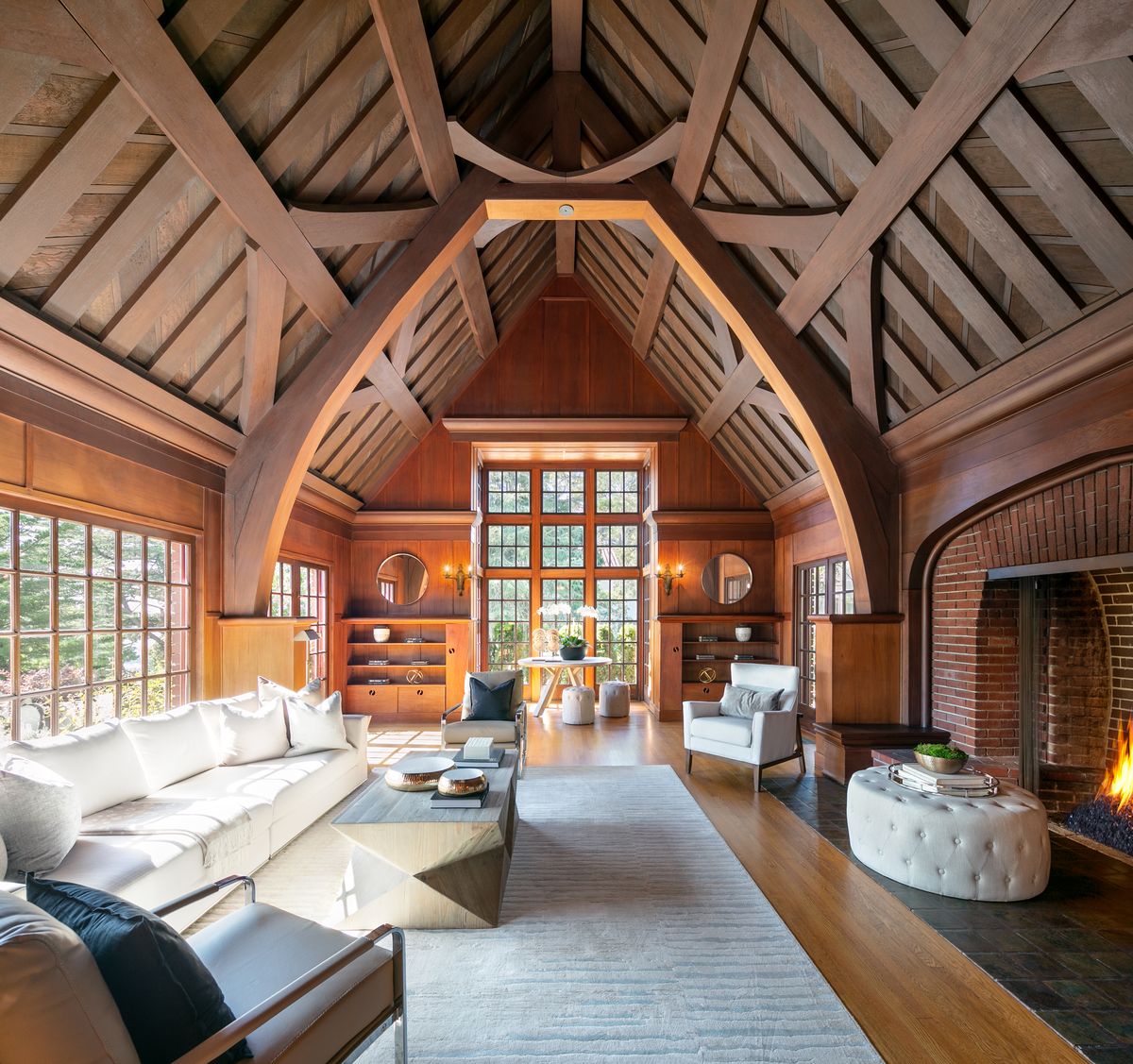
From the mind of the man who built the Roos House and the Palace of Fine Arts, Bernard Maybeck’s Erlanger House, built in 1916, used Samlesbury Hall, an English medieval manor, as a prototype. Featuring four bedrooms, three bathrooms, and 3,620 square feet, 270 Castenada Avenue came with interiors made up of warm redwood, heavy beams, a grand hall, a castle turret, a huge fireplace, cathedral ceilings rising to 20 feet, and hand-hewn and hand-crafted details. It sold for $4 million.
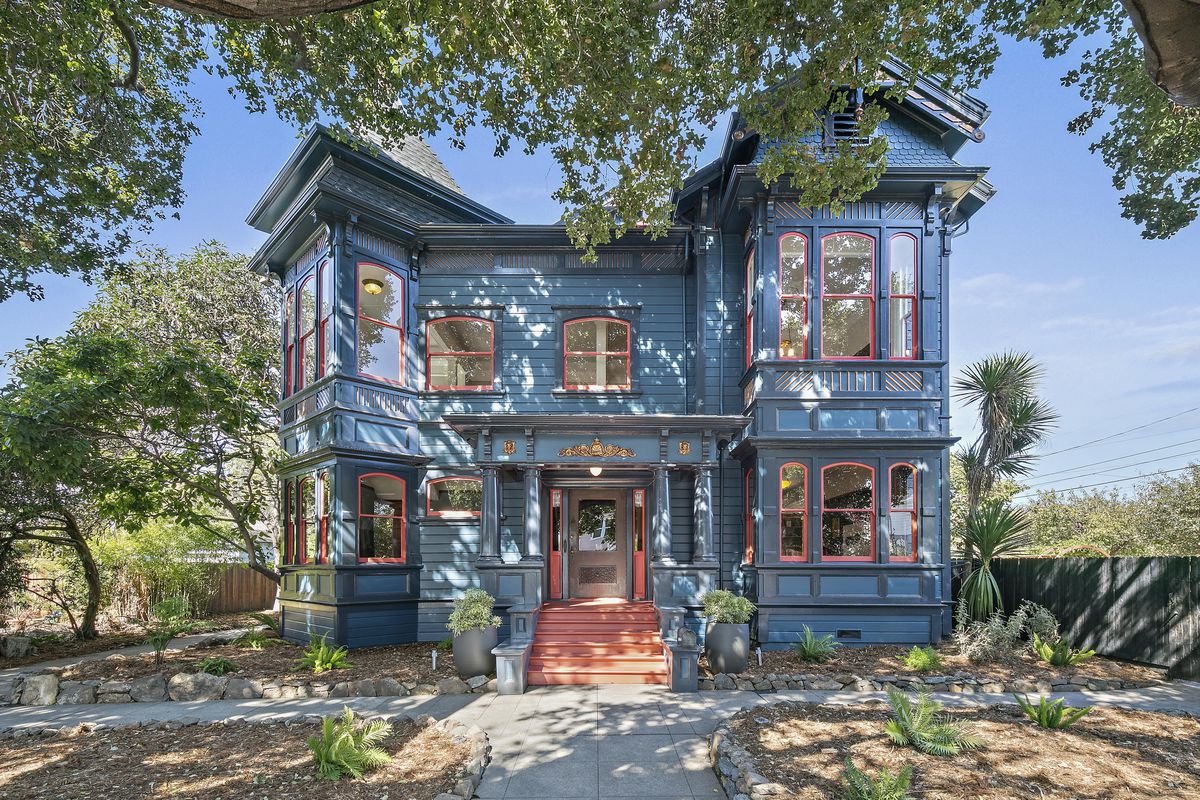
Built in 1885, this exquisite Victorian, nicknamed the de Rome House, hits the market for $2.8 million. It came with over 80 arch-topped windows, embossed wallpaper, crown moldings, four wood-burning fireplaces, pocket doors, and those skinny bathrooms that, pardon the pun, reek of charm.
Designed by William Turnbull, who helped develop the Sea Ranch community along the Sonoma coast, this 1968 property, this the Binker Barn is one of California’s most prestigious homes. Highlights here included two interior loft spaces accessible by ladder, picture windows, Douglas fir flooring, skylights, and aboral views.
Photo by Open Homes Photography, courtesy of Vincent Tore San Nicolas of Green Bridge Properties
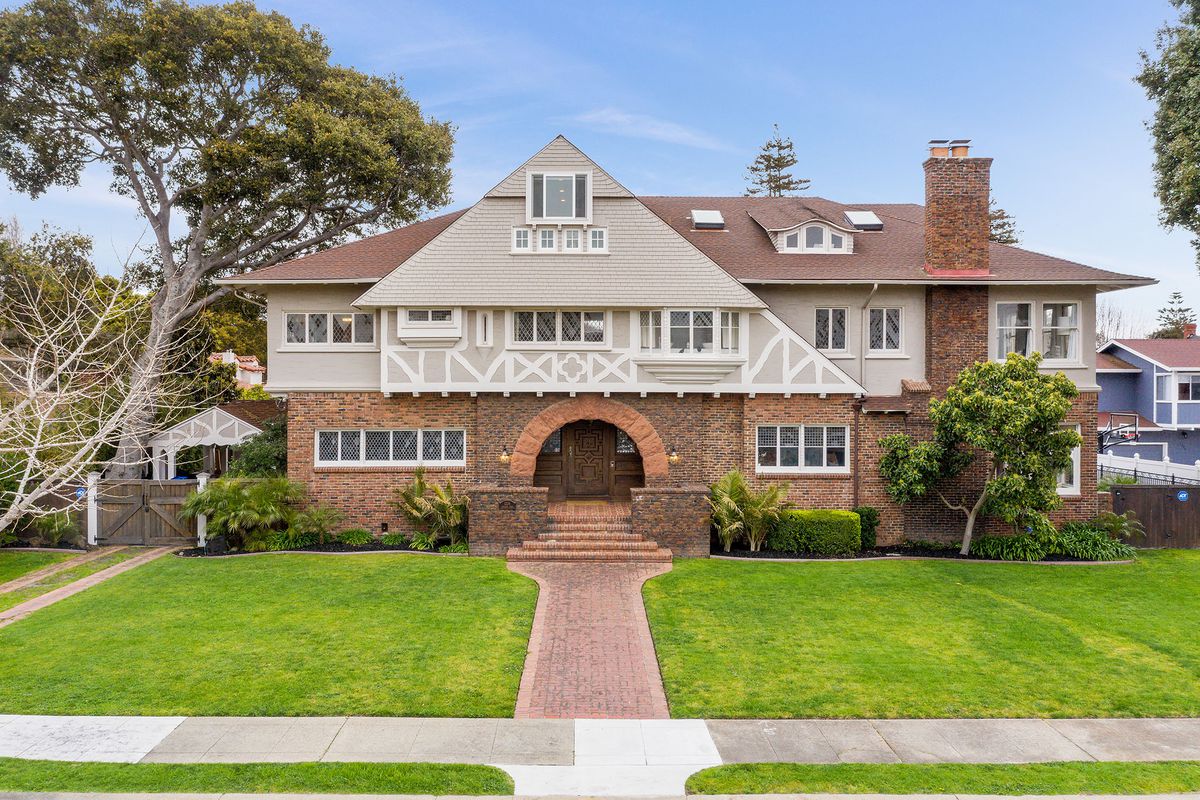
The Tudor at 1234 Hawthorne, reportedly the largest house in the East Bay town, was a sight to behold. Originally constructed in 1910 for Charles Appleton Hooper, a lumber mogul and philanthropist, the mansion measured 9,349 square feet and came with exposed beams, a grand staircase, and a secret bookcase door leading to another room.
Photo by Christian Klugmann Photography, courtesy of Red Oak Realty
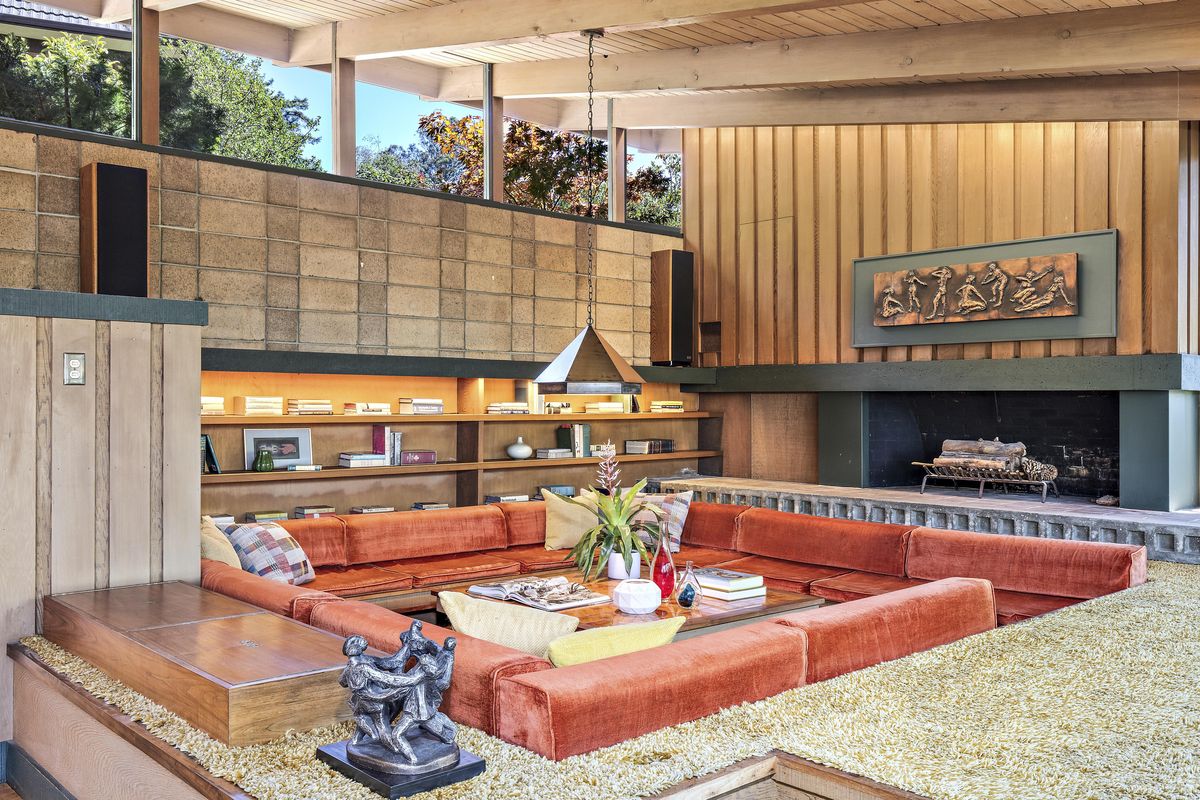
Built in 1956, this John Hans Ostwald home came with all of the straightforward trappings that midcentury aficionados love so dearly. But of far greater importance was the conversation pit smack dab in the middle of the living room.
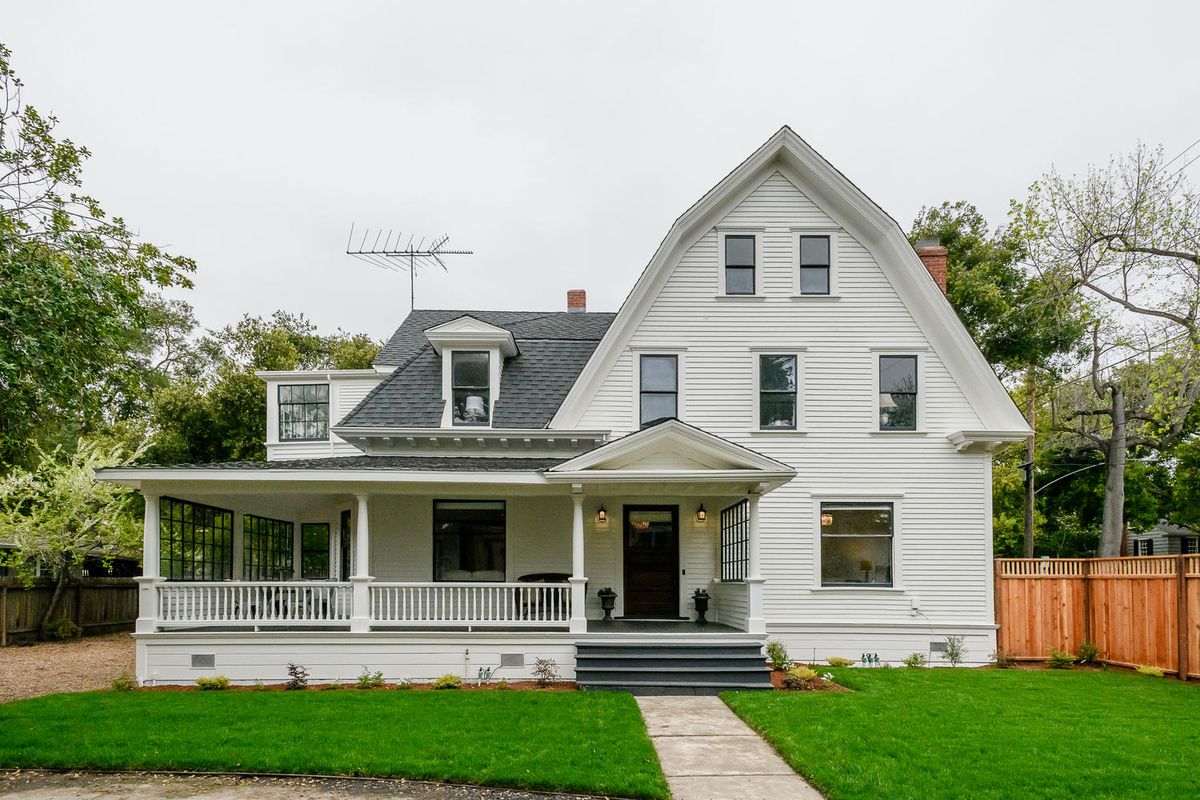
The renovated farmhouse trend was major this decade, many of which were contrived. A few exposed beams, a Napa setting, and an over saturation of Restoration Hardware furnishings does not a farmhouse make. But this one, located in Palo Alto’s historic Professorville district, was the real deal. And how could we not love the TV antenna still sprouting from the roof? UHF never looked this charming.
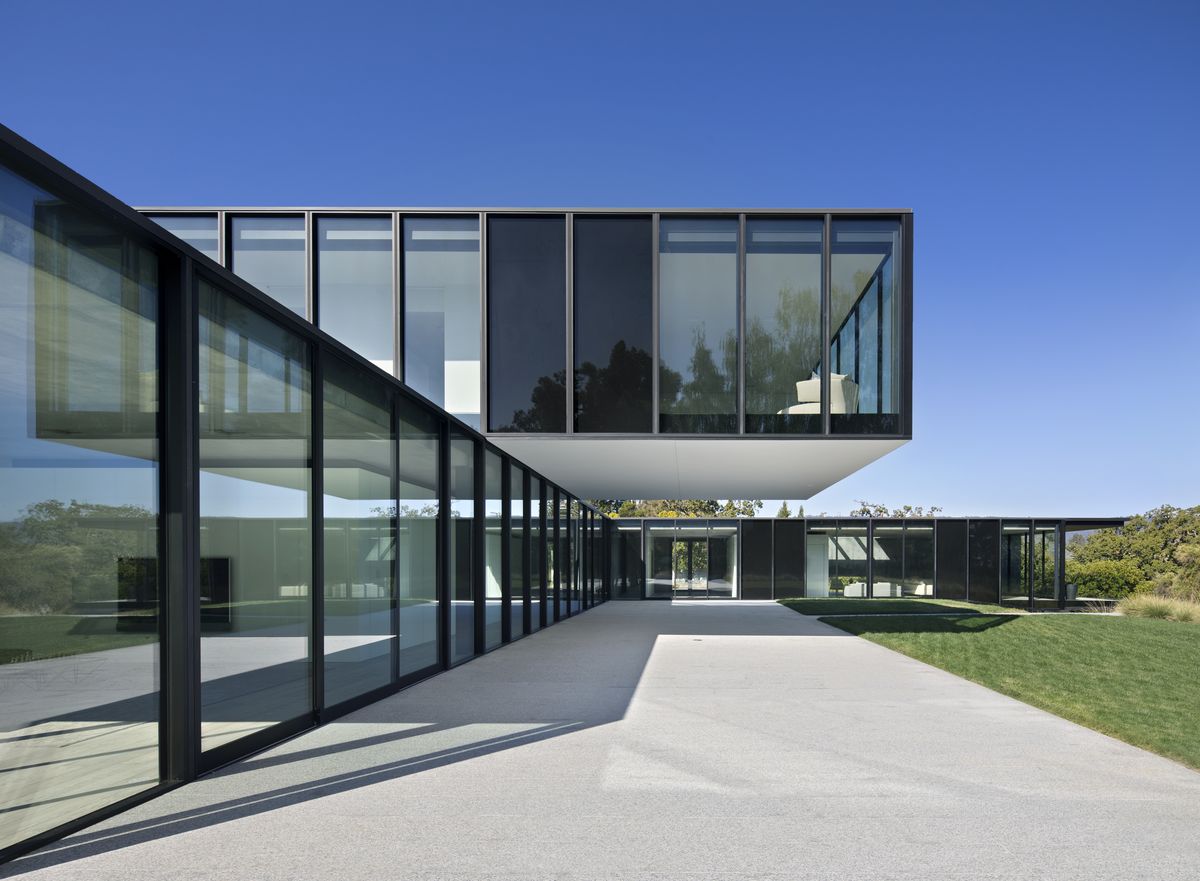
Love it or loathe it, this exceedingly contemporary home in Silicon Valley came with cohesion and a clear design point of view: stark and excessive. The concrete-and-glass behemoth, made up of two L-shaped structures, sold for $21 million.
Designed by William Raymond Yelland, the 1927 Normandy Village (née Thornburg Village) complex in Berkeley remains one-of-a-kind—a blend of different architectural styles, including storybook and medieval revival, that results in a fairytale-like residence. The one-bedroom unit here, measuring a mere 909 square feet, came with dowelled wood floors, walls that resembled hand-hewn stone and timber, two earthen brick fireplaces, archways, and a stone patio. It sold for $875K.
This list wouldn’t be complete without an Eichler, the popular midcentury homes built by iconic developer Joesph Eichler. Our favorite in 2019? This circa-1963 specimen designed by A. Quincy Jones. It sold for $1.365 million.