Grants will help Bay Area arts companies that serve people of color acquire real estate

77a12 MERcdc5903fb4948823deeb6ca2b21fc paafXXXX scaled Grants will help Bay Area arts companies that serve people of color acquire real estate
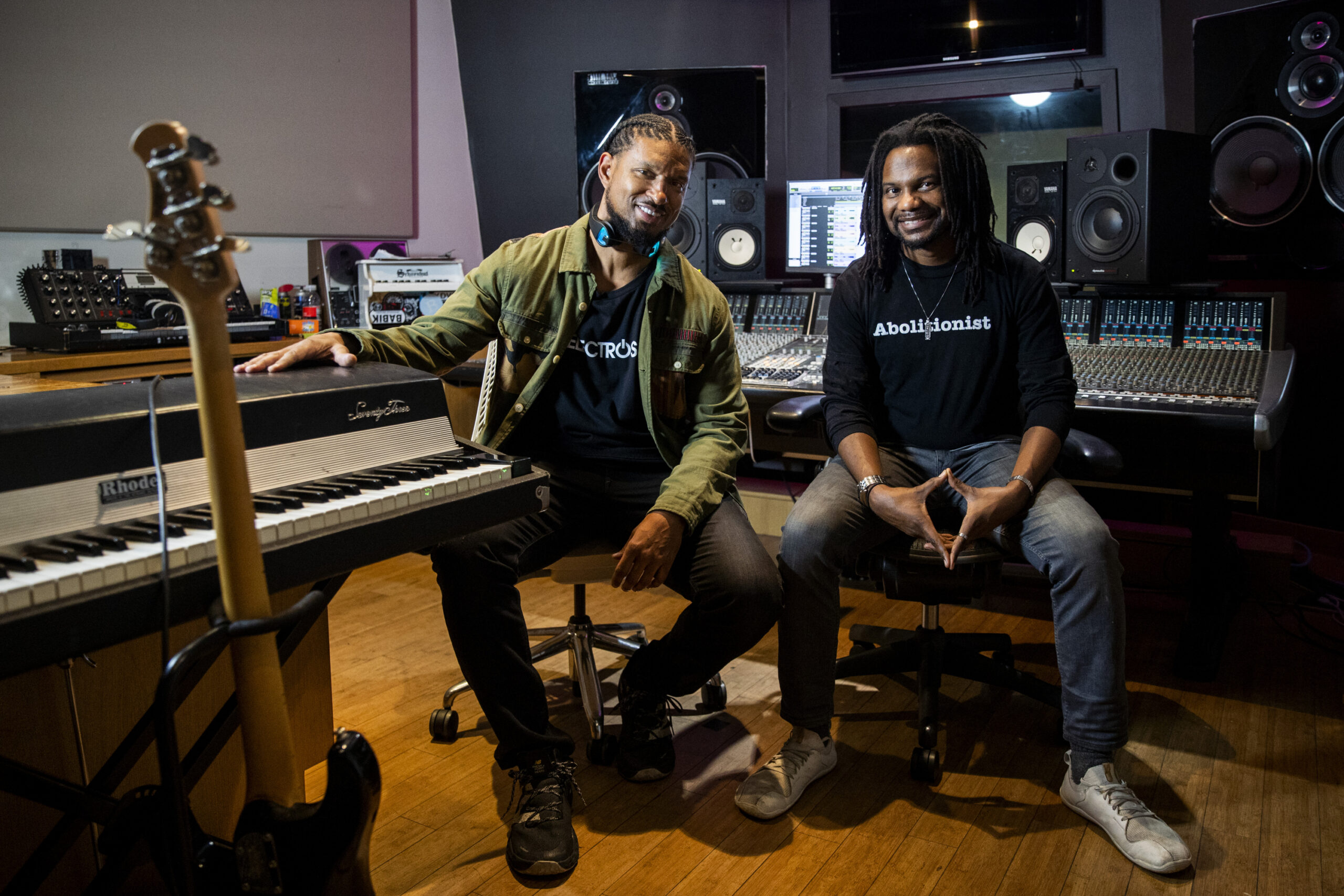
Trevor Parham (center) of Oakstop LLC and Bosko Kante (right) of Black Music Entrepreneurship Incubator introduce the Futurelics at their music studio in Oakland. A grant worth more than $700,000 was awarded to Oakstop and Black Music Entrepreneurship Incubator to buy the building they work out of in the Acorn neighborhood. Photo: Santiago Mejia / The Chronicle

Five Bay Area performing arts organizations, all of whom primarily serve people of color, are getting grants to acquire their own real estate thanks to one-time funding from the William and Flora Hewlett Foundation.

The Performing Arts Acquisition Fund grants, announced Jan. 3, total $3 million and are going to:

  • Black Cultural Zone Community Development Corporation for pre-development expenses toward building a neighborhood arts hub at Liberation Park in East Oakland;
  • East Bay Permanent Real Estate Cooperative and House/Full of Blackwomen for the purchase of Esther’s Orbit Room in West Oakland;
  • Gamelan Sekar Jaya for the purchase of the space it is currently leasing in Berkeley;
  • Oakstop LLC and Black Music Entrepreneurship Incubator for the purchase of the former Zoo Labs building in West Oakland;
  • Pajaro Valley Arts for the purchase of a planned arts center in Watsonville.

We’re building a really vibrant network of arts and cultural hubs,” said Carolyn “CJ” Johnson, CEO of the Black Cultural Zone Community Development Corporation, particularly referring to the three projects in Oakland.

Her vision: “Folks will come to Liberation Park for this kind of event and then go to Esther’s Orbit Room for something else and then go to Oakstop for something else.”

Community Vision, a community development financial institution that is administering the grant,prioritized applicants in neighborhoods that have suffered historical disinvestment because of policies such as redlining or projects such as freeway-building.

“Everything we do is focused on Black- and brown-led community ownership of community assets,” said Risa Blumlein Keeper, a managing consultant at Community Vision.

2b78d MER3747d5b5745dea4e98935de1f34d6 paafXXXX scaled Grants will help Bay Area arts companies that serve people of color acquire real estate
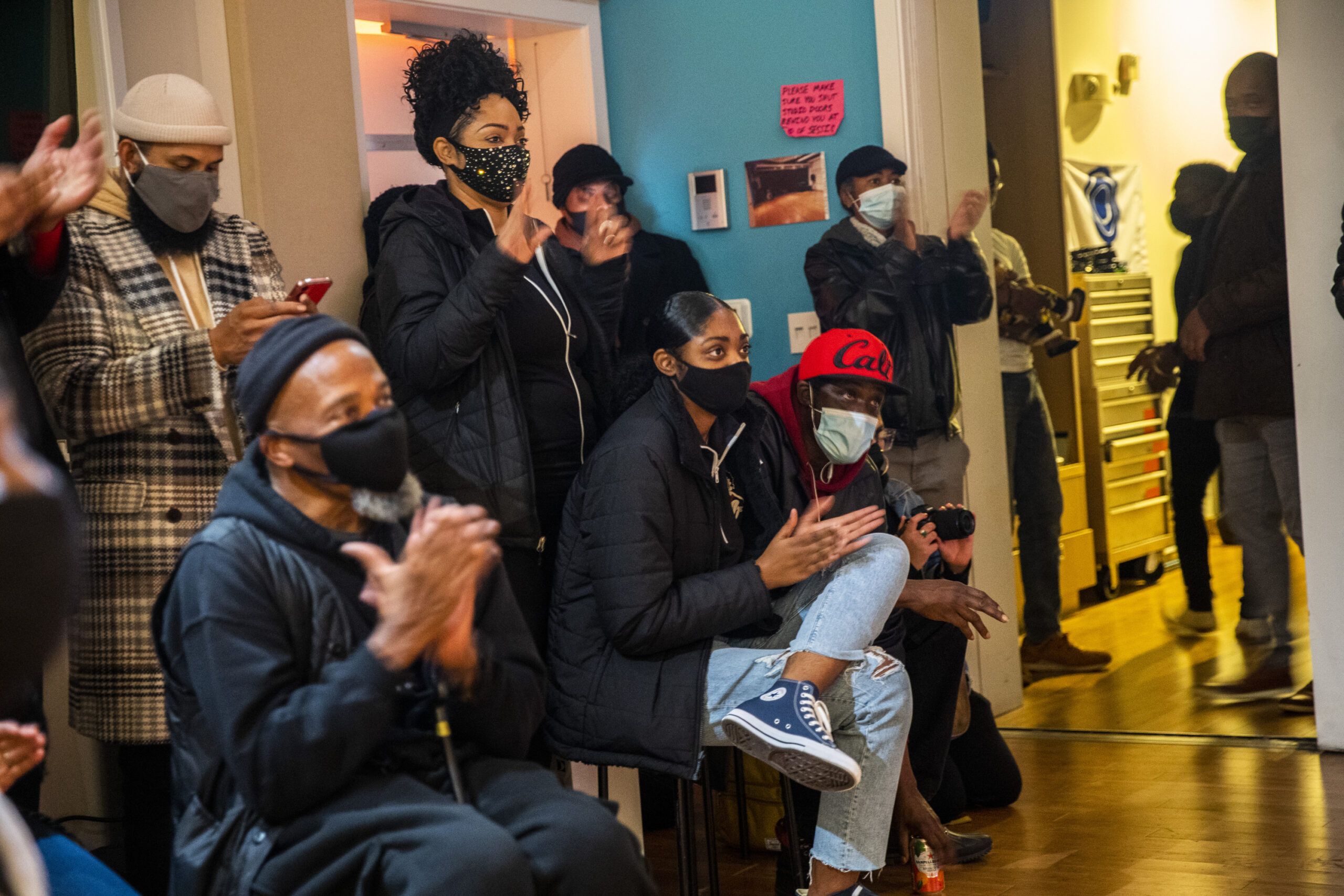
Guests watch an Oakland performance of the Futurelics at the space that Oakstop LLC Black Music Entrepreneurship Incubator are acquiring with help from a grant from the Hewlett Foundation. Photo: Santiago Mejia / The Chronicle

The Hewlett Foundation made this investment in part because of the unique difficulties local arts organizations face with regard to real estate, said program officer Adam Fong. But it’s not just that the Bay Area is the most expensive region in the country.

Most arts organizations are not well suited to take on debt or to manage investments over a medium and longer term. The vast majority of them are focusing on adapting to local circumstances and ending each year in the black,” he explained. “What that means is, in our economic environment, they’re not able to harness all of the wealth and the goodwill that exists because of their work.”

Owning real estate can be transformative for arts organizations, he added.

“They don’t need to go chasing after stability. They can make medium- and long-term investments that are really grounded in their mission,” he said. “It allows them to show up in very different ways.”

96b07 MER3811a8952491a9d503f8145b70fb1 paafXXXX scaled Grants will help Bay Area arts companies that serve people of color acquire real estate
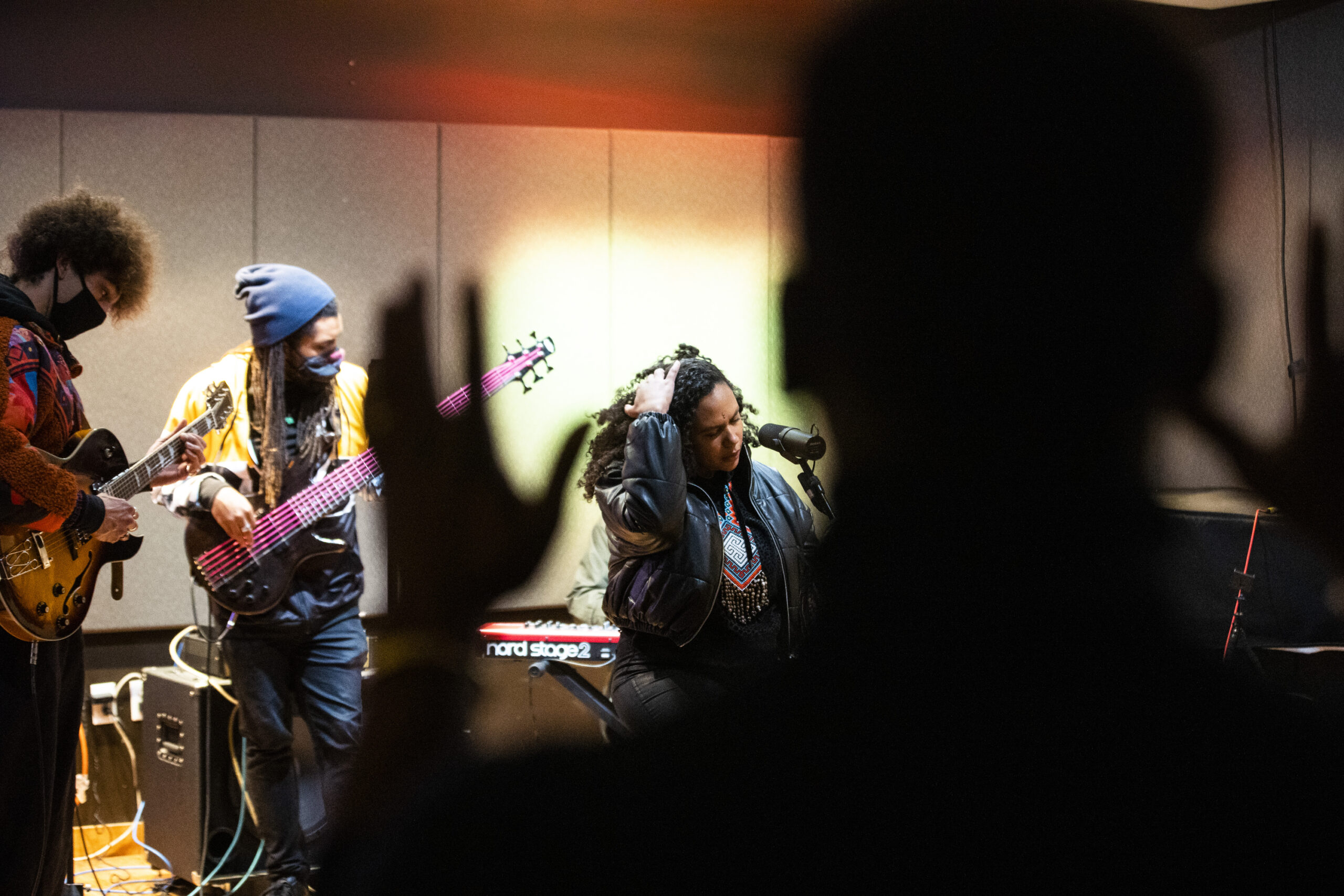
The Futurelics perform at the space Oakstop LLC and Black Music Entrepreneurship Incubator are acquiring. The site features three studios with state-of-the-art equipment. Photo: Santiago Mejia / The Chronicle

Many of the projects are aiming for a multiplier effect; for Hewlett and Community Vision, supporting each grantee means supporting a much wider array of neighborhood residents. Oakstop and Black Music Entrepreneurship Incubator, for instance, have three state-of-the-art recording studios, but they’re also using their site to turn local musicians into entrepreneurs, thereby giving them a larger and more reliable income stream in between gigs, which hopefully will help keep more local artists in the neighborhood.

Bosko Kante, a musician and Grammy-winning producer who is now on the BME Incubator team, sees his own entrepreneurship as a model he hopes to help others emulate. He recalled the successful career he had carefully built hitting a rough patch during the 2008 financial crisis. “For a while, I didn’t have a recording studio,” he said. “I couldn’t make noise.”
55b66 MER28689259e49018e1594857364dda7 paafXXXX scaled Grants will help Bay Area arts companies that serve people of color acquire real estate
Bosko Kante of Black Music Entrepreneurship Incubator (left) and Trevor Parham of Oakstop at their Oakland music studio. Their organizations are among the recipients of the Performing Arts Acquisition Fund, which is administered by Community Vision and funded by the William Flora Hewlett Foundation. Photo: Santiago Mejia / The Chronicle

At the same time, he said, “I had the idea for this device called the talk box.” He’d played the device (think Peter Frampton’s talking guitar) on a bunch of recordings but had grown frustrated with its design, particularly its cumbersome size. So he prototyped his own version, the ElectroSpit, which is small enough for musicians to wear around the neck. He has since patented it and begun manufacturing it.

“It reinvigorated my music career,” he said, adding that he feels he “found a formula that allows artists to stay in the Bay Area and to thrive and to create more art.”

Now that BME Incubator and Oakstop are acquiring the space where Kante built and promoted the ElectroSpit, they can customize the floor plan for artists’ needs, said Trevor Parham, founder and director of Oakstop.

When you have creative control, you can start to build in structural changes to the building that will drive the creative agenda. For instance, you can take down a whole wall if you want to build out a bigger studio,” he said. “Most real estate developers or owners are not thinking about artists as the consistent use case; they’re more looking at office and residential and just trying to keep things as vanilla as possible,” which he called “the antithesis of creativity.”

6e0e8 MERa39fa168a46b0b0ceeb7c2c8cdd2b paafXXXX scaled Grants will help Bay Area arts companies that serve people of color acquire real estate
The Futurelics perform at Oakstop and Black Music Entrepreneurship Incubator’s space in Oakland. Photo: Santiago Mejia / The Chronicle

At Liberation Park, Black Cultural Zone is planning a market hall with gathering, vending and performance spaces and 120 units of housing, with 20 set aside for “maker spaces,” where artists will have studios adjacent to their dwellings. Johnson described the project as a way to combat gentrification, displacement and homelessness.

Artists “change the vibration in the community,” she said. “When I am taking my art class or my dance class and I see my same instructor in the grocery store, and he or she also looks like me, it changes what I believe I can be.”


Article source: https://datebook.sfchronicle.com/entertainment/grants-will-help-bay-area-arts-companies-that-serve-people-of-color-acquire-real-estate

Posted in SF Bay Area News | Tagged | Leave a comment

Grants will help Bay Area arts companies that serve people of color acquire real estate

072a7 MERcdc5903fb4948823deeb6ca2b21fc paafXXXX scaled Grants will help Bay Area arts companies that serve people of color acquire real estate
Trevor Parham (center) of Oakstop and Bosko Kante (right) of Black Music Entrepreneurship Incubator introduce the Futurelics at their music studio in Oakland. A grant worth more than $700,000 was awarded to Oakstop, LLC and Black Music Entrepreneurship Incubator to buy the building they work out of in the Acorn neighborhood. The grant was awarded by the William Flora Hewlett Foundation and administered by Community Vision. In total, $3 million was granted to five organizations that serve people of color to buy their own real estate. Photo: Santiago Mejia / The Chronicle

Five Bay Area performing arts organizations, all of whom primarily serve people of color, are getting grants to acquire their own real estate thanks to one-time funding from the William and Flora Hewlett Foundation.

The Performing Arts Acquisition Fund grants, announced Jan. 3, total $3 million and are going to:

  • Black Cultural Zone Community Development Corporation for pre-development expenses toward building a neighborhood arts hub at Liberation Park in East Oakland;
  • East Bay Permanent Real Estate Cooperative and House/Full of Blackwomen for the purchase of Esther’s Orbit Room in West Oakland;
  • Gamelan Sekar Jaya for the purchase of the space it’s currently leasing in Berkeley;
  • Oakstop, LLC and Black Music Entrepreneurship Incubator for the purchase of the former Zoo Labs building in West Oakland;
  • Pajaro Valley Arts for the purchase of a planned arts center in Watsonville.

We’re building a really vibrant network of arts and cultural hubs,” Carolyn “CJ” Johnson, CEO of the Black Cultural Zone Community Development Corporation, said, particularly referring to the three projects in Oakland.

Her vision: “Folks will come to Liberation Park for this kind of event and then go to Esther’s Orbit Room for something else and then go to Oakstop for something else.”

Community Vision, a community development financial institution which is administering the grant,prioritized applicants in neighborhoods that have suffered historical disinvestment because of policies such as redlining or projects such as freeway building.

“Everything we do is focused on Black- and brown-led community ownership of community assets,” said Risa Blumlein Keeper, a managing consultant at Community Vision.

5d648 MER3747d5b5745dea4e98935de1f34d6 paafXXXX scaled Grants will help Bay Area arts companies that serve people of color acquire real estate
Guests watch an Oakland performance of the Futurelics at the space that Oakstop, LLC Black Music Entrepreneurship Incubator are acquiring with help from a grant from the Hewlett Foundation. Photo: Santiago Mejia / The Chronicle

The Hewlett Foundation made this investment in part because of the unique difficulties local arts organizations face with regard to real estate, said program officer Adam Fong. But it’s not just that the Bay Area is the most expensive region in the country.

Most arts organizations are not well suited to take on debt or to manage investments over a medium and longer term. The vast majority of them are focusing on adapting to local circumstances and ending each year in the black,” he explained. “What that means is, in our economic environment, they’re not able to harness all of the wealth and the good will that exists because of their work.”

Owning real estate can be transformative for arts organizations, he added.

“They don’t need to go chasing after stability. They can make medium- and long-term investments that are really grounded in their mission,” he said. “It allows them to show up in very different ways.”

5d648 MER3811a8952491a9d503f8145b70fb1 paafXXXX scaled Grants will help Bay Area arts companies that serve people of color acquire real estate
The Futurelics perform at the space Oakstop, LLC and Black Music Entrepreneurship Incubator are acquiring. The site features three studios with state-of-the-art equipment. Photo: Santiago Mejia / The Chronicle

Many of the projects are aiming for a multiplier effect; for Hewlett and Community Vision, supporting each grantee means supporting a much wider array of neighborhood residents. Oakstop, LLC and Black Music Entrepreneurship Incubator, for instance, have three state-of-the-art recording studios, but they’re also using their site to turn local musicians into entrepreneurs, thereby giving them a larger and more reliable income stream in between gigs, which hopefully will help keep more local artists in the neighborhood.

Bosko Kante, a musician and Grammy-winning producer who’s now on the BME Incubator team, sees his own entrepreneurship as a model he hopes to help others emulate. He recalled the successful career he’d carefully built hitting a rough patch during the 2008 financial crisis. “For a while, I didn’t have a recording studio,” he said. “I couldn’t make noise.”

f2a6f MER28689259e49018e1594857364dda7 paafXXXX scaled Grants will help Bay Area arts companies that serve people of color acquire real estate
A portrait of Bosko Kante of Black Music Entrepreneurship Incubator and Trevor Parham of Oakstop, LLC at their Oakland music studio. Their organizations are among the recipients of the Performing Arts Acquisition Fund, which is administered by Community Vision and funded by the William Flora Hewlett Foundation. Photo: Santiago Mejia / The Chronicle

At the same time, he said, “I had the idea for this device called the talkbox.” He’d played the device (think Peter Frampton’s talking guitar) on a bunch of recordings but had grown frustrated with its design, particularly its cumbersome size. So he prototyped his own version, the ElectroSpit, which is small enough for musicians to wear around the neck. He has since patented it and begun manufacturing it.

“It reinvigorated my music career,” he said, adding that he feels he “found a formula that allows artists to stay in the Bay Area and to thrive and to create more art.”

Now that BME Incubator and Oakstop are acquiring the space where Kante built and promoted the ElectroSpit, they can customize the floor plan for artists’ needs, said Trevor Parham, founder and director of Oakstop.

When you have creative control, you can start to build in structural changes to the building that will drive the creative agenda. For instance, you can take down a whole wall if you want to build out a bigger studio,” he said. “Most real estate developers or owners are not thinking about artists as the consistent use case; they’re more looking at office and residential and just trying to keep things as vanilla as possible,” which he called “the antithesis of creativity.”

28fb8 MERa39fa168a46b0b0ceeb7c2c8cdd2b paafXXXX scaled Grants will help Bay Area arts companies that serve people of color acquire real estate
The Futurelics perform at Oakstop and Black Music Entrepreneurship Incubator’s space in Oakland. Photo: Santiago Mejia / The Chronicle

At Liberation Park, Black Cultural Zone is planning a market hall with gathering, vending and performance spaces and 120 units of housing, with 20 set aside for “maker spaces,” where artists will have studios adjacent to their dwellings. Johnson described the project as a way to combat gentrification, displacement and homelessness.

Artists “change the vibration in the community,” she said. “When I am taking my art class or my dance class and I see my same instructor in the grocery store, and he or she also looks like me, it changes what I believe I can be.”


Article source: https://datebook.sfchronicle.com/entertainment/grants-will-help-bay-area-arts-companies-that-serve-people-of-color-acquire-real-estate

Posted in SF Bay Area News | Tagged | Leave a comment

SF has a slew of mega housing projects on track for 2022. Here’s what it could mean for the city

Nowhere is this more apparent than Treasure Island, where, after two decades of planning, the first residents will move into new buildings on both the main island and the adjacent Yerba Buena Island in 2022.

On Treasure Island, Swords to Plowshares and Chinatown Community Development Center will debut the 104-unit Maceo May Apartments late in the year, apartments that will house some formerly homeless veterans. On Yerba Buena Island, Wilson Meany will open the Bristol, a six-story, 124-unit condo project overlooking Clipper Cove and the eastern span of the Bay Bridge.

But the creation of an 8,000-unit neighborhood on the 400-acre island will only accelerate after the first two buildings open. Treasure Island could see work start on as many as 985 units in 2022, including Tidal House, a 20-story apartment tower. A ferry terminal will open this month, offering residents a five-minute cruise across the bay to the Ferry Building, according to Wilson Meany Partner Chris Meany.

“We can’t wait to welcome residents early this spring to become a part of this exciting new residential community,” said Meany, whose firm is the master developer for the island.

At Mission Rock, across the Lefty O’Doul Bridge from ATT Park, Tishman Speyer and the San Francisco Giants are rapidly transforming an 11-acre surface parking lot with three buildings — one residential, one biotech and one slated to be Visa’s new corporate headquarters.

 SF has a slew of mega housing projects on track for 2022. Heres what it could mean for the city

Crews pour concrete in a section of new Mission Rock development near Oracle Park in April.

Carlos Avila Gonzalez/The Chronicle 2021

Construction started in December 2020 on the first two buildings, Visa’s corporate headquarters and Building A, a 23-story apartment. That was followed by a life science building on Third Street. Work will start on a fourth building, a 255-unit apartment complex designed by Studio Gang, as well as the 5-acre China Basin Park.

“We are trying to deliver the park and the four buildings as close together as we can,” said Carl Shannon, senior managing director with Tishman Speyer.

All told, work could start on some 3,000 units spread across the city’s megaprojects, often former industrial or military properties that require a multiphase approach and infrastructure work like streets, sidewalks, parks and utilities. About 1,300 units are expected to be completed as part of these projects in 2022, including about 300 units at 5M — the 4-acre development next to The Chronicle’s newsroom at 901 Mission St. — and 350 apartments that represent the first phase of a project Local 38 Plumbers Pipefitters is building with Strada Development at 1621 Market St.

 SF has a slew of mega housing projects on track for 2022. Heres what it could mean for the city

Construction on the 415 Natoma St. office building, part of the 5M development project, in February.

Marlena Sloss/Special to The Chronicle 2021

Breaking ground will likely include 708 deeply affordable apartments built at three different public housing complexes — 357 at Potrero Hill Annex and Terrace, 183 at Hunters View in Hunters Point, 168 at Sunnydale. At Power Station, a former power plant on the Dogpatch waterfront, construction crews are busy restoring the historic 19th century power plant — in 2022, grading will be completed and utilities installed.

“Our major projects are starting to produce the new homes, open spaces and jobs that we’ve counted on for years,” said Judson True, Mayor Breed’s director of housing delivery, who has focused on pushing the megaprojects forward. “We still have more to do, but we’re working with all the city departments closely to help these future neighborhoods take shape.”

But while several of the city’s largest projects keep on trucking, others are stuck in neutral. The redevelopment of Parkmerced, slated for 5,600 apartments, still has not started, more than a decade after it was approved by the Board of Supervisors. Work at Schlage Lock, on the city’s border with Brisbane, has been delayed due to the pandemic, while the 12,000-unit development at the shipyard and Candlestick Point has been mostly on hold with the exception of one 77-condo building.

And the future for many smaller projects — that don’t involve public-private partnerships or spread risk out over a decade — is even less certain. Stalled projects include an apartment complex slated for Ninth and Mission, a tower approved at Market and Van Ness and several mixed-use projects in the South of Market.

While Tishman Speyer’s twisty, white Mira condo development near the Embarcadero has done well since it opened last year — it’s 70% sold — Senior Managing Director Carl Shannon said that the math is not working at the moment for a typical housing project.

 SF has a slew of mega housing projects on track for 2022. Heres what it could mean for the city

The Mira condo tower (center) at 160 Folsom St. in 2019

Liz Hafalia/The Chronicle 2019

“Construction costs have gone up a lot, and even though rents have recovered somewhat, the generic market rate project in San Francisco doesn’t make sense today,” said Shannon. “You would need rents to go up or construction costs to go down.”

John Manning, who heads up commercial real estate financing for Avison Young, said there are very few housing developers looking for debt or equity for new San Francisco projects. Part of that is because sites where projects have been approved are clustered in downtown areas, like Civic Center, South of Market and the Tenderloin — all neighborhoods that continue to struggle with empty office buildings, vacant storefronts and open-air drug dealing.

Neighborhoods that have bounced back more successfully from the pandemic, like the Sunset, Haight-Ashbury or the Marina, don’t have any approved projects ready to break ground.

“The areas where development is allowed are, generally speaking, those that have been hit hardest in terms of rental rates and condo values,” Manning said. “To break ground on a new project would require a vision and confidence that things are going to pop back up to an extent that is hard to imagine right now. That’s not something I’m hearing a lot of.”

The fact that so many infill projects are not going forward doesn’t bode well for housing production over the next few years.

This year the city is on track to open about 4,500 units, most of which started construction prior to the pandemic. An additional estimated 5,800 units are under construction, most of which will wrap up in 2022 or 2023. That is a lot less than the high of 10,000 units that were being built in 2016 or 2017. The data suggest that 2022 and 2023 could be lean years in terms of completions, with less than about 3,000 new units a year, according to city data.

Rudy Gonzalez, secretary treasurer of the San Francisco Building Trades Council, said he is optimistic that some of the big projects will help some of the 1,300 union construction workers who are out of work. But he said that the fact that downtown office buildings are still largely empty because of the pandemic is hurting plumbers and pipefitters and electricians who rely on “tenant improvements” in corporate space for about 50% of their work.

“Mission Rock is beautiful. Treasure Island is beautiful,” he said. “But all the (tenant improvement) work generated from the buildings downtown? At the end of the day we are just not seeing downtown come back to life.”

Meanwhile, housing development battles continue to rage at City Hall. The San Francisco Board of Supervisors recently made national news for rejecting over 800 housing units proposed for the Tenderloin and South of Market.

Partly in response to that, Mayor London Breed has introduced a charter amendment that would allow some code-compliant projects to bypass the city’s famously difficult approval process.

“Working people like our nurses, teachers, and even the construction workers who build our homes are suffering because we haven’t built enough housing for decades,” said Breed. “Even with the progress on moving large projects forward, we have to make fundamental changes to how we approve and permit housing in San Francisco so families can afford to stay here.”

J.K. Dineen is a San Francisco Chronicle staff writer. Email: jdineen@sfchronicle.com Twitter: @SFjkdineen

Article source: https://www.sfchronicle.com/sf/article/Big-S-F-housing-development-will-go-gangbusters-16721048.php

Posted in SF Bay Area News | Tagged | Leave a comment

SF has a slew of mega housing projects on track for 2022. Here’s what it could mean for the city

Nowhere is this more apparent than Treasure Island, where, after two decades of planning, the first residents will move into new buildings on both the main island and the adjacent Yerba Buena Island in 2022.

On Treasure Island, Swords to Plowshares and Chinatown Community Development Center will debut the 104-unit Maceo May Apartments late in the year, apartments that will house some formerly homeless veterans. On Yerba Buena Island, Wilson Meany will open the Bristol, a six-story, 124-unit condo project overlooking Clipper Cove and the eastern span of the Bay Bridge.

But the creation of an 8,000-unit neighborhood on the 400-acre island will only accelerate after the first two buildings open. Treasure Island could see work start on as many as 985 units in 2022, including Tidal House, a 20-story apartment tower. A ferry terminal will open this month, offering residents a five-minute cruise across the bay to the Ferry Building, according to Wilson Meany Partner Chris Meany.

“We can’t wait to welcome residents early this spring to become a part of this exciting new residential community,” said Meany, whose firm is the master developer for the island.

At Mission Rock, across the Lefty O’Doul Bridge from ATT Park, Tishman Speyer and the San Francisco Giants are rapidly transforming an 11-acre surface parking lot with three buildings — one residential, one biotech and one slated to be Visa’s new corporate headquarters.

 SF has a slew of mega housing projects on track for 2022. Heres what it could mean for the city

Crews pour concrete in a section of new Mission Rock development near Oracle Park in April.

Carlos Avila Gonzalez/The Chronicle 2021

Construction started in December 2020 on the first two buildings, Visa’s corporate headquarters and Building A, a 23-story apartment. That was followed by a life science building on Third Street. Work will start on a fourth building, a 255-unit apartment complex designed by Studio Gang, as well as the 5-acre China Basin Park.

“We are trying to deliver the park and the four buildings as close together as we can,” said Carl Shannon, senior managing director with Tishman Speyer.

All told, work could start on some 3,000 units spread across the city’s megaprojects, often former industrial or military properties that require a multiphase approach and infrastructure work like streets, sidewalks, parks and utilities. About 1,300 units are expected to be completed as part of these projects in 2022, including about 300 units at 5M — the 4-acre development next to The Chronicle’s newsroom at 901 Mission St. — and 350 apartments that represent the first phase of a project Local 38 Plumbers Pipefitters is building with Strada Development at 1621 Market St.

 SF has a slew of mega housing projects on track for 2022. Heres what it could mean for the city

Construction on the 415 Natoma St. office building, part of the 5M development project, in February.

Marlena Sloss/Special to The Chronicle 2021

Breaking ground will likely include 708 deeply affordable apartments built at three different public housing complexes — 357 at Potrero Hill Annex and Terrace, 183 at Hunters View in Hunters Point, 168 at Sunnydale. At Power Station, a former power plant on the Dogpatch waterfront, construction crews are busy restoring the historic 19th century power plant — in 2022, grading will be completed and utilities installed.

“Our major projects are starting to produce the new homes, open spaces and jobs that we’ve counted on for years,” said Judson True, Mayor Breed’s director of housing delivery, who has focused on pushing the megaprojects forward. “We still have more to do, but we’re working with all the city departments closely to help these future neighborhoods take shape.”

But while several of the city’s largest projects keep on trucking, others are stuck in neutral. The redevelopment of Parkmerced, slated for 5,600 apartments, still has not started, more than a decade after it was approved by the Board of Supervisors. Work at Schlage Lock, on the city’s border with Brisbane, has been delayed due to the pandemic, while the 12,000-unit development at the shipyard and Candlestick Point has been mostly on hold with the exception of one 77-condo building.

And the future for many smaller projects — that don’t involve public-private partnerships or spread risk out over a decade — is even less certain. Stalled projects include an apartment complex slated for Ninth and Mission, a tower approved at Market and Van Ness and several mixed-use projects in the South of Market.

While Tishman Speyer’s twisty, white Mira condo development near the Embarcadero has done well since it opened last year — it’s 70% sold — Senior Managing Director Carl Shannon said that the math is not working at the moment for a typical housing project.

 SF has a slew of mega housing projects on track for 2022. Heres what it could mean for the city

The Mira condo tower (center) at 160 Folsom St. in 2019

Liz Hafalia/The Chronicle 2019

“Construction costs have gone up a lot, and even though rents have recovered somewhat, the generic market rate project in San Francisco doesn’t make sense today,” said Shannon. “You would need rents to go up or construction costs to go down.”

John Manning, who heads up commercial real estate financing for Avison Young, said there are very few housing developers looking for debt or equity for new San Francisco projects. Part of that is because sites where projects have been approved are clustered in downtown areas, like Civic Center, South of Market and the Tenderloin — all neighborhoods that continue to struggle with empty office buildings, vacant storefronts and open-air drug dealing.

Neighborhoods that have bounced back more successfully from the pandemic, like the Sunset, Haight-Ashbury or the Marina, don’t have any approved projects ready to break ground.

“The areas where development is allowed are, generally speaking, those that have been hit hardest in terms of rental rates and condo values,” Manning said. “To break ground on a new project would require a vision and confidence that things are going to pop back up to an extent that is hard to imagine right now. That’s not something I’m hearing a lot of.”

The fact that so many infill projects are not going forward doesn’t bode well for housing production over the next few years.

This year the city is on track to open about 4,500 units, most of which started construction prior to the pandemic. An additional estimated 5,800 units are under construction, most of which will wrap up in 2022 or 2023. That is a lot less than the high of 10,000 units that were being built in 2016 or 2017. The data suggest that 2022 and 2023 could be lean years in terms of completions, with less than about 3,000 new units a year, according to city data.

Rudy Gonzalez, secretary treasurer of the San Francisco Building Trades Council, said he is optimistic that some of the big projects will help some of the 1,300 union construction workers who are out of work. But he said that the fact that downtown office buildings are still largely empty because of the pandemic is hurting plumbers and pipefitters and electricians who rely on “tenant improvements” in corporate space for about 50% of their work.

“Mission Rock is beautiful. Treasure Island is beautiful,” he said. “But all the (tenant improvement) work generated from the buildings downtown? At the end of the day we are just not seeing downtown come back to life.”

Meanwhile, housing development battles continue to rage at City Hall. The San Francisco Board of Supervisors recently made national news for rejecting over 800 housing units proposed for the Tenderloin and South of Market.

Partly in response to that, Mayor London Breed has introduced a charter amendment that would allow some code-compliant projects to bypass the city’s famously difficult approval process.

“Working people like our nurses, teachers, and even the construction workers who build our homes are suffering because we haven’t built enough housing for decades,” said Breed. “Even with the progress on moving large projects forward, we have to make fundamental changes to how we approve and permit housing in San Francisco so families can afford to stay here.”

J.K. Dineen is a San Francisco Chronicle staff writer. Email: jdineen@sfchronicle.com Twitter: @SFjkdineen

Article source: https://www.sfchronicle.com/sf/article/Big-S-F-housing-development-will-go-gangbusters-16721048.php

Posted in SF Bay Area News | Tagged | Leave a comment

‘Is this real?’: San Francisco home sells for $1 million over asking price in 3 days

SAN FRANCISCO, Calif. (KRON) – Another day… another record-breaking San Francisco home sale.

It’s becoming a trend in Bay Area real estate.

464 Lansdale Ave in San Francisco just sold for $3.5 million, which was 40% over the initial listing price of $2.5 million.

The home received three offers, all of which were more than $500,000 over asking, according to Compass real estate agents Richard Woo and Holly Phan.

“We didn’t price the house low – it was priced based on area comps so when we saw the offer come in at more than $1 million over asking with no contingencies, it was amazing and we thought, is this real?” Woo said.

“But the timing was right, the location was good, and the seller did everything you could think of to modernize the home. Even so, the offer was amazing to him too.”

The home has been completely remodeled and features a wall of windows that open up to panoramic city and Bay views.

The seller bought the house from the same Compass real estate agents just two years ago for $1.4 million.

“While this was the highest over asking offer we’ve received in our real estate careers, we had another record-breaking San Francisco sale in August at 1455 27th Avenue that received 16 offers in 6 days and sold for almost 58 percent over asking and was not underpriced either,” Woo said.

“People will pay premium right now when the house is prepared right.”

Article source: https://www.kron4.com/news/real-estate/is-this-real-san-francisco-home-sells-for-1-million-over-asking-price-in-3-days/

Posted in SF Bay Area News | Tagged | Leave a comment