SKS Partners Wins Prestigious Platinum LEED Certification

SAN FRANCISCO–(BUSINESS WIRE)–The United States Green Building Council has awarded a prestigious
Platinum LEED Certification to 270 Brannan Street in San Francisco’s
SOMA neighborhood, developed by SKS Partners of San Francisco.

LEED, or Leadership in Energy Environmental Design, is a green
building certification program that recognizes best-in-class building
strategies and practices. SKS Partners of San Francisco developed 270
Brannan in partnership with Mitsui Fudosan America of New York City. The
200,000 square foot building, constructed on the site of a former
parking lot, opened in May 2016.

Projects pursuing LEED certification earn points for how well they meet
various measures of sustainability. Platinum is the highest level of
certification possible. LEED-certified buildings are resource efficient,
use less water and energy and reduce greenhouse gas emissions.

The platinum level is rare and 270 Brannan Street becomes only the 30th
building in the City of San Francisco to win this designation. The
building won 100 percent of the LEED points awarded for water efficiency.

The structure incorporates a water reuse system that captures rainwater
and condensation from the building’s cooling system. This non-potable
water is then treated on site and used for 100 percent of the irrigation
system demand and 83 percent of the toilet flushing demand in the
building.

“SKS and MFA were committed to developing an office building that would
be a leader in environmentally sustainable practices,” said Dan
Kingsley, Managing Partner of SKS. “We were particularly focused on
demonstrating that contemporary buildings can efficiently use the scarce
resource of water, and therefore we are honored to have been awarded all
of the available LEED points for water efficiency.”

Designed by prominent local architect Peter Pfau of Pfau Long
Architecture and Sustainability Consultant Thornton Tomasetti, 270
Brannan Street has been recognized for its innovative and
environmentally sustainable design. Between the five-story front and
seven-story rear sections of the building sits a naturally ventilated
5,000-foot internal atrium that provides occupants with a tranquil
alternative to the open office environment.

The building is one of the first in the city to set aside more spaces
for bicycles – 52 – than cars – 12. City planners have praised 270
Brannan Street for incorporating the history and character of the
neighborhood into the design, while meeting the needs of tenants. The
building is fully leased to Splunk, a fast-growing enterprise software
company that specializes in data mining.

SKS Partners, established in 1992, is a leading investor and
developer of commercial real estate properties in the San Francisco Bay
Area. The firm has successfully executed over 25 ground up and adaptive
re-use developments totaling over 8 million square feet, based upon its
ability to identify emerging demographic and market trends.

Mitsui Fudosan America, Inc. (MFA) is a real estate investment
and development company headquartered in New York City and is the U.S.
subsidiary of Mitsui Fudosan Co., Ltd. – Japan’s largest publicly traded
real estate company. Since its inception, MFA has acquired and developed
numerous office, multifamily and hospitality properties in major markets
throughout the U.S. In addition to its significant portfolio of office
buildings, MFA recently expanded its development platform, with several
office and multifamily development projects launched in New York,
Seattle, San Francisco, and Washington D.C.

Article source: http://www.businesswire.com/news/home/20161121006219/en/SKS-Partners-Wins-Prestigious-Platinum-LEED-Certification


Posted in SF Bay Area News | Tagged | Leave a comment

Dungeness crab: Where to eat, buy NOW in the Bay Area

After losing last year’s California crab season to demonic levels of domoic acid, Dungeness fans can’t wait to get cracking.

Crab has been showing up on some Bay Area menus and in grocery stores since the season started in Oregon and Washington, and now supplies will be supplemented with freshly caught crab from Northern California, where the season started Nov. 15.

Here’s an alphabetical roundup of restaurants, grocery seafood counters and other purveyors with local Dungeness available now, or next week or after Thanksgiving. As we hear of more, we’ll add them. Email us at food@bayareanewsgroup.com.


CRAB AT THE DOCK

Call Pillar Point Harbor for details on the fresh catch of the day. 650-726-8724,  ext. 3.


CRAB DELIVERY TO YOUR DOOR

DailyFreshFish.com: Dock-to-door delivery from Pucci Foods of Hayward.


CRAB AVAILABLE NOW AT RESTAURANTS, STORES

Brasserie SP: Dungeness Crab Benedict (brunch); Dungeness Crab Cakes (lunch). Loews Regency hotel, 222 Sansome St., San Francisco.

By Th’ Bucket: Whole cracked Dungeness crab dinner; Crab Louie Salad. 4565 Stevens Creek Blvd., Santa Clara.

Diablo Foods: Fresh cracked, cleaned Dungeness crab. 3615 Mt. Diablo Blvd., Lafayette.

Eve’s Waterfront: Dockside “Dungy” Melt, Deviled Eggs with Dungeness Crab. 15 Embarcadero West, Oakland.

Fish Market restaurants: Fresh cracked Dungeness crab dinner in the restaurant, or to-go from the seafood counter. All locations: Palo Alto, Santa Clara, San Mateo, San Jose.

Fisherman’s Wharf: Multiple stands. Check for individual offerings. San Francisco.

Half Moon Bay Brewing Co.: Cracked Dungeness crab four ways: chilled crab with drawn butter; warm crab with drawn butter; warm crab with housemade pesto; and warm crab with Cajun spices. 390 Capistrano Road, Half Moon Bay.

Ketch Joanne Restaurant: For breakfast, Dungeness crab benedict and crab omelettes. 17 Johnson Pier, Half Moon Bay.

La Folie: Dungeness Crab Salad. 2316 Polk St., San Francisco.

Lake Chalet Seafood Bar Grill: Lake Chalet Louie Salad. 1520 Lakeside Drive, Oakland.

Le Colonial: Cha Gio Tom Cua (crispy rolls with Dungeness crab meat); Canh Cua (Dungeness crab soup); Cha Cua (crispy coconut-crusted Dungeness crab). 20 Cosmo Place, San Francisco.

Lunardi’s Markets: Fresh cracked and cleaned Dungeness crab. All stores: Belmont, Burlingame, Danville, Los Gatos, San Bruno, San Jose/Bascom, San Jose/Meridian, Walnut Creek.

Mollie Stone’s Markets: Fresh cracked and cleaned Dungeness crab. All stores: Palo Alto, Burlingame, San Bruno, San Mateo, Greebrae, Sausalito, San Francisco.

Navio and the Conservatory at the Ritz-Carlton: Dungeness Crab Salad, Saffron Chitarra with Dungeness. One Miramontes Point Road, Half Moon Bay.

Pier 39: Multiple restaurants. Check for individual menus. San Francisco.

Sam’s Chowder House: Fresh Dungeness served steamed or chile-garlic style; cioppino. Both locations: 4210 North Cabrillo Highway, Half Moon Bay, and 185 University Ave., Palo Alto.

Scott’s Seafood: Fresh Dungeness crab. 185 Park Ave., San Jose.

Shakewell: Chef Jennifer Biesty’s Crab Toast with Golden Miso Verjus, a riff on the classic Maine lobster roll. 3407 Lakeshore Ave., Oakland.

Tap (415): Dungeness Crab Roll. 845 Market St., Westfield Centre, San Francisco.

Terrain Cafe: Philadelphia chef Marc Vetri may be new to the West Coast, but he’s savvy enough to put a Warm Dungeness Crab Salad on his opening menu. Inside Anthropologie store, Stanford Shopping Center, Palo Alto.

Via Uno: Italian-style Crab Cakes, Fritters, Pasta, Ravioli and Cioppino with Dungeness Crab. 2810 Cabrillo Highway, Half Moon Bay.

Whole Foods Markets: Fresh cracked, cleaned Dungeness crab from Pezzolo Seafood at San Francisco’s Fisherman’s Wharf. All locations.

Zanotto’s Markets: Fresh cracked, cleaned Dungeness crab. All locations: Rose Garden, Foxworthy, Sunnyvale.


CRAB COMING WEEK OF NOV. 21

Steamer’s Grillhouse: Cracked Dungeness crab; Steamer’s Linguine with Dungeness. 31 University ave., Los Gatos. Call ahead for availability, 408-395-2722.


CRAB COMING AFTER THANKSGIVING

Yankee Pier: Dungeness crab rolls, crab Louies and whole hot or cold cracked crab dinners. 3593 Mt. Diablo Blvd., Lafayette. Call ahead for availability. 925-283-4100.


Article source: http://www.mercurynews.com/2016/11/18/dungeness-crab-where-to-eat-buy-now-in-the-bay-area/

Posted in SF Bay Area News | Tagged | Leave a comment

How Trump could affect the San Francisco real-estate market

  • 37dcc gettyimages 618312688 master How Trump could affect the San Francisco real estate market


Caption

Close

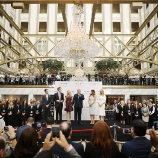
(L-R) Melania Trump, wife of Republican presidential nominee Donald Trump, and his daughters Tiffany Trump and Ivanka Trump cut the ribbon at the new Trump International Hotel October 26, 2016 in Washington, DC. The hotel, built inside the historic Old Post Office, has 263 luxury rooms, including the 6,300-square-foot ‘Trump Townhouse’ at $100,000 a night, with a five-night minimum. The Trump Organization was granted a 60-year lease to the historic building by the federal government before the billionaire New York real estate mogul announced his intent to run for president. less


Photo: Chip Somodevilla / Getty Images

Republican presidential nominee Donald Trump (C) and his family (L-R) son Donald Trump Jr, son Eric Trump, wife Melania Trump and daughters Tiffany Trump and Ivanka Trump prepare to cut the ribbon at the new Trump International Hotel October 26, 2016 in Washington, DC. The hotel, built inside the historic Old Post Office, has 263 luxury rooms, including the 6,300-square-foot ‘Trump Townhouse’ at $100,000 a night, with a five-night minimum. The Trump Organization was granted a 60-year lease to the historic building by the federal government before the billionaire New York real estate mogul announced his intent to run for president. less


Photo: Chip Somodevilla / Getty Images


For the first-ever real-estate mogul president-elect, Donald Trump spoke very little during the campaign about his housing policies.

“I cannot recall Mr. Trump explicitly connecting his experience with real estate to how he will handle housing policy during his presidency,” said Nela Richardson, Redfin’s chief economist.

That being said, given how outspoken Trump has been on various other topics—such as trade, immigration and deregulation—Richardson, as well as a few local experts, have their guesses about how the impending Trump presidency could affect the market moving forward.

Mortgage rates 

We won’t have to wait until January to see how Trump affects the mortgage market; mortgage rates have already climbed half a percent in the week since the election, as investors take their money out of bonds and head back to the stock market.

Richardson points out that a 4 percent interest rate is still very low historically, and shouldn’t impact the market much unless it continues to get significantly higher at a rapid pace. That substantial increase could certainly happen if there is a move to privatize beleaguered financial services agencies Fannie Mae and Freddie Mac, she said.

According to Patrick Carlisle, chief market analyst at Paragon Real Estate, with affordability already problematic in the high-priced Bay Area, every uptick in the mortgage rate could mean more people priced out of homes.

“Interest rates are a huge concern,” he said. “In the Bay Area housing affordability is one of our biggest social, economic and political issues. If interest rates go up dramatically, that will dramatically affect housing affordability for the worse. For example, rates a couple weeks ago were in the 3.5 percent to 3.6 percent range. If they jumped to 4.5 percent, that’s a 25 percent increase in interest rates for the average home buyer, who is already having issues affording Bay Area homes, especially in its most expensive areas.” 

Foreign investment

Trump’s push for exclusionary immigration policies could have a big impact on foreign investments in the market nationwide.

“Right now, U.S. real estate is looked upon as a safe haven investment for foreign buyers,” said Richardson. “Any uncertainty created around the safety of that investment, such as concerns about the ability to liquidate their assets or even occupy their homes could cause shocks to the luxury housing market in particular.”

Locally, the biggest factor is how Trump’s anti-Chinese rhetoric might deter investment, said Carlisle. “If the Chinese start believing they’re not welcome or safe here, they will stop coming here, sending their kids here for college, and investing here, immediately,” he said.

But Selma Hepp, chief economist at Pacific Union (which opened a “Chinese Service Concierge Desk” in San Francisco in 2014) believes that Trump’s real-estate background will lead him to realize the importance of foreign investment in real estate and she was hopeful his administration would understand “the value of high-skilled immigrants, the spillover effects and their impact on the economy.”

In short, any fear from Chinese investors may be short-lived. “We may see some trepidation from Chinese buyers and they may frankly look to other markets, such as Canada (though they are already have large presence there), but I think when we get a clearer picture of what the immigration reform entails, those Chinese investors will return,” she said.

A certain uncertainty 

Trump has already begun to pull back on some of his campaign rhetoric after his victory, which left our experts wondering how much of what he said on the campaign trail would actually come to pass. Richardson, for one, was hopeful that the promised return of jobs to “Rust Belt” states would help the still-struggling housing markets there. “Unlike cities along the East and West coasts, time won’t fix these communities, only jobs will,” she said. “They need our attention and reinvestment in their local economies before homeownership can become a great investment again.”

But if Trump follows through on his promises to revise trade policies and bring those jobs back to the U.S., California’s economy is sure to be affected, argued Hepp. “The Chinese government is very concerned about Trump’s ideas on trade agreements and what he wants to do with them,” she said. “As I wrote in my article, it is particularly concerning for California since so much trade passes through California’s ports and foreign investment from East Asia is largely focused on California.”

And while Richardson was also hopeful that Trump’s emphasis on deregulation as well as his real-estate background might lead to an easing of restrictions on development, and therefore more housing, Carlisle didn’t think any changes on a national level would have much impact locally. “Our market and all its regulations—code, environmental, planning review, and so forth— and political resistance to development are all set locally or on the state level,” he said.

In fact Carlisle’s overall view on Trump echoed many in the Bay Area this past week: “Pray that Trump isn’t going to be the president he has promised during his campaign that he will be.”

Emily Landes is a writer and editor who is obsessed with all things real estate.


Article source: http://blog.sfgate.com/ontheblock/2016/11/16/how-trump-could-affect-the-san-francisco-real-estate-market/

Posted in SF Bay Area News | Tagged | Leave a comment

Key Takeaways from Pacific Union International Bay Area Real Estate Forecast Through 2019

SAN FRANCISCO, Nov. 17, 2016 /PRNewswire/ – For the third consecutive year, Pacific Union International teamed with John Burns Real Estate Consulting to present a live webcast forecast of what’s ahead in Bay Area real estate through 2019. To watch last night’s full, one-hour presentation, click here.

Presenters Pacific Union CEO Mark A. McLaughlin; Pacific Union Chief Economist Selma Hepp; John Burns Real Estate Consulting CEO John Burns; and John Burns Real Estate Consulting Senior Vice President Dean Wehrli combined research and analysis to project what’s ahead for the Bay Area real estate market.

 Key Takeaways from Pacific Union International Bay Area Real Estate Forecast Through 2019

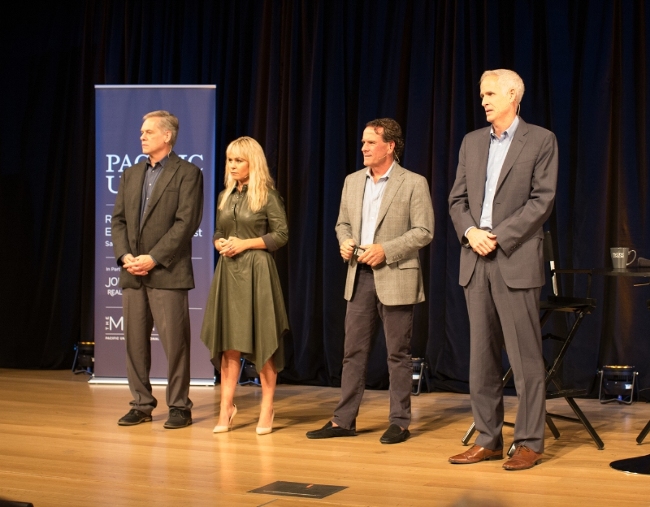
L-R Dean Werhli, VP, John Burns Real Estate Consulting, Selma Hepp, Chief Economist, Pacific Union, Mark McLaughlin, CEO, Pacific Union and John Burns, CEO, John Burns Real Estate Consulting respond to questions from the audience at the third annual Pacific Union International Real Estate Bay Area Economic Forecast from the stage of the San Francisco Jazz Center on November 16. The live webcast was simulcast in Mandarin to Pacific Union’s Chinese Concierge clients in China.


Here are the highlights and what to watch for over the next three years:

  • President-elect Trump will put pressure on mortgage rates, though it is not certain how fast rates will increase. Nevertheless, an increase in mortgage rates will significantly reduce the potential pool of buyers who can afford to buy a home in the Bay Area.
  • Despite being in the seventh year of economic expansion, the economy will continue growing through 2019 before slowing in 2020.
  • The Bay Area real estate market is one of the few in the U.S. classified as overheated.
  • Demographic changes will continue fueling demand as more millennials approach the age when they start their own households.
  • Bay Area millennials will benefit from the transfer of intergenerational wealth from their parents and grandparents who help them with their down payments.
  • More “surban homes™” – those that offer urbanlike living in a suburban market – will be built.
  • Across the entire Bay Area, home prices appreciation averaged 7 percent so far this year when compared with the same period in 2015.
  • Individual Bay Area communities fall into four categories when measured by year-to-date appreciation: normal, double-digit, heating up, and declining.

Markets that fall into each category include:

    • Normal (up to 10 percent appreciation): The majority of markets fall into this category, including San Jose, Santa Rosa, and San Francisco. The median home price in these markets averages $940,000.
    • Double-Digit (10 to 20 percent growth): These markets include Oakland, Hayward, and Petaluma. The median home price in these markets averages slightly above $500,000.
    • Heated (20 to 40 percent appreciation): While no city-level appreciation exceeded 20 percent, some ZIP codes have seen these levels of appreciation, including those in Oakland, Berkeley, Cotati, Glen Ellen, Larkspur, St. Helena, and East Palo Alto.
    • Slowing (6 percent depreciation to flat): Cities in which median price is lower than last year include Palo Alto, Tiburon, Menlo Park, and Lafayette. The median home price in these markets averages $1,700,000.


  • Differences in home price appreciation were driven by affordability and access to public transit and jobs. The highest appreciation was seen in markets that are still relatively affordable. The slowest appreciation and depreciation was seen in relatively more expensive markets and those that lack easy accessibility to jobs.
  • Cooling buyer sentiment is evident in almost all markets. Fewer homes are selling above asking price in 2016 across the Bay Area, particularly in San Francisco, San Mateo, and Santa Clara counties, and in higher price ranges. Premiums paid this year are also smaller in all counties.
  • Overall Bay Area inventory has increased by 5 percent year to date when compared with last year, with San Francisco and San Mateo counties seeing the largest gains. The buildup in inventory levels is mostly seen among homes priced between $2 million and $3 million.
  • Bay Area job growth will continue to outpace the number of homes built in 2017. The majority of new construction is concentrated in San Francisco, while no new supply is occurring outside of the city.
  • The new supply is mostly in higher price segments, so even though the ratio of new employment to new permits may be falling, it does not reflect the true availability for the average worker.
  • From 2017 to 2019, overall home prices will grow by 11 percent in Napa County; 9 percent in Sonoma County; 8 percent in Santa Clara County; 4 percentin Marin, San Francisco, and San Mateo counties; and 3 percent in Alameda and Contra Costa counties.
  • The number of new San Francisco condominiums for sale has spiked in the second half of 2016 but will begin slowing over the next three years.

About Pacific Union

Pacific Union is the San Francisco Bay Area’s premier luxury real estate brand operating in eight regions. The brokerage offers a full range of personal and commercial real estate services, including buying, selling, and relocation, and enjoys a relationship with Christie’s International Real Estate as an exclusive affiliate in in the San Francisco, Marin, Sonoma, Napa, Alameda, and Contra Costa counties in the state of California. Locally owned, Pacific Union operates with an entrepreneurial mindset and unwavering commitment to deliver exceptional service and expertise. For more information, please visit us at www.pacificunion.com.

About The Mark Company

The Mark Company is one of the nation’s premier urban residential marketing and sales firms. Founded by Alan Mark in 1997, The Mark Company provides a full range of core consulting services including analytics, design, marketing and sales for urban high-rises and suburban attached properties throughout the Western United States. The firm is a trusted partner to global leaders in residential development and finance, providing buyer-driven sales and marketing strategies that produce industry-leading results. The Mark Company has represented more than 10,000 residences and generated over $5 billion in sales for some of the nation’s most notable and successful developments including The Infinity in San Francisco, Evo in Los Angeles and The Martin in Las Vegas. Current projects include 181 Fremont Residences and The Harrison in San Francisco and Cavalleri in Malibu. A subsidiary of Pacific Union International, one of the San Francisco Bay Area’s top-performing resale brokerages, The Mark Company benefits from an enriched leadership team, enhanced technology and added global reach through its affiliation with Christie’s International.  For more information, please visit www.themarkcompany.com.

Photo – http://photos.prnewswire.com/prnh/20161118/441046


To view the original version on PR Newswire, visit:http://www.prnewswire.com/news-releases/key-takeaways-from-pacific-union-international-bay-area-real-estate-forecast-through-2019-300365778.html

SOURCE Pacific Union

Related Links

http://www.pacificunion.com

Article source: http://www.prnewswire.com/news-releases/key-takeaways-from-pacific-union-international-bay-area-real-estate-forecast-through-2019-300365778.html

Posted in SF Bay Area News | Tagged | Leave a comment

Trump win may shake up Bay Area housing market

You’d think having a real estate tycoon in the White House would be good for real estate. And it might be. Some of his proposals — such as boosting infrastructure spending and cutting mortgage regulations — would be bullish. But they could have side effects that offset the positives.


For example, Trump’s plan to boost infrastructure spending and cut taxes would stimulate the economy and give people more income to spend on housing. But it would also increase the deficit, which probably would raise inflation and interest rates, making homes less affordable.

The prospect of higher deficits has caused an uptick in interest rates, including mortgage rates. It also caused a sell-off in tech stocks, as investors rotated out of those into ones that would do better under Trump, especially banks, which could benefit from rising interest rates and financial deregulation. That trading strategy has reversed itself a bit in the past two days.

99c3c 920x1240 Trump win may shake up Bay Area housing market

Trump’s vow to “dismantle” the Dodd Frank Wall Street Reform and Consumer Protection Act could make home loans cheaper and more readily available, especially for people with weak credit. “That could offset some of the higher interest rates,” said Chris Thornberg, founding partner of Beacon Economics.

“Standard mortgage lending would go up if Dodd Frank is repealed,” said Andres Carbacho-Burgos, a senior economist with Moody’s Analytics. “That’s good if you think mortgage regulations are too tight. The longer-term risk is that sooner or later the pool of good borrowers will run out and mortgage lenders will start looking for the same type of borrowers they were looking for in 2004-05.”

If Trump deports undocumented immigrants and builds a wall to keep out new ones, demand for apartments could drop, because most of them rent. Legal and illegal immigrants and their descendants could account for 88 percent of population growth over the next 50 years, according to the Pew Research Center.

Reduced demand, combined with new apartment construction, “could create a surplus of housing in certain parts of the country. The Bay Area could be one of them,” said Ken Rosen, chairman of the Fisher Center for Real Estate at UC Berkeley’s Haas School of Business.

That could put downward pressure on rents and tilt the rent-or-buy decision toward renting for some people.

Trump’s plan to boost infrastructure spending comes at a time when the construction industry “is operating at full capacity, at least in labor terms,” Carbacho-Burgos said. “If the Republican Congress and Trump are serious about engaging in as many deportations as they can and choking off illegal immigration, the construction industry could be subject to some manpower losses.” His firm estimated that 13 to 14 percent of construction workers in 2012 were undocumented.

If a worker shortage slows construction of multifamily homes, “I see a slightly higher upward pressure on rents,” in the short-term. “If he is serious about deporting all 11 million illegal immigrants, then rents will go down.”

Trump’s threat to slap tariffs on imported goods, especially from China, could result in fewer foreigners buying U.S. real estate. “If he does what he said, he might upset the offshore capital flow. China might retaliate. They might really crack down” on money flowing into the U.S., Rosen said. On the other hand, “we could get more buyers from Russia.”

Tech workers have been a force in the market, and a prolonged decline in tech stocks could leave them with less buying power. But within tech, “there are winners and losers. Certainly the alternative energy companies stand to lose because he doesn’t want any preferential treatment of any particular energy sources,” said Selma Hepp, a vice president of business intelligence with Pacific Union. But biotech stocks got a bump after the election. Trump’s platform includes reforming the Food and Drug Administration.

Meanwhile, large tech companies such as Uber, Airbnb and Palantir could finally go public “if we get an uptick in confidence,” said Patrick Carlisle, chief market analyst with Paragon Real Estate Group. “When you add 6,000 more millionaires to the mix, that could make a difference.”

It’s too soon to say what impact, if any, the Trump victory is having on Bay Area real estate. It came when the market is entering a seasonal slowdown.

“I have had (homes) go into contract. Nothing has fallen out of contract” since the election, said D.J. Grubb, owner of the Grubb Co. real estate brokerage in Oakland. “We believe this new presidency will stimulate the market eventually. Getting there will create a little stagnation because of the uncertainty.”

Marin Realtor Joan Kermath said the election “has almost been a nonevent” for Bay Area real estate. “I have not seen buyers pulling back if they find the right house because they want to move to Canada.”

Things had been slowing down even before the election, added Kermath, an agent with Decker Bullock Sotheby’s International Realty. “Homes are taking longer to sell. Buyers are just more hesitant. They are making their choices much more carefully. There is more room to negotiate. It’s a much more normal market.”

Whether a Trump presidency will be a net positive or negative for real estate is hard to calculate. Rosen said he “didn’t do that forecast” because he didn’t think Trump would win. He’s working on one now. “On net, we think it is slightly negative” for real estate investors, but positive for renters, he said.

More by Kathleen Pender

A big risk is soaring interest rates. After a half-point jump, the average rate on a 30-year conforming loan is around 4 percent. “We were at 4 percent in January and nobody was complaining,” said Greg McBride, chief financial analyst with Bankrate.com. But at 4.5 percent, “it becomes more of a psychological tipping point. There is a concrete difference in affordability between 3.5 and 4.5 percent.” Realtors say this would not be a problem for all-cash buyers, who accounted for 20 percent of home purchases in September.

Some of Trump’s advisers want to turn Fannie Mae and Freddie Mac, which guarantee mortgages, back to the private sector. “If they were privatized without any government backing,” mortgage rates would rise by 0.4 to 1 percentage point, but it would probably take three or four years for this to happen, Carbacho-Burgos said.

Over the next year or two, his firm is “relatively optimistic” about the housing market, he said. That assumes the labor market improves, wages go up across the board and demand for homes rises, especially among first-time home buyers.

Thornberg also says the prospects are good, regardless of Trump. “I honestly think it’s not going to make a difference. People are going to live their lives like they always have. Trump is going to have to work within a system that is pretty darn slow.”

Kathleen Pender is a San Francisco Chronicle columnist. Email: kpender@sfchronicle.com Twitter: @kathpender

Article source: http://www.sfchronicle.com/business/networth/article/Trump-win-may-shake-up-Bay-Area-housing-market-10619443.php

Posted in SF Bay Area News | Tagged | Leave a comment