Now Bank-Owned, Latrell Sprewell’s Former Mansion Might Be a Bargain

It’s been more than 10 years since he last put on an NBA uniform, but former All-Star Latrell Sprewell continues to face financial woes.

Sprewell, who played 13 seasons in the NBA, had his Purchase, NY, mansion seized by the bank, and it’s now available for purchase at a hefty discount.

Purchased by Sprewell in 2000 for $2.3 million, the estate is now on the market for $1.5 million. The value of the Georgian and Colonial-style home was assessed as recently as 2008 for $3.95 million. It’s set on 3.32 acres of flat, usable land and measures 9,200 square feet. It has six bedrooms, 10 bathrooms, and two half-baths.

It’s currently one of the cheapest properties for sale in Purchase, a town where the median list price is $3 million.

Built in 1999, the bank-owned property needs interior and exterior TLC. Inside, potential bargain hunters will find granite countertops, four fireplaces, a sauna/steam room, an attic, a finished basement, and, of course, a basketball court.

71c49 sprewell purchase front exterior e1483589080971 Now Bank Owned, Latrell Sprewells Former Mansion Might Be a Bargain
Front exterior

realtor.com

71c49 sprewell purchase bathroom e1483589038915 Now Bank Owned, Latrell Sprewells Former Mansion Might Be a Bargain
Master bathroom

realtor.com

71c49 sprewell purchase bathoom e1483588982336 Now Bank Owned, Latrell Sprewells Former Mansion Might Be a Bargain
Kitchen

realtor.com

Sprewell is no stranger to controversy—including questionable financial and asset management.

On court, the five-time All-Star is remembered for choking then-Golden State Warriors head coach P.J. Carlesimo in 1997. He was suspended for the 68 games remaining in the season and traded shortly thereafter to the New York Knicks.

While he saw success on the court after leaving the San Francisco Bay Area, Sprewell made headlines for the wrong reasons, including when he turned down a then-lucrative contract extension because the $21 million wasn’t enough to feed his kids.

Sprewell retired in 2005 having earned a reported $96 million during his career, but several high-profile financial and legal troubles followed the Milwaukee native on his way out.

Article source: http://www.realtor.com/news/celebrity-real-estate/latrell-sprewells-foreclosed-mansion-market-serious-discount/

Posted in SF Bay Area News | Tagged | Leave a comment

Most expensive Bay Area neighborhoods, ranked

Which Silicon Valley ZIP codes are expensive? All of them. Which is the worst? If you have to ask, you can’t afford it.

But if you want more robust analysis than that, you’ve got plenty of options.

Forbes released their list of the nation’s most expensive ZIP codes last month, for example, and naturally the Bay Area was all over it.

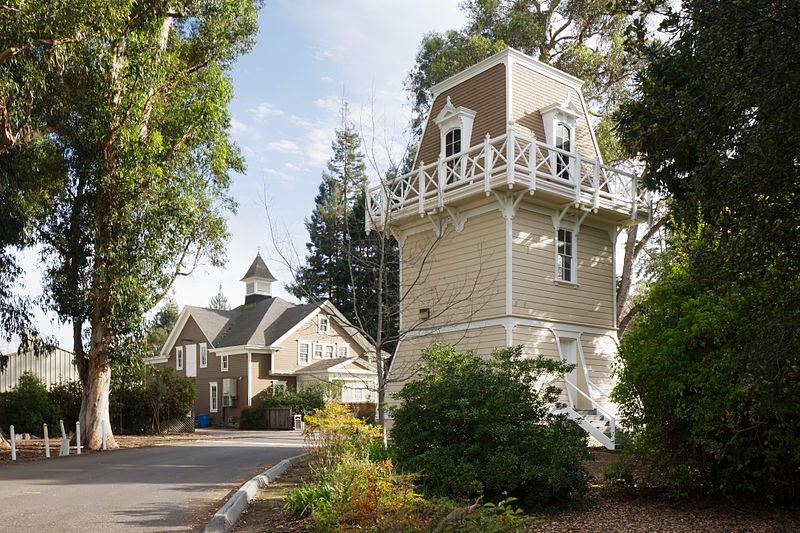
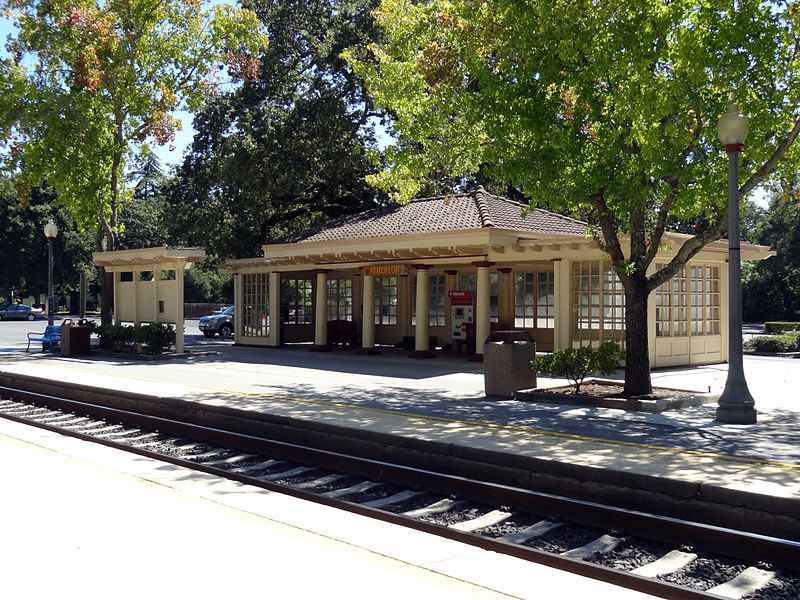
The money mag ranked Atherton’s 94027 ZIP (which covers the entire city) the third priciest nationwide, averaging $7.2 million a home. To the shock of no one who has ever been to Atherton.

4ce02 LPS1 Most expensive Bay Area neighborhoods, ranked

Atherton

LPS.1

7d2e0 Tumbenhaur Most expensive Bay Area neighborhoods, ranked

Atherton Caltrain

Tumbenhaur

Forbes dubbed Los Altos Hills (94022) eighth priciest, averaging just over $6 million. Burlingame (94010) gets 16th place with just over $5 million. Woodside (94062) finishes in 20th place with $4.7 million.

San Francisco only rose as high as 61st place on Forbes list, with the Marina District’s 94123 ZIP—just over $3 million.

All told, there were not many surprises. Then along comes real estate site PropertyShark with a year-end list of their own, insisting Forbes did it all wrong.

Looking only at sales data instead of asking prices, the real estate site came up with a shockingly different list.

How different? Forbes’ most expensive ZIP in Manalapan, Florida landed in 4,252th place on PropertyShark. Wow.

PropertyShark has it that 72 of the nation’s top 100 ZIPs are in California. And of course it reads like a directory of every Silicon Valley town, A through Z.

It’s normal for different analyses with different methods to yield different results. You rarely see a divide quite this stark, though.

Just for our own edification, we took the most expensive Bay Area ZIPs on both lists and looked at their average sale price on Redfin for all of 2016:

  1. Atherton, 92027 ($6.09 million; #3 Forbes, #2 PropertyShark)
  2. Palo Alto, 94301 ($2.93 million; #48 Forbes, #8 PS)
  3. Ross, 94957, ($2.82 million; N/A Forbes, #13 PS)
  4. Los Altos, 94022 ($2.8 million; #46 Forbes, #9 PS)
  5. Portola Valley, 94028 ($2.8 million; #51 Forbes, #10 PS)
  6. Los Altos, 94024 ($2.62 million; #68 Forbes, #15 PS)
  7. Los Gatos, 95030 ($2.3 million; #89 Forbes, #25 PS)
  8. Stanford*, 94305 ($2.28 million; N/A Forbes, #39 PS)
  9. Burlingame, 94010 ($2.23 million; #182 Forbes, #22 PS)
  10. Palo Alto, 94306 ($2.22 million; #143 Forbes, #23 PS)
  11. Saratoga, 95070 ($2.22 million; $85 Forbes, #28 PS)
  12. San Francisco, 94123 ($2.06 million; #61 Forbes, #24 PS)
  13. Tiburon, 94920 ($1.89 million; #54 Forbes, #31 PS)
  14. San Francisco, 94118 ($1.82 million; #128 Forbes, #37 PS)
  15. Menlo Park, 94025 ($1.8 million; #134 Forbes, #38 PS)

(*Note that Stanford’s sample size of only a little more than a dozen homes sold isn’t particularly useful or reliable, which is probably why it didn’t make Forbes’ list.)

In general, the Redfin list cleaves more closely to PropertyShark’s evaluations than to Forbes’, both in terms of placement and dollar values.

But since not every publicly sold home lists on Redfin, it’s not an exhaustive analysis.

Article source: http://sf.curbed.com/2017/1/4/14167392/most-expensive-zip-codes-2016

Posted in SF Bay Area News | Tagged | Leave a comment

Bay Area rental market softens

After years of painful increases, the cost of renting an apartment in most Bay Area cities has hit a plateau.

In San Francisco, the median cost of a 2-bedroom apartment was $4,550 in mid-December — still an inconceivable sum for most wage earners, yet down 2.5 percent from a year earlier. Likewise, the San Jose median of $2,550 was down 0.7 percent.

The Oakland median of $2,500, however, was up a modest 0.8 percent.

That’s all according to a new report from ApartmentList.com that tracks rents through Dec. 16.

“After a couple of years of scorching rent increases, rents are stabilizing or actually declining in many parts of the Bay Area,” said Andrew Woo, data scientist for ApartmentList.com.

He attributed the cooling to three factors: the construction of thousands of units of new housing for renters around the region, the typical seasonal slowdown in rent growth at year’s end, and the fact that “the market has already gone up so much that it can’t sustain any more rent increases.”

There were a few exceptions to the general trend, especially in a handful of East Bay markets where renters have flocked in search of something affordable. The result: The new competition has driven up rents by 8.1 percent year-over-year in Pleasanton, where the median 2-bedroom was $2,770, and by 6.8 percent in Concord, where the median was $1,900.

But elsewhere, the market softened, with rents either declining or moving up a smidgen, the website reported.

The median 2-bedroom unit went for $3,600 in Palo Alto, down 2.0 percent; for $3,440 in Redwood City, down 4.8 percent; for $3,040 in Daly City, up 1.7 percent; for $2,750 in Santa Clara, down 1.1 percent; for $2,390 in Fremont, down 0.5 percent; and for $2,300 in Campbell-Saratoga, down 1.4 percent.

Statewide, the numbers followed the same trend, even in large cities with the fastest rates of increase. Among the 10 biggest municipalities, Los Angeles — with a median 2-bedroom rent of $2,600 — led the pack with a 1.8 percent increase from a year earlier. Sacramento 2-bedrooms were up 1.7 percent to $1,200, and Fresno 2-bedrooms rose 1.2 percent to $870.

San Franciscans, in particular, might want to pay attention to those numbers.

Get a load of these median rents for 2-bedroom apartments in neighborhoods around the City by the Bay: South Beach, $5,500; Mission Bay $4,910; Pacific Heights, $4,880; Mission, $4,650; Nob Hill-Russian Hill, $4,500; Noe Valley-Castro, $4,400; Bernal Heights, $3,800; and the Outer/Central Sunset, a mere $,3,350.

Article source: http://www.mercurynews.com/2017/01/03/its-a-fact-the-bay-area-rental-market-has-softened/

Posted in SF Bay Area News | Tagged | Leave a comment

Bay Area housing crisis: Can we learn from New…

When Gabriel Metcalf suggested at a forum on affordable housing that cities should be penalized by the state for failing to build enough housing, he drew gasps from fellow panelists.

It’s not that the other panelists disagreed with Metcalf, who as president and CEO of Spur, is one of the Bay Area’s better-known housing advocates. It’s just that no one else had been willing to make the suggestion.

We talked to Metcalf to discuss the region’s housing crisis and some strategies that might fix it. As the head of SPUR — the San Francisco Bay Area Planning and Urban Research Association — Metcalf is in the thick of the housing conversation. That makes sense: Over the decades, SPUR — which has offices in San Jose, San Francisco and Oakland — has helped catalyze some of the region’s critical policy moves, from the founding of BART to the preservation of the Golden Gate National Recreation Area.

This conversation has been edited for length and clarity.

Q The housing crisis rises from a thicket of seemingly intractable problems. How do you stay motivated?

A The good news is that we have the power to make the Bay Area much more affordable than it is. It might not be something where we ever feel like it’s fully solved, but it could be much better than it is now. And so in that sense, it’s different than some other problems, like cutting carbon emissions where only action at the global scale can address the problem, or even income inequality where really a lot of the biggest solutions are at the national level.

The housing market in the Bay Area is broken because of local decisions, and that means it can be fixed through different local decisions. We need a group of Bay Area cities to decide to open up the housing market. We need a “coalition of the willing.” Cities need to change their zoning and their planning processes to make it really easy and quick to add housing.

Q But I’m guessing you want to guard against incoherent or environmentally damaging development.

A The good news here is that high-density settlement patterns are the most environmentally efficient way for humans to live. The “greenest” city in the United States is New York, if you care about the per-person carbon footprint — because people in great cities can walk and take transit for most trips. So it turns out that building compact, walkable neighborhoods focused around transit stations is good for quality of life and housing costs and the environment.

Q Mountain View has several thousand new units planned or underway. San Jose’s General Plan commits the city to building 120,000 new units by 2040. That’s something. Are any cities doing enough in terms of redressing the imbalance between job growth and new housing?

A We see small glimmers of hope, but it is not yet happening at the scale necessary to change overall housing costs at this point.

The three largest cities in the region – San Jose, San Francisco and Oakland – probably have the capacity to make a difference, just because of their scale and because of how much transit they have. I would add that any cities that have a BART or a Caltrain station also have the opportunity to make a difference by adding large amounts of housing around those transit hubs.

Q What are a couple of initiatives that you’d like to see happen at the state level?

A One would be to change the state’s environmental review law to have an assumption that in-fill development — as opposed to sprawl — is good for the environment. Another idea is to require that cities meet their housing production targets in order to maintain local land-use authority. In other words, if a city isn’t hitting its targets for housing, then the state could issue permits to build housing there.

Q You’re saying that the state might preempt local land-use authority; I saw you suggest this at a housing forum a few months ago. So, as it stands now, decisions about land use are made at the local level, where new housing proposals often get quashed?

A Yes. California has turned over land-use authority to cities — even if cities refuse to build more housing and essentially turn themselves into gated enclaves of wealth and exclusivity.

Q Facebook has pledged to spend about $20 million on affordable housing, and Mark Zuckerberg and his wife, Dr. Priscilla Chan, met over the summer with a number of housing experts — which made some people wonder if he and his wife might launch an initiative via their foundation. Do you think Silicon Valley will finally do something to solve the housing crisis?

A I’m really encouraged by the focus that tech leadership has on housing. If a group of leaders from tech decides to go big on solving these problems, we could go far.

Q You’ve espoused a “wave of experiments” to increase the stock of middle-class housing. What might that entail?

A This is one of the issues we have not yet solved. My belief is that we can’t help middle-class people afford housing through local subsidies; we’re going to have to actually fix the broader housing market. But within that context, we need to try a bunch of things to see if we can bring down the cost of market-rate housing. Ideas might include ramping up prefabricated and modular housing construction, which in theory could reduce the hard costs of construction by a lot… There’s also room to do a lot more with unit design — to make our units more like what you typically see in New York or Paris: well-designed, hopefully, but smaller.

Fully embracing car-free living is another way to reduce housing costs. If people aren’t using cars, that eliminates the cost of building garages under new apartment complexes. And if you look at the typical household budget, car use is expensive. So if we can put housing in the right places, so people don’t have to own cars, we can put more money in people’s pockets.


Gabriel Metcalf

Born: June 21, 1970 in Madison, Wisconsin

Place of Residence: San Francisco

Jobs: President CEO of SPUR, (2005-present); Deputy Director (2002-2005), Policy Director (1999-2002)

Education: Antioch College, Ohio, BA in political theory, 1993; U.C. Berkeley, Masters in City and Regional Planning, 1999

Family: Partner, Elizabeth, a psychotherapist; two sons, aged 9 and 13


5 Facts About Gabriel Metcalf

1. He comes from a background of social involvement. His father, an economist, worked in economic development for the state of Colorado. His mother, a lawyer, worked for the U.S. Environmental Protection Agency.

2. His book “Democratic by Design: How Carsharing, Co-ops, and Community Land Trusts Are Reinventing America” (2015, St. Martin’s Press) is a history of alternative institutions within progressive social movements.

3. He teaches a class in U.C. Berkeley’s department of city and regional planning on the intersection between political theory and regional planning.

4. Before working for SPUR, he helped found City CarShare, one of the first car-sharing programs in North America.

5. His chosen mode of commuting: bicycle.


Article source: http://www.mercurynews.com/2017/01/02/fixing-the-bay-areas-housing-crisis-one-advocate-speaks-out/

Posted in SF Bay Area News | Tagged | Leave a comment

Fixing the Bay Area’s housing crisis: One…

When Gabriel Metcalf suggested at a forum on affordable housing that cities should be penalized by the state for failing to build enough housing, he drew gasps from fellow panelists.

It’s not that the other panelists disagreed with Metcalf, who as president and CEO of Spur, is one of the Bay Area’s better-known housing advocates. It’s just that no one else had been willing to make the suggestion.

We talked to Metcalf to discuss the region’s housing crisis and some strategies that might fix it. As the head of SPUR — the San Francisco Bay Area Planning and Urban Research Association — Metcalf is in the thick of the housing conversation. That makes sense: Over the decades, SPUR — which has offices in San Jose, San Francisco and Oakland — has helped catalyze some of the region’s critical policy moves, from the founding of BART to the preservation of the Golden Gate National Recreation Area.

This conversation has been edited for length and clarity.

Q The housing crisis rises from a thicket of seemingly intractable problems. How do you stay motivated?

A The good news is that we have the power to make the Bay Area much more affordable than it is. It might not be something where we ever feel like it’s fully solved, but it could be much better than it is now. And so in that sense, it’s different than some other problems, like cutting carbon emissions where only action at the global scale can address the problem, or even income inequality where really a lot of the biggest solutions are at the national level.

The housing market in the Bay Area is broken because of local decisions, and that means it can be fixed through different local decisions. We need a group of Bay Area cities to decide to open up the housing market. We need a “coalition of the willing.” Cities need to change their zoning and their planning processes to make it really easy and quick to add housing.

Q But I’m guessing you want to guard against incoherent or environmentally damaging development.

A The good news here is that high-density settlement patterns are the most environmentally efficient way for humans to live. The “greenest” city in the United States is New York, if you care about the per-person carbon footprint — because people in great cities can walk and take transit for most trips. So it turns out that building compact, walkable neighborhoods focused around transit stations is good for quality of life and housing costs and the environment.

Q Mountain View has several thousand new units planned or underway. San Jose’s General Plan commits the city to building 120,000 new units by 2040. That’s something. Are any cities doing enough in terms of redressing the imbalance between job growth and new housing?

A We see small glimmers of hope, but it is not yet happening at the scale necessary to change overall housing costs at this point.

The three largest cities in the region – San Jose, San Francisco and Oakland – probably have the capacity to make a difference, just because of their scale and because of how much transit they have. I would add that any cities that have a BART or a Caltrain station also have the opportunity to make a difference by adding large amounts of housing around those transit hubs.

Q What are a couple of initiatives that you’d like to see happen at the state level?

A One would be to change the state’s environmental review law to have an assumption that in-fill development — as opposed to sprawl — is good for the environment. Another idea is to require that cities meet their housing production targets in order to maintain local land-use authority. In other words, if a city isn’t hitting its targets for housing, then the state could issue permits to build housing there.

Q You’re saying that the state might preempt local land-use authority; I saw you suggest this at a housing forum a few months ago. So, as it stands now, decisions about land use are made at the local level, where new housing proposals often get quashed?

A Yes. California has turned over land-use authority to cities — even if cities refuse to build more housing and essentially turn themselves into gated enclaves of wealth and exclusivity.

Q Facebook has pledged to spend about $20 million on affordable housing, and Mark Zuckerberg and his wife, Dr. Priscilla Chan, met over the summer with a number of housing experts — which made some people wonder if he and his wife might launch an initiative via their foundation. Do you think Silicon Valley will finally do something to solve the housing crisis?

A I’m really encouraged by the focus that tech leadership has on housing. If a group of leaders from tech decides to go big on solving these problems, we could go far.

Q You’ve espoused a “wave of experiments” to increase the stock of middle-class housing. What might that entail?

A This is one of the issues we have not yet solved. My belief is that we can’t help middle-class people afford housing through local subsidies; we’re going to have to actually fix the broader housing market. But within that context, we need to try a bunch of things to see if we can bring down the cost of market-rate housing. Ideas might include ramping up prefabricated and modular housing construction, which in theory could reduce the hard costs of construction by a lot… There’s also room to do a lot more with unit design — to make our units more like what you typically see in New York or Paris: well-designed, hopefully, but smaller.

Fully embracing car-free living is another way to reduce housing costs. If people aren’t using cars, that eliminates the cost of building garages under new apartment complexes. And if you look at the typical household budget, car use is expensive. So if we can put housing in the right places, so people don’t have to own cars, we can put more money in people’s pockets.


Gabriel Metcalf

Born: June 21, 1970 in Madison, Wisconsin

Place of Residence: San Francisco

Jobs: President CEO of SPUR, (2005-present); Deputy Director (2002-2005), Policy Director (1999-2002)

Education: Antioch College, Ohio, BA in political theory, 1993; U.C. Berkeley, Masters in City and Regional Planning, 1999

Family: Partner, Elizabeth, a psychotherapist; two sons, aged 9 and 13


5 Facts About Gabriel Metcalf

1. He comes from a background of social involvement. His father, an economist, worked in economic development for the state of Colorado. His mother, a lawyer, worked for the U.S. Environmental Protection Agency.

2. His book “Democratic by Design: How Carsharing, Co-ops, and Community Land Trusts Are Reinventing America” (2015, St. Martin’s Press) is a history of alternative institutions within progressive social movements.

3. He teaches a class in U.C. Berkeley’s department of city and regional planning on the intersection between political theory and regional planning.

4. Before working for SPUR, he helped found City CarShare, one of the first car-sharing programs in North America.

5. His chosen mode of commuting: bicycle.


Article source: http://www.mercurynews.com/2017/01/02/fixing-the-bay-areas-housing-crisis-one-advocate-speaks-out/

Posted in SF Bay Area News | Tagged | Leave a comment