Big-City Life — Displacement Blues: Public Press Weekly

Everyone’s favorite city — San Francisco — looks like it’s not everyone’s favorite place to live in. Lots of Bay Area residents, say, 20,000 a year, are saying “enough already” to the city and surrounding areas, and fleeing to the Sacramento region, where the summers are triple-digit scorchers, the pace of life slower and the housing prices helluva cheaper. (The Mercury News). And hey, you need to pull in $216,181 a year to buy a median-price house in the San Jose metro area (and $171,330 in San Francisco metro), so it’s no wonder that wannabe homeowners are heading inland (household income needed in Sacto? $71,345). (The Mercury News). For a visual aid to gentrification and displacement in Northern California, take a look at UC Berkeley’s Urban Displacement Project‘s map, and its latest iteration has added four more counties to the mix, including (no surprise here) Sacramento. (Berkeley News). But what’s up with the folks who stay put in San Francisco and its environs? News on the rental front is still sketchy: Nasty landlords who engage in bellicose illegal evictions, or the tough choices facing a couple who break up and are forced to reassess their living situation, somehow, in a hellish real estate market, can be just the way things are. (San Francisco magazine; The Potrero View).

Even developers are singing the blues in a city where the ground floor retail space in their big, beautiful residential developments stays empty, a situation chalked up to an anemic retail sector, steep building costs and zoning restrictions. (San Francisco Chronicle). But barriers to affordable housing persist. Environmental boosters say that California is losing valuable environmental protections in its pursuit of “streamlined” land-use regulations that speed housing construction. (San Francisco Public Press). Furthermore, the Republican tax bill snaking its way through Congress may exacerbate the state’s housing crisis, specifically for lower-income residents because tax breaks that help fund affordable housing may end up being history. (New York Times). However, there are a few bright spots. A private pilot project that hopes to house homeless people in tiny dwellings in San Francisco is being tested. (San Francisco Public Press). Public Press readers offered their 2 cents on how to help the homeless, suggesting, for example, requiring developers to build more low-cost housing and reserving space for the homeless in nonresidential areas. (San Francisco Public Press).

Hey, Is It Safe to Breathe?

In Politics, Follow the Money

Where There’s Smoke, There Are Rules and Regulations

  • The state finally got around to issuing rules on soon-to-be-legal marijuana, and these include things like allowing big farms and small delivery services, but saying no to pot in strip clubs. “California Releases Long-Awaited Cannabis Regulations, Will Allow Huge Farms” (San Francisco Chronicle).
  • Even though pot will be legal, pot ads on Muni won’t be. The San Francisco Municipal Transportation Agency banned them, just like ads for alcohol and tobacco, insisted the agency’s board chairwoman. “Muni Bans Cannabis Ads on Its Buses” (San Francisco Examiner).

Let’s Talk Turkey

You may not have seen the last of the Thanksgiving turkey. Wild gobblers have invaded the streets of Concord, pooping, chewing up landscaping and being all-around ornery. “Turkeys Thriving, Causing Ruckus in San Francisco Suburbs” (The Concord Monitor).


Article source: http://sfpublicpress.org/news/2017-11/big-city-life-%E2%80%94-displacement-blues-public-press-weekly-1

Posted in SF Bay Area News | Tagged | Leave a comment

These Wealthy San Francisco Homeowners Lost Their Private Street After They Didn’t Pay Taxes. Now They Might Get …

Michael Cheng says one could compare his controversial purchase to buying a collectible car.

People might spend “a couple hundred thousand dollars and they leave it there, and maybe they don’t make any money with it,” he says. “They just like looking at it.” As rare as old roadsters might be, Cheng, with his wife Tina Lam, bought something much less common. Two years ago, they swooped up one of San Francisco’s most elite private streets — much to the surprise of the people who live there — and on Tuesday, the city’s Board of Supervisors will consider whether to rescind the sale.

In an era when politicians routinely decry the ills of inequality, much schadenfreude has been generated over the purchase of Presidio Terrace, a gated cul-de-sac of multi-million-dollar homes where the likes of Sen. Dianne Feinstein and Rep. Nancy Pelosi have lived in relative privacy. After more than a decade of tax bills went unpaid, having been sent to the address of a now deceased accountant that once worked for the homeowners’ association (HOA), the city put the parcel up for sale in an online auction in 2015. And after eight parties made 140 bids, Cheng and Lam became the new owners of real estate in one of the Bay Area’s most desirable neighborhoods for $90,100.

Cheng, who works as a mortgage broker and real estate investor, and Lam, who works as a product manager at a tech firm, say they didn’t even know precisely what they were bidding on at the time. The South Bay couple had been looking for opportunities to own “a piece of San Francisco,” they say, and took a gamble given the parcel’s tony location, not knowing exactly what it was other than some patch of ground. Only later did they realize what they had bought: the road, including 120 parking spaces, the sidewalks and lush islands of common area that lay among the street’s 35 homes.

Despite past statements that they might consider charging the residents for parking on the street, they say their intention has never been to make money on the investment but to enjoy the pride of ownership. Lam, who came to the U.S. from Hong Kong, says this is especially meaningful for her as a Chinese immigrant, that having her name attached to the property is her “American dream” — even if it might be hard for other people to understand that they’d spend $90,000 to experience a feeling of achievement.

Describing themselves as middle-class “by Bay Area standards,” they argue that the sale was legal and sum up the subtext that made the story go viral after it broke this summer. “Even if the wealth distribution is not fair, the law is fair,” Cheng says, “and that’s something that is comforting to people.” They suggest that the residents should have kept better track of their responsibilities as property owners and balk at suggestions the HOA’s attorney has made about the couple being “opportunistic.”

One onlooker tweeted that the prospect of unsuspecting ultra-wealthy people being at the whims of new landlords was “delicious.” And reporters noted that in the early 1900s, a racial covenant banned non-white people from owning homes on Presidio Terrace, a private development that has been managed by the homeowners since 1905. The hearing on Tuesday, Lam says, threatens to “steal” their property through political process. “We’re not even talking about their driveway,” she says, arguing that their ownership has had no material impact on the people who live there. “They are still driving on our street right now.”

Things look different from the other side of the pavement. A board member of the HOA, who asked that TIME not use her name to protect the privacy of her family, says that the portrayal of the neighborhood is not accurate and that “to have our property sold without us even knowing is both unconstitutional and unfair.” San Francisco Treasurer Jose Cisneros has maintained that the sale was done by the book. His office also acknowledges that when the HOA was sent a notice of the auction by certified mail, that notice was returned to his office as undelivered — an indication that previous bills and notices did not reach them either. “They knew we didn’t get it,” the board member says, adding that the sale “never should have happened.”

In a brief filed with the Board of Supervisors, lawyers representing the Presidio Terrace Association argue that rescinding the sale is the lawful thing to do. “Before the government sells a piece of private property, should it make a reasonable effort to notify those who have an interest in that property? Of course, the answer is ‘yes.’ That is what principles of fairness and due process require,” the brief reads, emphasizing that this is the case “whether the government is dealing with the powerless or the privileged.”

Among the residents of Presidio Terrace are people who own $10-million mansions. There are also multi-generational families, families of immigrants and thirty kids who walk and bike around the manicured cul-de-sac that the homeowners pay to maintain, the board member says. She acknowledges that they did default on taxes that totaled $994.77 (about $14 a year plus fees) but says they would have been happy to pay if they had known about the bill and that residents have been investing in upkeep and maintenance.

“In all of this time, we as individual homeowners were all paying our property taxes and we also invest significantly in the property every year,” she says. “We maintain the road, the landscaping, we recently replaced a palm tree … We’ve been great stewards.”

“It’s a place where our children can grow up feeling safe and free,” she adds. “We’re real people, and however we got there, we’re a very strong, cohesive community.” She describes news vans and helicopters hovering around their homes after the story broke and says that since the sale became public, the street has become “a frequent destination for the curious.” She also argues that there is a problem with having the street owned by people whose interests might not be aligned with those of the individuals who use that street every day.

Both parties confirmed to TIME that they had multiple meetings and discussed the possibility of a settlement, but they did not agree on the value of the street. The HOA board member says the notion that the couple has no intention of making money on the purchase “is not consistent” with the impression she got during those meetings. Cheng maintains that during the meetings “we were consistent that we just wanted to own the property and not do anything to it,” though they did discuss valuations. A title company that contacted the HOA earlier this year did ask about the possibility of homeowners buying the street back, but Cheng says that was done in “error.”

Another twist to this tale is that failing to pay taxes is a mistake the HOA has made before, temporarily losing ownership of the street after defaulting on their bill in the 1970s. In a brief, the treasurer says it is the responsibility of taxpayers to keep their addresses updated with the city. He also notes that the Board has authority under the tax code to rescind the sale — something that is noted in the small print accompanying online auctions — and that his office will “implement the direction it receives from the Board of Supervisors on this matter.”

Sen. Feinstein wrote a letter to the board in advance of the hearing urging it to reverse the sale, saying that she was not attempting to influence their decision because she counts some residents of Presidio Terrace among her friends but because the city’s bureaucracy slipped up. As tax bills went unpaid and unacknowledged for years, the treasurer’s office was “continually informed by the apparently decades-long feedback loop that the wrong address was still wrong,” the lawmaker writes. The “office’s insistence that taxpayers were wholly to blame for that office’s own fiasco was breathtaking.”

If the sale is canceled, Cheng and Lam say that it will be proof that powerful people get their way in an “unfair system.” The residents of Presidio Terrace, who paint the tax collector as the real villain in this drama — saying that office has subjected both sides to an “insufficient process” — maintain that justice will have been done. The HOA previously filed a lawsuit over the sale of the street with the San Francisco Superior Court, to ensure that the property was not sold to someone else as they pursued action with the board. In advance of the hearing, Cheng and Lam say they are willing to continue pursuing this through the courts if the hearing doesn’t go their way.

The people who live on Presidio Terrace are also determined to get their street back. “This is our neighborhood, this is our street and our sidewalks, this is in a 112-year-old community, and it was sold without the knowledge of 35 homeowners,” the board member says. “So people can make it whatever they want. But it’s a really serious issue for the homeowners.”

Article source: http://time.com/5035204/presidio-terrace-san-francisco-hearing-street-sale/?xid=homepage

Posted in SF Bay Area News | Tagged | Leave a comment

These Wealthy San Francisco Homeowners Lost Their Private Street After They Didn’t Pay Taxes. Now They Might Get …

Michael Cheng says one could compare his controversial purchase to buying a collectible car.

People might spend “a couple hundred thousand dollars and they leave it there, and maybe they don’t make any money with it,” he says. “They just like looking at it.” As rare as old roadsters might be, Cheng, with his wife Tina Lam, bought something much less common. Two years ago, they swooped up one of San Francisco’s most elite private streets — much to the surprise of the people who live there — and on Tuesday, the city’s Board of Supervisors will consider whether to rescind the sale.

In an era when politicians routinely decry the ills of inequality, much schadenfreude has been generated over the purchase of Presidio Terrace, a gated cul-de-sac of multi-million-dollar homes where the likes of Sen. Dianne Feinstein and Rep. Nancy Pelosi have lived in relative privacy. After more than a decade of tax bills went unpaid, having been sent to the address of a now deceased accountant that once worked for the homeowners’ association (HOA), the city put the parcel up for sale in an online auction in 2015. And after eight parties made 140 bids, Cheng and Lam became the new owners of real estate in one of the Bay Area’s most desirable neighborhoods for $90,100.

Cheng, who works as a mortgage broker and real estate investor, and Lam, who works as a product manager at a tech firm, say they didn’t even know precisely what they were bidding on at the time. The South Bay couple had been looking for opportunities to own “a piece of San Francisco,” they say, and took a gamble given the parcel’s tony location, not knowing exactly what it was other than some patch of ground. Only later did they realize what they had bought: the road, including 120 parking spaces, the sidewalks and lush islands of common area that lay among the street’s 35 homes.

Despite past statements that they might consider charging the residents for parking on the street, they say their intention has never been to make money on the investment but to enjoy the pride of ownership. Lam, who came to the U.S. from Hong Kong, says this is especially meaningful for her as a Chinese immigrant, that having her name attached to the property is her “American dream” — even if it might be hard for other people to understand that they’d spend $90,000 to experience a feeling of achievement.

Describing themselves as middle-class “by Bay Area standards,” they argue that the sale was legal and sum up the subtext that made the story go viral after it broke this summer. “Even if the wealth distribution is not fair, the law is fair,” Cheng says, “and that’s something that is comforting to people.” They suggest that the residents should have kept better track of their responsibilities as property owners and balk at suggestions the HOA’s attorney has made about the couple being “opportunistic.”

One onlooker tweeted that the prospect of unsuspecting ultra-wealthy people being at the whims of new landlords was “delicious.” And reporters noted that in the early 1900s, a racial covenant banned non-white people from owning homes on Presidio Terrace, a private development that has been managed by the homeowners since 1905. The hearing on Tuesday, Lam says, threatens to “steal” their property through political process. “We’re not even talking about their driveway,” she says, arguing that their ownership has had no material impact on the people who live there. “They are still driving on our street right now.”

Things look different from the other side of the pavement. A board member of the HOA, who asked that TIME not use her name to protect the privacy of her family, says that the portrayal of the neighborhood is not accurate and that “to have our property sold without us even knowing is both unconstitutional and unfair.” San Francisco Treasurer Jose Cisneros has maintained that the sale was done by the book. His office also acknowledges that when the HOA was sent a notice of the auction by certified mail, that notice was returned to his office as undelivered — an indication that previous bills and notices did not reach them either. “They knew we didn’t get it,” the board member says, adding that the sale “never should have happened.”

In a brief filed with the Board of Supervisors, lawyers representing the Presidio Terrace Association argue that rescinding the sale is the lawful thing to do. “Before the government sells a piece of private property, should it make a reasonable effort to notify those who have an interest in that property? Of course, the answer is ‘yes.’ That is what principles of fairness and due process require,” the brief reads, emphasizing that this is the case “whether the government is dealing with the powerless or the privileged.”

Among the residents of Presidio Terrace are people who own $10-million mansions. There are also multi-generational families, families of immigrants and thirty kids who walk and bike around the manicured cul-de-sac that the homeowners pay to maintain, the board member says. She acknowledges that they did default on taxes that totaled $994.77 (about $14 a year plus fees) but says they would have been happy to pay if they had known about the bill and that residents have been investing in upkeep and maintenance.

“In all of this time, we as individual homeowners were all paying our property taxes and we also invest significantly in the property every year,” she says. “We maintain the road, the landscaping, we recently replaced a palm tree … We’ve been great stewards.”

“It’s a place where our children can grow up feeling safe and free,” she adds. “We’re real people, and however we got there, we’re a very strong, cohesive community.” She describes news vans and helicopters hovering around their homes after the story broke and says that since the sale became public, the street has become “a frequent destination for the curious.” She also argues that there is a problem with having the street owned by people whose interests might not be aligned with those of the individuals who use that street every day.

Both parties confirmed to TIME that they had multiple meetings and discussed the possibility of a settlement, but they did not agree on the value of the street. The HOA board member says the notion that the couple has no intention of making money on the purchase “is not consistent” with the impression she got during those meetings. Cheng maintains that during the meetings “we were consistent that we just wanted to own the property and not do anything to it,” though they did discuss valuations. A title company that contacted the HOA earlier this year did ask about the possibility of homeowners buying the street back, but Cheng says that was done in “error.”

Another twist to this tale is that failing to pay taxes is a mistake the HOA has made before, temporarily losing ownership of the street after defaulting on their bill in the 1970s. In a brief, the treasurer says it is the responsibility of taxpayers to keep their addresses updated with the city. He also notes that the Board has authority under the tax code to rescind the sale — something that is noted in the small print accompanying online auctions — and that his office will “implement the direction it receives from the Board of Supervisors on this matter.”

Sen. Feinstein wrote a letter to the board in advance of the hearing urging it to reverse the sale, saying that she was not attempting to influence their decision because she counts some residents of Presidio Terrace among her friends but because the city’s bureaucracy slipped up. As tax bills went unpaid and unacknowledged for years, the treasurer’s office was “continually informed by the apparently decades-long feedback loop that the wrong address was still wrong,” the lawmaker writes. The “office’s insistence that taxpayers were wholly to blame for that office’s own fiasco was breathtaking.”

If the sale is canceled, Cheng and Lam say that it will be proof that powerful people get their way in an “unfair system.” The residents of Presidio Terrace, who paint the tax collector as the real villain in this drama — saying that office has subjected both sides to an “insufficient process” — maintain that justice will have been done. The HOA previously filed a lawsuit over the sale of the street with the San Francisco Superior Court, to ensure that the property was not sold to someone else as they pursued action with the board. In advance of the hearing, Cheng and Lam say they are willing to continue pursuing this through the courts if the hearing doesn’t go their way.

The people who live on Presidio Terrace are also determined to get their street back. “This is our neighborhood, this is our street and our sidewalks, this is in a 112-year-old community, and it was sold without the knowledge of 35 homeowners,” the board member says. “So people can make it whatever they want. But it’s a really serious issue for the homeowners.”

Article source: http://time.com/5035204/presidio-terrace-san-francisco-hearing-street-sale/?xid=homepage

Posted in SF Bay Area News | Tagged | Leave a comment

Laidley Street Home Prices Soar as Tech Execs Converge on SF’s Glen Park

SAN FRANCISCO (KPIX) — Century-old architecture and cottage homes meet enormous, modern construction on the hottest street in San Francisco for high-roller tech executives.

Laidley Street, which curves around the east flank of the Glen Park neighborhood, could soon be recognized as a new San Francisco “microhood” which some realtors have begun calling Laidley Heights.

Take Laidley street’s newest home — dubbed Laidley Manor — on the market for a record $10 million. It’s a 5,300 square foot, five-bedroom, 5 1/2 bath home which features a zen garden, three levels, massive closets and top-of-the-line finishes.

“We have buyers, typically younger, high-tech buyers who are massively wealthy, typically suddenly so, and they’re not really interested in the mansion in Pacific Heights,” Patrick Carlisle, with Paragon Real Estate, told KPIX. “They want a beautiful new home, they want a high-tech home, they want a neighborhood ambiance that is lower-key and more relaxed.”

Laidley Street stretches south from Noe Valley. It is separated from Bernal Heights on the east by San Jose Ave. Among Laidley’s attractions are dramatic, unobstructed views of the San Francisco skyline, the Bay Bridge and East Bay hills.

Real estate agents told KPIX that Apple executives have snapped up and remodeled three pricey, mega homes in the area.

This past spring, a 5-bedroom, 4,400 square foot home sold for more than $5 million — the highest ever for the neighborhood. On a recent drive, it’s not hard to spot big construction projects on the block.

After the 1906 earthquake, many people from downtown moved into the neighborhood because it was mainly untouched by the disaster. Newly-homeless families lived in so-called earthquake shacks.

Andrew Ugrinow has lived on Laidley for 14 years. He and his husband plan to take advantage of the red-hot real estate market and cash out.

“We’re thinking about retiring and it’d be kind of nice to sell it at a higher price,” Ugrinow said. “We’re thinking about either going back to Ohio or Palm Springs.”

Judy Tergis is a third-generation San Franciscan.

“It’s gotta be sad you know, we have four children who can’t afford to live here and we’re lucky because my mother-in-law bought this house in the fifties (at) $50,000 or so for two lots,” Tergis explained.

Today the median home price for Glen Park is close to 1.5 million.

Philip Pasmanick’s 2-bedroom house is within walking distance of the luxury homes.

“I have mixed feelings because these homes — many of them only the elite can possibly begin to afford, whereas I bought my home for $200,000 and now my daughter still lives in her childhood room in the basement,” Pasmanick said.

Real estate market analyst Patrick Carlisle says the new generation of Silicon Valley elites has particular taste.

“They love areas like Noe Valley, the Castro and Cole Valley, places where they wander out in their jeans and sneakers for a cup of coffee and sushi and that sort of thing. And it’s also close to highways south on the peninsula,” Carlisle said.

Article source: http://sanfrancisco.cbslocal.com/2017/11/23/laidley-street-glen-park-real-estate/

Posted in SF Bay Area News | Tagged | Leave a comment

South SF’s Oyster Point wrong place for housing, biotech industry says


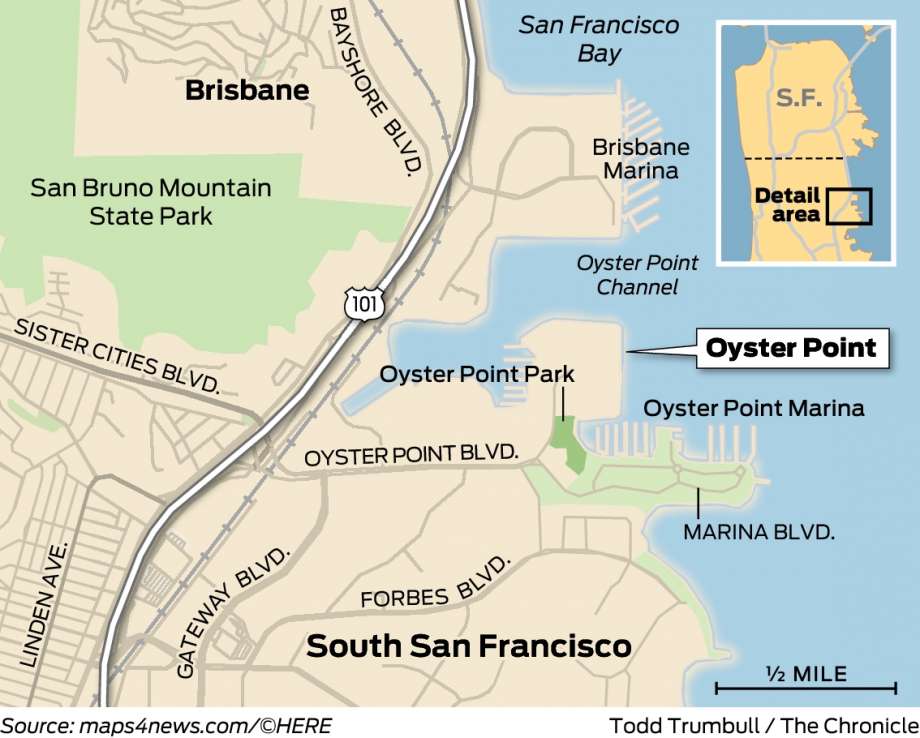
Now a developer who owns 40 acres of land on Oyster Point is looking to tweak the mix of uses in the area once more by building as many as 1,200 housing units in the biotech stronghold.


But while housing advocates favor the idea, South San Francisco’s biotech players argue that residential development is incompatible with the research and development activity that has made the city of 67,000 residents one of the leading life-science clusters in the world.

The property owner, a group of investors led by the Chinese developer Greenland USA, is proposing to revise the 2011 Oyster Point Plan, which approved 2.25 million square feet of office and research-and-development space on the V-shaped property that wraps around the South San Francisco marina and harbor. The revised proposal, which calls for 4 acres of waterfront open space, would replace the third and fourth phases of that office development with seven residential buildings, decreasing the commercial development by between 500,000 and 750,000 square feet.

Paul Stein of SKS Partners, a real estate development firm that is advising Greenland USA, says the housing will help meet the needs of South San Francisco’s biotech workforce, which is anticipated to grow by 18,000 workers over the next three years.

Stein said the decision to segregate biotech jobs from residential neighborhoods in the Oyster Point Plan “was an ’80’s planning document” that came at a time when the life-science field was in its infancy and there was a lot of misunderstanding about health risks that came with the research and development of drugs.

Since then, housing and biotech have been built close to each other in several places, including in Cambridge, Mass., and San Francisco’s Mission Bay. The new generation of biotech researchers want to work and live in a mixed-use environment with housing, retail and recreation, Stein said.

“The idea was: It’s biotech, people don’t know what it is, let’s throw a fence around it and protect it,” said Stein. “Now, the reality of the world has changed, and we think housing will help enhance the biotech cluster out here.”

Sara Radcliffe, president of the California Life Sciences Association, an industry group that represents many South San Francisco biotech companies, says the industry supports housing but that Oyster Point is not the place for it. Plunking a residential neighborhood down next to around-the-clock research labs will inevitably lead to discord, she said.

Much of South San Francisco’s meteoric rise as a biotech center is attributable to smart planning that has “avoided land-use conflict by not locating residential next to an industrial area,” she said.

“The successful development of the life-science cluster has really been supported and driven by that vision,” she said. “Allowing housing would represent a dramatic turn in the city’s vision for east of 101.”

While South San Francisco city staff has yet to take a position on the housing development, it was city officials who initially asked the developers to consider changing the Oyster Point approvals to include residential. City Manager Mike Futrell said a 2015 study identified two sites west of Highway 101 where housing could be desirable: Oyster Point and an industrial property next to the Caltrain station.

“The study said housing might be feasible,” Futrell said. “We are currently weighing the risks, looking at the macro and the micro. Which is the bigger risk to the biotech sector in the long term? Is it the housing shortage and the adverse impact of long commutes, or is it some perceived disadvantage of having residential too close to biotech?”

City planning staff will probably make a recommendation on the changes to the City Council by February. The City Council could vote in March or April.

Mayor Pradeep Gupta supports the housing, arguing that the change would not only create places for workers to live but also inject energy into an area that is dead at night and on weekends.

“It’s not only a good idea, it’s a critical need,” said Gupta. “We need the housing, and it’s essential that the new housing be built close to where people work so we can get them out of their cars.”

Casting a shadow on the debate is Genentech, the city’s largest and most powerful employer. Genentech, which has been in South City since 1978, employs 12,000 workers there. Greenland says Genentech has not directly said it opposes the plan but has been lobbying against it behind the scenes.

In a statement, Genentech said, “We support the concept of residential developments in appropriate areas East of 101. At this time, we are not commenting on specific projects.”

ff877 920x1240 South SFs Oyster Point wrong place for housing, biotech industry says


Opponents to housing at Oyster Point also say that the area lacks the transportation infrastructure to support housing. Oyster Point has a ferry terminal with connections to Alameda, Oakland and San Francisco’s Ferry Building. It’s about 1.5 miles from the Caltrain station. But Futrell pointed out that the alternative to housing at Oyster Point is more office space — 2.25 million square feet versus about 1.5 million square feet with the residential development.

“We are not comparing residential to open space, we are comparing it to more biotech space,” he said. “As compared to commuters going to work in biotech, the residential development will create less traffic. There will be people who live nearby who can bike or walk to work.”

While municipal planners generally have moved away from separating land uses into distinct zones, there are times when it makes sense, said Gabriel Metcalf, executive director of the generally pro-housing urban think-tank SPUR.

“Not every site in the region is appropriate for housing,” he said. “Where there are intact, healthy industrial and manufacturing clusters we probably want to protect those.”

Meanwhile, whether or not the housing is approved, work has started at Oyster Point. Demolition of several old buildings is set to commence this year to make way for phase one — 508,000 square feet of commercial space in three buildings.

More by J.K. Dineen

Clara Tang, executive vice president with Greenland USA, said she is excited to do what her company has done on a large scale in 80 Chinese cities, as well as in Brooklyn, N.Y., and Los Angeles.

“That’s what we build: industrial parks with housing next to the companies so people can live next to where they work,” she said. “That’s what we do all over Asia.”

If approved, construction on the first phase of residential buildings could start as soon as next summer, she said. That phase would include 330 rental units, 150 condominiums and 11,000 square feet of retail.

“We wanted to plant a flag here, and Oyster Point is a once-in-a-lifetime opportunity,” she said. “It’s by the water. Everyone loves the water.”

J.K. Dineen is a San Francisco Chronicle staff writer. Email: jdineen@sfchronicle.com Twitter: @sfjkdineen

Article source: http://www.sfchronicle.com/bayarea/article/South-SF-s-Oyster-Point-wrong-place-for-12382240.php

Posted in SF Bay Area News | Tagged | Leave a comment