Is home ownership losing its luster in these Bay Area cities?

As more people are unable, or unwilling, to buy a home, many major destinations in the Bay Area and beyond are turning into cities of renters.

A quarter of the 100 largest U.S. cities saw renting — not owning a home — become the new norm over the past 10 years, according to a recent analysis of U.S. Census data by apartment search website RentCafe. It’s a stark change particularly evident in the Bay Area, where sky-high home prices make renting the only option for many. But experts say the shift also is driven by cultural changes that have made renting attractive to some millennials, who are rejecting being tied down to a mortgage, at least for now.

“There’s no nice way to put this. The idea of owning a home lost much of the charm that once made it a structural element of the American Dream,” RentCafe writer Balazs Szekely wrote in a blog post publishing the data.

As of 2016, Oakland ranked among the top 10 cities with the highest share of renters — 59 percent. San Francisco is another renter-majority city, with 56 percent of residents paying a landlord for housing.

Fremont saw a 31 percent increase in its share of renters between 2006 and 2016 — the sixth largest jump among cities studied. Less than a third of Fremont’s residents rented in 2006. By 2016, that jumped to 42 percent.

In San Jose, on the other hand, 58 percent of residents lived in a home they own.

The surge in renting is something Sydney Bennet, senior research associate at Apartment List, has noticed as well. It started after the housing bubble burst in 2008, and many people who had their homes foreclosed didn’t immediately go out and buy again, she said. Then a new generation graduated college in the recession without the savings to buy a house.

“And the shortage of affordable homes makes it so even once they do have some savings, it makes it hard to find a home, especially in the Bay Area,” Bennet added.

In San Jose, for example, it would take a single home buyer nearly 31 years to save for a down payment on a home, according to a new Zillow study that analyzed housing prices and Census income data. In San Francisco, it would take almost 28 years.

At the same time, cultural norms have shifted, making renting a more attractive option to millennials. There’s no longer a stigma around long-term renting, and renting gives residents flexibility that home ownership doesn’t, Bennet said. That’s not to say young people don’t ever want to buy a home.

“We’re finding that 80 percent of millennials do still want that,” Bennet said, “but I think there’s less pressure to do it quickly. I think you see more people still renting when they have kids, which may have been less common 10 or 15 years ago.”

But in the past year, home ownership appears to be on the rise again. The rate of U.S. residents who live in homes they own ticked up from 62.9 percent in the second quarter of 2016, to 63.9 percent in the third quarter of 2017 — the highest rate since 2014, according to Apartment List.

“Undoubtedly, the recession had a great impact on homeownership, and it’s hard not to agree if you look at the data from the last decade or so,” Szekely wrote. “However, it looks like it takes more to discourage Americans from buying a house than that.”


Cities of renters

More people are renting homes instead of buying in cities across the Bay Area.

Oakland — 59 percent of residents rented in 2016, up 12 percent from 10 years ago.

San Jose — 42 percent of residents rented, up 16 percent

Fremont — 42 percent of residents rented, up 31 percent.

Fresno — 52 percent of residents rented, up 8 percent

San Francisco — 56 percent of residents rented, up 4 percent.

Sacramento — 50 percent of residents rented, up 11 percent.

Source: RentCafe


Article source: https://www.mercurynews.com/2018/02/09/is-home-ownership-losing-its-luster-in-these-bay-area-cities/

Posted in SF Bay Area News | Tagged | Leave a comment

Bay Area residents want more housing, but …

(Click here if you’re having trouble viewing the gallery on your mobile device.)

Fed up with soaring prices that are increasingly putting home ownership, or even a decent rental, out of reach, Bay Area residents overwhelmingly say they want more housing built, according to a new poll. But it better not make their commutes worse.

Residents said they support everything from new single family homes to housing for the homeless in their communities, tossing aside NIMBY concerns that sometimes throw a wrench in building plans. But there were limits to their enthusiasm. Respondents balked at building anything that would cut into the Bay Area’s cherished open spaces or funnel more people onto crowded local freeways and public transit, making their treks to work longer.

The responses, in a five-county poll conducted for the Silicon Valley Leadership Group and this news organization, left some housing advocates hopeful that public sentiment is shifting in favor of building more housing. But the survey also illustrates the hurdles the Bay Area faces in solving its housing shortage.

“I think as more people personally experience the crisis of the lack of affordable housing, we’re seeing public support gradually move upwards, including support for bringing new affordable housing into people’s own neighborhoods — which is a new trend in the 27 years I’ve been working in the field,” said Matt Schwartz, president and CEO of housing nonprofit California Housing Partnerships. “This feels like something different and new that is happening now.”

Tyler Young is one of many Bay Area residents feeling the impact of the region’s housing crunch first-hand. The 31-year-old lawyer moved his family to Dublin from San Francisco in 2015 when his landlord decided to raise the monthly rent by $700, asking $5,000 for a two-bedroom apartment near ATT Park. Now Young, his pregnant wife and 2-year-old son rent a condo in Dublin for $3,000 a month.

“I do think it’s a serious issue,” Young said of the housing shortage. That’s why he supports building housing of all types, including in his own neighborhood.

“I welcome as much development as can happen,”  he said, “but I understand that there are people who don’t feel that way.”

Of the 900 registered voters surveyed, 64 percent said they favor building significant quantities of new housing, and 53 percent said they would support new construction even if it changed the character of their neighborhood. But fewer than half — 46 percent — were willing to sacrifice open space for new development, and just 30 percent said they would support new housing that brought more people onto local roads and transit systems, making their commutes worse.

When speaking generally, 89 percent of people supported both building more low-income housing and more housing for the homeless. A slightly smaller percentage would welcome those developments into the communities where they live and shop and where their kids go to school. Seventy-eight percent of respondents supported building low-income housing in their own neighborhood, and 69 percent supported building homeless housing in their neighborhood.

Those numbers seem high to Laura Foote Clark, executive director of the pro-development organization YIMBY Action, but she said that support won’t necessarily translate into more building permits. Saying you support housing in a survey is one thing, she said. It’s quite another to show up at city meetings or email local elected officials to voice that opinion.

“There’s two fundamental problems,” Clark said. “Those people are not necessarily aware of how to engage with government in order to express that point of view. And then the second big problem is housing takes place in a particular place. So everyone might be supportive of housing in general, and then when you propose a specific project, that general support sometimes wanes.”

San Francisco residents were more likely to back building housing of all types, including low-income and homeless housing, than their neighbors in surrounding counties. Respondents younger than 40 were more likely to favor development than their older counterparts. And 81 percent of apartment-dwellers supported building significant quantities of new housing in the Bay Area, compared to 59 percent of people living in single-family homes.

That’s not surprising, said Sydney Bennet, senior research associate at real estate website Apartment List. People renting apartments typically hope to buy a home one day, so they support new development that could lower home prices, she said.  But homeowners, who worry about the value of their house falling or their neighborhood changing, have more to lose when new buildings go up.

“People who are homeowners and have lived in the same neighborhood longer may be more attached to that character,” Bennet said.

The opinions of renters are becoming increasingly important as home ownership falls out of reach for more people. The region’s proportion of renters grew by about 5 percent over the past decade, while the percentage of homeowners dropped in kind, according to a report by New York University’s Furman Center for Real Estate and Urban Policy.

Some Bay Area residents can’t afford even to rent, like 60-year-old Guadalupe Negrete, who has lived in San Jose her whole life. Since her husband’s death four years ago, Negrete, a former bank teller, has survived on widows benefits. After losing the home she owned and then bouncing from rental to rental, she’s spent the past 10 months living in her station wagon with her terrier, Bella.

“For a woman 60 years old, that’s not the greatest thing,” Negrete said. “I didn’t stay in San Jose 60 years to end up this way. This is ridiculous.”

4ec6f sjm l poll 0211 90 01 Bay Area residents want more housing, but …

About the poll: The poll of 900 registered voters in Alameda, Contra Costa, San Mateo, Santa Clara and San Francisco counties was conducted by J. Moore Methods Inc. Public Opinion Research for Silicon Valley Leadership Group and the Bay Area News Group. Silicon Valley Leadership Group provided funding for the poll with significant financial support from Facebook. The poll, conducted from Dec. 27 to Jan. 9, has a margin of error of +/- 3.3 percent.

Article source: https://www.mercurynews.com/2018/02/11/bay-area-residents-want-more-housing-but/

Posted in SF Bay Area News | Tagged | Leave a comment

Packing up and moving out: Bay Area exodus continues


 Packing up and moving out: Bay Area exodus continues

Portrait: Michael McDaniel, 27, moved from San Jose to Sacramento in February so he could go to college in a more affordable city. Before the move, he had an entry level receptionist’s position at Google — and also juggled a part-time job and occasionally drove for Uber. “I was doing what I could to survive,” he said. “But it was this constant struggle.” He is studying communications and business at Sacramento State and Sacramento City College. (Dai Sugano/Bay Area News Group)


A Bay Area mover’s checklist:

Rising home prices?

Check.

Rising rents?

Check.

Click desperately through real estate websites for a cheaper home and a better life?

Check.

Efforts to move out of the Bay Area continued in recent months, with 16,000 residents packing up and taking to the road for less expensive housing and new opportunities. A study by real estate brokerage Redfin found the Bay Area remains the top region for outward migration in the country.

The most popular destination for Bay Area refugees remains Sacramento, followed by other tech hubs and California cities. “It’s pretty much in line with what we’ve seen for the past few years,” said Taylor Marr, senior economist at Redfin. “Many people leaving the Bay Area are still looking in California.”

The steady climb in real estate prices has made first-time home-buying expensive and frustrating for many newcomers. And rents continued to rise year over year, especially around tech giant headquarters in Silicon Valley.

The median price in December for a single-family home in Santa Clara County was $1.2 million, while a similar home in San Mateo was $1.4 million, and in Alameda, $838,000, according to real estate firm CoreLogic. A comparable home in Sacramento is $314,000, according to Zillow.

Overall, the region’s population continues to grow. But the number of outgoing residents has hit its highest point in more than a decade, according to a report released Wednesday by Joint Venture Silicon Valley.

People are leaving Silicon Valley nearly as quickly as they are coming in. Between July 2015 and July 2017, the region gained 44,732 immigrants but lost 44,102 residents to other parts of California and the country, according to the regional think tank. The population drops have been most notable on residents from the ages of 18 to 24, and from 45 to 64.

Redfin analysts combine sales data and searches on their website to determine where users are moving. For the past nine months, San Francisco, New York and Los Angeles have had the highest number of residents moving out.

About 1 in 4 Bay Area residents looking to leave searched for homes in Sacramento, and nearly 1 in 10 browsed Seattle listings. The top five destinations for Bay Area movers were Sacramento, Los Angeles, Seattle, Portland and San Diego.

The Bay Area migration also causes ripples through other housing markets, Marr said. Relatively wealthy Silicon Valley residents bid up home prices in other cities, lifting values in their new regions.

Sandy Jamison, owner and broker at Tuscana Properties in San Jose, has seen several homeowners cash in and move to cheaper areas. Among her recent listings of homes for sale, nine of 10 owners are leaving the state.

Her recent clients have moved to Colorado, Idaho, Texas, Florida, North Carolina, New Hampshire and several other states, she said. “They’re going everywhere.”

A typical client has been in their home for decades, and no longer feels connected to the changing community, she said. Selling a family home for $1 million in the valley and buying a new home for half the price in another state makes sense for many retirees, she said.

“It’s a newer house, in a newer area,” Jamison said. “And now they’re set up for retirement.”

Article source: http://www.santacruzsentinel.com/social-affairs/20180211/packing-up-and-moving-out-bay-area-exodus-continues

Posted in SF Bay Area News | Tagged | Leave a comment

Sweet Bernal condo, circa 1900, comes with a hot tub


  • 172bd 920x920 Sweet Bernal condo, circa 1900, comes with a hot tub

Caption

Close

386 Richland Ave., unit B. 1 BR Bernal condo asking $799K

386 Richland Ave., unit B. 1 BR Bernal condo asking $799K

Photo: Chelsea Bass, Luxmore Real Estate


386 Richland Ave., unit B. 1 BR Bernal condo asking $799K

386 Richland Ave., unit B. 1 BR Bernal condo asking $799K

Photo: Chelsea Bass, Luxmore Real Estate


386 Richland Ave., unit B. 1 BR Bernal condo asking $799K

386 Richland Ave., unit B. 1 BR Bernal condo asking $799K

Photo: Chelsea Bass, Luxmore Real Estate


386 Richland Ave., unit B. 1 BR Bernal condo asking $799K

386 Richland Ave., unit B. 1 BR Bernal condo asking $799K

Photo: Chelsea Bass, Luxmore Real Estate


386 Richland Ave., unit B. 1 BR Bernal condo asking $799K

386 Richland Ave., unit B. 1 BR Bernal condo asking $799K

Photo: Chelsea Bass, Luxmore Real Estate


386 Richland Ave., unit B. 1 BR Bernal condo asking $799K

386 Richland Ave., unit B. 1 BR Bernal condo asking $799K

Photo: Chelsea Bass, Luxmore Real Estate


386 Richland Ave., unit B. 1 BR Bernal condo asking $799K

386 Richland Ave., unit B. 1 BR Bernal condo asking $799K

Photo: Chelsea Bass, Luxmore Real Estate


386 Richland Ave., unit B. 1 BR Bernal condo asking $799K

386 Richland Ave., unit B. 1 BR Bernal condo asking $799K

Photo: Chelsea Bass, Luxmore Real Estate


386 Richland Ave., unit B. 1 BR Bernal condo asking $799K

386 Richland Ave., unit B. 1 BR Bernal condo asking $799K

Photo: Chelsea Bass, Luxmore Real Estate


386 Richland Ave., unit B. 1 BR Bernal condo asking $799K

386 Richland Ave., unit B. 1 BR Bernal condo asking $799K

Photo: Chelsea Bass, Luxmore Real Estate


386 Richland Ave., unit B. 1 BR Bernal condo asking $799K

386 Richland Ave., unit B. 1 BR Bernal condo asking $799K

Photo: Chelsea Bass, Luxmore Real Estate


386 Richland Ave., unit B. 1 BR Bernal condo asking $799K

386 Richland Ave., unit B. 1 BR Bernal condo asking $799K

Photo: Chelsea Bass, Luxmore Real Estate


386 Richland Ave., unit B. 1 BR Bernal condo asking $799K

386 Richland Ave., unit B. 1 BR Bernal condo asking $799K

Photo: Chelsea Bass, Luxmore Real Estate


386 Richland Ave., unit B. 1 BR Bernal condo asking $799K

386 Richland Ave., unit B. 1 BR Bernal condo asking $799K

Photo: Chelsea Bass, Luxmore Real Estate


386 Richland Ave., unit B. 1 BR Bernal condo asking $799K

386 Richland Ave., unit B. 1 BR Bernal condo asking $799K

Photo: Chelsea Bass, Luxmore Real Estate


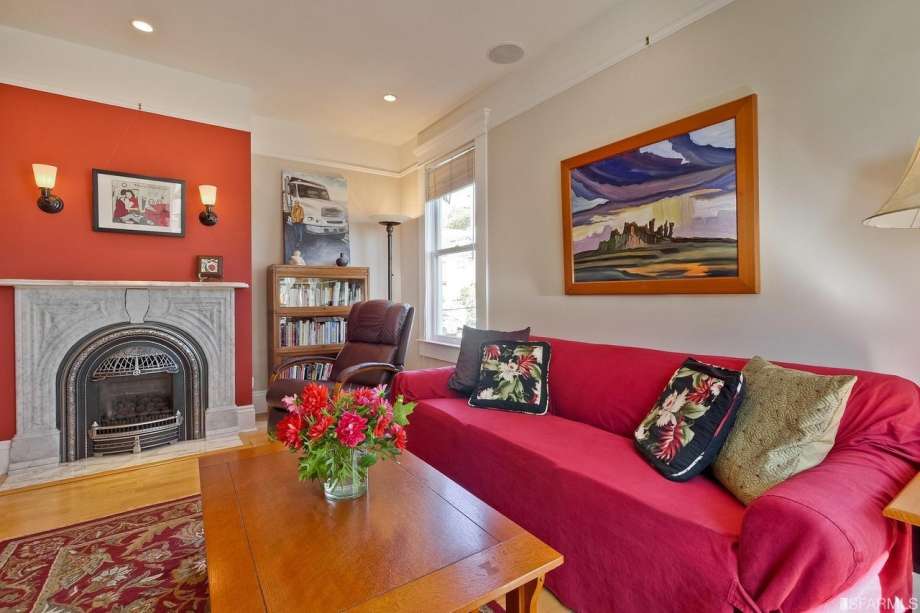
A sweet property at 386 Richland Ave. feels like something out of “Tales of the City” author Armistead Maupin’s San Francisco

This one-bedroom, one-bathroom condo (with a hot tub and parking) is listed for $799,000.

The unit

The condo itself is 850 square feet, residing in a vintage Bernal Heights multi-unit circa 1900. The MLS listing on Redfin shows the property type classified as “Modern/high tech,” but you’ll see there’s more retro than new-fangled in the gallery above.


On Tuesday night, the San Jose City Council approved demolishing a Greyhound bus station in downtown to make way for high-rise condos. The approval comes with controversy as city union workers claim the developer is planning to hire outside help to c


Media: Brandpoint


Inside, the living room features a fireplace and built-ins. The kitchen, updated certainly at some point, has lots of counter space and a sunny dining nook.

The bedrooms feel spacious, all natural light and gleaming hardwood floors, leading to a bright black and white full bath.

The extras

Outside, we find the real Maupin magic: There is an actual garage with room for storing stuff and one-car parking dedicated to this unit.

There’s also a shared yard and hot tub for relaxing and/or mingling with friends and neighbors. The building is close to two parks for more of the same.

In Maupin’s day this unit would have cost a lot less; today 386 Richland Ave., unit B asks $799,000– and comparable recent sales put the actual market value over $830,000.

But those prices are part of today’s tales of the city.

Anna Marie Erwert writes from both the renter and new buyer perspective, having (finally) achieved both statuses. She focuses on national real estate trends, specializing in the San Francisco Bay Area and Pacific Northwest. Follow Anna on Twitter: @AnnaMarieErwert

Article source: https://www.sfgate.com/realestate/article/San-Francisco-real-estate-Bernal-condo-hot-tub-12560388.php

Posted in SF Bay Area News | Tagged | Leave a comment

Romantic Berkeley cabin that’s 640-square-feet draws more than 200 at first open house


  • 08111 920x920 Romantic Berkeley cabin thats 640 square feet draws more than 200 at first open house

Caption

Close

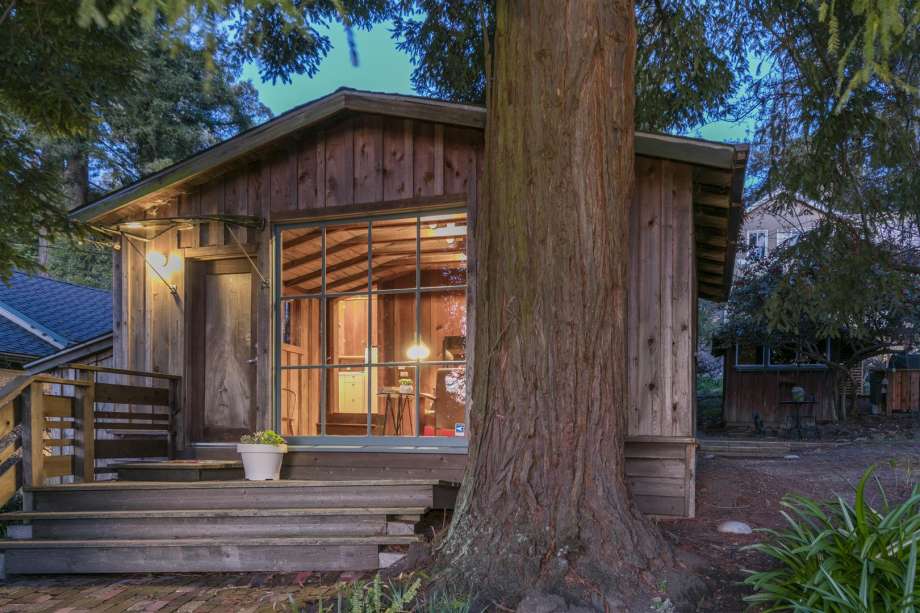
A cozy cabin in the woods of the Berkeley Hills is on the market for $479,000.

A cozy cabin in the woods of the Berkeley Hills is on the market for $479,000.

Photo: Christian Kluggman


A cozy cabin in the woods of the Berkeley Hills is on the market for $479,000.

A cozy cabin in the woods of the Berkeley Hills is on the market for $479,000.

Photo: Christian Kluggman


A cozy cabin in the woods of the Berkeley Hills is on the market for $479,000.

A cozy cabin in the woods of the Berkeley Hills is on the market for $479,000.

Photo: Christian Kluggman


A cozy cabin in the woods of the Berkeley Hills is on the market for $479,000.

A cozy cabin in the woods of the Berkeley Hills is on the market for $479,000.

Photo: Christian Kluggman


A cozy cabin in the woods of the Berkeley Hills is on the market for $479,000.

A cozy cabin in the woods of the Berkeley Hills is on the market for $479,000.

Photo: Christian Kluggman


A cozy cabin in the woods of the Berkeley Hills is on the market for $479,000.

A cozy cabin in the woods of the Berkeley Hills is on the market for $479,000.

Photo: Christian Kluggman


When real estate agent Josie George of Ratoosh Group arrived to show a rustic cabin in the Berkeley Hills for an open house on Sunday afternoon, people were already gathered outside.

“I went inside to turn on the lights and welcome people in, and then when I stepped back outside, more and more people were showing up,” George says.

For two straight hours, Ratoosh answered questions from eager prospective buyers. At first they formed a line behind her, waiting for a turn, but eventually George just stood on the deck and addressed the group as if she were giving a speech.

George says more than 200 people came to look at the 640-square-foot cottage at 2794 Shasta Rd. listed for $479,000 —and this was on the same day as the Super Bowl.

“I’ve never been at an open house that’s so busy,” she says.

Forty-two disclosure packets have been given out since Feb. 4, and after another Sunday open house on Feb. 11, offers will be accepted on Wednesday.

The video below is a handout from the real estate agent.


A cozy cabin in the woods of the Berkeley Hills is on the market for $479,000 (Handout video from real estate agent).


Media: Alex Adame


In the San Francisco Bay Area where real estate has boomed for nearly 10 years, stories of mobbed open houses aren’t unusual. Well-priced properties with curb appeal or potential receive dozens of offers and go for hundreds of thousands of dollars over asking price.

What’s more, the University town of Berkeley with its quirky charms, tree-lined streets and vibrant cultural and dining scene draws hungry homebuyers. The median sales price in September 2012 was $648,00 and nearly six years later that figure has nearly doubled to $1.225 million, according to Trulia. Seven months ago, two-bedroom bungalow with a pretty garden was listed for $725,000 and sold for 53 percent over asking at $1.111 million.

But 2794 Shasta Rd. might be a little different from the typical listing that causes a frenzy as it’s the size of a master suite in a typical new suburban home and it’s simple cabin design has never been updated.

George thinks it’s the original charms—the old-growth Douglas fir floors, interior walls paneled in Redwood, vaulted ceilings and a claw foot tub—that make the home alluring.

“Berkeley is full of wonderful homes, but this is different than anything that has been on the market in a long time. So many things get fixed up. It’s the rustic cabin feel that makes it special.”

David Ratoosh, founder of the Ratoosh Group, says the two cabins were originally built in 1921 and part of a pear farm and workers who picked the fruit stayed in them, but SFGATE was not able to confirm this information.


Embedded in a grove of redwoods in the hills yet only 10 minutes from the Gourmet Ghetto, the brown-shingled cabin also provides a unique location offering the best of both worlds.

“You feel like you’re in Tahoe or Yosemite,” says Ratoosh.

The property is being sold as a stand-alone condo that shares a lot with a neighboring cottage; both are in private settings and you don’t see your neighbors from inside either cottage, as reported previously on SFGATE.

Interested buyers from across the country have been calling to ask about the property. Devin Ratoosh, who is also a co-listing agent, says he has received calls from people in New York, Florida and Louisiana.

“They’re saying this is the house they’ve been looking for their entire life,” Devin says. “It’s a very romantic place. It’s up in the hills. The setting is perfect. You have the trees. You’re away from the city and you’re also right in the woods. And people love Berkeley.”

Article source: https://www.sfgate.com/realestate/article/Berkeley-real-estate-2794-Shasta-Rd-cabin-12571801.php

Posted in SF Bay Area News | Tagged | Leave a comment