Tax questions answered, Opportunity Zone fund rush begins

The rush to create Opportunity Zone funds, one of the biggest federal-tax-saving opportunities in decades, is on.

The zones were created in December 2017 in the Tax Cuts and Jobs Act. The law gave investors two separate but related federal tax breaks when they reinvest the capital gain from one investment into a fund that invests in property or businesses in designated low-income census tracts called Opportunity Zones.

It’s designed to spur investment in neglected areas, but many of the zones are in neighborhoods ripe for development, including parts of San Francisco, Oakland, Berkeley and San Jose. There are 8,700 zones nationwide, equal to 12% of all census tracts. California has 879 of them, spread across every county except Mono.

Opportunity Zones, or O-zones for short, got off to a slow start because the law left many unanswered questions. But interest exploded in mid-April, after the IRS released a second set of proposed rules that answered many of them, in mostly favorable ways for developers.

“Congress in the past has offered incentives to invest in geographic areas. This is by far the most generous incentive they have come up with. The tax upside is incredible,” said Dustin Stamper, a managing director with accounting firm Grant Thornton. But the investment “still has to make economic sense.”

Patrick Kennedy, owner of Panoramic Interests, plans to raise an $85 million fund to help finance construction of the first phase of a giant mixed-use complex with more than 1,000 apartments next to the West Oakland BART Station.

His firm purchased the land in 2016, before O-zones were a thing. The new tax breaks will let him raise capital on a more favorable basis. “It was like buying a piece of real estate that could have an oil deposit underneath it we knew nothing about,” Kennedy said.

He’s been approached by large, out-of-state investors who say, “We want to invest in your project in West Oakland. And by the way, where is West Oakland?” he said. “This is one way to induce the haves to invest in the neighborhoods of the have-nots.”

 Tax questions answered, Opportunity Zone fund rush begins

Critics say the tax break is unlikely to help people living in the areas that need it the most. “Because of the way it’s structured, the best places for developers to put their money is in neighborhoods that are already gentrifying,” said Howard Gleckman, a senior fellow with the Tax Policy Center think tank. “Building a Hilton Hotel in the middle of a dying rural city just doesn’t make sense, even with the tax subsidy.”

To get any tax break, investors must first own an asset — such as stocks, real estate, artwork or a business — in which they have a capital gain. They must sell that asset and within 180 days reinvest it into a qualified Opportunity Zone fund.

They can defer paying federal tax on the reinvested profit until Dec. 31, 2026, or whenever they sell the O-zone investment, whichever comes first. At that point, they must pay tax on the original investment, but 10% or 15% of their gain will be exempt from federal tax if they have held the O-zone for at least five or seven years, respectively.

The second and bigger tax break comes when they exit the O-zone fund. If they’ve held it at least 10 years, the entire profit is exempt from federal tax. “It’s the big enchilada at the end,” Kennedy said.

California has not conformed to the federal law, so profits on both investments are taxed as usual by the state.

To get the 15% discount on the first investment, investors must reinvest the profit into an O-zone fund by the end of this year. That’s spurred a bit of a rush, even though the IRS still has not published final regulations.

The fund itself must meet complicated rules and deadlines for investing the money. “These rules are nuts, they’re crazy,” said Michael D’Addio, a principal with the accounting firm Marcum.

A big one: If the fund buys property with an existing structure, it must “substantially improve” it within a certain time. That generally means it must spend at least what it paid for the property, minus the land value, on renovation or new construction. It can’t just buy a rental property in a zone and lease it out without making major improvements.

If the fund buys empty land, “there is no requirement to improve it,” D’Addio said. However, it must be used in a trade or business. It can’t be held purely for investment, but it’s unclear how much development is required.

A fund could also start or expand a business in an Opportunity Zone, even if it rents space there, but it also has to contend with crazy rules. Venture capitalists are setting up incubators in Opportunity Zones in places like Austin, Texas, said Andy Hart, CEO of wealth management firm Delegate Advisors in San Francisco.

Most of the funds being raised today are for real estate investment. They are generally private placements, although some are open to the public and more may be coming. To invest in a private fund, you usually need to be an accredited investor, meaning you earn at least $200,000 a year ($300,000 if married) or have more than $1 million in net worth excluding your home.

The funds typically require minimum investments in the six or even seven figures. “Our minimum is $250,000, but our average investment size is closer to $750,000 or $800,000,” said Erik Hayden, president of Urban Catalyst.

His firm is raising a $250 million fund to buy properties in downtown San Jose’s Opportunity Zone. It has already purchased one in the Fountain Alley area for $6.9 million that will be redeveloped for office and retail.

The fund’s investors range from a venture capitalist to a mother and daughter who inherited a condo in San Diego and sold it because they didn’t want to rent it out, Hayden said.

Kennedy said the Bay Area could miss out on some Opportunity Zone investments because of its notoriously long entitlement process. His West Oakland project goes before the city Planning Commission next month. Once it’s approved, he plans to raise $85 million in equity capital and borrow $100 million to build the first phase, with 311 apartments and retail space.

Do-it-yourself investors can form their own funds, but because of the complexity, “if you are just a person with a capital gain and no experience (developing real estate), that’s a heavy lift,” Stamper said.

That didn’t discourage John Sun, who runs hedge fund Aperte Capital Partners in San Francisco. He formed his own fund to buy a small property in an Opportunity Zone just north of Sonoma. He paid about $1.1 million for two parcels that include a brake shop, tuxedo-rental store and a vacant lot, on which he plans to build a two- to four-unit residential property.

Sun has a second home nearby and knows that developers have been buying property there. Ten days after he closed on the property, one offered him 20% more than he paid.

Hart said he gets at least one email a day from companies pitching these funds, but his clients “aren’t pounding the table” to invest.

One problem is that no one has a track record running O-zone funds. Before investing, Hart said, he’d make sure the promoter has “deep experience” developing real estate or running successful incubators. And he’d scrutinize the fees, which can be steep.

Like other private-equity funds, most O-zone funds are charging 2% of assets per year to manage the fund, plus 20% of profits, sometimes over a certain hurdle rate such as 7 or 8% a year. Some levy more fees for things like property acquisition, financing, management and liquidation. “Make sure you do your math: How many dollars are you going to get paid after they’ve gotten paid six different ways,” he said.

If everything goes perfectly, Hart said, the tax break could increase your return by 3% a year. But that’s a big if.

“The investment has to pencil on its own,” said Jeff Diener, a partner with law firm DLA Piper. “If you don’t have a fundamentally sound investment to begin with, I would not rely on this tax treatment to get you over the tipping point.”

Kathleen Pender is a San Francisco Chronicle columnist. Email: kpender@sfchronicle.com Twitter: @kathpender

Article source: https://www.sfchronicle.com/business/networth/article/Tax-questions-answered-Opportunity-Zone-fund-13992079.php
Posted in SF Bay Area News | Tagged | Leave a comment

Designing Bay Area’s most ambitious properties


  • 99746 920x920 Designing Bay Area’s most ambitious properties

    Gregory Malin

    Gregory Malin


    Photo: Gregory Malin

  •  Designing Bay Area’s most ambitious properties

Caption

Close

Gregory Malin

Gregory Malin


Photo: Gregory Malin


Long before he founded Troon Pacific, a high-end real estate development firm producing some the Bay Area’s most ambitious, luxurious and eco-conscious properties, Gregory Malin managed shopping centers in Southern California.

After acquiring some shopping centers in the South Bay peninsula, Malin headed north and made his mark in San Francisco, developing some of the city’s most refined residences over the last quarter-century.


The father of twin 17-year-old boys, Malin has lived in San Francisco since 1989.

“Now I feel like a local,” the UCLA graduate said.

Malin’s move came several months before the Loma Prieta earthquake of Oct. 17, 1989, but living through that disaster forever changed the way he looked at developing properties, whether they be luxurious single-family residences or mixed-use developments.


“We think a lot about seismic safety when we’re designing,” Malin said. “We also look for ways to supplement the design. A home we built in Russian Hill has a backup generator and water cistern on-site.”

Malin is referring to 950 Lombard St., a 9,500-square-foot residence boasting the city’s largest residential rainwater cistern. The cistern has a capacity of 12,500 gallons and can deliver up to 50,000 gallons of water per year to the home’s toilets and irrigation system. In an emergency, the filtered water within the cistern can be tapped as a source of drinking water.

In this interview with The San Francisco Chronicle, Malin talks about what inspires him, what design practices irk him and the connection between managing shopping centers and developing high-end real estate.

Q: What are your favorite types of architecture, what are your influences, and what do you draw inspiration from?

A: There isn’t a specific type of architecture that I seek to buy or change. I look to find elements of architecture that we can highlight — a modern interpretation on tradition. I enjoy finding ways to connect interior spaces to the outdoors while bathing a house in natural light. I love playing with natural light, and I’m always looking for a way to surprise someone for that “wow” moment. Sometimes architecture is blank canvas; other times it has incredible period detailing that we can highlight. Some homes are a hodgepodge of different types of architecture, which allows you the opportunity to elevate or modernize that appearance.


Q: Is there anything in common between managing shopping centers and developing high-end real estate?

A: The common connection is problem solving, and having vision and implementing it. I’ve seen several cycles in real estate and was a receiver for First Republic Bank at one time. That let me see how people really make mistakes between vision, implementation and management of capital. It helped me learn how to properly invest.

Q: What’s something you’re committed to as a developer?

A: One thing we don’t do is create false history for a home. We won’t add finishes or details simply for the sake of adding them. I’m committed to quality, efficiency, beauty and going that extra mile. For example, we’ll wrap plumbing pipes with clay for acoustic reasons. No one can see it because it’s hidden behind the walls and you’d never know it was there, but it’s little touches like that which separate us from other developers. When I first started, developers had a poor name because they cut every corner. I thought, “What if we did the opposite? What if a developer knew where to invest?”

We invest in sustainability and wellness. When we did our first sustainable project, most people hadn’t even heard about LEED certification, but our aim is to not be wasteful. We want the buyer to not feel bad about their purchase. We really learned how to make homes more healthful through the process of sustainability. My late wife would say the greatest luxury in life is health, and I want to be sure that what we do is as healthful as possible. That’s why we mitigate the use of known carcinogens, have air changers and water filters in our homes.

Q: What projects/accomplishments are you most proud of?

A: One of them is Residence 950 in Russian Hill. I’m most proud of how the garden connects to the house and kitchen, and how usable it is between cottage and main house. There’s a surprise element to the home when combined with its art gallery/sport court below. I’ve never built a house that entertains better.

Residence 2646 on the border of Cow Hollow and Pacific Heights has the best family floor plan I’ve done. There are four bedrooms on the same level, and I enjoy the home’s connection to the street and how the public rooms play together.

We incorporated natural light with a skylight over the stairs and bathrooms. The skylight above the stairs can open, allowing hot air to rise out of the home. At Residence 950, we placed a skylight above the home’s glass elevator. That touch brings sunlight through all three levels.

Q: What do you do to unwind?

A: My favorite moments are reflective moments, like when we finish a project. At Residence 950, it was so soothing to sit in that garden and have a glass of my favorite drink and a cigar and reflect on process and accomplishment.

Q: What’s a piece of technology you can’t imagine doing business without?

A: I can’t imagine living in a home that hasn’t taken advantage of the health and wellness aspect. That means air filtration, so there’s always fresh air in the home, using as much natural light as possible and implementing water filtration. We try to mitigate the use of known carcinogens in the materials, paints, sealants and insulation used in homes, and find ways to work with companies and materials that are associated with health, wellness and sustainability in real estate.


Gregory Malin

Founder, CEO of Troon Pacific.

Address: 1 Post St., Financial District, San Francisco.

Website: www.troonpacific.com. Phone: 415-504-8100.

Malin has more than 25 years experience in acquisitions, oversight and development planning in the real estate industry. An investor in both residential and commercial real estate, Malin emphasizes designs that are energy efficient and sustainable. In his spare time, he supports organizations like the San Francisco Opera Guild and the San Francisco Museum of Modern Art. Malin is a member of the San Francisco Zoological Society board and serves on the leadership council for the San Francisco Education Fund and the Residence Hall Committee for the San Francisco Music Conservatory. He also lends support to international organizations focused on women’s health and environmental research, like the Kew and Voss foundations.


Article source: https://www.sfgate.com/news/article/Designing-Bay-Area-s-most-ambitious-properties-13894424.php

Posted in SF Bay Area News | Tagged | Leave a comment

Designing Bay Area’s most ambitious properties


  • 5b58a 920x920 Designing Bay Area’s most ambitious properties

    Gregory Malin

    Gregory Malin


    Photo: Gregory Malin

  •  Designing Bay Area’s most ambitious properties

Caption

Close

Gregory Malin

Gregory Malin


Photo: Gregory Malin


Long before he founded Troon Pacific, a high-end real estate development firm producing some the Bay Area’s most ambitious, luxurious and eco-conscious properties, Gregory Malin managed shopping centers in Southern California.

After acquiring some shopping centers in the South Bay peninsula, Malin headed north and made his mark in San Francisco, developing some of the city’s most refined residences over the last quarter-century.


The father of twin 17-year-old boys, Malin has lived in San Francisco since 1989.

“Now I feel like a local,” the UCLA graduate said.

Malin’s move came several months before the Loma Prieta earthquake of Oct. 17, 1989, but living through that disaster forever changed the way he looked at developing properties, whether they be luxurious single-family residences or mixed-use developments.


“We think a lot about seismic safety when we’re designing,” Malin said. “We also look for ways to supplement the design. A home we built in Russian Hill has a backup generator and water cistern on-site.”

Malin is referring to 950 Lombard St., a 9,500-square-foot residence boasting the city’s largest residential rainwater cistern. The cistern has a capacity of 12,500 gallons and can deliver up to 50,000 gallons of water per year to the home’s toilets and irrigation system. In an emergency, the filtered water within the cistern can be tapped as a source of drinking water.

In this interview with The San Francisco Chronicle, Malin talks about what inspires him, what design practices irk him and the connection between managing shopping centers and developing high-end real estate.

Q: What are your favorite types of architecture, what are your influences, and what do you draw inspiration from?

A: There isn’t a specific type of architecture that I seek to buy or change. I look to find elements of architecture that we can highlight — a modern interpretation on tradition. I enjoy finding ways to connect interior spaces to the outdoors while bathing a house in natural light. I love playing with natural light, and I’m always looking for a way to surprise someone for that “wow” moment. Sometimes architecture is blank canvas; other times it has incredible period detailing that we can highlight. Some homes are a hodgepodge of different types of architecture, which allows you the opportunity to elevate or modernize that appearance.


Q: Is there anything in common between managing shopping centers and developing high-end real estate?

A: The common connection is problem solving, and having vision and implementing it. I’ve seen several cycles in real estate and was a receiver for First Republic Bank at one time. That let me see how people really make mistakes between vision, implementation and management of capital. It helped me learn how to properly invest.

Q: What’s something you’re committed to as a developer?

A: One thing we don’t do is create false history for a home. We won’t add finishes or details simply for the sake of adding them. I’m committed to quality, efficiency, beauty and going that extra mile. For example, we’ll wrap plumbing pipes with clay for acoustic reasons. No one can see it because it’s hidden behind the walls and you’d never know it was there, but it’s little touches like that which separate us from other developers. When I first started, developers had a poor name because they cut every corner. I thought, “What if we did the opposite? What if a developer knew where to invest?”

We invest in sustainability and wellness. When we did our first sustainable project, most people hadn’t even heard about LEED certification, but our aim is to not be wasteful. We want the buyer to not feel bad about their purchase. We really learned how to make homes more healthful through the process of sustainability. My late wife would say the greatest luxury in life is health, and I want to be sure that what we do is as healthful as possible. That’s why we mitigate the use of known carcinogens, have air changers and water filters in our homes.

Q: What projects/accomplishments are you most proud of?

A: One of them is Residence 950 in Russian Hill. I’m most proud of how the garden connects to the house and kitchen, and how usable it is between cottage and main house. There’s a surprise element to the home when combined with its art gallery/sport court below. I’ve never built a house that entertains better.

Residence 2646 on the border of Cow Hollow and Pacific Heights has the best family floor plan I’ve done. There are four bedrooms on the same level, and I enjoy the home’s connection to the street and how the public rooms play together.

We incorporated natural light with a skylight over the stairs and bathrooms. The skylight above the stairs can open, allowing hot air to rise out of the home. At Residence 950, we placed a skylight above the home’s glass elevator. That touch brings sunlight through all three levels.

Q: What do you do to unwind?

A: My favorite moments are reflective moments, like when we finish a project. At Residence 950, it was so soothing to sit in that garden and have a glass of my favorite drink and a cigar and reflect on process and accomplishment.

Q: What’s a piece of technology you can’t imagine doing business without?

A: I can’t imagine living in a home that hasn’t taken advantage of the health and wellness aspect. That means air filtration, so there’s always fresh air in the home, using as much natural light as possible and implementing water filtration. We try to mitigate the use of known carcinogens in the materials, paints, sealants and insulation used in homes, and find ways to work with companies and materials that are associated with health, wellness and sustainability in real estate.


Gregory Malin

Founder, CEO of Troon Pacific.

Address: 1 Post St., Financial District, San Francisco.

Website: www.troonpacific.com. Phone: 415-504-8100.

Malin has more than 25 years experience in acquisitions, oversight and development planning in the real estate industry. An investor in both residential and commercial real estate, Malin emphasizes designs that are energy efficient and sustainable. In his spare time, he supports organizations like the San Francisco Opera Guild and the San Francisco Museum of Modern Art. Malin is a member of the San Francisco Zoological Society board and serves on the leadership council for the San Francisco Education Fund and the Residence Hall Committee for the San Francisco Music Conservatory. He also lends support to international organizations focused on women’s health and environmental research, like the Kew and Voss foundations.


Article source: https://www.sfgate.com/news/article/Designing-Bay-Area-s-most-ambitious-properties-13894424.php

Posted in SF Bay Area News | Tagged | Leave a comment

Hang-glider factory? Bug depository? School? Bay Area property listed for $3.1M has had many lives


  • 57360 920x920 Hang glider factory? Bug depository? School? Bay Area property listed for $3.1M has had many lives

    Much of the home is currently used as a dance school.

    Much of the home is currently used as a dance school.


    Photo: Coldwell Banker

  •  Hang glider factory? Bug depository? School? Bay Area property listed for $3.1M has had many lives

Caption

Close

Much of the home is currently used as a dance school.

Much of the home is currently used as a dance school.


Photo: Coldwell Banker


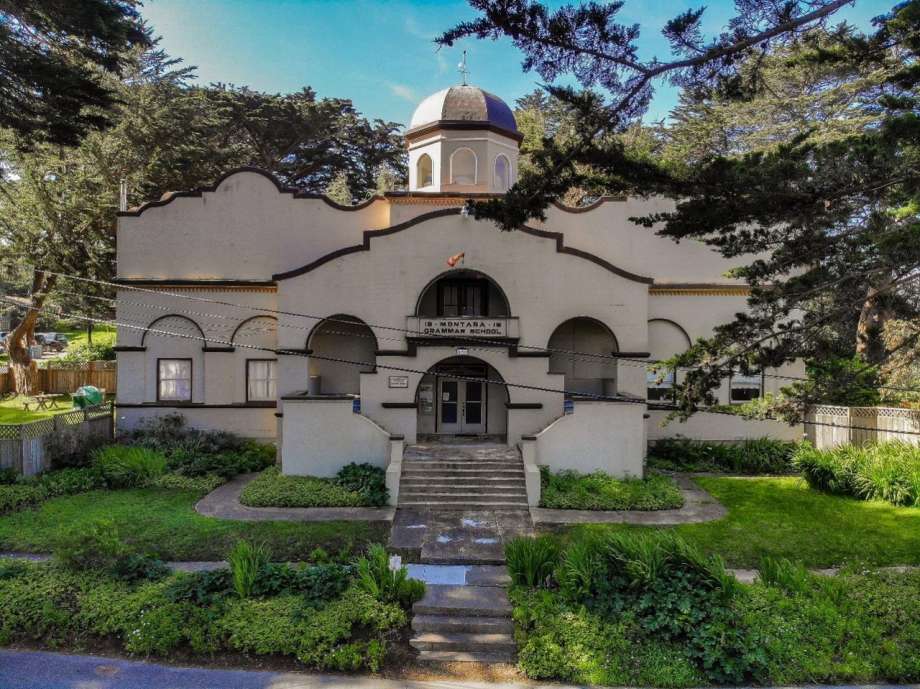
Built 114 years ago as a grammar school, 496 Sixth St. in Montara has led a storied existence. It’s been a rare insect repository, a hang-glider factory, a home for a family of nine, a wedding venue and, most recently, a dance school. The nearly 10,000-square-foot building on an enormous lot 45 minutes south of San Francisco is now on the market for the first time since 1995 and asking $3.1 million.

“There is something really special about coming across a property with such rich history,” said Sue Mahlstedt, one of the listing agents on the property. “The residence itself offers ample space to live, work and entertain, but the 40,000 square foot lot—comprised of eight lots at 5,000 square feet each—allows for further development.”


The property has been in some stage of reinvention almost since day one. Only a few years after it opened as the Montara Grammar School, a fire caused extensive damage to the property and it had to be reconstructed.


The school was housed in the newly rebuilt building until the early 1950s, when it was sold to amateur entomologist Owen Bryant. He was attracted to the home because it had room for his massive collection of bugs and was close to the Academy of Sciences in Golden Gate Park, where he went regularly to discuss all things insect.

ALSO: San Francisco spec house with 30-foot-tall living wall asks $4.2 million

An associate from the academy came to visit Bryant and his wife, Lucy, in the old school house and he recalled that the couple simply pushed their king-size bed up against the blackboard in one of the classrooms to turn it into their bedroom.

Most of the rest of home was dedicated to housing Bryant’s nearly 200,000 bugs. (He had a special affection for beetles and donated upwards of 40,000 to the academy.) Bryant died in 1958; his wife preceded him a year earlier. Upon his death he donated the unique home and the entirety of his bug collection to the academy.

The scientific institution kept the creepy-crawlies but sold the house to the Fuller family, a couple with seven children, who made the property more of a true home than the Bryants. They added touches like a brick fireplace, plus new floors and windows, and converted several classrooms on the second floor into bedrooms, a living room and a second kitchen. (There is a catering kitchen on the ground floor as well.) When their many children were grown the family later rented out the property to a hang-glider company, and also offered it as a special event space for weddings and community events.


Much of the home still maintained its school-like qualities, including a large auditorium with an elevated stage, when the Fullers decided to sell in 1995. That made the property appealing to its current owner, Susan Hayward, who used the home as a dance school and residence ever since. In fact, the dance school is still advertising a summer camp there for this year.

The fact that camp is still on may be an acknowledgment that it will likely take a little bit of time, and a very special buyer, to figure out what 496 Sixth St. will become next.

Emily Landes is a writer and editor who is obsessed with all things real estate.


Article source: https://www.sfgate.com/realestate/article/496-Sixth-St-Montara-real-estate-for-sale-school-13966885.php

Posted in SF Bay Area News | Tagged | Leave a comment

New Bay Area startup promises a house without the down payment blues

A new startup launched in the Bay Area on Tuesday says it can help buyers survive the region’s cutthroat housing market by doing away with one of its biggest hurdles — a massive down payment.

San Francisco-based ZeroDown allows clients to live in the home they want to buy while paying into a fund that ultimately will allow them to purchase it. It’s a unique idea designed to provide a leg up to buyers who are reasonably well-off but still struggling to afford the region’s pricey homes. But it’s an untested one that gives some experts in the industry pause.

Co-founder Abhijeet Dwivedi says he’s giving families access to the dream of home ownership.

“There are people who were in tears when they walked into their home,” he said of the clients he’s worked with during the company’s beta testing phase. “It was a very emotional experience for all of us here.”

To use ZeroDown, a qualifying client pays the company a $10,000 fee and chooses a house for sale. Then ZeroDown buys the home using funds borrowed from bank lenders. The client can move in right away and immediately begins making a monthly payment to ZeroDown in lieu of a mortgage. As the client makes those monthly payments, he or she builds up credit toward an eventual down payment.

After two to five years, the client can cash out those credits — which after five years will typically equal 9 percent of the home’s value, the company says. ZeroDown will add another 5 percent from the company’s own cash reserves for a total of 14 percent. That means the client only has to come up with 6 percent of the home’s value on his or her own to reach the 20 percent normally recommended for a down payment. At that point, the client secures a traditional mortgage and buys the home from ZeroDown.

If a client ultimately decides not to buy the house, ZeroDown will refund up to 9 percent of the home’s value. In addition to the $10,000 fees it charges clients, ZeroDown also plans to make money through its homeowner concierge service. The concierge connects homeowners with services they may need — such as plumbers, for example — and ZeroDown takes a commission from the service provider.

The company wouldn’t disclose how many customers it has served so far. The company got its start through the prestigious Mountain View-based Y Combinator accelerator and has since received $30 million in funding from Goodwater Capital and others.

San Jose-based realtor Mike Gaines worried ZeroDown’s novel business model could have unforeseen ramifications for home buyers. It’s particularly concerning in the Bay Area, he said, where the market’s exorbitant prices raise the stakes on every decision. Until the house is actually in the client’s name, he or she is paying enormous amounts of rent to ZeroDown, Gaines said.

“I’m not sure I’d be comfortable paying that type of money, in a sense, for just rent,” he said.

It’s also a troubling time to launch such a product, as the market is trending down, Gaines said. Median year-over-year sale prices dropped in March for the first time in seven years and continue to lag behind last year. Now experts are talking about a “correction” to the region’s over-heated market. Gaines worries clients who make a deal now with ZeroDown and then see the value of their intended home drop might wonder after five years if it was a good deal after all.

“It’s the untested parts of this model that are my concerns for the consumer,” Gaines said.

The price of a ZeroDown home is set at the beginning of the transaction and assumes an up-market — the price the client pays will be the current price of the home plus 5.4 percent appreciation per year. If the home loses value, the client doesn’t get a discount. But ZeroDown will let the client postpone the purchase.

ZeroDown isn’t the first company to attempt to help tenants turn their rent payments into an investment toward their future home purchase. Property management and rental listing platform Onerent launched Poplar Street last year, which promised to add 20 percent of users’ monthly rental payments to a savings account for an eventual home purchase.

Greg Smithies, 35, used ZeroDown to buy a home in April, as one of the startup’s early beta users. The three-bedroom home in Oakland’s Lake Merritt neighborhood sold for $1.25 million, and Smithies and his wife now pay the startup $7,000 a month — a sum he says is a bit more than the payment would have been for a traditional mortgage.

“It’s significantly life-changing,” Smithies said. “It allows us to get off of the rental treadmill.”

And it was fast. About 10 days after reaching out to the company, Smithies had a key to his new home.

Smithies and his wife previously rented a two-bedroom house in the Berkeley Hills for $4,500 a month, but their lease was expiring and the landlord wanted an extra $1,000 a month.

Smithies and his wife make decent money at good jobs — he works in venture capital at BMW and she does branding and strategy consulting — but they didn’t have $250,000 for a down payment to buy a $1.25 million house. So they reached out to ZeroDown shortly after the startup came out of stealth mode. Smithies plans to buy the house back from ZeroDown in two years, at which point he’ll need to come up with about $50,000 on his own to make the down payment.

Since moving into his new home, Smithies has recommended ZeroDown to several friends, many of whom have started working with the company.

“There’s some sort of massive pent up demand there that they’ve tapped into,” he said.


Article source: https://www.mercurynews.com/2019/06/11/new-bay-area-startup-promises-a-house-without-the-down-payment-blues/

Posted in SF Bay Area News | Tagged | Leave a comment