Designer Profile: Barney Diamos, Dream Team Real Estate Group

Raised in the Mission District and the son of a restaurateur, Barney Diamos figured his career would be in the food service industry, not real estate. HIs father, Frank Diamos, co-owned Minichiello’s Italian restaurant on 22nd and Valencia streets. Barney Diamos wound up opening a pair of restaurants of his own, before switching gears and becoming a real estate broker.

He started in San Francisco and the Peninsula and built a respectable portfolio from San Francisco to Silicon Valley between 1999 and the Great Recession. But Barney Diamos recognized the root of the problem and pivoted, creating Loan Negotiator Group, a mortgage restructuring company that coordinated with banks to fix homeowners defaulted adjustable-rate mortgages so they could stay in their homes.

“It wasn’t a real estate crash, it was a mortgage crash,” he said.

Barney Diamos estimates LNG saved roughly 1,700 homes from foreclosure during their years in business.

For the last two years he’s headed up Dream Team Development Group, a collection of family members and industry experts who seek out investment opportunities and transform old multi-family residences into condos and tenancy-in-common buildings.

Dream Team

Real Estate Group

A group of experienced real estate developers building upscale residences throughout the Bay Area. The group provides project evaluation and construction management, as well as joint ventures with investors. Barney Diamos serves as president of the Dream Team Real Estate Group, while his brother Joe Diamos plays the roles of vice president and controller. Jeff Sternberg is the team’s project manager and provides a wealth of experience as a general contractor and product supplier. The group’s conservative approach ensures each project is completed to the highest standards and the team’s recent projects include a home in Silicon Valley, as well as residences in San Francisco’s Marina district and Parkside neighborhood.

Contact: 50 Woodside Plaza, Suite 624, Redwood City, 650-722-7880, dbgroup00@

icloud.com, www.dreamteam

regroup.com.

“A few years ago we started seeing a market spike and we were constantly hearing about how expensive housing is,” he said. “So we’ve been taking small apartment buildings and converting to them to tenancy-in-commons or condos because it creates an affordable opportunity for home ownership.”

In this interview with The Chronicle, Barney Diamos talks about his upbringing in the local restaurant industry, his goal to bring more affordable housing and homeownership to the Bay Area and his passion for making sure World War II veterans are property recognized.

Q: What’s your favorite type of architecture?

A: Being a native of the Mission District, I’m always dying to restore Victorians, but they can be a challenge because they’re so old.

One of the common pitfalls of Victorians are their masonry foundation, basically the foundation is made of bricks. A lot of them don’t have cement perimeter foundations, so it’s something to be wary of when we’re looking at them. After all, bricks can crumble during an earthquake.

Beyond that, you’ve got other issues like knob and tube wiring, cast-iron plumbing and wood-rot. That said, they’re a challenge, but I love them. I adore the period details. It’s really fun to enhance a facade with with cornices, rosettes and gold leaf painting.

Q: What is your design philosophy?

A: We take old buildings and modernize the floor plans. When we size up a project, we want the path of least resistance. It can be easy to get hung up on project for years and years. We’re looking for the biggest bang for the buck, and that’s achieved by providing the best value to a new homeowner or tenant.

We’ll redesign kitchens and bathrooms, and add modern features like Nest Thermostats. Recently we did a Viking appliance package in a Marina district home, and we’ll add finishes like counters with waterfall edges. We’re always trying to stay on the cutting edge.

Q: What’s your favorite neighborhood to work in?

A: I love the Marina district. I love the people and vibe. And it has great architecture and weather. Plus, you’re near the bay and the Golden Gate Bridge, and I love the sound of those foghorns.

Q: Do you have family? What are you hobbies?

A: I have a close family with three wonderful children who are now grown. They originally all started out helping the family business. They’re all successful in their chosen careers, and all are related to the real estate and construction industries. My eldest daughter is a project engineer for a large construction firm, while my son works as an electrician.

My youngest daughter helped me with the books when we were first starting. I’m incredibly fortunate to have been able to work closely with my family. My partner, Tracy Stevenson, is a designer and flight attendant, so we travel a lot. We enjoy admiring and learning about all the diverse architecture and new design ideas we see.

Q: Your father, Frank Diamos, was a World War II veteran who served in Okinawa. How did his experience shape your appreciation for veterans?

A: I was raised Semper Fi by an incredible Marine. I can’t express how lucky was I to be raised by my best friend and hero. He was the toughest, nicest guy, and everyone in the neighborhood knew him. Something people don’t realize is that when a lot of the soldiers from the Pacific theater came back, the parades were over and they never got their medals.

So I’ll research old World War II veterans and work to get them the service medals they are entitled to. I’ve probably done 15 or 16 now. I don’t think those guys will ever get the credit they deserve.

Q: What’s a piece of technology you can’t imagine doing business without?

A: My iPhone. I think back to what it was like in the early 2000s, when we were relying on fax machines. Now I can run the business from my iPhone. It does everything, like group texts and resending contracts — plus all the different apps.

The iScanner app allows me to scan things off my phone, so I don’t have to go to office to use a scanner or send a fax. Oh my god, has that made things so much faster and easier. I can submit investor profiles to three different investors from my phone. It’s all stored in my email history and Dropbox and Google Docs. And everything can be shared in real time.

Q: Why are you such a proponent of tenancy-in-common developments?

A: A tenancy-in-common — where residents share co-ownership of a multi-unit property — are most prevalent in two of the most expensive cities in the country: New York and San Francisco. And that’s because of the huge increase in home prices.

TICs, like condominiums, provide a more affordable option to entry-level home buyers in San Francisco. And “fractional financing” is becoming more available to purchase TICs, making it even more achievable to afford and buy them.

Article source: https://www.sfchronicle.com/realestate/article/Designer-Profile-Barney-Diamos-Dream-Team-Real-14426086.php
Posted in SF Bay Area News | Tagged | Leave a comment

Is there actually a good time to buy a house in San Francisco?


  • 30626 920x920 Is there actually a good time to buy a house in San Francisco?

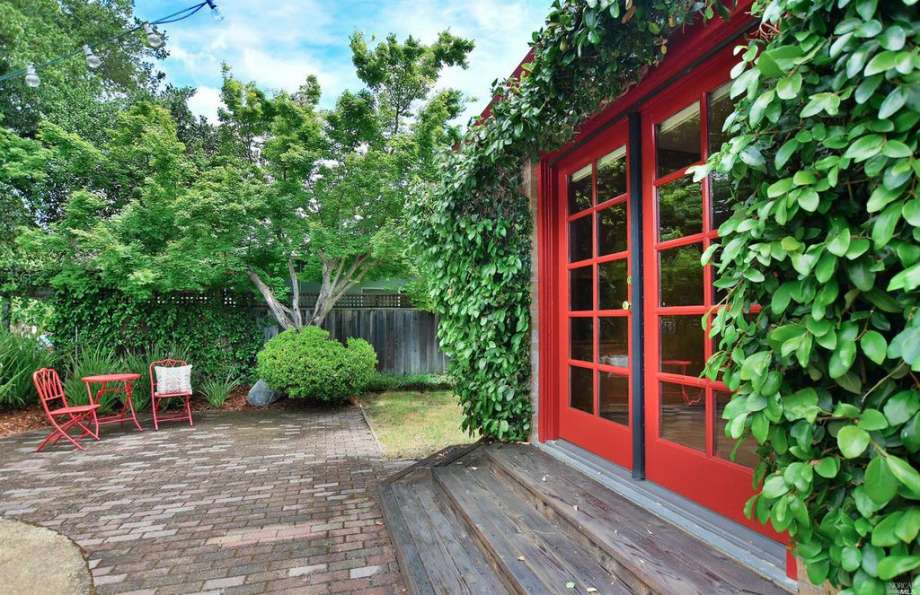
    Realtor Thomas Henthorne was among the only people looking at this home during Marin’s sleepy selling period, and he bought for less than its market value

    Realtor Thomas Henthorne was among the only people looking at this home during Marin’s sleepy selling period, and he bought for less than its market value


    Photo: Place Holder

  •  Is there actually a good time to buy a house in San Francisco?

Caption

Close

Realtor Thomas Henthorne was among the only people looking at this home during Marin’s sleepy selling period, and he bought for less than its market value

Realtor Thomas Henthorne was among the only people looking at this home during Marin’s sleepy selling period, and he bought for less than its market value


Photo: Place Holder


When is the best time to buy in the San Francisco Bay Area? The answer isn’t simple, and not only because nothing about buying a home is simple, especially in one of the most competitive real estate markets in the world.

San Francisco

In San Francisco, September brings the flood: It is the month with the most new listings of the entire year. So is this a good time to buy, with so many more choices?

Depends.

Patrick Carlisle, chief analyst for Compass Realty, has tracked the San Francisco market for years. In his opinion, there are two seasons in SF that might appeal to buyers, but for different reasons.

“The greatest number of new listings come on the market in spring and in September, so that’s when buyers have the most choice. However, those are also typically the times of highest demand, so buyer competition and overbidding are also at their peaks,” said Carlisle.


Buyers in San Francisco have maximum negotiating leverage in late summer and mid-winter holiday periods. This is the time with the least competition from other buyers as well: “Many buyers disappear for the holidays and sellers are much more open to lower offers to get their homes sold,” he said.

Carlisle also provided tables that map out the market activity he’s commenting on, included in the gallery above.

East Bay

Both Oakland and Berkeley have become strong sellers’ markets in the past eight years. That said, there are some months when being a buyer is easier.

Deidre Joyner of Red Oak Realty is a second-generation agent and among the top 1% of realtors working in the East Bay.

Joyner provided data on East Bay market activity (included in the gallery above) that indicate some months of the year experience higher bidding prices: so, in certain times of the year, homes selling for higher over asking prices.

“Homes that go into contract in January and February have a lower median price, so on a city-wide basis, you will pay less for a property if you get into contract during those months, said Joyner.

Of course, the real story is more complex than this. The lower numbers on both charts may be due to inaccurately priced properties and/or properties that are less desirable. You may pay less, but you may also get less, too.

Joyner’s overall advice: Timing isn’t everything. Consider the price for your budget, and what you can afford in terms of repairs, remodeling, and location. In other words, in the end buying smart matters as much—if not more—as trying to buy in the ever-elusive “buyer’s market.”


Marin

Marin, unlike San Francisco, is a market influenced by the school calendar. Again, this can work for or against buyers, depending on their stomach for competition versus a large pool of listings to choose from.

Thomas Henthorne is a top real estate agent with Golden Gate Sotheby’s International Realty in Greenbrae. An agent since 2010 who has lived in Marin since 1998, he covers all of Marin County as well as San Francisco.

Henthorne told SFGate that the best time for buyers to look for a home in Marin County varies based on their goals. “Parents with children in school often have the least flexibility about when they can move, and this in large part drives the spring season in Marin, which is the busiest time of the year,” said Henthorne.

In Marin, inventory is highest in the spring, especially once the sun begins making a regular appearance. Other than spring, there is also a short but similarly busy season commencing just after Labor Day and running through October. “Competition is also usually higher during these times.”

Marin’s slowest season is winter, especially the holidays. Though inventory is more scare, sellers are more motivated (otherwise why sell during the holidays?) and there are fewer buyers to compete with.

“Holidays can be a great time to look and I’m speaking from personal experience,” Henthorne said. ”I just bought an investment home on Memorial Day in Napa County — I think I was one of the only ones looking that day, and snapped up a home that had just hit the market.”

We included a photo of the home Henthorne bought in the gallery above. In all comparable analyses, it was worth more than he bought it for, with estimates ranging from $20,000 to $50,000 under market value.

The upshot

Buying a home in the Bay Area will never be easy, but depending on your goals and perseverance, there are windows of time when the market may be kinder.

Anna Marie Erwert writes from both the renter and new buyer perspective, having (finally) achieved both statuses. She focuses on national real estate trends, specializing in the San Francisco Bay Area and Pacific Northwest. Follow Anna on Twitter: @AnnaMarieErwert.

Article source: https://www.sfgate.com/realestate/article/best-time-buy-house-San-Francisco-Bay-Area-14383572.php

Posted in SF Bay Area News | Tagged | Leave a comment

Bay Area family lists beachfront Hawaii home with its own resident monk seal for $7.75M


  • 581b2 920x920 Bay Area family lists beachfront Hawaii home with its own resident monk seal for $7.75M

  •  Bay Area family lists beachfront Hawaii home with its own resident monk seal for $7.75M

Caption

Close


In the gallery above, see photos of a beachfront home on the Hawaiian Island of Kauai’s sunny South Shore listed for $7.75 million.

Jinee Tao and Charlie Baxter first got to know 5142 Hoona Rd. on Kauai’s Poipu Beach when they rented it from a friend. When that friend put the beachfront home — one of only a handful located directly on Kauai’s south shore — on the market in 2012, the Bay Area couple jumped on the chance to buy it.

“It imbues a sense of place and soulfulness from the moment you walk in,” said Tao. “The sunrises and sunsets are truly Instagram-worthy, and a local monk seal calls our beach home.”

The $4.8-million purchase is far from the only Hawaiian investment for the Tao-Baxters. The equity investors own a significant stake in the iconic island-inspired clothing line Reyn Spooner. (They also own a big piece of Napa wine supply chain company Wineshipping, among other investments.)


In fact, the clothing company’s signature reverse-printed fabrics feature prominently in the home’s 2018 interior remodel. Tao describes the revamped aesthetic as “island and Asian influences with Mid-Century Modern sensibilities.”

Ceramic flooring was replaced with large format limestone-like porcelain tiles. All windows were converted from dark wood louvers to glass louvers and fixed glass walls. The kitchen and three bathrooms in the main three-bedroom house, dubbed Hale Luana, were completely updated. There’s also a one-bedroom, one-bath pool house.

ALSO: For the price of one SF home, you could buy 12 in Philadelphia

But the Tao-Baxters left intact the major architectural elements of the home, which was designed by renowned architect Ralph Anderson in 1993. Anderson was known for revitalizing Seattle’s Pioneer Square and for embracing natural elements both inside and out.

“Hale Luana maintains the the exposed wood vaulted ceilings that typify a Ralph Anderson home, as well as prominent windows and sliding glass doors built to showcase Hale Luana’s breathtaking views and create seamless indoor-outdoor living,” said press agent Liz Foley. “One of the favorite spots in the house — there are many — is the covered dining lanai featuring stunning ocean views and extendable table for 12. Another is the second-floor patio with two beautiful, large hanging basket chairs for relaxing in the warm off shore breezes and taking in the beach sunsets.”


The Tao-Baxters have been too busy to make it out to their beach home more than a few times a year, according to Foley. (When they aren’t using it, it makes for a popular vacation rental.) As their kids have gotten older, she added, they have become more committed to year-round sports at home. At the same time, the couple’s investments have demanded more of their time.

“They see themselves spending less time in Kauai for the foreseeable future,” she said.

So the family decided to say “Aloha” to the home, putting it on the market for $7.75 million.

Emily Landes is a writer and editor who is obsessed with all things real estate.

Article source: https://www.sfgate.com/ontheblock/article/5142-Hoona-Rd-Kauai-real-estate-for-sale-14414557.php

Posted in SF Bay Area News | Tagged | Leave a comment

BART Looks To Purchase New Offices In Oakland After Years Of Renting

OAKLAND (KPIX 5) — It’s a discussion many Bay Area households have had in recent years: Is it better to rent or buy? BART, it appears, is ready to settle down.

“Financially it is going to be good for us,” explained BART Board of Directors President Bevan Dufty. “We’ve already had a plan for an escalation in cost for real estate.”

For decades, most of BART’s offices have been rented space in the Kaiser Center. Like everywhere else in Oakland, rents are rising. In BART’s case, it’s a projected rise of 60 percent.

“Being able to purchase this building for 25 years really gives us an asset, not just burning money paying rent,” said Dufty.

BART is looking to buy, and they’re not looking far. 2150 Webster is right across street and was recently renovated top to bottom.

“You know, probably an A- building, major renovation,” explains Stephen Banker, President of LCB Associates. “It would have all the new seismic life-safety amenities, so it will be a top-of-the-line building.”

Banker is a commercial real estate broker. He said BART’s $220 million dollar investment idea could be a good one in the long term.

“You know, markets can go up, markets can go down,”  said Banker. “If you own the asset, then I think it’s a smart move.”

BART would buy the building with low-interest rate bonds. The purchase would not involve the $2.5 billion set aside for those new train cars, or the $3.5 billion voters approved to rebuild system infrastructure that was neglected for so many years.

BART says this investment is actually a long-term money saver.

“If we remained as renters, it would be costing BART, and our taxpayers, $115 million to $271 million more over that 25 year period,” said Dufty.

This is something BART has been looking at for years. Staff actually started presenting options back in June. The BART Board of Directors will take up the issue later this month.

Article source: https://sanfrancisco.cbslocal.com/2019/09/06/bart-looks-to-purchase-new-offices-in-oakland-after-years-of-renting/

Posted in SF Bay Area News | Tagged | Leave a comment

BART’s rent is soaring, so it wants to buy a new Oakland headquarters

BART may move its Oakland headquarters in an effort to save millions of dollars in annual rent as it grapples with the city’s record-high office costs.

The transit agency’s current headquarters lease at the Kaiser Center complex near Lake Merritt expires in 2021, and rent would rise by more than 60%, said Sean Brooks, BART’s manager of real estate.

Instead, agency staff recommend a relocation and the $140 million purchase of 2150 Webster St., which is across the street from Kaiser Center. Interior construction and additional costs would total $87 million. BART’s board of directors will vote on the deal on Sept. 12. Around a third of BART’s 3,300 employees would be affected by an office move. (BART has a separate operational center near Lake Merritt and most employees work in BART stations and rail yards.)

The agency wants to limit costs, use space more efficiently, and stay close to a BART station as part of a move, Brooks said.

A 25-year sales tax bond would finance the deal. The agency already uses such bonds for its current operations, and a move wouldn’t raise taxes or fares for riders. The bond doesn’t require voter approval.

“It doesn’t change the use of the funds,” Brooks said. “The money being used to purchase this is not taking away from any other capital projects.”

BART has a $2.3 billion annual budget this year, but falling ridership and fare evaders are eroding revenue. In June, BART’s board approved an 18% fare increase over seven years to help offset the decline.

BART occupies 369,587 square feet, or over a third of the Kaiser Center complex, making it one of the city’s largest tenants. It signed its lease in 2004, long before real estate values surged throughout the Bay Area, and pays rent of $15 million annually, or $40 per square foot, about half of current market rates, said Brooks. If it renewed its lease, the agency would pay hundreds of thousands of dollars more in rent, according to a recent staff report.

 BART’s rent is soaring, so it wants to buy a new Oakland headquarters

Oakland office rents have doubled in the last four years. Competition for limited space is growing, with only a few vacant downtown buildings. San Francisco tech companies Square and Credit Karma expanded to Oakland and filled two large projects: Uptown Station and 1100 Broadway. Blue Shield is moving its headquarters from San Francisco to Oakland’s 601 12th St., another new tower.

BART began studying its real estate options last year, surveying 225 managers and touring new offices in San Francisco. BART’s conclusion: Its 1990s-style offices were obsolete and had excessive space.

Now, BART plans to downsize to around 250,000 square feet and build a modern work environment that allows for more interaction among different divisions and fewer private offices. The agency is also reducing the amount of paper records it uses to cut its space needs.

BART is “a very siloed organization today. People don’t know what others are working on,” said Tom Maloney, managing director at JLL, BART’s real estate broker, at a June hearing. “The idea here is to move BART to a more open, collaborative layout.”

A new office with more technology integration will aid in recruitment of younger workers, said Maloney. There would be space at 2150 Webster St. for around 1,300 workers, an increase of 200 from the current office.

“BART is facing a retirement cliff,” said Maloney in an interview. “It’s critically important for them to create a workplace that will attract Millennial talent.”

The new building will include a ground-floor board room that is more publicly accessible.

BART also considered relocating to 601 12th St., the new tower also leased by Blue Shield, but costs were higher than at 2150 Webster St. BART studied moving to two proposed office projects by different developers at Lake Merritt and West Oakland BART stations on land that the agency owns. However, those projects aren’t approved and won’t be ready in time when BART’s lease expires, said Brooks.

Lane Partners and Walton Street Capital own 2150 Webster St., which was formerly an ATT office building that was fully renovated. Lane Partners didn’t immediately respond to a request for comment.

BART’s departure would leave a major vacancy — and opportunity to find a more lucrative tenant — at the Kaiser Center, one of the city’s largest office complexes. Kaiser Permanente will also move out of the property into a new headquarters in Uptown Oakland.

“While we value all of our tenants, should BART elect to make the substantial investment to acquire its own building or otherwise relocate, we are confident that Kaiser Center will benefit from Oakland’s robust tenant demand and limited space availability, and that we will continue to attract top tenants in this important submarket given the recent transformation of the lobby, common areas and building amenities,” Kaiser Center owners the Swig Co. and Rockpoint Group said.

Other Bay Area transit agencies have spent millions on real estate. The Metropolitan Transportation Commission moved from Oakland to San Francisco in 2016 after spending $155 million on renovations, double its original estimate.

The San Francisco Municipal Transportation Agency is headquartered at 1 South Van Ness Ave., along with other city divisions. The city of San Francisco bought the property for $71.5 million in 2007. Caltrans owns its regional office at 111 Grand Ave. in Oakland.

Roland Li is a Chronicle staff writer. Email: roland.li@sfchronicle.com Twitter: @rolandlisf

Article source: https://www.sfchronicle.com/business/article/BART-s-rent-is-soaring-so-it-wants-to-buy-a-14417407.php

Posted in SF Bay Area News | Tagged | Leave a comment