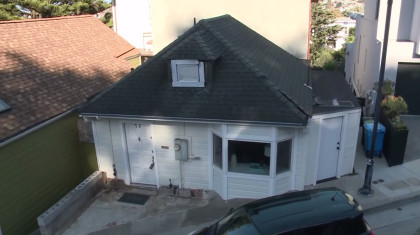
Endangered Bay Area species: the new home

Click here if you’re unable to view the photo gallery on your mobile device.

Daniel Huang and his wife, Cathy, were looking to downsize from their three-bedroom house in the East Bay. Their children had moved out, and the couple wanted something new.

They hunted for months and finally bought a two-bedroom condo under construction in a Fremont development called the Locale at State Street. For slightly less than $800,000, their 1,200-square-foot unit came with the modern appliances and features they sought. “The hardest thing for us,” Huang said, “was waiting.”

The couple is part of an endangered species — owners of a new Bay Area home.

 Endangered Bay Area species: the new homeIn a region of more than 7 million people, just 266 new homes, townhomes and condos were sold in January. It was the lowest number of monthly new home sales in at least two decades, according to an analysis for this news organization by real estate data firm CoreLogic. The slump has continued into the summer — new home sales in July were off 9 percent from the previous year. The region is on pace for its lowest number of new home sales since 2011.

Put simply, developers — burdened by high land costs, local regulations and scarce labor — are building far fewer new homes.

In previous economic booms, residential construction has flourished in the nine-county region. Not this time.

“It’s certainly not lack of demand,” said Paul Campos of the Bay Area Building Industry Association. Homebuyers are looking for both new suburban developments and higher-density redevelopment. “There’s tremendous demand for both types of housing.”

New home sales have fallen to record lows, according to an analysis of CoreLogic sales data since 2000. The number of new home sales in the nine-county Bay Area peaked at about 1,800 in December 2004, while the monthly average was around 840 sales. In July, Bay Area developers sold 490 new homes and condos.

An average month for existing home sales is about 5,800 transactions, with a high of around 11,160 sales coming in June 2004, according to proprietary CoreLogic data. Overall sales fell 2.2 percent year-over-year in July, to 7,404 homes.

Since the start of a record run-up in median home prices, new home prices have escalated faster than existing homes. Between April 2012 and April 2019, median new home prices rose 135 percent, while existing home prices rose 112 percent. The median sale price for a new Bay Area home in April was $969,000; the median price for a resale home was $900,000, according to CoreLogic.

In the last decade, San Jose has added roughly three times as many jobs as houses, condos and apartments, according to a recent analysis by Apartment List. San Francisco and the East Bay added about 3.5 jobs for every housing unit during the same period.

The Bay Area’s imbalance between new jobs and new housing is the most pronounced in the country. Apartment List housing economist Chris Salviati said a healthy ratio of jobs-to-housing permits is about 2-to-1. He called the Bay Area numbers “pretty severely out-of-whack.”

And the housing deficit could grow worse. Permits for residential construction in California fell 16 percent in 2018-19 from the previous 12-month cycle, according to an analysis by the Public Policy Institute of California. Permits dropped nearly 50 percent in San Mateo County, 30 percent in Alameda County, almost 10 percent in Santa Clara County and 7 percent in Contra Costa County.

Zillow senior economist Issi Romem said the housing backlog began decades ago and has worsened in the Bay Area as cities have imposed “an even heavier blanket of local land use policy.”

Elected leaders in several Bay Area cities have fought large residential developments and favored commercial projects, which typically bring more tax revenue and less demand for services such as schools, police and infrastructure. Long-time residents often are wary of increased traffic and changing community demographics.

With a shrinking supply of land to develop, contractors turn to redeveloping existing structures as so-called in-fill housing. This redevelopment is typically more expensive, encumbered by environmental and zoning restrictions and slower to come to market.

Tony Yaconelli, owner of Pacific Builders in Willow Glen, does two or three custom homes a year. Yaconelli, in business since 1982, said demand is strong.

He focuses on properties in Monte Sereno, Los Gatos and Saratoga. Municipal planners and inspectors know his work, and Pacific Builders can move efficiently through the regulatory process, he said.

He’s had “exceptional clients” from other Silicon Valley cities request projects. But he’s turned down the work, knowing local regulations can stretch budgets and add up to a year on a project’s timeline. “If they’re saying ‘no’ at every level,” he said, “it’s a nightmare.”

Katia Kamangar, executive vice president at SummerHill Homes, said although the overall real estate market has cooled from last year’s record highs, buyers are still attracted to ready-to-move-in homes. A new build means a family doesn’t have to go through a costly and long remodel.

SummerHill Homes built the Locale at State Street in Fremont, a mix of condos and townhomes near transit on a redeveloped property. It’s the company’s sweet spot — building in-fill homes in existing neighborhoods near rail stations.

It takes about three years from the purchase of a property to having single-family homes built and move-in ready, she said. The local approval and construction process for condos can take up to five years.

One property in Los Gatos, fraught with neighborhood and city opposition, has taken more than four decades to develop.

“The cycle time is pretty long,” Kamangar said. “A lot can happen in that time. And it does.”

The Huangs moved into the Locale in early July. They have no regrets, Daniel Huang said, and the few minor fixes were handled quickly by the developer. “It meets all our expectations.”

Other units still under construction in the development, a SummerHill agent said, have been selling briskly.


Article source: https://www.mercurynews.com/2019/09/01/endangered-bay-area-species-the-new-home/
Posted in SF Bay Area News | Tagged | Leave a comment

Measure clears way for tax hikes on ballot to address Bay Area housing crisis

The idea was bold and controversial: Blanket the Bay Area with 35,000 new homes a year. Protect 300,000 low-income households that are on the verge of being displaced. Safeguard 30,000 units of existing affordable housing.

Assemblyman David Chiu estimates that the region needs about $2.5 billion annually to meet the terms of a compact that politicians and business leaders signed in January, designed to bring housing stock in line with demand. His bill allowing two government agencies to put tax measures or bonds on the ballot — which the Legislature passed Thursday by a knife-edge margin — is the first step.

The bill awaits the signature of Gov. Gavin Newsom.

Supporters celebrated the victory, but acknowledged challenges ahead. The fight over AB1487 points to a much larger debate over how to solve the housing crisis, and who decides where to build.

“Clearly, our piecemeal approach in the past of trying to solve this crisis city by city and county by county hasn’t worked,” said Chiu, D-San Francisco. He’s called for a more unified strategy that would recognize how deeply the 101 cities of the Bay Area are interconnected: if residents of North Berkeley or Brisbane obstruct development in their backyards, it puts more pressure on Oakland and San Francisco.

AB1487 would enable the Metropolitan Transportation Commission and Association of Bay Area Governments to put funding measures on ballots in the nine counties, generating sustained revenue for affordable housing — perhaps as soon as next year. The money would go toward tax credits and subsidies for affordable housing projects, updating of land-use or zoning plans, tenant services and assistance for cities to buy land parcels. It wouldn’t completely close the gap, Chiu said. He expects to raise between $1 billion and $1.5 billion annually, roughly half of what the region needs.

Still, AB1487 would be a “coordinated, regional approach” to a housing shortage that’s pushed people into suburbs and rural areas, forcing them to commute long distances to work. The by-products of land-use decisions have spread throughout the Bay Area, as traffic chokes freeways, greenhouse gas emissions increase and homeless encampments pop up in areas once insulated from in-your-face poverty.

Solving those problems will take the same “we’re all in this together” mind-set that voters applied to wetland restoration in 2016, or to transportation when they passed Regional Measure 3 last year. Chiu spent months meeting with city councils, county supervisors and nonprofit groups to pitch this concept, revising his bill again and again to ensure they all had input. He originally wanted to create an agency to raise funds for affordable housing construction, an idea he eventually scrapped. In the final version of the bill, Chiu also ensured that 80% of funds collected from a county would go back to that county. The other 20% would go into a regional pot.

But AB1487 still hit plenty of opposition. Some leaders said it would run roughshod over local control. Opponents in the Legislature worried that it would force their constituents to pay taxes that would ultimately benefit other cities.

“Right off the bat, 20% of the taxes that are collected and taken from a community are highly likely to not go back to that community,” said Assemblyman Marc Levine, D-San Rafael. He also disliked handing over land-use decisions to the Metropolitan Transportation Commission, calling it “an unaccountable bureaucratic agency with no track record of building housing.”

Berkeley Mayor Jesse Arreguín, who is vice president of ABAG, said proponents of AB1487 worked hard to ensure that all Bay Area cities “had a voice” in the legislation. Part of the reason Chiu divided control between MTC and ABAG was to create a system of checks and balances: ABAG is dominated by smaller cities and towns, while MTC skews toward bigger cities.

The changes failed to mollify Assemblywoman Rebecca Bauer-Kahan, D-Orinda, who voted against AB1487. She said large cities would see a return on their tax funds and small cities would not.

“If my constituents are paying these taxes, they should see the benefit of it,” Kahan said.

Similar criticisms dogged the original plan to build 35,000 homes, crafted this year by a panel of mayors, tenant advocates, tech executives, labor groups and others who don’t normally sit down at the table together. When proponents presented the 10-point “CASA compact” — CASA is shorthand for the Committee to House the Bay Area — to city councils, they sometimes got a cold reception, particularly from suburban leaders who saw the plan as an intervention from their big-city counterparts in San Francisco, Oakland and San Jose.

Though the plan stoked debate, its language percolated into a number of bills passed by the Legislature this session. In addition to AB1487, Chiu also sponsored AB1482 to prevent unreasonable rent increases. State Sen. Nancy Skinner, D-Berkeley, sponsored SB330 to suspend local obstacles to housing production. AB1486 by Assemblyman Phil Ting, D-San Francisco, expands access to surplus lands for affordable housing development. Newsom began using some of the terms associated with the compact — “production,” “preservation” and “protection” — in public statements.

To Chiu, it was no surprise that the Bay Area had so much influence over the course of housing statewide. “We were the epicenter of this crisis,” he said. “The evictions, the high rents, the homelessness. We saw all of that before everyone else.”

Rachel Swan is a San Francisco Chronicle staff writer. Email: rswan@sfchronicle.com Twitter: @rachelswan

Article source: https://www.sfchronicle.com/bayarea/article/Measure-clears-way-for-tax-hikes-on-ballot-to-14438992.php

Posted in SF Bay Area News | Tagged | Leave a comment

Office rents are so high that Bay Area businesses are buying buildings

Tenancy in the Bay Area means huge rent increases, fighting others for attractive listings and constant uncertainty.

And that’s true even if you’re a big business.

With rents spiking, deep-pocketed companies and public agencies are increasingly buying offices, for some of the same reasons home buyers plunk down for a space to live: more certainty over the long term on what they’ll pay for a roof over their heads.

The latest dealmaker: BART, which owns a sprawling network of rail lines but not its Oakland headquarters at 300 Lakeside Drive. Facing a rent increase of more than 60% there, BART’s board of directors approved on Thursday the purchase of a nearby building at 2150 Webster St. for a new headquarters.

It won’t be cheap. BART expects to pay $140 million and an additional $87 million in construction and other costs to move in. But buying will save millions of dollars a year compared with renewing its lease or leasing elsewhere, said Sean Brooks, BART’s real estate director.

BART isn’t alone. Seven major tenants in San Francisco and Oakland have spent or committed to spend more than $2.7 billion on real estate since 2012, according to property records. Tech giants Google, Facebook and Apple have each spent billions of dollars to buy in Silicon Valley.

“Across the Bay Area, companies are looking to purchase mission-critical assets, headquarters locations,” said Tom Maloney of JLL, BART’s real estate broker.

 Office rents are so high that Bay Area businesses are buying buildings

Beyond escaping the unpredictable office market, ownership allows companies to control a building’s branding, design and security, Maloney said. Excess space can also be leased to other tenants for a profit. Government agencies like BART don’t pay property tax on buildings they own.

The biggest hurdle: Buyers must have cash, or the ability to borrow it cheaply.

BART will issue low-interest bonds backed by sales tax revenue, which made the purchase attractive, Brooks said. The bonds won’t lead to any tax increases and don’t require voter approval.

Tobacco giant Altria invested $12.8 billion in Juul last year, and the controversial vaping company bought 123 Mission St. for $397 million in June as it keeps hiring. Seller Northwood Investors made a significant profit after paying $290 million for the tower in 2018.

As with the residential market, timing matters. Companies that spent money on offices earlier this decade are now cashing out. Zynga’s South of Market headquarters more than doubled in value from 2012 to 2019, and the gaming company agreed to sell it this summer for $600 million. In 2017, Uber sold Uptown Station in Oakland for tens of millions of dollars in profit.

For the Metropolitan Transportation Commission, the region’s transit planning agency, buying a new South of Market headquarters at 375 Beale St. in 2011 was perfect timing, said Randy Rentschler, MTC director of legislation and public affairs.

A third of the nearly 500,000-square-foot building is leased to private tenants Conduent, Twilio and Degenkolb. The agency expects a net operating profit of more than $200 million over 30 years, enough to cover its costs.

“The public is going to get a free building. Our operating costs are going to be paid for by rent for the rest of our existence,” he said. “We feel the public is getting a pretty good deal.”

The commission’s building, a former post office, houses the Association of Bay Area Governments, a regional planning agency, and the San Francisco Bay Conservation and Development Commission, which oversees the bay and shoreline. That protects three agencies from rent increases and makes policy meetings more convenient.

“The issues we deal with all intertwine,” Rentschler said. “It’s just more efficient.”

Funding for the $263 million building came from a $1 billion capital reserve that can’t be invested in traditional funds, but can be used to buy offices, he said.

Unlike the commission, BART won’t have excess real estate that it can lease out in its new headquarters. But the building will still be a better deal for taxpayers than continuing to rent, officials said.

Roland Li is a Chronicle staff writer. Email: roland.li@sfchronicle.com Twitter: @rolandlisf

Article source: https://www.sfchronicle.com/business/article/Office-rents-are-so-high-that-Bay-Area-businesses-14439078.php

Posted in SF Bay Area News | Tagged | Leave a comment

San Francisco’s least expensive home still costs $600G

41013 san francisco home San Francisco’s least expensive home still costs $600G

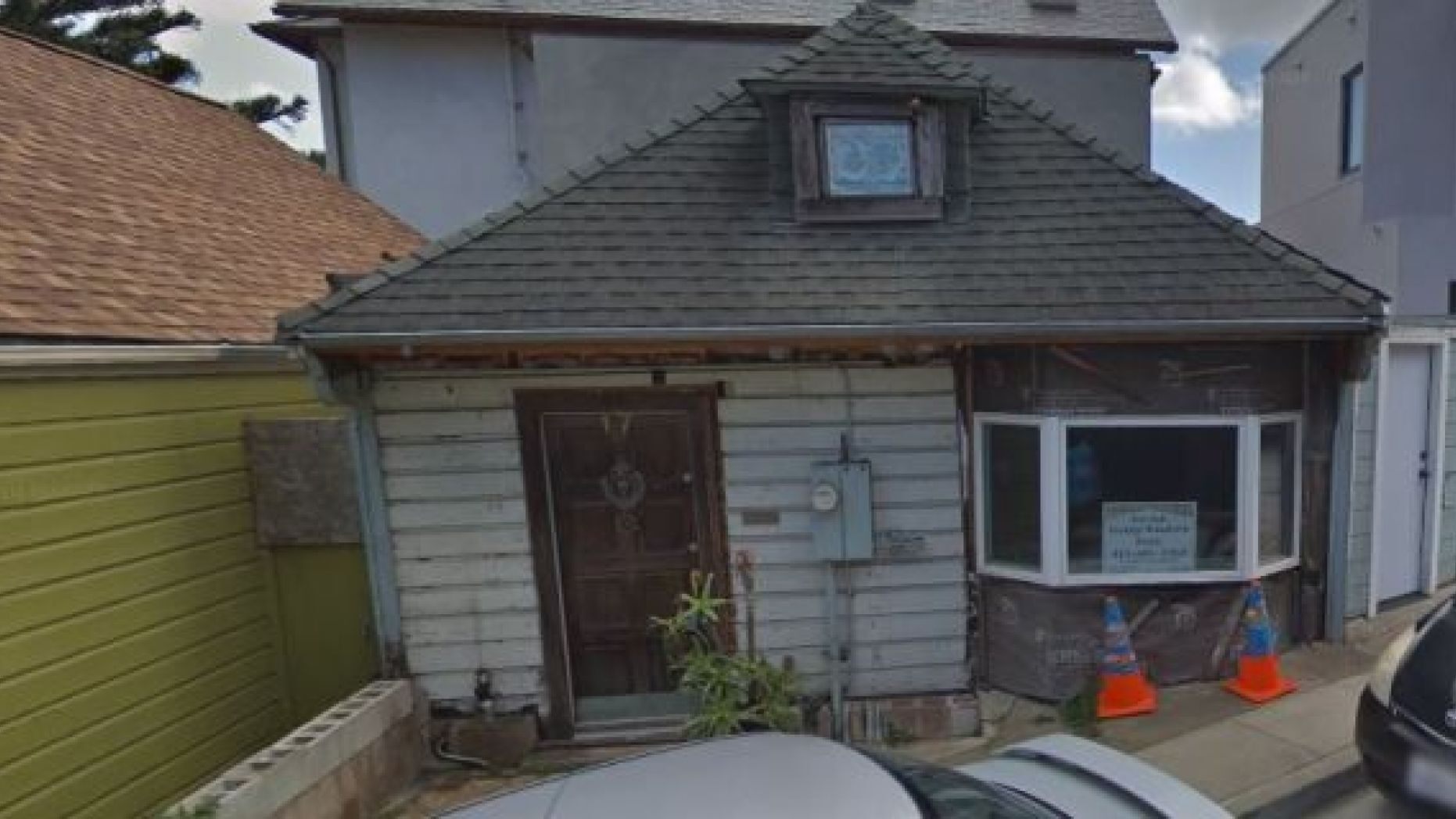
A 570-square-foot one-bedroom, one-bath property is on the market for $599,000 in San Francisco’s Glen Park neighborhood.
(Google Maps)

If a one-bedroom, one-bath cottage with no garage or backyard priced at over half-a-million dollars sounds like your cup of tea, then get our your checkbook.

A 570-square-foot one-bedroom, one-bath property is on the market for $599,000 in San Francisco’s Glen Park neighborhood.

SAN FRANCISCO’S MOST EXPENSIVE LISTING GETS $4.5-MILLION CUT FROM $45 MILLION ASKING PRICE

According to SF Gate, the home was originally listed in March for $675,000, but after months without an interested buyer, the agent took it off the market in August.

Now the residential property at 17 Laidley St., which recently had its kitchen and bathroom remodeled, is once again for sale at a lowered $599,000 price tag.

CLICK HERE TO GET THE FOX NEWS APP

“We’ve been getting all kinds of activity. I’m getting calls from people down south and they’re saying hey, I can get a house in SF for $599,000 I want it now. Some people are saying I don’t even know what I’d do with it yet, but I want it,” listing agent Jeff Appenrodt with Laurel Realty told SF Gate.

The abode is considered a bargain given that the median price of homes–including condos –in the nine-county Bay Area was a cool $815,000 this summer, according to the San Francisco Chronicle, which cited a report by CoreLogic.

In San Francisco, specifically, the median was $1.35 million.

FOLLOW US ON FACEBOOK FOR MORE FOX LIFESTYLE NEWS

Though there seems to be renewed interest in the “cheap” property, the home will never be as big as its mini-mansion neighbors, since the lot it sits on is only 614 square feet.

However, Appenrodt tells SF Gate the pint-sized home has a basement and attic that could potentially add more square footage if finished.

CLICK HERE TO SIGN UP FOR OUR LIFESTYLE NEWSLETTER

Article source: https://www.foxnews.com/real-estate/san-franciscos-least-expensive-home-still-costs-600g

Posted in SF Bay Area News | Tagged | Leave a comment

San Francisco Steal: 570 Square-Foot House Slashed To $599,000; Lowest Price In City

SAN FRANCISCO (CBS SF) – The lowest priced house currently for sale in San Francisco’s pricey real estate market just got cheaper.

The one-bedroom, one-bath, 570 square-foot cottage on Laidley St. in the city’s Glen Park neighborhood had its price cut to $599,000. Previously, the home was listed for $675,000.

ALSO READ: Home Prices Soar On San Francisco Laidley St. As Tech Execs Converge On Glen Park

According to the agent, the kitchen and bathroom have been remodeled. The home is near Muni and several restaurants, but the home has no backyard or garage.

2cc8c cheapest sf home 091319 San Francisco Steal: 570 Square Foot House Slashed To $599,000; Lowest Price In City

Home for sale in San Francisco’s Glen Park neighborhood that is the lowest priced in the entire city as of September 12, 2019. (CBS)

The agent said there is potential to add living space by finishing the home’s attic and basement, if the city allows it.

According to the listing, the home was built in 1907. Property records show the home was last sold in 2007 for $285,000.

Article source: https://sanfrancisco.cbslocal.com/2019/09/13/lowest-priced-san-francisco-house-for-sale-599k-one-bedroom/

Posted in SF Bay Area News | Tagged | Leave a comment