SAN FRANCISCO (KPIX) — A new report shows home sales in the Bay Area have dipped to a 9-year low.
The data released from CoreLogic reports a total of 7,247 new and existing houses and condominiums were sold in Alameda, Contra Costa, Marin, Napa, Santa Clara, San Francisco, San Mateo, Solano and Sonoma counties in August 2019. In August 2010, at the zenith of the great recession, 6,698 homes were sold in the Bay Area.
“Although Bay Area home sales in August fell nearly 6% from a year earlier, the recent drop in mortgage rates likely helped temper that decline,” said Andrew LePage, a CoreLogic analyst.
“From March through August this year, when mortgage rates trended lower, home sales fell about 7% compared with that same six-month period last year. In the second half of 2018, when mortgage rates climbed, home sales fell nearly 12% compared with the second half of 2017.”
“All prices have to get capped at some point and there will be winners and losers,” said Karen Kircher of San Francisco. “As a renter then I’ll be a winner,” she added.
The report also said the median sale price for a home in the Bay Area is $810,000. A year ago it was $830,000. That is a drop of 2.4%.
San Francisco bucks the trend. The median sale price in the city is $1.35 million. A year ago it was $1.31 million, an increase of 2.9%.
“I don’t see any indication that the market is on the precipice of a big downturn,” said Mary MacPherson of Compass Real Estate.
“We all wonder, ‘is this going to be the beginning of the end, the beginning of a cooling?’ I really don’t think so. We only have a couple hundred more listings right now active than we normally have on the market. And we always have at least 2,000 buyers active in the market at any given time. We have about 900 active listings. That’s still not enough to meet our supply and demand issue. So no, I don’t think so. By next year, who knows?”
CLICK HERE if you are having trouble viewing these photos on a mobile device
Sure, the city has some incredible restaurants. But so do the East and South Bays, from Michelin starred spots to fantastic holes-in-the-wall. We’ve noshed and sipped our way through hundreds, seeking out the very best — and now we’re ready to proclaim the Bay Area’s top 50 non-SF spots. We’re rolling out our restaurant critics and food writers’ top picks this week, starting with Nos. 41-50 on Monday and Nos. 31-40 yesterday.
Today, we’re diving into the next batch. So let’s get started — because when you’re yearning for a glamorous 1940s throwback, a Spanish tapas spot or a NOLA gem, it makes no sense to tarry.
Selby’s, Redwood City: When the celebration calls for retro classics
It’s a new restaurant with the elegance of a 1940s supper house and updated classics such as Lobster Consomme, Sweetbreads Piccata, Braised Rabbit Vol-Au-Vent and Delmonico Steak with Bordelaise Sauce. The decor is equally glamorous. Thanks to the Bacchus group and executive chef Mark Sullivan, destination dining has returned to this stretch of the Peninsula that for years housed the upscale Chantilly and John Bentley’s.
Order: Dry-aged Roast Crown of Duck for Two with Robuchon’s Potatoes.
Shakewell, Oakland: When your ‘Top Chef’ obsession skews Spanish
Paella with Manila clams and chorizo at Shakewell. (Ray Chavez/Bay Area News Group File) Ray Chavez/Bay Area News Group file
We can’t exactly jet-set off to Spain whenever we crave croquetas, but this tapas spot helmed by “Top Chef” alums caters to all our obsessions, from the craft cocktails — Shakewell, get it? — to the jamon Iberico de belotta, Spanish octopus and wood-fired paellas. Chef Jen Biesty’s Mediterranean-but-mostly-Spanish small plates pair perfectly with cava, rosé sangria and cocktails made with rhum agricole and habanero-infused tequila. (Psst, they do a more global brunch, too. Hello, fried chicken and churros.)
Order: Bacalao croquetas with squid ink aioli, clam-studded paella
Black Sheep Brasserie, San Jose: Where everything tastes good because it’s hearth-roasted
The stylish decor at San Jose’s Black Sheep Brasserie is matched by the stellar food. (Patrick Tehan/Bay Area News Group File)
Trendy restaurants come and go, but modern classics, like Black Sheep Brasserie, tend to have staying power. This refined brasserie, perfect for a date or dinner with the folks, helped put Willow Glen on the fine dining map, and it’s no wonder: Everything from executive chef Jeff Fitzgerald’s kitchen is good, especially if it’s coming out of the hearth, like “burnt” French onion soup with beef broth or a half chicken that’s first poached in mushroom butter. Desserts, including warm buttermilk beignets with maple-calvados caramel, are also consistently delicious.
Gather, Berkeley: When you want to delight vegans and omnivores alike
Award-winning Gather restaurant in Berkeley specializes in Northern California fare that appeals to both vegetarians and meat lovers.
It’s all about root-to-shoot, head-to-tail, farm-to-fork deliciousness at this renowned 10-year-old restaurant that caters every bit as much to vegans and vegetarians as it does to omnivores. The ingredients come from local farms and heritage breed ranches, and the meat is butchered in-house — but those veggie-forward flavors are so bold and bright, you may give up meat altogether. (Well, not the pancetta on the roasted corn pizza. Let’s not be hasty here.)
Order: Acme French toast for brunch, heirloom grains risotto or that roasted corn pizza for dinner.
Donato Enoteca, Redwood City: When it’s time for white-tablecloth Italian
Italian-born Donato Scotti’s roots are in Bergamo, near Lake Como, but his flagship restaurant and newer outposts (Donato Co. in Berkeley, Cento Osteria in San Francisco) highlight many of the country’s regional cuisines. Housemade pastas and house-cured meats, along with California ingredients, turn rustic dishes upscale. A risotto is studded with crispy Niman Ranch pork belly. Monterey Bay calamari stars with tonnarelli pasta. And the wood-fired oven turns out pizzas topped with Watsonville artichokes and housemade Calabrian-style nduja sausage.
Order: Bigoli pasta with Nebbiolo-braised oxtail and, during late fall, the white truffle menu
The Slanted Door, San Ramon: When Charles Phan’s shaking beef and cellophane noodles invade your dreams
It was a big deal when Charles Phan opened The Slanted Door in the East Bay. The City Center Bishop Ranch restaurant lacks its sister’s Embarcadero view, but the food is just as memorable and there’s a massive, wrap-around exhibition kitchen to watch cooks and bartenders on bustling Saturday nights. Best of all, there is no longer a bridge separating you from that legendary shaking beef or cellophane noodles brimming with gulf crab. There’s also a killer Sunday afternoon happy hour not too many people know about — yet.
Order: SD spring rolls, shaking beef, cellophane noodles, lemongrass tofu
Restaurant Asa, Los Altos: When you’d like to mix and match Mediterranean
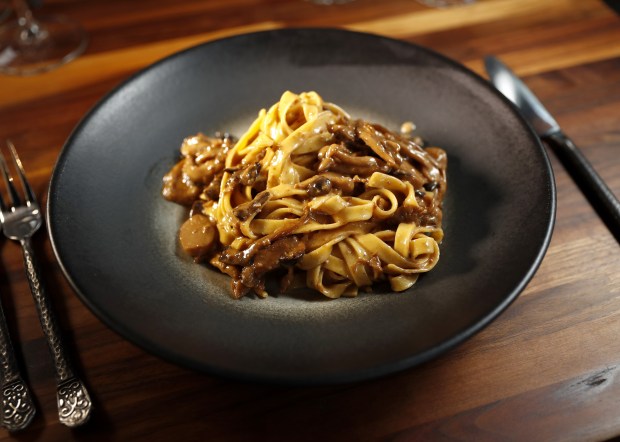
Silky Exotic Mushroom Pasta offers a roasted garlic finish at Asa in Los Altos. (Nhat V. Meyer/Bay Area News Group)
Andrew Welch’s Asa has developed a loyal following for his menu of Spanish- and Italian-influenced dishes. Call it mix-and-match Mediterranean: Start with the duck-fat-roasted baby potatoes with house aioli, then veer toward the Iberian peninsula with the shrimp-chorizo Paella Valencia or head east with the Exotic Mushroom Pasta, handmade fettuccine with a silky sauce that gives the dish a roasted garlic finish. Speaking of compass directions, Welch’s next venture, Asa South, will open soon in Los Gatos.
Order: The Bowl of Soul bathes the fresh fish of the day and Gulf shrimp in a tomato-seafood broth.
Vineyard Table Tasting Lounge, Livermore: When you want a stellar wine country meal without the stuffiness
Shrimp a la Plancha with Green Goddess is served at the newly opened Vineyard Table Tasting Lounge at Wente Vineyards. (Jose Carlos Fajardo/Bay Area News Group)Wente Vineyards’ estate restaurant has transformed from a stodgy, white table-clothed steakhouse into a chic, yet relaxed, family-friendly destination that plays ’80s music and serves fresh, hyper-seasonal organic food grown on-site by a master gardener. Look for memorable shared plates, like tomato salad with fried halloumi and smoked pork tenderloin with sweet corn relish, as well as inventive desserts, including a garden peach pop that’s served with a side of brut. Wine cocktails and flights — all Wente, natch — add to the updated wine country experience. Still want that steak? It comes from Wente’s estate beef program, and it’s fantastic.
Order: Diane’s Garden Bowl, dry-aged New York steak, smoked pork tenderloin
The Bywater, Los Gatos: When you know what it means to miss New Orleans
Hush Puppies tempt at David Kinch’s The Bywater restaurant in Los Gatos. (Karl Mondon/Bay Area News Group File)
Head to Los Gatos when you want a taste of New Orleans, minus the humidity. Manresa’s David Kinch opened this restaurant in late 2015 as his paean to the city where he fell in love with cooking. His chef de cuisine, Dave Morgan, has been drawing from his own experiences in NOLA as well as highlighting the city’s other culinary influences. That’s why you’ll find dishes like Vietnamese Braised Short Rib, Dave’s Famous Fried Mortadella Sandwich and Yaka Mein, a Chinese/Creole noodle soup, sharing menu space with the po boys and the red beans and rice. The lagniappe? A terrific New Orleans soundtrack.
Order: Any gumbo, jambalaya or soft-shell crab dish on the menu, plus beignets for dessert.
Oliveto, Oakland: When you crave handmade pasta — and audible conversation
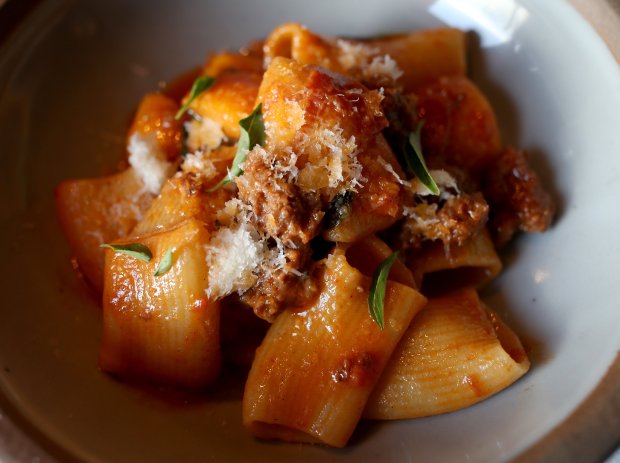
Rigatoni with peaches, Tuscan sausage and basil is captures the flavors of summer at Oliveto, the popular Italian restaurant started by Bob and Maggie Klein more than 30 years ago. (Jane Tyska/Bay Area News Group)
California meets Mediterranean fare at this venerable restaurant, where even the grains and flour are locally milled. The ingredients are impeccable and the seasonal menu offers something for everyone, from the pasta — hello, rigatoni with peaches and basil — to the mains. Adding to the bliss: The second floor dining room isn’t just a perfect setting for date nights or other special occasions. It’s been acoustically engineered, so you can actually — gasp! — hear your dining companions.
Order: Any pasta — but especially the swoon-worthy doppio ravioli
SAN FRANCISCO, Sept. 27, 2019 (GLOBE NEWSWIRE) — Zephyr Real Estate once again is an active participant in the Castro Street Fair. This year marks the 46th anniversary of the annual event founded by Harvey Milk and Castro Merchants in 1974. The Fair, always on the first Sunday of October, will be on October 6, from 11 am until 6 pm., and covers six city blocks.
In addition to its participation as a sponsor, Zephyr Real Estate and several agent volunteers will host a booth distributing fun facts and prizes. Special thanks to Zephyr agent and neighborhood specialist, Rich Bennett, for his support with this event.
Hundreds of artisans, artists, entertainers, exhibitors, vendors, crafters and purveyors of edibles and libation will also be on hand to ensure a good time for everyone. Live entertainment is on tap throughout the festivities at various pavilions with plenty of space for dancing the day away.
Castro Street Fair is a non-profit 501c3 organization, and this annual fundraiser benefits a variety of local nonprofit organizations. This year’s proceeds will be shared with many groups including Bears of San Francisco, Castro Community on Patrol, Castro Country Club, Centro La Olas, Familiar de la Raza, Family Link, Haight Ashbury Cooperative Nursery School, Imperial Council of San Francisco, McKinley Elementary PTA, Most Holy Redeemer AIDS Support Group, San Francisco Lesbian/Gay Freedom Band, San Francisco Spikes Soccer Club, SF Boom Softball Team, Queer Lifespace, and 15 Association. In addition, the Fair underwrites the cost of flying the rainbow flag at Harvey Milk Plaza.
Each year, the Fair attracts over 20,000 visitors, and raised over $50,000 last year alone. Since 1998, the Fair has given over $1.5 million back to community partners to help continue to provide necessary services in and around the Castro. Donations may be made in advance of the Fair at www.castrostreetfair.org/donate/.
Zephyr has a long and colorful history of giving back to the community, a significant element of the firm’s culture. In its 40+ years in San Francisco, Zephyr has continued this sense of community pride to help make a difference and reach out to those in need.
“Castro Street Fair combines a great cause with great fun to create an amazing celebration,” commented Harry Clark, Zephyr’s spearhead for the Fair. “If you’ve yet to experience this event, make this the year you attend.”
About Zephyr Real Estate Founded in 1978, Zephyr Real Estate is San Francisco’s No. 1 independent real estate firm with over $2.4 billion in gross sales and a current roster of more than 350 full-time agents. Zephyr’s highly-visited website has earned two web design awards, including the prestigious Interactive Media Award. Zephyr Real Estate is a member of the international relocation network, Leading Real Estate Companies of the World; global luxury affiliate; the local luxury marketing association, the Luxury Marketing Council of San Francisco; and the regional luxury real estate affiliation, the Artisan Group. Zephyr has nine locations across San Francisco, Marin, Alameda and San Mateo Counties and two brokerage affiliates in Sonoma County, all strategically positioned to serve a large customer base throughout the San Francisco Bay Area. For more information, visit www.ZephyrRE.com.
Media contact: Melody Foster Zephyr Real Estate San Francisco, CA 415.426.3203 melodyfoster@zephyrsf.com
Bay Area home prices slumped for a sixth straight month in August, according to a report issued Thursday by research firm CoreLogic.
The median price paid for a new or existing Bay Area home or condo was $810,000 last month, down 0.7% from July and down 2.4% from August of last year. Prices year-over-year have now been flat or falling for six consecutive months. The last increase was in February.
Although the Bay Area’s frantic housing market started cooling around June 2018, prices year-over-year continued rising at double-digit rates until September of last year, when the market downshifted amid a jump in interest rates and a stock market selloff. From last fall into early this year, inventory grew and price cuts started appearing, but the median price continued rising until March, when it fell for the first time in 83 months. The biggest dip this year was 4.1% in July.
Four Bay Area counties posted year-over-year price drops in August, the largest being Santa Clara’s 8% decline. The other five posted increases, the largest being a 2.9% gain in San Francisco, where the median was $1.35 million, highest in the region.
San Francisco, Oakland-Berkeley and to a lesser extent San Mateo County have been outperforming the rest of the Bay Area since spring, according to Patrick Carlisle, chief market analyst with the Compass real estate brokerage. “My best guess is that the differentiating factor (in these markets) is all the IPOs that have occurred over the last six months,” he said — even though it wasn’t “the hysterical jump” in prices that some were anticipating.
Some studies have shown that initial public offerings do raise home prices somewhat, with the biggest gains coming closest to the company’s headquarters. The impact fades the farther you get in distance and time from the IPO. That seems to be happening now, Carlisle added.
Cyd Greer, a Coldwell Banker agent in the Napa Valley, is suddenly seeing a lot of activity at the top of the market. “I got five offers on four properties in the $5 million to $6 million range in the last week,” she said. But none was from buyers with IPO money. “Oftentimes, the IPO people buy a primary residence in the city, at some point they will come up here” to buy a vacation home. Activity in the low- to moderate-price range has been slower, she said.
Sales were sluggish throughout the Bay Area last month. Only 7,247 transactions closed in August, down 2.3% from July and down 5.7% from last August, according to CoreLogic.
Even though prices and mortgage rates have come down this year, affordability remains a problem for many buyers, and that’s crimping sales, CoreLogic analyst Andrew LePage said.
The average rate on a 30-year fixed-rate mortgage was 3.64% this week, down from 4.72% a year ago, according to Freddie Mac.
The roughly one-percentage-point drop in mortgage rates reduced the monthly payment on a median-priced Bay Area home by 13%, LePage said.
Santa Clara and Sonoma counties have seen “the most dramatic cooling” since the middle of last year, Carlisle said. Those had been the Bay Area’s two hottest markets before the market shifted in the spring of 2018.
Santa Clara’s market had been driven largely by job growth. In Sonoma County, prices surged after the October 2017 wildfires as people raced to replace homes even before the flames were extinguished.
By early 2018, prices in both counties had reached the breaking point. “It’s almost like people were saying, ‘I can’t do this anymore,’” Carlisle said.
Sonoma County may have seen a rebound last month, or maybe not.
Earlier this month, when the California Association of Realtors issued its report on August home prices, it showed a 6.3% surge in the median price for Sonoma County — by far the biggest year-over-year jump in the Bay Area.
Data from Sonoma real estate groups also showed a late-summer spike in prices, leading some to believe that people who had lost their homes in the wildfires were rushing to buy a new one before their insurance money for additional living expenses runs out. Some companies cap these payments at two years, and the two-year anniversary of the North Bay fires is next month.
CoreLogic’s report for August, however, showed a mere 0.8% increase in year-over-year prices for Sonoma County.
The California Association of Realtors’ report only includes existing, single-family homes. CoreLogic’s report is broader; it also includes new homes and condos, along with sales that were not entered on a Multiple Listing Service. But those differences alone can’t explain the big discrepancy between the two numbers for Sonoma County.
Gerrett Snedaker, who owns and runs the Better Homes and Gardens Wine Country Group in Napa and Sonoma counties, said his agents have seen no rush of people buying homes before their insurance money runs out. “They are not working with a lot of fire survivors who are running up the prices,” he said. “We anticipated some of that, but I believe most folks have already made arrangements. Some bought something else, or moved on, or are continuing to lease where they are at their own expense.”
There has been a big jump in the number of fire lots being listed for sale, however. There are 542 on the market, the highest on record, Snedaker said.
The sale of fire lots could be impacting data.
Craig Curreri, a broker associate with Coldwell Banker in Santa Rosa, said he pulled some numbers that showed prices rising 5.1% in Sonoma County prices year over year. But he attributed the August increase to “normal supply and demand,” not purchases by people who lost homes in the fires.
In a statewide housing forecast issued Thursday, the California Association of Realtors said it expects that existing, single-family home sales statewide will hit 390,200 units this year, down 3.1% from 402,800 last year. The median price for these units will likely hit hit $593,200 this year, up 4.1% from last year.
For next year, it expects that sales statewide will rise 0.8% to 393,500 units, and prices will increase more modestly than this year — by just 2.5% — to $607,900.
In the Bay Area, price growth will be flatter than the statewide average, but that could help sales, which are likely to be in line with the statewide average, said Jordan Levine, the association’s deputy chief economist.
The “more affordable markets with proximity to the Bay Area,” such as Solano, Yolo and Stanislaus counties, will see the fastest appreciation, he said.
Levine said the new $10,000 limit on the federal deduction for state and local taxes is weighing on home sales and prices in the Bay Area. The limit “has definitely made renting more attractive than it was a year ago,” he said.
Kathleen Pender is a San Francisco Chronicle columnist. Email: kpender@sfchronicle.com Twitter: @kathpender
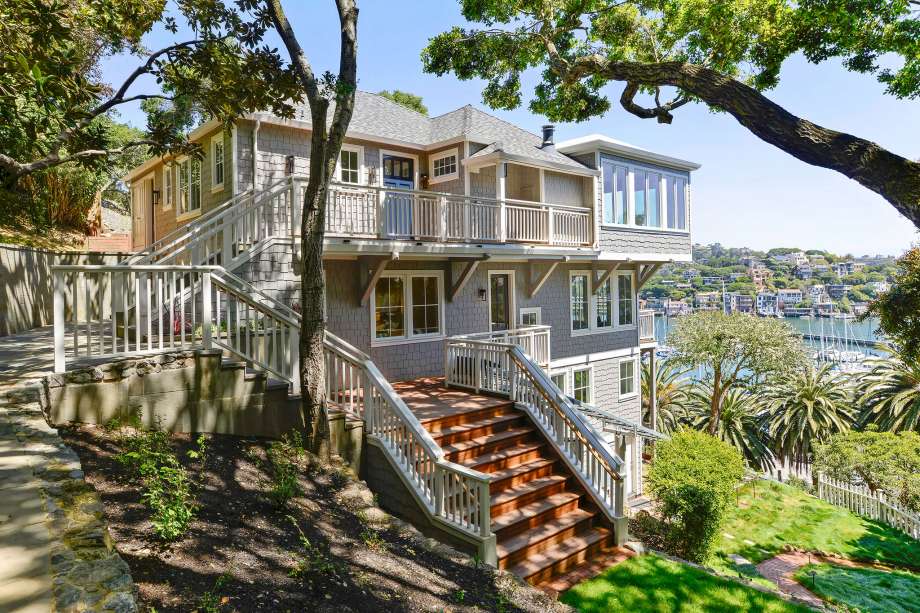
Built in 1914, this Belvedere abode has stunning views and a stunning remodel. See it before and after its makeover. This is the home now.
Built in 1914, this Belvedere abode has stunning views and a stunning remodel. See it before and after its makeover. This is the home now.
Photo: New Home Photos: Open Homes Photography; Original Home Photos Courtesy Compass Real Estate
Caption
Close
Built in 1914, this Belvedere abode has stunning views and a stunning remodel. See it before and after its makeover. This is the home now.
Built in 1914, this Belvedere abode has stunning views and a stunning remodel. See it before and after its makeover. This is the home now.
Photo: New Home Photos: Open Homes Photography; Original Home Photos Courtesy Compass Real Estate
At $7.95 million, this five-bedroom, four and a half-bathroom home offers 4,020 square feet, most of it facing the bay. It’s one of the oldest homes in Belvedere, and its makeover is a profound one.
The property
Belvedere was incorporated in 1896, so this home, built in 1914, is among its more historic.
Listing agent Carolyn Adducci told SFGATE that the home’s remodel had to follow Belvedere’s “stringent rules regarding house design and setbacks in order to preserve trees, views and the wooded character.”
For 147 Beach Road the developer, Cottage Coastal Builders, had to follow strict guidelines with the rebuilding of the home to keep the character of home as the home was built in 1914 and over 100 years old.
The original home was a brown shingle Craftsman. Now, “the exterior is reminisce of old Craftsman home with a new color palette with shingles that match the original look.”
David Holscher of Holscher Architecture, the firm which accomplished the overhaul of 147 Beach Road, said that Belvedere codes regulating remodeling require that 50 percent of the original home remains as it is. It is also against code to demolish the building “which means that 50 percent of the exterior structure needs to remain including all of the original architectural details.”
Aside from the shingles, roofline, and shape of the original wood window, the home now, especially the interior, feels very new.
The original sun porch that framed the stunning views was covered by a dark beamed ceiling. Now, the view is really all that seems the same. With ceiling in white and floors a pale ash color, the effect is a much brighter space.
Another major conversion is the kitchen. The old kitchen was clearly dated, a rather busy affair with what looks like a Wedgewood stove.
Now, the kitchen is completely modern with Thermador appliances and Matt Quartz counters.
Other features of note in the new abode: a master suite with private deck overlooking the Bay, a lower level with additional bedroom or den, and a temperature controlled wine room.
To transport residents from the home’s heights to the back yard, there is a new hillavator that can accommodate four people.
The lot is 5,310 square feet, and embellished with trees and gardens.
The location
Belvedere is an exclusive enclave of Marin Country, but this home offers even more exclusivity as the location is directly across from the San Francisco Yacht Club Marina.
From 147 Beach Road, you could walk to to neighborhood amenities and the SF Ferry.
“Traditionally, residents of Belvedere have been older,” said Carolyn Adducci. “But nowadays, we’re seeing younger buyers, families with babies in strollers. The demographic is changing.”
Such a shift would quickly make an impression in the area, given that there were only 2,068 people living in Belvedere according to the 2010 census.
Perhaps the newness of 147 Beach Road’s interior speaks to the new and younger buyers entering the area.
Want to be the next resident of Belvedere? Maybe in a newly overhauled luxury abode with an obstructed view of the San Francisco Bay? The price is $7.95 million.
Anna Marie Erwert writes from both the renter and new buyer perspective, having (finally) achieved both statuses. She focuses on national real estate trends, specializing in the San Francisco Bay Area and Pacific Northwest. Follow Anna on Twitter: @AnnaMarieErwert.