
Post-blackout inspections showed 218 cases of busted equipment that could have made this fire season a whole lot worse had they not been turned off.
Article source: https://sfist.com/2019/11/30/saturday-links-winter-is-here/
Post-blackout inspections showed 218 cases of busted equipment that could have made this fire season a whole lot worse had they not been turned off.
Article source: https://sfist.com/2019/11/30/saturday-links-winter-is-here/
For the first time in more than a decade, Oakland’s skyline has a new office tower — and many more to come.
Last month, health insurer Blue Shield of California began moving 1,200 workers to 601 City Center, a 24-story building a few blocks west of the 12th Street/Oakland City Center BART Station.
The new high-rise has sweeping views of downtown Oakland, the Bay Bridge and the nonprofit’s old home, San Francisco, where it was headquartered for 80 years.
Blue Shield’s cross-bay move will result in major rent and tax savings, said Sandra Clarke, the company’s chief financial officer. Two-thirds of its employees already live in the East Bay and now have a better commute.
“San Francisco real estate is very expensive. We want to make the best use of our (health care) members’ money that we can,” she said. “The options that Oakland offers, especially in this downtown area, make it worth really serious consideration. I know we’re very happy that we made this decision.”
The new building has more light and air than Blue Shield’s former offices at 50 Beale St., a 1967 building that’s now dwarfed by newer towers next door occupied by Salesforce. The Oakland tower also has floor-to-ceiling windows, a gym and a roof deck.
A wave of migration from San Francisco, along with local business growth, has made Oakland one of the hottest local economies in the country. Additional office projects totaling more than 4 million square feet, or room for 20,000 more employees, are under construction or planned downtown, which currently has around 80,000 jobs.
More than a dozen major housing projects are also in progress. Combined with easy BART access and proximity to new restaurants and bars, downtown is seeing the biggest building boom in decades, experts say.
“The skyline’s going to be totally reimagined,” said Chris Roeder, a real estate broker at JLL. “The perception of Oakland has changed.”
Many of the new projects have already have full tenant commitments. Kaiser Permanente plans to build a $900 million headquarters that would be the largest office building in Oakland. BART plans to buy a renovated property at 2150 Webster St. for a new headquarters. One of its neighbors will be the Sierra Club, which moved to Oakland in 2016, after 124 years in San Francisco, to save on rent. San Francisco tech firms Square and Credit Karma have also signed major Oakland office expansions.
Morten Jensen, president of Oakland architecture firm JRDV, increasingly sees a “dual core” of major employment and housing centers in San Francisco and Oakland, connected by a 15-minute BART ride.
“I think we’re right at the tip of the iceberg of the potential of what can happen,” he said.
Jensen sees affordable housing as a daunting problem, but with BART being the lifeblood of local economic growth, he also wants to see regional leaders prioritize transit expansion.
“It’s time for Oakland to assume a larger role in the Bay Area. Transportation is really key to this,” Jensen said. “It’s not just Oakland by itself. It’s Oakland linking to the entire region.”
Officials are studying both a second transbay BART tube and second bridge across the bay, but there are disagreements over priorities.
Oakland is thinking bigger. Since 2015, the city has been working on a Downtown Plan that will guide growth over the next 20 years. The plan was restarted in 2017 to focus more on equity and benefits for existing residents, particularly marginalized communities of color.
A draft plan calls for 61,000 new jobs and nearly 30,000 new homes downtown, up to a quarter of them affordable, by 2040. The city could implement fees and require more affordable housing to help meet those goals. Less than 7% of the 9,304 homes being built citywide are affordable, despite fees on market-rate housing passed in 2016.
Downtown’s growth has been long coming. In 1999, then-Mayor Jerry Brown had a plan that would start to bring 10,000 new residents to the area. But the 2008 recession was devastating, freezing almost all construction in Oakland until around 2015, as soaring rents were pushing both residents and businesses out of San Francisco and eastward.
San Francisco developer Shorenstein Properties first started construction on what would become Blue Shield’s building in the fall of 2008, but suspended work soon after the recession began. The company had already purchased the steel, and ended up storing it in Arizona for nearly a decade.
Tom McDonnell, Shorenstein’s vice president of leasing, sees parallels between Oakland’s transformation and another area that’s seen major changes: San Francisco’s Mid-Market, where Shorenstein bought and renovated what is now Twitter headquarters.
Access to transit and new housing in both areas helped attract new businesses. “When you put such a strong residential component into a commercial area, it changes the vibe of the whole town,” McDonnell said. “There are so many good things going on.”
One thing Oakland doesn’t have is a huge tech sector. Tech accounted for only 3,500 of 65,000 downtown jobs, or about 5%, in the second quarter of 2016, according to a city report. Uber bought the former Sears department store building in 2015 and planned a major new office. But two years later, amid countless corporate scandals, it sold the building. Square has leased it for an expansion office and plans to move in next year.
San Francisco is getting more expensive and it’s increasingly harder to find space, so the likelihood of a big tech push into Oakland is growing, said J.D. Lumpkin, a broker at Cushman Wakefield.
Rising fees for San Francisco office projects and growth restrictions continue to push rents up. “It’s only going to increase in the coming years. I think that will only be a positive thing for Oakland,” Lumpkin said.
Developers are gearing up to lure big tech. TMG Partners plans to start construction next year on an 875,000-square-foot project called Telegraph Tower that has no tenants. The project’s 15-foot floor heights and three rooftop terraces make it competitive with San Francisco’s new towers, said Lumpkin, who is marketing the property along with Roeder of JLL.
Matt Field, president of TMG Partners, said Oakland has benefited from national shifts toward urban living, and continued challenges around transit and housing make growing in the East Bay more attractive than ever.
“Companies are really trying to get closer to their employees,” he said.
Roland Li is a San Francisco Chronicle staff writer. Email: roland.li@sfchronicle.com Twitter: @rolandlisf
Article source: https://www.sfchronicle.com/business/article/Why-downtown-Oakland-is-booming-14869616.php
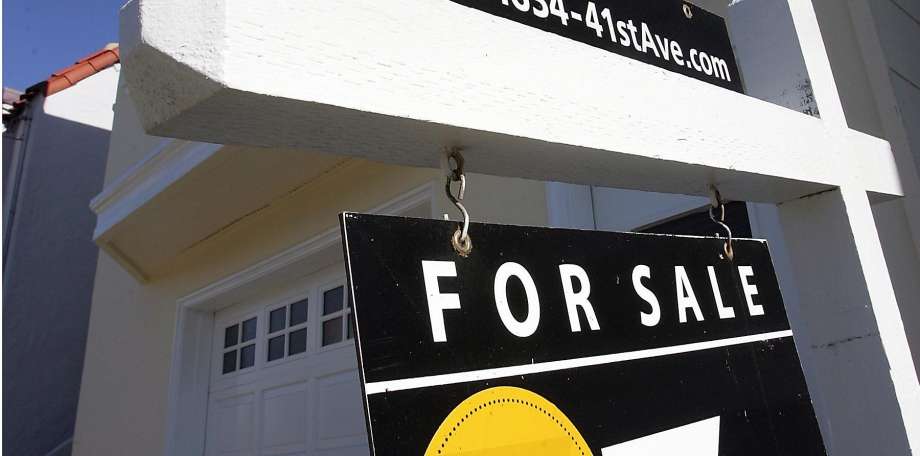
Believe it or not, there are some good times of year for someone to make the leap to home ownership — even in the Bay Area.
The BHJ Index attempts to calculate whether a homeowner will receive more returns on their investment, than a renter living in a similar home who invests all of the money after rent that would have gone towards home ownership. Scroll ahead to see which markets make the most sense to rent in, rather than buy.
Believe it or not, there are some good times of year for someone to make the leap to home ownership — even in the Bay Area.
The BHJ Index attempts to calculate whether a homeowner will receive more
Photo: Justin Sullivan, Getty Images
Caption
Close
Believe it or not, there are some good times of year for someone to make the leap to home ownership — even in the Bay Area.
The BHJ Index attempts to calculate whether a homeowner will receive more returns on their investment, than a renter living in a similar home who invests all of the money after rent that would have gone towards home ownership. Scroll ahead to see which markets make the most sense to rent in, rather than buy.
Believe it or not, there are some good times of year for someone to make the leap to home ownership — even in the Bay Area.
The BHJ Index attempts to calculate whether a homeowner will receive more
Photo: Justin Sullivan, Getty Images
The holidays bring many gifts: among them, possibly, is the chance for prospective Bay Area home buyers to finally get a foot in the door of one of the world’s most competitive real estate markets.
San Francisco
In San Francisco, September brings the most new listings. But by November, listings drop off.
“In San Francisco and many of the Bay Area markets, September is the single month with the highest number of new listings, which fuels the relatively short autumn selling season, and typically causes a big spike in October sales. In November and December, the number of new listings starts plunging dramatically toward its annual low, as the market shifts into the mid-winter, holiday season slowdown,” Patrick Carlisle, chief analyst for Compass Realty, told SFGate.
That slowdown lasts from mid-November to mid-January.
“Also in late November and December, many sellers — especially of more expensive homes — pull their unsold listings off the market to await the beginning of the more active selling season in the new year, “said Carlisle.
Partially due to this slowdown, data show that buyers in San Francisco have the maximum negotiating leverage twice a year: a) in late summer, and b) during the mid-winter holiday period.


Sellers are more motivated clearly (or else why would they choose the stress of selling their homes to the holiday season?). This is the time with the least competition from other buyers as well: “Many buyers disappear for the holidays and sellers are much more open to lower offers to get their homes sold,” Carlisle said.
East Bay
Here, too, sellers gain ground during the holidays. This year, the number of listings has been decreasing steadily since September. Movato reports 512 homes for sale in Oakland now vs. 520 last month. In Berkeley, listings dipped from 120 in October to 109 this November.
Marin
Thomas Henthorne, a top real estate agent in Marin County, told SFGate that the North Bay also offers holiday deals to buyers. “Many homes are coming off the market as we move into the holidays,” said Henthorne. “We are down to about two months of inventory in Marin now versus last month when we had almost three months of inventory.” Though there are fewer overall homes to chose from, “This is a great time for buyers to strike a deal as sellers tend to be more motivated as the holidays approach and there is less competition from other buyers,” Henthorne said.
A good investment
Despite speculation this year that the country may be headed toward a recession, The Urban Land Institute ranked San Francisco and Oakland among the top 80 metros for real estate investing. Citing growing local economies driven by a young workforce in both areas, a September 2019 Urban Land Institute study ranked San Francisco as 12th, San Jose 13th, the East Bay as 30th among the top 80 metros where growth is expected to continue. So, if home buyers can indeed get better prices during the holidays, this could yield an even better return later … as long as they don’t later sell during the holidays themselves.
Anna Marie Erwert writes from both the renter and new buyer perspective, having (finally) achieved both statuses. She focuses on national real estate trends, specializing in the San Francisco Bay Area and Pacific Northwest. Follow Anna on Twitter: @AnnaMarieErwert.
Article source: https://www.sfgate.com/realestate/article/Bay-Area-homebuyers-real-estate-san-francisco-14851017.php
Cities in California must comply with a state law that requires them to make surplus public land available for low-cost housing, a state appeals court ruled Tuesday.
“The shortage of sites available for affordable housing development is a matter of statewide concern” that outweighs a city’s self-government interests, said the Sixth District Court of Appeal in San Jose. The court overturned a judge’s decision that would have allowed the city of San Jose to enforce a local ordinance that has less-stringent low-cost housing requirements, and more exemptions, than the state law.
The ruling, if it stands, will apply to 121 cities in California, including the largest cities that have their own self-governing charters, like San Francisco, and contain about half the state’s population, said affordable-housing advocates who challenged the ordinance.
San Jose, supported by the League of California Cities in court filings, was the first charter city to enact a housing law that conflicted with the state law. Non-charter cities are bound to follow the state law, under long-settled principles, and have not contested it.
The court’s decision “ensures that every local government does its fair share to help address the statewide affordable-housing crisis,” said Rebekah Evenson, a Bay Area Legal Aid attorney who argued in support of the state law.
A contrary ruling “would create two different Californias” covered by two sets of housing laws, said another attorney in the case, Michael Rawson of the nonprofit Public Interest Law Project. He said officials in some charter cities, like Oakland, were willing to follow the state law, but others would be free to adopt their own rules.
There was no immediate comment from the city attorney’s office. The city could seek review in the state Supreme Court.
The state law was enacted in 1982 and strengthened in 2014. It says local governments that own land or property they no longer need must offer it to developers that agree to make at least 25% of the housing units affordable for sale or rent by low-income households for at least 55 years.
If no such sale or lease of the property can be negotiated, the law allows the city to sell it on the open market, but if it includes 10 or more residential units, at least 15% must be at affordable prices.
San Jose’s ordinance, passed in 2016, declares the city’s commitment to affordable housing. But it allows the City Council to exempt individual properties from the state law’s requirements, and grants a five-year exemption from those requirements for all proposed high-rise rental housing in downtown San Jose. It also allows some property on city land to be sold at moderate-income prices rather than the low-income rates required by the state law.
Santa Clara County Superior Court Judge Theodore Zayner upheld the city’s law, ruling that a charter city’s sale of its own property was a subject of local concern, rather than a statewide matter governed by state law. The appeals court disagreed.
Although the city has a legitimate interest in disposing of its excess real estate, it must give way to the state’s concerns about “the well-documented shortage of sites for low- and moderate-income housing and the regional spillover effects of insufficient housing,” Justice Eugene Premo said in the 3-0 ruling.
He cited the Legislature’s statement, part of an amendment to the law due to take effect in January, that the shortage of sites available for affordable housing “is a barrier to addressing urgent statewide housing needs.”
Bob Egelko is a San Francisco Chronicle staff writer. Email: begelko@sfchronicle.com Twitter: @BobEgelko
Article source: https://www.sfchronicle.com/news/article/Court-says-San-Jose-can-t-make-its-own-rules-14865569.php
Want to get a jump-start on upcoming deals? Meet the major San Francisco players at one of our upcoming events!
With multistory warehouses gaining some modicum of steam in the U.S., industrial experts in the Bay Area have confidence the region will see its first such building in the very near future.
“I would imagine that in the next couple of years we’ll see a few projects break ground that are intended to be multistory,” said JLL Managing Director Greg Matter, a panelist at Bisnow‘s upcoming Northern California Industrial and Logistics Summit.
Matter, who co-heads JLL’s urban logistics practice in NorCal, said many of the big industrial real estate companies, including Prologis, are looking to do multistory in various spots throughout the Bay Area.
Prologis, the San Francisco-based logistics REIT that finished the country’s first ground-up multistory industrial building in Seattle last year, has plans for two three-story industrial buildings totaling 2.1M SF in what it calls a “first-of-its-kind facility” in the San Francisco’s Bayview neighborhood.
Prologis originally proposed its San Francisco Gateway development in 2017, and last month project architect Jackson Liles Architecture submitted revised drawings for the complex back to the planning department, according to city records. Prologis did not immediately respond to request for comment on when it expects to break ground.
San Francisco Gateway, which will target a mix of last-mile delivery and wholesale storage and distribution uses, could come to S.F. for the same reason multistory industrial has reached New York City and Seattle. San Francisco rates high in population density, e-commerce use and industrial occupancy, all of which are key variables for multistory warehouse development, according to a CBRE report.
While the national industrial vacancy rate is 4.4%, San Francisco’s is 1%, according to CBRE. Other Bay Area submarkets like San Mateo County, the East Bay and Silicon Valley have similarly tight market conditions.
Westcore Properties President and CEO Don Ankeny believes the kind of land scarcity and building costs that have led to several multistory industrial projects coming to New York could also necessitate them in the Bay Area.
The increased density and rent premium demanded could be what makes a multistory project pencil, even with construction costs rising to support heavy loads on the extra floors and fireproofing code requirements for multistory structures.
For instance, Prologis’ Georgetown Crossroads development cost about $260 per SF including land compared to $230 for other projects in the same Seattle neighborhood, according to the Wall Street Journal. But with the cost comes higher rents and much more scale.
Transportation and labor costs account for 60% of operating costs for tenants of distribution centers, while real estate accounts for just 4% to 6%, meaning the savings generated by a location like Bayview could greatly outweigh the increased rents, according to JLL.
Besides San Francisco itself, the Bay Area has several other potential landing spots for its first multistory warehouse, including further down the Peninsula, Ankeny said.
“South San Francisco would be my bet for where we see it first,” Ankeny said. “There are possibilities in the East Bay, but I really think South San Francisco has got the most demand and finite supply of development sites.”
Matter sees San Francisco itself as the ideal spot, but said it could be anyone’s guess for where it ends up.
“San Francisco is a prime location for this type of product,” Matter said. “But it remains to be seen exactly where this is going to be headed.”
Article source: https://www.bisnow.com/san-francisco/news/industrial/when-will-the-bay-area-see-multistory-warehouses-101999