IPO explosion never happened in San Francisco, according to the NY Times


  • 103b3 920x920 IPO explosion never happened in San Francisco, according to the NY Times

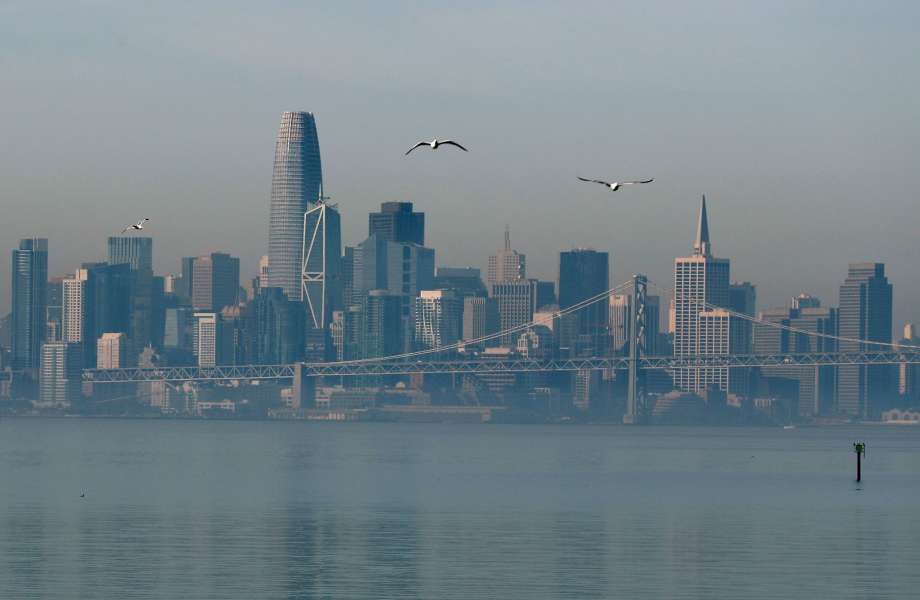
    The expected boom in initial public offerings never turned into the explosion of millionaires that was expected to happen this year, according to the New York Times.

    The expected boom in initial public offerings never turned into the explosion of millionaires that was expected to happen this year, according to the New York Times.


    Photo: Justin Sullivan/Getty Images

  •  IPO explosion never happened in San Francisco, according to the NY Times

Caption

Close

The expected boom in initial public offerings never turned into the explosion of millionaires that was expected to happen this year, according to the New York Times.

The expected boom in initial public offerings never turned into the explosion of millionaires that was expected to happen this year, according to the New York Times.


Photo: Justin Sullivan/Getty Images


The New York Times published a provocative article Thursday on how an anticipated boom in initial public offerings — and related consumer spending — never exploded in the San Francisco Bay Area. The tidal wave of new millionaires never swept the region.

“San Francisco has been left as a slightly more normal town of tech workers who got rich-ish, maybe making a few hundred thousand dollars,” reads the article titled “Where Are the Tech Zillionaires? San Francisco Faces the I.P.O. Fizzle” by Nellie Bowles and Kate Conger. “But that doesn’t go far in a city where the median cost of a single family home is about $1.6 million.”

The story goes on to report on the impact: “Private wealth managers are now meeting with a chastened clientele. Developers are having to cut home prices — unheard-of a year ago. Party planners are signing nondisclosure agreements to stage secret parties where hosts can privately enjoy their wealth. Union organizers are finding an opportunity.”


In March, the Times ran a story, also by Bowles, predicting the flurry of big tech companies entering the tech market would create a crush of overnight millionaires “hungry for parties, houses, boats, bikes — and ice sculptures.”

At the time, Lyft, Uber, Airbnb, Slack, Postmates and Pinterest were all lining up to go public. Valuations were sky-high with Uber at $120 billion, Airbnb at $31 billion, Lyft with $15 billion and Pinterest at $12 billion.

Bowles interviewed business owners preparing for the influx, everyone from party planners ready throw elaborate parties, to the owners of an electric bike company increasing its stock for an influx of customers.

Now, nine months later, the story is a little different. “The stock of Uber, the ride-hailing giant, has dropped nearly 30 percent since the company went public in May,” reads the Times piece. “Lyft shares are down nearly 40 percent. Pinterest and Slack have declined, too.”

Could it be the Times over-hyped the impact of the IPOs and now they’re under-hyping the result? SFGATE talked with some experts in the community.

“I did read the Times story, and I do agree that some people expected a big spike in the ultra-luxury market, which we haven’t seen,”  Ted Egan, chief economist with the city of San Francisco’s Office of the Controller, wrote in an email. “Of course it’s difficult to separate out the effects of the IPOs from everything else that is happening in the economy and housing market. Our own analysis from last May predicted a fairly small bump to housing prices because of IPOs, in the range of .5% to 2.0%, because even the big IPOs of a few companies wouldn’t account for that much of the overall economic growth of a city the size of San Francisco. The economic numbers for the city, as far as we know through the first half of 2019, have been very strong, so there’s no real sign yet that the tech boom is over.”


Financial Samurai columnist Sam Dogen says the IPOs have generally done terribly. “What I see happening is there’s a come-to-Jesus moment and maybe joining a startup isn’t a promise to become rich,” Dogen says. Anyone who joined in 2015 or later isn’t rich. They’re losing. They took a salary cut to work for a place like Uber and get paid in stock. Instead, the stock is down 25 to 30 percent from when they got the stock in 2015.”

But Dogen adds the region has still seen an influx of new money as employees of tech companies are cashing out stock options that are now liquid. They just may not have raked in is as much money as expected.

“It’s just happening slowly and maybe instead of being worth $2 or $3 million, they may be worth only $1 million.”

One of the key indicators of the IPO fizzle presented by the Times is a softening of a ultra-luxury condo market. In the past year, a number of new high-priced penthouses have hit the marketing including the $46 million grand penthouse in 181 Fremont and the $49 million penthouse in the Four Seasons. These haven’t flown off the shelves.

Patrick Carlisle, chief market analyst with Compass real estate, has tracked this trend. “In that segment, developers certainly over-estimated the number of buyers for condos in the highest price ranges,” Carlisle wrote in an email. “Now the supply far outweighs the natural demand, and sellers are competing for buyers instead of vice versa.”

He adds this is the only segment in the city that now qualifies as a buyer’s market. The second quarter of 2019 was surprisingly strong in San Francisco and the inner East Bay. While not as overheated as spring 2018, when markets were the hottest since 2000, demand was high.


“By every standard statistical measure, both these areas out-performed the other Bay Area markets, which did not have an IPO effect, almost all of which saw drops in median sales prices, drops in sales volumes, increases in price reductions, and overall, significantly weaker market dynamics. Both SF and the inner East Bay saw modest year-over-year increases in median sales prices in the 2nd quarter,” he says. “Overbidding remained common, most listings sold very quickly. There was a general shortage of listings as compared to buyer demand. In particular, S.F. has seen very strong sales in the higher price segments — in S.F., houses in the $2-million-to-$4-million range — though not in the highest ultra-luxury segments, $5 million-plus.”

Amy Graff is a digital editor with SFGATE. Email her at agraff@sfgate.com.

Article source: https://www.sfgate.com/realestate/article/IPO-New-York-Times-San-Francisco-economy-14919502.php

Posted in SF Bay Area News | Tagged | Leave a comment

Sponsored: Compass takes S.F. Bay Area by storm in residential real estate — including luxury

Within just two short years, Compass has grown to be the largest residential real estate brokerage in the San Francisco Bay Area. After purchasing Paragon Real Estate Group and Pacific Union International in San Francisco in 2018, Compass needed a major Silicon Valley presence. With Alain Pinel Realtors joining the national real estate brokerage this last March, the two firms have united as a powerhouse in Silicon Valley. With APR’s reputation for quality and expertise in the luxury market combined with Compass’ cutting-edge technology and national reach, clients have access to the best of both worlds in a single brokerage. For the 12 months ending November 30, 2019, Compass was No. 1 in MLS market share for the 10 Bay Area counties in all three categories: (1) Total Market Share of 17.6%, (2) Luxury ($5m+) Market Share 37.8% and (3) Ultra Luxury ($10m+) Market Share of 35.3%.

 Sponsored: Compass takes S.F. Bay Area by storm in residential real estate — including luxuryCompass is building the first modern real estate platform, pairing the industry’s top talent with technology to make the search-and-sell experience intelligent and seamless. The goal is to empower agents so they have more time for advising their clients, all in the service of the Compass mission: to help everyone find their place in the world. Founded in 2012 by Ori Allon and Robert Reffkin, Compass operates in more than 100 cities.
Buyers and sellers also have an advantage through Compass’ innovative programs such as Compass Concierge and Compass Bridge Loan Services — turnkey programs that make buying and selling easier, faster, and more profitable.

Compass Concierge is a standout program that Silicon Valley customers have been raving about. With Compass Concierge, you are fronted for the cost of home improvement services with no interest, allowing you to sell your home faster and for a higher price. Concierge covers services such as roof replacements, foundation repairs, flooring, painting, and more — all at no upfront cost to the seller. When your home sells, the homeowner simply pays back the funds at the close of escrow. No interest and no additional fees.

Compass Bridge Loan Services is another program launched by the brokerage to bridge the gap between the home you have and the home you want. A bridge loan is a short-term loan that uses the equity from your current home to help you make an offer on a new one, without rushing to sell. With Compass Bridge Loan Services, clients have access to competitive rates and dedicated support from industry-leading lenders, with the exclusive option to get up to six months of loan payments fronted.

When top producer Therese Swan was asked why she was so excited to be a part of Compass, she replied, “Compass has amazing programs that are so beneficial to buyers and sellers. These new services will further enhance my ability to service my clients. But I have to admit, the thing I am most excited about is the future. Compass will be getting heavily into machine learning and AI. Because of my very strong technical background prior to real estate combined with my success in selling homes, I had the opportunity this year to meet with CTO Joseph Sirosh and provided him with several ideas of applications for machine learning in the real estate industry. What I found out in the process, was that Joseph, who was previously the head of AI/ machine learning at Microsoft, was also hiring top AI executives from both Zillow and Amazon, and expected to grow to about 450 engineers in all product areas by the end of 2020. To be part of the future of real estate is just extremely exciting.” Swan’s education includes a Bachelor of Science degree from William and Mary with majors in mathematics and computer science as well as computer science graduate studies at the University of Illinois Urbana-Champaign.

Prior to real estate she worked as an application developer in the tech industry and later migrated into a top sales position selling software and consulting services. She has been a top-producing real estate agent the past 12 years in a row and is consistently among the Top 100 agents in the S.F. Bay Area. In addition, she has been nationally ranked in the Wall Street Journal Top 1,000 agents in the United States.

Content provided by Therese Swan

Contact: Therese Swan 408-656-8240, tswan@tswan.com
Website: www.tswan.com


Article source: http://www.mercurynews.com/sponsored-compass-takes-s-f-bay-area-by-storm-in-residential-real-estate-including-luxury

Posted in SF Bay Area News | Tagged | Leave a comment

San Francisco housing went on a rampage this past decade

In the 1957 B-movie The Amazing Colossal Man, an explosion causes a once-ordinary guy to grow to ten times his normal size and wreak havoc on a city—an apt metaphor for the San Francisco housing market more than 50 years later.

As the decade draws to a close, the question of what exactly happened to housing in San Francisco is one part triage to two parts post-traumatic shock. Opulent new constructions, like the $46 million penthouse at 181 Fremont or the $40 million house on Billionaires’ Row, had eyes popping—but that’s come to be expected in recent years. The real whiplash came when onetime humble homes geared toward middle-class residents became Onion headlines: A Sunset District Spanish Mediterranean sold for $555,000 over asking, and uninhabitable teardowns sold for near the seven-figure mark.

Here’s how housing in San Francisco looked in the 2010s, by the numbers.


In 2010, the median sale price for a single-family house in SF came in at $751,000, a smidge under the census-estimated median home value of $768,000. Median monthly housing costs for a home with a mortgage in SF were $3,180.

But by October of 2019, the California Association of Realtors estimated that a median-priced SF house sold for $1.65 million, more than double the value of a home the same time ten years ago.

Of course, one must add inflation into the mix—$751,000 in 2010 was more like $891,000 today if we apply the Bureau of Labor Statistic’s inflation formula. But that still leaves SF up more than 85 percent in less than a decade.

Condo prices were comparably more mellow but still jaw-dropping in hindsight, up from $670K at the beginning of the decade to $1.24 million earlier this year, according to real estate group Compass. That’s a 55 percent appreciation after inflation.

Home values have sprung up to $1.19 million in eight years, and mortgage costs in San Francisco for the 2018 census estimates were at $3,751, more than twice the national median of $1,566.

In eight years the number of owner-occupied homes in SF crept up from 123,128 in 2010 to 136,242.

And the homeowner vacancy rate, which was already a vanishingly small 1.3 percent, shrank to 0.3—a figure so small that most people assume it’s a mistake the first time they hear it.

Although the dominating force in the last ten years of SF housing has been the much ballyhooed tech boom—and the chaos in its wake—the beginning of the decade was a different time, with the nation still weary and wary after the failure of the banking and housing sectors and San Francisco looking at a 10 percent unemployment rate.

“They used to talk about the rational investor, but people constantly do things that are irrational,” Compass analyst Patrick Carlisle told Curbed SF, reflecting on the anxiety of those recession years.

“When things are down, people they think it’s never going to get better; and when things go up and optimism turns into irrational enthusiasm, they think it’ll go up forever,” he adds.

That irrationality creeps into housing prices as a sort of heady brinksmanship that drives up prices through bidding wars that buyers might not even realize they’re getting into.

“What pushes prices up more than any other factor is buyers competing for the same home,” Carlisle says, noting that bidders “start thinking about paying much more money than they ever did before” once there’s someone to compete against.

Bidding wars became de rigueur in the city, with many homeowners pricing their abodes with seemingly affordable prices, only to see offers, coming in fast and furious, skyrocket. Cunning realtors developed a habit of pricing homes below market value, angling for bargain hunters who ironically ended up vaulting the price ever-higher.

Midway through the decade, and with the tech-inspired housing frenzy in full swing, some parties began feeling queasy about the size of the year-over-year metrics and began having grim flashbacks of the previous dot-com boom and its aftermath around the year 2000.

In early 2016, credit rating agency Fitch Ratings called San Francisco home prices “unsustainable,” with Fitch Managing Director Grant Bailey pointing out, “The last time the Bay Area experienced this kind of home price growth was during the dot-com era,” which presaged ruin.

Only two months earlier, real estate site Zillow reported that of 56 “housing experts” surveyed, 22 believed SF was in the midst of a housing bubble, 11 expected a bubble within a year, and 15 predicted one within three to five years—so, right about now.

“All the rapid growth really brought back bad memories,” Jordan Levine, deputy chief economist for the California Association of Realtors, tells Curbed SF, recalling fears about both the old tech bubble and the more recent mortgage bust.

But the bubble didn’t burst. “I hesitate to use the phrase, ‘This time it’s different,’” says Levine, adding, “it’s a terrible time to be a housing forecaster” thanks, in part, to the inherent weirdness of the SF market, where constrained supply makes strange things happen.

Even so, he says he doesn’t anticipate any big crash-out in the near future. He also points out the irony of many people’s response to this assessment: “We end up rooting against ourselves” because SF’s signs of success— e.g., high wages, low unemployment, ravenous housing demand—are also omens of doom for those feeling compacted by the pressures of trying to afford living here.

Earlier this year, Curbed’s Jeff Andrews pointed out that a recession, when it comes (there’s always one coming sooner or later) probably won’t make a big dent in housing prices.

“During two mild recessions in the early 1980s, for example, home prices actually increased,” Andrews writes, and in most cases housing either stays flat or dips only slightly when the rest of the economy turns south. The 2008 crash was a weird exception not likely to repeat in our lifetimes—maybe ever.

Possibly San Francisco, with the sheer scale of housing appreciation this decade, has a little more air to let out than the rest of the country does.

But unless the fundamentals of how housing works in the city radically change, an economic disaster still might not hit hard enough to make homebuying plausible for anyone but the wealthiest or those willing to take on the greatest possible housing burden in its aftermath.

“Even tech workers can’t afford to buy homes in San Francisco,” Recode observed in March. That can happen when you create a monster: It’s out of your control before you know it.

Article source: https://sf.curbed.com/2019/12/16/21001096/san-francisco-housing-decade-review-2010-prices-bubble-crisis

Posted in SF Bay Area News | Tagged | Leave a comment

Inside the best San Francisco Bay Area homes

House Calls, Curbed’s weekly original tours series, takes you inside homes of eye-catching style and big personality, from bohemian apartments with funky decor to contemporary behemoths with design furniture.

We’ve selected the homes and homeowners’ stories of the last decade that best captured the vibe of the Bay Area: Multimillion-dollar affairs, like this major remodel atop a famous San Francisco hill or this empty-nester couple’s colorfully postmodernist apartment in SoMa, will thrill even real-estate and design aficionados who don’t pull in eight figures annually. But Curbed also stepped inside more approachable, yet no less stunning homes, like this Castro artist’s unabashedly maximalist apartment teeming with found objects, or a tiny Hayes Valley studio were a closet was transformed into a sleeping space.

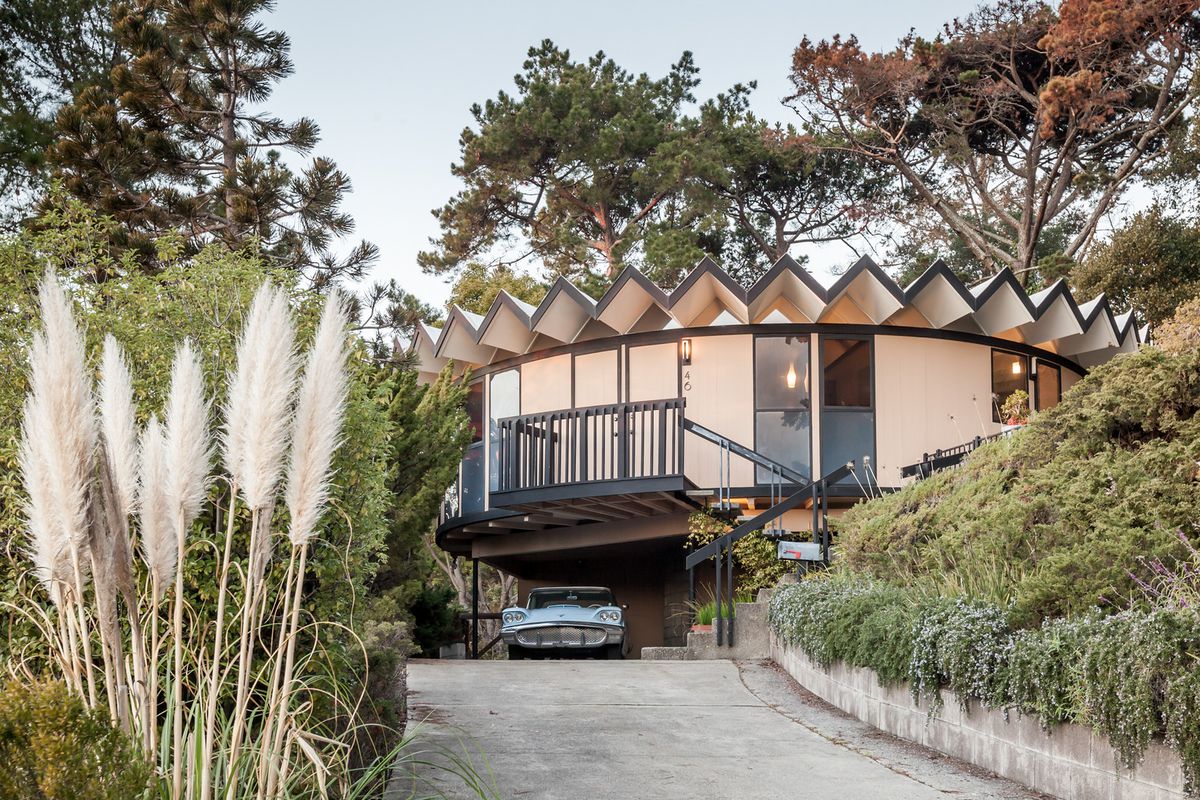
Even the midcentury trend (which, mercifully, reached its zenith this past decade) is represented in all of its retro glory at Oakland’s circular Nolan House.

Without further ado, may we present our favorite Bay Area homes of the decade.


f27d5 HouseCallJimSiegal PChang 5422.0 Inside the best San Francisco Bay Area homes

Photo by Patricia Chang

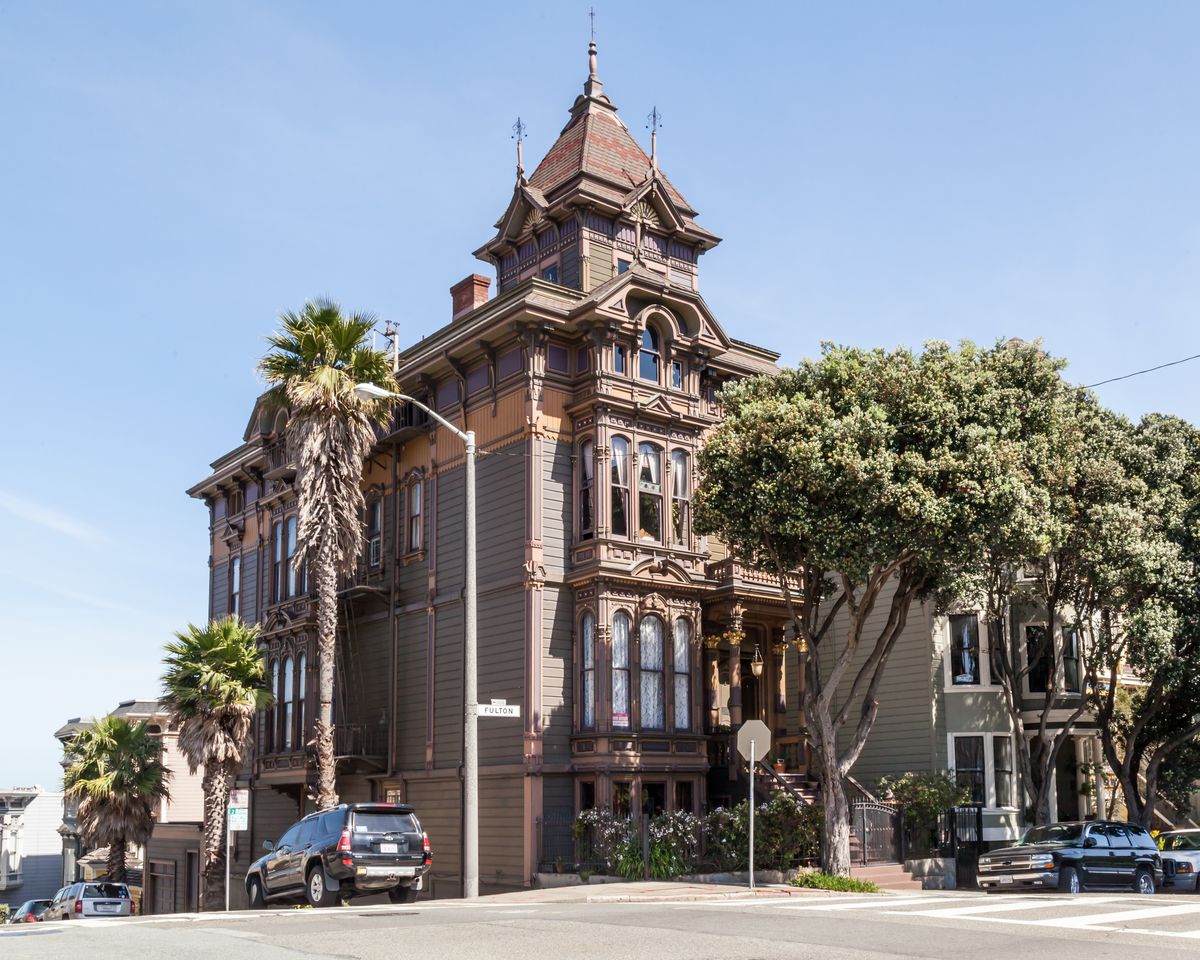
Alamo Square’s Westerfeld House: San Francisco’s most storied Victorian

When Jim Siegel was just eight years old, he saw his first episode of The Addams Family, and fell in love during the opening sequence. Not with the “creepy” and “kooky” characters shown snapping their fingers in a staccato cadence, but with the gothic Victorian house pictured in the first frame. Siegel, watching in his parents’ suburban ranch house, was smitten.

”I was obsessed with that show and the house,” he says. “I think it was because the family and their home were quirky and different. Even back then, I knew I was gay, and I felt different from everyone around me—maybe I identified with it.”

He was still a boy when he saw the Westerfeld House, a Stick Italian Villa in Alamo Square, from the window of his parents’ car. “To me, it looked like the Addams Family house,” he says. (…more)

f27d5 HouseCallCastro PChang 4345 Inside the best San Francisco Bay Area homes

Photo by Patricia Chang

Castro apartment: Inside an artist’s maximalist home

“I don’t like looking at TVs,” says fine artist and Radical Faerie Brian Busta. “They’re so ugly.” And that, in part, is what makes his expansive, sun-dappled Castro apartment so special—its fantasy decor with nary an inkling of anything from the contemporary world.

Television sets and laptops are tucked away in favor of rustic and used objects collected over the years, which Busta has strewn about in careful, loving fashion.

For the last decade, Busta (who also goes by the name “Chickpea,” a Radical Faerie sobriquet he picked up during a stay at Oregon’s Wolfcreek commune in the ’90s) has been at the helm of designing glowing installations for Comfort and Joy, an LGBT nonprofit that began as a bawdy, sexually-charged Burning Man camp. (…more)

f27d5 House Calls San Francisco Taylor livingroom 2.0.0.1484256352 Inside the best San Francisco Bay Area homes

Photo by Carlos Chavarria

SoMa warehouse: Empty nesters upgrade to make room for their quirky passions

When Lloyd and Dana Taylor’s six children departed, the couple left their suburban family house and began searching for a space in San Francisco. They weren’t looking for just any empty-nester condo, they were after something different; and several months in, they realized that they wanted a warehouse.

The Taylors are involved in a number of organizations that support arts and ideas, ranging from We Players, a group that turns public spaces into site-integrated theater, to Jeffersonian Dinners, gatherings of thought leaders to discuss issues. (…more)

8a0f1 House Calls San Francisco Robinson roomate portrait 13 Inside the best San Francisco Bay Area homes

Photo by Carlos Chavarria

Mission District Victorian: An artist finds a home, and community

The name Christian Robinson is familiar to legions of parents and children across the nation. He’s the illustrator of 10 children’s books, including bestsellers such as , , and, most recently, . His work, usually a mix of painting and collage, is instantly recognizable for its joyful, almost childlike, quality.

Many of his books include sweet interiors, such as the vaguely Victorian rooms in Leo: A Ghost Story. Robinson says that details in Leo’s haunts were partly inspired by his own home: A four-bedroom apartment in the Mission District he shares with three other roommates. To understand what his place means to him, you have to know the home of his childhood. (…more)

 Inside the best San Francisco Bay Area homes

Photo by Patricia Chang

Duboce Triangle studio: A writer’s life, loved ones, and design philosophy

“As San Francisco becomes blander, we old-timers have a responsibility to be weirder,” John Vlahides, a travel writer and San Francisco Symphony Chorus member, explained as he looked out the window of his 1920s studio. His view, which once captured the bay and downtown San Francisco, now looks out onto the beige stucco back wall of Linea, the contemporary glass condo behemoth on Market Street.

And although weird can come with all sorts of affected connotations, especially in San Francisco (think cat eye glasses, tiki lamps), Vlahides, a gentleman in his own right with rapid-fire cadence and honed wit, has reclaimed the term and elevated it with a glug of storied elegance.

His two-room studio in the Castro attests to his peculiar yet cohesive mishmash of style. Located at the nexus of Duboce Triangle, Castro, and Hayes Valley, Vlahides prefers to think of his neighborhood as the Castro. (…more)

8a0f1 HouseCallMidCenturyMobler PChang 4535 X3.0 Inside the best San Francisco Bay Area homes

Photo by Patricia Chang

Oakland’s Nolan House: Vintage-loving couple decorate an architectural time capsule

You could say that Julian Goldklang and Desiree Myers started furnishing their unique round house in Oakland years before they ever laid eyes on it. As the owners of midcentury Møbler in Berkeley, the largest midcentury showroom in Northern California, they are in a good position to score the best furniture of the era.

”Before moving into our home, it had been our dream to fill a midcentury house with concurrently designed furniture,” Goldklang says.

”Over the last 10 years, I’ve been putting away my favorite pieces with the idea that they would all live harmoniously together in a perfect, untouched midcentury time capsule home.” (…more)

8a0f1 IMG 0238 Inside the best San Francisco Bay Area homes

Photo by Patricia Chang

Hayes Valley micro-apartment: Sleeping in the closet and making it work

When Catie Nienaber moved into her Hayes Valley apartment almost seven years ago, she kept what you might think of as a typical studio: a desk, some space-conscious shelving, and a bed right smack in the middle of the main living space.

”When you have people over, there’s the unacknowledged vulgarity of the bed right there in the living room,” she says. “I wanted this to be more of a space where I can have friends over and have chairs for people to sit in. Hence I turned my walk-in closet into the world’s smallest one-bedroom.” (…more)

8a0f1 HouseCallSucculence PChang 6144 Inside the best San Francisco Bay Area homes

Photo by Patricia Chang

Bernal Heights Edwardian: A succulent existence on Cortland Avenue

Back in 2007, Ken Shelf was an accountant and a musician looking for more. His wife, Amy Shelf, inadvertently found his calling on online. “At the time, I had a serious Craigslist habit. I was always checking to see what was for sale in the neighborhood,” she says. “One day, I found a post about the local video store, Four Star Video, being for sale. When I emailed it to Ken, I thought I was sharing a piece of community gossip, he took it another way.”

The Shelf family had been friendly with the owner of the video store before he died. David Ayoob was often in front of his business, sweeping up and greeting the neighbors. “He was a community character. When I read that the business and building were up for sale, I thought ‘I could be that guy,’” says Ken. (…more)

471cd House Calls Marshall Toya San Francisco living 1 Inside the best San Francisco Bay Area homes

Photo by Kelly Marshall

Alamo Square apartment: An architect embraces all things vintage

San Francisco’s Alamo Square is most famous for its iconic row of Painted Ladies, the colorful Victorian homes that run along its east side, which became a pop culture icon when they appeared in the title sequence of the late-’80s, early ’90s television show Full House.

But just on the other side of the park sits another stately building, with an arched entryway of marble and dark wood, its large bay windows hugging a corner of the building. This yellow-brick pile has been home to architect John Toya for the last decade. (…more)

471cd House Calls San Francisco Frey living room.0.1484137231 Inside the best San Francisco Bay Area homes

Photo by Carlos Chavarria

Forest Hill home: The dream house next door

Although Tina and Jochen Frey had committed to a house, they kept looking longingly at the neighbor’s dwelling. It made no sense to abandon their remodel plans and move next door—or did it?

The couple had relocated from the Marina (like the name suggests, a neighborhood along the San Francisco Bay) to Forest Hill (located atop the hilly area on the city’s southwest side) just two years ago. They loved many things about the new house, but it needed updating, and they were busy planning a remodel with architect George Bradley. It was increasingly clear that the plans were shaping up to be a major project. (…more)

471cd GEORGE HOME30128 Inside the best San Francisco Bay Area homes

Photo by Kelly Marshall

SF Edwardian: Inside an art director’s sanctuary—and festive dinner parties

Two years ago, San Francisco artist and art director George McCalman found himself living alone for the first time in many years and grieving the end of a long-term relationship. His road to recovery involved reimagining the apartment he had shared with his partner and reinvigorating his three community-building groups.

McCalman’s journey to the one-bedroom unit—which is tucked into an Edwardian dwelling on a narrow street—is circuitous and (seemingly) charmed. Prior to his occupancy, it was rented by his friend and her boyfriend. “When she applied to live there, I provided a reference letter for her,” he says. “I always loved the place, and I would joke with her, telling her that when she died, I wanted the apartment. It was kind of a gallows humor between us, and my meaning was that the place was so great, death would be the only reason you would ever leave.” (…more)

471cd House Calls Chavarri a Robert Edmonds   Vivian Lee San Francisco exterior 1 Inside the best San Francisco Bay Area homes

Photo by Carlos Chavarría

Twin Peaks contemporary: “Even the developers wouldn’t touch it”

When architects Robert Edmonds and Vivian Lee moved from New York City to San Francisco, they discovered something many outsiders don’t know about the City by the Bay: The fog is not distributed equitably.

As anyone who has spent time in SF will attest, there are parts of the city that are warmer and sunnier than others. This couple, partners in life and in the firm Edmonds + Lee Architects, found this fact out the hard way—they moved to Twin Peaks, a neighborhood that’s foggier than many. (…more)

Article source: https://sf.curbed.com/2019/12/17/21024911/inside-best-favorite-bay-area-homes-house-sf

Posted in SF Bay Area News | Tagged | Leave a comment

Building a Better Bay Area: Median home price in Fremont surpasses $1 million – KGO

FREMONT, Calif. (KGO) — 7 On Your Side’s Michael Finney met up with Fremont real estate agent Bryan Van Heusen as he was showing clients one of his listings. The home had 3,300 square feet, was in a nice area, modern and clean. It was not cheap.

The prices in Fremont may surprise you.

BUILDING A BETTER BAY AREA: Fremont

Bryan told his clients, “This home here is priced at $2.3 million.”

Rozina and Pijoel Karki already live in Fremont. They are looking to be move-up buyers.

“If we find a perfect home, move-in ready, we are willing to put in an offer,” Rozina said.

Van Heusen says not only is Fremont attractive, but this area is where many want to live.

“This is Mission San Jose,” he says. “So this is the upper crust of Fremont.”

BUILDING A BETTER BAY AREA: Fremont’s housing solutions

Fremont is the fourth largest city in the Bay Area, only surpassed by San Francisco, San Jose and Oakland. Among the Big Four, Fremont has the second most expensive housing, following only San Francisco.

“It is a really large city in the Bay Area and it is more expensive than many people think,” says Cheryl Young, a senior economist at Zillow. She says, “San Francisco is $1.3 million for a typical home. Fremont is just under a million. So like $999, $800 or something like that.”

Prices have dropped just shy of 5 percent from their height here, but the increases are still staggering. According to Zillow, in October 1999, the median house in Fremont sold for $313,600. Ten years after that, in October 2009, the median price is $523,500. Ten years later, last month, the median price was $1,065,700.

“Fremont has risen through the ranks over the past few years,” real estate agent Van Heusen says. “They’ve got, believe it or not, better schools than Cupertino and the job growth here is exceptional. Also, proximity. You are 20 minutes to San Jose, Silicon Valley and 25 minutes to San Francisco. It kind of makes sense.”

That brings us back to our home shoppers, who love Fremont and see it as a great deal, even at more than $2 million.

“Fremont is still affordable when compared to the Peninsula and the South Bay,’” says Pijoel Karki.

He’s right. Across the Dumbarton Bridge from Fremont is Palo Alto, where the median cost for a home is $2,852,000 — two and a half times the cost in Fremont.

See more stories and videos about Building a Better Bay Area here.

Take a look at more stories and videos by Michael Finney and 7 On Your Side.

Article source: https://abc7news.com/realestate/median-home-price-in-fremont-surpasses-$1-million/5714057/

Posted in SF Bay Area News | Tagged | Leave a comment