Sponsored: Compass takes S.F. Bay Area by storm with its seamless search-and-sell experience

Within just two short years, Compass has grown to be the largest residential real estate brokerage in the San Francisco Bay Area. After purchasing Paragon Real Estate Group and Pacific Union International in San Francisco in 2018, Compass needed a major Silicon Valley presence. With Alain Pinel Realtors joining the national real estate brokerage this last March, the two firms have united as a powerhouse in Silicon Valley. With APR’s reputation for quality and expertise in the luxury market combined with Compass’ cutting-edge technology and national reach, clients have access to the best of both worlds in a single brokerage. For the 12 months ending November 30, 2019, Compass was No. 1 in MLS market share for the 10 Bay Area counties in all three categories: (1) Total Market Share of 17.6%, (2) Luxury ($5m+) Market Share 37.8% and (3) Ultra Luxury ($10m+) Market Share of 35.3%.

 Sponsored: Compass takes S.F. Bay Area by storm with its seamless search and sell experienceCompass is building the first modern real estate platform, pairing the industry’s top talent with technology to make the search-and-sell experience intelligent and seamless. The goal is to empower agents so they have more time for advising their clients, all in the service of the Compass mission: to help everyone find their place in the world. Founded in 2012 by Ori Allon and Robert Reffkin, Compass operates in more than 100 cities.

Buyers and sellers also have an advantage through Compass’ innovative programs such as Compass Concierge and Compass Bridge Loan Services — turnkey programs that make buying and selling easier, faster, and more profitable.

Compass Concierge is a standout program that Silicon Valley customers have been raving about. With Compass Concierge, you are fronted for the cost of home improvement services with no interest, allowing you to sell your home faster and for a higher price. Concierge covers services such as roof replacements, foundation repairs, flooring, painting, and more — all at no upfront cost to the seller. When your home sells, the homeowner simply pays back the funds at the close of escrow. No interest and no additional fees.

Compass Bridge Loan Services is another program launched by the brokerage to bridge the gap between the home you have and the home you want. A bridge loan is a short-term loan that uses the equity from your current home to help you make an offer on a new one, without rushing to sell. With Compass Bridge Loan Services, clients have access to competitive rates and dedicated support from industry-leading lenders, with the exclusive option to get up to six months of loan payments fronted.

When top producer Therese Swan was asked why she was so excited to be a part of Compass, she replied, “Compass has amazing programs that are so beneficial to buyers and sellers. These new services will further enhance my ability to service my clients. But I have to admit, the thing I am most excited about is the future. Compass will be getting heavily into machine learning and AI. Because of my very strong technical background prior to real estate combined with my success in selling homes, I had the opportunity last year to meet with CTO Joseph Sirosh and provided him with several ideas of applications for machine learning in the real estate industry. What I found out in the process, was that Joseph, who was previously the head of AI/machine learning at Microsoft, was also hiring top AI executives from both Zillow and Amazon, and expected to grow to about 450 engineers in all product areas by the end of 2020. To be part of the future of real estate is just extremely exciting.” Swan’s education includes a Bachelor of Science degree from William and Mary with majors in mathematics and computer science as well as computer science graduate studies at the University of Illinois Urbana-Champaign.

Prior to real estate she worked as an application developer in the tech industry and later migrated into a top sales position selling software and consulting services. She has been a top-producing real estate agent the past 12 years in a row and is consistently among the Top 100 agents in the S.F. Bay Area. In addition, she has been nationally ranked in the Wall Street Journal Top 1,000 agents in the United States.

Content provided by Therese Swan

Contact: Therese Swan 408-656-8240, tswan@tswan.com
Website: www.tswan.com


Article source: https://www.mercurynews.com/sponsored-compass-takes-s-f-bay-area-by-storm-in-residential-real-estate-including-luxury

Posted in SF Bay Area News | Tagged | Leave a comment

SF’s Plan to Build More Housing, and Fewer Offices

Prop E will put new pressure on what Elberling describes as the Bay Area’s “growth industry.” Under the new dispensation, developers as well as other sectors that derive benefits from growth will have a strong incentive to make sure that affordable housing gets built. The idea is to turn developers into a lobby for affordable housing. “It would be in their self-interest,” he says. “They will push harder for more funding for more affordable housing.”

Further, the measure would expedite developments that include their fair share of affordable housing units (or pay for them to be built elsewhere). Should San Francisco fail to hit its housing targets, the Prop E regulation will instead slow new office projects—a win-win scenario, from Elberling’s perspective. “When you’re in a hole,” he says, “you stop digging.”

But addressing the city’s jobs-housing imbalance by driving jobs out of the area would be short-sighted, says Nick Josefowitz, policy director of the Bay Area urbanist nonprofit SPUR—especially because San Francisco is “one of the most transit-oriented places west of the Mississippi.” Already, offices are moving out in search of cheaper real estate; the payment-processing company Stripe fled for the more suburban city of South San Francisco this fall. Under Prop E, more offices looking to expand may have to look to the San Francisco Peninsula or to the East Bay—areas that are less connected by transit than San Francisco while similarly strapped for cheaper housing.

“When looking at the jobs-housing balance, it’s more appropriate to look at it at the regional level,” Josefowitz says. “People are commuting all over this region … many coming in from the Central Valley. What I think is important is that the entire region steps up to build … enough affordable housing to house our residents rather than trying to necessarily dice up the jobs-housing balance in small cities at that scale.”

Other opponents of Prop E have a different concern: The cap won’t do enough to slow office growth, especially in the short term. “I really think that Prop E is much ado about very little,“ says Randy Shaw, the author of a book on California’s housing supply crisis, Generation Priced Out. In his proposal, Elberling ensured that the measure will exempt 5.5 million square feet of office space across SoMa, where seven building permits have already been approved. Because of the “staggering” amount of office space not covered under the proposal, it could take 10 to 15 years for the intended targets to start brushing up against the limits, Shaw says.

In central SoMa, Elberling’s proposal not only grandfathers in the projects already underway, it would actually expedite their construction. Under Proposition M, the 1986 measure, the city set strict limits on office construction to prevent the “Manhattanization” of San Francisco; the new measure would allow these seven buildings to sidestep those restrictions. “If we stuck with Prop M as it is, it would take a long time for central SoMa plans to be built out,” says Sonja Trauss, co-executive director of the California Renters Legal Advocacy and Education Fund* and a founding figure in California’s “Yes In My Backyard” movement. “This ballot measure is going to create a flood of new offices, without doing anything to guarantee that we’ll have more affordable housing.”

Article source: https://www.citylab.com/equity/2020/01/san-francisco-affordable-housing-office-space-proposition-e/604651/

Posted in SF Bay Area News | Tagged | Leave a comment

Palo Alto mayors talk about everything wrong with Bay Area housing

If any city besides San Francisco is the unwilling poster child of the Bay Area housing crisis, it’s Palo Alto, the bucolic Peninsula town with fewer than 67,000 people in the cold heart of Silicon Valley.

Not just because of the crushing pressure of finding and keeping housing or because of the high stakes of trying to create new development in the tony enclave that Mark Zuckerberg and Larry Page call home, but also because of the tectonic divisions in the conversation about how to resolve them.

Case in point, Palo Alto City Councilmember Eric Filseth served as the city’s mayor in 2019, while Adrian Fine assumed the mayor’s role this year; both mayors agree that the cost of housing in Palo Alto has strangled diversity in the community, and both agree that the city has underinvested in critical infrastructure like housing and transit.

But when it comes to the roots of and solutions to the problem, the two mayors agree on little at all.

Most recently, both split over Senate Bill 50, SF-based State Sen. Scott Wiener’s sweeping (and divisive) transit-housing bill that faces a looming deadline in the California Senate.

After Filseth scourged the bill in an op-ed earlier this month, Curbed SF talked to him about the hazards of housing in Silicon Valley, and with Fine about why he’s putting faith in Sacramento to help break the impasse in his city.


Curbed SF: We have some follow-up questions about your recent op-ed about SB 50 in the Daily Post.

Eric Filseth: Well, I think most of what I’ve got to contribute, much of which I suspect Curbed doesn’t agree with, is in the Post piece: Until cities balance their jobs and housing growth, they put people into tents.

In the mid-Peninsula, office space leases for [up to] $12 per square foot, high-end housing for maybe $4.00, and affordable housing well under that. So no surprise, we get a lot of investment in the first of those, much less in the second, and none in the third unless we subsidize it.

Cities like business tax revenues and hate spending money. Basically the formula has been: green light every commercial project, and let somebody else worry about the increasingly expensive housing, transportation, and infrastructure. Coming out of the recession the whole Bay Area was guilty of this—including us.

I’m aware Curbed believes suburbs are white NIMBY bourgeois who don’t want to live near low-income earners and so don’t deserve to vote. That’s nutty. Everybody in town here knows that only 10 percent of our teachers and seven percent of city staff actually live here, and it’s a huge issue. You can’t have a functional community comprised only of software engineers and patent attorneys.

In 2015-16 we got off the merry-go-round [and] slapped on serious annual office-space caps, which constrained jobs growth so far that it no longer outstripped our housing production The real estate people obviously hated it, we worried about revenue, but we did it and the result was balance.

I don’t believe SB 50’s upzoning will overcome the economics of commercial versus housing investment. That means its impact will be limited, and not remotely close to keeping up with state job growth.

You bring up all the people who can’t afford to live in Palo Alto. The thing is, that is also the problem that people cite when they promote things like SB 50.

It fits on a bumper sticker.

To them it sounds like madness to say, “Working people can’t afford to live here, so don’t build more housing.” And yes, I realize that’s not strictly what you’re saying—but it is what they hear. Can you address that?

Correct, that’s not what I’m saying. Sure, like everywhere there are people in town who think we’re completely full, but they’re a minority. And, of course, there are people who intentionally distort it that way, in order to support their own political narrative—standard political stuff, alas, sort of like Hillary’s email server.

As for educating everybody, I’ve found it’s tough enough just staying in alignment with our local community. Even harder to do that with the larger region. Even harder with the state level. And harder yet at the national level. If you figure out the answer, tell me, especially with this stuff that’s too complicated to fit on a bumper sticker.

You say Palo Alto “got off the merry-go-round” by capping office construction, but this is a regional economy; offices you don’t build have to be built somewhere else. I guess everyone could say no, but then don’t we pay a price economically?

Which do we prioritize: max new jobs, or no more people in tents? “I can have both for free if I just do X” is a cop-out. We also pay an economic price for environmental and child-labor laws too, and do so happily.

It’s not a no-jobs argument. It’s an argument that if benefits do outweigh costs, then the people who get the benefits ought to cover the costs, not slough them onto the city next door. It doesn’t help that these costs have escalated as the region has densified. But you can’t have it both ways: If it’s not worth doing anywhere, it probably shouldn’t be done. If it is worth doing, then somebody must pay.

Underinvestment in the housing, transportation and infrastructure necessary to sustain our economic success is the foundation of the Bay Area’s woes. Who should fund that investment is our region’s existential question. And it needs to be answered by government setting the rules; corporations are not charities, it’s not fair to ask them to decide on their own.

How to pay for the region’s economic expansion is the seminal issue here. All this NIMBY-YIMBY stuff, and squabbling over who sets parking ratios, is a waste of time.

A jobs/housing balance is still not really relieving housing shortages, it’s just freezing them. Surely the goal should be producing more housing than job/population growth; otherwise aren’t we preserving an interminable status quo?

But you have to live in the real world—at least we do in cities. What you just described is, for the moment, a fantasy. None of these Sacramento initiatives even comes close to matching future job growth let alone exceeding it.

All that these bills [change] is zoning, and there’s no evidence that zoning can close a gap that produces jobs six times faster than housing. Why would anybody think SB 50, another zoning bill, will magically get there? In reality, SB 50 would do the usual: fall back on, “Well, surely every little bit helps.” That’s okay for state politicians, but in cities [people end up living in] tents.

Job one is surely to stop digging the hole deeper now, and there’s proof it’s achievable. Sacramento should—and can—hold cities accountable for balanced growth, not just design their zoning. Because it can actually work in the real world; the latter won’t, and pretending it will just makes more tents.

Well, SB 50 on its own can’t solve everything, but if you say we’re building too many offices and not enough homes, then how is the solution to that not to build more homes? Even if we call that an incomplete solution on its own, it is difficult to see a downside to it in material terms?

You speak of building homes like it’s a choice, that it’s boolean. It’s neither. First, the time you can actually mandate [terms] is when somebody’s seeking approval for a mixed-use project, and you can tell them: “No approval unless there’s more housing in here.” The rest of the time you’re at zone-and-wish, and subject to all the other factors like construction costs, who owns which parcels et cetera. So, it doesn’t just happen. Zoning is not housing.

Second, it isn’t yes or no. SB 50’s authors try to claim it’s a litmus test: Are you for housing or against? You kind of phrased it that way too. But it just isn’t true. How many homes are we talking about? What kind, where are they, and who lives in them? What are the costs and who pays them? How much parking do they need? What services? And who should decide? All the stuff we wish wasn’t complicated, but it is. We don’t even treat that stuff uniformly across our town, and for good reasons; I can’t imagine mandating it for the whole state.

Are there ever times when not building homes is the right answer? Sure. We don’t allow them out in the Baylands, which is environmentally sensitive and soon to be underwater. Calling that anti-housing would be a pretty extreme extrapolation.

You say more housing is just a cover for not addressing what you consider the root of the problem. How do you distinguish housing policy as an agenda from housing policy that really does think more housing will help?

I think there’s a lot of addiction to theater among career politicians and that theater can work at odds with problem-solving. I also think the influence of money in politics is corrosive. Delegate the problem-solving to local jurisdictions, and their voters will usually hold them accountable for results—it’s a lot closer feedback loop than Sacramento, or Washington DC. Not perfect, but better than the alternatives.

Wait, you say—-what about when local voters don’t agree the problem is a problem? It happens, but in my opinion less often than people think, especially in faraway places. And do you think Senator Wiener has ever in his life asked, “Gee, I wonder if there’s something these local voters might know, that I don’t?”


Curbed SF: So why do you back SB 50?

Adrian Fine: Certain cities have proven themselves incapable of creating the market conditions to produce abundant, affordable, and secure housing. In Palo Alto our population is about 65,000. We’ve been that way since the 1960s, and we’re supposed to build 300 new homes every year. Instead we’re approving about 50-60 units annually.

For decades Palo Alto has been offloading its affordable housing and market housing to other cities. If we’re not willing to build four- and five-story buildings next to the Caltrain station, where should they go? If we can’t build a mile away from the train, are we serious about this housing crisis?

But is low-density zoning near transit really the biggest problem driving up housing costs in Palo Alto?

Well, the cost of land is extraordinarily high, as is the cost of construction—those are things SB 50 isn’t going to fix. But other bills can address the process; the output is the question of who is going to buy that land and pay for the labor to begin with? It’s more attractive if we can offer them larger housing prospects instead of smaller.

And our regulations are stuck in the 1950s. We require two parking spaces per unit of housing—that is a punitive level of parking requirements. The highest you can build anywhere in Palo Alto is 50 feet, but in most of the city it’s 35 feet or 17 feet. And our jobs-to-housing ratio is like 3-1.

Well, it’s funny you mention that ratio because your colleague Eric Filseth says that’s the whole problem. He argues that if you cap office growth to match housing growth that solves the problem—and that does seem to make sense up to a point?

Sure, if you’re not doing anything then you’re not contributing to the problem—and in Palo Alto right now, we’re doing absolutely jack shit. We’re not making the problem better, but we’re not making it worse—that’s what my colleagues argue.

But Palo Alto is taking a lot of punitive steps toward business—and it’s starting to hurt us. We’re losing some big business. There’s not business and commercial growth. And there’s not housing growth happening, either. I try to push for more housing and they kill that too; it’s a farce.

That attitude assumes that each marginal square foot of office we build creates housing demand—that’s so wildly inaccurate. It’s not like you build a new office building and 50 new people move to Palo Alto, that’s now how it works. In fact, we’re actually losing population.

My parents raised six kids in Palo Alto. I’m the only one left, and a lot of it has to do with housing costs. I graduated here with 400 other kids—there’s only two or three of us left. We’re a graying city—and in some respects there’s nothing wrong with that, but I go outside of Palo Alto and I see strollers and mothers and I think “whoa.” It’s weird. And if the population goes away, then there goes your tax base—these things aren’t in a vacuum.

What about these counterarguments that—I was just reading a piece in World Economic Forum arguing that appreciation and inflation happen so fast in places like SF that we just can’t build fast enough to keep up no matter what?

Look, there’s good research on the urban economics of housing supply coming out of places like Stanford and Berkeley—just look at other markets, look at Portland, they built thousands of new homes and their prices are starting to come down. It makes sense.

They throw these Reagan-esque terms at me, saying we want trickle-down housing policy. But if we don’t build any housing, we get the opposite, the housing supply just trickles up because only rich people can pay the higher costs. That’s a formula for gentrification.

Even with what they call “luxury housing,” these new condos sell for $2 million, a single-family home for $3 million, but over time these units age and their prices come down, that’s absolutely true. If you want to see how today’s luxury home becomes tomorrow’s more affordable home, just go to Daly City.

And on top of all of that, there’s an emotional quality of life issue. When you have four or five young people sharing a two-bedroom house or renting closets or RVs or tents—just build more housing. It’s not that hard.

Another point Filseth argues is that SB 50 has garnered new support in large part by exempting communities from its most aggressive provisions, and that’s often true. What happens if the bill passes but it’s not muscular enough anymore to make real growth?

SB 50 is not the only bill in the legislature. There’s funding bills. And there’s one that came up just the other day that says any building that includes affordable housing can bypass CEQA, which would be huge.

If the half mile to quarter mile provisions in this bill get through, I think that makes a major difference no matter what. And this is not going to be our last shot, there is no silver bullet solution to this.

For people who really are classic Bay Area NIMBYs—you know, we can try to motivate them with the “Brotherhood of Man” approach, but when that doesn’t work, what can you really offer? Democracy is largely about voting your interests, so what’s in it for them to build more?

We want a diverse, vibrant community. It’s good for us to have retirees serving the community, but it’s also great to have kids at Stanford. My dad went to the hospital the other week and they say we’re going to have to schedule you for eight months out because they don’t have enough phlebotomists.

And it’s all, you know, “Why can’t I get a gardener anymore? Why does my coffee cost $6? Why did my favorite store close?” And the Palo Alto school district is having a really hard time getting teachers—this crunch is affecting everyone’s quality of life.

So is this something politics can really fix through cooperation, or are we stuck just being adversarial?

I can’t speak for the legislature. I’m always in favor of partnering for solutions. But in Palo Alto we’re probably still going to be pretty partisan on this issue. I try to be data-driven about it.

You know the data says that data is .

I get that. But what else am I going to do? This is the system we have.

Probably a smaller city like Palo Alto really can decide to put off its housing obligations and the rest of the region will make up the difference. How do you counter the math on that?

You have good actors like Oakland, San Jose, and to some degree SF. Then you have Cupertino or Los Altos that are not doing good, they’re externalizing their housing demand. That’s why SB 50 has the variable about jobs-rich communities, that’s targeted at cities like mine that don’t pull their weight.

I don’t know how to counter that attitude, but you can counter the behavior with action.

Article source: https://sf.curbed.com/2020/1/13/21062784/palo-alto-mayors-housing-crisis-sb50-filseth-fine


Posted in SF Bay Area News | Tagged | Leave a comment

Tech IPOs didn’t destroy Bay Area housing after all

The Bay Area braced itself in 2019 for a tsunami of tech cash that seemed poised to sweep away the region as we know it, but now it seems that this most recent year in housing was mostly a wash.

While some sources predicted that tech money would “eat San Francisco alive,” Compass real estate group, which assessed the state of the Bay Area in a report released last week, described the results as “basically flat—down a little bit up a little bit, or unchanged” depending on the city in question.

But mostly we saw changes in inches and degrees instead of leaps and bounds. Here are some key takeaways from the report.

  • In San Francisco, a median single-family home in 2019 cost 1.6 million, and a median condo $1.24 million. While those are both increases compared to last year—and are both huge numbers—the growth is pretty modest, just 1.6 and 3.3 percent, respectively. For comparison, between 2017 and 2018 SF’s house median leapt more than 12 percent.
  • In the South Bay, despite runaway prices in San Jose, Santa Clara County writ large actually declined from $1.33 million to $1.26 on average for a house, and $880K to $825K for a condo. Analyst Patrick Carlisle notes that “Santa Clara probably had the hottest major market in the country,” so things were bound to drop eventually.
  • The East Bay region that includes Oakland and Berkeley dropped the most for home prices, sliding four percent to $860K, while the median price of a condo was exactly the same year over year in 2019 at $620K. Tough break for anyone hoping to flip.

So why the mostly quiet season? Carlisle offers a few speculative analyses, suggesting that slower population growth, bad press from regional social issues, and the federal government’s recent changes to the tax code might have blunted demand.

In 2018, data firm Core Logic hypothesized that the Bay Area may gradually but inevitably be growing too expensive to maintain growth (now there’s a concept!), and it could be that played out in the year to follow.

And of course, generally speaking the performances of many big-name Bay Area tech companies disappointed market watchers last year Although perhaps the IPO wave of 2019 just hasn’t hit yet.

The lock-out period for Lyft employees ended in September, and in November for much-bigger rival Uber. A lot of demand-side money is only in the last couple of months able to potentially spread; maybe some industry insiders are now considering digging into their shares in hopes of making some initial offers of their own.

Article source: https://sf.curbed.com/2020/1/13/21063927/tech-ipos-2019-housing-prices-compass-flat

Posted in SF Bay Area News | Tagged | Leave a comment

Will the housing market crash in 2020? We asked real estate experts to look ahead


  • 35ffd 920x920 Will the housing market crash in 2020? We asked real estate experts to look ahead

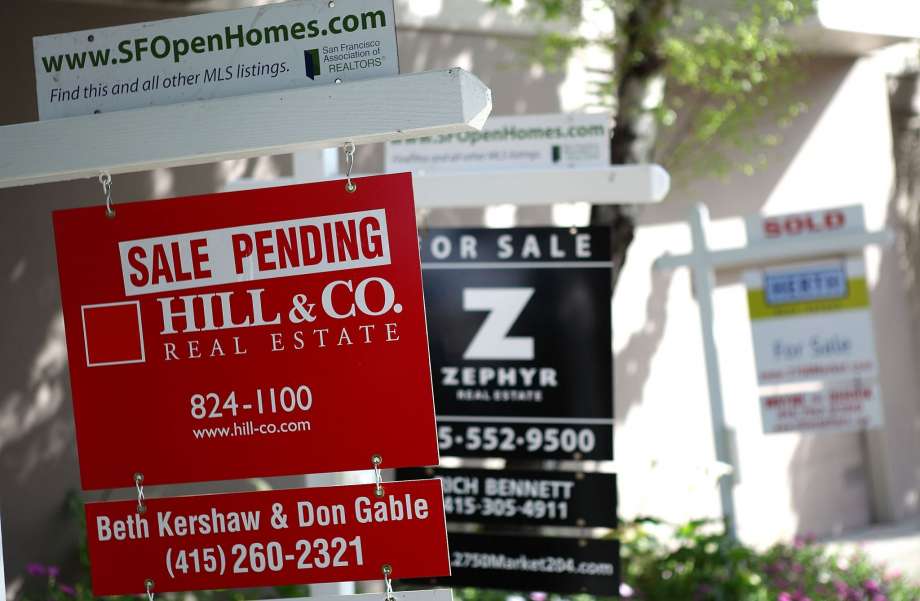
    Real estate experts will be watching the Bay Area housing market closing in 2020, the start of a new decade.

    Real estate experts will be watching the Bay Area housing market closing in 2020, the start of a new decade.


    Photo: Justin Sullivan/Getty Images

  •  Will the housing market crash in 2020? We asked real estate experts to look ahead

Caption

Close

Real estate experts will be watching the Bay Area housing market closing in 2020, the start of a new decade.

Real estate experts will be watching the Bay Area housing market closing in 2020, the start of a new decade.


Photo: Justin Sullivan/Getty Images


The Bay Area just said goodbye to a decade when real estate prices soared to astronomical heights. The 2010s were marked by $1 million fixer-uppers and bidding wars, and many homeowners saw their property values double. In 2019, prices flattened out a bit compared to 2018.

At the start of a new decade, what will 2020 bring? Is a crash on the horizon? What impact with the U.S. presidential election have?

SFGATE reached out to four experts to weigh in on the outlook for the Bay Area real estate market in 2020. We’ve compiled their responses to several questions below.

Boom or bust: What will happen to the housing market in 2020? 

Ken Rosen, chairman of the Fisher Center for Real Estate and Urban Economics at UC Berkeley: “First of all, the rate of price increases flattened out for home prices in 2019 … We expect that to continue in 2020. We have low interest rates, but we also have the fact that housing is very expensive so it’s hard to become a bullish market. We expect the affordability problem to continue for the Bay Area. Job growth may slow and there’s the possibility of a recession. A lot of people are going to decide now is a good time to sell because the market has gone up a lot in the past and prices are high.”


Herman Chan, Sotheby’s real estate agent working in the East Bay: “Bay Area real estate in 2020 will not face a crash. Unlike the great financial crisis where people bought with zero down payment,  too many people have large down payments in their home or paid all cash in the past 10 years. They aren’t going to just walk away. Rents are still among the highest in nation and the appreciation ramped up steadily in the past 10 years, so many home owners have options. They will wait it out, rent it out or cash out.  However, for home buyers the ramp up has made the acquisition price a barrier to entry. The market will probably be flat overall. So it is not a crash, nor is it a boom.”

Patrick Carlisle, chief market analyst at Compass Bay Area: “My guess is that the market will stay relatively even, neither increasing nor dropping by very much. Most of the Bay Area counties in 2019 saw median prices about the same as in 2018 (SF, San Mateo), dropped a little (Marin, Sonoma, Southern Alameda County, Santa Clara County), or bumped up a little (the Oakland-Berkeley, Inner East Bay region). That will probably occur in 2020, as well.


“I don’t see a crash as likely, unless caused by some big, sudden, macro-economic, national or international event, which could be anything from war with Iran, to a Chinese stock market crash, or huge oil supply issues, run on the markets, or some new financially engineered, Wall-Street product that no one understands blows up. And the fact that personal, corporate, U.S. government and international debt are all at all-time highs and climbing is of significant concern. The only local event that could cause a big, negative adjustment would probably be an environmental/ecological event – such as an earthquake, massive fires with huge and continuing power outages.”

Pierre Buljan, real estate agent on the Peninsula for more than 40 years and currently with Compass: “In my humble opinion, I don’t see any market crash in the near future. Two reasons, the market has already been leveling off over the past year, all over the greater Bay Area. Second reason, I don’t see much of a political climate change this coming year either. Prices are not expected to rise but rather stay neutral this year (if there is such a thing?). Lots of new construction is in process, which will help stabilize prices and give buyers an edge, so to speak. People will remain cautious as it is an election year and more on guard with fewer new construction projects started this year than in recent past.”

ALSO: The most expensive homes sold in San Francisco in 2019

What factors will impact the Bay Area market in 2020? 

Rosen: “Federal tax reform. Tax incentives are less desirable to homeowners. Federal tax reform limits state and local income tax deduction to $10,000, so raises the effective tax rate and after-tax costs of housing substantially in California and other high tax states. The doubling of the standard deduction and reduction in mortgage interest deductibility also reduces the incentives  for homeownership. The after-tax cost of owning a home has gone up.”

Chan: “Iran. Election. China. There was a reckoning with the IPOs buzz that fizzled. Frenzy is gone. There is a normalization in the market, which overall I find healthy. And of course lack of housing/affordability is always a factor.”

Carlisle: “Outward migration of residents and businesses, foreign immigration, employment, interest rates, stock markets, venture capital.”

Buljan: “The election. If any major changes are to happen, it will be after the elections. [But] the more likely factor that could gravely affect the real estate market is the recent California political talks about repealing Prop 13 and effectively raising the property tax prices three-fold! That could spell a destabilizing in the real estate market not seen in years and could prove to be a disaster for home owners and their ability to hang on to properties that they have owned forever.”

Will interest rates go up in 2020?

Rosen: “I think they’re going to go up by about 50 basis points. That’s the long-term interest rate. Short-term rates will remain about the same.”

Chan: “When the market was more frothy one to two years ago, the Fed had planned a couple rate hikes, but they reneged as the stock market and trade wars caused uncertainty. Heading into election year, I highly doubt the rates will jump….at least until new president is elected.”

Carlisle: “Interest rates are famously difficult to predict. Just 13 months ago, the big predictions by economists and financial experts for 2019 were interest rates in the 5% to 5.5% range. Instead, they dropped to 3.5% to 3.75% – an enormous swing between forecasts and reality. I expect interest rates will probably stay low in 2020, but that’s simply a guess.”

Buljan: “I don’t see any interest rate hikes in the near future as the Feds don’t want any major shake up during an election year.”

Will 2020 be a good year to buy or sell a home in the Bay Area?

Rosen: “It’s a balanced market now. If you want to sell, now’s the time to do it. If you want to buy, it’s the best opportunity in some time. It might even shift into a buyer’s market though that’s hard to believe in the Bay Area.”

Chan: “We are in an inflection period now. It is hard to say clearly across the board.  It is about market segmentation now. If you are buying with expectation of high appreciation in a couple years, it’s probably not a good idea. If you are buying long-term, then sure, lay down roots, take advantage of the super low rates. If you want to sell a house you just bought recently, it’s probably not going to turn out profitable after factoring carrying costs, closing costs, realtor fees, taxes, etc. If you have lived a long while and equity is hefty, then sure, sell now to cash out.

Sellers need to manage their expectations. They won’t be getting a dozen offers in one week. Maybe one to two, and longer days on market. Can’t rely on a hot market to unload. Don’t skimp on advertising and with the political uncertainties this year, some people may retract from the market and buyers who are actively searching can take advantage of less competition.”

Buljan: “2020 will be both a good year to buy and sell. Prices have stabilized this past year, making it a better time to buy than in recent past years, but they are also at an all-time high, which in essence makes it a good time to sell.”

MORE: Blast off: How median home prices in the Bay Area shot up over the decade

Where can home buyers find deals in the Bay Area in 2020?

Rosen: “I’d say I don’t want to pick cities. If you’re going to buy a home, get it as close to your job as you can because one of the other big problems beyond high housing prices is congestion has gotten bad in the area. Buy close to public transit or as close to work as you can because that big commute has become a problem for everyone in the Bay Area.”

Chan: “Single family homes in metro areas are still coveted. I wouldn’t say those are the best deals, but those will hold value the best. New Luxury Condos are overbuilt and many do not feel those are strong investments anymore due to oversupply and lack of product differentiation. If you are looking for a good deal, many condo developers are more willing to wheel and deal to make a sale.”

Buljan: “I think that people can and will find deals in pockets of the Bay Area real estate, properties that were priced aggressively within the last year and not sold will be back again at more reasonable prices and they will be deals to be had.”

Amy Graff is a digital editor with SFGATE. Email her: agraff@sfgate.com.

Article source: https://www.sfgate.com/realestate/article/bay-area-real-estate-bubble-pop-San-Francisco-14960135.php

Posted in SF Bay Area News | Tagged | Leave a comment