Sound Off: Will recent volatility in the stock market affect the Bay Area real estate market? Do you expect it to last?


  • ef36a 920x920 Sound Off: Will recent volatility in the stock market affect the Bay Area real estate market? Do you expect it to last?

    Man and woman thinking about housing

    Man and woman thinking about housing


    Photo: Takasuu / Getty Images/iStockphoto

Caption

Close

Man and woman thinking about housing

Man and woman thinking about housing


Photo: Takasuu / Getty Images/iStockphoto


Q: “Will recent volatility in the stock market affect the Bay Area real estate market? Do you expect it to last?”

A: Looking at the dramatic downturn of the stock market recently, it’s not a total surprise as analysts were already waiting for some sort of correction. This is not the first time this has happened and most likely will not be the last—the markets have recovered and eventually became stronger. How does this affect real estate?

There are distractions versus focus, and as agents we need to concentrate on our buyers and sellers needs. Stuff happens in life, and people are still selling and buying no matter what happens. Interest rates hit an all time low, giving move up buyers a great opportunity.

If people lost down payment money, then they adjust their pricing, but most people are already cashed in for their quick purchase. Real estate is still a great investment for the Bay Area.


Jeannie Anderson, Compass, 415-271-4887, jeannie.anderson@compass.com.

A: So far, we have not noticed any affect in the Marin real estate market due to stock market volatility. Thanks to the past reforms put in place it’s unlikely that any short term correction, or even more significant dip in the stock market like we’ve noted in the past week, will make such a significant impact on the Bay Area housing market like it did in 2008. While it’s true that the stock market can influence housing to a degree, there are other financial factors that play a larger role, such as income growth and jobs. When an area’s economy is seeing rising wages and is adding jobs there is a demand for home ownership. What most Marin home owners need to remember as well is that housing is shelter first, and an investment second.

In the end, most of our clients seem to rely on the fact that real estate is an appreciating asset – so even if the stock market does adversely impact the housing market at some point, the downswing is only temporary.

Kathleen Daly, Coldwell Banker Residential Brokerage, 415-519-6074, kdaly@cbnorcal.com; Lisa Lange, Coldwell Banker Residential Brokerage, 415-847-7770, lisalange@marinbestliving.com.

A: I don’t believe recent volatility in the stock market will affect the Bay Area real estate market; at least not how some may expect it to. Our housing market is tied closely with our local employment figures and job market. Continued low interest rates and a hedging against inflation may actually cause prices to continue on their trajectory. Inventory levels remain at historic lows and demand for housing is high. Mortgage payments as a percentage of household income are at some of their lowest (15.8%) and the median home resale price continues to increase.


The supply and demand charts in most price ranges remain in the seller’s favor. High construction costs still make remodeled and newer construction homes extremely valuable to consumers and the under $4 million marketplace remains very active in Marin County and San Francisco.

Coronavirus will cause disruptions to supply chains and manufacturing output. And that will spill over to income growth and consumer confidence. But the rising financial market stress can lead to explosive growth of financial assets and may continue to put many in a financially gainful position to assist in their purchase of real estate. Real estate is the best place to invest your money to hedge against inflation, which is up 2.49% in January of 2020, compared to 2.29% in December.

C.J. Nakagawa, Golden Gate Sotheby’s International Realty, 415-407-2151, sf2marin@gmail.com.

Article source: https://www.sfgate.com/realestate-advertisement/article/Sound-Off-Will-recent-volatility-in-the-stock-15116868.php

Posted in SF Bay Area News | Tagged | Leave a comment

Should you buy a house in SF in 2020?

Save for those benefiting from an IPO windfall or a plump trust fund from a blue-blood lineage, few people can find a way to afford a home in San Francisco. Housing stock is scarce, and home prices are stratospheric: The median price for a two-bedroom sits at $1.35 million.

It’s a crisis that some activist groups, including the YIMBY set and a handful of politicos, have tried to remedy through public policy and reform, while counter cabals would prefer to see it continue as is.

”I am working with more first-time homebuyers who are buying over $2.5 million now and baby boomers looking for second homes in the $2 million range,” says Marco Carvajal, a San Francisco real estate agent. “Around 40 to 60 percent of them are cash buyers.”

With soaring home prices and an influx of well-to-do buyers throwing sacks of cash at sellers, it’s hard for any low- to middle-class buyer to compete for an abode in a city that was once prized for its diversity and “all are welcome” attitude.

Curbed SF asked a handful of people in the housing sector, ranging from luxury realtors to housing activists, for their takes on one simple question: Should you buy a home in San Francisco this year?

We collected the responses below before the outbreak of novel coronavirus in the U.S. How might its spread impact the housing market this year? Read this.


Laura Foote

Executive director, YIMBY Action

I think “the right time to buy” frames the question as one of speculating on the housing market. It implies that buying a home should have a rate of return like an investment portfolio. Our society needs to move back to the idea that buying a home is more like a savings account and that housing is where you live.

We need a housing market where we stop asking whether or not it’s the right time, which is just everyone speculating on the housing market. When we have abundant housing, prices decline to close to the cost of construction, and everyone who wants to live in San Francisco can. At that time our cities will be thriving, and housing will not outpace every other investment.

When we apply the “buy low, sell high” framework to housing, we cripple our ability to solve the housing shortage.


Corey Smith

Deputy director, Bay Area Housing Advocacy Coalition

Yes, if you’re fortunate enough to be able to afford one.

San Francisco has underbuilt housing at all levels of affordability for the last 40 years, so the only way to be truly housing secure is to buy a home. This lack of housing options leaves renters one bad landlord away from having to leave our city. Renters would be housing secure if they had more housing options in their neighborhood and across the city. This lack of supply also means the least expensive homes in SF are more than $1 million, which makes it hard for young families to buy a starter home in San Francisco.

This also means that the only people that are truly housing secure in San Francisco are 1) the rich and 2) low-income neighbors living in subsidized affordable housing. Unfortunately, they lose their homes if their income increases too much.


“This is the year to support legislation and ballot measures that make housing faster and easier to build. And if you’re a NIMBY, this is the year to stop being a NIMBY, to recognize that if you are lucky enough to live here, why not allow others to as well?”

—Allison Arieff


Allison Arieff

Design writer and housing activist, SPUR

If you can afford it, then sure; interest rates are still low, and it’s an investment that will continue to increase in value over time. But the house up the street from me just sold for $1 million over asking.

I don’t think that home prices will get lower any time soon, even when the inevitable recession hits. The reality in SF is that the pool of people who can afford to buy is smaller and smaller and the supply of housing is not growing with demand (duh). I can’t imagine there are people in the city waiting for housing to get cheaper; if they can’t afford it now, they’re most likely leaving the city. So this is the year to support legislation and ballot measures that make housing faster and easier to build. And if you’re a NIMBY, this is the year to stop being a NIMBY, to recognize that if you are lucky enough to live here, why not allow others to as well?

The city needs to streamline the process of building new housing at all income levels so everyone can afford to live here. Don’t forget to vote.


Justin Fichelson

Realtor, Bravo’s Million Dollar Listing: SF

Unlike the dotcom bubble and the mortgage debacle, which helped trigger the last major recession of 2008, there are no significant indicators that would suggest a considerable dip in real estate prices in San Francisco anytime soon. A relatively high percentage of the buyers in the city are all cash—and those that aren’t paying all cash are putting at least 20 percent down with the ability to close fast, even with a loan. The market is always cyclical by nature, but SF real estate has historically always gone up more than most other markets.

Here is why I believe that real estate is a great investment in San Francisco:

1) Wealth creation: San Francisco has had an entrepreneurial spirit from its inception (i.e., the Gold Rush); hence, further wealth creation and innovation will occur here. As it is the epicenter of the technology industry, there are a lot of people with an immense amount of wealth. Wealth isn’t just limited to the uber-wealthy founders of major tech companies or successful VCs but also the general workforce, whose salaries and incomes are among the highest in the world.

2) Limited inventory: San Francisco is fortunate to be one of those rare markets in the world in which the real estate market is perpetually constrained in terms of inventory. Several factors contribute to this, but principally the strict zoning laws which prevent new development and high rise construction throughout the city. The strict zoning laws, coupled with the fact that the SF is only seven by seven miles, makes it a very constrained market and keeps supply perpetually low.

As a result, San Francisco is one of the most resilient real estate markets in the world and a great place to invest in real estate in 2020.


Crystal Chen

Marketing manager, Zumper

From a data perspective, an average two-bedroom home in San Francisco is about $1.35 million right now. Taking into account a 20 percent down payment on a 30-year loan with a 3.5 percent interest rate, 1.4 percent toward property taxes, and an average of $300 monthly for HOA fees, a mortgage with everything included comes out to a monthly price tag of about $6,700.

Meanwhile, according to our most recent National Rent Report, two-bedroom rent in San Francisco is at a median of $4,550. That’s a monthly difference of over $2,000, assuming one can afford the $270,000 down payment. If not, the monthly mortgage all-in would be even higher. San Francisco rents overall have been plateauing in recent months, with two-bedroom rent actually down about 2 percent year over year. As long as rents are flattening or even decreasing, it seems renting in this city makes more sense than owning—at least in 2020.


Issi Romem

Fellow at UC Berkeley’s Terner Center for Housing Innovation; founder MetroSight

If you are financially able to buy a home in the Bay Area—and if your life and family circumstances are in alignment with a home purchase—then this year is a good one to buy. The Bay Area and American cities in general are at an inflection point that may lead to reinvigorated home construction in the coming decades. That process, however, will be gradual and will almost certainly only temper housing price appreciation—not reduce it—which means that as expensive as housing may seem now, it will likely never be cheaper!

There is a risk of recession in the next two to three years, but barring extreme political events, an upcoming recession is likely to have a limited effect on the Bay Area’s housing market. And last but not least, if buying a Bay Area home seems out of reach, stay tuned: The next few years will bring a flurry of innovative financial arrangements that straddle the middle ground between rental and ownership, and some of them could be right for you.


“The problem is that buying has become so out of reach for many that it seems only the rich and elite can afford to buy.”

—Jon Jocobo


Jon Jocobo

Vice president, Calle 24 Latino Cultural District

If one has the ability to buy a home, the answer in my opinion is always yes. Stability matters; it helps our community keep its presence and vibrancy. The problem is that buying has become so out of reach for many that it seems only the rich and elite can afford to buy. That’s clearly a problem for us all.


Joel Goodrich

Luxury homes real estate agent

I do think that 2020 is a decent time to buy in San Francisco over the short and intermediate term, and a very good time to buy for the longer term.

While no one has a crystal ball, most real estate forecasts are indicating a similar market to the past few years: i.e., stable, but not red-hot. And most predictions for the coming years are that the next economic dip will not be as severe as 2009 or 2001. I am extremely bullish over the next decade.

My hope is that enough affordable housing is built so that lower- and middle-income families and individuals can afford to buy a home and become a stakeholder in the city. Even in a rising market, homeownership should be a realistic goal for most people.


Cheryl Young

Senior economist, Zillow

Buying a home is a daunting prospect for any would-be homebuyer, but in one of the nation’s most expensive housing markets, the decision to buy is especially fraught. Potential homebuyers in San Francisco already face slim pickings—for-sale inventory was down 7.5 percent in December from the year prior—so even if you could find what you’re looking for, homebuyers would be wise to ask themselves the following two questions:

Can you afford it? Expect to pay around $6,400 a month for mortgage payments, insurance, and taxes on a typically priced home of $1.35 million in San Francisco, after spending 20 percent on a down payment. Speaking of down payments, after finding the right home, saving for a down payment is the most challenging buying activity for home buyers. According to the Zillow Consumer Housing Trends Report, 22 percent of buyers find saving for a down payment to be difficult or very difficult. In fact, in San Francisco, buyers would have to cough up $269,600 if they were putting 20 percent down on the December median listing price of $1,348,000—that’s not much less than the $282,000 price tag for a typical for-sale home nationally. In 2018, it took the typical household 18.3 years to save for a 20 percent down payment on a median valued home in the San Francisco metro area—that’s eight more years than it was 30 years ago.

How long will you stay in the home? Buying a home carries recurrent costs, like monthly mortgage payments, as well as maintenance issues that arise. One-time costs such as closing and selling fees can further tip the equation between renting versus buying. It will take nearly five years for buying to become cheaper than renting using current for-sale home prices, current rent values, and forecasts for rent and home value growth. If you plan to stay in the home for less than five years, renting may be a better choice. If you think buying a house in San Francisco is a great investment no matter how long you plan to live there, think again. Annual home value changes in the San Francisco metro have been negative since April of 2019.

Interview responses have been lightly edited for length and clarity.

Article source: https://sf.curbed.com/2020/3/11/21155283/buying-a-house-san-francisco-2020

Posted in SF Bay Area News | Tagged | Leave a comment

Software developer plans to restore San Francisco Painted Lady house – Business Insider

  • A San Francisco tech veteran has bought one of the city’s iconic Painted Ladies homes for $3.55 million, well over its asking price of $2.75 million.
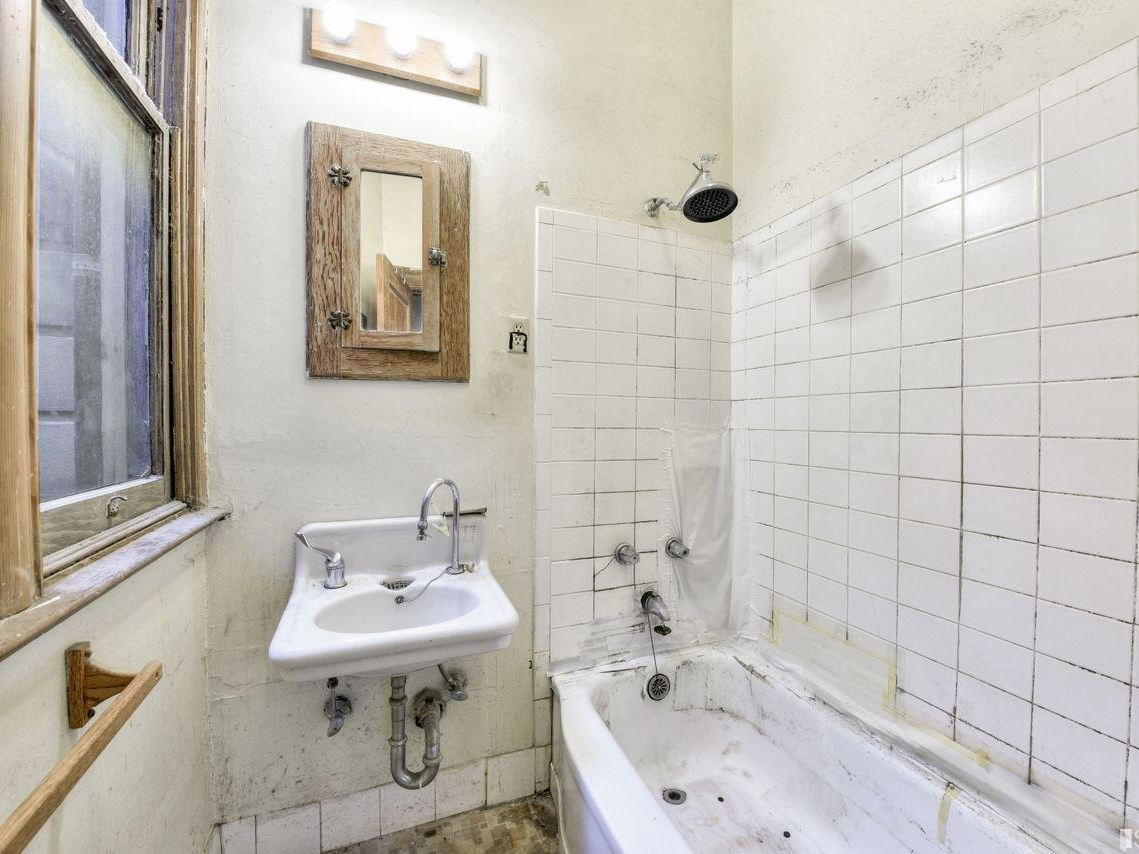
  • The home is a “fixer-upper” — it needs a full-house renovation, with interior photos showing peeling paint and dilapidated rooms.
  • Culver is a software engineer by trade who has worked in the industry since the early days of the internet and is now running a podcast app company.
  • She told Business Insider that she intends to undertake a full renovation of her new home, which she estimates will cost $3 million.
  • Visit Business Insider’s homepage for more stories.

Tech industry veteran Leah Culver wasn’t looking for a home renovation project when she set out to invest in San Francisco’s housing market.

She has lived in the same apartment in the city for 10 years, Culver told Business Insider, before she set out to find a realtor to help her on her house hunt. And one of the items on her wishlist for a new home was that it be a famous and iconic San Francisco home, perhaps even one of the iconic Victorians on Steiner Street for which the city is known.

It was a wishlist item that Culver ended up fulfilling — except that it came bound with a necessitated multimillion-dollar home restoration on top of the home’s price tag.

The pink Painted Lady at 714 Steiner Street is a “fixer-upper,” the home’s listing agent told Business Insider when the home was still on the market in early January. Interior photos show peeling paint, dusty windows, grimy walls, and discolored tile flooring. 

 Software developer plans to restore San Francisco Painted Lady house   Business Insider

A bathroom in the home needs some work.


Courtesy of Jeremy Rushton with Coldwell Banker


But despite the needed TLC, Culver bought it in late January for $3.55 million, well over its asking price of $2.75 million. 

The 37-year-old software developer has 14 years of experience in the Bay Area’s lucrative tech industry and a slew of big names listed in her resume, including Dropbox. She’s the co-creator of OAuth, an open-standard authentication that was integral to the early days of the web. She’s also an author of OEmbed, another specification that helps run some of the most ubiquitous aspects of our digital lives — OEmbed is supported by Instagram, Twitter, and Youtube.

Culver said she intends to live in the home, which marks the first time she’s done that with one of her real-estate investments. She paid in cash, a common and, in most cases, necessary step if prospective Bay Area homeowners are wanting to snag a house. Even so, Culver said that she wasn’t the highest bidder and yet still won the sale. The selection of real estate in San Francisco is tight — which exacerbates both a housing crisis and a homelessness crisis — and buyers with the means to purchase property often pay above the listing price, and in cash.

That trend is magnified when we’re talking about the city’s historic home stock. There are seven Painted Ladies on Steiner Street, or what is sometimes called Postcard Row or the Seven Sisters. It’s a rare feat to own one — only two were listed for sale in the past ten years.

 Software developer plans to restore San Francisco Painted Lady house   Business Insider

Culver’s new Painted Lady is the home painted in a pink-red trim in the center, left of the blue house.


Katie Canales/Business Insider


The homes sprung into the global consciousness in part through their appearance in the sitcom “Full House,” which first aired in the late 1980s. Since then, the homes have become one of the most popular tourist attractions in the city, right up there with the Golden Gate Bridge and the Transamerica Pyramid Building. The septuplet of houses shows up on city postcards and other paraphernalia in almost any gift shop you stumble into. 

It’s a picturesque part of town, beloved by tourists and locals alike, and is one that Culver is now apart of.

But first comes the daunting renovation process, one that she’ll have loads of help with thanks to a project manager she’s hired. Culver estimates everything will cost an additional $3 million, rounding out her home investment to at least $6.5 million. 

And while she said she intends to embrace the Victorian home’s character rather than override it, there is still some tweaking that needs to be done to the house, which hasn’t been kept in the best condition in its more than 100-year history.

“It hasn’t been preserved, so I can’t keep preserving it,” Culver said.

Here’s how she’s gearing up for the renovation.

Article source: https://www.businessinsider.com/software-developer-san-francisco-painted-lady-house-renovation-2020-2

Posted in SF Bay Area News | Tagged | Leave a comment

Live Bay Area coronavirus updates: Santa Clara County reports new cases, bans large gatherings


  • 5d941 920x920 Live Bay Area coronavirus updates: Santa Clara County reports new cases, bans large gatherings

    Passengers look out from balconies aboard the Grand Princess as it cruises a holding pattern about 25 miles off the coast of San Francisco on Sunday, March 8, 2020. The ship is expected to dock in Oakland in the east San Francisco Bay on Monday. California Gov. Gavin Newsom and the mayor of Oakland sought Sunday to reassure the public that none of the passengers from the ship with multiple cases of the new coronavirus will be released into the public before undergoing a 14-day quarantine. (AP Photo/Noah Berger)

    less

    Passengers look out from balconies aboard the Grand Princess as it cruises a holding pattern about 25 miles off the coast of San Francisco on Sunday, March 8, 2020. The ship is expected to dock in Oakland in

    … more


    Photo: Noah Berger/AP

Caption

Close

Passengers look out from balconies aboard the Grand Princess as it cruises a holding pattern about 25 miles off the coast of San Francisco on Sunday, March 8, 2020. The ship is expected to dock in Oakland in the east San Francisco Bay on Monday. California Gov. Gavin Newsom and the mayor of Oakland sought Sunday to reassure the public that none of the passengers from the ship with multiple cases of the new coronavirus will be released into the public before undergoing a 14-day quarantine. (AP Photo/Noah Berger)

less

Passengers look out from balconies aboard the Grand Princess as it cruises a holding pattern about 25 miles off the coast of San Francisco on Sunday, March 8, 2020. The ship is expected to dock in Oakland in

… more


Photo: Noah Berger/AP


For more coverage, visit our complete coronavirus section here.

March 9, 7:00 p.m. Santa Clara County — the Bay Area county with the highest number of known coronavirus cases — reported six additional cases of the virus and banned large gatherings of individuals.

During a Monday night press conference, officials stated that the county now has 43 cases — up from the 37 it was at earlier in the day — and large gatherings of over 1,000 people are now prohibited.

The ban on gatherings does not apply to airports, shopping malls, grocery stores or offices, and is enforceable by both the sheriff’s office and local police departments. It goes into effect on Wednesday, and could last three weeks.

The ban applies to San Jose Sharks games at SAP Center, and the team said in a statement they are not ready to announce whether they will play in the empty venue, or potentially move the games elsewhere.


March 9, 6:30 p.m. The number of coronavirus cases in San Mateo has risen to nine, officials reported Monday.

Four cases are positive, and five are presumptively positive. No other details were released on the patients.

March 9, 6:00 p.m. San Francisco District Attorney Chesa Boudin sent a memo to staff on Monday outlining measures his office will take to avoid the spread of the coronavirus.

His staff has been urged to practice good hygiene and not come into the office if sick, while victims and witnesses are asked to communicate with officials via phone or email to minimize person-to-person contact.

In addition, prosecutors are asked to minimize the time out-of-custody defendants spend in public by considering waiving defendants’ next court appearances and opposing release only if a given suspect poses a public safety threat.

Furthermore, for future custody plea deals, prosecutors should “strongly consider credit for time served offers for all probation cases and appropriate paper commitments.”

You can read the full memo here.

March 9, 4:55 p.m.: The City of San Francisco announced $5 million in emergency spending and a Public Health Order to help combat the spread of COVID-19.

“This emergency fund and Order will focus on reducing risk of exposure to the virus for the many marginally housed seniors, people with underlying health conditions, and individuals experiencing homelessness, living in shelters, single-room occupancy hotels (SROs), and Permanent Supportive Housing,” Mayor London Breed’s office said in a statement.


The money will be spent on increased cleaning at shelters and SROs and expanding meal delivery for those living in SROs whose health may be jeopardized by going into the community. The Public Health Order will establish new cleaning requirements and “contagion mitigation protocols” for privately owned SROs.

March 9, 3:46 p.m.: Vice President Mike Pence said in a news conference from the White House the 25 children aboard the Grand Princess cruise ship, which has docked in Oakland, are healthy. The 21 passengers and crew members who previously tested positive for the novel coronavirus remain in quarantine and will be transferred to military bases in Travis Air Force Base and Miramar Marine Corps Air Station in California as well bases in Texas and Georgia.

Passengers from Canada and the U.K. will be sent back to their home countries on chartered jets, the vice president said.

March 9, 3:30 p.m.: UCSF Medical Center set up two outdoor tents at its 505 Parnassus campus over the weekend to care for patients with respiratory symptoms.

“The tents will be used for triage to make sure that people who come in with respiratory illnesses of any kind don’t spread them to others in our emergency department,” UCSF spokesperson Kristen Bole wrote in an email. “Patients will not stay in the tents, other than for initial triage.”

Bole added: “This is also a busy time of year for influenza patients, so we will be using them for any patients with respiratory symptoms.”

Read the full story.

March 9, 12:30 p.m.: A woman in her 60s passed away at El Camino Hospital in Mountain View Monday, the first death tied to the novel coronavirus in the Bay Area.

The woman was hospitalized for several weeks, Santa Clara County health officials said. She was the third case detected in the county.

“She was the first person in the County confirmed to be infected with COVID-19 without any known history of international travel or contact with a traveler or infected person, suggesting she contracted COVID-19 in our community,” Santa Clara County Public Health said in a statement.

Santa Clara County has reported the most cases of COVID-19 in the Bay Area — 37 as of mid-day Monday.

The death of a 72-year-old man from Sunnyvale was previously thought to be linked to COVID-19, but test results confirmed the man did not have the virus.

March 9, 12:05 p.m.: Marin County officials announced the first known in-county case of COVID-19 Monday.

The patient is described as “an older man” who was on the Grand Princess cruise from San Francisco to Mexico from Feb. 11 to 21. He is being treated at a hospital in the county and those who have been in close contact with him are being monitored in isolation.

“This is the first case of COVID-19 affecting a Marin resident. A previously reported case in Marin was an asymptomatic patient transferred from Travis Air Force Base in Solano County to a local hospital. That patient has remained well and was released to return to their home outside of Marin,” the county said in a statement.

March 9, 11:30 a.m.: The Grand Princess cruise with at least 21 coronavirus patients onboard passed under the Golden Gate Bridge as it moved toward the Port of Oakland. Federal and state officials are readying flights and buses to whisk passengers aboard the boat to military bases or their home countries for a 14-day quarantine. Read the full story on the Grand Princess cruise ship here.

March 9, 9:30 a.m.: The number of patients infected with COVID-19 in the San Francisco Bay Area increased this weekend as counties reported more cases.

Five new cases of COVID-19 were confirmed in San Francisco, according to the Department of Public Health, bringing the total in the city to 13. All five people had contact with other known cases of coronavirus. They were in good condition at their homes, the department said.

Contra Costa Health Services confirmed five new cases in residents; four of them had no travel history or known contact with a confirmed case and are being treated in local hospitals. The fifth patient had close contact with an infected person and is isolating at home.

As of Sunday morning, the county had nine confirmed cases. “One patient who tested positive last week remains in a local hospital, while three other previously identified patients who tested positive are also isolating at home,” Contra Costa Health Services said in a statement.

Five new patients were also identified in Santa Clara County on Sunday. The South Bay county, which includes San Jose, now has 37 cases, the most in the nine-county region. The cases are under investigation.

Over the weekend, more than 230 cases were added to the U.S. total. The country now has 566 cases and 21 deaths have been reported.

As more testing becomes available, the number of cases in the United States is expected to increase. “You’re going to see numbers spike,” Dr. Celine Grounder, a clinical assistant professor infectious diseases at New York University, told CNN on Monday morning. “You’re going to find the transmission has been there all along.”

California now has 114 cases, including passengers from the Grand Princess cruise ship currently off the coast of California, according to the state’s public health department.

ALAMEDA COUNTY

Confirmed cases: 3 residents

Fore more information on Alameda County cases, visit the public health department website.

CONTRA COSTA COUNTY

Confirmed cases: 9 residents, 3 people of unknown residence being treated at Contra Costa hospitals

Fore more information on Contra Costa County cases, visit the public health department website.

MARIN COUNTY

Confirmed cases: 1 resident, 1 patient of unknown residence

Fore more information on Marin County cases, visit the public health department website.

NAPA COUNTY

Confirmed cases: 2 patients treated in Napa, then transferred out of county

For more information on Napa County cases, visit the public health department website.

SAN MATEO COUNTY

Confirmed cases: 1 resident, 8 patients of unknown residence treated at San Mateo County hospital

For more information on San Mateo County cases, visit the public health department website.

SANTA CLARA COUNTY 

Confirmed cases: 37 residents

Related deaths: 1

This county has the most confirmed cases in the Bay Area. As of March 8, health officials have identified a total of 37: five were travel-related, 10 were from being in close contact with a known case, and nine contracted the virus without any known contact with other infected individuals. The others are under investigation.

One woman died on March 9 at El Camino Hospital in Mountain View. She had been hospitalized for several weeks, officials said.

Fore more information on Santa Clara County cases, visit the public health department website.

SAN FRANCISCO COUNTY

Confirmed cases: 13 cases, 3 out-of-county patients being treated in SF hospitals

For more information on San Francisco County cases, visit the public health department website.

SOLANO COUNTY

Confirmed cases: At least 2 residents, 1 healthcare worker who resides in Alameda County

female Solano County resident was the first case of “unknown origin” in the U.S. and was infected with virus without any travel history or contact with another known case. She first arrived at the North Bay VacaValley Hospital in Vacaville on Feb. 15 and was transferred to UC Davis Medical Center three days later, before being tested.

Two health care workers at the North Bay VacaValley Hospital were also infected with the virus. One is a Solano County resident; the other lives in Alameda County.

For more information on Solano County cases, visit the public health department website.

SONOMA COUNTY

Confirmed cases: 2 residents, 1 patient of unknown residency

For more information on Sonoma County cases, visit the public health department website.

CALIFORNIA DEATHS: 2

Two deaths related to coronavirus in California have been reported.

The first occurred in Placer County on March 4. The Placer County Health Department said the deceased is an elderly resident of the county with underlying health conditions. The patient tested presumptively positive on Tuesday, March 3 at a California lab and was likely exposed on a Princess cruise ship that traveled from San Francisco to Mexico, Feb. 11 to 21, health officials said. The patient was under treatment in isolation at Kaiser Permanente Roseville.

The first Bay Area death was reported in Santa Clara County in March 9. A woman in her 60s passed away at El Camino Hospital in Mountain View Monday, the first death tied to the novel coronavirus in the Bay Area. The woman was hospitalized for several weeks, Santa Clara County health officials said.

The death of a 72-year-old man from Sunnyvale was previously thought to be linked to COVID-19, but test results confirmed the man did not have the virus.

Amy Graff and Alix Martichoux are digital editors with SFGATE. Email them: agraff@sfgate.com, alix.martichoux@sfgate.com. 

MORE CORONAVIRUS COVERAGE:

Article source: https://www.sfgate.com/bayarea/article/Live-coronavirus-updates-Bay-Area-San-Francisco-15116853.php


Posted in SF Bay Area News | Tagged | Leave a comment

Here’s How Tech Is Changing Bay Area Industrial

New technologies are bringing big changes to industrial real estate, especially in the Bay Area, according to a new white paper from Newmark Knight Frank.

The once-limited San Francisco industrial sector, for instance, has ballooned thanks to production, distribution and repair space, all of which is in high demand for expanding hardware companies like Samsara, which makes sensors, and aerospace startup Capella Space, Newmark Knight Frank San Francisco Director of Research Andrea Arata said.

The change, which Arata attributes partly to the need for companies to access the city’s tech workforce, has happened quickly. San Francisco had less than 50K SF of industrial demand in the market at the beginning of 2017, but over 1.7M SF by the end of 2020, according to NKF’s report.

Also although SoMa has seen much of the demand thus far, changing needs have required intensive build-outs and strong rent growth, Arata said. Rents for Class-A industrial space grew about 36% in S.F. between 2017 and 2019, NKF said in its report.  

“Rents have gone up considerably as build-outs and tenants have gotten more sophisticated,” Arata said. “These companies can’t necessarily walk into what had been formerly been an auto-repair place. Their requirements are going to be different.”

Aside from just boosting demand for industrial commercial real estate in San Francisco proper, tech has also affected what qualities industrial real estate can and must offer in the Bay Area and other markets, both Arata and Altus Group Senior Director Pauline Hale said.

Last-mile needs and e-commerce in general have resulted in companies like RightHand Robotics, which provides short-term order-fulfillment machinery, coming into the fold, as distribution centers grow in both complexity and height. The number of industrial developments coming online this year with ceiling heights of 40 feet or greater is expected to be more than double the total in 2019, according to NKF.

Also gradually coming into play in the U.S. are multistory warehouses, sought out as attractive sites proximate to population hubs. “Scarcity sparks creativity,” Hale said, pointing to Prologis’ landmark Seattle facility as a precursor to more multistory development. 

Likewise, on-demand warehouse marketplaces like Flexe have arisen with e-commerce growth, taking advantage of smaller available spaces within existing storage facilities. But even with on-demand and pop-up distribution centers on the rise, experts see a nationwide need for new Class-A industrial product still present. A CBRE report from late 2018 concluded that the “vast majority” of warehouses in the U.S. were “ill-suited for the demands of e-commerce.”

“Something very dysfunctional but close [to population hubs] still might not be the answer,” Hale said.

Article source: https://www.bisnow.com/san-francisco/news/industrial/how-tech-is-changing-bay-area-industrial-real-estate-103308

Posted in SF Bay Area News | Tagged | Leave a comment