No open house? No problem. Bay Area realtors adapt to new real estate changes


  • f370d 920x920 No open house? No problem. Bay Area realtors adapt to new real estate changes

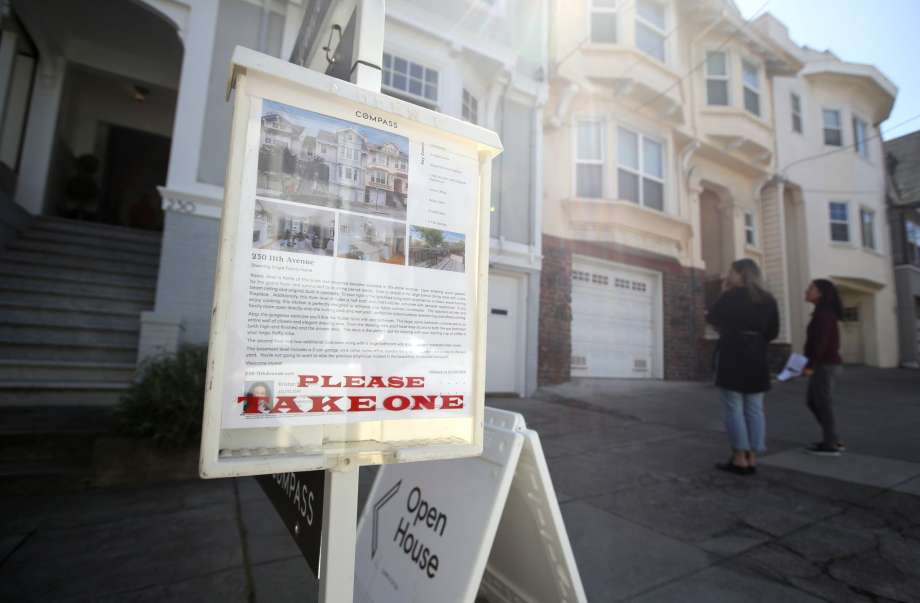
    People look at a home for sale during an open house on April 16, 2019 in San Francisco. This spring, no open houses can take place and realtors have had to adjust quickly.

    People look at a home for sale during an open house on April 16, 2019 in San Francisco. This spring, no open houses can take place and realtors have had to adjust quickly.


    Photo: Justin Sullivan/Getty Images

Caption

Close

People look at a home for sale during an open house on April 16, 2019 in San Francisco. This spring, no open houses can take place and realtors have had to adjust quickly.

People look at a home for sale during an open house on April 16, 2019 in San Francisco. This spring, no open houses can take place and realtors have had to adjust quickly.


Photo: Justin Sullivan/Getty Images


How do you sell a home without an open house?

This is a question Bay Area realtors have had to answer very quickly if they want their listings to sell in what is typically the hot spring season.

In early March, Bay Area shelter-in-place orders did not include real estate as an “essential” business and all showings came to a halt. During this time, realtors could only do virtual walk-throughs, which some doubted would ever be enough to close a deal, especially on the higher end. “It’s hard to imagine virtual tours of luxury properties being sufficient,” said Neal Ward, who specializes in selling such homes in San Francisco. “But I think that everything I possibly knew a few weeks ago has the potential of changing moving forward and we have to be ready with tools and practices to adapt appropriately.”


On March 28, real estate received the “essential” designation. Open houses were still out, but private showings taken with precautionary measures were back in.

Today, buyers look through disclosure packets and take a virtual tour before they see a home in person. This additional screening eliminates a lot of non-serious buyers, said East Bay realtor Deidre Joyner. “In our niche market we have older housing stock and it is not unusual for an older home to have repair recommendations,” she explained. “If a buyer can rule out a home based upon a property inspection report, then we are weeding out potential buyers who were likely never going to write an offer.”


If a buyer does make it to an in-person tour, it’s not uncommon to have to sign a release acknowledging the risks of the virus before entering the home.

Realtors do say buyers tend to have a better experience than they might have had at a crowded open house, despite the addition of masks and hand sanitizer to the very personal home buying process. With only a pair of buyers and an agent allowed in the home at once, buyers have the time and space to thoroughly examine the home. “Buyers seem to enjoy private showings more than open houses,” said Bebe McRae, who sells properties in the East Bay with partner Alexis Thompson.

They are also enjoying the more “transparent” pricing that realtors are now recommending to their clients, McRae said. The thought is that if open houses are out, the chances of multiple offers dwindle. So, pricing a home low in order to elicit a bidding war no longer makes as much sense.


“Since we are trying to limit the access, I have recommended to all of my selling clients to raise the price closer to a price they are willing to accept,” Joyner agreed. “I believe that buyers appreciate transparency and clarity during this time.”


While there are some definite benefits to being a buyer during this period, realtors said the dynamics of low inventory and high demand haven’t changed that much. Some buyers might be scared off, given the economic uncertainty, but there are still more buyers than sellers and the buyers who remain are highly motivated. “Since SIP, I have gotten a family into contract and this week I am showing properties to three sets of buyers,” said Joyner. “While some buyers are watching from the sidelines, there are others who are in a position to purchase.”

Many sellers are also still moving forward with listing their properties, Joyner said. She was working with nine sellers before shelter in place orders came in. Of those, one decided not to sell at all, and two are on hold until they can find a place to move. The others are all moving forward, despite the new restrictions.

It’s too soon to tell how sales prices will ultimately be impacted by the new restrictions. But, looking back to the last financial crisis of 2008, Ward said his well-heeled sellers would likely just sit out the spring season rather than rush to sell in a down market.

“I do not feel that we will see properties coming onto market on the northside due to financial distress of the sellers. We did not see this in 2008 and I feel we won’t see it now,” he said. “Fortunately, in the Bay Area we have a very strong and diverse economy along with supporting good buyer demand and as always limited inventory. I believe buyers now more than ever will place greater value on their homes.”

Emily Landes is a writer and editor obsessed with all this real estate.

Article source: https://www.sfgate.com/ontheblock/article/real-estate-changing-Bay-Area-realtors-economy-15241500.php

Posted in SF Bay Area News | Tagged | Leave a comment

Realtors can show houses again? Not so fast

0a828 21468484 web1 200325 SFE LarryRosen header 1 Realtors can show houses again? Not so fast

Just when it seemed like real estate was dead(ish), along comes a slightly relaxed version of shelter-in-place that allows for heavily restricted in-person home tours, freeing us from a dystopian future of virtual tours, virtual open houses and helpless agents watching from home as sellers, armed with iPads, display the virtues and warts of their homes to captive Zoom audiences.

As of May 4, California rules changed to allow a single agent, accompanied by no more than two clients, into occupied for-sale properties — as long as the occupants are not present. As the first step on its long trip back to normalcy, home shopping will resemble shopping for Cokes at a 7-Eleven. “Only two customers in the store at a time, please. Social Distancing.”

Good news, right? Not so fast. While the California Association of Realtors has indeed established these new guidelines, the story in San Francisco and the greater Bay Area is somewhat different. Much like our overall shelter-in-place rules are dictated by our mayor and not by Gov. Newsom, local real estate rules are also local. And they have been relaxed… somewhat. Have they been tweaked enough to bring relief to an industry that saw a decline of approximately 80 percent of its business? (That’s how much the number of accepted offers fell by in April.)

It doesn’t seem so, and here’s why:

The catch, per guidelines released by the San Francisco Association of Realtors and echoed by their peers down in San Mateo, is that in-person, by-appointment showings, while technically now legal, are only permissible if all virtual options are impossible.

Yes, Realtors are essential workers, but in order to get to the point where they can actually bring someone to a property, they must first exhaust all other methods. “All appointments and viewings must happen virtually,” begins the SFAR. “If a virtual viewing is not possible, then a single photographer or videographer is permitted to visit the property once to take photographs and/or video.” If that is not possible, then the agent can set up an appointment for one or two clients “from the same household” to tour in-person, provided there’s nobody home and the clients are accompanied by only one agent.

They’re not messing around here, folks. The punchline is that in order to get a potential buyer into a listing, that listing has to go live without any online photos and/or a virtual tour — two key elements to marketing a property. Honestly, in order to find a listing without photos or a tour you’d have to first find a time machine and set it to 1997.

Technology has always occupied something of an awkward place in the real estate world. Brokers and marketers have been touting the need to “stay ahead of the curve” on technology for years while simultaneously struggling with its actual applications in real estate. One agent I talked to sounded an optimistic note, mentioning that he hoped “sheltering in place would up the standard of practice for digitally marketing real estate.”

“Buyers appreciate things like Matterport 3D tours, high-quality photography, producing floorplans,” he continued. “Hopefully this will all become normal.”

Even if they do, I think the endgame for technology is in helping buyers whittle down choices, not in making their ultimate choice. While I did walk away from a virtual open house a few weeks ago convinced I had seen the future of open houses, I still think it’s going to be difficult to convince someone to pull the trigger before they’ve actually been in the house. It’s as much an emotional decision as a financial one.

But who knows? We buy everything from paper clips to 90-inch TVs on Amazon. Maybe eventually we won’t need in-person home tours.

Now is not that time, though. Last week, agents were looking forward to May 4 with anticipation. This simple change — allowing in-person tours — would bring the market roaring back to life. But now they’re confused; are they allowed to show homes or not? If a home has photos online but their buyer wants to see something not shown, then is it OK to take them to the home?

Word on the street is that some agents are skirting the rules, some consciously (out of habit, likely) but others because they’re just not certain what’s allowable and what’s not. What we do know is that in one important way real estate is mimicking the rest of society: It doesn’t know how and when this crisis ends.

The Market Musings real estate column appears every other Wednesday. Larry Rosen is a San Francisco-based writer, editor, podcaster and recovering former Realtor. He is a guest columnist and his viewpoint is not necessarily that of the Examiner.

Bay Area NewsCoronavirusreal estatesan francisco news

Article source: https://www.sfexaminer.com/news-columnists/realtors-can-show-houses-again-not-so-fast/

Posted in SF Bay Area News | Tagged | Leave a comment

Coronavirus slows, but doesn’t stop Bay Area real estate agents

Realtor Alan Wang sat on the sidelines for two weeks.

The government had called his work nonessential, the grand opening of his Santa Clara office was scotched by a shelter-in-place order, and he spent more time with his children’s homework than selling homes.

The veteran Silicon Valley agent just earned a work-release, of sorts. The government lock-down on real estate sales loosened last week — agents and other professionals now were deemed essential workers, although some had continued to show homes during shelter-in-place restrictions. New strict Bay Area guidelines still ban open houses and close contact.

Bay Area agents, inspectors and homebuyers waiting for the green light accelerated swiftly back into action. Wang escorted a young couple around an immaculate Eichler for sale in Foster City — four bedrooms, 1,700 square feet and $1.6 million of sweetness.

The only thing missing was a handshake. But despite the rubber gloves, paper masks and social-distancing dances from room to room, the deal seemed near.

“Scale of 1 to 10,” Wang asked his clients, “what do you give it?”

The couple, Nicole Huang and Steve Young, gave it close to a perfect 10. “If this was three weeks ago, we would have been fighting for this place,” Huang said. “It’s an opportunity.”

Even though restrictions were loosened, agents were given plenty of caveats:  no flyers, appointments only, no more than two family members in a house. Once inside, social distancing mandates apply. Homes must be unoccupied by sellers.

“Virtual showings are highly encouraged,” advised public health officials in Santa Clara and San Mateo counties.

But in the touchy-feely world of residential real estate, pictures and videos can only carry a buyer’s imagination, heart and checkbook so far. Agents are driving back into the neighborhoods with gloves, masks and as much hand sanitizer as they can get.

The $445 billion residential and commercial real estate industry in California has been a vital fuel in the state’s economy. Sky-high prices for Bay Area homes have made multimillionaires out of long-time homeowners and long-time renters out of would-be owners.

The regional housing market had begun to rebound in the first two months of the year, with solid gains in median home prices and strong buyer demand after a flattening of prices in 2019. But the lockdowns, stock market turmoil and long-term uncertainty caused by the pandemic have slowed Bay Area listings and sales.

Bay Area transactions in March and April tumbled from the same time last year, and buyers and sellers backed out of more deals, according to MLSListings data from the counties of San Mateo, Santa Clara, Santa Cruz, San Benito and Monterey. It’s still unclear what restrictions apply to people who want to move.

The number of home sales in escrow that fell through increased by 50 percent from the same time last year. Twice as many sellers pulled their properties from the market in the past two months compared with last year. The total number of home sales fell 9 percent, according to an analysis by MLSListings done for this news organization.

The initial shelter-in-place guidelines — loosely enforced and largely self-regulating — were ignored by some agents seeing loopholes and looking to please clients. Some continued to advertise open houses and broker tours until MLSListings disabled the feature March 21 on its database.

04162 SJM L REALTOR 0405 90 01 Coronavirus slows, but doesnt stop Bay Area real estate agentsThe pressure to hit sales goals, satisfy clients and score deals kept many agents busy despite concerns about the coronavirus.

Will Doerlich, a San Ramon agent with Realty One Group, said showings have slowed down dramatically during the lockdown, but he opened a few vacant houses to insistent clients. He pulled on a pair of gloves and a mask, unlocked the door and let the buyers tour the property themselves.

“When it comes down to it, it’s the client’s decision,” he said. “If they have a pressing need, you have to respect that.”

Another couple Doerlich was helping bid on a house they saw just before the lockdown, he said. They thought they would have one of the only offers. But about 10 other bids came in — with many shoppers likely seeing the home during the black-out period, he said.

Wang said a client called to set up a home tour shortly after the shelter-in-place order came down. Wang apologized, saying they could make the tour only after the county loosened restrictions. Last week, Wang called the client back — but he had already visited the home with another agent.

“Some agents have been following the rules,” Wang said. “Some have not.”

CAR has urged members to follow local rules, but some remain confused about the policies, said Dave Walsh, a San Jose agent and president-elect of the Realtors group. Lenders, escrow agents and some county clerk offices remained open during the shelter-in-place, while other parts of the home-selling business were closed.

“It’s clearly in the code of ethics that you obey the law,” Walsh said. The association has daily updates and video-conferencing to answer questions, and share tips for safe, private showings.

In curbing the pandemic’s spread, he added, agents “need to play our role.”

Vanessa Bergmark, owner of Red Oak Realty in the East Bay, pulled her agents from the field, although she knows some of her competitors did not. “I don’t point fingers,” she said. “It’s just disappointing behavior.”

Red Oak agents now are back, cautiously. Bergmark and her team pulled together a work plan to safely negotiate the complexities of photographing, marketing, showing, financing, inspecting, closing and cleaning a property during the pandemic.

“There’s still, frankly, a lot confusion about what can be done and what can’t be done,” said Bergmark, who has sold in the East Bay for two decades.

One type of home remained appealing — fixer-uppers. Home flippers have been submitting low-ball offers on dilapidated houses, sight unseen. Agents say investors need mainly to study the numbers — comparable sales and asking prices — to make a decision.

Brian Schwatka with Keller Williams in Los Gatos has been trying to sell a client’s fixer-upper electronically for almost a month. The only face-to-face contact needed is between a notary and an agent for the buyer — held outdoors at an appropriate distance, he said.

The seller accepted four offers, only to have every deal canceled the following day. He’s optimistic he can close on a fifth offer next week. “It’s almost a miracle when you get things through,” Schwatka said. “If you’re not selling a vacant house, then you’re not selling a house.”

Alan Wang was ready when the panoply of government offices released Realtors back into the world.

Wang met Young, general manager and partner in the Ramen Nagi restaurants, and his partner, Nicole Huang, Thursday morning in a suburban neighborhood six blocks from the bay. Wang provided masks, rubber gloves and sanitizer for the visitors.

The couple had been searching aggressively in January and February but took a break during the shelter-in-place. They are expecting a child in July and would like to have a new home to move into.

The Foster City home looked promising — remodeled, well-staged, lots of light, and in a good school district.

Wang believed it was a good time to put in an offer. Huang and Young said they would talk it over with family.

Within a day, nearly a dozen other buyers had shown serious interest. Wang expected several to make bids.


Article source: https://www.mercurynews.com/coronavirus-slows-but-doesnt-stop-bay-area-real-estate-agents

Posted in SF Bay Area News | Tagged | Leave a comment

Listings Plummet in San Francisco as Coronavirus Takes Hold of the Real Estate Market

 Listings Plummet in San Francisco as Coronavirus Takes Hold of the Real Estate Market


ADAMKAZ / GETTY IMAGES

The impact of the coronavirus on San Francisco’s housing market cannot be fully measured yet, but supply has plummeted since the city and state of California issued shelter-in-place edicts, according to a report released Thursday by Compass.

In March, a time when supply should be increasing, the number of active listings dropped by close to 50% compared to the previous month, the report found.

There were 1,016 active listings as of the week beginning Feb. 24, and just 535 as of the week beginning March 30. For luxury properties—those priced at $2.5 million and above—there were 225 listed as of Feb. 24, but only 124 listed as of March 30. 

Click to read more San Francisco luxury real estate news

“Spring is usually the most active selling season and often sees the highest median sales prices of the calendar year, due to both the level of buyer demand and the seasonal surge in the luxury home market,” Patrick Carlisle, chief market analyst at Compass, wrote in the report.

At the same time, hundreds of listings have been removed. More than 200 were taken off the market the week beginning March 16 alone, according to the report. The city’s shelter-in-place mandate was issued March 17.

The number of new listings is also down, the data showed. Only 22 properties went on the market the week of March 30. More than 120 were listed the last week of February.

California has reported 18,309 cases of the virus as of Thursday afternoon. Close to 500 fatalities have been reported. San Francisco has seen 724 cases and 10 deaths.

From PentaTwitter CEO Jack Dorsey Sets Up $1 Billion Fund, With Initial Focus on Covid-19 Relief

Sales prices remained essentially flat, but most of those deals were reached before the lockdown.

“Almost all of the sales price data we have, as of the first week of April, still reflects the market before the shelter-in-place rules went into effect,” Mr. Carlisle wrote. “In virtually all Bay Area counties, first quarter and March median sales prices were quite strong.”

Indeed, the median sales price for a single family home was $1.65 million in March, up from $1.61 million in February, according to the report. The median price for the first quarter was $1.6 million, up from $1.55 million during the same time period in 2019.

Prices were also up for condos in San Francisco. The median sales price was $1.25 million in the first quarter, compared to $1.18 million for the first three months of last year.

This article originally appeared on Mansion Global .

Article source: https://www.barrons.com/articles/listings-plummet-in-san-francisco-as-coronavirus-takes-hold-of-the-real-estate-market-01586536294

Posted in SF Bay Area News | Tagged | Leave a comment

Coronavirus stimulus checks do less for Bay Area renters, homeowners

As federal stimulus checks land in bank accounts in coming days, a sobering reality may hit many Bay Area residents — the money will cover less of their housing costs than anywhere else in the country.

More than 9 in 10 Bay Area homeowners would have less than half their monthly mortgage and utilities paid by a $1,200 coronavirus-related stimulus check, the smallest relief for any region in the country, according to a new analysis by Redfin. Even most two-income families receiving $2,400 in aid would come up well short of paying Bay Area mortgages and utilities.

Bay Area renters, too, will see relatively less relief than anywhere else in the country. Just 1 in 5 renters in San Jose and 1 in 3 in San Francisco and the East Bay would see the majority of their housing costs paid with a $1,200 check.

“That’s not going to help too much,” said Redfin senior economist Schery Bokhari.

Bay Area housing costs remain among the highest in the nation. The median sale price for a single-family home in seven Bay Area counties in February was $888,100, according to Zillow. Despite a falling stock market and shelter-in-place restrictions, demand has kept prices high, Bay Area real estate professionals say.

“Inventory is extremely low,” said San Mateo County agent Wilson Leung. “People are still motivated to buy.”

The median rent in April for a two-bedroom apartment was $2,990 in Oakland, $3,030 in San Jose and $4,540 in San Francisco, according to rental listing site Zumper.

The federal stimulus checks are part of $2.2 trillion aid package passed by Congress in March. Individuals receive up to $1,200 and couples get up to $2,400, plus $500 per child. But the stimulus phases out at higher incomes, beginning at $75,000 of adjusted gross income for individuals and $150,000 for couples.

The Bay Area’s median annual household income is about $96,000, and many residents in high-income communities will not receive full stimulus checks.

But other factors could ease the pain for residents struggling to meet mortgages and rents. Out-of-work Californians have received an extra, $600 weekly supplement to unemployment payments, helping bridge gaps in lost income.

High Bay Area rents often mean more than two tenants, bringing multiple incomes and relief checks, to help with housing costs.

Nationally, a single stimulus check is expected to cover most or all of housing expenses for 3 in 4 renters, according to the Redfin analysis of census data. Just about half of all U.S. homeowners would have most of their mortgages covered by the federal checks.

But things look much worse in the San Jose and San Francisco metros, which ranked 50th and 49th, respectively, among the 50 largest metropolitan regions studied. The median monthly mortgage payment in San Francisco and the East Bay was $3,100, while the median in the San Jose metro was $3,370.

The coronavirus pandemic has not eased the tension between supply and demand in the housing market so far, according to Redfin research. Both buyers and sellers are pulling back in equal measure, leaving prices relatively stable, Bokhari said.

Redfin saw demand for customers taking their first home tours drop 26 percent, year-over-year, during the first week of April. But at the same time, home listings on the site also dropped 44 percent from the previous year.

Bokhari cautioned that a lengthy downturn and higher unemployment could push home prices down. Consumers are less willing to make big purchases when their incomes fall or employment seems uncertain.


Article source: https://www.mercurynews.com/coronavirus-stimulus-checks-do-less-for-bay-area-renters-homeowners

Posted in SF Bay Area News | Tagged | Leave a comment