The economic fallout from the coronavirus pandemic is leaving deep scars on the budgets of Bay Area cities.
While the newest round of health orders that took effect last week across much of the region relaxed restrictions for some businesses, efforts to stop the spread of the virus by sheltering in place and shuttering most commercial activity have walloped cities across the board.
Sales tax revenues have plunged, as have hotel tax receipts, and income from parking, tourism and other funding sources. That has forced cities to confront difficult, complex spending choices while dealing with a still-unfolding pandemic as pressure mounts to reopen.
Most city officials aren’t yet ready to say publicly just how deeply they’ll need to cut. But most said they’re already contemplating hiring freezes and shunting money away from nonessential capital projects to make up for the losses.
But while most city budgets are in bad shape, the effects won’t be felt equally.
In the months ahead, the downturn will exacerbate divisions between large cities and small, and between the poor and the prosperous, creating what could be a more balkanized region.
San Francisco and San Jose, bigger and wealthier, will see revenue losses that rival the worst periods of the great recession. Cities that rely more heavily on property taxes for their operating budgets will likely manage with fewer bruises. Mid-size cities like Oakland and Richmond are contemplating deep cuts that would be most harmful to working-class residents.
Before the pandemic Bay Area policymakers were taking steps to address a severe regional housing shortage. But the pandemic has spun the area back to where it was in the 2008-09 recession, shifting the focus to jobs.
And cities with fewer than 500,000 people — most Bay Area cities — are not eligible for direct aid from the federal government. In most areas stimulus money is filtered through the counties, though some counties don’t even meet the population threshold.
“It’s not clear how the money is going to flow from the counties to the cities,” said Jesse Arreguin, the mayor of Berkeley and president of the Association of Bay Area Governments, noting that the mayors of Alameda County cities recently sent a letter to the Board of Supervisors, asking for emergency funding to pay for coronavirus testing, contact tracing, protective equipment and services for the homeless.
ABAG will lobby for direct financial aid in Sacramento and Washington, D.C. Its members also have the authority to collect and distribute money from the state and federal government or from private philanthropists, and hand it over to cities.
Additionally, some officials have pitched unusual solutions, such as Alameda County Supervisor Scott Haggerty’s idea that cities could merge with their neighbors, cutting down on government bureacracy and providing a larger safety net for cities on the verge of bankruptcy. This suggestion hit resistance from leaders of small cities who would rather not be gobbled up by a larger one.
Whatever strategies the region pursue, “the economic impact is going to be felt for years,” Arreguin said.
Across the region, cities are contemplating painful service cuts through a fog of ambiguity about when the region will fully reopen. Opening too soon to rescue the collapsing economy risks a resurgence of COVID-19 cases, adding more financial stress because many local governments would be forced to tap into reserves.
“A lot of folks are saying, ‘Open up as quickly as possible for economic reasons, for people’s jobs and tax revenue.’ But if you go too quickly, you have a second wave that could be worse in the long run for all concerned,” said Michael Coleman, an economist and expert in California municipal finance policy.
Coleman estimates California cities are already on track to lose around $7 billion in revenue, a forecast that doesn’t factor in a second wave of infections.
Getting out from under a growing ocean of red ink, Coleman said, will probably require assistance from the federal government since the state, despite its reserves, will have deficit issues of its own to contend with.
“And the state, unlike the federal government, cannot print money,” he said. “It can’t run that kind of deficit spending. It’s just a different animal.”
Here is a rundown of 11 cities weathering the crisis:
San Francisco
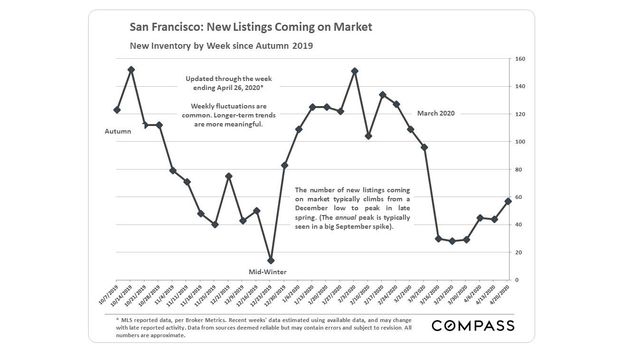
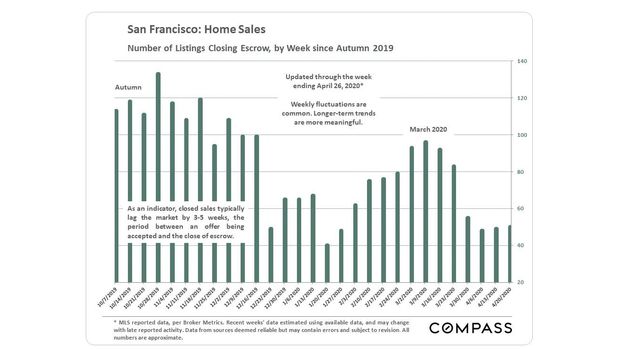
Even before the pandemic hit, San Francisco was staring down a $420 million budget deficit over the next two fiscal years, thanks to slowing revenue growth and rising expenses, which include salary and pension costs. But the economic effects of the shutdown have deepened the shortfall considerably. Plunging sales and hotel tax revenues have punched a hole in the budget that could grow to nearly $2 billion. The city has received $154 million from the federal CARES Act to help pay for COVID-19 testing and contact tracing, but the money can’t be used to offset revenue losses. The costs of the city’s response to the pandemic will significantly exceed that amount, officials said.
The city has already instituted a broad hiring freeze and paused nonessential capital projects like building maintenance, nonemergency tree pruning and street repaving. Deeper cuts are likely on the way, though they’re still being decided. Following the economic collapse of 2008-09, the city took similar steps: reducing services like street cleaning, and implementing hiring freezes and furloughs, and even slashing funding to HIV programs. Yet again, “everything is going to be on the table as we go through this process,” said Jeff Cretan, a spokesman for the mayor’s office.
Annual budget: $12.3 billion
Projected shortfall: $1.1 billion to $1.7 billion over its two-year budget cycle
Possible cuts: hiring freeze, service reductions
San Jose
With an annual budget of $4.5 billion, San Jose considers itself one of the financially leanest big cities in the country. “We’re on a thin margin as it is,” City Manager Dave Sykes said. “There’s not a lot of fluff in our budget, so we’ve had to learn to be efficient just for our own fiscal survival one year to the next.” Sales tax revenue has evaporated because of the economic drain that’s followed weeks of sheltering in place — the biggest hit to the city’s budget so far, Sykes said. San Jose, he said, is committed to preserving public safety services. So officials plan to hold off filling citywide vacancies as a first step to save cash. Up until the pandemic, San Jose was in the midst of a “major workforce attraction and retention strategy,” Sykes said, with a vacancy rate of more than 10% within city government.
Annual budget: $4.5 billion
Projected shortfall: $45 million in current fiscal year, $65 million in next fiscal year
Possible cuts: hiring freeze
Redwood City
As a bedroom community where 40% of the city’s operating revenue comes from property taxes, Redwood City is fairly well positioned to weather the COVID-19 pandemic. Despite an anticipated $6 million shortfall, Redwood City officials expect to close out the fiscal year with a balanced budget, City Manager Melissa Stevenson Diaz said. To do that, the city had to postpone filling some vacant city jobs and pushed off some planned capital projects, including improvements to transportation infrastructure. While the city is still refining its projections for next fiscal year’s shortfall, Stevenson Diaz said current estimates are hovering around $10 million.
Annual budget: $158 million
Projected shortfall: $6 million loss attributable to COVID-19, but budget will be balanced this year; anticipated gap next year of $10 million
Possible cuts: hiring freeze, holding off on $2 million in transportation capital projects
Sausalito
Spring marks the start of Sausalito’s tourism season, a critical time of year for the waterfront city’s economy, where sales, hotel and business taxes and parking fees account for nearly half of revenue in the $19 million general fund. But the long shadow cast by the coronavirus has crippled Sausalito’s restaurants and waterfront businesses and discouraged visitors trekking across the Golden Gate Bridge for day trips. Tourism-based revenues are projected to decline 40% in the coming fiscal year and three of the 10 largest employers in the city are restaurants. With a population of around 7,200, city officials aren’t relying on federal stimulus aid to balance the books.
Tough choices are ahead, said Mayor Susan Cleveland-Knowles.
“There is going to be pain,” she said. “A budget is inherently a document that reflects your values as a city, and we’re going to be working hard to spread the pain evenly and apply as balanced an approach as we can.” In addition to tapping reserves, Cleveland-Knowles said city residents should brace for “some reductions in programs and levels of service,” though what those will be are still being decided.
Annual budget: Adopted at $19 million; adjusted to $17.4 million
Projected shortfall: $1.6 million in current fiscal year (ending June 30), $4.9 million in next fiscal year
Possible cuts: service reductions; sharing government employees with Marin County and nearby cities, such as Mill Valley
Oakland
Faced with a revenue shortfall of roughly $120 million through the end of the next fiscal year, Oakland has instituted a hiring freeze and cut part-time, temporary employees. About 400 people were not assigned hours during the shutdown, including library aides, crossing guards and referees for sports matches, said city spokeswoman Karen Boyd. She added that the city “hopes this is temporary,” and that none of the workers have been removed from Oakland’s payroll. Tax revenues from sales, businesses, hotels and real estate transfers are expected to drop significantly, prompting the city to consider eliminating any travel and education expenses that aren’t directly related to the COVID-19 emergency. Oakland will also suffer from losses of restricted funds, such as the state gas tax, which goes to transportation projects.
“The size and scale of these revenue shortfalls is like nothing Oakland has ever before experienced,” Finance Director Adam Benson wrote in a budget report on April 21. “The point is that — absent an unexpected state or federal bailout — this problem will not be easily resolved, and it will not be fixed by tinkering at the margins. It will require significant action by city leaders.”
Annual budget: $1.6 billion
Projected shortfall: $24 million this year, $54 million next year, $42 million restricted funds
Possible cuts: travel expenses, part-time employees, hiring freeze, possible furloughs
Vallejo
Before the coronavirus set in, Vallejo was on the rise. The Solano County city had clawed its way out of bankruptcy a decade ago to become an attractive nesting place for families priced out of San Francisco. Home values were appreciating, the Planning Commission was approving new development and the ferry terminal offered commuter boat service to the Financial District. The coronavirus may freeze all that progress, at least temporarily. Vallejo is staring at a $13 million shortfall in its $110 million general fund next year. Sales tax revenue has declined 12% during the shutdown and, according to a city tax consultant, may hover there for 18 months. The city has stopped hiring for all nonessential positions and may defer some infrastructure projects.
Annual budget: $110 million
Projected shortfall: $13 million
Possible cuts: hiring freeze, deferring some capital improvement projects
Berkeley
Berkeley, a hippie haven dotted with million-dollar craftsman homes, sustains itself largely on property taxes. But it also relies on hotel and sales tax revenue and fees reaped from parking citations, all of which have taken a nosedive. From March through next year the city stands to lose $27.8 million, with estimated shortfalls of $2.6 million this year and $25.2 million next year. That’s 12.6% of Berkeley’s annual $200 million budget. The City Council has built up reserves over the years, and Berkeley is in a better position to weather the crisis than its neighbors, Richmond and Oakland. Nonetheless, its restaurants, shops and hotels will remain closed through May. Gas stations won’t see much business as people avoid car travel, and the city will extract little money from parking fines, since officials decided early on not to enforce parking violations other than red curbs. The city of roughly 121,000 people also has a significant homeless population of 1,108, according to last year’s count, and those street- or tent-dwellers will need additional services during the crisis, Deputy City Manager David White said.
Annual budget: $200 million
Projected shortfall: $2.6 million this year, $25.2 million next year
Possible cuts: hiring freeze, some capital projects may be deferred
Richmond
A working-class city with a Chevron petroleum refinery in its backyard, Richmond may take a harder beating than many of its larger peers. With a population of 110,00, it’s well under the 500,000 benchmark to receive funding from most federal stimulus programs. Normally, the city’s budget hovers at $176 million, but it’s facing a $7 million deficit this year and a $27 million hole next year, accounting for the projected dip in sales tax revenue, the rising cost of pensions and inflation in goods and services, said Mayor Tom Butt. He’s formed an ad hoc budget committee with two City Council members that is looking at 49 potential cuts, including closures of branch libraries, fire stations or community centers, and slashing of recreation programs. They’re trying to minimize layoffs and look closely at what services residents would lose. “When we make cuts, it has a much greater impact than in a (more prosperous) city like Orinda or Walnut Creek — and that makes it particularly painful,” Butt said. The median household income in Richmond is $64,575, and residents rely heavily on city services.
Annual budget: $176 million
Projected shortfall: $7 million this year and $27 million next year
Possible cuts: branch libraries, fire stations, recreation programs
Walnut Creek
Known for its downtown theater and shopping centers, this Contra Costa city of 70,000 residents took a big sales tax hit when the coronavirus swept in. The city normally has $92 million in its general fund, and officials had anticipated a $3.5 million surplus before the virus. When the shelter-in-place clamped down the city faced a shortfall of up to $10 million, which it patched up by cutting travel and hourly workers, and freezing vacant positions. Next year’s losses could balloon to $12 million, mostly stemming from the drop in sales tax revenue and a decline in arts and recreation — no one is renting sports fields, and the Dean Lesher Regional Center for the Arts has canceled all performances. “There’s going to be an incredibly complicated and painful discussion that we have to put together before June,” said Mayor Loella Haskew, adding that no one can quite predict how the virus will change people’s shopping habits or affect stage productions.
Annual budget: $92 million
Projected shortfall: $13 million this year but staff cuts were made to balance budget; approximately $12 million next year
Possible cuts: Hiring freeze, hourly workers cut, travel and unnecessary purchases stopped
Santa Rosa
The coronavirus is the latest in a string of catastrophes to hit Santa Rosa, a North Bay city of 180,000 people, already walloped by wildfires and an acute homelessness crisis. It’s looking at losses of $74 million over six years — a significant drain for a city with an annual budget of $171 million. This year alone the city bled $12 million, and projections now show it gushing up to $20 million next year if officials don’t do something. Santa Rosa also faces other complications. Three quarter-cent sales tax measures — all aimed at generating money for public safety and keeping the city operating after wildfires — are due to expire in 2025 and 2027. And officials are struggling to prevent the spread of the coronavirus among 1,600 homeless people, many of whom are camped beneath Highway 101. Placing them in motels costs up to $250 per person, per day, according to Mayor Tom Schwedhelm, and there’s no guarantee the federal government will reimburse that money. Then there’s the likelihood of power shutoffs during the fall fire season, which could stall business for days and drain sales taxes even more. The city has a hiring freeze in effect, and its budget staff is re-examining $39 million for projects that have been approved, but not yet paid for.
Annual budget: $171 million
Projected shortfall: $12 million this year, but the city will use reserves to balance the budget; approximately $20 million next year
Possible cuts: hiring freeze, some projects stalled
Tourist season generally picks up during spring and summer in Napa, but it’s sputtered during the pandemic. Losses of $8.3 million in revenue from hotel taxes and $2.2 million from sales taxes forced the city to dip into its reserves. Next year Napa officials expect to lose between $15 million and $20 million, a sizable portion of a roughly $100 million annual budget. They have proposed cuts that include elimination of part-time employees, cancellation of community events and sports programs, new limits on police overtime, and consolidating city offices to break free from two building leases. The city would also delay buying equipment for traffic signals, storm drain inlets, building maintenance, downtown cleaning and even fire engines. In all, the city will lay off 39 people and freeze 31 vacant positions.
Annual budget: $100 million
Projected shortfall: $10 million this year, $15 million-$20 million next year
Possible cuts: hiring freeze, layoffs, sport programs and events cut, equipment purchases delayed, office leases ended
Dominic Fracassa and Rachel Swan are San Francisco Chronicle staff writers. Email: dfracassa@sfchronicle.com, rswan@sfchronicle.com Twitter: @dominicfracassa, @rachelswan