San Francisco rents down 9.2%, lowest prices in 3 years


  • 3c13a 920x920 San Francisco rents down 9.2%, lowest prices in 3 years

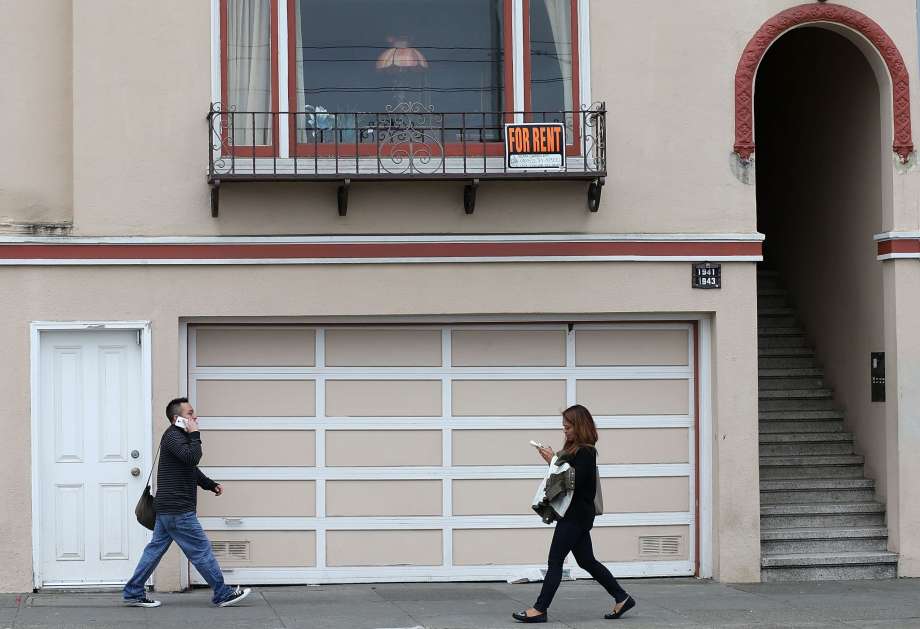
    FILE PHOTO: Pedestrians walk by an apartment for rent in San Francisco.

    FILE PHOTO: Pedestrians walk by an apartment for rent in San Francisco.


    Photo: Justin Sullivan/Getty Images

Caption

Close

FILE PHOTO: Pedestrians walk by an apartment for rent in San Francisco.

FILE PHOTO: Pedestrians walk by an apartment for rent in San Francisco.


Photo: Justin Sullivan/Getty Images


Rents for one-bedroom apartments in San Francisco have dropped by 9.2% since June 2019, according to Zumper. That’s the biggest decline since the rental site started recording such data in 2015, and brings median one-bedroom prices down to levels not seen since March 2017.

With the economy faltering and unemployment numbers skyrocketing, Zumper’s Crystal Chen said she expected to see a dip, but as a long-time SF resident, she said the nearly double-digit year-over-year decline was “still shocking.” Plus, prices are unlikely to plateau anytime soon.


Median one-bedroom prices in San Francisco dropped almost 3% just in the last month alone.

She attributes the decrease in demand — also seen in other expensive cities such as New York, Boston and San Jose, though to a lesser degree — to a new prioritization for renters that puts cost and space over location. This is especially true in tech-heavy locations like San Francisco, where workers may be able to work from home indefinitely. “As more and more companies move into remote work, many renters don’t want to pay the big-city price tag when they are unable to use the amenities and are looking for more affordable options outside of large, metropolitan areas,” she said. “If everyone is stuck at home, people are prioritizing having more space and comfort over city life.”


Plus, with physical separation of the utmost importance to stop the spread of COVID-19, people are turning away from the time-honored tactic to save money: roommates. “I think most people would rather move elsewhere for more affordability than risk moving in with people they haven’t been social distancing with and potentially exposing themselves to the virus,” Chen said.


Zumper saw a 6.4% year-over-year decline for two-bedrooms in San Francisco, with a similar drop for three-bedroom units.


Chen said the city’s renters have their sights set on nearby locations that offer more space and affordability. Sacramento, Sonoma and Los Angeles have been the biggest beneficiaries of San Francisco’s rental exodus, she added.

Though the price drop is a welcome change for renters who do want to stay in SF, the city still has the most expensive one-bedroom rents in the country, with a median of $3,360, according to Zumper.

So, even with a dramatic decrease in demand, will San Francisco ever truly be “affordable” again? “Things are definitely going to be shaken up, and more relief will come in terms of rents, but there will still be a floor that rents will drop to,” Chen said. “We’ll have to see how low it goes in the coming months.”

Emily Landes is a writer and editor who is obsessed with all things real estate. 

Article source: https://www.sfgate.com/ontheblock/article/san-francisco-rents-drop-coronavirus-15311467.php

Posted in SF Bay Area News | Tagged | Leave a comment

San Francisco rent prices see ‘unprecedented’ drop

After years of people bemoaning the state of San Francisco, a city stifled by skyrocketing rent prices and overrun by tech-worker drones decked out in matching Patagonia vests, new data suggests that change could be coming.

Zumper, the San Francisco–based apartment-rental site, just released its latest rent figures and, according to CEO Anthemos Georgiades, the “price drops are unprecedented” in the seven-plus years the company has published rent reports. “All this talk of people leaving S.F. for a future of remote work is now backed up by hard data.”

Georgiades isn’t being hyperbolic. Per Zumper’s report, one-bedroom rents in S.F. fell 9.2 percent year over year in May, the largest S.F. drop ever in the history of the company’s monthly reports and the lowest price point in over three years. The average price for a one-bedroom in S.F. stands at $3,360; it was at $3,700 the same time last year.

The plummeting numbers fell even further down in Silicon Valley.

In Mountain View, home to Google, the price for a one-bedroom home dropped 15.9 percent in consecutive years in May. Facebook’s home of Menlo Park saw a 14.1 percent tumble, while Cupertino and Palo Alto, home to Apple and Tesla, saw prices plunge 14.3 percent and 10.8 percent, respectively.

Georgiades says that these rent drops may be even higher than the company’s published data, “since some landlords conceal price drops in ‘lease specials’ like six weeks of free rent to move in.”

A cursory glance on Craigslist reveals major price cuts, with landlords all but begging you to sign a lease: “Newly Reduced Rate” reads the headline for a new East Cut studio offering eight free weeks, while this contemporary SoMa loft dangles ten weeks of rent-free living to interested takers.

“I’ve never seen anybody giving that much free rent as an incentive the whole time I’ve lived here, since 2003,” Bay Area property manager and landlord Carlos Carbajal tells KQED.

Several factors are at play: There’s a widespread hiring freeze; mass layoffs have hit the Bay Area’s tech industry; some have suggested Airbnb rentals now being listed as homes could be a cause (Note: an Airbnb spokesperson tells Curbed, “We have more listings and hosts on the platform today than we did on Jan. 1.”); and many tech giants in the Bay Area, like Facebook and Google, have told their remaining employees to work from home until the end of the year. San Francisco’s Twitter and Square went even further, telling most of their workforce they can work remotely permanently.

Not everyone is convinced that this much-needed rent-price slump has staying power. After all, these unprecedented figures are due to anomalous times brought on by a global pandemic.

“I wouldn’t be so fast,” Kim-Mai Cutler, partner at Initialized Capital and vocal housing advocate, wrote on Twitter. “I definitely see a lot of movement right now because it doesn’t make sense to be in a closed down city through the summer. But once things open up or the pandemic passes in 1-3 years, there will be a lot of good deals/prices, possible energy to come back.”

While this price drop is refreshing to hear, it isn’t good news for everyone, especially in East Bay cities. The drops in rent, according to Zumper, were hardly noticeable in Berkeley, where it dipped less than one percent, and in Oakland rent prices for a one-bedroom went up 4.9 percent. According to the San Francisco Chronicle, “Georgiades speculated that the East Bay may become even more attractive post-coronavirus among Silicon Valley employees who want to stay in the Bay Area but don’t feel the need to live close to their corporate campuses.”

As for San Francisco returning to a city where trust-fund-free dwellers get by on a café job plus whatever cut they get from playing Bottom of the Hill? Don’t count on it. San Francisco still remains the most expensive market in the country, ahead of New York City, Boston, and San Jose, which all had negative year-over-year changes for their respective one-bedroom rents.

Correction: This piece has been updated for clarity.

Article source: https://sf.curbed.com/2020/6/2/21277355/san-francisco-rent-prices-coronavirus-2020-may

Posted in SF Bay Area News | Tagged | Leave a comment

SF, Silicon Valley rents plunge amid downturn: ‘Never seen anything like it’

The cost of renting an apartment in the Bay Area plummeted in May, as layoffs and the increased flexibility of working from home drove a double-digit drop in some of the nation’s most expensive housing markets.

Rents for a one-bedroom apartment dropped most in the cities richest in high-paying tech jobs, falling 9.2% in San Francisco compared with May of 2019. In Mountain View, home to Google, rents fell 15.9% year over year, while in Apple’s hometown of Cupertino rents dipped 14.3%, according to the rental search engine Zumper. In San Bruno, where YouTube has its offices, rents tumbled 14.9%.

“It’s a dramatic drop in San Francisco and the South Bay,” said Zumper CEO Anthemos Georgiades. “This is real. We have never seen anything like it.”

While rents are down across the country, the drop was more severe in high-priced coastal cities that over the past decade have been most attractive to tech entrepreneurs and their investors, Georgiades said. Several of the biggest employers in those cities, including Facebook and Google, are allowing employees to work from home through the end of the year, while San Francisco’s Twitter and Square have said many employees will be allowed to work remotely permanently.

This has employees rethinking all sorts of assumptions, including where they live. In a May survey of 2,800 tech workers in Northern California, New York City and Seattle, 66% said they would be willing to work remotely and relocate out of those urban areas. The survey, by the employee messaging app Blind, found that 20% of San Francisco respondents said they would be willing to accept a pay cut of up to 20% in exchange for being allowed to telecommute from a more affordable city.

 SF, Silicon Valley rents plunge amid downturn: Never seen anything like it

That remote working trend is “compounding the job losses and putting significant downward pressure on rents” in the Bay Area, Georgiades said. “You have all these CEOs talking about how productive their teams are working from home and questioning whether they need to return to the office.”

The drops in rent were much less severe in Berkeley — less than 1% — while in Oakland rents are up 4.9% from May of 2019, mostly because that city has seen a big jump in rents in late 2019 and early 2020. Georgiades speculated that the East Bay may become even more attractive post-coronavirus among Silicon Valley employees who want to stay in the Bay Area but don’t feel the need to live close to their corporate campuses. And while rents have skyrocketed in Oakland, the average one-bedroom in that city — $2,350 a month — is still a bargain compared to Menlo Park, where the average unit is $2,980, and Palo Alto, where the average is $2,810.

The 9.2% drop in the average one-bedroom San Francisco rent of $3,360 still leaves it unaffordable for the vast majority of city residents. But Georgiades said he could see that number falling below $3,000, similar to New York, where the average one-bedroom goes for about $2,900. He said rents would likely continue to decline through the end of the year. In addition to dropping rents, the large multifamily developers will likely continue to offer more free rent promotions. Some developers are now offering eight free weeks, compared to the four weeks they were giving prior to the pandemic.

“This definitely has a floor,” Georgiades said. “We are not predicting that rents will fall to $1,750. Unfortunately for renters, that is not going to happen.”

Neighborhoods that have a high percentage of college and graduate students could see the highest drops, as landlords rush to attract tenants to buildings that would typically be filled with students. UC Berkeley has yet to announce whether the fall semester will be remote or on campus.

“It’s very unclear if those leases are going to be signed right now,” he said. “There could be a lot of downward pressure in those ZIP codes.”

 SF, Silicon Valley rents plunge amid downturn: Never seen anything like it

He expects landlords to be “pragmatic” in offering deals, lowering rents and making accommodations to existing tenants. “They know there is not a line around the corner of people looking to take their current tenant’s place,” he said.

Georgiades said there has long been an unsupported myth that Bay Area residents are leaving the city in droves because of high cost of living, steep taxes, snarled traffic and homeless issues. It was a narrative that was not supported by the facts, he said — until now.

“I’ve lived in the Bay Area for eight years and I’ve heard that story for eight years,” he said. “This is the first time ever the narrative is actually real.”

The phenomenon of a lot of San Francisco renters “turning in their keys and leaving the city” is something landlords are seeing, according to Charley Goss of the San Francisco Apartment Association.

“Lots of renters who maybe don’t have roots here, or who don’t need to be here for work, or who are frustrated with the city street conditions, are leaving,” he said. “This, combined with some tenants being unable to pay, would lead some owners to rush to fill vacancies as quickly as they can.”

In addition a lot of Airbnb listings are being offered as regular apartments now, which could also increase supply and lower rents, Goss said.

Correction: An earlier version of this article misstated the drop in San Francisco rents. They declined 9.2%.

J.K. Dineen is a San Francisco Chronicle staff writer. Email: jdineen@sfchronicle.com Twitter: @sfjkdineen

Bay Area rents

Source: Zumper

Article source: https://www.sfchronicle.com/business/article/San-Francisco-Silicon-Valley-rents-saw-sharp-15307118.php

Posted in SF Bay Area News | Tagged | Leave a comment

SF allowing some office workers to return in June, but businesses are in no rush

San Francisco will allow some workers to return to their offices on June 15, but businesses aren’t rushing back as the coronavirus continues to be a threat.

A downtown where skyscrapers, restaurants and BART stations were packed at the beginning of the year will likely remain desolate as some of the city’s largest employers keep workers home. Companies are also delaying returns to campuses in Silicon Valley and the East Bay.

Salesforce, San Francisco’s largest private employer with over 9,000 local workers, said it didn’t have an update on when its headquarters will reopen. The company plans to have mandatory face masks, temperature checks and 6-foot separation when workers return.

Wells Fargo, which has 14,500 Bay Area employees, will keep most office workers home until at least June 30, though some retail branches will reopen in June. “We do not yet know when our business-as-usual activities will resume. We are creating a thoughtful, phased plan for returning to the workplace, and we will use guidance from health experts to maintain a safe workplace for all employees,” said Ruben Pulido, a bank spokesman.

Google will start reopening offices beginning July 6 with around 10% occupancy, CEO Sundar Pichai wrote in a blog post last week. In September, occupancy will rise to 30%. Bay Area offices are included in the plan, a spokesman said.

Facebook’s offices also won’t reopen until July 6 at the earliest. Salesforce, Facebook and Google are all allowing most employees to work from home for the remainder of the year.

“Returning people to a physical office setting will happen slowly and in stages,” said Carl Guardino, CEO of the Silicon Valley Leadership Group. “No self-respecting employer would put employees at risk.”

The business group’s frequent surveys of members show that they’re overwhelmingly still encouraging employees to work from home.

The scarcity of office workers will likely extend pain for retailers and restaurants that depend on downtown foot traffic. Specialty’s, whose generously sized cookies and sandwiches were a mainstay of corporate lunches, said last month it was closing the Pleasanton chain’s 50 locations permanently due to the virus.

San Francisco officials are also encouraging businesses to be cautious. Employees who are “necessary for operations” can return to offices, but Gloria Chan, a city spokeswoman, said those who could work remotely should continue to do so. More guidelines will be released this month, she said.

Without clear guidelines from health authorities, many offices are not ready to think about reopening, said Jay Cheng, public policy director at the San Francisco Chamber of Commerce.

“We haven’t heard from a lot of folks who are planning to really reopen offices on June 15,” he said. “The city hasn’t released strong regulations on what office reopening looks like, so we’re kind of stabbing in the dark until that happens.”

No company wants to be found responsible for helping the coronavirus to spread.

“Businesses are very nervous about reopening without specific procedures and regulations to protect them,” Cheng said. “They are hungry for those very clear regulations because the legal liability is huge if you reopen and you aren’t protected by a document saying you know what you are doing.”

Angela De La Housaye, founder of DLHA Law Group, has about 14 workers split between San Francisco and Walnut Creek. Starting in mid-June, she will have support staff rotate through Walnut Creek with one person in the office daily to receive process servers, deliveries and mail.

Since most of her workers live in the East Bay, she has no plans to reopen the San Francisco office. “Until they have a vaccine, I don’t want them to have to ride BART to work in San Francisco because of potential exposure there,” she said.

Zillow Group, which has about 500 workers in downtown San Francisco, expects to start opening offices this summer “safely and in a measured way,” but told employees they can continue working from home until at least the end of the year. “We want them to have the flexibility to make the decision that’s right for them,” said Dawn Lyon, chief corporate relations officer.

“Especially with tech, I’m not seeing a great rush to return,” said Dan McCoy, a partner at law firm Fenwick West who focuses on employment practices.

It’s unclear how looting and arson during protests over the death of George Floyd might affect reopening plans, since June 15 is still two weeks away.

“People honestly have no idea if the civil unrest will continue for another week,” Cheng said.

The virus has frozen a booming real estate market. Tony Zucker, a Dunhill Partners West real estate broker who works with smaller tenants, said there has been little office leasing activity since around March.

Tenants are hoping to reduce rents on existing leases, but landlords have resisted so far. For new leases, tenants are seeking a clause that will delay rent payments until offices are ready for occupancy with approval from the city, he said.

There are signs that office rents are falling.

At one downtown office that a client is considering, annual rents were in the mid-$60s per square foot before the virus and have now dropped to the high $50s per square foot, Zucker said. He declined to identify the space for client privacy reasons.

“I think there’s no doubt rents are going to go down,” he said. “Tenants are really thinking about how much space they really need.”

Scott Harper, a Colliers International real estate broker who represents landlords, agreed it was “inevitable” that rents would go down, but it was unclear by how much given the scarcity of new leases.

“Fundamentals are still good in the Bay Area,” he said, but the long-standing challenge around commuting has become more complicated with people avoiding public transit.

Last month, California allowed counties to approve office reopenings for workers who cannot work from home, and Marin, San Mateo, Napa, Solano and Sonoma have done so. Contra Costa is set to allow offices to reopen on Wednesday, while Alameda and Santa Clara counties haven’t released a specific date for when offices could reopen.

ServiceNow, a Santa Clara tech company, said only 10% to 15% of its thousands of local workers will initially come in when offices reopen. The company doesn’t have a date for reopening.

“We’re going to take a phased approach, a very conservative approach,” said Pat Wadors, ServiceNow’s chief talent officer. “The decision to work from home was a very easy one and done within minutes. Returning is more complex.”

Architecture firm Skidmore, Owings Merrill, which has about 250 people in downtown San Francisco, said Sept. 8 is the soonest that workers could return.

“It will be a voluntary return to the office,” said Keith Boswell, a partner at SOM. “Our organizing mantra is we want to make sure that employees are safe and that they feel safe.”

Waiting until after Labor Day helps employees with planning and “gives us enough time to see where San Francisco and adjacent counties are going,” he said. The company surveyed all 1,100 employees nationwide to get their input, with many expressing concerns about how they would get to work, for instance.

Meanwhile, landlords are planning a new reality that includes thorough cleaning and temperature checks.

At 101 California, a major downtown tower, masks will be required and elevators will be touchless with occupancy limited to four people, property manager Hines said in a letter to tenants reviewed by The Chronicle. Automatic door openers will be installed by July, and temperature checks will be mandatory for guests and voluntary for employees. The tower has remained open for essential businesses but is preparing for a widespread return, a Hines spokesman said.

The rise of remote work and the potential end of workers crammed into tight workspaces favored by tech startups could reshape the entire office sector.

“I think there will be some fundamental changes,” said Colin Yasukochi, executive director of real estate brokerage CBRE’s Tech Insights Center.

Roland Li and Carolyn Said are San Francisco Chronicle staff writers. Email: roland.li@sfchronicle.com, csaid@sfchronicle.com Twitter: @rolandlisf, @csaid

Article source: https://www.sfchronicle.com/business/article/SF-allowing-some-office-workers-to-return-in-15309986.php

Posted in SF Bay Area News | Tagged | Leave a comment

Keller Williams Realty Announces KW SF Bay Area

  • Home:
  • News:
  • Keller Williams Realty:

From Napa to Carmel, KW elevates agent value for more market impact

SAN FRANCISCO – (BUSINESS WIRE) – June 02, 2020 – Keller Williams Realty announces KW SF Bay Area, a new collective bringing together operations and agent communities from KW San Francisco, KW Peninsula Estates and The Cunningham Group’s (TCG) entire network of offices from Napa to Carmel. A long time in development, this strategic move is the answer to the evolving trends of the real estate industry, agent business mobility, and the widespread use of technology and data-driven communications. This change aligns with KW’s values and business model to put agents first, empowering agents’ ability to deliver greater value to buyers, sellers, and investors.

With nearly 400 real estate professionals serving San Francisco and San Mateo Counties, this new collective offers agents access to a broader network and geography of inventory. Offices will streamline operations, communications, marketing, and share more resources and referrals. Agents will see expanded earning, retention and profit sharing programs that open growth opportunities in this new world of virtual real estate transactions. Additionally, as part of The Cunningham Group (TCG) agents have affiliation with KW locations in Napa, Oakland, Alameda, Castro Valley, Los Gatos, Saratoga, Carmel, Brentwood, Santa Monica, Pacific Palisades, Newport Beach, and Oahu, as well as worldwide through Keller Williams International (KWRI).

Nicole Aissa will lead KW SF Bay Area and comes with decades of real estate experience launching some of Bay Area’s most successful real estate agents. “KW’s over 1 billion tech investment has mobilized new capabilities for agents to drive business, access training and support, and deepen agent-client relationships in this new era of real estate,” says Nicole Aissa, Senior Executive Team Leader.

Supporting the change, KWRI has expanded its award-winning training, coaching and mentor programs through the expanded use of virtual platforms, the use of which was accelerated by the COVID-19 shelter-in-place (SIP) orders. Recently, Keller Williams teamed up with Facebook to offer agents BOLD Pivot, a digitally formatted version of its award-winning BOLD training platform. Over 25,000 agents from around the world have attended. “Our training programs have always been in high demand and now are accessible to more agents. In addition, this new network provides more connection to high performing coaches and mentors in the business,” says Anne Kennedy, Operating Partner.

KW offices are open and agents are conducting business by appointment in San Francisco on Monterey Blvd. and Lombard Street, in Burlingame, San Mateo, Napa, and Half Moon Bay.

About Keller Williams Realty International

Austin, Texas-based Keller Williams Realty International, the world’s largest real estate franchise by agent count, has more than 975 offices and 186,000 associates. The franchise is also No. 1 in units and sales volume in the United States. In 2015, Keller Williams began its evolution into a technology company, now building the real estate platform that agents’ buyers and sellers prefer. Since 1983, the company has cultivated an agent-centric, technology-driven and education-based culture that rewards agents as stakeholders.

About The Cunningham Group (TCG)

Headquartered in Santa Monica, California The Cunningham Group (TCG) with regional partners has a network of over 1,700+ agents spanning California and Hawaii with combined sales volume of over $6.4 Billion. TCG offices in Northern California are a network of agents, internal operations, and buyer/seller services covering Napa to Newport Beach.

SOURCE Keller Williams Realty International

###

Comments:

Please enable JavaScript to view the comments powered by Disqus.
comments powered by Disqus

Article source: https://www.franchising.com/news/20200602_keller_williams_realty_announces_kw_sf_bay_area.html

Posted in SF Bay Area News | Tagged | Leave a comment