The Big Move: I work in Silicon Valley, but my job is now remote. I can finally live somewhere cheaper. Where should I go?

I’m a tech worker in Silicon Valley, and my company recently informed us that we can work remotely indefinitely. There’s a lot I love about living here — including the easy access to Michelin-starred restaurants and to outdoor activities like hiking and surfing.

What I don’t love is the high cost of living. I earn all this money, and it goes on rent and transport and, yes, eating out. With everything that’s happened in the last six months, I have had long talks with friends about our future, and our relationship to our work.

There’s got to be some reward for all of the long days, right? I’m a renter right now, but I have enough money saved up to buy a home somewhere. I hate to leave, but several members of my friend group have the same idea. We’re done! My money would go much further outside of Northern California.

Where should I go?

Searching and So Over It in San Jose

Dear Searching,

Open Google Maps
GOOG,
+1.60%

 
GOOGL,
+1.55%

 and take your pick.

You’re far from alone when it comes to working from home on a more permanent basis. As far back as May, major companies like Twitter
TWTR,
+3.58%

 and Square
SQ,
+3.66%

 — which are both run by Jack Dorsey — said they would allow many employees to work from home indefinitely.

A survey of more than 300 chief financial officers conducted by research firm Gartner found that around nearly three-quarter of them plan to shift at least 5% of on-site employees to permanently-remote positions post COVID-19. It appears that there’s something of a a movement afoot.

The pandemic has forced lots of people to rethink their living arrangements. Faced with the prospect of working from home for many, many more months to come, major cities like New York and San Francisco are seeing an exodus of folks moving to the suburbs.

And still more people are looking for cheaper housing in light of the pandemic-fueled economic downturn. Even before COVID-19, high-cost housing markets like where you live in San Jose were seeing people leave simply because it got to be too expensive.

So where were those people moving? An analysis of listing-view data from Realtor.com found that 62.8% of the homes San Francisco Bay Area shoppers looked at were in fact not in the Bay Area. Here are Top 10 counties with the most home-listing views from current Bay Area residents:

  1. . Sacramento

  2. . San Joaquin

  3. . Placer

  4. . El Dorado

  5. . Stanislaus

  6. .. Monterey

  7. . Los Angeles

  8. . Santa Cruz

  9. . Fresno

  10. .. Nevada

9bfcc MW IA372 forsal 20200216185658 ZQ The Big Move: I work in Silicon Valley, but my job is now remote. I can finally live somewhere cheaper. Where should I go?

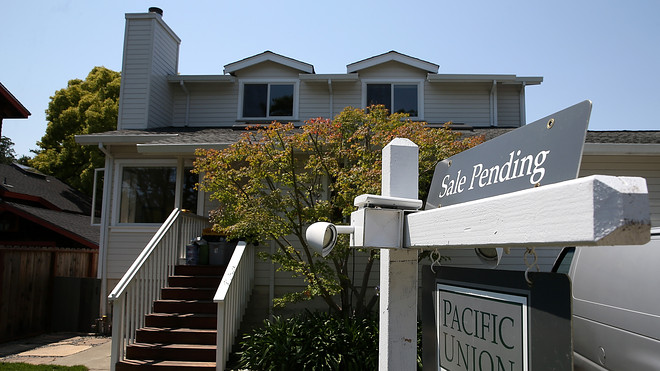
Buying a home like this in the Bay Area of California could cost you an arm and a leg — but looking further afield will provide you with many more affordable options.


Getty Images

“We are seeing a migration out of San Francisco to what we’ll call the North Bay, the East Bay, the Central Valley, and even Sacramento,” said Scott Fuller, a real-estate broker and founder of LeavingTheBayArea.com, a real-estate services firm that helps people relocate out of California.

“People are feeling like they’re being given some independence and some flexibility and they want what they would consider a better quality of life,” he said.

Many of the counties from Realtor.com’s list — including Sacramento and San Joaquin— are in the Central Valley. This region has become increasingly popular in recent years because of high home prices in areas like San Jose and San Francisco.

(Realtor.com is operated by News Corp
NWSA,
+3.27%

  subsidiary Move Inc., and MarketWatch is a unit of Dow Jone, which is also a News Corp subsidiary.)

But moving to this part of California has its trade-offs. “The most exciting thing you could do is go to Safeway or maybe duck hunting,” said Pat Kapowich, a Silicon Valley-based real-estate broker. “It’s still really a bedroom community — you have to get in your car if you want to do anything exciting or fun.”


‘It’s still really a bedroom community — you have to get in your car if you want to do anything exciting or fun.’

— Pat Kapowich, a Silicon Valley-based real-estate broker, on the downsides to living in California’s Central Valley

It’s a bit of a resurgence of the drive-until-you-qualify phenomenon we saw in the housing bubble that preceded the Great Recession — people are moving to many towns and cities in this region despite the hours-long commute to work because they can afford to buy a home here.

For someone in your position, who can work remotely indefinitely, living in the Central Valley could make a lot of sense. It’s not too long of a drive to many of the amenities you like about where you live now — the beach, the mountains, and even Napa Valley’s wineries.

Plus, you need to consider the fact that you might want to change jobs eventually — and, if you do, your new job might not be remote. If you choose to buy in this region, you could theoretically commute to a job in Silicon Valley, if need be.

But let’s say that you’re tired of California living. There are many markets across the country where you could be happy. Again, one consideration should be whether the region has a thriving or growing tech sector. Along those lines, there are the usual suspects — places like Seattle, Denver and Austin.

But other markets Fuller and Kapowich identified as being popular among his clients also include areas like Phoenix, Nashville, Raleigh, N.C., and Boise, Idaho. Even more places to consider include Scottsdale, Ariz., Reno and Santa Fe or Albuquerque, N.M.

In most of these places “for $500,000 and less you can get into a home that’s going to be at least 3,000 square feet,” Fuller said.

Don’t miss:California’s emigrants aren’t all moving to cheaper housing markets

Fuller estimated that some 80% of his clients who choose to relocate fully outside of California still stay west of the Rocky Mountains. “They’ve got family or something that’s tying them back so they want to be within a couple of hours plane ride to get back to California,” he said.

Some of these cities — like Seattle, Nashville and Denver — will offer lots in the way of restaurants, entertainment and access to the great outdoors. Unfortunately, it may be hard to fully replicate the lifestyle you currently can lead in the Bay Area.

“Here you have all these activities within a 90-minute drive,” Kapowich said. “You can go surfing on Saturday and snow skiing on Sunday.”

Why didn’t I give you one or two suggestions?

These aren’t normal times, so instead I suggest you reach out to your network to see if you know people who live in those areas and get the honest truth from them about what lifestyle you could lead after you move. The pandemic is a time when we can and should lean on each other.

Take some time to narrow down where you might want to live, and then fly out to see if your most desired amenities are within a stone’s throw. If you have got close friends who have the same idea, you can pool your resources, creatively, if not financially.

It might be easier if you made some of these decisions together.

Article source: https://www.marketwatch.com/story/the-big-move-i-work-in-silicon-valley-but-my-job-is-now-remote-i-can-finally-live-somewhere-cheaper-where-should-i-go-2020-08-13

Posted in SF Bay Area News | Tagged | Leave a comment

Market Musings: Tech replacing Realtors? Please. – The San Francisco Examiner

0afc6 22639456 web1 200909 SFE Rosen header 1 Market Musings: Tech replacing Realtors? Please. – The San Francisco Examiner

Licensed real estate brokers date back to 1919, which is right about the time the counter-narrative began, insisting that they are not necessary.

The general argument — that real estate agents, having passed a scandalously low barrier to entry, do little more than ferry around clients to open houses and cash enormous commission checks — has grown more persistent in tandem with technology taking over our daily lives. Add a sprinkle of COVID and its accompanying restrictions on doing real estate business, and the argument has grown to a roar.

Real estate has been historically slow to decipher technology, which probably doesn’t help rebut the anti-Realtor camp. Agents have admittedly struggled with it, trying to figure out how to best leverage tech while acknowledging that it actually does make parts of their job (mainly the “finding houses” part) both easier and less dependent on them. It’s inaccurate, though, to say that the industry has “resisted” technology — especially in the Bay Area — even though some people insist just that.

When Compass blew like a category five-level hurricane into real estate a few years ago, it was largely because it sold itself as a next-generation “real estate technology company,” the “first modern real estate platform,” which paired “top talent with technology.” These aren’t the words of an empty blowhard. Compass’ ability to leverage data and tech has led; other agencies have followed.

And yet the nagging feeling that “I could just find my own place and hire a lawyer to do the contract” persists, almost 15 years after a pair of ambition-inflated Microsofties followed up their founding of Expedia by inventing Zillow and vowing to “do to Realtors what we did to travel agents.” Real estate sites like Zillow and Redfin have definitely changed the way consumers find properties; and yet, Realtors are still here.

In a recent Fast Company article, Massachusetts real estate broker Jason Weissman sounds the alarm for traditional real estate, calling on agents to “adapt or die” in the face of “PropTech,” the industry’s name for a wave of well-funded real estate-focused technology start-ups. Compass, which functions like a traditional brokerage, is one of them; so is Opendoor, an algorithm created for buying and selling properties online. If you can buy and sell with a few clicks, why do you need a real estate agent?

The answer is buried several paragraphs down in Weissman’s piece: “Real estate agents are still critical for the most important part of the purchasing process: advisory service,” he says. “If all politics is local, that is doubly true for real estate.”

Preach on, brother. Last week, my wife and I closed on a home in Oregon that was supposed to close two weeks ago and probably would be pending into infinity if not for our local real estate agent. The problem? I’m still not sure. I do know that we signed closing documents seven times and each time ran into some roadblock related to the differences between doing business in California versus Oregon, the pace at which they do business in Oregon and general confusion regarding legal terms, notaries and maybe an indifferent title company officer. Full disclosure: I’m still not sure what happened.

What I do know is this: during the last two weeks of August, our Oregon realtor, who we thought was in line for the easiest commission of his career, calmly guided us through local customs, doggedly advocated for us and even convinced the seller to grant us access to the house before actual closing, lest we be forced to re-rent our U-Haul for another three days. After close, when it looked like the title company was going to withhold a rebate we legally deserved, he didn’t back down until the issue was resolved.

In the end, it wasn’t the easiest commission of his career.

Then again, having worked around Realtors for several years, I’m not actually sure there are any easy commissions. No matter how breezy the job may look, how snappy the suits and shiny the cars, now matter how much technology makes it look like you can simply go online and purchase a home like you would a pair of shoes at Amazon, the only way to eliminate Realtors through technology would be to create an app that eliminates everyone involved with the process of buying and selling homes — agents, mortgage brokers, title companies, inspectors, contractors… it’s a pretty extensive list.

Once they do that, we’ll all then be free to float around in our WALL-E luxury chairs, surfing for our next house while simultaneously watching videos and stuffing our faces with candy.

Larry Rosen is a San Francisco-based writer, editor, podcaster and recovering former Realtor. He is a guest columnist and his viewpoint is not necessarily that of the Examiner. The Market Musings real estate column appears every other week.

real estatesan francisco news

Article source: https://www.sfexaminer.com/news-columnists/market-musings-tech-replacing-realtors-please/

Posted in SF Bay Area News | Tagged | Leave a comment

Nearly 2 times as many San Francisco homes are for sale – Business Insider

  • San Francisco housing inventory has risen 96% year-over-year, meaning there are nearly twice as many homes listed for sale as there were this time last year, per a Zillow report.
  • The statistic is just one of the latest in a growing pile of evidence that the pandemic and a rise in remote work are allowing residents to leave for more affordable places.
  • San Francisco is just one of the major cities across the country is at the center of a debate around the post-coronavirus future of urban areas.
  • Visit Business Insider’s homepage for more stories.

Nearly twice as many homes are for sale in San Francisco as residents continue to leave one of the most expensive cities in the country amid a pandemic-driven exodus.

According to a Zillow report published last week, housing inventory is up 96% from this time last year, and listing prices have also dropped by 5%. Though you’ll still spot San Francisco’s infamously high price tags on online housing sites — Zillow lists the city’s median home value at about $1.45 million.

The report points out that other metro areas are not seeing the flood of new listings that San Francisco is experiencing — inventory in and around cities like Los Angeles, Seattle, and Boston is either steady or dropping.

The Zillow report is just the latest data point in a growing consensus that more people are leaving San Francisco during the COVID-19 pandemic.

Reports of residents leaving the city are nothing new and predate the COVID-19 pandemic — soaring housing prices, a high cost of living, and other factors have been cited as key drivers to people exiting the city in recent years. But the “urban flight” from the city has been accelerated as some of the city’s most attractive amenities — like museums, indoor restaurants, and bars — remain shuttered and as the rise of remote work has allowed workers in tech and other sectors to move to places with cheaper costs of living. 

Tech workers are a major part of the region’s talent pool, and industry giants like Facebook and Google have announced that their workforces will be working from home well into 2021.

Moving companies in the San Francisco Bay Area have seen a surge in business in recent months, as Business Insider’s Rob Price reported. And many in Silicon Valley have escaped to surrounding areas, like the affluent wine country to the north, where wealthy homebuyers have reportedly fled dense San Francisco to snatch up hillside homes.

Since the onset of the pandemic, a debate has ensued on whether or not people will want to live in major US metro areas in the short and long term. 

Article source: https://www.businessinsider.com/twice-as-many-san-francisco-homes-for-sale-pandemic-2020-8

Posted in SF Bay Area News | Tagged | Leave a comment

People are fleeing the Bay Area. But they might not be gone for long

Shortly after Erica Johnston and her husband learned they were expecting a child, their best friends moved from San Francisco to Austin, Texas.

Johnston and her husband began to wonder if they should follow suit. Rent would be half the price for a larger place. They could be closer to friends. The Texas city would be a more affordable place to raise a child.

Then the coronavirus pandemic hit, and, six months later, raging wildfires brought unsafe air quality. “The last few weeks, especially with the fires, we can’t even take our daughter on walks,” Johnston said.

The combination of crises made their decision for them. With no real reason to remain in San Francisco and remote work encouraged by Johnston’s employer, Airbnb, they decided to move to Austin, too.

“It’s such a strange time for San Francisco,” she said. “There’s no sense in me paying the rent.”

Just like Johnston, most other Bay Area escapees have left because the coronavirus pandemic, shelter-in-place rules and wildfires have amped up the region’s space constraints and high cost of living, while minimizing many of the cultural and career reasons that motivate people to bear with the downsides.

Some of those leaving are young college graduates moving home to live with their parents to save money, or college students studying from home. Some young workers in tech or other corporate jobs in the region, mostly under 35, have decided to move with friends to places like Los Angeles, Montana or even New Hampshire, embracing the flexibility of remote work.

And a final large group are parents like Johnston, many of them also working in the tech industry, who have relocated within California or across the country for more space and a lower cost of living.

But this exodus may not be a permanent one. Of the more than 20 people who shared anecdotes for this story, more than half said they are considering returning to the Bay Area when the pandemic ends, although they do not know when that may be or what that will look like.

Precise information about population shifts in the Bay Area may not be available until after the release of 2020 census data. But more than fifty people responded to queries from The Chronicle to share their stories about moving, and reports from real estate and moving companies indicate a transformative shift, even if it cannot be measured precisely.

The number of people seeking price estimates to move out of the Bay Area was 46% higher this year than in June 2019 for Unigroup, which owns moving companies United Van Lines and Mayflower. Other moving companies, including U-Haul and Winter Moving and Storage, have also reported increased demand for trucks and moving services in the region.

The effect appears most dramatic in San Francisco proper. Rents have dropped between 14% and 15% year over year for one- and two-bedroom units in the city, and homes listed for sale have skyrocketed 96% in San Francisco, dramatically higher than every other metropolitan area but New York, according to data from Zillow, the real-estate site. (It is not clear how much of that is due to people moving out of the region or within it; Realtors had reported high demand this summer from people moving from San Francisco and Silicon Valley to the North and East Bay.)

San Francisco’s “demand score,” or the relative interest in San Francisco sale listings compared to other markets on Realtor.com, has dropped 83 points since January, from 89 to 6 on a 100-point scale. The level of interest is by far the lowest it has been since at least September 2016. Average listing prices, which peaked at $2.75 million in January, have since fallen to $1.9 million — about where they were in 2017 and 2018, but significantly below 2019’s levels.

Nationally, 20% of Americans say they have relocated or know someone who relocated since the beginning of the pandemic, according to a June Pew Research Center poll. The effects of this moving trend on the housing maket are most pronounced in the San Francisco area, Zillow researchers said.

Here are some portraits of those choosing to move that emerged from The Chronicle’s reporting.

Back home with the parents: The first wave of the exodus began when Bay Are colleges and universities canceled in-person classes, and a significant number of students moved back in with their parents.

University of San Francisco fourth-year student Tori Hunt lived in a third-floor walk-up apartment in the Inner Richmond during the school year, but she moved in with family in Roseville after USF went remote.

“I would love to come back and be there, but paying $1,700-plus a month if I don’t absolutely have to feels unnecessary,” she said. Because most colleges are remote this year, most of those students will not return for the foreseeable future.

Cross-country adventures: Recent graduates and young, newly remote workers who are mostly renters make up another portion of Bay Area escapees. More than 52% of people ages 20-29 are now living with their parents, the highest rate since the Great Depression, according to a Sept. 4 Pew Research survey. Around 10% of adults nationwide between the ages of 20 and 29 say they moved because of the coronavirus pandemic, the most of any age group, according to a June Pew Research poll.

Many are moving in with friends from college and planning rural adventures far from San Francisco.

Nikita Ramoji, a 22-year-old recent graduate working in tech, plans to leave the Bay Area this month to live with friends for as long as her company continues to allow remote work. She and her friends are deciding between places in Oregon, Nevada, Washington and Utah to move to for an indefinite period of time — at least through the end of the year.

“I would definitely prefer for the pandemic to end and to be able to live the life I would have otherwise, but given the reality I’m trying to make the best of it in a safe way,” Ramoji said.

It’s not just tech workers making these temporary moves. Charley Locke, a story producer for Pop-Up Magazine, and her boyfriend left their Oakland apartment at the end of August. They plan to move across the country to Massachusetts in October for the foreseeable future, in part to be closer to her boyfriend’s family.

“Living in a small apartment has been really tough over the last six months,” she said, describing her frustration with little moments, like finding space by sitting on a chair between the wall and the bed.

“I always imagined myself building a life in the Bay Area, but it feels increasingly untenable to do that,” she said, adding: “In some ways, the pandemic is prompting an internal reckoning.”

Saving money — and sanity: Some young workers have also made more permanent moves. The high rent and cramped spaces drove out San Francisco tech recruiter Lucy Wu, who has gone from living in a 400-square-foot apartment to a 1,400-square-foot one near Pasadena in Southern California.

The additional space has worked wonders for her mental health, she said. “Everything that was appealing about the city was gone, so it was an easy decision to move out,” she added.

Countless others have left the Bay Area for mental health reasons as well. When LinkedIn employee Sahil Handa learned he could work remotely, he put most of his possessions in storage and booked a one-way ticket to Hawaii.

“Probably one of the best decisions I took, and honestly, I’m not missing San Francisco too much, especially not the tech bros, high rents and the weather,” he said.

Uprooting the family: Families with children have also left the region over the last few months, and though they too are motivated by space and cost constraints, many said they are accelerating already-discussed plans to leave anywhere from one to five years into the future.

So why move now? Historically low interest rates caused by the pandemic-induced economic crisis have made home ownership a more affordable financial proposition for most families. And those that have lingered because they love San Francisco’s arts and food scenes now see only the problems.

“All the things that we love about the city are just gone right now,” said Michelle Lai, a 16-year resident of the Mission District who moved south to a house in Capitola (Santa Cruz County) in mid-July.

She and her husband had discussed moving out of San Francisco with their young son for some time, but “everything just accelerated” because of the pandemic and the possibility for remote work, she said.

“It really just put our plans in fast forward,” said Johnston, the Airbnb worker relocating to Texas.

And while she and her husband’s planned move to Austin is technically for just one year for now, “this is probably going to be permanent,” she added.

That’s a common thread for those leaving the Bay Area: embracing the ambiguity of life during the pandemic and accepting that the temporary may blur into the permanent.

Anna Kramer is a San Francisco Chronicle staff writer. Email: anna.kramer@sfchronicle.com Twitter: @anna_c_kramer

Article source: https://www.sfchronicle.com/business/article/People-are-fleeing-the-Bay-Area-But-they-might-15547234.php

Posted in SF Bay Area News | Tagged | Leave a comment

Bold S.F. waterfront proposal on controversial site: 850 homes and floating swimming pool

San Francisco’s Piers 30-32, once the site of a proposed Golden State Warriors arena, would be redeveloped with an audacious mixed-use project that would include a floating public swimming pool and more than 850 housing units, according to a proposal that city staff recommends go forward.

Developers Strada TCC Partners and Trammell Crow beat out two other developers as the preferred option in a Port of San Francisco competition for both the piers and the 3.2-acre lot across the street known as Seawall Lot 330.

Previous development proposals on the 13-acre site died amid fierce fights. The Warriors’ proposed arena plans fell apart because of opposition. Talks with George Lucas to put his cultural museum there went nowhere. A developer was picked in 2000 to build a cruise terminal, hotel and housing on part of the site, but the plans sank. Other proposals have also drowned. The site sat vacant since the structures on it were destroyed in a fire in 1984, but the city opened a 200-bed homeless shelter there last year, which caused a neighborhood uproar and a lawsuit.

The port sounded the call for proposals in February, before the pandemic hit and many real estate projects stalled amid the economic fallout. Building is always challenging along the waterfront, where height limits and uses are tightly regulated and where activists scrutinize every project and approvals, which are required from several agencies, can take many years.

The other two proposals for the sites would have had far less housing. One, from prolific builder Tishman Speyer, called for 459 units while a third, from Vornado, would have 360 units.

 Bold S.F. waterfront proposal on controversial site: 850 homes and floating swimming pool

The Strada proposal would include investing $369 million into waterfront infrastructure as well as provide approximately $325 million in lease payments over many years. The proposed investment in critical infrastructure includes strengthening the seawall, developing seismically sound piers as well as the deep draft berth, all of which would provide critical resiliency and sea level rise protection along the waterfront, while also offering first-in-kind recreation opportunities in the bay.

This isn’t the first time a developer has floated the idea of a bobbing pool in the bay. In 2006, a recreation company proposed a similar idea for Piers 27-31, where Shorenstein Properties wanted to build office space.

In the Strada plan, Piers 30-32 would be demolished and replaced with two finger piers and “simple shed buildings.” Between the piers would be a floating swimming pool and bay recreation area that would allow people to swim and kayak between and around the piers.

“Our project is designed to succeed where others have failed by basing our proposal on established precedent, a pragmatic design that embraces a ‘less is more’ ethos, and public trust consistent attractions not seen elsewhere around the Bay,” Strada states in its proposal.

The sheds on the piers would include 376,000 gross square feet of office space and about 3 acres of the pier’s 7.2 acres would be publicly accessible open space. A quarter of the homes would be affordable housing.

The port commission is expected to hear the proposals at Tuesday’s meeting.

Supervisor Matt Haney said he’s “excited that there is finally a long-term plan for that site and one that includes much needed housing and recreation space. This is a dense and growing neighborhood that needs both those things.”

Haney said the proposal also assuages neighborhood concerns that the current use — a Navigation Center for homeless people — would be permanent.

“When we were having the conversation about the Navigation Center, I made it clear that it would be temporary and that there would be a long-term development for that site,” Haney said. “I’m happy to see that come to fruition.”

Political consultant P.J. Johnston, who has been involved in several waterfront projects that have been killed by neighborhood opposition, said that San Francisco’s resistance to change “is especially cutthroat and cynical when it comes to the waterfront.”

“They scream and shout about protecting the waterfront,” he said. “They exploit people’s fear of change. But all they end up doing is protecting parking lots.”

Strada and Trammell Crow couldn’t immediately be reached for comment.

J.K. Dineen is a San Francisco Chronicle staff writer. Email: jdineen@sfchronicle.com Twitter: @sfjkdineen

Article source: https://www.sfchronicle.com/bayarea/article/Bold-SF-waterfront-proposal-on-controversial-15544444.php

Posted in SF Bay Area News | Tagged | Leave a comment