Proposition 19, which modifies Prop. 13 property-tax breaks, maintaining its lead in California

Proposition 19, which would expand one property tax break for seniors but rein in another for transfers of real estate between parents and children, appeared headed to passage, according to unofficial election results.

The vote, with all precincts reporting at least partial results, was 51.5% to 48.5% as of Wednesday evening. Bay Area counties gave the ballot measure its strongest support, with yes votes ranging from roughly 56% to 60%.

The Legislative Analyst’s Office estimated that the net effect of Prop. 19 would be to raise property tax revenues for state and local governments, schools and firefighting.

Prop. 15, which would have increased taxes by reassessing most commercial properties at market value at least once every three years, appeared headed to defeat by almost the same slim margin that Prop. 19 was ahead.

Although both would raise taxes, it’s possible that more voters focused on the part of Prop. 19 that will give seniors, disabled people and some disaster victims more ways to sell their home and buy another without facing a big tax increase.

In California, property is reassessed at market value when it changes hands, with some exemptions to reassessment. In between transfers, its assessed value (also called taxable value or tax base) can go up by no more than 2% a year, plus the value of major improvements. Normally when property turns over after many years, its assessed value, and thus its tax bill, soars.

Prop. 19 would let people older than 55 or those who are severely disabled sell their primary residence and transfer its tax base to a different primary residence of any value anywhere in the state, up to three times. However, if the owner bought a more expensive home, the difference in market value between the old and new homes would be added to the old tax base.

Today these people can transfer their tax base only if they buy a replacement home of equal or lesser value in the same county or in one of 10 that accept inter-county transfers. And they can do this only once. Prop. 19 would also let people who lost their home in a natural disaster transfer its tax base to a home in a different location.

This provision would apply to transfers starting April 1. Existing law and Prop. 19 both give eligible homeowners two years to sell the old home and buy the new one, or vice versa. It’s unclear whether an eligible homeowner would have to both buy and sell on April 1 or later to take advantage of Prop. 19’s more generous terms. The Legislature may have to adopt clarifying language.

The Legislative Analyst’s Office expects this provision will reduce property tax revenues, especially in counties that attract a lot of older homeowners. Some of the increased revenues from Prop. 19’s other provision would go to counties that lost money.

Prop. 19 would raise tax revenues by reining in generous tax breaks that apply to property transfers between parents and children (and between grandparents and grandchildren if the grandchildren’s parents are not alive).

Today, parents and children can transfer — by gift, sale or inheritance — a primary home of any value and it won’t be reassessed at market value, even if they leave it vacant or rent it out. They can also transfer other property, such as rental homes or commercial property, and exempt up to $1 million of current assessed value (not market value) from reassessment.

Prop. 19 would abolish this tax break on any property that was not being used as a primary residence or farm.

On transfers of a primary residence or farm, the property would not be reassessed if the new owner also uses it as his or her primary residence or farm and the difference between the assessed value and current market value does not exceed $1 million (indexed for inflation). If it does exceed $1 million and is used as a primary residence, it would be partially reassessed, but not to full market value, according to a formula. There is some disagreement on this formula, which the Legislature also might need to clarify.

This provision would apply to transfers made on or after Feb. 16; it is not retroactive.

Prop. 19 would increase home sales, which is why the California and national associations of Realtors together spent more than $45 million promoting it. Opponents, primarily the Howard Jarvis Taxpayers Association, spent less than $325,000.

Some ads for the proposition focused on the fact that it would abolish the provision that lets wealthy heirs, including some Hollywood celebrities, rent out valuable property they got from their parents without facing a tax increase. One flyer showed two young men — in suits and designer shades with big grins on their faces — under the headline “Prop 19 Closes Tax Loopholes for East Coast Trust Fund Heirs.”

  •  Proposition 19, which modifies Prop. 13 property tax breaks, maintaining its lead in CaliforniaOaklanders express hope for unity with Biden-Harris victorySFGATE
  •  Proposition 19, which modifies Prop. 13 property tax breaks, maintaining its lead in CaliforniaBiden-Harris election victory sparks street celebrations across Bay AreaSFGATE
  •  Proposition 19, which modifies Prop. 13 property tax breaks, maintaining its lead in CaliforniaAmerican citizens cross the U.S.-Mexico border to vote in historic electionSFGATE
  •  Proposition 19, which modifies Prop. 13 property tax breaks, maintaining its lead in CaliforniaA look into San Francisco’s unique polling placesSFGATE
  •  Proposition 19, which modifies Prop. 13 property tax breaks, maintaining its lead in CaliforniaEarly voting in California surges ahead of 2020 ElectionSFGATE
  •  Proposition 19, which modifies Prop. 13 property tax breaks, maintaining its lead in CaliforniaMeet the cats and dogs running for ‘Mayor of 55th Street’ in OaklandSFGATE
  •  Proposition 19, which modifies Prop. 13 property tax breaks, maintaining its lead in CaliforniaSan Francisco Drag Queens Say: Go Out And Vote this NovemberSFGATE
  •  Proposition 19, which modifies Prop. 13 property tax breaks, maintaining its lead in CaliforniaWho Is Kamala Harris? A look at her Bay Area careerSFGATE
  •  Proposition 19, which modifies Prop. 13 property tax breaks, maintaining its lead in CaliforniaThree Female Vice Presidential Candidates who Cleared the Way for Kamala HarrisSFGATE
  •  Proposition 19, which modifies Prop. 13 property tax breaks, maintaining its lead in CaliforniaCalifornia Sen. Kamala Harris picked as Joe Biden’s running mateSan Francisco Chronicle
  •  Proposition 19, which modifies Prop. 13 property tax breaks, maintaining its lead in CaliforniaSen. Kamala Harris Accepts the Democratic Nomination for Vice PresidentSFGATE

The Legislative Analyst’s Office estimated that the proposition could generate tens of millions of dollars a year in extra tax revenues for state and local governments during the early years, growing to a few hundred million of dollars annually over time. Schools could expect a similar windfall. Revenue from other taxes, such as capital gains taxes on increased home sales, could increase by tens of millions of dollars per year, with most of that new money going to fire protection.

The California Budget Project called it “one of the most complicated measures on the November 2020 state ballot.” It said its “central proposal to expand tax breaks for older, mostly white, mostly economically advantaged homeowners would make California’s tax system less equitable” while doing “little or nothing to help the Californians most severely affected by the state’s housing affordability crisis, including renters, families with low incomes, and most Black and Latinx residents.”

Becky Warren, a spokeswoman for the Yes on 19 campaign, said in a statement, “We are optimistic that when all the votes are counted, California seniors, disabled homeowners, and wildfire victims will get much needed housing and tax relief, while delivering constitutionally protected funding for firefighters, local schools, cities, and counties.”

Kathleen Pender is a San Francisco Chronicle columnist. Email: kpender@sfchronicle.com Twitter: @kathpender

Article source: https://www.sfchronicle.com/business/networth/article/Proposition-19-which-modifies-Prop-13-s-tax-15699669.php

Posted in SF Bay Area News | Tagged | Leave a comment

San Francisco wealth tax will fuel next blue exodus for rich earners | TheHill

The celebration of Democrats is on hold after the election results. Joe Biden and Kamala Harris are headed to the White House, but defeats in both chambers of Congress slowed the extreme agenda of packing the Supreme Court, adding new states to the union, and the prospect of a confiscatory wealth tax. Unforeseen losses for Democrats in Congress and state legislatures will most likely mean that radical policy prescriptions will be only possible at the local level.

That’s what happened in San Francisco, where voters recently passed a sweeping wealth tax far beyond efforts at the state or federal level. Proponents of the tax describe it as an “overpaid executive tax”: Companies that operate in the city and pay their executives more than 100 times the median employee’s salary will pay a tax ranging between 0.1 percent and 0.6 percent. While decisions regarding tax hikes are better left to local voters, rather than bureaucrats in Sacramento or DC, San Francisco’s new wealth tax could create unintended negative consequences, including a significant exodus of high-earners out of the city.

The Bay Area is home to California’s largest income gap. Residents in the area’s 90th percentile earned 12.2 times more than those in the bottom 10th percentile. The top 5 percent of San Francisco County households earns $808,105 — a stunningly higher figure than the $16,184 of the bottom quintile. A unique combination of California’s increasingly-distant past as a market-friendly state, and its current socialist policies of high taxation and constraining housing policies, created this stark separation of classes. The success of Big Tech combined with high taxes, regulations, and building restrictions leads to a situation where a person could earn over $100,000 per year and live in his or her car.

The new wealth tax could not come at a worse time. Facing COVID-related restrictions and the resulting economic slump, the SF Gate reported on a “mad dash” for the wealthy to leave the city. The number of houses on the market doubled from last year. It got so bad that the SF Gate hired a “Bay Area exodus” reporter, who then left the area herself. Similar fiscal moves in the city, including a doubling of the transfer tax on high-value real estate and a sharp increase in business taxes, will only further accelerate the exodus.

Recent and historical examples suggest higher taxes would likely only reduce the gap between rich and poor by chasing the wealthy away. The emigration catastrophe affecting the city will accelerate as it becomes remarkably difficult to own property or run a business in San Francisco. There’s already a steady stream of large companies considering moving from the city altogether. Tesla is likely headed out from the Bay Area, so are several venture capital firms, the CEO of Dropbox, as well as tech employees from Google, Twitter, and beyond. When corporations feel no longer welcome and have a remote-working fig leaf to disperse their employees, the results will be obvious and far reaching.

The ripple effects of the new tax could also hurt blue collar workers and service sector employees in the long run. Tax revenue for basic services, social programs, and infrastructure will be hollowed out if high-earners continue to flee. The wealthy will simply bring their capital elsewhere; they will go where the jobs are or create them someplace else. This may bring advantages for employees in Denver or Austin, to the detriment of low and middle-income workers in San Francisco.

The city’s leaders would be wise to learn from the experiences of similar tax schemes. France finally overturned its wealth tax in 2017, after finding that it chased out 42,000 millionaires from the country between 2000 and 2012. Indeed, across Europe, the model of a wealth tax has been mostly phased out or severely debilitated by loopholes. Closer to home, New York City’s exorbitant state and local tax rates sparked an even larger exodus earlier this year.Some wealthy neighborhoods saw up to 40 percent of their residents flee, along with their $300 billion in combined wealth.

There are other solutions to help close San Francisco’s wealth and income gaps. The state and local tax deduction limit is one of the major means to even the playing field between the wealthy without raising the statutory income tax. When the city is faced with a litter of needles, rapidly rising crime, and stresses of the pandemic, new punitive taxes may be the signal for the city’s earning elite that it is no longer wealthy. And for a region that is so prideful of and dependent on, its big tech companies, the recent ballot initiatives may soon spark a demographic disaster of the first order.

Kristin Tate is a libertarian author and an analyst for Young Americans for Liberty. She is a Robert Novak journalism fellow at the Fund for American Studies. Her newest book is “The Liberal Invasion of Red State America.”

Article source: https://thehill.com/opinion/finance/527731-san-francisco-wealth-tax-will-fuel-next-blue-exodus-for-rich-earners

Posted in SF Bay Area News | Tagged | Leave a comment

San Francisco Voters Approve Higher Taxes for Big Businesses

San Francisco voters approved several tax measures targeting big businesses and property owners in an effort to address economic disparity exacerbated by the coronavirus pandemic.

More than 65% of voters approved placing a new additional tax on San Francisco businesses that report CEO compensation that is more than 100 times the median compensation paid to employees.?? Gap, for example, is headquartered in San Francisco and pays its CEO more than 1,000 times the median employee salary.?? Other companies headquartered in San Francisco include Square, Twitter, and Levi Strauss Co.

The tax rate will be between 0.1% and 0.6% of gross receipts or between 0.4% and 2.4% of payroll expense for those businesses, giving the city an estimated $60 million to $140 million a year.


Higher Business, Property Taxes for the Wealthy

In addition, more than 68% of voters agreed to a business tax overhaul that will lead to a higher tax rate for many tech companies, and nearly 58% of voters supported a higher real estate transfer tax on property sales worth at least $10 million. The business tax overhaul is expected to generate annual revenue of $97 million for San Francisco, while the increased property transfer tax is estimated to generate $196 million a year.

San Francisco was home to 77 billionaires in 2019, making it the home to the third-largest billionaire population in the world, according to a June report from Wealth-X.?? Former Uber CEO Travis Kalanick, Salesforce CEO Marc Benioff, and Facebook co-founder Dustin Moskovitz all reside in San Francisco.

San Francisco has the fourth-highest business taxes of any city in the U.S. after New York, Washington, D.C., and Philadelphia, according to SPUR, the San Francisco Bay Area Planning and Urban Research Association.?? Its business taxes are much higher, on average, than other Bay Area jurisdictions, though its property tax is lower than the average for its neighbors.


Public Opinion

Critics called the CEO compensation surcharge an attempt at redistribution of wealth and criticized raising business taxes in the middle of a recession, the Associated Press reported.??

“The middle of a pandemic-fueled shutdown is the wrong time to raise taxes,” Jim Wunderman, CEO of the Bay Area Council, said in a statement. “The drip, drip, drip of new general taxes is going to erode the already shaky foundations of local economies decimated by the worst downturn in generations.”

However, Supervisor Matt Haney, author of the measure titled the “Overpaid Executive Tax”, dismissed fears that the surcharge will drive companies out of San Francisco, noting that the tax is moderate compared to the cost of moving a business. He said he hopes the tax will encourage companies to reexamine their compensation structure.

The results “show that San Franciscans are concerned about growing economic inequality,” Haney said.

Article source: https://www.investopedia.com/san-francisco-voters-approve-higher-taxes-for-big-businesses-5086129

Posted in SF Bay Area News | Tagged | Leave a comment

Condo Prices Drop 13% in San Francisco, All-Time Record Inventory Glut Piles Up

The glut is in neighborhoods with condo towers, particularly where the construction boom has been. Neighborhoods with low-rise buildings are less impacted.

By Wolf Richter for WOLF STREET.

The situation in the San Francisco housing market is getting increasingly curious. Even as there is a veritable land rush in many parts around the US, including in parts of the San Francisco Bay Area, San Francisco is now facing historic record high inventory of condos for sale, and sharp drops in condo prices. Inventory of single-family houses is also up and prices are mixed.

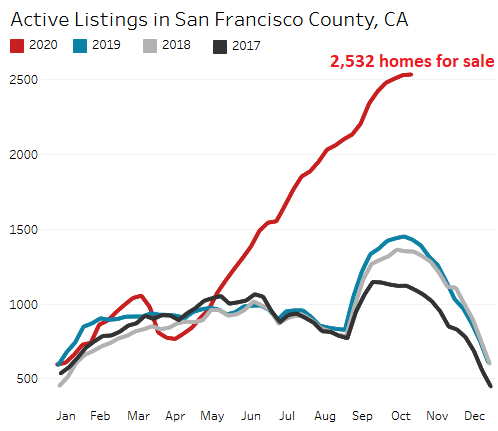
There were 2,532 homes listed for sale in San Francisco at the end of October, up 77% from the same week a year ago, according to data from Redfin. About two-thirds were condos. According to data from Compass, inventory of condos for sale was up 85% year-over-year. Inventory of single-family houses was up 25%:

42e96 US San Francisco housing 2020 11 05 active listings Condo Prices Drop 13% in San Francisco, All Time Record Inventory Glut Piles Up

This inventory of homes for sale does not include the condos in new towers that developers are trying to sell through their own sales offices, following the construction boom. That supply of new condos is difficult to quantify since it isn’t listed, but it’s significant.

Condo prices are heading lower. According to the California Association of Realtors, in October the median price of condos in San Francisco dropped 12.8% year-over-year.

By a different measure, over the three-month period through October, according to Compass, the average price per square foot fell 9% to $1,061/sqft for one-bedroom condos, and to $1,076/sqft for two-bedroom condos. The median price of one-bedroom condos over the same period fell 8% year-over-year to $850,000; the median price for a two-bedroom condo fell 9% to $1.295 million.

There have been numerous deals where condos sold below their prices from years ago. San Francisco real estate site SocketSite just reported on another such sale, unit #6G at the Lumina tower; it has now sold below its 2016 price. And it took over a year to sell it.

Back in July 2016, when the Lumina tower was completed, the 1,401-square-foot two-bedroom two-bath condo was purchased for $1.697 million. It was listed for sale in September 2019 at $1.975 million, reduced to $1.925 million in October, and to $1.895 million in November. But it didn’t sell and was pulled off the market. It was relisted in June at $1.795 million, reduced to $1.695 million in August, and has finally sold and is now in escrow with a price of 1.633 million. That’s a decline of $64,000 or 3.8% from the purchase price four years ago.

Tack on the closing costs on a $1.633 million deal, plus home owners association fees for over fours years, which Zillow lists at $1,216 a month, plus property taxes, and insurance, and pretty soon you’re talking about some real money.

Price reductions in October were running about double the highest rate in the 2012-2019 period, according to Compass, with listings of condo and TICs (Tenancy in Common) accounting for about 80% of the price reductions, and houses accounting for about 20% of the price reductions.

With prices of single-family houses, the situation is more complex. House sales are strong, and accounted for about half of total sales, according to Compass. The median price of 3-bedroom houses ticked up 1% to $1.62 million in the three-month period through October, compared to a year ago. But for four-bedroom houses, the median price fell 3% to $2.12 million.

Sales volume has fully recovered from the collapse in April and May. Pending sales over the past four weeks were up 8.6% from a year ago, according to Redfin data. But inventory was up 77% from a year ago. And that’s the problem.

For years, there was talk of a “housing shortage” and an “inventory shortage” in the City, when in fact there was all this shadow inventory waiting to come on the market, and now it has come on the market, particularly condos that have turned this market into a condo glut.

In the neighborhoods were the high-rise condo construction boom was most pronounced – South Beach, South of Market, and Mission Bay – there is now 9.5 months of supply of condos, according to Compass. There is 8.0 months of supply in the Russian Hill, Nob Hill, and Telegraph Hill neighborhoods. And there is 7.5 months of supply in the Van Ness, Civic Center, and Downtown areas. There is much less supply in low-rise neighborhoods, with 2.7 months of supply in the Richmond District, Lake Street, Noe Valley, Eureka Valley, and Cole Valley.

As we head toward the holidays, normally much of the inventory for sale would be pulled off the market, and then be relisted in the spring, so that there’s very little inventory listed for sale over the holidays, which gives the real-estate media opportunity for a few weeks to rave about the extreme “inventory shortage.”

This would be the normal seasonal pattern. But seasonal patterns have been disrupted this year, with the peak selling season in the spring getting wiped out by the Pandemic, and with inventory then pouring on the market when it shouldn’t have. Sales have picked up too in the fall when normally they would slow down going into the winter. But inventory will still get pulled off the market before the holidays. So we should see inventory decline over the next seven weeks.

Unemployment and work-from-home or work-from-anywhere are massively shifting where people want to live. Read… US Apartment Market Splits in Two, 100 Cities: Where Rents Jumped or Dropped the Most, Are Highest or Lowest

Enjoy reading WOLF STREET and want to support it? Using ad blockers – I totally get why – but want to support the site? You can donate. I appreciate it immensely. Click on the beer and iced-tea mug to find out how:

42e96 BeerMug2 Condo Prices Drop 13% in San Francisco, All Time Record Inventory Glut Piles Up

Would you like to be notified via email when WOLF STREET publishes a new article? Sign up here.

42e96 placeholder2 Condo Prices Drop 13% in San Francisco, All Time Record Inventory Glut Piles Up


Article source: https://wolfstreet.com/2020/11/05/condo-prices-drop-9-in-san-francisco-all-time-record-inventory-glut-piles-up/

Posted in SF Bay Area News | Tagged | Leave a comment

Feces Complaints in San Francisco Drop to Lowest Level in 3 Years Amid Pandemic

The NBC Bay Area Investigative Unit analyzed 311 complaint data from April 1 to Nov. 13 and compared it to the same time period in previous years to gain insight into how the global health emergency may be impacting the cleanliness of San Francisco’s infamously dirty streets.

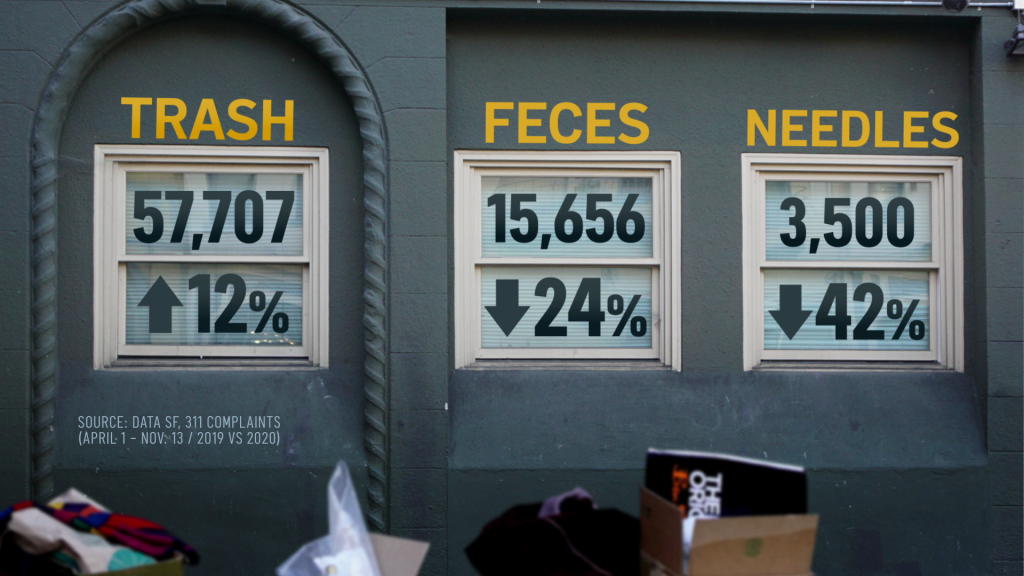
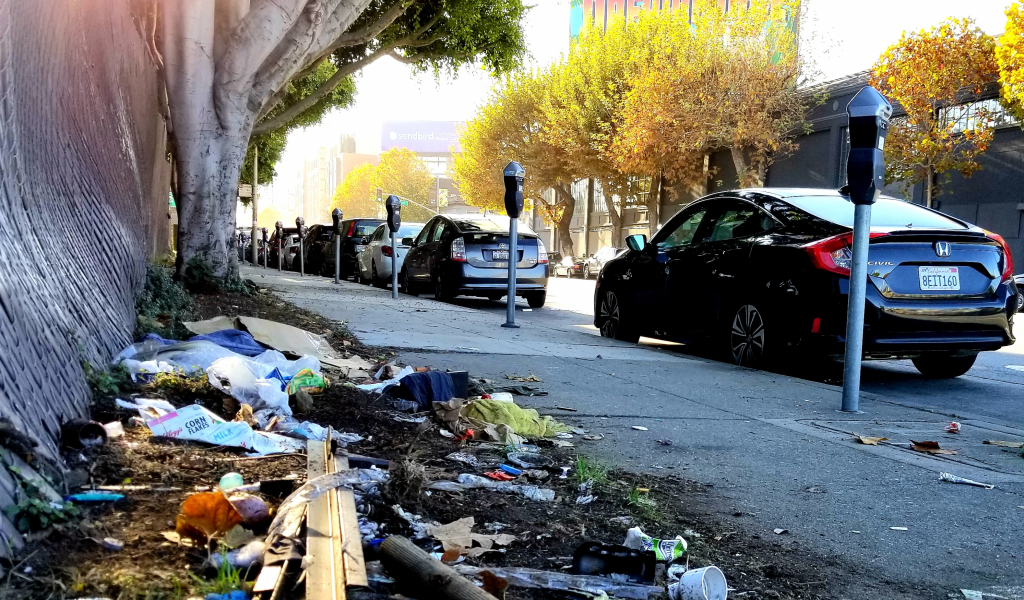
The data shows more calls for help to clear trash from San Francisco streets than in the previous year, but fewer concerns about feces and needles. The changes come as stay-at-home orders have reduced the total number of people on the streets, coupled with a migration out of the city by renters. In addition, ongoing services provided to the homeless may also play a role in the decreasing number of complaints, according to city officials.

City-wide Complaints Shed Light on Street Conditions During Pandemic

From April 1 to Nov.1, 2020, San Francisco logged 15,656 feces complaints, which represents a 24% decline from last year. In fact, the city’s grievances about human or animal waste are now at the lowest level in three years. The last time San Francisco received fewer complaints was in 2017, when the city tallied 13,592 feces complaints. Complaints concerning used syringes have also declined during the pandemic, falling 24%. Trash complaints, however, increased 12% during the same 8-month time period.

b4ac1 vlcsnap 2020 11 24 14h53m09s508 Feces Complaints in San Francisco Drop to Lowest Level in 3 Years Amid Pandemic


Nearly 5% of Renters Have Moved Out of San Francisco Since April

Local


b4ac1 Smoke Maggots and Mold  Fire Survivors Fight Insuranc Feces Complaints in San Francisco Drop to Lowest Level in 3 Years Amid Pandemic


b4ac1 Holiday Travel Rush Amid Pandemic Feces Complaints in San Francisco Drop to Lowest Level in 3 Years Amid Pandemic

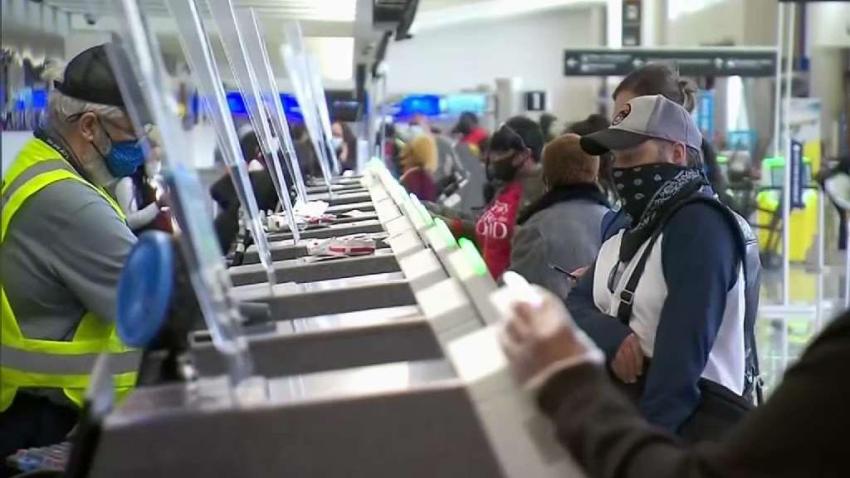
Recent statistics also show renters leaving San Francisco. Co-star, a commercial real estate data provider, reports that 4.8% of apartment renters have left the city. That exodus, coupled with shelter-in-place orders, means fewer people are using streets and sidewalks.  

New Homeless Services Emerge Amid Pandemic

“The rollout of 15 new pitstop toilets last April may have something to do with the decrease,” said Dan Goncher, the Budget Legislative Analyst who has audited the city’s street cleaning budget and in past years noted a lack of improvement in street cleanliness even as the street cleaning budget doubled. “Some of those pitstops include a needle depository,” said Goncher, which may account for the decrease in complaints about used syringes on the street. 

Goncher also noted that many homeless people have been housed in hotels during the pandemic. The measure, intended to reduce the spread of COVID-19 in the homeless population, may also have curbed drug use on the streets. 

b4ac1 Harrison Street SOMA SF Nov 24 2020 Feces Complaints in San Francisco Drop to Lowest Level in 3 Years Amid Pandemic


Viral Investigation on San Francisco’s ‘Diseased Streets

In February 2018, the Investigative Unit surveyed 153 blocks in downtown San Francisco and exposed a dangerous mix of drug needles, garbage, and human waste. Infectious disease experts compared the city to some of the dirtiest slums in the world. Dr. Lee Riley of UC Berkeley noted the contamination — particularly from discarded needles — could cause HIV, Hepatitis C, Hepatitis B, and a variety of other viral diseases. The investigation also exposed questionable spending inside Public Works, the city department in charge of street cleaning. Since then, Mohammed Nuru, the head of that agency, has been charged with corruption. Nuru remains at the center of an F.B.I. probe. He resigned as public works director shortly after his arrest.

San Francisco Voters Overhaul City’s Street Cleaning Program

During the Nov. 3 election, San Francisco voted overwhelmingly for the creation of a new Department of Sanitation and Streets. The new department would take over many of the duties currently assigned to Public Works, including cleaning streets and sidewalks, maintaining trash cans, removing graffiti and illegally dumped waste, as well as maintaining restrooms and street trees.  The measure will also create two separate five-member commissions: one to oversee the new Sanitation Department and another to oversee Public Works. The new department, however, will not be established until the 2022-2023 budget year. 

The City Controller’s office estimates the new Sanitation department will cost between $2.5 and $6 million. 

“The measure was written to have no fiscal impact in the next two budget years, due to concerns about COVID related revenue losses,” said District 6 Supervisor Matt Haney, the author of the proposal. “We do have to think outside the box.”

Article source: https://www.nbcbayarea.com/investigations/feces-complaints-in-san-francisco-drop-to-lowest-level-in-3-years-amid-pandemic/2407474/

Posted in SF Bay Area News | Tagged | Leave a comment