Even less affordable: Bay Area home prices keep soaring

Mark Wong recently had a client fall hard for a 5,000 square foot home in Los Altos Hills — big yard, great schools, plenty of room for family and a remote office.

The property went up for sale at just under $5 million. Hoping to overwhelm other buyers, Wong’s client bid $6 million. But the home, on a one-acre lot, drew 16 offers and sold for $6.75 million.

“We went $1 million over the asking price and we weren’t even close,” said Wong, a Compass real estate agent in Saratoga. “Once again, Silicon Valley real estate is defying gravity.”

Across the Bay Area, home prices continued to surge in October, with all nine counties reporting double-digit growth and pushing the median price of an existing single family home to $1.12 million, according to CoreLogic data. Alameda County — up 20% to $1.15 million from the same month last year — led the boom, followed by Napa (up 19% to $825,000) and Solano (up 18% to $555,000) counties.

Prices in Santa Clara County climbed 16.5% to $1.55 million, jumped nearly 11% in San Mateo County to $1.74 million, and rose 11.6% to $1.75 million in San Francisco, according to the real estate data and services company.

CoreLogic economist Selma Hepp said the increasing Bay Area prices could be due to the growing number of expensive homes selling.

Demand has been strong in the Bay Area and across the country, she said, driven by an influx of millennials into the market and the easing of international travel restrictions, allowing new workers to once again settle in the U.S. In other parts of the country, investors have been aggressively buying up single family homes.

“In theory, we will run out of buyers at some point,” Hepp said. “But maybe it doesn’t apply in this case.”

U.S and Bay Area housing supply could be further pinched by shortages of material and labor to build new homes, she said.

As prices climb, more prospective buyers have been shut out. The run-up in Bay Area prices has made it the least affordable region in California.

The median household income needed to purchase a Bay Area home rose to $235,000 in September, nearly triple the wages needed in early 2012, according to the California Association of Realtors. A decade ago, about 45% of families could fit a Bay Area home purchase into their budget; now, just 22% can afford it.

By comparison, roughly half of U.S. households have enough income to buy a home.

Agents say Silicon Valley’s high prices have been driven by well-paid tech workers, low interest rates and a scarcity of homes for sale. Agents are rolling up a record year while affordability scrapes to near record lows.

Rising prices have cooled some demand, agents say, but deep-pocketed buyers continue to pursue suburban properties. In many attractive markets, homes are selling within a week or two of being put up for sale.

“Today’s buyers are all qualified to buy $2 million homes,” said Cupertino agent Ramesh Rao.

He sees Silicon Valley buyers more interested in accessory dwelling units for in-laws or rental income. But Rao has also seen some older residents resisting the urge to sell and downsize, limiting the available homes for sale. “Nobody wants to sell,” he said. “It’s just a comfort zone.”

The Alameda County market has reached record levels.

“The demand just outstrips supply,” said Jeffrey Neidleman, an Oakland agent and president of the Bridge Association of Realtors. Buyers have not been deterred by several high-profile crimes in some Oakland neighborhoods, he said.

Overall, upscale cities and neighborhoods in Alameda County have driven the market — Piedmont, Berkeley and Oakland communities near Montclair have been popular, Neidleman said.

One family recently was looking to trade up for more room, and found a restored four-bedroom home in the Berkeley flats listed for $1.95 million. The home came with a backyard accessory dwelling unit that could be used as a rental or an in-law suite.

The sellers accepted a $2.7 million pre-emptive offer, he said. “Berkeley is just insane right now.”

Wong, too, is having a record year in the super-heated and competitive Silicon Valley market. Even properties near major highways that need renovations are getting heavy interest from tech buyers, he said. “That’s the market right now.”


Article source: https://www.mercurynews.com/2021/12/02/even-less-affordable-bay-area-home-prices-keep-soaring
Posted in SF Bay Area News | Tagged | Leave a comment

Experts predict what’s next for the Bay Area real estate market in 2022

Every real estate agent we spoke with agreed that 2022 is still likely to be a seller’s market in the Bay Area. Even as interest rates are projected to go up, the demand for homes will still be greater than the inventory, especially for single family homes, in the region. “In the history of United States real estate, being a seller in San Francisco right now is the single best opportunity you’re ever going to have in your lifetime,” said San Francisco real estate agent Aaron Bellings of Compass. “… I think San Francisco is going to have a banner year. If I was thinking about selling in the next 6 to 12 months I wouldn’t hesitate to put my house on the market.” 

He said much of that demand is from buyers that were starting to look in 2021 and still haven’t found a place. “I see the spring being absolutely crazy again. I have buyers right now that are chomping at the bit to get in there and there’s nothing out there for them,” Bellings said. “It’s going to be a strong market.”

Nina Hatvany, a real estate agent in San Francisco for over 30 years, said the amount of quality, single family homes on the market is usually low in the city, but those houses are now in particularly short supply. Plus, between the continuing pandemic and the inevitable hike in interest rates, now is the time to put a home on the market. “It’s definitely a good time to sell,” Hatvany said. “… I would definitely take advantage since we don’t know what the future will bring.”

Khrista Jarvis, an East Bay Compass real estate agent, said the robust seller’s market translates into a tough buyer’s market — especially in the East Bay. “It’s frustrating to be a buyer in this market. There are multiple offers, bidding wars, paying $200,000 over asking is just the norm,” she said. “You have to be super competitive and sometimes make offers several times before you get a house.”


Jarvis said the region continues to be particularly hot for buyers from San Francisco as many are still looking for more space than they can get in the city.

Seasonality has disappeared

The old adage says that if you’re going to put your home on the market, you better wait until after the Super Bowl. And you definitely can’t sell a home during the winter. Today, none of that holds true. “We’re going to go into a very strong season right away,” Jarvis said. “Usually the market waits until spring, but this year it’s going to start really early. Seasonality is out the window. I think it’s just busy all year round now. Even December. I thought I’d get a break for the holidays and that’s just not the case.”

Bellings said there is still some seasonality, just not in the way it exists in other major markets. “We really don’t have an off-season. It really just comes down to whether people are in town to actually look at and bid on the homes put on the market,” he said. “Usually we start to see pick up post-President’s Day, but I wouldn’t be surprised if things start to pick up mid- to late January this year.”

Everyone is watching interest rates

Interest rates are going up, it’s just a matter of when. If the Fed sticks to their plans, prospective buyers and sellers are going to have to keep that in mind in 2022. “It is going to create a sense of urgency,” Bellings said. “I’ve already had buyers reach out to me and say we need to make this happen before the Fed starts hiking rates. People are already starting to feel the pressure even though we don’t know when this is going to happen and how high the rates will go.”

For sellers, that means the time is now. “It would be wise to move quickly if you want to be in the driver’s seat when it comes to selling your home,” said Daryl Fairweather, Redfin’s chief economist. “For the second half of 2022, if mortgage rates increase, that could definitely put the brakes on demand and make it harder to sell a home.” 

Even if rates creep up to 4%, that’s still historically low, especially for an area with as much wealth as the Bay Area has. “In other places I would expect the housing market to slow down significantly, but San Francisco is on a different trajectory,” Fairweather said. “There will be more demand for homes than there was this year. … What I think is the Bay Area will look more like the rest of the country in terms of how quickly prices grow, how many homes sell over list price.” 

Rent will probably go up

As the home buying market reached new heights over the past year and a half, the rental market in San Francisco, Oakland and San Jose did the opposite. These Bay Area cities are some of the only places in the country where rent has yet to creep back up to pre-pandemic levels, even allowing San Francisco to lose its throne as the most expensive rental market in the country to New York, according to Zumper. Experts have speculated that’s due to the Bay Area’s embracing of remote work amid the pandemic, though many offices won’t stay closed forever.

“General inflation will probably push rent up eventually, but if offices keep getting pushed back that will still keep them down relatively,” Zumper data journalist Jeff Andrews said. “The fundamentals are all pointing to rent going up again.”

He also expects some of the seasonality of the rental market to return this year, after being more volatile since early 2020. 

While Zumper found that New York City surpassed SF as the most expensive rental market in 2021, “San Francisco still stands out as the most expensive market on our platform,” said Rob Warnock, research associate at Apartment List. “But, the Bay Area is the last remaining place where there is a discount,” he said. “… That said, I think prices are going to go up again in the early parts of [2022].”

Warnock said since the Bay Area has been one of the places most amenable to remote and flexible work, it also could affect trends across SF neighborhoods. Prices in areas downtown, like SoMa, may still remain at a deep discount while more western neighborhoods like the Sunset may keep their slightly inflated rates. 

Space is still a must

“Zoom rooms” and Peloton bikes became must-haves as the pandemic wore on, and none of the agents we spoke with saw that going away anytime soon. “I’m not seeing the desire for home offices or gyms go away at all,” Hatvany said. “It’s become a very locked-in thing. It’s a complete essential in ways that it never was.”

Hatvany has even seen some new “amenities” emerge — like being located near a Slow Street. She said just as parks are great nearby amenities for a home buyer, slow streets now hold the same desirability. 

Outdoor space is still crucial for most clients, said Josh Dickinson, the founder of real estate agency Zip Code East Bay, and he’s even seeing more sellers get creative to upgrade that outdoor space. There’s even been a rise in ADU-like spaces, like upgrading a shed in the backyard that can be used as a multipurpose space. 

Even with their confident predictions, there wasn’t one person that didn’t mention the feeling of uncertainty that still lies ahead as we continue into the next phase of the pandemic. “I think we’re all just anxious to see what is it all going to look like when we get back to the point where people are going back to the office and all the COVID numbers are declining,” Dickinson said. “It in some ways seems like we’re still a long way from there.”


Article source: https://www.sfgate.com/realestate/article/Experts-predict-bay-area-housing-market-2022-16732134.php

Posted in SF Bay Area News | Tagged | Leave a comment

‘We Didn’t Expect A Million Dollars More’ – San Francisco Home’s Astronomical Overbid Stuns Agents

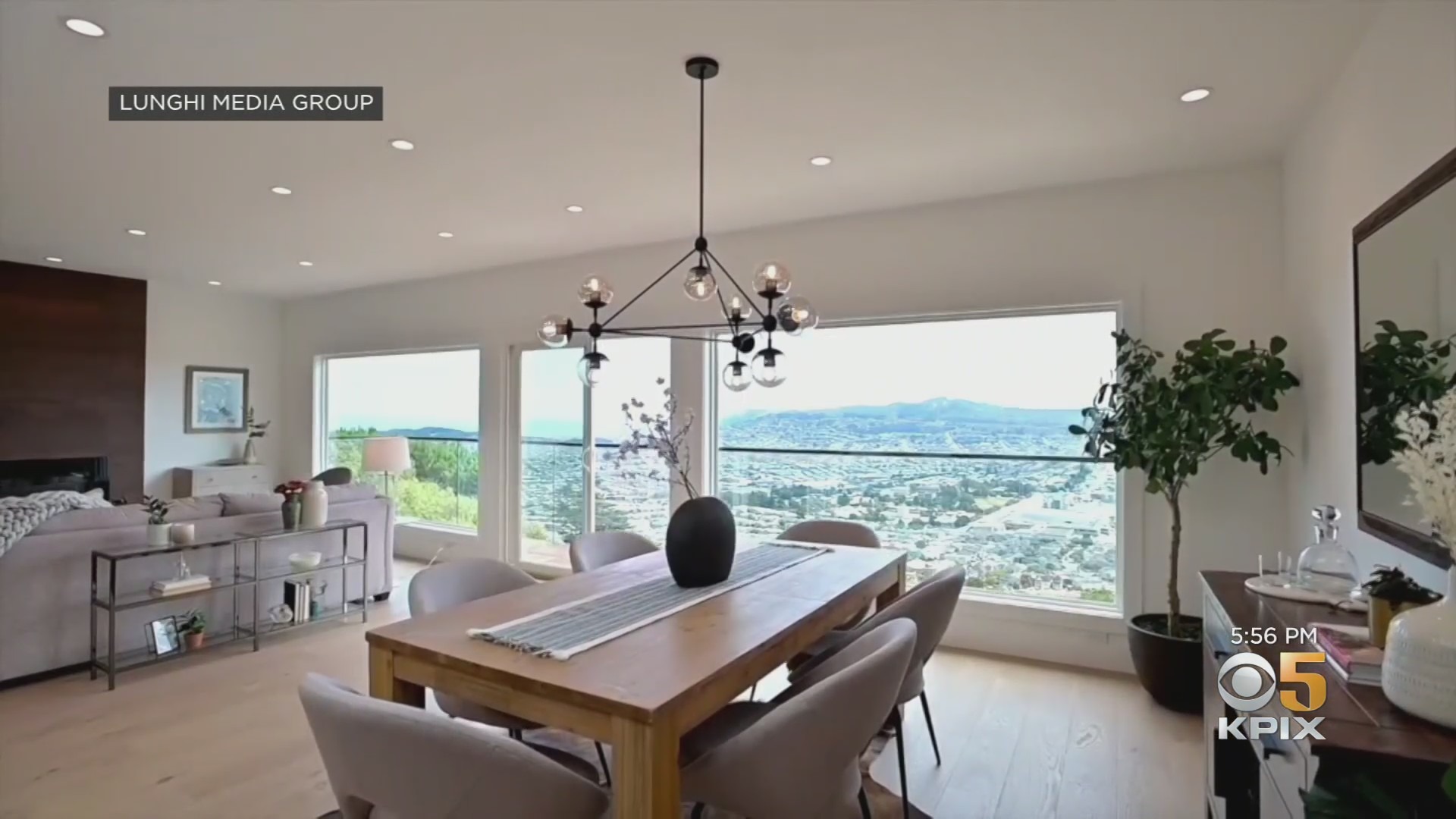
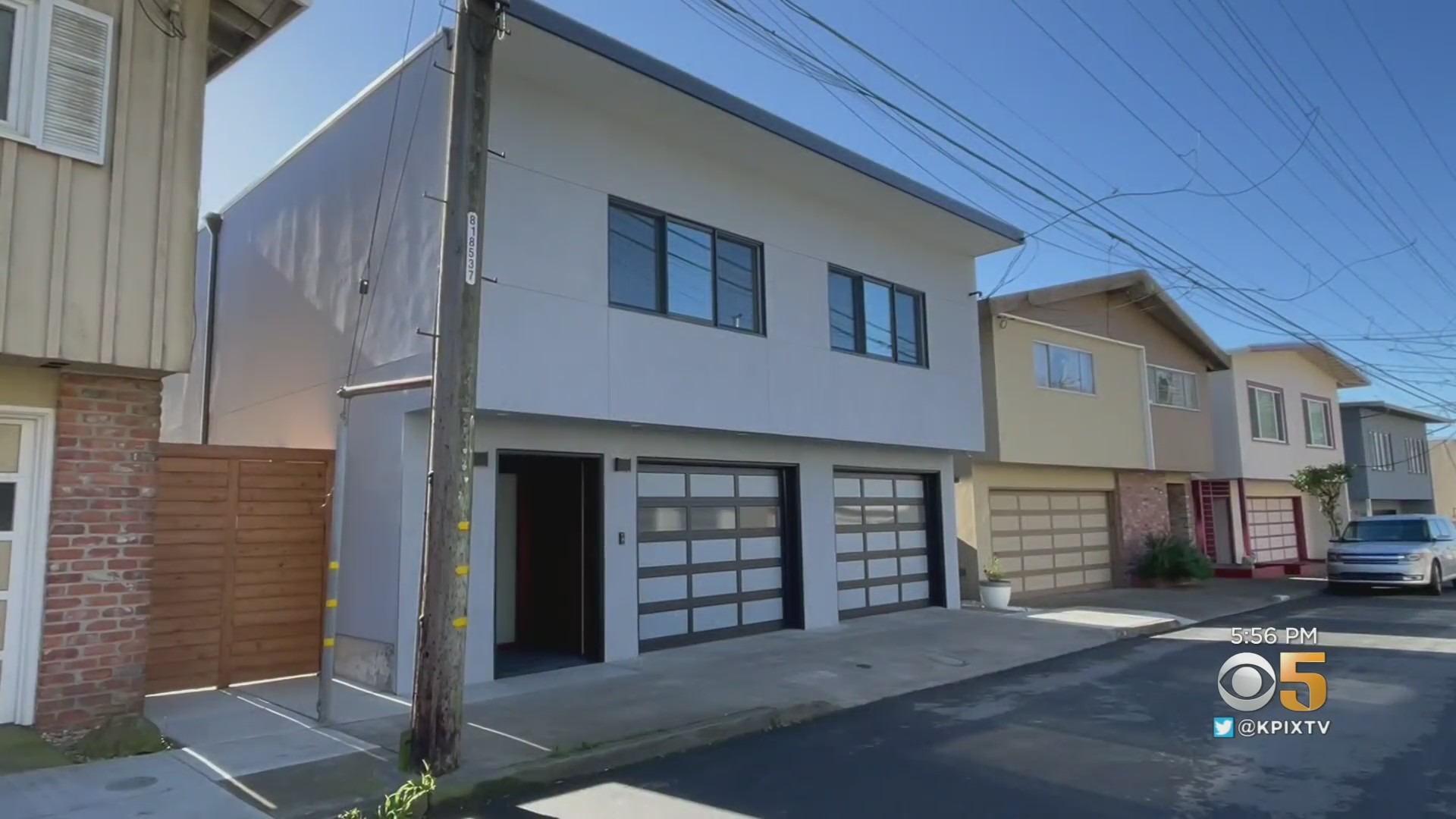
SAN FRANCISCO (KPIX 5) – While high prices and overbidding have become the norm in the Bay Area real estate market, a home that sold for $1 million above asking in San Francisco is raising eyebrows.

It’s a newly updated, 2,400 square foot, 4 bedroom home, with a two car garage and an incredible view. The home is located in a quiet neighborhood in San Francisco near Mt. Davidson, west of Twin Peaks.

READ MORE: Santa Clara County To Require COVID Booster for Healthcare Workers, Other High-Risk Groups

e58f9 sf million over asking int 120921 We Didnt Expect A Million Dollars More – San Francisco Homes Astronomical Overbid Stuns Agents

Interior of San Francisco home near Mt. Davidson that fetched $1 million above asking. (Lunghi Media Group)

Real estate agents Richard Woo and Holly Phan listed the home for just under $2.5 million. Three days later, they’d ink the sale at $3.5 million.

“We were all very surprised, because they were not just over – they were way over,” Woo said.

“We expected more, a little bit more, but we didn’t expect a million dollars more,” Phan said.

With the current market conditions, it’s pretty typical for Bay Area homes to sell at the list price or a little bit over the list price.

e58f9 sf million over asking ext 120921 We Didnt Expect A Million Dollars More – San Francisco Homes Astronomical Overbid Stuns Agents

Home that sold $1 million over asking in San Francisco. (CBS)

READ MORE: John Madden, Hall Of Fame Oakland Raiders Coach NFL Broadcast Legend, Dies at 85

“It’s been one of the most ferocious markets in history this past year,” said Patrick Carlisle, the Chief Market Analyst for Compass. “We have been seeing some very spectacular over-bids, not only within the city, but around the Bay Area.”

Available housing inventory is still incredibly low throughout the Bay Area. That makes for more competition among buyers, which can drive sale prices up.

“Though a fair number of new listings have come on the market, they’ve been snatched up faster than ever – maybe at the fastest rate in history,” Carlisle told KPIX 5. “Virtually every segment in the Bay Area has gone bananas.”

There has been a huge surge in property sales in San Francisco, specifically, according to Carlisle.

“Of course, part of that is some people are leaving. But the other side of it is, there are still plenty of people who are very eager to live in the city, own homes in the city, and are willing to pay higher prices than they’ve ever paid before,” he said. “Sooner or later, upcycles do end. What history has taught us though, is that it is extremely difficult to predict when upcycles will end.”

Potential buyers should have all of their ducks in a row, according to Woo.

As for sellers?

MORE NEWS: San Francisco New Year’s Eve Fireworks Show Canceled Over COVID Surge

“It’s a seller’s market,” Woo said. “Of course timing is important, location is important. But, to prepare the house right is the most important thing.”

Article source: https://sanfrancisco.cbslocal.com/2021/12/11/sf-home-astronomical-overbid-1-million-more/

Posted in SF Bay Area News | Tagged | Leave a comment

The Bay Area’s bizarro year-round Christmas amusement park: Santa’s Village

Santa’s Village was the brainchild of Glenn Holland, a California real estate developer and Christmas aficionado. His first Santa’s Village in San Bernardino County nipped in just under the wire to open in late May 1955, beating Disneyland’s opening by a few months. It was an instant hit, and Holland signed a lease to open a second village in Scotts Valley. This was big news in the little mountain town, and the project was daily news in the Santa Cruz Sentinel. 

A flurry of whimsical construction commenced, costing a reported $9,000 a week in labor and materials (that’s about $84,000 today). The village was the vision of Ellen Koger, who was described in newspaper coverage as a Southern California “housewife” despite the fact she was a trained artist and held the title of Santa’s Village art director. Koger’s designs were straight out of a fairy tale: a “Welcome House” decorated with candy canes and chubby polka dot toadstools, a life-size gingerbread house that sold fragrant, fresh cookies, a restaurant called Mrs. Claus’ Kitchen that served such Arctic staples as … burgers, steak sandwiches and hot dogs.

 The Bay Areas bizarro year round Christmas amusement park: Santas Village

Cars lined up in the Santa’s Village parking lot in Scotts Valley.

Ken Stone/Santa Cruz Public Library

There were touches of fantasy everywhere. “All of a sudden the kids will come upon a lollipop tree,” the Sentinel wrote during opening weekend 1957. “They’ll hardly believe their eyes, but they can reach right up and pull the sweet, colored suckers right off the tree — and free.” There was even a North Pole made of ice, which the Sentinel excitedly reported “the kids can lick … to their heart’s content.” (Please email us if you licked the Santa’s Village North Pole and survived the experience.)

A Texan named Grady Carothers, the self-proclaimed “reindeer king of the United States,” brought his herd of reindeer to the park, and a petting zoo offered up baby burros to bottle feed. In order to flesh out the character interactions — Christmas doesn’t have much by way of big names — a host of random characters wandered the park, including Alice in Wonderland, the Easter Bunny, Little Bo Peep and the Good Witch, Jack Pumpkinhead and Scarecrow from the Wizard of Oz. 

 The Bay Areas bizarro year round Christmas amusement park: Santas Village

A guide map shows the attractions in Santa’s Village.

Ken Stone/Santa Cruz Public Library

“We try to make a visit to Santa’s Village like a national convention of all the wonderful characters out of childhood storybooks,” Koger said.

That convention was nearly disrupted the night before opening day. An employee parked his car at a Salinas hotel and returned to his vehicle to find someone had stolen nearly all the costumes out of the back. “The police may not know who took his things,” the Santa Cruz Sentinel wrote, “but you can bet your boots that Santa knows.”

 The Bay Areas bizarro year round Christmas amusement park: Santas Village

The Santa’s Village gas station, photo courtesy of Santa Cruz Public Libraries, Scotts Valley branch.

Ken Stone/Santa Cruz Public Library

Luckily, backups were rallied and the ragtag crew of characters were ready to greet 8,000 guests, mostly children, on opening day. As kids raced around the park, employees dressed as gnomes did crowd control and parking duty. Local publications praised the family-friendly amusement park for its “exceptional taste” and told parents it was “almost impossible” for kids to “break anything.”

The manic energy of Santa’s Village was immortalized on film in a series of shorts by K. Gordon Murray, a producer best-known today for unleashing several clunkers that ended up as “Mystery Science Theater 3000” fodder. The shorts, collectively called “Santa’s Enchanted Village,” were released in 1964 essentially as promotional material for the Santa’s Village chain, which by then also had a park in Dundee, Ill. 

“Santa’s Enchanted Village” provides a priceless look at the elaborate buildings and a mind-melting glimpse at what passed for family entertainment in the early 1960s. The films have little plot other than watching characters wander aimlessly around the parks (lowlights include a slack-jawed wolf who complains loudly about his ulcer and looped audio of a pained-sounding boy shouting, “WONDERFUL!” and laughing hysterically at a puppet show.)


As promotional videos, they were a flop and, alas, Santa’s Village was not long for this world. As Californians increasingly had more entertainment options, a year-round Christmas experience lost its luster. Financial woes hit the park in the ‘70s, and by the end of the decade its new owners were pivoting to a shopping center concept called “The Village.” Christmas-y colors were painted over in muted tones and non-holiday shops moved in. “When you have an amusement park that appeals to children from two to eleven years old, you are limiting your marketing appeal,” vice president of operations Bill Witcher told the Sentinel in 1979. That year, the 13-year Santa’s Village general manager stepped down, citing $48,000 in debt weighing down village operations. 

 The Bay Areas bizarro year round Christmas amusement park: Santas Village

Fred Cummings, a former Santa’s Village maintenance chief, seen at the Scotts Valley amusement park in December 1983.

Jerry Telfer/Hearst Newspapers

The Village puttered along for a few more years before software company Borland International bought the site in 1990 for its new corporate headquarters. The jolly chalets were torn down, and nearly every trace of Santa’s Village removed. The office park is now called the Enterprise Technology Centre and is currently leased by UC Santa Cruz.

Santa’s Village did leave one indelible mark on Scotts Valley, however: a road. The street that once ushered carloads of excited children into the Christmas wonderland is still called Santa’s Village Road today.

Article source: https://www.sfgate.com/sf-culture/article/The-Bay-Areas-year-round-Christmas-park-16714126.php

Posted in SF Bay Area News | Tagged | Leave a comment

The Bay Area’s bizarro year-round Christmas amusement park: Santa’s Village

Santa’s Village was the brainchild of Glenn Holland, a California real estate developer and Christmas aficionado. His first Santa’s Village in San Bernardino County nipped in just under the wire to open in late May 1955, beating Disneyland’s opening by a few months. It was an instant hit, and Holland signed a lease to open a second village in Scotts Valley. This was big news in the little mountain town, and the project was daily news in the Santa Cruz Sentinel. 

A flurry of whimsical construction commenced, costing a reported $9,000 a week in labor and materials (that’s about $84,000 today). The village was the vision of Ellen Koger, who was described in newspaper coverage as a Southern California “housewife” despite the fact she was a trained artist and held the title of Santa’s Village art director. Koger’s designs were straight out of a fairy tale: a “Welcome House” decorated with candy canes and chubby polka dot toadstools, a life-size gingerbread house that sold fragrant, fresh cookies, a restaurant called Mrs. Claus’ Kitchen that served such Arctic staples as … burgers, steak sandwiches and hot dogs.

 The Bay Areas bizarro year round Christmas amusement park: Santas Village

Cars lined up in the Santa’s Village parking lot in Scotts Valley.

Ken Stone/Santa Cruz Public Library

There were touches of fantasy everywhere. “All of a sudden the kids will come upon a lollipop tree,” the Sentinel wrote during opening weekend 1957. “They’ll hardly believe their eyes, but they can reach right up and pull the sweet, colored suckers right off the tree — and free.” There was even a North Pole made of ice, which the Sentinel excitedly reported “the kids can lick … to their heart’s content.” (Please email us if you licked the Santa’s Village North Pole and survived the experience.)

A Texan named Grady Carothers, the self-proclaimed “reindeer king of the United States,” brought his herd of reindeer to the park, and a petting zoo offered up baby burros to bottle feed. In order to flesh out the character interactions — Christmas doesn’t have much by way of big names — a host of random characters wandered the park, including Alice in Wonderland, the Easter Bunny, Little Bo Peep and the Good Witch, Jack Pumpkinhead and Scarecrow from the Wizard of Oz. 

 The Bay Areas bizarro year round Christmas amusement park: Santas Village

A guide map shows the attractions in Santa’s Village.

Ken Stone/Santa Cruz Public Library

“We try to make a visit to Santa’s Village like a national convention of all the wonderful characters out of childhood storybooks,” Koger said.

That convention was nearly disrupted the night before opening day. An employee parked his car at a Salinas hotel and returned to his vehicle to find someone had stolen nearly all the costumes out of the back. “The police may not know who took his things,” the Santa Cruz Sentinel wrote, “but you can bet your boots that Santa knows.”

 The Bay Areas bizarro year round Christmas amusement park: Santas Village

The Santa’s Village gas station, photo courtesy of Santa Cruz Public Libraries, Scotts Valley branch.

Ken Stone/Santa Cruz Public Library

Luckily, backups were rallied and the ragtag crew of characters were ready to greet 8,000 guests, mostly children, on opening day. As kids raced around the park, employees dressed as gnomes did crowd control and parking duty. Local publications praised the family-friendly amusement park for its “exceptional taste” and told parents it was “almost impossible” for kids to “break anything.”

The manic energy of Santa’s Village was immortalized on film in a series of shorts by K. Gordon Murray, a producer best-known today for unleashing several clunkers that ended up as “Mystery Science Theater 3000” fodder. The shorts, collectively called “Santa’s Enchanted Village,” were released in 1964 essentially as promotional material for the Santa’s Village chain, which by then also had a park in Dundee, Ill. 

“Santa’s Enchanted Village” provides a priceless look at the elaborate buildings and a mind-melting glimpse at what passed for family entertainment in the early 1960s. The films have little plot other than watching characters wander aimlessly around the parks (lowlights include a slack-jawed wolf who complains loudly about his ulcer and looped audio of a pained-sounding boy shouting, “WONDERFUL!” and laughing hysterically at a puppet show.)


As promotional videos, they were a flop and, alas, Santa’s Village was not long for this world. As Californians increasingly had more entertainment options, a year-round Christmas experience lost its luster. Financial woes hit the park in the ‘70s, and by the end of the decade its new owners were pivoting to a shopping center concept called “The Village.” Christmas-y colors were painted over in muted tones and non-holiday shops moved in. “When you have an amusement park that appeals to children from two to eleven years old, you are limiting your marketing appeal,” vice president of operations Bill Witcher told the Sentinel in 1979. That year, the 13-year Santa’s Village general manager stepped down, citing $48,000 in debt weighing down village operations. 

 The Bay Areas bizarro year round Christmas amusement park: Santas Village

Fred Cummings, a former Santa’s Village maintenance chief, seen at the Scotts Valley amusement park in December 1983.

Jerry Telfer/Hearst Newspapers

The Village puttered along for a few more years before software company Borland International bought the site in 1990 for its new corporate headquarters. The jolly chalets were torn down, and nearly every trace of Santa’s Village removed. The office park is now called the Enterprise Technology Centre and is currently leased by UC Santa Cruz.

Santa’s Village did leave one indelible mark on Scotts Valley, however: a road. The street that once ushered carloads of excited children into the Christmas wonderland is still called Santa’s Village Road today.

Article source: https://www.sfgate.com/sf-culture/article/The-Bay-Areas-year-round-Christmas-park-16714126.php

Posted in SF Bay Area News | Tagged | Leave a comment