Carlos Santana’s Private Hillside Home Provides Spectacular San Francisco Bay Views

Listing of the Day

Location: Tiburon, California

Price: $5.777 million 

Tucked into a hillside in Tiburon, California, this home owned by famed guitarist Carlos Santana presides over stunning views across San Francisco Bay.

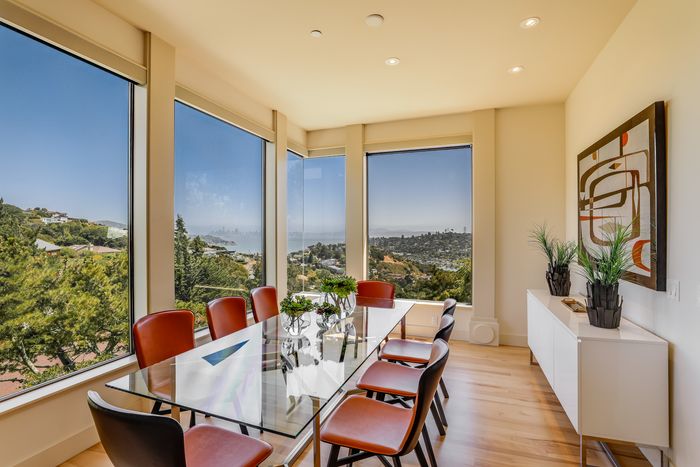
“The home is also architecturally interesting with its floor-to-ceiling glass windows that showcase the bridge-to-bridge and San Francisco views,” said listing agent Shana Rohde-Lynch of Compass. “It’s surrounded by mature landscaping and has a very private feel.” 

Built in 1978, the home embodies a contemporary architectural design and features a dramatic entrance: an “acoustical dome” that leads into the main living spaces. 

 Carlos Santana’s Private Hillside Home Provides Spectacular San Francisco Bay Views

Wide curved double doors open to the circular entry, under an acoustical dome that sets the stage for the home.


Jason Wells

More: Kirk Douglas Home in Beverly Hills Sells for More Than $1 Million Over Its Asking Price

“The ‘acoustical dome’ is a special architectural feature installed by the prior owner,” Ms. Rohde-Lynch said. “It’s a small circular space that has a microphone-like effect when you speak from this specific location.”

Once inside, the house’s modern style flows across an open floor plan marked by clean lines and quality craftsmanship from the kitchen and dining areas to the living room. Hardwood flooring and walls of windows frame the picturesque views from nearly every room.  

 Carlos Santana’s Private Hillside Home Provides Spectacular San Francisco Bay Views

The contemporary chef’s kitchen leads to a dining area.


Jason Wells

The primary suite is found on the main level with an en-suite bathroom that includes a raised soaking tub, a glass-walled shower—and lush hillside views. Outdoors, a large deck and a lower patio offer entertaining areas.

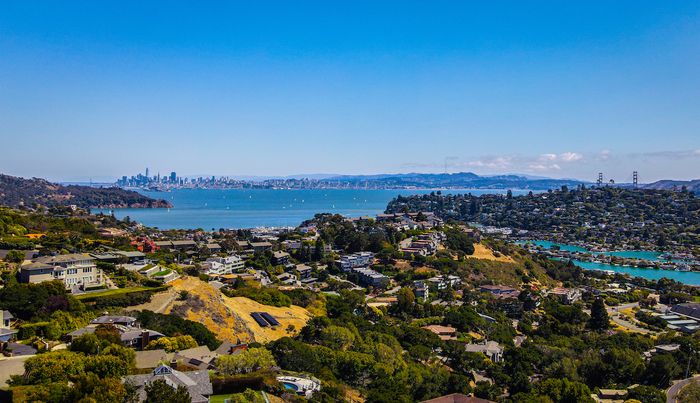
“I love the home’s sense of volume from its large open, light and airy living spaces,” said Ms. Rohde-Lynch. “And the sweeping views across the bay that include the Golden Gate Bridge, San Francisco, Belvedere Island and Angel Island.”

 Carlos Santana’s Private Hillside Home Provides Spectacular San Francisco Bay Views

The home has stunning views of downtown San Francisco that include the Salesforce Tower.


Jason Wells

More: Late Fashion Designer Max Azria’s Los Angeles Megamansion Now Asking $75 Million

Stats

The home, which sits on nearly an acre, has 3,785 square feet of living space, which includes four bedrooms, three full bathrooms and one half bathroom.

Amenities

The home’s open chef’s kitchen is centered by a granite cooktop island and a serving pull-up counter seating and a breakfast area. The property also includes an attached two-car garage and motor court for multiple vehicles.

Neighborhood Notes 

Tiburon is just north of San Francisco and the home is minutes away from the town’s shopping area and restaurants as well as its picturesque waterfront pathways.

The home is in one of Tiburon’s most sought after locations, and it’s about a half-hour ferry ride to San Francisco and about an hour’s drive to the Napa Valley, Ms. Rohde-Lynch said.

Agent: Shana Rohde-Lynch, Compass

View the original listing.

Write to Listing of the Day

Article source: https://www.mansionglobal.com/articles/carlos-santanas-private-hillside-home-provides-spectacular-san-francisco-bay-views-01642509022

Posted in SF Bay Area News | Tagged | Leave a comment

SF has 40000 empty homes. Would taxing them help solve the city’s housing crisis?

The issue is the latest test for local politicians who acknowledge that San Francisco needs more affordable housing but can’t agree on a political path to make it happen.

“It’s a part of the housing policy discussion in the city that just never really gets addressed,” said District Five Supervisor Dean Preston, who commissioned the new report and has expressed concern about vacancies fueled by real estate speculators, but has yet to formally propose a new tax measure. “It’s a high number, and it’s a growing number.”

Supporters of a San Francisco vacancy tax frame it as a quick way to force more homes onto the rental market and generate money for the city. Opponents say the strategy is a distraction from broader efforts to build new housing, and that the city’s vacancy rate is normal for cities where people are often on the move.

“A vacancy tax makes no sense,” said Randy Shaw, executive director of homeless housing provider Tenderloin Housing Clinic. “It creates this false sense that we don’t need to build more housing.”

Preston argues that “we have to be working on all fronts” to create more affordable housing, but the vacancy debate follows a series of clashes over where to go from here on the city’s housing crisis.

On one side are pro-development groups and Mayor London Breed, who say the city has no choice but to build its way out of a stark mismatch between jobs and housing. On the other are tenant advocates, some nonprofit housing developers and San Francisco supervisors who often oppose new market-rate housing proposals due to concerns about everything from gentrification to negative impacts on existing homeowners, many of whom have benefited from increasing property values.

In late January, a legal arm of pro-housing lobbying group YIMBY Action sued the city after supervisors including Preston rejected a 495-unit housing project initially approved for a SoMa parking lot. Last week, Breed was rebuffed by supervisors for a third time on an effort to streamline housing approvals through a charter amendment.

Taken together, Shaw said the housing controversies point to “a pattern” of the mayor’s proposals failing to attract in-person support at city meetings, followed by a hardening of the stalemate between the board and the mayor. Ultimately, he said, it may make sense for advocates of more housing to take an alternate route and ask voters to break the political gridlock.

“With all these things, we have a November ballot,” Shaw said. “San Francisco is not being held hostage by the Board of Supervisors. The voters can speak.”

The new report on vacancy rates and the potential for a version of an empty home tax in San Francisco come as affordability advocates in other California cities, including L.A. and Santa Cruz, mount their own ballot campaigns for similar measures. Preston declined to specify when or how he may bring such a measure to the Board of Supervisors in San Francisco, but he noted that all tax measures ultimately require voter sign-off.

As it stands, San Francisco is on track to permit the 28,869 new homes that state regulators directed it to plan for between 2015 and 2022. That’s largely because the city has exceeded its goals for market-rate housing by 6,000 units, the new report notes, while falling more than 10,600 units short of low- and moderate-income housing targets.

Using federal data from 2019, the most recent year that census estimates include details on the reasons homes are vacant, there were 40,458 empty homes in San Francisco, the report found. That represents about 10% of the city’s 406,399 housing units, which is comparable to vacancy rates in Philadelphia and Boston, below New York’s 14% rate and above L.A.’s estimated 7% empty homes.

The reason homes are reported vacant varies, and it can be difficult to track in real time. While the new report notes that it’s normal for some homes to be vacant during the time between occupants, census estimates show a 420% jump from 2015 to 2019 in the number of units sold in San Francisco that remain unoccupied.

Some analysts question how many buyers are purchasing homes still under construction, or why property owners would pass up the chance to earn rental income in expensive cities like San Francisco. Preston frames the increase as an example of investors buying up units and holding onto them with the intent to sell as prices rise.

“These are units that are intentionally held vacant for long periods of time,” he said. “They’re playing the market but aren’t interested in providing housing.”

Another complexity is how the economic shock of the pandemic may have scrambled vacancy numbers. According to numbers from the latest decennial census in 2020, which have not yet been released in full, there were more like 34,777 vacant housing units in San Francisco County as of April 1, representing a lower 8.6% vacancy rate.

Since then, Realtors and tenants report a scramble to find roomier rentals in outlying neighborhoods like Bernal Heights and the Richmond District, in contrast with reduced rents and empty units in once-busy downtown office corridors like SoMa and the Financial District.

Research about the impact of vacancy taxes on other cities is also mixed. In Vancouver, the city did see an initial influx of new rental properties and generated the U.S. equivalent of around $21 million in new taxes in 2019, but vacancy rates have since leveled off as rents continue to climb. Oakland collected $7 million in new vacancy tax revenue in 2020, but rents also continue to surge and many properties are exempt from the $3,000-to-$6,000-a-year flat fee on vacant units approved by voters in 2018 — a tax structure that the new report notes also “appears to be the most feasible for San Francisco.”

Preston acknowledges that taxing empty units wouldn’t be “a silver bullet” to a housing crisis decades in the making. But it’s one more avenue that he says the city can’t afford not to pursue as tents in some areas dot the street below empty homes.

“I don’t think I can think of a more stark example of the failure of our housing system,” he said, “than that this exists side by side.”

Lauren Hepler is a San Francisco Chronicle staff writer. Email: lauren.hepler@sfchronicle.com Twitter: @LAHepler

Article source: https://www.sfchronicle.com/sf/article/S-F-has-40-000-empty-homes-Would-taxing-them-16819901.php

Posted in SF Bay Area News | Tagged | Leave a comment

South San Francisco site for big mixed-use development lands buyer

SOUTH SAN FRANCISCO – A big mixed-use project in South San Francisco that will include a new Safeway store is pushing ahead with a real estate company’s purchase of a choice site for the development.

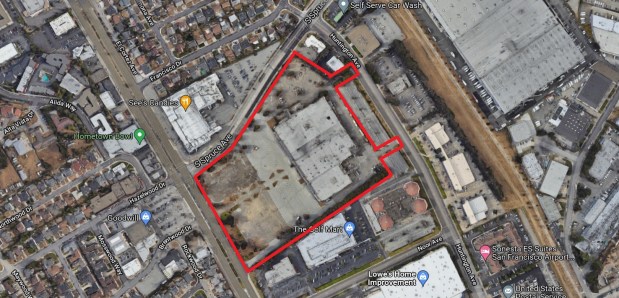
Steelwave, a veteran developer that acted through an affiliate, has bought a large site at 180 El Camino Real in South San Francisco where the project would be built, according to documents filed with San Mateo County property officials.

The affiliate paid $98 million for the parcel, purchasing the 14.5-acre site from Shamaim LLC, the county documents that were filed on Dec. 28 show.

Newmark brokers Steven Golubchik, Nicholas Bicardo, Edmund Najera, Jonathan Schaefler and Darren Hollak arranged the property transaction, the commercial real estate firm said.

“180 El Camino was one of few remaining opportunities to acquire scale within South San Francisco,” said Golubchik, a Newmark vice chairman and head of the real estate firm’s Northern California Capital Markets unit. Golubchik added that the property drew “robust” interest from prospective buyers.

The Steelwave unit completed the property purchase through an all-cash deal, according to the county records.

One of the centerpieces of the project is expected to be a new Safeway store, according to South San Francisco planning documents.

“The revitalization of this property has been in the works for many years, but it is worth the wait,” South San Francisco Mayor Mark Addiego said in a prepared release.

The new Safeway store will be approximately 63,700 square feet, city officials said.

An existing strip mall on the site, known over the years as Spruce Shopping Center, located at the southeast corner of El Camino Real and Spruce Avenue, has been vacant in recent years.

Steelwave also is planning multiple buildings consisting of offices and research sites on the site adjacent to where the Safeway store would be constructed.

The office and research buildings are expected to total 750,000 square feet, according to a very preliminary proposal filed with city officials.

Excluding the Safeway store, potentially 19,500 square feet of retail could be part of the project.

Steelwave is fine-tuning the precise plans for the office and research space, as well as the additional retail sites beyond the Safeway store.

Construction of the new Safeway store is slated to begin this spring and be completed by the summer of 2023, South San Francisco officials said.

The development site is located within two miles of the San Bruno BART station.

South San Francisco residents have been awaiting upgrades at the retail complex for a number of years, but previous proposals had failed to materialize as an actual project.

“The new Safeway will anchor and stimulate positive improvements in the area and offer our residents greater shopping and eating options,” Mayor Addiego said.

169fe SJM L SSFPROJECT x 02 South San Francisco site for big mixed use development lands buyer
180 El Camino Real in San Francisco, a development site for a mixed-use office and retail project, concept. (Google Maps)


Article source: https://www.mercurynews.com/2022/01/03/south-san-francisco-real-estate-big-mix-use-develop-buy-office-retail

Posted in SF Bay Area News | Tagged | Leave a comment

The pricey California real estate market? In 2021, it got pricier

By Candace Jackson

The New York Times

The real estate market in California mostly mirrored the national trends in 2021, with home prices increasing by double digits in the more affordable, outlying suburbs and in smaller metro areas like Riverside and Sacramento. In urban markets like San Francisco, the increases were more modest — at least by 2021 standards.

As for home prices overall, they far outpaced the national median price. In October, the median sale price of a single-family home in California was $798,440, up 12.3% from the year before, according to information from the California Department of Finance — more than twice the national median sale price of $353,900 reported in November by the National Association of Realtors.

Jeff Tucker, a senior economist with Zillow, said the Bay Area’s housing market was one of the state’s coolest in 2021, with home values rising sharply but at a lower rate than statewide values. By Zillow’s calculations, he said, San Francisco saw the “typical” home value increase by 9.3%, to $1.53 million, from November 2020 to November 2021, compared with a statewide increase of 20%.

“But it’s like a fractal,” he said. “You zoom in and the pattern reasserts itself,” with the national trend of more affordable outlying areas seeing the most significant price growth.

The East Bay, for example, which includes Berkeley, Oakland and the surrounding suburbs, saw stronger price growth. “Oakland was the market that saw the biggest increase in demand,” said Daryl Fairweather, the chief economist for Redfin. “Everyone was leaving The City and going across the bridge.”

The median sale price of a single-family home in Alameda County, which includes Oakland and Berkeley, was $1.3 million in November 2021 — up 24%, from $1.05 million, in November 2020, according to data from the California Association of Realtors. In San Francisco, by comparison, the median sale price for a single-family home was $1.9 million, an increase of 12%, from $1.67 million, a year before.

“It was crazy all year long,” said Daniel Stea, a broker and lawyer who owns Stea Realty Group and works in Oakland and Berkeley. That is, with the exception of a brief slowdown in June, he said, when bidding-war fatigue seemed to set in and some buyers may have headed out of town, post-vaccination. But demand picked up sharply later in the summer, he added, with move-in ready homes that had work-from-home space and backyards often getting a dozen or more offers.

Sacramento was one of the most in-demand destinations for buyers seeking bigger homes at relatively affordable prices. The “typical” value of a single-family home there in 2021 was $472,000, according to Zillow’s estimate — up 22.3% from 2020, but still far less than the statewide average. “The area has newer and bigger homes than its coastal neighbor to the west,” Tucker said, referring to San Francisco. “That’s a good example we saw of the trend in a lot of the country.”

Los Angeles also saw strong price growth. In November, the median sale price of a single-family home there was $810,000, according to information from Redfin, up from $730,000 the previous year — an 11% increase that reflected a mix of larger price increases in more affordable areas and smaller ones in already pricey places like Santa Monica, Fairweather said.

Still, the luxury market soared in affluent enclaves like Montecito, near Santa Barbara, which made headlines in 2020 when Prince Harry and Meghan Markle, the Duke and Duchess of Sussex, bought a $19.9 million home there. In 2021, it continued to attract wealthy buyers, and the average sale price increased by 43% over the prior year, to $6.46 million, said Martha J. Mosier, the president of Berkshire Hathaway HomeServices California Properties.

Her explanation? “More and more executives no longer have to remain in LA or in San Francisco.”

Inventory in most of the state remains low, with the number of active listings down more than 30%, said Danielle Hale, the chief economist at Realtor.com. San Francisco and Los Angeles saw listings increase slightly, year over year, she said, “but because buyers are pretty active, those homes are being snapped up quickly.”

So what’s in store for California in 2022?

“A lot of these California markets are going to see home prices grow half as fast as they did in 2021,” Hale said. “That should be a relief for buyers.”

She and others cautioned, however, that the slow pace of construction meant that demand for homes would likely outstrip supply in much of the state for the foreseeable future.

This article originally appeared in The New York Times.

Article source: http://www.sfexaminer.com/findings/the-pricey-california-real-estate-market-in-2021-it-got-pricier/

Posted in SF Bay Area News | Tagged | Leave a comment

‘Worst House on Best Block’ of San Francisco Sells for $2M

A decaying, 122-year-old Victorian marketed as “the worst house on the best block” of San Francisco has sold for nearly $2 million — an eye-catching price that the realtor said was the outcome of overbidding in an auction.

A developer’s $1.97 million cash offer for the 2,158-square-foot (200-square-meter) property in the Noe Valley neighborhood was finalized last week. On the social media page Zillow Gone Wild, some commenters marveled at the price while others questioned the value of a house with boarded-up windows, peeling paint and an unstable foundation.

One commenter joked: “It actually has a parking space. No wonder it sold for almost 2 million!”

The property sold at several hundred thousand dollars higher than other comparable fixer-uppers in the area as a result of a complex conservatorship sale, said Todd Wiley, who represented the seller.

Local


c705f Deebo Samuel Touchdown Rams USATSI 17591287 ‘Worst House on Best Block of San Francisco Sells for $2M


9ac65 GettyImages 1344833156 ‘Worst House on Best Block of San Francisco Sells for $2M

Wiley said a judge approved the sale of the house after its elderly owner was placed in a conservatorship. The man’s family, concerned about the way he was living, hired a licensed fiduciary to handle the sale with the proceeds going to pay for his continuing care, according to Wiley.

The house initially received the highest offer of about $1.4 million, and a probate judge ratified the offer, setting off a roughly 7-week process where the house stayed on the real estate market, generating intense interest.

At auction, a probate judge set bidding at $10,000 increments.

“That kept things low and kept five to six bidders in the game,” Wiley said. Two people ultimately went neck and neck, he said, “and it’s that auction environment that led it to go where it was.”

“They really wanted it but the data point didn’t support that sale. It was an anomaly,” he said.

Article source: https://www.nbcbayarea.com/news/local/worst-house-on-best-block-of-san-francisco-sells-for-2m/2778697/

Posted in SF Bay Area News | Tagged | Leave a comment