New ULI Report, Bay Area In 2015, Suggests Bay Area at Risk of Losing …

SAN FRANCISCO – October 8, 2015 – (RealEstateRama) — A new report from the Urban Land Institute, Bay Area in 2015, suggests that the San Francisco metropolitan region is at risk of losing Millennials in the years ahead, as high housing costs are making them increasingly skeptical about their ability to eventually move into homes in neighborhoods with the high livability attributes they desire.

The report, which was released today at ULI’s 2015 Fall Meeting in San Francisco, finds that 74 percent of Millennials living in the Greater Bay area are considering moving over the next five years, although housing affordability concerns suggest that they will be more apt to move away from the area than within it. Just 24 percent are very confident that they will be able to own or rent their desired home in five years – a dramatically lower percentage than Gen Xers, 38 percent of which voiced strong confidence in their ability to move up; or Baby Boomers, at 49 percent.

Another possible indicator of housing affordability challenges for the Bay Area’s youngest adults: While 34 percent of Millennials currently live in apartments — compared to 21 percent of Gen Xers and 11 percent of Baby Boomers — an equal percentage of Millennials expect to be living in apartments in the future, compared to just 11 percent of Gen Xers and 8 percent of Baby Boomers.

Bay Area in 2015 is based on a survey of 701 adults in the Greater San Francisco Bay area that was conducted during February 2015 as a companion to a national survey conducted for ULI’s America in 2015 report, which was released last spring. Survey responses are categorized by generation – Millennials, Generation X, Baby Boomers, War Babies and the Silent Generation – as well as by ethnicity, income, and location (North Bay, the five-county Bay area, and South Bay). The low expectations of Millennials in the Greater Bay area in terms of moving up are in stark contrast to Millennials in the U.S. as a whole (52 percent said they anticipate being able to purchase or rent their desired housing in five years).

Across the Bay area’s submarkets, one-third of the respondents from the South Bay Area – which has the largest number of Millennials – say they are not satisfied with their local housing options.

The report also shows that Millennials in the Greater Bay area place the highest priority on health-related attributes including air and water quality, access to public transportation, and bike lanes. Yet, they are the least likely of the generations to have easy access to safe places for outdoor physical activity and active transportation systems such as bike lanes.

The findings of Bay Area in 2015 should serve as a wake-up call — not just for the region’s technology industry with its Millennial-heavy employment base — but for how San Francisco grows for the future, said ULI Global Chief Executive Officer Patrick L. Phillips. “Millennials make up the largest, most diverse generation in our history, and they will have an enormous impact on the success of our cities. San Francisco needs to consider the how declining housing affordability is affecting the high quality of life it is seeking to provide for all residents, including this powerful group,” he said. “This means placing a strong emphasis on providing housing for a mix of incomes and generations, and by investing in development patterns to further reduce automobile dependence and promote health and wellness.”

Among other findings in the report:

Eighty-seven percent of all Bay area residents say that the quality of the environment, including air and water quality, is a top or high priority when choosing where to live; 78 percent say the availability of fresh, healthy food is a top or high priority.
Sixty-three percent of Bay area residents say rate green space and parks as a top or high priority, while less than half – 42 percent – place having private yard space as a top or high priority, indicating that access to shared open space is a highly valued urban amenity throughout the region.

Bay area residents are more likely than U.S. residents as a whole to prefer an auto-optional lifestyle. Sixty-eight percent rate walkability, including pedestrian-friendly features, as a top or high priority, compared to 50 percent of all Americans. Half of Bay area residents say the convenience of public transportation would be a top or high priority when deciding on a new home, compared to 32 percent of all Americans.

Twenty-nine percent of Bay area residents say they walk or bike to a destination nearly every day, and half believe their neighborhoods need more bike lanes. The desire for more bike lanes was strongest among South Bay residents (62 percent).
“This report shows that residents throughout the Bay area clearly prefer alternatives to the automobile to get around in their communities,” Phillips said. “Making truly car-optional communities involves having access to supportive community infrastructure and neighborhood design, such as sidewalks, crosswalks and bike lanes, as well as having destinations that are easily reachable by walking, cycling or using public transportation. Communities that support these ‘people-first’ strategies will have a competitive edge, in terms of livability, prosperity and sustainability.”

Bay Area in 2015 was prepared jointly by the ULI Terwilliger Center for Housing and ULI’s Building Healthy Places Initiative in partnership with ULI San Francisco, which serves ULI members in the greater San Francisco metropolitan region.

The Terwilliger Center for Housing engages in a multifaceted program of work that furthers the development of mixed-income, mixed-use communities with a full spectrum of housing. Through the Building Healthy Places Initiative, ULI is leveraging the power of ULI’s global networks to shape projects and places in ways that improve the health of people and communities.

NOTE TO EDITORS AND REPORTERS: To speak with a ULI expert about the report and the survey findings, contact Trish Riggs at 202-679-4557 (cell).

About the Urban Land Institute
The Urban Land Institute is a nonprofit education and research institute supported by its members. Its mission is to provide leadership in the responsible use of land and in creating and sustaining thriving communities worldwide. Established in 1936, the Institute has more than 36,000 members worldwide representing all aspects of land use and development disciplines.

contact Trish Riggs at 202-624-7086
Article source: http://www.realestaterama.com/2015/10/08/new-uli-report-bay-area-in-2015-suggests-bay-area-at-risk-of-losing-millennials-due-to-high-housing-costs-quality-of-life-concerns-ID028790.html

Posted in SF Bay Area News | Tagged | Leave a comment

Sacramento bank expands into Bay Area with first office: More to come?

As you were browsing http://www.bizjournals.com something about your browser made us think you were a bot. There are a few reasons this might happen:

  • You’re a power user moving through this website with super-human speed.
  • You’ve disabled JavaScript in your web browser.
  • A third-party browser plugin, such as Ghostery or NoScript, is preventing JavaScript from running. Additional information is available in this support article.

To request an unblock, please fill out the form below and we will review it as soon as possible.

You reached this page when attempting to access http://www.bizjournals.com/sanfrancisco/blog/2015/10/sacramento-river-citybank-expands-san-francisco.html from 208.79.238.69 on 2015-10-07 09:29:19 GMT.
Trace: E30EB41C-6CD5-11E5-AF54-E27D58B27A82 via 93422e00-f2c8-4e63-84d3-c4b70dc8ea87

Article source: http://www.bizjournals.com/sanfrancisco/blog/2015/10/sacramento-river-citybank-expands-san-francisco.html

Posted in SF Bay Area News | Tagged | Leave a comment

Try to remember the kind of September when homes sell slow and oh so mellow

As you were browsing http://www.bizjournals.com something about your browser made us think you were a bot. There are a few reasons this might happen:

  • You’re a power user moving through this website with super-human speed.
  • You’ve disabled JavaScript in your web browser.
  • A third-party browser plugin, such as Ghostery or NoScript, is preventing JavaScript from running. Additional information is available in this support article.

To request an unblock, please fill out the form below and we will review it as soon as possible.

You reached this page when attempting to access http://www.bizjournals.com/sanfrancisco/blog/2015/09/san-francisco-real-estate-housing-market-z-zillow.html from 208.79.238.69 on 2015-10-05 03:22:31 GMT.
Trace: 501082C4-6B10-11E5-BA45-D0AE73C6F32A via 93422e00-f2c8-4e63-84d3-c4b70dc8ea87

Article source: http://www.bizjournals.com/sanfrancisco/blog/2015/09/san-francisco-real-estate-housing-market-z-zillow.html

Posted in SF Bay Area News | Tagged | Leave a comment

The best deal in the Bay Area? Julia Morgan on the market for under $1 million

  • fa7b8 920x920 The best deal in the Bay Area? Julia Morgan on the market for under $1 million

Caption

Close

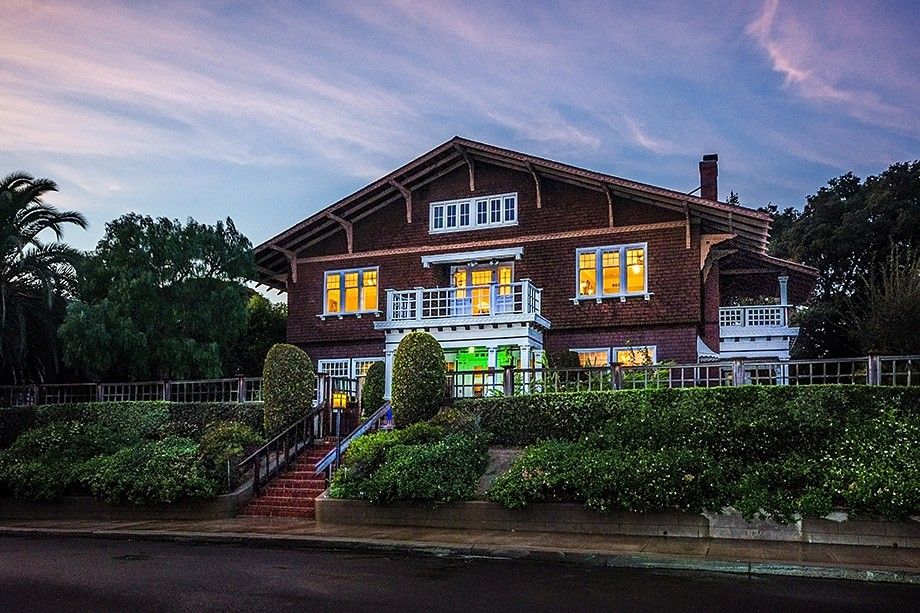
A Julia Morgan home in Vallejo, originally listed in 2014 at $1.2 million, is now on the market for $998,000. The historic five-bedroom built in 1909 features splendid architectural details and Bay views. 


Photo: Jason Born


A Julia Morgan home in Vallejo, originally listed in 2014 at $1.2 million, is now on the market for $998,000. The historic five-bedroom built in 1909 features splendid architectural details and Bay views.


Photo: Jason Born


A Julia Morgan home in Vallejo, originally listed in 2014 at $1.2 million, is now on the market for $998,000. The historic five-bedroom built in 1909 features splendid architectural details and Bay views.


Photo: Jason Born


A Julia Morgan home in Vallejo, originally listed in 2014 at $1.2 million, is now on the market for $998,000. The historic five-bedroom built in 1909 features splendid architectural details and Bay views. 


Photo: Jason Born


Graceful banisters add flair to the staircase, top, hedges and planter boxes grace the grounds, above, and a fire
place adorns the living room.


Photo: Jack Journey


Mature trees and lush gardens surround the Vallejo home. 


Photo: Jack Journey


Ornate buttresses support the roof. 


Photo: Jack Journey


The wood-shingled home offers a total of four patios. 


Photo: Jack Journey


The home offers views of the surrounding foothills. 


Photo: Jack Journey


This covered patio includes a swing. 


Photo: Jack Journey


The Vallejo home has three tile fireplaces. 


Photo: Jack Journey


Tall hardwood wainscoting decorates the stately formal dining room. 


Photo: Jack Journey


A tile fireplace warms a formal dining room with built-ins and hardwood accents. 


Photo: Jack Journey


Stained-glass windows lend color and flair to the turned staircase.


Photo: Jack Journey


Wainscoting, a coffered ceiling and turned staircase are among the classical design elements in the Vallejo home. 


Photo: Jack Journey


The four-bedroom home was completed in 1909.


Photo: Jack Journey


The spacious master suite includes a tall ceiling and plenty of natural light. 


Photo: Jack Journey


A plethora of windows welcome natural light into the master suite. 


Photo: Jack Journey


Parquet flooring in the office is one of a myriad of classical design elements in the Julia Morgan-designed home.


Photo: Jack Journey


A wood-burning fireplace with tile surround warms the living room.


Photo: Jack Journey


Stained glass finishes fashion the classic kitchen. 


Photo: Jack Journey


A wooden deck sits behind the stately home that features a towering brick chimneys.


Photo: Jack Journey


A covered patio sits beside a brick pathway.


Photo: Jack Journey


728 Capitol St. in Vallejo is a four-bedroom designed by Julia Morgan. 


Photo: Jack Journey


Architect Julia Morgan, Cal.


Photo: File, San Francisco Chronicle


Julia Morgan
One of California’s – and the nation’s – most notable architects, Morgan began her career working on several buildings on the campus of her alma mater, the University of California-Berkeley. Of the many projects she undertook in her career, including Mills College and the YWCA, most of her most famous buildings were erected for William Randolph Hearst, including the famous Hearst Castle. Morgan was the first woman architect licensed in California and the first to receive the AIA’s Gold Medal, which was awarded posthumously in 2014.


Julia Morgan began her career in the office of John Galen Howard, and served as the supervising architect for UC-Berkeley’s Greek Theater. It opened in 1903; her boss is reputed to have told an associate about his “excellent draftsman whom I have to pay almost nothing, as it is a woman,” and Morgan went off on her own a year later.


Photo: SFC


Morgan’s first major commission on her own was El Campanil at Mills College in Oakland, one of a half-dozen buildings she did for the school between 1904 and 1925.


Photo: SFC


Another early project by Julia Morgan was the reconstruction of the Fairmont Hotel on Nob Hill after the 1906 earthquake. Her work was structural, rather than architectural details, but the rapidity and quality with which it was done helped Morgan’s growing reputation.


Photo: Kevin N. Hume, SFC


Julia Morgan’s best-known work is Hearst Castle, the 165-room estate of newspaper publisher William Randolph Hearst, in San Simeon. Construction began in 1919 and continued for 28 years.


Photo: SFC


As imposing as the architecture might be, the most dazzling feature for many visitors to Hearst Castle is the Morgan-designed Neptune Pool.


Photo: Hearst Corporation


There’s an indoor pool at Hearst Castle as well, complete with Roman sculptures. Those newspaper magnates knew how to live, and Julia Morgan knew how to keep her clients happy.


Photo: SFC


The largest collection of Morgan’s architecture is at the Asilomar conference center in Pacific Grove. She designed 13 buildings between 1913 and 1928 for the YWCA, which then owned the oceanside retreat.


Photo: Penni Gladstone, SFC


Merrill Hall, the last and largest building at Asilomar designed by Julia Morgan.


Photo: Joel Puliatti; Julia Morgan, Architect Of Beauty


Julia Morgan’s work for the YWCA wasn’t limited to Asilomar. The Chinese Historical Society building on Clay Street in San Francisco’s Chinatown began life in 1930 as the Chinatown YWCA — one of more than a dozen such projects in four states done by Morgan.


Photo: Kevin N. Hume, SFC


The YWCA in Oakland, designed by Julia Morgan, opened in 1915 on Webster Street. It now is occupied in part by an arts-related charter school, and is on the National Register of Historic Places.


Photo: PAUL CHINN, SFC


Julia Morgan’s work extended to neighborhood commercial buildings, such as this retail building from 1916 on Piedmont Avenue in Oakland.


Photo: Kevin N. Hume, SFC


The Hearst Gym at UC Berkeley, from 1925, was designed by Julia Morgan with Bernard Maybeck.


Photo: Kevin N. Hume, SFC


in addition to civic and commercial buildings, Morgan did a number of private homes. Among the most distinctive is this seven-bedroom estate from 1928 on Claremont Boulevard in Berkeley.


Photo: CHRIS STEWART, SFC


In San Francisco, Julia Morgan’s residential work in the arts and crafts style includes this house on Filbert Street from 1909.


Photo: Noah Berger, SFC


The house on the 1100 block of Filbert Street as it appeared shortly after it was finished in 1909.


Photo: Courtesy Suzanne Dumont, SFC


The Heritage Retirement building, designed by architect Julia Morgan, sits in the late evening light on Thursday, June 19, 2014 in the Marina District of San Francisco, Calif. Morgan is being honored posthumously with a Gold medal from the American Institute of Architects.


Photo: Kevin N. Hume, SFC


The interior of the Berkeley City Club, one of Morgan’s last significant buildings. The structure at 2315 Durant St. near Telegraph Avenue was built in 1929.


Photo: Michael Macor, SFC


An exterior detail at the Berkeley City Club.


Photo: Paul Chinn, SFC


Many styles of building, many styles of architecture: a sort of Bavarian Gothic retreat done by Morgan for William Randolph Hearst at the family’s Siskoyou County getaway, Wyntoon.


Photo: California Polytechnic State University, San Luis Obispo, Robert E. Kennedy Library, Sarah Holmes Boutelle Archive


The listing price on the splendid George W. Wilson House designed by Julia Morgan at the turn-of-the-century in Vallejo was reduced from $1.2 million to $998,000 this month.

Less than $1 million for a piece of California history designed by one of the state’s most notable architects?

Even in a blue-collar town like Vallejo, isn’t this a deal?

Last spring, a diminutive 875-square-foot one-bedroom designed by the famed architect and located in San Francisco’s tony Pacific Heights was scooped up for $3.7 million. 

This home with five bedrooms three and a half baths offers 3,390 square feet — that’s only $300 a square foot.

“I was on tour in the Silicon Valley today and every house I saw was over $1,200 a square foot,” the home’s listing agent Jason Born said in an interview. “I look at that house in Vallejo and all the craftsmanship and the materials and there’s no way you could build it for $1 million.

Even in the worst neighborhood in San Francisco, I think it’s $4 million and anywhere else I think it would go for $5 to $6 million.”

“This house is an incredible deal for someone who wants to own a Julia Morgan.”

An architectural treasure

With rustic brown shingles, gleaming white trim and a soaring Bas-reliefs roofline, the home at 728 Capitol Street resembles a high-class Swiss Chalet.

It’s one of Morgan’s best examples in the First Bay Tradition, a style embraced between the 1880s and 1920s by California architects who designed homes that connected with nature and used locally sourced materials such as redwood.

“This house stands out among Morgan’s residential designs,” Julia Morgan scholar Karen McNeill said in an interview. “More than any other, it bears the influence of her mentor, Bernard Maybeck. Rarely does one find such a soaring roof line with dramatically overhanging eaves — far more exaggerated than in most Morgan houses.”

The interior is grand, elegant and filled with Arts and Crafts period details. Hardwood built-ins and wainscoting line the dining room, three fireplaces are adored with handcrafted tiles, and a sweeping staircase leads to the upstairs where stained glass windows overlook the lush, landscaped grounds with four patios.

Morgan was the first woman to study at the architecture program at l’École Nationale Supérieure des Beaux-Arts in Paris and the first woman architect licensed in California. She’s best known for her work as the architect of Hearst Castle in San Simeon, Calif.

Looking for the right buyer

The home originally hit the market with Sotheby’s in 2014 and Born, who took over the listing this summer, feels the agency was targeting a luxury buyer by only offering tours by appointment.

Born is looking for a buyer dedicated to the preservation of this home located in the heart of Vallejo’s Heritage District.

He mailed fliers to every Julia Morgan and Bernard Maybeck owner in the state and held a community open house.

“Over 300 people showed up,” said Born, who grew up in Vallejo. “The community loves this home.”

“I’m looking for a buyer committed to the home’s historical preservation and the civic importance of Vallejo.”

The former owner Judith Hilburg, who passed away last year, was well-respected in the community and frequently opened her home to the community. Her daughters have established lives in other parts of the state and aren’t in positions to move to Vallejo. They decided that finding a new owner would be better for the community rather than renting the property.

Location, location, location

With struggling public schools, a high crime rate, a troubled police department and a downtown that lost its soul with the opening of big-box stores, Vallejo has a bad rap. 

The city faced hard times in 1996 when the Mare Island Shipyard closed and thousands of jobs were lost and again in 2008 when the city declared bankruptcy and cut municipal services.

As a result, the city’s real estate market has remained flat while prices in the surrounding Bay Area have skyrocketed in recent years.

But Born says Vallejo is improving and it’s only a matter of time before real estate prices increase.

“If you look at Vallejo right now, it’s a community that can go nowhere but up,” he said. “The phoenix is rising.”

A thriving arts community, a growing police department, improving city services and an award-winning charter school are all signs of improvement, Born said.

What’s more, this Julia Morgan jewel is located in one of the city’s best neighborhoods, the Heritage District. This federally registered area is filled with historic homes built between 1860 and 1890.

“The location is fantastic — great views of Mare Island and the Bay, good walkability to Vallejo’s historic downtown, and located in the historic core of Vallejo, which has such great bones,” says McNeill. 

Article source: http://www.sfgate.com/realestate/article/Vallejo-Julia-Morgan-house-less-than-1-million-6537366.php

Posted in SF Bay Area News | Tagged | Leave a comment

SF Tech Workers Pay More Half Their Salaries to Live Near Unicorn Companies: Study

Tech workers pay more than half of their salaries to rent a slice of real estate near San Francisco unicorn companies like Uber, Square and Airbnb, according to a new study conducted by RadPad, a site which allows users to find and pay for apartment rentals online.

The findings concluded that it’s priciest to live near Square and Airbnb, where workers pay on average of 54% of their salary for a one bedroom apartment, followed by Stripe (52%), Jawbone (49%), and Uber (48%).

Ten of the study’s 13 companies are based in San Francisco, with three Los Angeles area companies thrown in for comparison: Snapchat (42%), RadPad (23%), and Elon Musk’s SpaceX (17%). The latter topped the list with the smallest percentage of salary needed to live near the company’s Hawthorne headquarters, perhaps allowing workers to save for interplanetary travel.

d9022 connect nbcbayarea main SF Tech Workers Pay More Half Their Salaries to Live Near Unicorn Companies: Studyd9022 bay connect twitter SF Tech Workers Pay More Half Their Salaries to Live Near Unicorn Companies: Studyd9022 bay connect facebook SF Tech Workers Pay More Half Their Salaries to Live Near Unicorn Companies: Studyd9022 bay connect googleplus SF Tech Workers Pay More Half Their Salaries to Live Near Unicorn Companies: Studyd9022 bay connect instagram SF Tech Workers Pay More Half Their Salaries to Live Near Unicorn Companies: Studyd9022 bay connect tumblr SF Tech Workers Pay More Half Their Salaries to Live Near Unicorn Companies: Studyd9022 bay connect pinterest SF Tech Workers Pay More Half Their Salaries to Live Near Unicorn Companies: Studyd9022 bay connect rss SF Tech Workers Pay More Half Their Salaries to Live Near Unicorn Companies: Studyd9022 bay connect newsletters SF Tech Workers Pay More Half Their Salaries to Live Near Unicorn Companies: Studyd9022 bay connect apps SF Tech Workers Pay More Half Their Salaries to Live Near Unicorn Companies: Studyd9022 bay connect celljournalist SF Tech Workers Pay More Half Their Salaries to Live Near Unicorn Companies: Study


Article source: http://www.nbcbayarea.com/news/local/SF-Tech-Workers-Pay-More-Half-Their-Salaries-to-Live-Near-Unicorn-Companies-Study-330441601.html

Posted in SF Bay Area News | Tagged | Leave a comment
