Why Tech Won’t Leave the Bay Area

San Francisco residents sometimes say things along the lines of, “It’s too expensive here already. Tech companies should move somewhere else that’s cheaper. After all, it would be better for their bottom line.”

And it’s true, in some ways. It would be better, for example, for the tech startups of Silicon Valley to decamp for Silicon Hills or Silicon Lakes or Silicon Upstate or what have you. There’s no fundamental reason why a tech startup must be headquartered in the Bay Area, the way a mining operation really does need to be situated by a quarry. There’s no such thing as a landlocked fishery, but apps can be made anywhere. San Francisco’s proximity to Burning Man is a plus for the tech industry, but it’s not good for anybody.

It’s easy to tease out all the ways that breaking up Silicon Valley would boost the fortunes of everyone involved. NIMBYs could declare victory, of course. Venture capitalists might warm up to the idea of investing less directly in the Bay Area’s high housing costs. Cities across the country would risk an awful lot to lure startups to relocate.

Look at reality, though, and the opposite trend is true. Competition is driving up prices for housing and commercial real estate alike in San Francisco, San Jose, and other hot Bay Area markets. Companies such as Apple, Google, and Facebook are entrenching, turning to high architecture to make their marks on the suburbs of Silicon Valley with elaborate corporate campuses.

Bloomberg reports that Facebook will pay its workers $10,000 to live close to its headquarters in Menlo Park. This might draw some teensy bit of pressure off San Francisco home prices, take a tech bus or two off the road, and produce more efficient workers for Facebook. But note that venture capital is essentially paying to correct the strange setup whereby workers live in a tremendously expensive urban hub but commute to a very expensive suburban office park for work. Worse still, as Bloomberg reports, this correction isn’t especially workable for other companies for tax reasons.

There are reasons that Snapchat* doesn’t pick up and move to Cleveland. Most of the reasons tech stays put boil down to “path dependency”: It’s a lot easier for companies to find and recruit new employees if they all work and socialize in one small geographically bounded area. The same goes for sharing (and stealing) new ideas. It seems strange to think about something like the Internet as a localized resource, but to a limited extent innovation does work that way. Plus, San Francisco is very nice. People want to live there.

But the costs of the entire industry insisting on working in one place are enormous. A study by Zumper has claimed that for every $1 billion in venture capital that pours into a local economy, rents rise by between $69 and $99 per month. There are problems with this study, namely that it doesn’t account for zoning regulations. Pouring venture capital into a locality where housing supply is low and zoning is restricted is going to raise rents more than in some other place.

Put another way: Tech startups that insist on operating in the Bay Area, and that’s a lot of them, are going to require more money. High housing costs dig into worker salaries. Workers either have to suck it up and pay those costs or live further and further away from work, which leads to longer commutes and lower productivity.

There’s a chicken-and-egg problem here: Venture capital might be raising rents by making labor markets more attractive to workers. Startups are congregating in highly productive labor markets where housing prices are high and rising, meaning that more VC winds up in the hands of landlords. There’s no single reason why why it has to be this way, just a lot of justifications for why it is this way. Tech companies can leave Silicon Valley any time, but there’s no reason to think anything will change.

*Correction: Snapchat, an example first used for this illustration, isn’t based in the Bay Area. It operates out of Venice Beach.

Article source: http://www.citylab.com/housing/2015/12/why-tech-will-never-leave-the-bay-area/421650/
Posted in SF Bay Area News | Tagged | Leave a comment

SF Sierra Club leaders resist newcomers’ takeover attempt


The old guard of San Francisco’s Sierra Club chapter has defeated an effort by a slate of newcomers to take over its executive committee.

The newcomers sought to change the San Francisco chapter’s opposition to high-rise development projects and make the group more racially diverse. Longtime members argued that the challengers were a front group for real estate interests because they were backed by the the San Francisco Bay Area Renters’ Federation, a pro-development group founded early last year.

In the months leading up to the election, the new group took to Reddit to encourage people to join the environmental organization so they could vote for its slate.

The challenge transformed what is usually a sleepy affair into a fractious election, one that underscored the degree to which land-use issues dominate city politics, and also the influence of Sierra Club endorsements on ballot measures and political races.

Winning the election for the five open seats on the nine-person executive committee were longtime Sierra Club members Arthur Feinstein, Sue Vaughan, John Rizzo, Barry Hermanson and Howard Strassner. Strassner was also backed by the pro-development group because he is more supportive of development projects, although he said he neither sought nor wanted its endorsement.

“Because of your votes, the SF Group thwarted a takeover attempt by a slate of candidates endorsed by a development-at-all-costs group, SF BARF,” Vaughan wrote in an e-mail after the election results were announced.

The Sierra Club has not released the finale tally.

Developers’ backing

Challengers Donald Dewsnup, Leah Pimentel, Jacquelyn Omotalade and Rebecca Lee lost in the voting.

Among them, Dewsnup drew the most scorn from longtime Sierra Club members because he is a real estate agent with little environmental background. The women, who are racial minorities, have worked in the environmental field, but the fact that the pro-development group supported them raised suspicions. The women also ran under the slate “Green SF with color.”

Lee said she will continue to work on environmental issues despite the loss.

“I have always been active in the environmental field, both as a profession as well as an activist on issue-based campaigns; this outcome does not change that,” Lee said in an e-mail. “I hope the winners of this election use their upcoming term to recruit diverse environmentalists and engage our local communities.”

‘Exit over voice’

Jon Golinger, a longtime Sierra Club member who campaigned against the pro-development slate, praised the results. “This is a huge victory and a clear mandate for the SF Sierra Club to remain a strong environmental voice and continue to fight vigorously to protect our waterfront and environment in the many battles ahead in 2016 and beyond,” he said.

Sonja Trauss, the founder of the pro-development group, said the election may be just the start. There are four seats on the executive committee up for election in 2016.

“If the executive committee continues to oppose height limit increases and smart infill, we’ll probably try again next year,” Trauss wrote in an e-mail. “It’s a hard election to win because most Sierra Club members who agree that opposing infill development promotes sprawl and is therefore antienvironmental, have already quit the Sierra club. They choose exit over voice.”

She added, “Maybe after we run a few times, the incumbents will eventually have to defend their opposition to infill development.”

Emily Green is a San Francisco Chronicle staff writer. E-mail: egreen@sfchronicle.com Twitter: @emilytgreen

Article source: http://www.sfgate.com/bayarea/article/S-F-Sierra-Club-leaders-resist-newcomers-6713583.php

Posted in SF Bay Area News | Tagged | Leave a comment

Oakland ascends to nation’s 4th most expensive rental market

“);
$(“.gallery_outer_overlay_dynamic”).css(“position”,”absolute”);
$(“.gallery_outer_overlay_dynamic”).css(“z-index”,”500″);
$(“.gallery_outer_overlay_dynamic”).css(“top”,”0″);
$(“.gallery_outer_overlay_dynamic”).css(“left”,”0″);
$(“.gallery_outer_overlay_dynamic”).css(“height”,”"+$(document).height()+”px”);
$(“.gallery_outer_overlay_dynamic”).css(“width”,”"+$(document).width()+”px”);
$(“.gallery_outer_overlay_dynamic”).css(“backgroundColor”,”rgba(0,0,0,1)”);
$(“.gallery_outer_overlay_dynamic”).css(“overflow”,”hidden”);
OUTER_OVERLAY_ON = true;
}

  • 779d6 a Oakland ascends to nations 4th most expensive rental market


Going up! Oakland rent this year, courtesy Zumper.

Image 1 of 16 – 1 BRs in Oakland now rent at $2190

Going up! Oakland rent this year, courtesy Zumper.

Going up! Oakland rent this year, courtesy Zumper.

This 1 BR/1 BA on Farimount rents for $2095. It is under 700 square feet. https://www.zumper.com/apartments-for-rent/11500183/1-bedroom-oakland-ave-harrison-st-oakland-ca

Image 2 of 16 – 1 BRs in Oakland now rent at $2190

This 1 BR/1 BA on Farimount rents for $2095. It is under 700 square feet. https://www.zumper.com/apartments-for-rent/11500183/1-bedroom-oakland-ave-harrison-st-oakland-ca

This 1 BR/1 BA on Farimount rents for $2095. It is under 700 square…feet….https://www.zumper.com/apartments-for-rent/11500183/1-bedroom-oakland-…ave-harrison-st-oakland-ca

Inside Fairmount, nothing too amazing is happening,– except the rent increase! Photo: Zumper

Image 3 of 16 – 1 BRs in Oakland now rent at $2190

Inside Fairmount, nothing too amazing is happening,– except the rent increase! Photo: Zumper

Inside Fairmount, nothing too amazing is happening,– except the rent…increase! Photo: Zumper

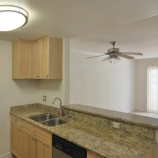
Kitchen/living room view. Photo: Zumper

Image 4 of 16 – 1 BRs in Oakland now rent at $2190

Kitchen/living room view. Photo: Zumper

Kitchen/living room view. Photo: Zumper

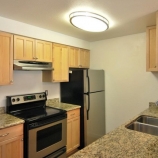
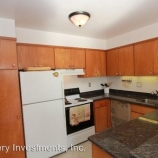
Kitchen. Photo: Zumper

Image 5 of 16 – 1 BRs in Oakland now rent at $2190

Kitchen. Photo: Zumper

Kitchen. Photo: Zumper

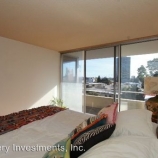
Boring bedroom. Photo: Zumper

Image 6 of 16 – 1 BRs in Oakland now rent at $2190

Boring bedroom. Photo: Zumper

Boring bedroom. Photo: Zumper

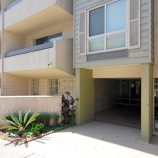
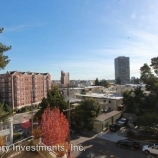
Option 2, at Adam’s Point, a little over 700 square feet is this 1 BR/1BA renting for $2300 a month. https://www.zumper.com/apartments-for-rent/11692914/1-bedroom-adams-point-oakland-ca

Image 7 of 16 – 1 BRs in Oakland now rent at $2190

Option 2, at Adam’s Point, a little over 700 square feet is this 1 BR/1BA renting for $2300 a month. https://www.zumper.com/apartments-for-rent/11692914/1-bedroom-adams-point-oakland-ca

Option 2, at Adam’s Point, a little over 700 square feet is this 1…BR/1BA renting for $2300 a month….https://www.zumper.com/apartments-for-rent/11692914/1-bedroom-adams-po…int-oakland-ca

inside Adam’s Point. Photos: Zumper

Image 8 of 16 – 1 BRs in Oakland now rent at $2190

inside Adam’s Point. Photos: Zumper

inside Adam’s Point. Photos: Zumper

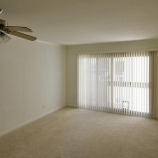
living room and view. Photos: Zumper

Image 9 of 16 – 1 BRs in Oakland now rent at $2190

living room and view. Photos: Zumper

living room and view. Photos: Zumper

View. Photos: Zumper

Image 10 of 16 – 1 BRs in Oakland now rent at $2190

View. Photos: Zumper

View. Photos: Zumper

kitchen. Photos: Zumper

Image 11 of 16 – 1 BRs in Oakland now rent at $2190

kitchen. Photos: Zumper

kitchen. Photos: Zumper

bedroom. Photos: Zumper

Image 12 of 16 – 1 BRs in Oakland now rent at $2190

bedroom. Photos: Zumper

bedroom. Photos: Zumper

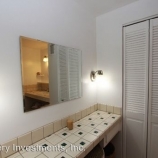
bath. Photos: Zumper

Image 13 of 16 – 1 BRs in Oakland now rent at $2190

bath. Photos: Zumper

bath. Photos: Zumper

Bath, view 2. Photos: Zumper

Image 14 of 16 – 1 BRs in Oakland now rent at $2190

Bath, view 2. Photos: Zumper

Bath, view 2. Photos: Zumper

building lobby. Photos: Zumper

Image 15 of 16 – 1 BRs in Oakland now rent at $2190

building lobby. Photos: Zumper

building lobby. Photos: Zumper

Exterior. Photos: Zumper

Image 16 of 16 – 1 BRs in Oakland now rent at $2190

Exterior. Photos: Zumper

Exterior. Photos: Zumper

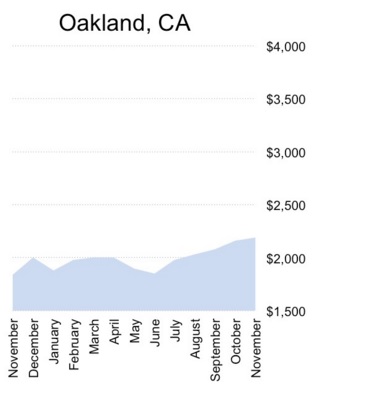
Last week, we learned the surprising news that San Francisco’s median rent took a dip in November, the first in many months of steady upward progress. But across the Bay, the news differs, according to Zumper’s National Rent Report.

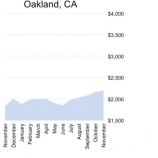
Oakland for the first time this November became the fourth most expensive rental market in the country, surpassing San Jose for the first time. One bedrooms increased 19 percent in the past year to $2,190, while two bedrooms increased 13.3 percent to reach $2,550.”

Oakland rent growth continues to outpace San Francisco’s, which isn’t much of a surprise given that S.F. rent started high and Oakland’s has far to go to match up with that former city’s median one-bedroom rent of $3,500 a month. But interesting indeed is Oakland edging out San Jose.

In fact, San Jose rents are down. Per Zumper, “San Jose, Calif., dropped to sixth place on our list, paring some of the gains seen so far this year. One bedrooms dropped 2.3 percent to $2,130, while two bedrooms were down a slight 0.4 percent to $2,710.”

Zumper’s data

Readers asked last week about the method used in this report. Zumper’s Devin O’Brien, who writes the monthly National Rental report, explains: “The Zumper National Rent Report analyzes rental data from over 1 million active listings across the United States. Data is aggregated on a monthly basis to calculate median asking rents for the top 50 metro areas by population, providing a comprehensive view of the current state of the market. The report is based on all data available in the month prior to publication.”

Oakland rent crisis

Zumper isn’t the only real estate/rental market site to notice Oakland’s striking market activity. To quote Smart Asset, “The East Bay was once an oasis of affordability in the otherwise pricey Bay Area. No longer. According to RentJungle.com, fair market rents in the Oakland area have nearly doubled since 2011. Meanwhile, median income in Oakland has increased by 11.3 percent, a significant amount but not nearly enough to compensate for the skyrocketing rental rates.”

The East Bay Express puts that income/rent ratio a bit more dramatically: “Oakland is slipping out of the hands of most of its residents. If the average Oakland renter had to move tomorrow into a market-rate rental apartment, they would need to pay a staggering 70 percent of their income on rent.” The recommended percentage for financial stability, incidentally, is 30 percent or less.

Anna Marie Erwert writes from both the renter and new buyer perspective, having (finally) achieved both statuses. She focuses on national real estate trends, specializing in the San Francisco Bay Area and Pacific Northwest. Follow Anna on Twitter: @AnnaMarieErwert.


Article source: http://blog.sfgate.com/ontheblock/2015/12/21/oakland-ascends-to-nations-4th-most-expensive-rental-market/

Posted in SF Bay Area News | Tagged | Leave a comment

Jerry Brown in dad’s old digs, renovated governor’s mansion

f54c4 920x1240 Jerry Brown in dads old digs, renovated governors mansion

Now that it’s undergone $4.1 million in renovations, Gov. Jerry Brown has moved into the old governor’s mansion occupied by his late father, Pat Brown, almost a half century ago.

Article source: http://www.sfchronicle.com/bayarea/matier-ross/article/Jerry-Brown-in-dad-s-old-digs-renovated-6711578.php

Posted in SF Bay Area News | Tagged | Leave a comment

How ‘Star Wars’ made Silicon Valley a new kind of Hollywood

SIGN IN

Article source: http://www.sfchronicle.com/business/article/How-Star-Wars-mad-Silicon-Valley-a-new-kind-6710350.php

Posted in SF Bay Area News | Tagged | Leave a comment