Report: Dip in house flipping indicates cooling in SF real estate market

922d7 facebook Report: Dip in house flipping indicates cooling in SF real estate market922d7 twitter Report: Dip in house flipping indicates cooling in SF real estate market922d7 google plus Report: Dip in house flipping indicates cooling in SF real estate market2678b mail Report: Dip in house flipping indicates cooling in SF real estate market2678b facebook Report: Dip in house flipping indicates cooling in SF real estate market2678b twitter Report: Dip in house flipping indicates cooling in SF real estate market2678b google plus Report: Dip in house flipping indicates cooling in SF real estate market2678b mail Report: Dip in house flipping indicates cooling in SF real estate market

San Francisco saw a drop in the number of homes that were flipped last year, indicating there may be a decrease in competition among The City’s real estate market, according to a report released Thursday by Trulia, a national online real estate tool.

The rate of house flipping — in which a buyer sells a home within a year of purchasing the property — fell in San Francisco to 3.3 percent in 2015, compared to 3.6 percent in 2014, the report shows.

Though the change might seem small, the downturn aligns with a larger cooling trend in the market, said Trulia’s chief economist and author of the report Ralph McLaughlin.

“That’s good news,” McLaughlin said. “It might mean that in the future, there’s less speculation in the Bay Area.”

The figure stands in sharp contrast to The City’s peak home flip rate of 7.7 percent back in 2001 and throughout the mid-2000s, when San Francisco’s flip rate ranged from 6.2 to 7.2 percent, McLaughlin said.

San Francisco also saw the lowest home flipping rate compared to other major cities in the Bay Area. Home flip rates for San Jose and Oakland were 4.3 percent and 4.6 percent, respectively, according to the report.

McLaughlin attributed two major factors to San Francisco’s “cooling down” of home speculation. First, there are much more people looking to purchase homes than there are homes for sale in The City. Second, the homes that are for sale are significantly more expensive compared to homes in other major cities, making it harder to fix and sell for an even higher price to turn a profit, McLaughlin said.

“The combination of short supply and high price makes it difficult for ‘flippers’ to find houses in the Bay Area,” McLaughlin said.

The data for the report was compiled by looking at the nation’s largest 100 cities and finding the percentage of houses bought and later sold within one year of purchase compared to the overall home sales for each city. Homes that were sold as part of a foreclosure process were not included in the findings, McLaughlin said.

Las Vegas had the highest rate of home flips, with 10.4 percent, a 9 percent surge from the year prior, according to the report. Other cities also saw dramatic increases in home flips across the U.S., though the national level at 5 percent, McLaughlin said.

Article source: http://www.sfexaminer.com/report-possible-cooling-in-sf-real-estate-market-as-house-flipping-rates-drop/

Posted in SF Bay Area News | Tagged | Leave a comment

Bay Area housing: What $635000 median price really will buy you

Breaking into the Bay Area real estate market has become an exhausting process, a legendary slog.

Just how disappointing is it for buyers?

We asked Alain Pinel broker Rainy Hake to describe what it’s like for newcomers to the region, all those techies with high hopes: “They say, ‘Well, I’m coming from Georgia, and I’m used to having a big beautiful house with a wraparound porch and a lovely yard,’ and you have to tell them, ‘Well, you’re not going to get any of those things and be within a two-hour commute from your new job.’ “

To help bring the market’s realities into focus for readers, we handed Hake, Alain Pinel’s chief operating officer, an assignment: Take the $635,000 median price for a single-family house in the nine-county Bay Area and see what it buys in a dozen or so communities.

 Bay Area housing: What $635000 median price really will buy you

“I looked at that number and went, ‘Hmm. It’s a long time since I’ve seen a home set at that price,’ ” Hake said.

But she scoured the listings, anyway, from Hollister in the south to Palo Alto and then across San Francisco Bay to Danville and still farther east to Brentwood in the outer stretches of Contra Costa County. She found single-family homes at or near that median price to be few; her sampling included four. Two were in outlying areas — Hollister and Brentwood. The other two were in Richmond and East Oakland, where gentrification is driving up prices but relative bargains can still be had.

Otherwise, Hake found condos and townhouses, mostly of 1970s vintage and kind of cozy — think 1,100 to 1,300 square feet, mostly, and even smaller in Palo Alto, where the best buy she could find was a 906-square-foot two-bedroom, one-bath condo for $748,000. “But I was surprised you could find anything in Palo Alto,” she said, noting that “it’s really hard to break into that market for less than $2 million.”

She summarized the dilemma of homebuyers: “You’re looking at two options: Go small or go far away.”

“There’s a lot of settling,” she said, “so you have to keep buyers motivated. You have to help them set priorities.”

Hake noted the irony of the situation: If you’re lucky, that supposedly typical median-priced home may really just turn out to be a starter home — “the bottom of the barrel in some of the most attractive markets.” Yet a house and a yard and a picket fence may still be yours if you opt for far-flung suburban living and plenty of driving.

In terms of pure house, the $635,000 Brentwood listing “was probably the best buy” of the bunch: five bedrooms, 3 ?1/2 baths and 3,161 square feet on an ample lot. Built in 2012, it has slab granite counters in the kitchen — and anyone who buys the place will probably leave before the crack of dawn in order to get to the office on time.

The $635,000 median reflects the region’s complex market. Just as priced-out San Franciscans have migrated to the East Bay, driving up prices there, increasing numbers of buyers from around the region have moved to outlying counties — Solano, Sonoma, Napa — where more affordable housing, surprisingly, can sometimes still be found. The $635,000 median reflects this broad geographic diversity, though the core Bay Area tends to be much more expensive.

Working with newcomers and the companies that hire them, Hake and her staff try to “educate” and “coach” the initiates to understand the situation: the competitive market, the fast turnarounds. Despite the sticker shock, the newbies learn, this home could be the stepping home to the next, assuming the market continues to appreciate.

It’s all about trade-offs: What do you really want, and what can you let go of? Do you want restaurants and beaches or tree-lined streets? Access to BART or old-fashioned family living?

“You’re probably making the biggest investment you’ve ever made, and you don’t want to feel like you’re only settling,” Hake said. So she urges newcomers to refine their goals and feel good about it.

If that means buying a 906-square-foot condo in Palo Alto for the good schools, so be it. Or maybe it means buying “that cute little vintage house in Oakland” — built in 1922, it’s on her list — “because you think, I can remodel it and it’s got character. It’s got the bull-nosed archways and all the things that are really intriguing. If you love it, you love it.”

Contact Richard Scheinin at 408-920-5069, read his stories at www.mercurynews.com/richard-scheinin, and follow him at Twitter.com/realestaterag.

Article source: http://www.mercurynews.com/business/ci_29528775/bay-area-housing-what-635-000-median-price

Posted in SF Bay Area News | Tagged | Leave a comment

HUD raises Section 8 rent benchmark in 2 Bay Area counties

7b9d9 920x1240 HUD raises Section 8 rent benchmark in 2 Bay Area counties

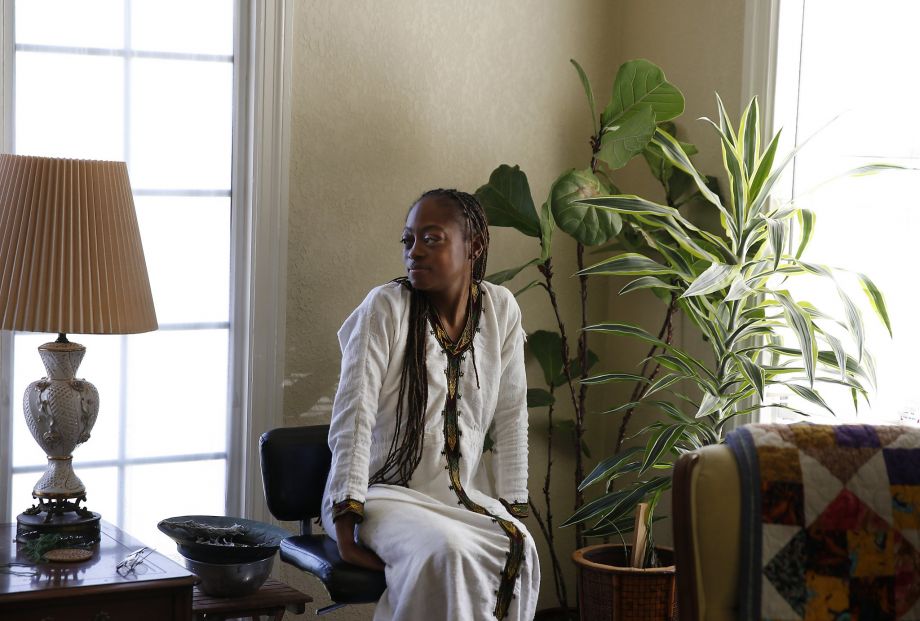
With her landlord threatening to raise the rent by $300 a month, Rochelle Richard is afraid she will have to move out of the small two-bedroom house in East Oakland where she’s lived for three years.

Article source: http://www.sfchronicle.com/bayarea/article/HUD-raises-Section-8-rent-benchmark-in-2-Bay-Area-6835010.php

Posted in SF Bay Area News | Tagged | Leave a comment

Warriors arena battle: Billionaires vs. billionaires

6b295 facebook Warriors arena battle: Billionaires vs. billionaires6b295 twitter Warriors arena battle: Billionaires vs. billionaires6b295 google plus Warriors arena battle: Billionaires vs. billionaires6b295 mail Warriors arena battle: Billionaires vs. billionaires6b295 facebook Warriors arena battle: Billionaires vs. billionairesc91ee twitter Warriors arena battle: Billionaires vs. billionairesc91ee google plus Warriors arena battle: Billionaires vs. billionairesc91ee mail Warriors arena battle: Billionaires vs. billionaires

A proposal to move the Warriors from Oakland to San Francisco’s Mission Bay district has given rise to a NIMBY battle on steroids, a dispute pitting billionaires against billionaires.

The scrum involves world-renowned scientists, a flourishing University of California campus, two of The City’s go-to public relations gunslingers, a nationally known lawyer and, of course, the reigning NBA champions.

Development fights are common in San Francisco — a peninsular city with a long provincial streak, a paucity of undeveloped property and an economy on a tear, fed in part by its $4 billion biotech industry.

“This is sort of a dog-bites-man story in San Francisco,” said P.J. Johnston, a former communications director for then-Mayor Willie Brown who is handling public relations for the Warriors arena project. “The difference is that these are very wealthy dogs.”

Indeed, the tussle has engaged the caliber of titans who wind up with their names on buildings, and who also often run in the same social circles.

Project proponents insist it will bring diversity to a neighborhood dominated by biotech and other life sciences firms clustered around UC San Francisco’s Mission Bay campus.

“I think having the Warriors in Mission Bay is a win-win for UCSF, and the city of San Francisco, and everybody who lives here,” said Marc Benioff, founder and chief executive of Salesforce.com. Late last year he sold the Warriors a 12-acre parcel that neighbors the UCSF Mission Bay campus and a new UCSF children’s hospital that, after a $100-million donation, bears the name Benioff.

Opponents say the development will create traffic chaos and undercut the emergence of UCSF and the district as an international mecca for life science research.

“It’s a terrible idea,” said William Rutter, a pioneer of the biotech industry, founder of Chiron Corp., and longtime UCSF faculty member. He was speaking from his office across a quad from the William J. Rutter Conference Center. “The City itself is a small city, and you have to make choices.”

After purchasing the Warriors five years ago for $450 million, majority owners Joe Lacob and Peter Guber made clear their desire to move the team back to “The City” — as native San Franciscans prefer — where it played in the 1960s as the San Francisco Warriors.

Grass-roots opposition torpedoed an initial bid to build near the Bay Bridge. At Benioff’s suggestion, the franchise next set its sights on two vacant blocks about a mile south that had been intended to serve as headquarters for his cloud-computing company.

The $1-billion, privately financed project would include an arena, two office towers, retail shops and restaurants, public plazas and green space. It would play host to more than 200 events a year — concerts, conventions and conferences in addition to Warriors games.

Organized opposition emerged last spring in the form of the Mission Bay Alliance, led by Rutter and others who were instrumental in developing UCSF Mission Bay.

The alliance is represented by Sam Singer, a San Francisco crisis communications specialist whose clients have included a zoo with a killer tiger and an oil company with an exploding refinery.

He and Johnston have been at it now for more than six months — a battle of sound bites and op-eds and conflicting experts, wrapped in provocative rhetoric about “shadowy” organizations and political intimidation.

There is no bay at Mission Bay. The marshy inlet was filled in long ago — with abandoned Gold Rush-era ships, rubble from earthquakes and fires and anything else that might turn water into developable land.

Before World War II, these developed properties supported San Francisco’s port. When the shipping trade relocated to Oakland, Mission Bay became in large measure a neglected brownfield.

In the late 1980s, cramped at its main campus above Golden Gate Park, UCSF began scouting for an additional site. Eventually, Senior Vice Chancellor Bruce Spaulding settled on 43 acres in Mission Bay.

Well-supported by philanthropists, the satellite campus has grown wildly, with its daily population of faculty, staff and students projected to nearly quadruple in the next 20 years. Outpatient visits are predicted to grow from 70,000 a year to 450,000.

Jeanne Robertson, who led fundraising for UCSF Mission Bay, calls the decision to place the arena in Mission Bay “dopey.”

“Those of us in the Mission Bay Alliance have nothing against the Warriors,” she said in an interview. “We just don’t think they should move there.”

In April, Spaulding told a San Francisco business newspaper that the 12 acres should be “land banked” for future campus expansion.

Johnston seized on the comment as evidence that the Mission Bay Alliance was nothing but a front for a few elites accustomed to getting their way in Mission Bay.

“I think the main objection is that the neighborhood has evolved in a different way than they wish it had,” Warriors President Rick Welts said in an interview. “It has evolved in a way that San Francisco has chosen to go.”

Moreover, the alliance was incorporated in a way that did not require disclosure of its financial backers, prompting Johnston to call it a “shadowy super PAC.”

Spaulding and others said the alliance was organized to protect faculty supporters from any backlash — the UCSF chancellor has endorsed the Warriors project — and insist it has growing grass-roots support. Nonetheless, land-banking no longer seems to be the preferred talking point of the project opponents.

Instead they focus on traffic flows and parking, the prosaic fodder of all development disputes. But they also speak of broader consequences.

“The resulting perfect storm of traffic would make it miserable for both the existing neighborhood and for sports fans — in addition to threatening the entire future of UCSF as the center of a world-class academic/biotech/medical complex,” contended a letter to San Francisco Mayor Ed Lee in late September.

It was signed by 20 UCSF professors and researchers, including Elizabeth Blackburn, a Nobel Prize-winning biochemistry and biophysics professor.

Johnston said it was “patently ridiculous” to suggest that the arena might dampen the biotech boom. He produced a letter of support from 12 Mission Bay life sciences companies.

“I don’t think anybody who lives in that neighborhood feels like there’s a terrifying dearth of biotech activity,” he said.

Singer noted that the letter also was signed by the real estate firm that serves as landlord for many of the biotech signees, implying they were pressured.

“This ‘endorsement’,” he told reporters, “is no different than Joe Lacob’s and Peter Guber’s mothers endorsing the Warriors development.”

The project “ran the table,” as Johnston put it, in the approval process, receiving the unanimous approval of a community commission, The City’s planning commission and its Board of Supervisors.

Not surprisingly, Singer discounts the project’s political success, saying it was clear from the start that The City’s approval process would prove to be a series of “rubber stamps.”

In December, the alliance sued UCSF Chancellor Sam Hawgood, contending he did not have the authority to enter into an agreement with The City and Warriors, surrendering an easement in exchange for traffic plan modifications.

“Sam wanted to reach accommodation for coexistence,” Spaulding said. “Our analysis of everything shows there can’t be coexistence.”

The chancellor, through a spokesperson, declined to be interviewed.

Last month, a more sweeping lawsuit was filed. It contended, in essence, that the review process had been short-circuited in The City’s rush to reclaim the Warriors — in the process imperiling future patients in need of emergency care.

“Some people will die trying to get to the hospital,” the lawsuit said.

It was signed by the alliance’s lead attorney, David Boies, who took on Microsoft, fought for Al Gore in the hanging chad presidential election of 2000, and litigated on behalf of gay marriage.

“Boies,” Johnston said, shaking his head. “Frickin’ David Boies.”

A week later, citing the litigation, the Warriors announced that the projected arena opening would be pushed back a year, to 2019.

The delay probably means three more full seasons for the Warriors in Oakland.

Still, their 40-year run at Oracle Arena can hardly be described as a horror show. For more than 150 consecutive games, dating to 2012, the so-called Dub Nation has filled to capacity the 19,500-seat Oracle — or “Roaracle,” as Oakland Mayor Libby Schaaf likes to call it.

Though the team store now stocks $85 “classic” San Francisco Warriors sweatshirts, Welts maintains that the franchise is not so much abandoning Oakland as giving its fans and team a facility upgrade.

“Our view is we are moving eight miles,” he said, “and we are still the Bay Area’s team.”
For Warriors players who live in the East Bay, the delay means an extra year to figure out whether they will move to San Francisco or endure a commute across the Bay Bridge to practices and games.

“Everybody is kind of curious to see what the future holds,” said Draymond Green, the team’s star forward.

He judiciously expressed confidence in the Warriors leadership’s ability to make a new arena a success, but added that for the players, Oracle has its own magic.

“Everybody loves Oakland,” he said. “We will always embrace Oakland.”

Article source: http://www.sfexaminer.com/warriors-arena-battle-billionaires-vs-billionaires/

Posted in SF Bay Area News | Tagged | Leave a comment

Family of missing Alameda man John Beck believes man in photo is him – KGO

The latest clue in the disappearance of John Beck, who owes millions of dollars to the federal government, has brought friends and family to Lands End in San Francisco.

They believe he was here-because of this picture they found on Instagram.

The photographer was taking a picture of the Golden Gate Bridge and captured a man in his shot. Beck’s daughter believes it is her father. She says she recognizes everything about him-down to his posture.

“The Instagram photo was huge I got chills up and down. I said that’s my dad,” said Laura Beck.

The picture was taken on Tuesday, the day Beck family says he disappeared. It gives them a place to look, so Monday morning, a few friends showed up to help Laura and her husband hand out fliers and ask people if they have seen him.

“It’s been overwhelming the support we have gotten from our friends. They have been amazing,” shared Jonas Madden-Connor, Laura’s husband.

Some may have heard John Beck’s name from the infomercials about his real estate company, a company that turned out to be a get-rich-quick real estate scam.

RELATED: Missing Alameda man owes $113 million in get rich quick scheme

Beck made millions from these properties and has been ordered to pay the U.S. government $113 million dollars.
Beck has appealed the case.

“Yes, it is a factor, an obvious thing in his life, but he had so much more, so many positive things about him and people who love him,” said Laura.

Article source: http://abc7news.com/news/family-believes-missing-alameda-man-was-spotted-in-sf/1201036/

Posted in SF Bay Area News | Tagged | Leave a comment