Marin, East Bay real estate markets see steady improvements

The normalization of the Bay Area market isn’t limited to San Francisco and Silicon Valley. The Marin County and East Bay real estate markets aren’t climbing as fast in price, while sellers face a more lenient buying process, according to Pacific Union’s second quarter report.

“Prices aren’t going down, but there’s a slow down in price growth,” said Selma Hepp, chief economist at Pacific Union. “There’s a huge inventory problem for our region, but I think we’re seeing a healthy plateauing of the market.”

Pacific Union / 10-Year Overview of Q2 Homes Sold

East Bay real estate affordability allows premium pricing

Head toward Oakland and Berkeley, and prices are considerably lower than the median in San Francisco. Given a larger range of affordability, the East Bay real estate market sales in the second quarter are forecasted to become the most active of 2016.

“Easy Bay areas are still doing well,” said Selma Hepp, Chief Economist at Pacific Union. “Generally, the more affordable areas of the market continue to go strong compared to the slowdown in the middle range luxury.”

In the second quarter, the East Bay real estate market favored sellers with 80 percent of sales bringing multiple offers and selling above list price. While affordability is better, buyers are paying 15 percent above asking.

“We still see these premiums in the affordable ranges, and the East Bay is the more affordable part of the region,” said Hepp. “In San Francisco, you’re seeing almost no premiums, but it depends on the price range.”

East Bay buyers prioritized BART accessibility. Homes between $800,000 and $1 million sold best.

Click To Tweet

“The lowest priced segment is still strong, particularly with accessibility to job centers and access to transportation,” she said.

According to the daily updated report for the East Bay, home prices are up 6.6 percent year-over-year. Inventory grew a slight .6 percent, while time on the market reached 46 days. Sellers of East Bay real estate received approximately 117 percent of asking price, on average.

Marin buyers more established and selective

In Marin County, buyers expressed less urgency, which in turn, limited bidding wars. Buyers in Marin County also tended to be more meticulous with their options, the report explained.

Hepp noted that Marin buyers differ from the up-and-coming millennial professional seen further south in the Bay Area market.

“There’s also a higher median price there, and mostly people with family wealth,” said Hepp. “What we’re seeing are people who have established a history in San Francisco with a family life.”

The price category with the highest sales volume was between $1 and $3 million, but inventory continues to hamper affordability, falling 6.4 percent year-over-year, according to the market-at-a-glance.

The updated data shows home prices up 6.6 percent year-over-year. Average time on the market dropped to 70 days from almost 82 days last year.

Email Jennifer Riner

Article source: https://www.inman.com/2016/07/26/marin-east-bay-real-estate-improving/

Posted in SF Bay Area News | Tagged | Leave a comment

Downtown Berkeley most walkable Bay Area neighborhood …

ddbfa 7309192774 5890ca14d9 k 720x478 Downtown Berkeley most walkable Bay Area neighborhood ...

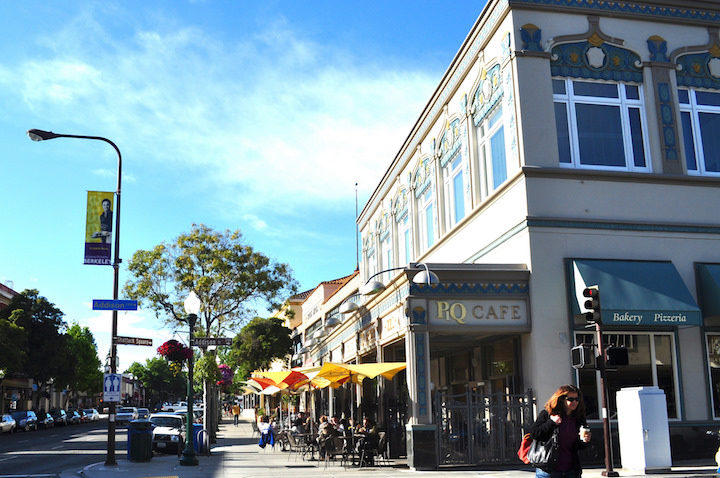
Downtown Berkeley: ranked number one for walkability in Redfin-Walk Score survey. Photo: Sharon Hahn Darlin

Downtown Berkeley is the most walkable neighborhood in the Bay Area, and two other Berkeley areas also make the Top 10, according to a new survey published by real-estate brokerage Redfin and Walk Score, which calculates areas’ walkability.

The report analyzed the most walkable neighborhoods of mid-size cities in the Bay Area. Downtown Berkeley placed highest with a Walk Score of 96 out of a possible 100; Southside Berkeley ranked fourth with a score of 93; and Northside Berkeley came in at number six with a score of 89.

Redfin agent Tom Hendershot puts downtown Berkeley’s winning spot down to the fact that it is a “fully functioning downtown with a large university just one block off the main strip.”

“Having the University of California, Berkeley so close to downtown offers many amenities for people there,” he said in a prepared statement, pointing in particular to “the culture, the access to everything within walking distance, and the combination of housing offered; from student housing through the university, to apartments, to traditional single family homes.”

ddbfa Cheeseboard Photo Ted Friedman Downtown Berkeley most walkable Bay Area neighborhood ...

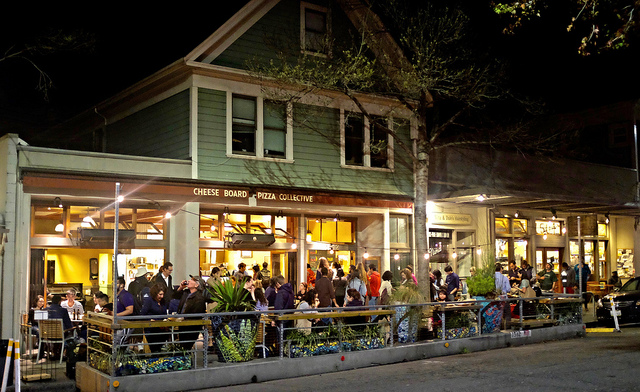
Northside Berkeley, which includes the Gourmet Ghetto and the popular Cheese Board restaurant, ranked sixth for walkability. Photo: Ted Friedman

The median home price in downtown Berkeley is $610,000, according to Redfin. The area is undergoing a construction boom, and is due to see an influx of thousands of new housing units over the next few years. New restaurants and bars, and a soon-to-be revamped BART plaza, will likely make the center of Berkeley even more desirable for those who favor walkability.

The median home price in Southside Berkeley, whose walkability score was enhanced by the area’s easy access to transportation, is $1.02 million. While in Northside, which boasts the Gourmet Ghetto, chock full of sidewalk cafés and popular destinations like the Cheese Board, the median home price is currently $1 million.

Walk Score’s methodology involves analyzing hundreds of walking routes to nearby amenities. Those within a five-minute walk (.25 miles) are given maximum points. Walk Score also measures pedestrian friendliness by analyzing population density and road metrics such as block length and intersection density. For this particular list, Walk Score and Redfin analyzed the most highly ranked neighborhoods in cities in the Bay Area with populations under 300,000.

Recent studies show that walkability is an increasingly important factor for those looking to buy or rent a home, and the preference applies across demographics. According to report from the Regional Plan Association, 56% of millennials and 46% of baby boomers prefer to live in more walkable, mixed-use neighborhoods.

“A lot of my clients want to live in a place where they don’t have to rely on a car,” Redfin agent Hendershot told Berkeleyside. “This means being able to walk to the grocery store or the dry cleaners, but what’s especially important to my buyers is proximity to recreational activities. Berkeley has a lot to offer in that realm, like hiking, biking, sailing, the arts and, of course, great restaurants.” Hendershot added that many people who move to Berkeley are commuting to San Francisco, so being able to walk to public transit is also high on the priority list.

As for whether walkability adds value to a home in terms of its list price, Hendershot said: “Homes with high Walk Scores do seem to fetch a premium, as walkable neighborhoods tend to also be the most desirable neighborhoods. There’s a definite correlation between walkability and price. We also see price-per-square foot increase significantly near public transportation hubs, like within several blocks of BART stations. That said, opting to live in a place with a high Walk Score and access to public transportation also means that you can save money in the long run on gas and car payments.”

Perhaps unsurprisingly, other downtown areas of smaller Bay Area cities fared well too in the survey: San Rafael ranked second with a 93 score; San Mateo came in third with 93; and Burlingame placed fifth with a 90 walkability score.

Want to keep up-to-date on all the food, drink and restaurant news in the East Bay? Subscribe to NOSH Weekly, the free weekly email packed with delicious news. Simply sign up here.

Article source: http://www.berkeleyside.com/2016/07/25/downtown-berkeley-most-walkable-bay-area-neighborhood/

Posted in SF Bay Area News | Tagged | Leave a comment

Nonprofit serving homeless youths finds new home with city-assisted lease

f212e facebook Nonprofit serving homeless youths finds new home with city assisted leasef212e twitter Nonprofit serving homeless youths finds new home with city assisted leasef212e google plus Nonprofit serving homeless youths finds new home with city assisted leasef212e mail Nonprofit serving homeless youths finds new home with city assisted leasef212e facebook Nonprofit serving homeless youths finds new home with city assisted leasef212e twitter Nonprofit serving homeless youths finds new home with city assisted leasef212e google plus Nonprofit serving homeless youths finds new home with city assisted leasef212e mail Nonprofit serving homeless youths finds new home with city assisted lease

Rob Gitin has spent the past 18 years counseling homeless youths in San Francisco through the nonprofit he co-founded.

But when the building where he leased space for the nonprofit on Valencia Street in the Mission District was sold two years ago, that work was put in jeopardy.

Gitin and his nonprofit, At the Crossroads, faced the stark reality that hundreds of nonprofit organizations in San Francisco and the Bay Area have confronted for the past five years — displacement in a hot real estate market.

Gitin’s real estate worries, however, have seemingly come to an end with a rare opportunity to sublease thousands of square feet from The City for $1 a year in rent, an agreement that will go before a Board of Supervisors committee for approval today. The proposed sublease is for five years with a five year option.

The chance arose following an outcry from nonprofit leaders in 2013 that without a helping hand from The City many of San Francisco’s longstanding organizations will move away or simply vanish. A year later, The City created a nonprofit displacement program and put $4.5 million into a fund to assist nonprofits with contract negotiations, relocation fees and real estate searches.

Also part of that effort was a recommendation that The City itself should explore subleasing to nonprofits.

Last year, The City did just that when asking nonprofits to bid on 4,124 square feet on the third and fourth floors of 167 Jessie St., also known as the Jessie Hotel, in the South of Market neighborhood. Gitin was one of 24 other groups to express interest and two to apply. Gitin won.

“[This is] literally the single most important thing to happen to our organization since we got our startup funding,” Gitin said Friday. “I say that because I have no idea what would have happened. We are not an organization that can move to Oakland or move to wherever. We have to be where our clients are. We didn’t know what we were going to do.”

The Board of Supervisors Land Use and Economic Development Committee will vote today to approve the agreement, which was introduced by Mayor Ed Lee and Supervisor Jane Kim, whose district includes SoMa.

The space came about through a series of circumstances dating back to a former redevelopment agency’s 1990s land sale to developer Third and Mission Associates LLC. That company built the Paramount at 680 Mission St., with one condition — that nonprofit space was provided and the adjacent 1912-era Jessie Hotel was preserved.

Some 15,000 square feet went to the California Historical Society, which subsequently reduced its square footage by 10,000 square feet, leading to an agreement with the developer to provide additional space for another nonprofit in the Jessie Hotel.

Admittedly, the space needs a lot of work. To that end, The City says Gitin can apply for a grant of up to $946,000, and the nonprofit is expected to privately raise about $1.5 million.

“At the Crossroads is a vital resource for our homeless community. This new space allows this important organization to continue providing unparalleled services to our youth who are vulnerable and at risk,” said Todd Rufo, director of the Office of Economic and Workforce Development, in an email.

A New York native, Gitin, 42, began working with homeless youths after taking a course at Stanford University related to poverty. He began to intern at a drop-in homeless center in San Jose, where he became most interested in the youths who were kicked out or who had heard about the service but waited years before taking advantage of it.

To address this segment of the homeless, Gitin, then 22, applied for a grant with co-founder Taj Mustapha, who has since moved on from the organization. The two initially began the work out of Gitin’s North Beach apartment and Mustapha’s lower Polk Street home.

“My refrigerator always smelled like peanut butter and jelly sandwiches and we had a ridiculous amount of condoms that we weren’t personally using underneath our beds,” Gitin said.

But in 1998, they moved into a small space in 333 Valencia St. and the nonprofit has since grown to a staff of 14 occupying 2,300 square feet and paying $3,400 a month in rent. The new owner wouldn’t renew their lease, which expired in June, though Gitin said he was able to negotiate a three-month extension.

Four nights a week, the group’s outreach counselors walk the streets and reach out to homeless youths and young adults. Annually, they contact about 1,100, but maintain longer term counseling relationships with some 400.

“A lot of the time it takes years and years of slowly building trust on the streets before kids really start to talk to us, but sometimes kids start talking with us right off the bat,” Gitin said. The youths often come from poverty and have suffered some form of abuse.

Gitin said there has been an increase black homeless youths over the years, which he suspects has to do with The City’s decreasing black population.

“Whereas in the past they might have had a large community that would have created options for them other than the streets, now that community is living in Antioch or they have moved out of [the] state,” he said. “This is our theory. I have no idea if we are right.”

He estimated about 65 percent of their clients are black and 15 percent Latino. “These are the kids who are the next generation of chronically homeless adults,” Gitin said.

At The Crossroads is just one of dozens of nonprofits struggling to stay afloat in the hot real estate market. Some 93 nonprofits have applied to The City’s nonprofit displacement program, which is overseen by Northern California Community Loan Fund.

About $2.1 million in financial assistance grants have since been awarded to 35 nonprofits, including 12 arts nonprofits and 23 social service nonprofits, as of March. Another 50 nonprofits have received some type of technical assistance. Forty nonprofits served obtained leases of three years or more.

Among those assisted was the Roxie Theater. The City provided the Roxie with $50,000 for tenant improvements while also providing assistance to negotiate a three-year lease extension, avoiding the doubling of rent the landlord initially sought.

Tandem, Partners in Early Learning, which promotes early childhood literacy, was forced from its 1,800-square-foot SoMa office space after 10 years due to rent hikes but The City provided $50,000 to help the nonprofit relocate to a 6,000-square-foot site in the Bayview-Hunters Point, under a seven year lease.

The need of nonprofits is expected to continue. A report released in March found 82 percent of nonprofits are “concerned about the negative impact of the real estate market on their long-term financial sustainability” and 68 percent “think they will have to make a decision about moving in the next five years.” The survey was conducted by Harder+Company on behalf of Northern California Grantmakers and the San Francisco Foundation. Nearly 500 Bay Area nonprofits responded.

The same report referred to reports by real estate firm CBRE that found San Francisco office space rents are 122 percent higher than five years ago and that “several years of fast growing, tech-dominated demand overwhelmed supply pipelines and resulted in all Bay Area markets becoming among the tightest in the nation.”

But as nonprofits’ real estate woes continue, so will The City’s assistance. The mayor added $6 million more to the nonprofit assistance program during the next two years as part of his budget, which the board approved last week.

“Nonprofit organizations are the backbone of our city,” the mayor said in a statement earlier this year. “Our residents, particularly our most vulnerable, depend on San Francisco nonprofits for services, compassion and inspiration.”

Click here or scroll down to comment

<!– Place your ad here
Loading… (function(){ var D=new Date(),d=document,b=’body’,ce=’createElement’,ac=’appendChild’,st=’style’,ds=’display’,n=’none’,gi=’getElementById’; var i=d[ce](‘iframe’);i[st][ds]=n;d[gi](“MarketGidScriptRootC52455″)[ac](i);try{var iw=i.contentWindow.document;iw.open();iw.writeln(“”);iw.close();var c=iw[b];} catch(e){var iw=d;var c=d[gi](“MarketGidScriptRootC52455″);}var dv=iw[ce](‘div’);dv.id=”MG_ID”;dv[st][ds]=n;dv.innerHTML=52455;c[ac](dv); var s=iw[ce](‘script’);s.async=’async’;s.defer=’defer’;s.charset=’utf-8′;s.src=”//jsc.mgid.com/s/f/sfexaminer.com.52455.js?t=”+D.getYear()+D.getMonth()+D.getDate()+D.getHours();c[ac](s);})(); –>

Article source: http://www.sfexaminer.com/nonprofit-serving-homeless-youths-finds-new-home-city-assisted-lease/

Posted in SF Bay Area News | Tagged | Leave a comment

Californians struggle for spotlight at Democrats’ big party

50a60 920x1240 Californians struggle for spotlight at Democrats big party

From Gov. Jerry Brown to San Francisco Mayor Ed Lee, California Democrats are headed back to Philadelphia in force — but with the exception of a couple of high-powered members of Congress, chances are you won’t see them on prime-time TV.

Article source: http://www.sfchronicle.com/bayarea/matier-ross/article/Californians-struggle-for-spotlight-at-8404539.php

Posted in SF Bay Area News | Tagged | Leave a comment

Bay Area rents: still rising, but starting to level off

Bay Area apartment rents continued to climb in the second quarter of 2016, but increases are starting to level off and double-digit hikes look like a thing of the past.

Despite that, the region remains confoundingly expensive for renters.

The average apartment rent in the nine county region is now $2,526, according to a new report from Novato-based RealFacts. That’s up 4.3 percent from the year before, a hefty enough boost. But renters, take solace: it’s a far cry from the 7.1 percent year-over-year increase reported in the first quarter and the 10 percent hike posted in the final quarter of 2015.

“Rents have gotten so high that they are slowing in the highest-demand areas,” said Sarah Bridge of RealFacts. “The market is at equilibrium and right now strikes a perfect balance between supply and demand. It’s not runaway rent growth, but it’s stable and appreciating at a respectable pace. And it seems to be meeting the demand of the renters and the investors.”

Across the region, occupancy rates stand at around 95 percent, though “some landlords are taking a little longer to fill apartments,” said Jeffrey M. Mishkin, regional manager at the San Francisco office of Marcus and Millichap, a real estate brokerage firm. “They’re still getting the good rents, but we’ve had this flattening (of increases) for a while now. If this turns out to be a soft landing for the market, that would be marvelous. Hopefully, it gives people a little bit of relief.”

Perhaps.

The average apartment in San Jose now rents for $2,503 — up 4.0 percent from the second quarter of last year, though that’s less than half of the 8.6 percent increase reported in the first quarter.

Among the region’s major cities, Oakland is where landlords pushed rents up the most: by 5.4 percent year over year, according to the report. But again, that was down from the 7.2 percent and 13.7 percent increases, respectively, in the previous two quarters.

An average Oakland apartment now rents for $2,959 — a serious challenge for the typical income earner who easily can spend half of his or her pretax wages on rent.

“There’s a sense of feeling trapped” by the cost of renting here, said Lena Chervin, a freelance environmental consultant who grew up in Berkeley and spent much of the past four years moving from one East Bay sublet to another. She roomed in a house with a revolving cast of troubled tenants and lived in a basement, improvising a kitchen by plugging hot plate, crock pot, mini-fridge, electric kettle and rice cooker into a surge strip.

She now rents a room in Oakland for $750 and called her current situation “a miracle. I can’t really run away from this housing problem — it’s happening in any desirable city. So you might as well come to terms with the hassles that you know.”

 Bay Area rents: still rising, but starting to level off

Looking for something affordable, a significant number of renters are moving east to Contra Costa County, increasing competition and pushing rents up. In Concord, the average apartment rent rose 8.3 percent from the year before to $1,760. But that’s less than half the cost of renting in San Francisco, which remains the region’s most expensive market at $3,595.

Because RealFacts reports on complexes with 50 or more units, smaller and at times more moderately priced complexes, duplexes and houses rented by mom-and-pop landlords are not factored into its data.

By county, according to RealFacts, first-quarter rents were up 2.7 percent year over year in Santa Clara County, where the average apartment rents for $2,654; 4.9 percent in San Mateo County ($2,912), 5.5 percent in Alameda County ($2,321) and 8.2 percent in Contra Costa County ($1,952).

RealFacts found that an average one-bedroom, one-bath apartment rents for $2,672 in Mountain View, $2,663 in Oakland, $2,258 in San Jose and $2,218 in Pleasanton. Stepping up to two bedrooms and two baths is a steep jump. In Mountain View, for example, the average two-bedroom, two-bath is $3,609.

Those kinds of prices are out of the question for Chervin, who has a degree in environmental toxicology from UC Davis and has socked some money away, working as a consultant. She has entered a teaching credential program at California State East Bay and hopes to become a high school science teacher — and perhaps some day rent her own apartment.

For the time being, she has been relegated to the real estate underground, renting rooms from friends, and friends of friends.

“The question I ask myself is, ‘Why?’ ” she said. “Why have I been subjecting myself to this? I feel a lot of resentment that it’s so hard to live in the place where I grew up. It’s weird, because you feel resentment toward the culture of the Bay Area, what it’s becoming. But at the same time — I feel so deeply rooted in this community.

“I’m not planning on moving,” she said. “I’m trying to stay here as long as I can.”

Contact Richard Scheinin at 408-920-5069, read his stories at www.mercurynews.com/richard-scheinin and follow him at Twitter.com/RealEstateRag.

Article source: http://www.mercurynews.com/business/ci_30154810/bay-area-rents-still-rising-but-starting-level

Posted in SF Bay Area News | Tagged | Leave a comment