Startup among latest efforts to help teachers afford Bay Area housing

When Wendy Gudalewicz heard about a new startup aimed at helping homebuyers afford down payments, she called her daughter Jamie right away.

“You need to check this out,” she said.

Jamie Carota, an East Oakland renter who teaches middle school science in Union City, has been searching intensively for a house in San Jose for about half a year. So far, she says, the process has been “defeating.” The 27-year-old has toured over 30 houses in the last eight weeks and scours the real estate website Redfin several times a day. But her husband also works in education, and their salaries put most homes out of range as Bay Area prices continue to rocket to new heights.
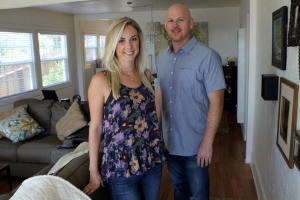
 Startup among latest efforts to help teachers afford Bay Area housing

“Landed” — a year-old startup that connects investors to people who can’t afford houses on their own — could give the Carotas the extra push they need to finally stop renting.

Recent Stanford grads Alex Lofton and Jonathan Asmis founded San Francisco-based Landed to help out all sorts of homebuyers. They currently operate throughout California with hopes to expand, but in the last five months they’ve focused on promoting their company among Bay Area teachers and school districts. With their entrepreneurial approach, Lofton and Asmis hope to combat a growing problem in Silicon Valley as teachers struggle to get by amid runaway rents and tech industry prosperity.

Their solution: Get investors to pay for half of a standard 20 percent down payment in exchange for some of the house’s future appreciation — or depreciation — in value when eventually the house is sold or refinanced. In the case of the Bay Area, investors’ share is 25 percent. For example, investors would collectively get $250,000 if a house that originally cost $1 million doubled in value by the time it changed hands. If homeowners aren’t ready to sell or refinance within seven to 10 years, Landed helps them enter a similar agreement with a new set of investors who can pay back the old ones.

Lofton, a five-year resident of San Francisco, was inspired by his own experience as a young man eyeing the expensive leap from renting to owning a home. If a Stanford business grad was struggling, he wondered, how could someone like a teacher fathom buying his or her first house?

The Bay Area’s median price for single-family homes hit a record $755,000 in June, up 8.2 percent from the same time last year. That number shoots higher outside the more affordable East Bay: San Mateo County’s median was $1.2 million, while Santa Clara County’s reached nearly $1 million in June.

 Startup among latest efforts to help teachers afford Bay Area housing

For Landed’s founders, the Bay Area’s expensive housing dilemma called for a new model to reduce mortgages and debt in which homebuyers don’t have to purchase all alone.

“We like to think of ourselves as an alternative to the bank of mom and dad, because not everybody has a mom and dad who can get them started,” Lofton said.

He himself has no such parental “bank” to draw from, with a public school teacher mother and a social worker father. In fact, Lofton, Asmis and a more recent addition to the cofounding team, Jesse Vaughan, all plan to use Landed themselves in the near future.

The company will fund its first cohort of teachers in the fall. Lofton cannot say yet how many will participate, but he did say that investors have provided millions of dollars in seed money.

Landed’s investor model is just one tactic among many as school districts around the Bay Area work to attract and retain teachers. The Santa Clara Unified School District has for years offered 70 rental units specifically for its teachers, and a San Francisco program loans teachers up to $20,000 for first home purchases.

But not every city has these resources, and some promising affordable housing programs for teachers have faltered or disappeared.

Cupertino Union School District, for example, announced in December that it wanted to turn an out-of-use elementary school site into 200 new housing units for its employees. But Gudalewicz, superintendent in the Cupertino Union School District, said that plan was scrapped after disagreement arose over how the land should be used.

San Jose’s Teacher Homebuyer Program, launched in 1999, used to provide zero-interest loans to help out with down payments. Jennifer Thomas, president of the San Jose Teachers Association, says the generous initiative was popular among her teacher friends, some of whom would have moved away from San Jose without it. But the city discontinued the program around the time of the Great Recession, and Thomas says nothing has replaced it. She thinks Landed is a good start.

“We’ve been asking the innovators and entrepreneurs in Silicon Valley to come up with a solution,” she said.

Asmis have a presentation about Landed at a Santa Clara County Office of Education event earlier this year that showcased a range of potential solutions to the teacher housing issue. Since then, its founders have been talking informally to educators throughout the Bay Area.

Jeff Harding, superintendent of the Mountain View-Los Altos High School District, invited Asmis to speak to his area’s school board in June.

“We’re encouraging our staff to work with Landed if they’re interested in buying a house,” Harding said. “We’re just at the beginning stages. … Informal feedback from our staff has been very positive.”

And Harding’s district isn’t even in greatest need. According to state payroll data, the average teacher salary there was relatively high in 2015 at $113,000, which is $30,000 to $40,000 above the average teacher salaries in Mountain View and Los Altos school districts that serve middle school and elementary students. Still, Harding said, Landed could be particularly helpful for early-career teachers who struggle to save up while also paying high rents.

One first-year teacher in the Mountain View-Los Altos district who wished to remain anonymous said that although she found an apartment in Mountain View after a stressful search, house prices are “definitely a concern in terms of being able to stay here long term.”

Carota, meanwhile, is freshly disappointed after being quickly outbid two weekends ago on a rare San Jose house listed below her top price, around $700,000.

“We don’t have the ability to negotiate up like other people do,” she said, noting that this is despite $80,000 in help from her dad. Carota, who got married last weekend, has signed up for Landed and hopes it can expand her and her husband’s options.

“We make good money,” she said. “But when you look at the rental and housing market, we don’t.”

Contact Hannah Knowles at 408-920-5767. Follow her at Twitter.com/KnowlesHannah.

Article source: http://www.mercurynews.com/bay-area-news/ci_30188336/startup-among-latest-efforts-help-teachers-afford-bay

Posted in SF Bay Area News | Tagged | Leave a comment

Feds Crack Down On Bay Area Luxury Home Buyers Using Shell Companies

SAN FRANCISCO (CBS SF) — Amid increasing concerns that shell companies are hiding stolen or ill-gotten funds in the United States’ luxury residential real estate market, the federal government is cracking down by requiring the buyer’s identity be revealed in all-cash luxury residential property sales, including those in the San Francisco Bay Area.

The new, albeit it temporary, regulations will descend on five California counties in August, marking the second phase of a program launched by the U.S. Department of the Treasury’s Financial Crimes Enforcement Network (FinCEN).

FinCEN, starting in March, has required U.S. title insurers to reveal the identities of individuals behind legal entities that complete all-cash real estate purchases in both the Borough of Manhattan in New York City and in Miami-Dade County, Florida.

“We are seeking to understand the risk that corrupt foreign officials, or transnational criminals, may be using premium U.S. real estate to secretly invest millions in dirty money,” FinCEN director Jennifer Shasky Calvery said when rolling out the program in Manhattan and Miami in January.

The landmark program marks the first time the federal government has required the identities of those behind all-cash real estate purchases be disclosed.

On Wednesday, FinCEN announced that their program had been so advantageous to their investigations that they are expanding it to cover six major metropolitan areas.

For six months, beginning August 28, 2016, the regulations will expand to cover any all-cash sale of $2 million or more in San Francisco, San Mateo, and Santa Clara counties, as well as Los Angeles County and San Diego County.

The program will also expand to cover all boroughs of New York City, Miami-Dade County as well as two counties immediately north, and Texas’ Bexar County, which includes San Antonio.

The expanded regulations come on the heels of a high-profile money laundering case, in which the FBI is seeking to seize over $1 billion in assets purchased with money allegedly stolen from 1Malaysia Development Berhad (1MDB), a fund owned by the Malaysian government and intended to benefit the people of Malaysia.

The FBI announced last week that, “much of the money was diverted by high-ranking fund officials and their associates to purchase yachts, hotels, a $35 million jet, artwork by Vincent Van Gogh and Claude Monet, and to bankroll the popular 2013 film The Wolf of Wall Street.” The fund officials also purchased high-end real estate in New York, Los Angeles and Beverly Hills, according to the FBI.

fee8f wolfofwallstreet01 Feds Crack Down On Bay Area Luxury Home Buyers Using Shell Companies

Leonardo DiCaprio in “The Wolf of Wall Street” (credit: Paramount Pictures)

FBI officials said in the case of 1MDB, the diversion of billions of dollars from the fund was made possible though the use of shell companies that concealed the origin and ownership of the funds.

A statement released this week by FinCEN explains that the program was created and expanded in order to identify anonymous individuals “attempting to hide their assets and identity by purchasing residential properties through limited liability companies or other opaque structures.”

FinCEN acting director Jamal El-Hindi said the temporary program not only provides the government with a better understanding of money laundering risks in the real estate market, but will also help inform future, permanent regulations.

By Hannah Albarazi – Follow her on Twitter: @hannahalbarazi.

Article source: http://sanfrancisco.cbslocal.com/2016/07/29/feds-crack-down-on-bay-area-luxury-home-buyers-using-shell-companies/

Posted in SF Bay Area News | Tagged | Leave a comment

Will Seattle really become the next San Francisco? | The Seattle Times

Talk to just about anyone about local real-estate prices and there’s a good chance you’ll hear this: Seattle is becoming the next San Francisco.

Sure, housing prices and rents are skyrocketing here, but are we really doomed to a fate where million-dollar homes and $5,000-a-month rents will soon be the norm?

Don’t count on it. Seattle is nowhere near catching up to San Francisco’s brutal housing market, the data and interviews with experts show. And Seattle is unlikely to get there anytime soon — if that’s any consolation.

Seattle is roughly half as expensive as San Francisco to rent or own a home, a fact that has stayed constant through housing booms and busts of the last two decades. Almost like clockwork, every time home prices have grown a dollar in Seattle, they’ve risen two dollars in San Francisco.

Seattle’s home prices are where San Francisco was 15 years ago. And based on historical cost increases, at this rate it will take nearly 20 years to reach San Francisco’s current average price of nearly $1.2 million per home.

Another stark data point: Just 10 percent of families in the San Francisco metro area can afford to buy the median home, compared with 50 percent in the Greater Seattle area, according to the National Association of Home Builders and Wells Fargo. And the typical San Franciscan now spends about 60 percent of his or her income on housing, compared with about 35 percent in Seattle, Zillow says.

Essentially, San Francisco has become almost exclusively for the rich, while Seattle is a place where it’s difficult but still possible for the middle class to thrive. That helps explain the fear over becoming “the next San Francisco” — if such a transformation were to take place, it would dwarf anything the city has ever seen.

f3007 WEB sf seattle homeprices 780x520 Will Seattle really become the next San Francisco? | The Seattle Times
 Will Seattle really become the next San Francisco? | The Seattle Times

Different, at least for now

The good news is Seattle has been adding homes twice as fast as construction-averse San Francisco for the last decade, which could help stave off the extreme housing shortages that have driven up costs in California.

And there are still many affordable options in the suburbs for people priced out of the city here, unlike the greater San Francisco Bay Area, where several outlying counties are already among the priciest in the nation.

“Seattle is dealing with a lot of the same themes that San Francisco is dealing with, but we’re not as extreme,” said Svenja Gudell, chief economist for Zillow. “I don’t think we will rise to the level of San Francisco anytime soon.”

Nonetheless, some developers and others are predicting a “San Francisization” of Seattle happening much sooner: If local prices don’t fall back to Earth but instead continue their current unprecedented growth for another half-decade — a phenomenon that no city has ever experienced — then we’ll be at San Francisco price levels in the early part of next decade.

And there are signs that the housing-construction boom in Seattle hasn’t helped much yet. For the first time, the city has recently seen prices rise faster than San Francisco.

“I look at San Francisco as really an image of Seattle’s future because it has the same land restraints, it has the same driving economy that is hiring six-figure millennials,” said Peter Orser, director of the University of Washington’s Runstad Center for Real Estate Studies. “They’re blood brothers; they’re twins.”

No crystal ball

The comparisons between the two West Coast cities are certainly easy to make, But the long-running idea that San Francisco is a crystal ball that predicts where Seattle’s housing prices are going in the next few years hasn’t been true historically, and that isn’t likely to change now.

Consider the last housing boom, in the middle of last decade, when home prices in both Seattle and San Francisco broke records and there were heightened fears from residents of both cities of being priced out — just like today.

The cost of the typical San Francisco home grew rapidly, from about $560,000 in 2002 to $830,000 in 2007, according to Zillow data. Yet Seattle never came close to matching that, peaking at $420,000 before the recession hit — less than what San Francisco cost at the start of its boom.

Then, during the recession, median home prices in San Francisco dropped to around $700,000. Yet fast-forward to today, and Seattle is still well below that, even during the current record boom.

In both cases, San Francisco at its cheapest was still much more expensive than Seattle at its priciest.

Now, San Francisco’s median price for all home types ($1.17 million) is double that of Seattle’s ($560,000), just as it has been for the last 20 years, through booms and busts.

There’s been a similar pattern for rents. The average rental in San Francisco is about twice as expensive as one in Seattle, a fact that hasn’t changed during the recent surge. Apartmentlist.com’s latest data, for instance, show it’ll run you $4,650 to rent a 2-bedroom in San Francisco, or $2,250 in Seattle.

e1205 sf seattle rentprices c 1024 780x698 Will Seattle really become the next San Francisco? | The Seattle Times
 Will Seattle really become the next San Francisco? | The Seattle Times

March to $1 million

So where are we headed? No one knows, of course, but Zillow crunched the numbers using Seattle’s historical housing-price growth rate for a rough idea of future home values.

It found Seattle isn’t on pace to hit the million-dollar median-home number until 2031 and won’t reach current San Francisco home values until 2034 or 2035. By then, based on past average wage growth, the typical King County household would make about $130,000 a year, up from $73,000 now.

The difference, of course, would be if Seattle’s recent torrid pace of housing-cost growth of about 10 percent a year somehow continues unabated. There’s no precedent in any city for such eye-popping increases to continue indefinitely. But if they do, Seattle would hit the million-dollar-home mark in about six years.

Glenn Kelman doesn’t think it’ll come to that. The CEO of Redfin has lived in both cities and seen each region’s housing crisis firsthand.

Decades ago, his mom bought a home in Bellevue armed with a modest income for a job she got with an associate degree.

“We could never afford our home now,” Kelman said.

After moving to San Francisco, he saw the city “put its head in the sand” and fail to address the crisis.

“I think Seattle will be different,” Kelman said. “It won’t be as severe as San Francisco because we’re doing something about it right now.”

e1205 sf seattle newsales c 1024 780x793 Will Seattle really become the next San Francisco? | The Seattle Times
 Will Seattle really become the next San Francisco? | The Seattle Times

Avoiding a housing shortage

Since 2005, San Francisco has added just 24,000 housing units, compared with about 50,000 in Seattle, which benefits from having a larger land mass and fewer residents. And forecasts for each city indicate the trend continuing.

Why does that matter? In San Francisco, one of the biggest culprits of skyrocketing costs has been the lack of construction — the region is famously nervous, even more so than Seattle, about changing the character of neighborhoods by building new homes or knocking down old buildings. The political process is so heated in the City by the Bay that many projects there take years and require several alterations to even be considered, and some even require voter approval.

“We like the city government, candidly, a lot more in Seattle than in San Francisco,” said Paul Menzies, CEO of Bay Area-based Laconia Development, which has done projects in both cities. “It doesn’t mean you get everything you want, but people are more reasonable.”

With the supply of new homes remaining stagnant in San Francisco, what’s left is extreme competition for the few available homes, driving up prices.

A similar situation has begun to play out in Seattle now. But all those extra homes, from new apartment towers to stacks of town homes popping up in place of torn-down single-family houses, could ultimately help Seattle stave off the severe supply-and-demand imbalance that has long plagued San Francisco.

“That’s what’s going to keep housing relatively affordable,” Gudell said. “Seattle is just on the cusp where now is the time to talk about some of these things.”

Seattle is hoping the added housing will help over the long-term, but the benefits clearly haven’t shown up yet. It now has some of the nation’s fastest-rising rents and home prices, while in San Francisco costs have finally begun to show signs of plateauing.

“Both Seattle and San Francisco are creating jobs at a rate faster than we can supply housing,” Orser said.

e1205 sf seattle chart c 1024 780x1006 Will Seattle really become the next San Francisco? | The Seattle Times
 Will Seattle really become the next San Francisco? | The Seattle Times

Could this boom be different?

There are plenty of developers banking on Seattle turning into Silicon Valley North, and Orser, for one, thinks it’s ultimately inevitable — the question is how long it might take.

“I call it the San Francisization of Seattle,” Orser said. “It’s real.”

He’s certainly not the only one who thinks that way. In recent months, The Wall Street Journal has declared Seattle not the next San Francisco but “the new San Francisco.” The Stranger proclaimed the transformation as “pretty much game over.” National outlets such as The New York Times, TechCrunch and Fox Business have run stories on the topic.

Menzies said “it’ll take awhile” for Seattle to catch up to San Francisco prices, but he believes the overall trend points in that direction.

“Whether San Francisco is a bellwether for Seattle, I think to some extent it probably is,” Menzies said.

Many blame the well-publicized migration path from Silicon Valley to Seattle, as more tech companies set up shop here, for luring Californians tantalized by our lower housing costs. The actual number of people making that move increases the local population only by a fraction of 1 percent, but their outsized influence in bidding up home prices has fed worries that the Bay Area is spreading its housing-crisis contagion north.

But Seattle has one more ace up its sleeve that San Francisco doesn’t: affordable options outside the city.

Seattle is actually cheaper than nearly all the outlying suburbs across the San Francisco Peninsula and Silicon Valley, and is now even cheaper than Oakland, long an affordable refuge in the Bay Area. The median-home cost across the hourlong drive between San Francisco and San Jose has topped $1 million, about two to three times as much as most towns within an hour’s drive of Seattle.

Maybe one last advantage Seattle has: It can learn from all the mistakes made in San Francisco, before it’s too late.

“I do think,” Kelman said, “we need to be worried about affordability as the city’s No.?1 issue.”

Article source: http://www.seattletimes.com/business/will-seattle-really-become-the-next-san-francisco/

Posted in SF Bay Area News | Tagged | Leave a comment

Will Seattle really become the next San Francisco?

Talk to just about anyone about local real-estate prices and there’s a good chance you’ll hear this: Seattle is becoming the next San Francisco.

Sure, housing prices and rents are skyrocketing here, but are we really doomed to a fate where million-dollar homes and $5,000-a-month rents will soon be the norm?

Don’t count on it. Seattle is nowhere near catching up to San Francisco’s brutal housing market, the data and interviews with experts show. And Seattle is unlikely to get there anytime soon — if that’s any consolation.

Seattle is roughly half as expensive as San Francisco to rent or own a home, a fact that has stayed constant through housing booms and busts of the last two decades. Almost like clockwork, every time home prices have grown a dollar in Seattle, they’ve risen two dollars in San Francisco.

Seattle’s home prices are where San Francisco was 15 years ago. And based on historical cost increases, at this rate it will take nearly 20 years to reach San Francisco’s current average price of nearly $1.2 million per home.

Another stark data point: Just 10 percent of families in the San Francisco metro area can afford to buy the median home, compared with 50 percent in the Greater Seattle area, according to the National Association of Home Builders and Wells Fargo. And the typical San Franciscan now spends about 60 percent of his or her income on housing, compared with about 35 percent in Seattle, Zillow says.

Essentially, San Francisco has become almost exclusively for the rich, while Seattle is a place where it’s difficult but still possible for the middle class to thrive. That helps explain the fear over becoming “the next San Francisco” — if such a transformation were to take place, it would dwarf anything the city has ever seen.

Different, at least for now

The good news is Seattle has been adding homes twice as fast as construction-averse San Francisco for the last decade, which could help stave off the extreme housing shortages that have driven up costs in California.

And there are still many affordable options in the suburbs for people priced out of the city here, unlike the greater San Francisco Bay Area, where several outlying counties are already among the priciest in the nation.

“Seattle is dealing with a lot of the same themes that San Francisco is dealing with, but we’re not as extreme,” said Svenja Gudell, chief economist for Zillow. “I don’t think we will rise to the level of San Francisco anytime soon.”

Nonetheless, some developers and others are predicting a “San Francisization” of Seattle happening much sooner: If local prices don’t fall back to Earth but instead continue their current unprecedented growth for another half-decade — a phenomenon that no city has ever experienced — then we’ll be at San Francisco price levels in the early part of next decade.

And there are signs that the housing-construction boom in Seattle hasn’t helped much yet. For the first time, the city has recently seen prices rise faster than San Francisco.

“I look at San Francisco as really an image of Seattle’s future because it has the same land restraints, it has the same driving economy that is hiring six-figure millennials,” said Peter Orser, director of the University of Washington’s Runstad Center for Real Estate Studies. “They’re blood brothers; they’re twins.”

No crystal ball

The comparisons between the two West Coast cities are certainly easy to make, But the long-running idea that San Francisco is a crystal ball that predicts where Seattle’s housing prices are going in the next few years hasn’t been true historically, and that isn’t likely to change now.

Consider the last housing boom, in the middle of last decade, when home prices in both Seattle and San Francisco broke records and there were heightened fears from residents of both cities of being priced out — just like today.

The cost of the typical San Francisco home grew rapidly, from about $560,000 in 2002 to $830,000 in 2007, according to Zillow data. Yet Seattle never came close to matching that, peaking at $420,000 before the recession hit — less than what San Francisco cost at the start of its boom.

Then, during the recession, median home prices in San Francisco dropped to around $700,000. Yet fast-forward to today, and Seattle is still well below that, even during the current record boom.

In both cases, San Francisco at its cheapest was still much more expensive than Seattle at its priciest.

Now, San Francisco’s median price for all home types ($1.17 million) is double that of Seattle’s ($560,000), just as it has been for the last 20 years, through booms and busts.

There’s been a similar pattern for rents. The average rental in San Francisco is about twice as expensive as one in Seattle, a fact that hasn’t changed during the recent surge. Apartmentlist.com’s latest data, for instance, show it’ll run you $4,650 to rent a 2-bedroom in San Francisco, or $2,250 in Seattle.

March to $1 million

So where are we headed? No one knows, of course, but Zillow crunched the numbers using Seattle’s historical housing-price growth rate for a rough idea of future home values.

It found Seattle isn’t on pace to hit the million-dollar median-home number until 2031 and won’t reach current San Francisco home values until 2034 or 2035. By then, based on past average wage growth, the typical King County household would make about $130,000 a year, up from $73,000 now.

The difference, of course, would be if Seattle’s recent torrid pace of housing-cost growth of about 10 percent a year somehow continues unabated. There’s no precedent in any city for such eye-popping increases to continue indefinitely. But if they do, Seattle would hit the million-dollar-home mark in about six years.

Glenn Kelman doesn’t think it’ll come to that. The CEO of Redfin has lived in both cities and seen each region’s housing crisis firsthand.

Decades ago, his mom bought a home in Bellevue armed with a modest income for a job she got with an associate degree.

“We could never afford our home now,” Kelman said.

After moving to San Francisco, he saw the city “put its head in the sand” and fail to address the crisis.

“I think Seattle will be different,” Kelman said. “It won’t be as severe as San Francisco because we’re doing something about it right now.”

Avoiding a housing shortage

Since 2005, San Francisco has added just 24,000 housing units, compared with about 50,000 in Seattle, which benefits from having a larger land mass and fewer residents. And forecasts for each city indicate the trend continuing.

Why does that matter? In San Francisco, one of the biggest culprits of skyrocketing costs has been the lack of construction — the region is famously nervous, even more so than Seattle, about changing the character of neighborhoods by building new homes or knocking down old buildings. The political process is so heated in the City by the Bay that many projects there take years and require several alterations to even be considered, and some even require voter approval.

“We like the city government, candidly, a lot more in Seattle than in San Francisco,” said Paul Menzies, CEO of Bay Area-based Laconia Development, which has done projects in both cities. “It doesn’t mean you get everything you want, but people are more reasonable.”

With the supply of new homes remaining stagnant in San Francisco, what’s left is extreme competition for the few available homes, driving up prices.

A similar situation has begun to play out in Seattle now. But all those extra homes, from new apartment towers to stacks of town homes popping up in place of torn-down single-family houses, could ultimately help Seattle stave off the severe supply-and-demand imbalance that has long plagued San Francisco.

“That’s what’s going to keep housing relatively affordable,” Gudell said. “Seattle is just on the cusp where now is the time to talk about some of these things.”

Seattle is hoping the added housing will help over the long-term, but the benefits clearly haven’t shown up yet. It now has some of the nation’s fastest-rising rents and home prices, while in San Francisco costs have finally begun to show signs of plateauing.

“Both Seattle and San Francisco are creating jobs at a rate faster than we can supply housing,” Orser said.

Could this boom be different?

There are plenty of developers banking on Seattle turning into Silicon Valley North, and Orser, for one, thinks it’s ultimately inevitable — the question is how long it might take.

“I call it the San Francisization of Seattle,” Orser said. “It’s real.”

He’s certainly not the only one who thinks that way. In recent months, The Wall Street Journal has declared Seattle not the next San Francisco but “the new San Francisco.” The Stranger proclaimed the transformation as “pretty much game over.” National outlets such as The New York Times, TechCrunch and Fox Business have run stories on the topic.

Menzies said “it’ll take awhile” for Seattle to catch up to San Francisco prices, but he believes the overall trend points in that direction.

“Whether San Francisco is a bellwether for Seattle, I think to some extent it probably is,” Menzies said.

Many blame the well-publicized migration path from Silicon Valley to Seattle, as more tech companies set up shop here, for luring Californians tantalized by our lower housing costs. The actual number of people making that move increases the local population only by a fraction of 1 percent, but their outsized influence in bidding up home prices has fed worries that the Bay Area is spreading its housing-crisis contagion north.

But Seattle has one more ace up its sleeve that San Francisco doesn’t: affordable options outside the city.

Seattle is actually cheaper than nearly all the outlying suburbs across the San Francisco Peninsula and Silicon Valley, and is now even cheaper than Oakland, long an affordable refuge in the Bay Area. The median-home cost across the hourlong drive between San Francisco and San Jose has topped $1 million, about two to three times as much as most towns within an hour’s drive of Seattle.

Maybe one last advantage Seattle has: It can learn from all the mistakes made in San Francisco, before it’s too late.

“I do think,” Kelman said, “we need to be worried about affordability as the city’s No.?1 issue.”

Article source: http://www.seattletimes.com/business/will-seattle-really-become-the-next-san-francisco/

Posted in SF Bay Area News | Tagged | Leave a comment

Marin, East Bay Real Estate Markets See Steady Improvements

The normalization of the Bay Area market isn’t limited to San Francisco and Silicon Valley. The Marin County and East Bay real estate markets aren’t climbing as fast in price, while sellers face a more lenient buying process, according to Pacific Union’s second quarter report.

“Prices aren’t going down, but there’s a slow down in price growth,” said Selma Hepp, chief economist at Pacific Union. “There’s a huge inventory problem for our region, but I think we’re seeing a healthy plateauing of the market.”

Pacific Union / 10-Year Overview of Q2 Homes Sold

East Bay real estate affordability allows premium pricing

Head toward Oakland and Berkeley, and prices are considerably lower than the median in San Francisco. Given a larger range of affordability, the East Bay real estate market sales in the second quarter are forecasted to become the most active of 2016.

“Easy Bay areas are still doing well,” said Selma Hepp, Chief Economist at Pacific Union. “Generally, the more affordable areas of the market continue to go strong compared to the slowdown in the middle range luxury.”

In the second quarter, the East Bay real estate market favored sellers with 80 percent of sales bringing multiple offers and selling above list price. While affordability is better, buyers are paying 15 percent above asking.

“We still see these premiums in the affordable ranges, and the East Bay is the more affordable part of the region,” said Hepp. “In San Francisco, you’re seeing almost no premiums, but it depends on the price range.”

East Bay buyers prioritized BART accessibility. Homes between $800,000 and $1 million sold best.

Click To Tweet

“The lowest priced segment is still strong, particularly with accessibility to job centers and access to transportation,” she said.

According to the daily updated report for the East Bay, home prices are up 6.6 percent year-over-year. Inventory grew a slight .6 percent, while time on the market reached 46 days. Sellers of East Bay real estate received approximately 117 percent of asking price, on average.

Marin buyers more established and selective

In Marin County, buyers expressed less urgency, which in turn, limited bidding wars. Buyers in Marin County also tended to be more meticulous with their options, the report explained.

Hepp noted that Marin buyers differ from the up-and-coming millennial professional seen further south in the Bay Area market.

“There’s also a higher median price there, and mostly people with family wealth,” said Hepp. “What we’re seeing are people who have established a history in San Francisco with a family life.”

The price category with the highest sales volume was between $1 and $3 million, but inventory continues to hamper affordability, falling 6.4 percent year-over-year, according to the market-at-a-glance.

The updated data shows home prices up 6.6 percent year-over-year. Average time on the market dropped to 70 days from almost 82 days last year.

Email Jennifer Riner

Article source: https://www.inman.com/2016/07/26/marin-east-bay-real-estate-improving/

Posted in SF Bay Area News | Tagged | Leave a comment