Yimby Nation: The Rise of America’s Pro-Housing Political Coalition

(Brent Gaisford, director of Abundant Housing LA, moderates a panel at the group’s December meeting / Scott Beyer)

Los Angeles, CA—America’s burgeoning pro-housing movement has many layers, and I recently witnessed one of them firsthand on a rare rainy night in Los Angeles. The activist group Abundant Housing LA was hosting its monthly meeting in a south-side Latino food mart, serving what seems to be the mandatory SoCal culinary combo for social settings, tacos and beer. The event featured a 4-person panel of local land-use experts, and another 50 attendees, who were united around a common cause: loosening land-use regulations to build more housing. Thus the meeting was, without even using the word, part of a growing “Yimby” movement that is spreading through the message boards and political ranks of urban America.

I first covered this movement for Forbes in June, after attending the first-ever YIMBY conference in Boulder, CO. I defined the movement then as a counter-punch to an urban American housing policy status quo that has become unsustainable. This status quo features the severe mismatch between population growth and housing supply in the nation’s most desirable cities, which has led to shortages, price inflation, overcrowding and displacement. The status quo is upheld by political barriers that make the solution (obvious as it may be) feel unreachable. That is, a tight regulatory framework—from zoning laws to urban growth boundaries to slow approval processes—has metastasized over a century to discourage construction. A “Nimby”–or “not in my back yard”–mentality among existing residents has only strengthened this regulatory state. All the while, major metros like New York, San Francisco and Los Angeles increase their populations by six figures annually, exacerbating the housing shortage.

The Yimby movement—or “yes in my backyard”—is the first coalition, outside of established business interests like the Chamber of Commerce or the National Association of Realtors, to challenge this anti-housing climate. In my half-year of westward U.S. travel since the conference, I’ve witnessed some of its ground-level workings.

Although fragmented, the movement’s growth seems to have risen from two polarities. The intellectual half is largely along the East Coast: in 2011, Fordham University graduate Nikolai Fedak founded what is believed to be the first Yimby website, New York YIMBY. The pro-growth real estate blog makes the moral and economic case for more housing, accompanying like-minded blogs such as Market Urbanism and Greater Greater Washington.

The grassroots activist side sits more on the West Coast, germinating among a colorful hodgepodge of non-profits, informal civic groups, beer hall meetups, blogging and social media platforms, and firebrand individuals, from beachtown gadflies to downtown flâneurs. The most formal body so far would be the SF YIMBY Party, which is an organized coalition of Bay Area groups with names like GrowSF and Palo Alto Forward. San Francisco’s Yimby figurehead is Sonja Trauss, a self-described anarchist who runs the San Francisco Bay Area Renters Federation (SFBarf). Trauss has been covered by numerous national media outlets, and spends her days distributing literature, speaking at public hearings, and pulling hard-nosed political stunts, like trying to stack the anti-growth local Sierra Club chapter with her allies.

Yimbyism is less developed in other major cities, but there is a similar ecosystem nonetheless in San Diego, Los Angeles, Boston, Minneapolis, Denver, Austin and elsewhere. The concept has blown up on Twitter in particular: there are handles for a “Tech Yimby”, a “Garden State Yimby”, a “London Yimby”, a “Bilbao Yimby”, and on and on, with one Yimby handle even surfacing, unbeknownst to me, in my tiny hometown of Charlottesville, VA.

Abundant Housing LA, where I visited in December, might symbolize the upward potential of the Yimby movement, which leans young and progressive anyway. The group was opened up to grassroots membership just five months ago by several entrepreneurs in their 20s and 30s. Nonetheless, says director and local housing developer Brent Gaisford, “we’ve grown to more than 400 members who actively support affordable and market rate housing developments, as well as advocate for upzoning.” The group hopes to soon form a think tank that publishes policy papers targeting particularly odious Los Angeles regulations, such as the city’s insistence on maintaining vast swaths of industrial zoning despite its largely post-industrial economy.

Article source: http://www.forbes.com/sites/scottbeyer/2016/12/25/yimby-nation-the-rise-of-americas-pro-housing-political-coalition/


Posted in SF Bay Area News | Tagged | Leave a comment

Intero Real Estate Services Opens First San Francisco Office

CUPERTINO, Calif.–(BUSINESS WIRE)–Intero Real Estate Services, Inc., a Berkshire Hathaway affiliate and
wholly owned subsidiary of HomeServices of America, Inc., is proud to
announce the opening of the company’s first San Francisco office. A
trusted name in Bay Area real estate, Intero is expanding its company
footprint for the first time since Berkshire Hathaway subsidiary,
HomeServices of America. Inc., acquired Intero in 2014.

Situated between the Nob Hill and Pacific Heights neighborhoods at 1902
Van Ness Avenue, the office is located in the one of the most desirable
locations in all of San Francisco. Taking the reins of the San Francisco
location is Tim Murray, a seasoned real estate veteran who has been in
and around the San Francisco real estate market since 1978.

“We are so excited to finally be part of the vibe of San Francisco,”
said Tom Tognoli, Intero President Chief Executive Officer. “The
office is absolutely stunning and it’s great to see it full of
enthusiastic agents ready to make Intero a brand to be reckoned with.”

About the Intero® Brand:

Intero Real Estate Services, Inc., a Berkshire Hathaway affiliate and
wholly owned subsidiary of HomeServices of America Inc., serves Northern
California with 16 offices throughout the greater Silicon Valley. The
Intero Franchise network is comprised of nearly 50 affiliates located in
Alabama, Arizona, California, Nevada, Tennessee and Texas. The company
is headquartered in California’s Silicon Valley.

Find more information about Intero at www.interorealestate.com.
Find more information about HomeServices at www.homeservices.com.

Article source: http://www.businesswire.com/news/home/20161129005051/en/Intero-Real-Estate-Services-Opens-San-Francisco

Posted in SF Bay Area News | Tagged | Leave a comment

San Francisco Ranked No. 1 Most Hungover City in Nation

San Francisco, this probably isn’t a ranking to be proud of.

The city apparently is the most hungover city in the country, according to a recent ranking by Trulia.

The Trulia ranking took into account the cities’ number of bars, the number of young people and amount of party suppliers. It also surveyed how many of a city’s residents reported having at least one binge drinking incident in the past month.

“The city with the most party suppliers, young people and binge drinkers scored higher as a place to party,” a Trulia news release said.

Behind San Francisco came San Diego at No. 2 and Austin at No. 3. Bellingham, Wash., was ranked No. 4 and Charleston, S.C., came in at No. 5.

Even with the holiday festivities, police and sheriff’s deputies want to remind you to stay safe and not drink and drive. And if you party, please take an Uber, Lyft or cab.

Get the latest from NBC Bay Area anywhere, anytime

  • bf7c0 bay area icon San Francisco Ranked No. 1 Most Hungover City in Nation

    Download the App

    Available for IOS and Android

Posted in SF Bay Area News | Tagged | Leave a comment

Pacific Union International Real Estate to Mark a Quarter of a Century of Bay Area Philanthropy

SAN FRANCISCO, Dec. 23, 2016 /PRNewswire/ – As the Bay Area prepares to celebrate the launch of 2017, the coming year will have deeper significance for the leading luxury real estate brokerage.  On January 1, Pacific Union International, Inc. marks twenty-five years of continuous support for the vibrant organizations that tackle Northern California’s most pressing social challenges.  Delivering both volunteers and resources to Bay Area community nonprofits, Pacific Union’s support ranges from significant donations to UCSF Benioff Children’s Hospital Oakland and the Leukemia Lymphoma Society’s Leukemia Cup Regatta, to San Francisco shelters for homeless families.

Pacific Union’s legacy of giving dramatically expanded under the brokerage’s leadership of CEO Mark A. McLaughlin.  Since 2009, Pacific Union has funded more than 145 Bay Area nonprofits with donations topping $1 million.

ab531 2016PacificUnionLeukemiaCupRegatta Pacific Union International Real Estate to Mark a Quarter of a Century of Bay Area Philanthropy

The 2016 Bay Area Pacific Union Leukemia Cup Regatta supporting the Leukemia and Lymphoma Society was a highlight of Pacific Union’s dynamic community fund outreach in 2016.


“We believe it is an undeniable duty for us to sustain and improve the neighborhoods in which we raise our families and make our living,” says McLaughlin. “We are committed to not only supporting them as a business but using our voices and actions to positively affect our communities and improve the lives of the people who live in them.”

Long before corporate social responsibility became a buzzword in the U.S., Pacific Union quietly established a strong commitment to the community by building a philanthropic partnership between its real estate professionals and the brokerage.  Founded in 1993 in San Francisco, Pacific Union’s Community Fund was established to deliver a powerful statement through funding and volunteerism in support of shelters and related services for many at-risk populations including families, abused women and children, and youth.

Pacific Union real estate professional, Susan D. Peterson, is one of the founding members of the Community Fund, and has served as chair since 2002.  “We recognized very early that supporting shelter in San Francisco would be crucial to health of our city,” says Peterson.  ”As we make our living selling and finding homes for our clients, we fittingly donate a portion of our fees to life-changing organizations such as Raphael House for homeless families, women’s shelters and child abuse prevention programs. These organizations and others have come to count on our annual giving, and their survival depends on programs like ours.”

As Pacific Union has grown to more than 25 offices and nearly 700 real estate professionals throughout nine Bay Area regions, its Community Fund also has expanded.  Now established in every region, real estate professionals continue to meet and choose the recipient nonprofits for funding in their neighborhoods. 

For more information about the Community Fund and the top 25 Bay Area charities supported by Pacific Union, please go to Community Fund .

About Pacific Union

Founded in 1975, Pacific Union is the San Francisco Bay Area’s premier luxury real estate brand operating in nine regions. With more than 25 offices and nearly 700 of the region’s top-performing real estate professionals, Pacific Union is the ninth largest residential real estate brokerage in the U.S. based on 2015 sales volume of $8.22 billion and merged with Los Angeles-based brokerage John Aaroe Group in December 2016. This strategic business collaboration links two of the strongest residential real estate firms on the West Coast, supporting combined 2015 production of $10.5 billion by 1,100 real estate professionals in 38 offices throughout California. The company offers a full range of personal and commercial real estate services, including buying, selling, and relocation, and it founded a unique concierge program for Chinese homebuyers. In addition, the company operates joint-venture businesses that provide rental and commercial property management, urban residential marketing and sales, and insurance services. Locally owned, Pacific Union operates with an entrepreneurial mindset and unwavering commitment to deliver exceptional service and expertise. For more information, please visit us at www.pacificunion.com.


To view the original version on PR Newswire, visit:http://www.prnewswire.com/news-releases/pacific-union-international-real-estate-to-mark-a-quarter-of-a-century-of-bay-area-philanthropy-300383297.html

SOURCE Pacific Union

Related Links

http://www.pacunion.com

Article source: http://www.prnewswire.com/news-releases/pacific-union-international-real-estate-to-mark-a-quarter-of-a-century-of-bay-area-philanthropy-300383297.html

Posted in SF Bay Area News | Tagged | Leave a comment

Here’s how San Francisco became so segregated

  • 271d8 920x920 Heres how San Francisco became so segregated

Caption

Close

Maps and reports drawn up by the Home Owners’ Loan Corporation (HOLC) include blatant redlining revealing certain areas of the city where residents were refused loans or given them with caution based on the

… more

Photo: Mapping Inequality: Redlining In New Deal America

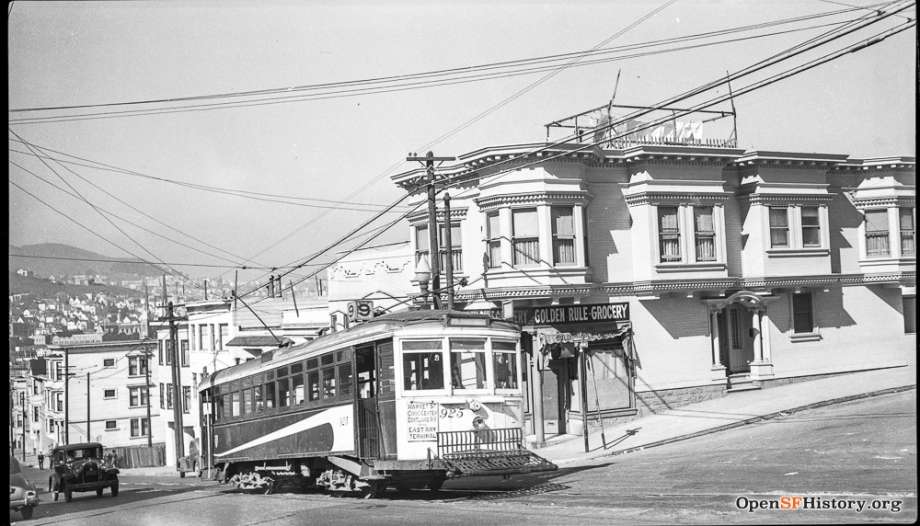
Bernal Heights—D13“It is inhabited largely by factory workers, and laborers with incomes ranging from $800 to $2,400. Many nationalities are represented but there is no inharmonious racial concentration.”

(Historic photo: Looking west on Cortland a 9-Line #925 streetcar shown. Courtesy of OpenSFHistory.org.)

less


Photo: Courtesy Of OpenSFHistory.org

Fillmore District/Western Addition—D3This large area of 125 blocks or more slopes gradually from the northwest to southeast. It is what might be termed the ‘melting pot of the West’ and is the nearest approach to a slum district in San Francisco. It has a highly congested population consisting of Japanese, Russians, Mexicans, Negroes, etc., having a very low income level. In the norther-central part of the area is the largest concentration of Japanese in the city, and Negroes predominate in its northwest section.”

“Only one mortgage institution was found who would even consider residential loans in this neighborhood, and they will only consider applications on the basis of land value.”

(Photo: San Francisco’s Fillmore District, Sept. 29, 1966.)

less


Photo: Robert H. Houston/AP


San Francisco likes to think of itself as a beautiful melting pot of people from different cultures, races and financial standings living harmoniously integrated within its 49 square miles.

In many ways this notion is true, and compared to other cities across the nation, San Francisco is less segregated with far fewer areas of concentrated poverty, affluence and race than metro areas such as Detroit, Boston, Philadelphia, Chicago and St. Louis, according to research from the University of Minnesota.


But any San Franciscan knows that segregation still exists and certain neighborhoods don’t reflect the city’s overall diversity and have high concentrations of people from certain races and financial status.

To understand the existence of this segregation and the history, it’s interesting to look at the redlining maps from the New Deal-era, when President Franklin D. Roosevelt introduced new economy recovery programs in response to the Great Depression.

The Northern California city joined the rest of the country in encouraging bankers to extend loans to the middle- and upper-class living in high-class areas and warned them against loaning money to home buyers in poor, non-white neighborhoods.

Maps and reports drawn up by the Home Owners’ Loan Corporation (HOLC) include blatant redlining revealing certain areas of the city where residents were refused loans or given them with caution based on the racial or ethnic composition of  their neighborhood.  

RELATED VIDEO: The most and least diverse cities in the United States

You can get a glimpse of this practice on the Mapping Inequality: Redlining in New Deal America site where four universities collected redlining maps for dozens of America’s largest cities including San Francisco.

“Collectively the maps are a remarkable window into racist redlining practices in mid-century America,” said Robert Nelson, director of the digital scholarship lab at the University of Richmond, one of the universities contributing to the project. “The private real estate industry practiced redlining. What the HOLC maps did was endorse those practices and through the federal government’s regulatory capacity systematically make them best practices in the era.”

Nelson added, “The effects were devastating. While obviously it’s not the only cause, by disadvantaging people of color in access to mortgage and other real estate financing, redlining helped to cause the great disparities of familial wealth between white families and families of color.”


The language in the reports is remarkable in that the racism isn’t implicit or hidden.

While you won’t find any racial slurs, HOLC’s agents outrightly stated that neighborhoods were deemed unacceptable risks because of the presence of people of color, of immigrants, and of Jews—in some cases just a handful.

“For example, the San Francisco area descriptions refer to ‘undesirable racial elements,’” Nelson explained. “D1, for instance, explains that ‘More than half the Negro population of San Francisco are located here, and it is considered a highly hazardous area.’ That explanation is pretty typical. That language could be found in the area descriptions of any other city, as is the language about the ‘threat’ of ‘infiltration’ by people of color.”

Article source: http://www.sfgate.com/bayarea/article/San-Francisco-segregated-neighborhoods-redlining-10806723.php

Posted in SF Bay Area News | Tagged | Leave a comment