Open thread: Does the Bay Area want Amazon’s new HQ?

Amazon CEO Jeff Bezos is now Prince Charming to tech-savvy cities who are all eager to prove that they’re the perfect fit for his glass slipper.

Early Thursday morning, Amazon announced plans to build a new large-scale headquarters somewhere in North America.

Via press release, the online shopping juggernaut promised “Amazon expects to invest over $5 billion in construction and grow this second headquarters to include as many as 50,000 high-paying jobs.”

Detroit, Chicago, and New York City are all strong contenders. But what about San Francisco?

In its request for proposals from cities, the company laid out a few basic parameters for its ideal suitor that might suit us locally:

- Metropolitan areas with more than one million people.

- Urban or suburban locations with the potential to attract and retain strong technical talent. [...]

- Existing buildings of at least 500,000+ sq. ft., meeting the core requirements described above and that are expandable or have additional options for development nearby.

- [...Or] other infill, existing buildings, including opportunities for renovation/redevelopment and greenfield sites, meeting the proximity and logistics requirements of the project.

Within six hours, the Washington Post identified 39 potential candidates, including San Francisco, San Jose, and Oakland.

Amazon already has offices in San Francisco, of course—in fact, the company leased 180,000 square feet at 525 Market just over a month ago.


787b2 Steve Jurveston Open thread: Does the Bay Area want Amazons new HQ?

A man who knows what he wants…whatever it is.

Steve Jurveston

But that’s not the same as a high-profile new centerpiece headquarters. Amazon is a bit of an outlier among tech giants in that its thumbprint in the Bay Area remains somewhat slender. Building nearby would to a degree feel like coming home for the world’s most successful Internet commerce site.

San Jose already announced it’s putting in a bid, and San Francisco and Oakland mayors Ed Lee and Libby Schaff say they may both throw their hats into the ring as well.

The question is, do locals want Bay Area cities to court Amazon? As a former Amazon executive warned the San Francisco Chronicle, “Every city [...] should be careful what they ask for. If Amazon shows up with that many people, what is that going to do to the cost of real estate?”

Does San Francisco want yet another huge jobs project in the city? Do we need it? Should we demand housing concessions with it? Should we back another Bay Area city’s bid, or try to discourage it for fear that Amazon employees might come shopping for San Francisco homes in an already crowded market?

The company’s deadline for city applications is October 18. Tell us in the comments what, if anything, Bay Area cities should be doing as that date looms?

Article source: https://sf.curbed.com/2017/9/8/16276280/amazon-headquarters-san-francisco-sf

Posted in SF Bay Area News | Tagged | Leave a comment

SF Bay Area Highways Are State’s Worst for Animal Collisions

You don’t have permission to access “http://www.usnews.com/news/best-states/california/articles/2017-09-08/sf-bay-area-highways-are-states-worst-for-animal-collisions” on this server.

Reference #18.6e1fcdad.1504888451.a7a8c2

Article source: https://www.usnews.com/news/best-states/california/articles/2017-09-08/sf-bay-area-highways-are-states-worst-for-animal-collisions

Posted in SF Bay Area News | Tagged | Leave a comment

Experts: Rising seas demand a unified Bay Area defense

SAN FRANCISCO — As Hurricane Irma bears down on Florida, local experts are warning that the the Bay Area is also at risk of inundation from fierce rainstorms, extreme high tides and steadily rising sea levels caused by climate change.

Noting that the 400-mile-long San Francisco Bay coastline is lined with crowded roads and a fragile infrastructure, a Wednesday panel sponsored by the prestigious National Academy of Sciences urged that Bay Area cities pull together to protect the region from future flooding.

The goal of the workshop was to seek engineering, environmental and social solutions to the urban challenges posed by a changing climate, even as the Trump White House denies that the problem is real.

“We have to make a circle with everybody inside of it — and work it out,” said Gary Griggs, a professor of Earth and planetary sciences at UC Santa Cruz. “All ice melts at 32 degrees. It doesn’t matter if you’re a Republican or a Democrat.”

The Bay Area’s economic health relies on a vast network of roads, power, wastewater treatment facilities and railroads — and the region’s cities’ disparate approaches could wreak regional havoc, Griggs and other experts agreed.

For example, if Berkeley does not build protective structures on its shoreline — but adjacent communities do — there could be major disruption of traffic all along the I-80 corridor, said Mark Stacey, professor of environmental engineering in UC Berkeley’s Department of Civil and Environmental Engineering.

“There is a regional cascade effect — triggering problems inland for people who might not care what Berkeley does with its water,” he said.

Counites should be aware of the vulnerabilities in other parts of the Bay Area, because it affects their traffic, said Stacey, who is conducting an analysis of widespread traffic and railroad disruptions triggered by localized flooding from San Francisco Bay.

“Santa Clara county traffic would be severely impacted if access to the Dumbarton or San Mateo Bridges was reduced or cutoff,”  he said.

There are many other examples.

Livermore residents could be startled to discover that it’s harder to flush a toilet if a wastewater treatment plant — miles away, in Hayward — is suddenly flooded, said Larry Goldzband of the Bay Conservation Development Commission.

Businesses all over the Bay Area could suffer if the Port of Oakland is inundated, said former San Francisco supervisor Susan Leal of Urban Water Works, a consulting company which works with utilities to protect water reliability.  Twice last year, shipping was interrupted at the port because of flooding, she said.

Flooded runways at airports would also hurt the region’s broader economy, she said.

Only an extra foot of flooding could submerge roads in Marin County. Big tech companies like Google and Oracle are perched on the edge of the rising bay. Thousands of homes and businesses are built over ancestral creeks and bay fill, Leal said.

Some parts of the Bay Area are already incorporating climate information into their planning. For instance, San Francisco’s “Great Highway” is being re-routed because of erosion. Voters in the  nine counties surrounding the bay recently passed a $12 annual tax on every parcel of real estate, with the money going towards climate adaptations.

Climate science has repeatedly shown that global warming is increasing the odds of extreme precipitation and storm surge flooding, says Noah Diffenbaugh, professor of earth system science at Stanford University.

While hurricanes like Harvey and Irma are complex events — and can’t be directly linked to climate change — it is well established that global warming is already influencing many kinds of weather extremes, according to Diffenbaugh’s research.

In the Bay Area, we’ve already gotten brief glimpses into the future, when the alignment of the gravitational pull between the sun and moon create extra-high King Tides — and walkers along San Francisco’s Embarcadero find themselves up to their ankles in brackish water from the bay.

The Bay Area, like the rest of the world, has flourished during a time of relative stable sea level rise, Griggs said, noting that for about 8,000 years, seas have risen at a rate of less than 1 millimeter a year.

Eight of the Earth’s “megacities,” home to more than 10 million people each, are located along a coast, he said. About 3 billion people worldwide live in a coastal area.

But sea level is now expected to rise significantly over the next century because of the changing
global climate.  The average global rate of sea-level rise is 3.4 millimeters a year — or 1.3 inches a decade. That’s more than twice the average rate over the 20th century and greater than any time over the past thousand years.

“Human civilization has never had to deal with significant sea level rise,” Griggs said. “That will be the biggest challenge that civilization has ever had to face, given the number of people who live along the coast.”

Part of the Bay Area’s flood risk is caused by slow and long-term rising seas, linked to melting ice in places like Greenland, Griggs said. But he said there also are shorter-term and more immediate risks, caused by high tides, storm surge and wave damage.

So far, the Bay Area has been spared the type of catastrophic flooding that routinely befalls cities like Houston, New Orleans and Miami, the experts said Wednesday.

Last January, the Bay Area was only 36 hours away from a potentially disastrous one-two punch: massive winter rains coupled with King Tides, Goldzband said.

When that happens, “that is when the world turns upside down,” he said. “We haven’t had that experience yet.”


Article source: http://www.mercurynews.com/2017/09/07/experts-rising-seas-demand-a-unified-bay-area-defense/

Posted in SF Bay Area News | Tagged | Leave a comment

Rent here, buy there: The first house these Bay Area residents …

http://www.sfgate.com/realestate/article/Rent-here-buy-there-11956922.php


Updated 10:26 am, Wednesday, September 6, 2017

  • f506d 920x920 Rent here, buy there: The first house these Bay Area residents ...

Caption

Close

Some people are renting homes in the Bay Area, but buying property elsewhere, like Bay Area native Ben Hunter. Pictured above: Hunter’s investment property on the Atlantic City waterfront.

Some people are renting homes in the Bay Area, but buying property elsewhere, like Bay Area native Ben Hunter. Pictured above: Hunter’s investment property on the Atlantic City waterfront.


Photo: Courtesy: Ben Hunter

20. San Antonio, Texas

Average home price: $210,000


3-year price growth forecast: 17%

20. San Antonio, Texas

Average home price: $210,000


3-year price growth forecast: 17%


Photo: Don Klumpp/Getty Images

19. Phoenix

Average home price: $243,000

3-year price growth forecast: 18%

19. Phoenix

Average home price: $243,000

3-year price growth forecast: 18%


Photo: Joseph Plotz/Getty Images

18. Atlanta

Average home price: $213,000

3-year price growth forecast: 19%

18. Atlanta

Average home price: $213,000

3-year price growth forecast: 19%


Photo: Joe Daniel Price/Getty Images

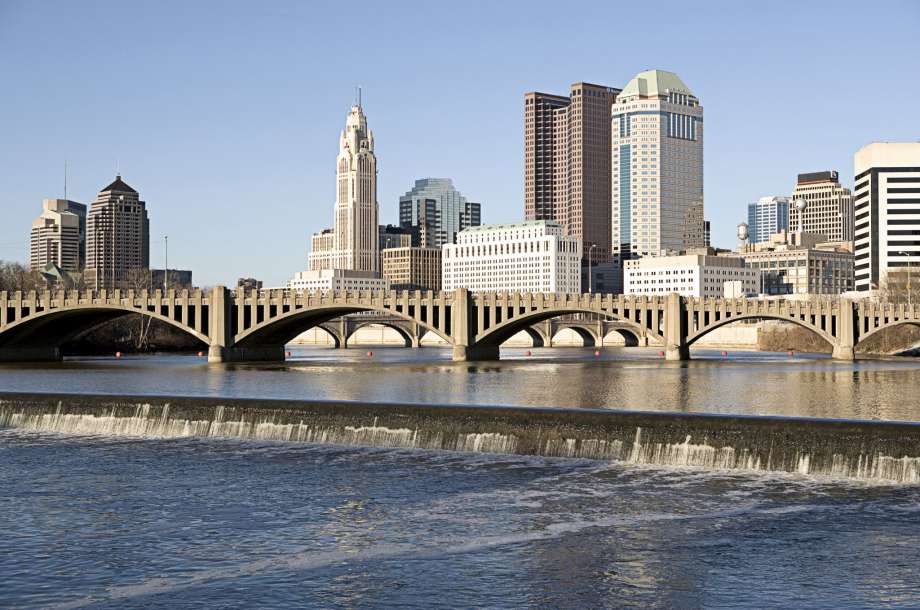
17. Columbus, Ohio

Average home price: $207,000

3-year price growth forecast: 19%

17. Columbus, Ohio

Average home price: $207,000

3-year price growth forecast: 19%


Photo: Ian Spanier/Getty Images/Image Source

16. Boston, Mass.

Average home price: $371,000

3-year price growth forecast: 20%

16. Boston, Mass.

Average home price: $371,000

3-year price growth forecast: 20%


Photo: Tomasz Szulczewski/Getty Images

15. Las Vegas

Average home price: $200,000

3-year price growth forecast: 20%

15. Las Vegas

Average home price: $200,000

3-year price growth forecast: 20%


Photo: RebeccaAng/Getty Images/RooM RF

14. San Diego, Calif.

Average home price: $436,000

3-year price growth forecast: 21%

14. San Diego, Calif.

Average home price: $436,000

3-year price growth forecast: 21%


Photo: Christopher A. Jones/Getty Images

13. Raleigh, N.C.

Average home price: $254,000

3-year price growth forecast: 21%

13. Raleigh, N.C.

Average home price: $254,000

3-year price growth forecast: 21%


Photo: Rick Nelson / EyeEm/Getty Images/EyeEm

12. Charlotte, N.C.

Average home price: $235,000

3-year price growth forecast: 21%

12. Charlotte, N.C.

Average home price: $235,000

3-year price growth forecast: 21%


Photo: Robert Loe/Getty Images

11. Sacramento, Calif.

Average home price: $291,000

3-year price growth forecast: 22%

11. Sacramento, Calif.

Average home price: $291,000

3-year price growth forecast: 22%


Photo: Richard Cummins/Getty Images/Lonely Planet Images

10. Grand Rapids, Mich. 

Average home price: $166,000

3-year price growth forecast: 23%

10. Grand Rapids, Mich. 

Average home price: $166,000

3-year price growth forecast: 23%


Photo: Danita Delimont/Getty Images/Gallo Images

9. Fort Worth, Texas

Average home price: $206,000

3-year price growth forecast: 24%

9. Fort Worth, Texas

Average home price: $206,000

3-year price growth forecast: 24%


Photo: Inge Johnsson/Getty Images/age Fotostock RM

8. Nashville 

Average home price: $249,000

3-year price growth forecast: 24%

8. Nashville 

Average home price: $249,000

3-year price growth forecast: 24%


Photo: Malcolm MacGregor/Getty Images

7. Tampa-St. Petersburg, Fla. 

Average home price: $213,000

3-year price growth forecast: 25%

7. Tampa-St. Petersburg, Fla. 

Average home price: $213,000

3-year price growth forecast: 25%


Photo: Busà Photography/Getty Images

6. Salt Lake City, Utah

Average home price: $277,000

3-year price growth forecast: 25%

6. Salt Lake City, Utah

Average home price: $277,000

3-year price growth forecast: 25%


Photo: Joel Addams/Getty Images/Aurora Creative

5. West Palm Beach, Fla.

Average home price: $313,000

3-year price growth forecast: 26%

5. West Palm Beach, Fla.

Average home price: $313,000

3-year price growth forecast: 26%


Photo: Richard Cummins/Getty Images

4. Seattle

Average home price: $416,000

3-year price growth forecast: 26%

4. Seattle

Average home price: $416,000

3-year price growth forecast: 26%


Photo: Zuraimi/Getty Images/RooM RF

3. Orlando

Average home price: $219,000

3-year price growth forecast: 28%

3. Orlando

Average home price: $219,000

3-year price growth forecast: 28%


Photo: Sky Noir Photography By Bill Dickinson/Getty Images

2. Jacksonville, Fla.

Average home price: $225,000

3-year price growth forecast: 30%

2. Jacksonville, Fla.

Average home price: $225,000

3-year price growth forecast: 30%


Photo: Henryk Sadura/Getty Images/Tetra Images RF

1. Dallas

Average home price: $233,000

3-year price growth forecast: 31%

1. Dallas

Average home price: $233,000

3-year price growth forecast: 31%


Photo: Michael Fitzgerald Fine Art Photography Of Texas/Getty Images


At 24 years old, Ben Hunter is a homeowner, but a sizable portion of his paycheck goes to rent for a room in an 11-person house in San Francisco. That’s because the home he owns is located about 3,000 miles east, in Atlantic City, N.J. 

“Growing up, my favorite places were the Santa Cruz Boardwalk, downtown Reno and the county fair. Atlantic City seamlessly combines all three in a setting where Pauly D. is still the resident DJ,” Hunter said, referencing the character from decade-old reality show “Jersey Shore.”

Hunter never imagined he’d be a property owner in his early 20s, especially with the median home value in San Francisco hovering in the seven digits. But chance intervened, as it often does in Atlantic City.

“Some friends and I went down just for one night, to watch the Warriors NBA game at a sports book,” said Hunter, who lived in New York City at the time. “We soon realized sports gambling was illegal (in New Jersey) so we explored the city instead. We fell in love.” 

Hunter left with the deed to a single-family home on the water. It cost about the equivalent of seven months rent for his room in San Francisco. 

About 35 percent of homes in the county of San Francisco are occupied by their owners, according to census data, compared to 54 percent nationally. If you’ve ever perused Bay Area housing prices, you can probably guess a major contributing factor to the disparity.

“It’s very difficult to get on the property ownership bandwagon here, unless you’ve got a lot of equity built up,” says Gary Beasley, CEO of real estate investment site Roofstock, which specializes in rental properties. Anecdotally, he said he’s “shocked” to see how many people rent in the Bay Area and buy elsewhere. 

Brooke Hernandez, a Realtor in Lake Tahoe and former president of the South Tahoe Association of Realtors, says about 75 percent of her clientele lives in the Bay Area. She says she’s recently worked with 10 buyers with permanent residences in the Bay Area who can’t afford to purchase homes there.

“It makes sense to me,” she said. “There’s value in investing in real estate, even when you can’t afford what’s in your neighborhood.”

SEE ALSO: Things you’ll miss if you leave the Bay Area

You may be thinking of leaving the Bay Area in search of a more affordable to live… but think of all the things you’ll miss!


Media: SFGATE


That’s the case for San Jose renter Marta Valli. With daughters still in high school and a job in San Jose, Valli says she has no plans to leave the Bay Area. But when her son moved to San Diego for college, she purchased a condo for him to live in, and as a long-term investment.

“I don’t have enough savings to buy a house I would want to live in here in San Jose,” she said. “But I did have enough to buy a smaller place in San Diego.”

Hernandez advises caution, however, as some banks refuse to issue loans to those buying property hundreds of miles away from their permanent residences. If you do secure a loan, you’ll likely end up paying higher interest rates and a heftier down payment.

“Actually, it’s such a pain in the ass,” said Eric Parsonnet of his condo in Springboat Steams, Colo.

“We’re definitely losing money on it, but I guess it’s an investment,” he said.  “I mean there’s no way I could find a house with that low of a mortgage in the Bay.”

It took Chris Patton 10 years to see the fruits of his real estate investment. He bought a three-bedroom home in Atlanta after graduating from Georgia Tech, but moved to San Francisco shortly after.

Around that time, the real estate market in Georgia collapsed. For his first six years of homeownership, Patton says rental payments didn’t cover his mortgage. 

“I had to pay the difference out-of-pocket,” he said.

A decade later, Patton says he’s finally breaking even each month, but largely because his house value appreciated by $100,000. 

Owning a home far from one’s permanent residence requires more than juggling finances. Homes require upkeep, and distance can make that challenging — and expensive. 

Michelle A., who preferred to use her last initial for privacy reasons, purchased a home in Ohio 12 years ago. When she returned to the Bay Area in 2015, she says she was shocked by the cost of homeownership from afar, and uncomfortable with the series of third-party transactions required to fix anything. 

“The upkeep of the house was costing more than I was making back in rent,” she said. She’s in the process of selling the house. 

For Hunter in Atlantic City, it’s not about the money so much as owning a stake in a city and neighborhood whose future he “hopes to invest in.” He’s biding his time until he makes the move to his adopted city.  

“I live in San Francisco because that’s where the jobs are,” he said. “If I had the money, I still don’t think I’d buy here. Why would I pay to live here when I could hang out in Atlantic City for a 10th of the cost?”

Read Michelle Robertson’s latest stories and send her news tips at mrobertson@sfchronicle.com

Article source: http://www.sfgate.com/realestate/article/Rent-here-buy-there-11956922.php

Posted in SF Bay Area News | Tagged | Leave a comment

Affordable housing crisis: Can Sacramento get it under control?

SACRAMENTO — As home prices and rents soar to unthinkable levels, California lawmakers are working furiously to drum up the votes for a package of bills they hope will help contain the spiraling affordable housing crisis.

With less than two weeks left in the legislative session — as lawmakers scramble to pass hundreds of bills dealing with everything from prescription drug prices to immigration enforcement — a vote on the housing package is coming down to the wire. But as of Tuesday afternoon, the only bill that would create a permanent funding source for affordable housing, Senate Bill 2, was still short of the votes it needs to pass.

“Every member of the Legislature knows that we’re in the midst of the most intense housing crisis that California has experienced in our state’s history and that we have to act,” Assemblyman David Chiu, D-San Francisco, said Tuesday. “Hopefully in the coming days we’ll be able to take these up for a vote, but these things often take a bit longer than we expect.”

While the package of housing bills being negotiated with the governor’s office has yet to be announced, Gov. Jerry Brown has signed off on two bills that could raise billions of dollars for affordable housing: Senate Bill 2, carried by Sen. Toni Atkins, D-San Diego, which would set new fees on certain real-estate transactions, and Senate Bill 3, a $4 billion bond measure by Sen. Jim Beall, D-Campbell. Brown has also agreed to sign at least one proposal that lawmakers say would address the state’s housing shortage by making the construction of new homes faster and cheaper — and harder for growth-averse cities to block.

In the nine-county Bay Area, homes are in such short supply that the median price for a single-family home has topped $800,000. And nearly one-third of renters statewide — 1.5 million households — spend more than half their income on rent, according to state estimates. The alarming trend has caused evictions and homeless encampments to proliferate in cities like Oakland. And runaway housing costs have put unprecedented pressure on middle-income residents as well. One-third of Bay Area residents surveyed last year by the Bay Area Council, a business group, said they wanted to leave the high-cost region. And year after year, businesses surveyed by the Silicon Valley Leadership Group cite housing as their top challenge.

“If we don’t get started in a serious way,” Atkins said, “we will have more than a crisis on our hands. We will have a humanitarian crisis of proportions you have never seen.”

Lawmakers such as Atkins and Chiu have been trying for years to address the crisis from Sacramento. Each year, as the problem deepened, Chiu said, “I’m told, `Next year we’re going to do housing.’”

Negotiations have been under way for more than a month between legislative leaders and the governor, who in the past have clashed over the issue. Brown has pushed lawmakers to cut red tape to make construction cheaper, while Chiu and others have said that the state must invest in building subsidized, as well as market-rate, housing.

The powerful California organization that represents construction unions, the State Building Trades Council, is backing the package of bills, arguing that it will create jobs as well as places for families to live. Late last month, roughly 100 representatives of local unions around the state converged in Sacramento for “lobby day” as the bills’ authors finalized the bills. The group held a joint news conference with key lawmakers, urging the bills’ passage.

Affordable-housing advocates had been pushing for a larger bond than is included in Beall’s SB 3, lobbying for a total of $6-$9 billion. The amount — originally $3 billion — was negotiated with Brown, who has longstanding concerns about the state’s long-term debt.

But Linda Mandolini, president of Hayward-based Eden Housing, said that the legislation is a sorely needed beginning. She and other affordable-housing officials and advocates say the money raised in the package would start to fill the gaping funding hole left by the elimination of the state’s Redevelopment Agency. The agency — cut more than five years ago to help pay for schools and other programs — had been a major source of funding for affordable housing.

“The problem is so big that if we don’t start somewhere we’ll never get anything done,” Mandolini said. “We’re the biggest state in the country, and we don’t invest in housing. That’s crazy.”

The housing push is being made at the tail end of the legislative session, almost five months after the Legislature passed a gas tax and weeks after it voted to extend the landmark climate program known as cap and trade. Both were tough, two-thirds votes, which could make it difficult to get Atkins’ SB 2 — which passed the Senate earlier this year — through the Assembly. It sets fees of up to $225 on certain real-estate transactions, not including home sales, and is the only permanent source of affordable-housing funding proposed in the package.

Previous iterations of SB 2 over the years have failed to gain traction, but housing advocates hope this latest attempt, which has the endorsement of the California Association of Realtors, will be a different story. Still, even moderate GOP lawmakers may be reluctant to join forces with Democrats in support of a new fee after a backlash over the July bipartisan cap-and-trade deal from party activists. Because of his cooperation, Assembly Republican Leader Chad Mayes, who propelled the legislation to victory, was forced to step down this month.

Without GOP backing, the bill would need the support of all 54 Democrats in the Assembly.

Senate Bill 3 also needs a two-thirds vote in the Assembly. It would place a $4 billion affordable housing bond on a future ballot, including $1 billion to extend the CalVet Home Loan Program, which is set to expire in 2018. Previously, the bill included a $3 billion bond measure.

Sen. Scott Wiener, D-San Francisco, said the housing crisis is not just a Bay Area problem and that he is worried it will only get worse if the state doesn’t act.

“This is a contagion that is moving around the state — that’s spreading like wildfire,” he said.


KEY HOUSING BILLS UNDER CONSIDERATION

Senate Bill 2, by Sen. Toni Atkins, D-San Diego, would create a permanent source of funding for affordable housing, imposing fees of up to $225 on certain real-estate transactions, such as mortgage refinancing. (Home and commercial real estate purchases would not be subject to the fee.) It would collect $1.2 billion over the next five years — and would raise a total of $5.8 billion during that time, including federal, local and private matching funds, according to committee estimates. Requires a two-thirds vote.

Senate Bill 3, by Sen. Jim Beall, D-Campbell, would place a $4 billion statewide housing bond on a future ballot. Like SB 2, it would pay for existing affordable-housing programs in California that used to be supported by funds from the state’s Redevelopment Agency, a giant source of money that was slashed during the Great Recession and never replaced. If the bond measure passes and is approved by voters, $1 billion of the total would go to extend the CalVet Home Loan Program, which is scheduled to expire in 2018. Requires a two-thirds vote.

Senate Bill 35, by Sen. Scott Wiener, D-San Francisco, would try to tackle the state’s housing-supply shortage. Currently, cities are told every eight years how many units they need to build to meet their share of regional demand — but they are not required to build them. This bill would make it harder to ignore those goals. It targets cities that fall short, requiring them to approve more housing developments that fit the bill’s criteria until they are back on track.

Senate Bill 167, by Sen. Nancy Skinner, D-Oakland, would strengthen the state’s 35-year-old Housing Accountability Act, known colloquially as the “anti-NIMBY (Not In My Backyard) Act.” Cities that don’t comply with a court order to allow development would be hit with automatic fines of $10,000 per housing unit.

Senate Bill 540, by Sen. Richard Roth, D-Riverside, allows cities to determine where housing needs to be built and to create a specific plan for development in that zone, including public hearings and environmental reviews. This is intended to speed up the approval and construction process.

Assembly Bill 73, by Assemblyman David Chiu, D-San Francisco, would give local governments cash incentives to create high-density “Housing Sustainability Districts” near transit with some affordable housing.

Assembly Bill 1505, by Assemblyman Richard Bloom, D-Santa Monica, restores the ability of local governments to require developers to include affordable rental units. A 2009 appellate court decision cut off that tool, which cities and counties had used for decades. Legislative leaders have been in talks with the governor’s office on this bill. The governor vetoed similar legislation by Atkins in 2013, arguing that it could make it harder for a city to attract development.

Article source: http://www.mercurynews.com/2017/09/05/affordable-housing-crisis-can-sacramento-get-it-under-control/

Posted in SF Bay Area News | Tagged | Leave a comment