San Francisco’s housing market is so out of control, a home has sold for nearly $1 million over asking


3645f 1 miguel san francisco 2 San Franciscos housing market is so out of control, a home has sold for nearly $1 million over askingPaul
Rollins

  • A mid-century modern home in San Francisco has sold for
    nearly $1 million over asking. 

    The buyers
    moved quickly in order to pre-empt a bidding war.
  • This kind of over-bidding shows the extent of the
    housing bubble in San Francisco, where tech workers fuel
    demand.


San Francisco’s housing market is so out of control, the new
owners of a cavernous hillside home in the city offered nearly $1
million over asking in order to pre-empt a bidding war.


1 Miguel Street
went into contract after just two days on the
market, closing for $2.6 million. The out-of-state
buyers made the deal before any other bids were placed,
according to the realtor.

This kind of over-bidding shows the extent of the housing
bubble in San Francisco, where a perfect storm of demand,
speculation, and exuberance drive real-estate prices
sky-high.


edb8b 1 miguel san francisco 7 San Franciscos housing market is so out of control, a home has sold for nearly $1 million over askingPaul
Rollins

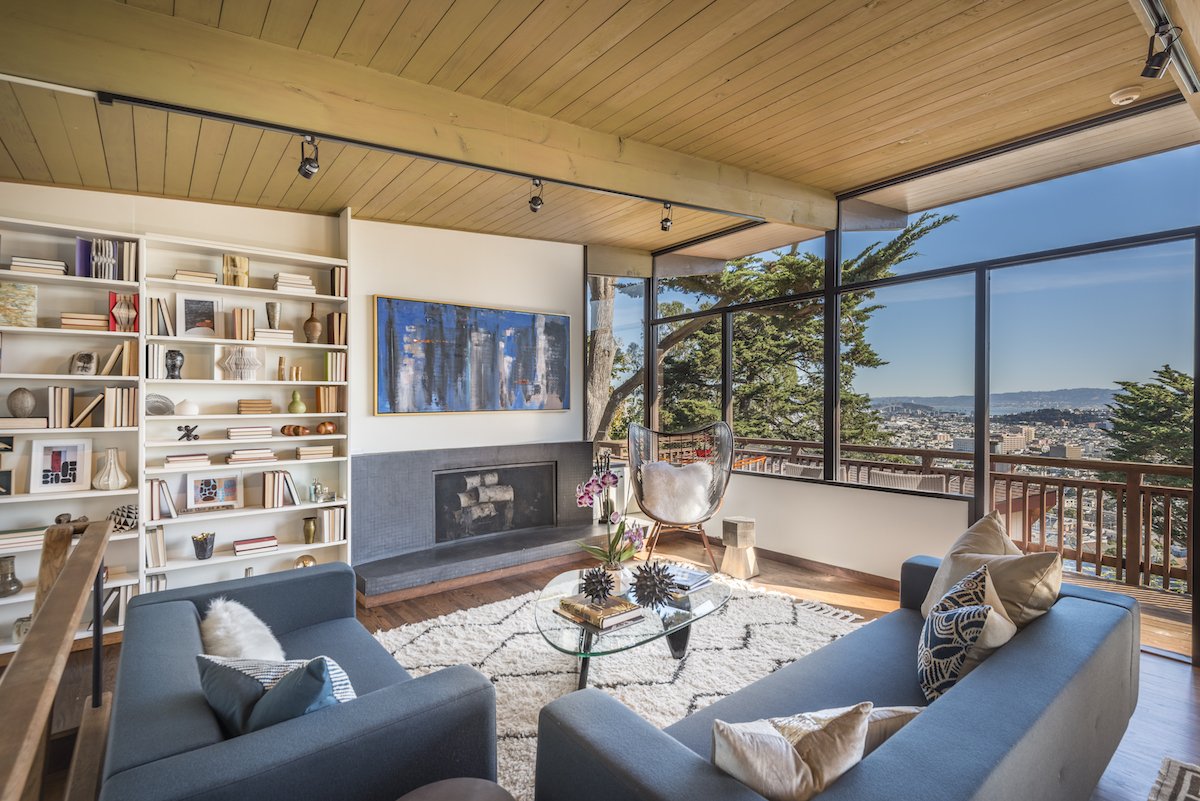
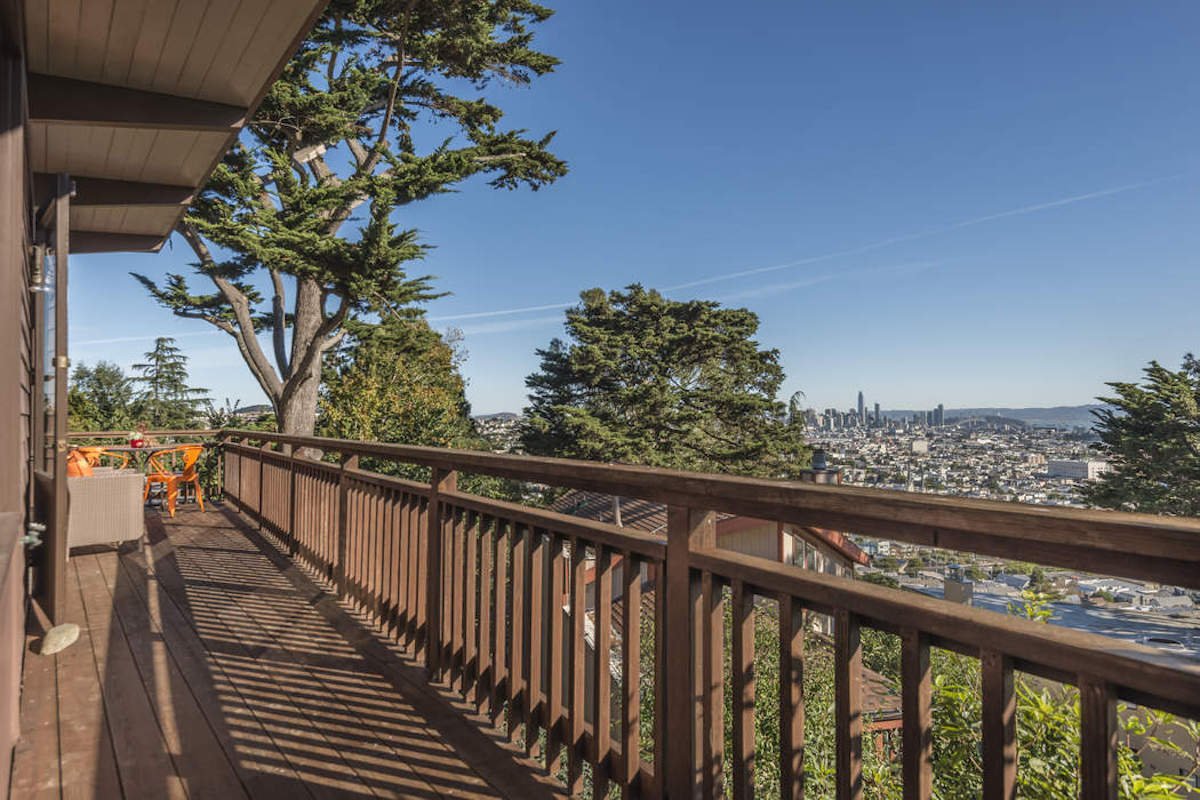
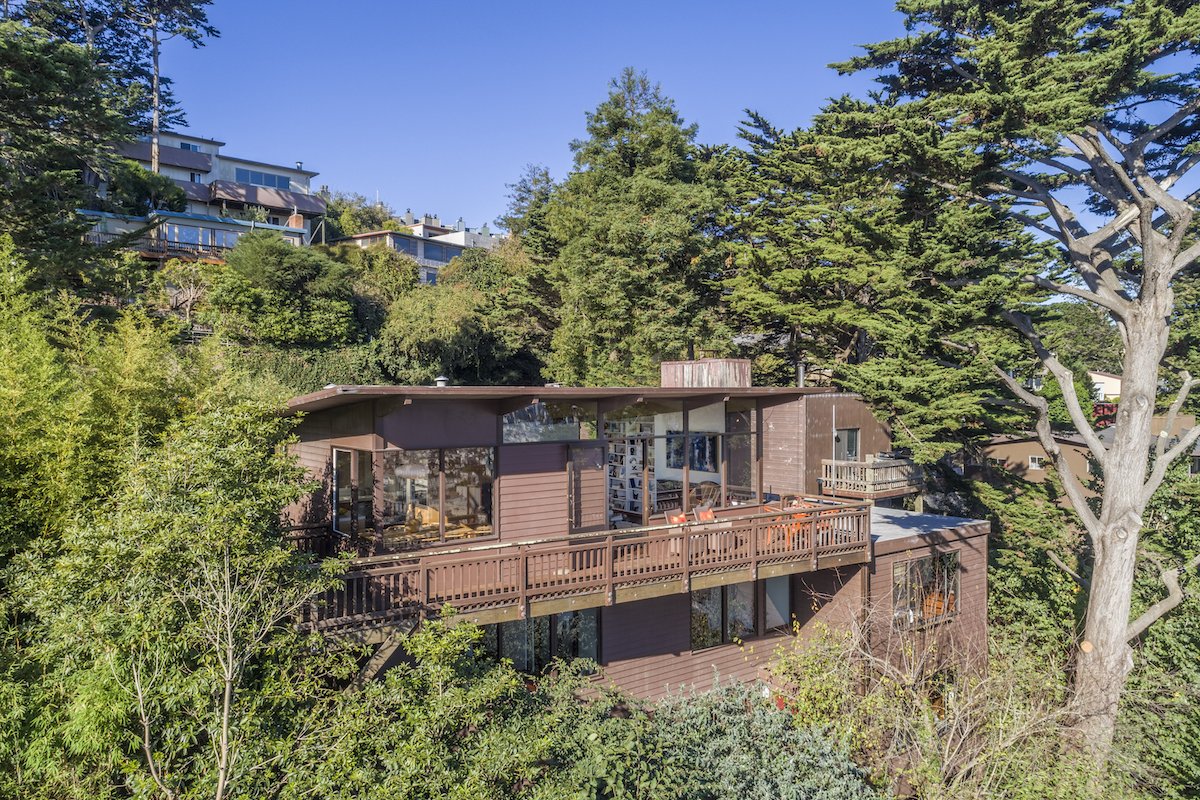
Built in 1957, the mid-century modern home sits on an
oversized lot surrounded by trees in the Glen Park neighborhood.
Featuring three beds, two and a half baths, and roughly 2,040
square feet, 1 Miguel Street offers panoramic views through the
floor-to-ceiling windows.

Wood-paneled walls,
exposed beams, and a wrap-around deck give it a distinct
treehouse vibe.


edb8b san francisco 1 miguel house 4 San Franciscos housing market is so out of control, a home has sold for nearly $1 million over asking
Sotheby’s
International Realty


The residence was a custom commission from local
architect Worley K. Wong. The kitchen and bathroom went through a
renovation before hitting the market, according to the
listing.

Glen Park is a southern enclave of San Francisco that
draws wealthy buyers because of its seclusion, picturesque
streetscapes, and suburban feel. The median list price in the
neighborhood is $1.8 million, and homes typically sell for

124%
of the list price.

Article source: http://www.businessinsider.com/san-francisco-home-sells-million-over-asking-2017-10

Posted in SF Bay Area News | Tagged | Leave a comment

SF and several other Bay Area cities lobby for Amazon headquarters …

Thursday was the deadline for cities to submit a potential site to Amazon for its upcoming, Apple UFO-like $5 billion new North American headquarters, a secondary hub that the company says will compare in size and scope to its existing Seattle headquarters.

Naturally, Bay Area cities are clamoring to draw company CEO Jeff Bezos’s eye. In all, nine local cities want to attract Amazon with prime real estate, including a coalition of seven cities, dubbed the Northern Arc, who submitted jointly.

San Francisco, Oakland, Richmond, Concord, and Fremont form the bulk of the so-called arc, with Pittsburg and Union city attached as potential “secondary sites” for Amazon riches.

The mass bid by the Bay Area Council [BAC] name drops the likes of “Levi Strauss, Kaiser Permanente, Chevron, Clorox, Visa, and Gap” before bringing up Google, Facebook, Apple, Tesla, Salesforce, and what it refers to as “a burgeoning knowledge-based economy” around Silicon Valley.

More important than the chance to rub shoulders with Tim Cook and Mark Zuckerberg, BAC argues that Bay Area cities have the infrastructure Amazon wants:

The backbone of the Northern Arc is Bay Area Rapid Transit (BART), which has stations in each city. Any one city could accommodate Amazon’s HQ2 needs, as could a combination of sites in multiple cities—all of which are connected today via BART, ferries, buses, rail, and bikeways, and soon connected by vertical transport and autonomous vehicles. All within 45 minutes to an hour of each other

San Francisco Business Times says that San Jose and Vallejo also petitioned Amazon, separately from the seven-city rush.

So, what are municipalities offering the company? Here’s a breakdown of some of the sites they’ve all pitched as potential development assets:


7997c 696679792 SF and several other Bay Area cities lobby for Amazon headquarters ...

Photo by David Ryder/Getty Images

San Francisco

  • Candlestick Point and the San Francisco Shipyard, here called “the largest single redevelopment opportunity on the West Coast.”
  • The “Southern Bayfront,” stretching from Mission Creek down to Candlestick and including Pier 70 and Mission Rock.
  • Central SoMa, “the rectangle bounded by Market Street, Townsend, Second Street, and Sixth Street,” which includes the new Flower Mart.

Oakland

  • Uptown Station, the former department store building that was meant to host Uber’s Oakland headquarters until the deal collapsed earlier this year.
  • 601 City Center, a 24-story Shorenstein-built office tower under construction on 12th Street.
  • Eastline Development, “a full city block assembled next to the Paramount Theater, where “underutilized buildings will be razed to construct large-plate office space now most in demand by tech and other firms.”

Concord

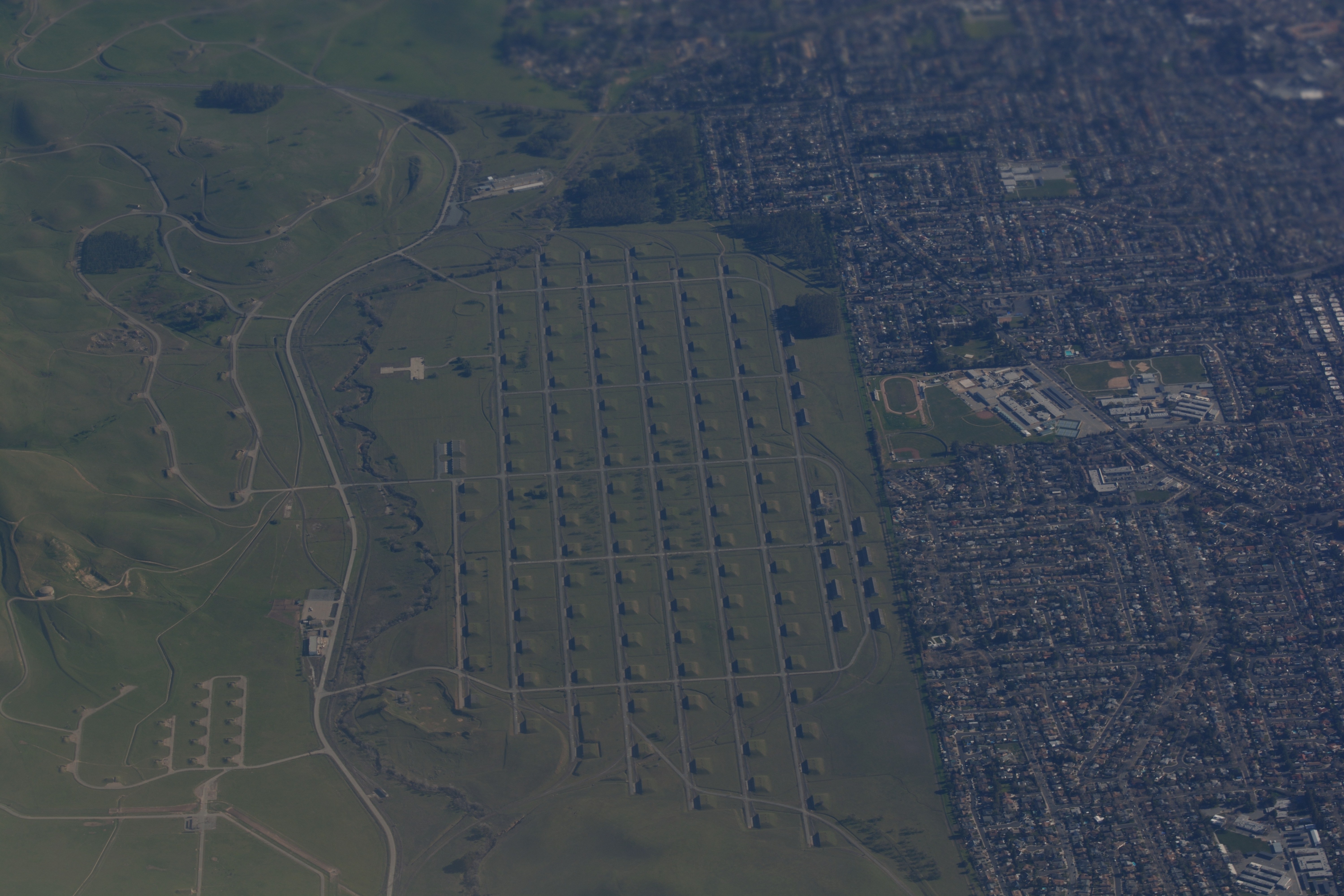
  • As the city indicated weeks ago, Concord put forth the former Concord Naval Weapons station as a potential Amazon site, “2,300 acres in total, with 500 acres allocated for Phase 1.” Although it should be noted that the entitlements on the conversion from derelict military site to new development aren’t yet completed.

b0253 wing SF and several other Bay Area cities lobby for Amazon headquarters ...

The Concord facility.

Wing

Richmond

  • UC Berkeley Richmond Field Station: “In May 2014, the University of California (UC) Board of Regents approved a Long Range Development Plan (LRDP) [that provides] guidance for the development of over 5.4 million square feet of research and development facilities on UC Berkeley property that could serve as the backbone for the Amazon facility.”

Fremont

  • Warm Springs parking lot: This 28-acre parcel is the current BART surface parking lot and is environmentally cleared and zoned for a 1.8 million-square-foot commercial development. Given that it is adjacent to the new Warm Springs BART Station, this site is also an excellent opportunity for increased density.
  • Northern Arc Bid [Bay Area Council]
  • Bay Cities Petition Amazon [SF Business Times]
  • Does SF Want Amazon? [Curbed SF]
  • Concord Bids Amazon [Curbed SF]

Article source: https://sf.curbed.com/2017/10/23/16508466/san-francisco-bay-area-amazon-berkeley-headquarters

Posted in SF Bay Area News | Tagged | Leave a comment

Summer-Like Heat to Return to the Bay Area, Could Break Records

It may be the middle of October, but summer-like heat will be making a comeback across the Bay Area this week.

The National Weather Service predicts that daytime high temperatures across the region could be 15 to 20 degrees above seasonal averages on Monday and Tuesday.

San Francisco is expected to creep just above the low-80s by Tuesday, according to the National Weather Service. Concord is forecasted to top out just below 90 degrees come Tuesday. Santa Cruz — typically a haven for those who despise the heat — could soar to the low-90s by the second day of the work week.

The Bay Area warming trend, which could break records in some spots such as Santa Rosa and Napa, does include low humidity levels, which ramps up fire danger.

Those hoping for fall-like temperatures will likely have to wait until next weekend.

Get the latest from NBC Bay Area anywhere, anytime

  • e688d bay area icon Summer Like Heat to Return to the Bay Area, Could Break Records

    Download the App

    Available for IOS and Android

Posted in SF Bay Area News | Tagged | Leave a comment

They survived the California fires. Now, the crisis is finding housing

Laurie Martinez has slept in a tent every night since a fire ripped through her neighborhood in Santa Rosa, California.

She walked several blocks to a local center on Wednesday to find out what help is available and began the process of piecing her life back together.

“Everyone has to start over,” she said.

She and her family were displaced by one of the massive Northern California fires last week.

The fire didn’t discriminate. The most destructive fire in California history torched Santa Rosa’s high-end homes, middle-class neighborhoods and a mobile home park. It left the entire spectrum of the city’s population in distress as homes and businesses went up in flames.

And because of the housing crunch gripping the San Francisco Bay Area, survivors of the fire are dealing with a different kind crisis: They have nowhere to go.

Housing was already scarce in Santa Rosa before the fire. Now, there’s even less.

Altogether, the fires killed 42 people and destroyed 8,400 structures, according to Cal Fire. The fires are almost contained, as of Friday.

While residents expressed gratitude for surviving the deadly blaze, nearly all have been dealing with daily uncertainty. Where do they go from here? Where are they going to sleep tonight?

Every day, Pauline Conway, a substitute teacher, tries to figure out if she can reserve one more night at a Santa Rosa hotel where she has stayed. She can’t book reservations beyond one night due to the demand for hotel rooms, and hasn’t found any open apartments.

“I’ve been going night-to-night, and it’s stressful,” said Conway on Wednesday.

She wore a look of fatigue, and a pair of denim shorts and zip-up jacket — the same clothes she had on when she fled her house more than a week ago. She held her cell phone in one hand and a clump of documents in the other as she bounced from call to call.

Conway’s house, which was in the Fountaingrove neighborhood, was destroyed. She hasn’t decided whether to rebuild her home, where she lived for 20 years. But since the night of the fire, she has slept on the floor of a sporting goods store, at a cousin’s house and in hotels.

Displaced residents are in shelters, mobile homes, staying with friends and family, or bouncing from one hotel to another, trying to figure out where they can stay after their homes were reduced to ash.

Some have gone to stay with family more than a hundred miles away. But many told CNN that they want to stay close to Santa Rosa. They’ve lost their homes, they don’t want to lose their jobs, too.

No housing means no place to put donations

Martinez, her three daughters and two grandchildren had lived in a two-bedroom apartment. The building didn’t burn down, but there was so much smoke damage, they can’t stay there, she said.

Her five family members now share a bedroom in a house about 20 miles away in the city of Monte Rio, but Martinez stayed behind in Santa Rosa, preferring to stay in a tent to avoid overcrowding. She set up the tent near a shelter, so she could wash and use the facilities.

“It’s been really humbling,” she said. “No one looks down at you. This is a resort area, a vintage town. Everybody didn’t want homeless people on the streets. Now people are homeless.”

Martinez sleeps in the tent shared with her cousin and charges her phone in her daughter’s car during their visits.

After visiting the local assistance center, she received a list of low-income housing resources to call — a stack of paperwork stuffed inside a grocery bag. But she wasn’t confident she’d find a place for her and her family.

Their belongings, which were mostly in storage, were destroyed in the fire. Martinez said there have been generous offers of donated items and clothing, but they can’t accept them.

“There’s nowhere to put it,” she said. “There’s no storage. My family is living in one room.”

‘I don’t know where everyone’s going to go’

Santa Rosa, a mixed-income community is about 50 miles north of San Francisco. It was one of the last vestiges of affordable housing compared with the rest of the Bay Area.

The value of a typical Santa Rosa home was around $600,000, compared with San Francisco’s $1.2 million and Marin County’s $1 million, according to 2017 data from the National Association of Realtors.

Before the fires, the city had already been grappling with severe lack of housing and a 3% vacancy rate.

“The inventory was constrained prior to the fire,” said Rick Laws, senior vice president in Santa Rosa for Pacific Union International real estate agency. “Now, we have lost about 5% of the housing stock of Santa Rosa, so that’s huge.”

Homes that had once seemed undesirable have been snapped up.

“People are calling, asking ‘What have you got? I can buy it. I don’t care what it is,” Laws said.

One listing in Petaluma — a city 15 miles south — had previously rented for $4,000 a month and went for $13,000 to an insurance company. Another vacation rental also went to an insurance company for $18,000 a month, he said.

While homeowners with insurance can likely rebuild and stay in the neighborhood, it’s a tougher question for low-income residents.

“Low-income people are even more likely to be squeezed out,” said Sarah Karlinsky, senior policy adviser at SPUR, a public policy think tank that does urban planning in the Bay Area.

“Is rental housing going to be rebuilt? How affordable will it be? Those are big questions and without some thinking through, low-income people will be disproportionately affected.”

Housing experts agree: Costs will likely increase.

“We’re going to see inventory get really tight and prices go up. Not everyone can buy, and there were almost no rentals prior to this,” Laws said. “I don’t know where everyone’s going to go.”

Shelters still opened

Since evacuating on October 9, Lydia Delos Reyes and her son, Robert, have been staying in a Sonoma County shelter.

Shelters are gradually closing as more evacuation orders are lifted. There were 20-30 shelters during the peak of the fire, now the county is down to three. Staying there isn’t a tenable, long-term solution, but Delos Reyes is grateful for the shelters and the kind workers there.

She’s a retiree from Hewlett-Packard and had lived in her Santa Rosa house in Coffey Park for 26 years. She lives with her son and grandson.

She said they have to stay in the area because her grandson works locally. But so far, the only available apartments have been in San Francisco (50 miles away), Sacramento (95 miles away) and Bakersfield (300 miles away).

“We keep calling, but nothing is available. All residents are in the same situation. A lot of people need a place. They just said nothing’s available,” she said.

They’re working with their insurance company, but they have no leads for temporary housing.

“I can feel myself getting heavier and heavier,” Delos Reyes said, pointing to her heart. She paused for a moment, choking back emotions.

“Every afternoon, I remember my house. I love my neighbors. I love my area. This is my place forever.”

What help is available?

Homeowner insurance policies vary, but generally fire coverage could include the cost of rebuilding, interim housing and property damages. There are limits to how much personal property is covered though, said Linda Kornfeld, vice chair at Blank Rome’s insurance recovery practice.

The key is to file claims early, she said.

FEMA offers a maximum of $34,000 grant per individual to both renters and homeowners who’ve sustained damage during a disaster. The money can be used for temporary housing, lodging, emergency repairs, personal property loss, medical, dental and funeral expenses.

The agency has also started the process of gathering local resources to build lists of vacancies to help people who need temporary housing. But the options could be limited as housing was already scarce before the fire.

FEMA said it had its first meeting with state officials and affected communities to assess housing issues on Thursday. But Frank Mansell, spokesman for FEMA, cautioned that it was still early in the process.

“We sit down with the state and communities, discussing what the options are,” he said. “FEMA doesn’t come in and say, ‘This is your solution.’”

FEMA used mobile homes for people after the 2005 Hurricane Katrina, but such decisions regarding housing are made by the community, Mansell said.

Something beautiful born out of ashes

The question of where Michael Ruiz and his family would live also weighed heavily. They had lost their home and all their belongings.

His pregnant wife, Charity Ruiz, escaped from the flames — that overtook their Santa Rosa house — on a bicycle last week. She put her two daughters in a toddler trailer hitched to the bike and rode out of the flames to safety.

A week after her harrowing escape, she gave birth to their third child.

With a newborn and two toddlers, the couple were eager to find a place for their growing family that was close to the couple’s workplace, a church in Santa Rosa.

Like many, Michael Ruiz struggled to find anything available, but worked with a family friend who’s a real estate agent. They may have found a rental in Sebastopol, a city about five miles west of Santa Rosa, he said.

In a span of a week, they lost their home that was bought in March, escaped from their burning neighborhood and welcomed the birth of their son.

“In the midst of all the heartache, there’s incredible joy as well,” Ruiz said.

He said they named their newborn son Remington Phoenix, to symbolize that “something beautiful has been born out of the ashes.”

Article source: http://myfox8.com/2017/10/22/they-survived-the-california-fires-now-the-crisis-is-finding-housing/

Posted in SF Bay Area News | Tagged | Leave a comment

Richard Nixon, environmental warrior, enjoyed his 1972 ferry ride

What sounds like science fiction in 2017 actually happened on Sept. 5, 1972, when Richard Nixon came to town. The president, an enthusiastic consumer of Bay Area mass transit who would ride BART three months later, arrived to advocate for the Golden Gate National Recreation Area.


“President Nixon took a brief ferryboat ride on San Francisco Bay on a windy, sunny day yesterday,” The Chronicle reported. “(He) posed for pictures on the top deck with the Golden Gate Bridge in the background, and said with a grin: ‘I’ll never have a better backdrop.’”

That money quote came in the middle of a presidential re-election run, against Democratic Party nominee George McGovern. But his political motivation that day was to support the pro-environment Gateway West bill, which would turn more than 30,000 acres of Bay Area real estate into protected parkland.

And according to the president, it was the Democrat-controlled Congress that was holding up the proposal.

“There is no excuse for further congressional delay,” Nixon pronounced during a press conference on the ferry. “(It’s time to) get Congress to go along with what the majority of the people in this country want — to clean up our environment.”

The San Francisco trip was a quick one, with the president arriving at San Francisco International Airport, heading to Fort Point, then taking a quick trip on a Sausalito-bound ferry named the Golden Gate.

The Chronicle reported no protests; just 200 young supporters, probably students, meeting the president at the Presidio with chants of “Four more years! Four more years!”

The boat tour into the Bay included a group of guests more eclectic than “Gilligan’s Island,” with aviator Charles Lindbergh, astronaut Frank Borman, San Francisco Mayor Joe Alioto and future secretary of defense Donald Rumsfeld on board.

Nixon spoke to the press from a podium placed inside the ferry, with a presidential seal and a curtain erected behind. He also toured the deck, waving at passing sailboats on the gusty day, while allowing the wind to muss his normally shellacked hair.

The bill, co-authored by Republican congressman William S. Mailliard and Democrat Phillip Burton, passed and was an enormous success. Be sure to thank Nixon when touring the recreation area’s current 80,000 acres, which includes Muir Woods, Alcatraz, the Presidio, Crissy Field and the remains of Sutro Baths.

But the boat ride was arguably a dud.

Nixon’s San Francisco Bay photo ops and fiery messages were quickly upstaged by much bigger news: the slaughter of Israeli athletes by terrorists at Olympic Village.

“Terror at Olympics — ALL HOSTAGES SLAIN,” the Chronicle’s headline stated, taking up most of the top third of the page. A photo of Nixon was buried on Page 30.

More bad news: After the ferry ride was over, it was discovered that in the fuss to get the ferry ready for the president, the locked cash box was robbed of more than $800. And a week later, The Chronicle wrote about large taxpayer expenditures for the short political trip.

“A 45-minute ride by President Nixon aboard the Golden Gate ferry … cost the Golden Gate Bridge District $10,000, officials acknowledged yesterday,” The Chronicle reported. “The costs involved painting of the ferryboat so the President would have a photographic backdrop free of rust strains, as well as test runs for the boat ride.”

But it was still a good political year for Nixon – maybe his last one.

He was elected that November in one of the largest landslides in recent political history. And along with the Golden Gate National Recreation Area, Nixon in 1970 signed an executive order for the Environmental Protection Agency.

Remember the that next time you walk through the Marin Headlands, and enjoy the real estate development-free views: The president who resigned in disgrace was also an environmental warrior.

Peter Hartlaub is The San Francisco Chronicle’s pop culture critic. Email: phartlaub@sfchronicle.com Twitter: @PeterHartlaub

Article source: http://www.sfchronicle.com/oursf/article/Richard-Nixon-environmental-warrior-enjoyed-his-12294634.php

Posted in SF Bay Area News | Tagged | Leave a comment