Facebook Has Leased Over 3M SF Of Bay Area Office In 2018

The Bay Area has one of the tightest office markets in the country. Will this change in 2019? CRE experts weigh in on Sept. 13!

Facebook’s leasing momentum doesn’t appear to be slowing down this year, with another entire campus lease in the works in the San Francisco Peninsula. The tech company’s leases so far this year have totaled over 3.7M SF, and it now has well over 6M SF in leased or owned property in the Bay Area.

Earlier this year, Facebook broke records by leasing the largest amount of office space in San Francisco’s history. It also is expanding its Menlo Park campus and has plans to build a mixed-use office and housing campus.

Check out Facebook’s latest large leases of the year below:

Burlingame Point

 Facebook Has Leased Over 3M SF Of Bay Area Office In 2018

Address: 300 Airport Blvd., Burlingame

Size of Prospective Lease: Around 803K SF

Developer: Kylli (Genzon Property Group subsidiary)

Broker: Cushman Wakefield

Facebook is in talks to lease the entire Burlingame Point, which could potentially house its Oculus division, which focuses on virtual and augmented reality, the San Francisco Business Times reports. The campus is ideally located between Facebook’s Menlo Park campus and San Francisco, where it has a growing presence. If the deal is finalized, the tech giant is expected to occupy this space in 2020.

Park Tower at Transbay

 Facebook Has Leased Over 3M SF Of Bay Area Office In 2018

Address: 200 Folsom St., San Francisco

Size of Lease: 755K SF

Developers: Metlife, John Buck Co. and Golub Co.

Broker: JLL

Facebook broke leasing records with its lease of Park Tower at Transbay and brought its San Francisco footprint to over 1M in just eight months. It previously leased all of 181 Fremont’s 436K SF of office space. The tech company is one of San Francisco’s largest tenants. Park Tower is expected to deliver at the end of the year.

Fremont

 Facebook Has Leased Over 3M SF Of Bay Area Office In 2018

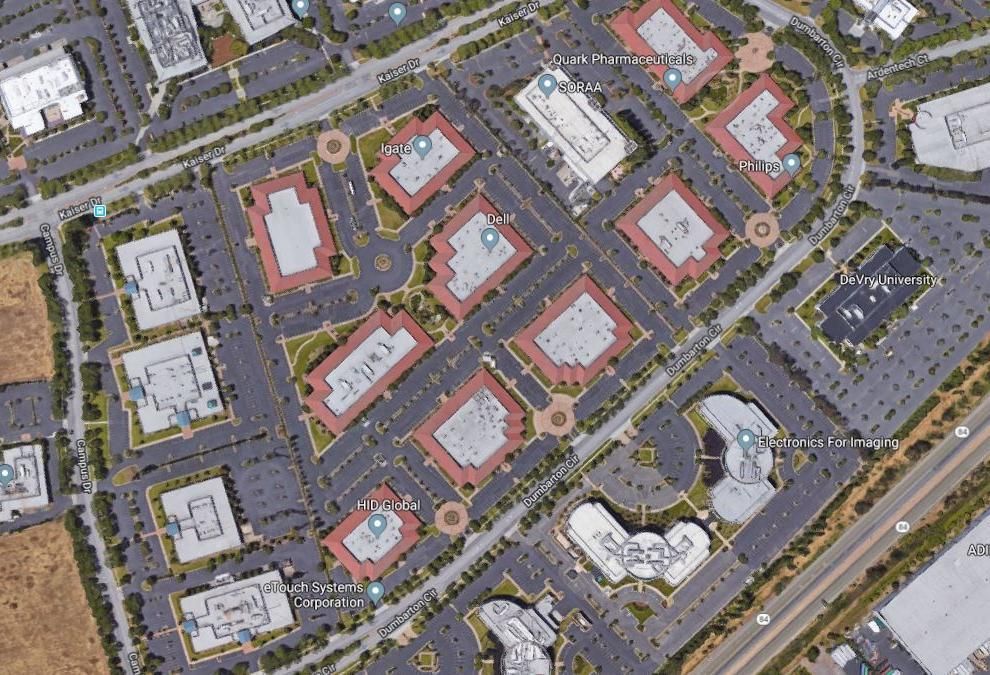
Address: 14 buildings in Ardenwood District of Fremont

Size of Lease: 750K SF

Developer: Peery Arrillaga

Facebook expanded east into Fremont within the last 12 months, leasing buildings that are 8 miles from its Menlo Park headquarters. The tech company is expected to occupy the space in the next six to nine months. Facebook previously leased 190K SF from The Sobrato Organization in December. The company now has about 1M SF of office space in Fremont.  

Moffett Towers II

 Facebook Has Leased Over 3M SF Of Bay Area Office In 2018

Address: 900 Fifth Ave. and 1180 and 1190 Discovery Way, Sunnyvale

Size of Lease: 1M SF

Developer: Jay Paul Co.

Broker: Newmark Knight Frank

Facebook’s lease of three of the five buildings at Moffett Towers II brought the project to full lease-up and marked the company’s largest lease of the year. Facebook could potentially move 5,000 to 6,000 employees into the campus, where Amazon has also leased 350K SF.

The Village at San Antonio Center

 Facebook Has Leased Over 3M SF Of Bay Area Office In 2018

Address: 391 and 401 San Antonio Road, Mountain View

Size of Lease: 450K SF

Developers: Merlone Geier Partners, but leased through WeWork

Originally, Facebook was only going to take one of the two office buildings, or 225K SF of office, at the mixed-use office and residential campus, but ended up securing leases for both buildings through WeWork. The coworking company had secured a lease for its largest-ever office space in October from LinkedIn.

Related Topics: Cushman Wakefield, JLL, Newmark Grubb Knight Frank, Peery Arrillaga, MetLife, tech office, Facebook, San Francisco Office, Moffett Towers, Merlone Geier Partners, Moffett Towers Phase II, kylli, Facebook Inc, Burlingame Point, WeWork San Francisco, Tech tenants, Bay Area office investment, Facebook campus, Facebook expansion, Jay Paul Co., The John Buck Co., Golub Co.

Article source: https://www.bisnow.com/san-francisco/news/office/facebook-has-leased-over-3m-sf-of-bay-area-office-in-2018-and-its-only-august-91896

Posted in SF Bay Area News | Tagged | Leave a comment

California real estate is so expensive that families, retirees, and even tech workers are living in cars and vans


Cars are no longer just a means of transportation. In a time when rents are soaring and housing prices are on the climb, they’re also doubling as a home.

Look no further than California, where the median price for a home is at a record high of $600,000 and sleeping in cars is a common occurrence. A recent Slate article explored the rising epidemic on America’s West Coast and found that 15,000 people live in cars, vans, and RVs in Los Angeles alone, citing the US Department of Housing and Urban Development. That’s not counting car dwellers in other expensive California cities, like San Diego and San Francisco.

The problem has become so severe that local governments are trying to “tighten parking restrictions or ban vehicle residency,” writes Slate reporter Amy Pollard. These crackdowns have led to the rise of safe parking programs. Run by nonprofits and some city governments, they try to accommodate vehicle residents with safety rules and regulations, according to Slate.

Dreams for Change in San Diego runs three lots with 150 spaces and 325 residents (people often share a car) — each space costs $2,950 a year for the company to operate. Caseworkers visit often, there is no entry after 10 p.m., RVs aren’t allowed, and neither are sex offenders.

“In the tight housing markets of West Coast cities, it’s not just the destitute or the unemployed who see their cars as their best option,” writes Pollard, adding that the residents of Dreams for Change consist of families, retirees, and even tech workers making near six figures.

In San Francisco, 59% of employees at tech companies can’t afford homes, Business Insider’s Melia Robinson previously reported, citing stats from Blind, an app for tech workers.

Graham Pruss, a researcher and former outreach worker for Seattle’s Road to Housing program, told Slate that cars are “a new form of affordable housing” in Seattle too, adding that he’s met Amazon workers who live in vehicles while saving up money to buy a home one day.

People are living in boats and vans too

Californians in need of housing aren’t picky — they’re also resorting to living in boats and vans.

Misa Gidding-Chatfield and Mike Kraft decided to live in San Francisco Bay on a 900 square-foot houseboat to save money, Robinson reported. At $300,000, it cost less to buy than a half-million dollar home on the outskirts of the Bay Area.

Tracey Kaplan, a reporter for the Bay Area News Group, also considered a houseboat, but didn’t want the $1,500 slip fees. Instead, she cashed out her retirement fund to buy a cargo van for $53,894, she explained in an article for The Mercury News. She’s spending an additional $37,000 on renovating it into a home.

Both options are still way cheaper than a traditional house in Bay Area, where a median-priced home sells for $1.9 million and buyers commonly bid hundreds of thousands above asking prices, Robinson reported. Consequently, only about 12% of households can afford a home there.

Joining the #vanlife movement helps Kaplan avoid spending most of her salary on a place to live in San Francisco and allows her to save more so she can travel when retired.

“I spent years anxiously searching for a viable housing solution that would allow me to retire in the Bay Area without going broke,” she wrote in the article. As the trend grows in popularity around the Bay Area, her biggest concern is finding a place to legally park her new home.

“I’ve already found some unusual solutions, including getting permission to sleep in a secluded lot in an industrial area of San Jose and renting a spot for a small fee in the Santa Cruz Mountains,” she wrote. “Many vanners ‘stealth park,’ a practice that refers to camping secretly, which often includes parking illegally. But I hope I don’t have to.”

Article source: https://www.businessinsider.com/california-housing-so-expensive-people-live-in-cars-vans-2018-8

Posted in SF Bay Area News | Tagged | Leave a comment

Compass buying Pacific Union — its second SF real estate …

Compass, a New York real estate brokerage firm, will buy San Francisco brokerage Pacific Union International less than two months after it purchased Paragon Real Estate Group, also of San Francisco.

Pacific Union is the nation’s fifth-largest residential real estate firm based on transaction volume and Compass is sixth, according to Real Trends, a Colorado consulting firm. Based on those numbers, the combined firm would leap to number three.

Pacific Union is majority owned by Fidelity National Financial, a publicly traded title insurance company based in Florida that also owns 100 percent of J. Rockcliff Realtors, an East Bay brokerage based in Danville.

Rockcliff President Jeff Sposito said a source at Fidelity, whom he would not identify, confirmed news reports that said Compass is on the verge of buying Pacific Union. Neither Pacific Union nor Compass returned requests for comment.

Compass has been aggressively luring top agents from other Bay Area firms, offering higher commission splits and bonuses.

“I know they are giving them stock and paying a tremendous amount of marketing funds for them,” said Sposito, who has lost some agents to Compass. “They are getting ridiculous amounts of money to come on board.”

Compass said in December that SoftBank Vision Fund agreed to invest $450 million in the company, bringing its total capital raised to $775 million.

In early July, Compass bought Paragon to form San Francisco’s largest residential brokerage firm. Terms were not disclosed.

Its purchase of Pacific Union will probably be the nation’s second largest real estate brokerage acquisition this year, said Steve Murray, president of Real Trends, whose firm consults on real estate mergers but was not involved in this one. He estimated that the purchase price will be between $100 million and $200 million, which would trail only one larger deal he was involved in. That one was not disclosed publicly but involved the acquisition of a privately held brokerage by a private equity firm, he said.

Pacific Union was founded in 1975 and acquired by CEO Mark McLaughlin in 2009. In December 2014, Fidelity bought a controlling stake, reported to be two-thirds.

Pacific Union has been on a buying spree itself, having acquired The Mark Company, which specializes in new-condo developments, in October 2015, followed by a string of other deals including one with Southern California’s John Aaroe Group in December 2016.

Mergers in the industry “have picked up considerably” over the past 12 to 18 months, Murray said. “The economics of the industry are getting more difficult. The lack of inventory, the decline in unit sales, is putting enormous pressure on brokerage firms and agents.”

Companies such as Redfin and eXp Realty are offering sellers lower commissions while venture-funded startups like Compass are luring agents with fat compensation packages and techy benefits such as free lunches.

Compass markets itself as a technology-driven real estate platform, but Sposito says, “They haven’t rolled out anything of their own.”

Murray agreed.

“They are a long way from being a leader in technology in the industry,” he said.

Year to date, Compass is San Francisco’s largest residential brokerage firm, with a market share of 9.4 percent, followed by Vanguard and Pacific Union, with 9 percent each, Paragon with 8.7 percent and Zephyr with 8.5 percent, according to Patrick Carlisle, Paragon’s chief market analyst.

Compass, Pacific Union and Paragon combined would “become by far the dominant brokerage” in San Francisco, although people would still have many other firms to choose from, Carlisle said.

Compass, with the acquisition of Pacific Union, will be the second-largest brokerage in California behind NRT, which owns Coldwell Banker, Sotheby’s International Realty, Climb and other firms, Murray said. NRT is also largest in the nation.

Kathleen Pender is a San Francisco Chronicle columnist. Email: kpender@sfchronicle.com Twitter: @kathpender

Article source: https://www.sfchronicle.com/business/networth/article/Compass-buying-Pacific-Union-second-SF-real-13172961.php

Posted in SF Bay Area News | Tagged | Leave a comment

In the Bay Area’s least expensive county, a median-price home costs $1 million less than in SF


  • 4d992 920x920 In the Bay Areas least expensive county, a median price home costs $1 million less than in SF

Caption

Close

Data via Compass Realty

Data via Compass Realty

Photo: Compass


Data via Compass Realty

Data via Compass Realty

Photo: Compass


Data via Compass Realty

Data via Compass Realty

Photo: Compass


Compass Realty’s report shows full recovery for the Bay Area, and more, since the crash. It also shows alarmingly high peaks

Compass Realty’s report shows full recovery for the Bay Area, and more, since the crash. It also shows alarmingly high peaks

Photo: Compass


Data via Compass Realty

Data via Compass Realty

Photo: Compass


San Mateo is the most pricey with a median of $1.65M. This house in Menlo Park asks $1.650 for 3 beds/2.5 baths, 1640 square feet.

San Mateo is the most pricey with a median of $1.65M. This house in Menlo Park asks $1.650 for 3 beds/2.5 baths, 1640 square feet.

Photo: Redfin


Marin has a median of 1.4 million. This home aks $1.475M for a 3 bed/2,5 bath in San Rafael, 2215 square feet

Marin has a median of 1.4 million. This home aks $1.475M for a 3 bed/2,5 bath in San Rafael, 2215 square feet

Photo: Redfin


Santa Clara homes fetch a median of $1.405M. Here we have a 3 bed, 2.5 bath, just under 2,000 square feet in Mission park asking $1.45M.

Santa Clara homes fetch a median of $1.405M. Here we have a 3 bed, 2.5 bath, just under 2,000 square feet in Mission park asking $1.45M.

Photo: Redfin


San Francisco’s median for SFHs is $1.625 million. This home on San Bruno is a 3 bed, 2 bath, asking $1.6M.

San Francisco’s median for SFHs is $1.625 million. This home on San Bruno is a 3 bed, 2 bath, asking $1.6M.

Photo: Redfin


Solano County is the cheapest: here the median is $450K. This home is 4 bed, 2.5 bath, 2,030 square feet, asking $436K.

Solano County is the cheapest: here the median is $450K. This home is 4 bed, 2.5 bath, 2,030 square feet, asking $436K.

Photo: Redfin


At the close of the second quarter of 2018, median home prices in five Bay Area counties hit $1 million or more. What does it take to buy a home in these areas, and where in the Bay Area can buyers find something for half that price?

Compass Realty just released its second quarter report on the state of Bay Area real estate. According to this study, both San Mateo and San Francisco counties reached a median selling price closer to $2 million than $1 million.

Santa Clara, Marin, and Alameda all fetched a median of $1 million or more.

The least expensive county is Solano, where the median is now $450,000. This means that Solano County home values have gone up approximately percent year-over-year.

Zillow Real Estate predicts that this county will continue to rise, gaining almost another 9 percent in the coming year.


The Compass report is quick to mention that median prices aren’t always the best measure of a market, since the figure is meant to show the mid-range of sales prices. Half as many homes sold for more, and half sold for less.

However, the new figures do indicate serious issues for affordability.

San Francisco real estate agents Lamisse Droubi and Patrick Carlisle offer tips on how to prepare when buying a home in the Bay Area.


Media: Katie Wood / SFGATE


How much do you have to make to buy a home in the Bay Area?

Based on a 20 percent down payment, local taxes and insurance, buyers in both San Mateo and San Francisco offer a qualifying income close to $350,000. In Santa Clara and Marin, $300,000 will do.

And for Solano, buyers need $95,380 a year in qualifying income. The most recent Census data tell us that “Households in Solano County, CA have a median annual income of $73,900.”

Dismal affordability

The California Association of Realtors posits the mismatch between home prices and salaries has a dramatic effect on affordability.

In Santa Clara and San Francisco, only 14 percent of residents make the qualifying income to buy a home. In Alameda, it’s 16 percent. Solano has one of the higher pay area percentages: 38 percent can qualify to buy a home.

However, the report also mentions these figures don’t take into account recent political changes. Federal income taxes limiting the deductibility of property taxes and the mortgage tax credit could make for even less affordability.

The mystery

Despite being out of reach for more than half its populace, the average days on the market for Santa Clara properties is 19.  In San Francisco, that range is 30 to 40 days. In January of 2018, Solano County made news for being the nation’s third hottest real estate market.


So if not affordable to half or (way more) than local residents, who is buying Bay Area real estate so quickly, and at such prices?

Anna Marie Erwert writes from both the renter and new buyer perspective, having (finally) achieved both statuses. She focuses on national real estate trends, specializing in the San Francisco Bay Area and Pacific Northwest. Follow Anna on Twitter: @AnnaMarieErwert 

Article source: https://www.sfgate.com/realestate/article/What-do-you-really-have-to-make-to-afford-a-Bay-13154061.php

Posted in SF Bay Area News | Tagged | Leave a comment

This 30-year-old commutes 4 hours, and 140 miles, every day so he doesn’t have to pay $4500-a-month San Francisco …

<!– –>


VISIT CNBC.COM


Money

5 Hours Ago


0f105 105390869 makeit 08032018 SanFrancommute mezz.940x528 This 30 year old commutes 4 hours, and 140 miles, every day so he doesnt have to pay $4500 a month San Francisco ...


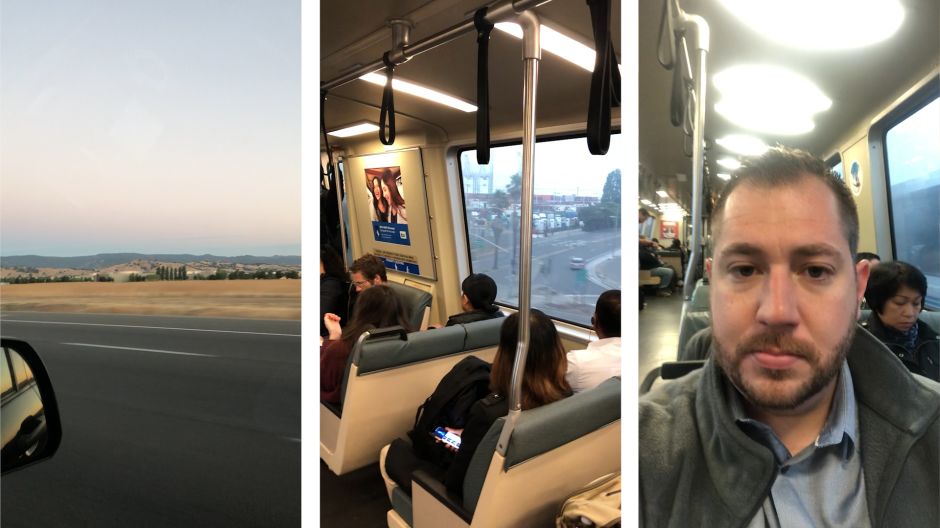
It’s dark and cold. The alarm clock flashes 4:30 a.m. Danny Finlay drags himself out of bed and mentally prepares for the two-hour, 72-mile commute ahead of him. And that’s just the first half of his journey.

For almost a year, Finlay, 30, has been commuting to the San Francisco Bay Area from the rural town of Dixon, California, where he lives with his wife, Mireya. Previously, he traveled two hours to his job in Oakland. Now, he goes even further to get to his new job as an account executive at public relations firm SutherlandGold located in San Francisco.

Finlay’s usually in his car by 5:10, he tells CNBC Make It. There isn’t normally a lot of congestion that early, “but once I start to progress, maybe 20 miles in, traffic will start to hit because you’re getting into more populated towns as you get closer to the Bay.”

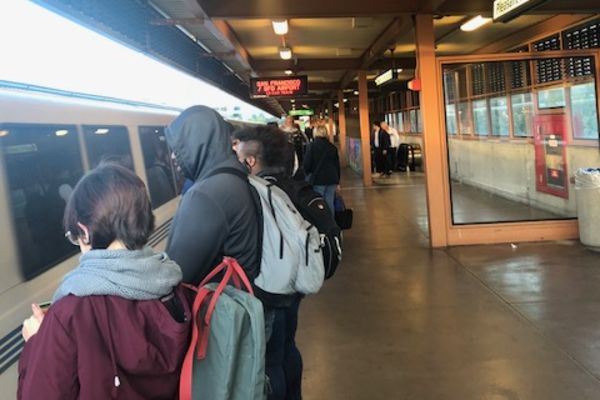
He doesn’t drive the whole way. On days he’s feeling tired, he says, “I’ll usually drive about 20 minutes from Dixon to a town called Fairfield, then get on a bus for 45 minutes all the way to El Cerrito.” From there, he takes a 45-minute train ride into the city and walks another 10 minutes to his office.

Other days, he’ll drive from Dixon to the town of Pleasant Hill, and then take a train into San Francisco and walk the rest of the way to work.

He leaves work at 4 p.m. and gets home around 6 p.m.

In total, the daily trek takes four hours and covers more than 140 miles. Given a five-day workweek, he spends about 1,000 hours commuting per year, or about 43 full days on the road.

It can be hard to call San Francisco home

Finlay took on his super-commute in response to the exorbitant housing prices in San Francisco. Job opportunities there are plenty, “specifically in the career field that I wanted to get into,” he says, but the cost of living can make it hard for people to call it home.

According to financial website SmartAsset, the total cost of living in San Francisco is more than 62 percent higher than the national average. The median rent in the city is $4,500.

In New York, for comparison, median rent is $2,950. In Boston, it’s $2,750. In Washington, D.C., and Miami, median rents are $2,688 and $2,475, respectively. And in the U.S. as a whole, the median rent is $1,695, nearly three times less than in San Francisco.

RENTCafé puts the median price for a one-bedroom in San Francisco at $3,261, a two-bedroom at $4,377 and a three-bedroom at a whopping $5,143.

When it comes to homebuying, the numbers go up even more dramatically: Median home prices are well over $1 million. Home investment company Unison found that you’d need to make a $349,650 annual salary to afford to buy. For someone earning an average wage, it would take 20 years to save up a 10 percent down payment.
8a534 Untitljed This 30 year old commutes 4 hours, and 140 miles, every day so he doesnt have to pay $4500 a month San Francisco ...


8a534 104381663 thumbnail.600x337 This 30 year old commutes 4 hours, and 140 miles, every day so he doesnt have to pay $4500 a month San Francisco ...


In places like Dixon, it’s still possible to buy

Finlay, a Dixon native, lived in Los Angeles while in college and stayed for work after he graduated. But after he married his wife, also a Dixon native, he says, “we started to think about where we really wanted to settle and where we wanted to buy a house. The commute allowed us to let our money go further.”

They now own a three-bedroom home with a swimming pool and have mortgage payments of $1,600 a month. The commuting costs aren’t too bad, either. Including gas and public transportation, Finlay says he spends less than $150 a week.

Still, the traveling has its downsides. For instance, public transportation isn’t always reliable, Finlay says. “The other day, it took me 3½ hours to get home because there was an accident on the freeway and the bus never showed up.”

And even when he does get home at his regular time, that doesn’t leave many hours to relax or catch up on errands. “By the time I get in, I’m pretty tired … and there’s only a certain amount of time that I can do things,” Finlay says. “So, it’s like, do I choose to watch TV tonight, or do I choose to go to the gym? Do I go for a run, or do I walk the dog? Everything has a time limit since there’s a time I have to go to bed.”

8a534 105254333 IMG 1871 1.600x400 This 30 year old commutes 4 hours, and 140 miles, every day so he doesnt have to pay $4500 a month San Francisco ...

Super-commuting is increasingly popular

Sydney Bennet, a senior research associate at real estate site Apartment List, attributes the rise of super-commuting to the fact that high-profile jobs are concentrated in a few select city hubs where high housing costs can lock workers out.

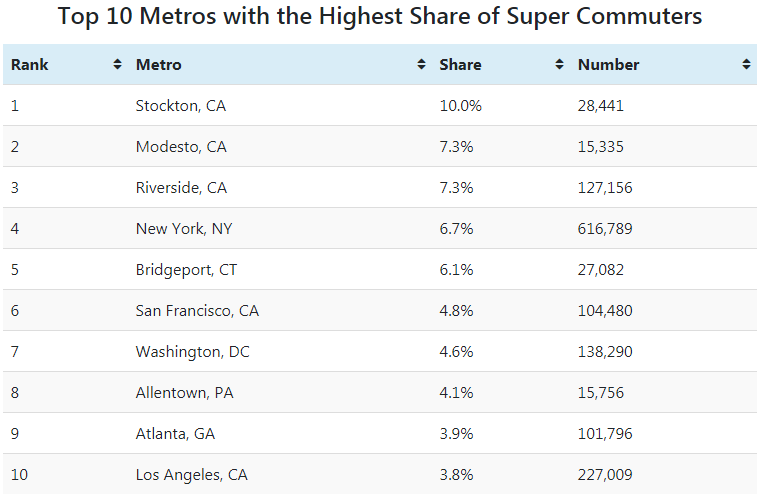
“Increasingly, the most lucrative jobs and most talented, wealthy people are converging in ‘superstar cities’ that are knowledge and technology hubs,” Apartment List notes in a recent report. “Eight of the 10 metros with the largest share of super-commuters are in regions surrounding three superstar cities: San Francisco, Los Angeles and New York.”

“These same three cities,” the report continues, “contain 80 percent of the ZIP codes where the median home price was $1 million or more.” And so, “while many higher-paid, highly educated workers can afford to live in these cities, other workers are priced out due to high demand and restrictive zoning regulations that lead to a lack of new housing.”
8a534 APTLST This 30 year old commutes 4 hours, and 140 miles, every day so he doesnt have to pay $4500 a month San Francisco ...

Nationwide, 1 in 36 commuters travel 90-plus minutes to work each day, the report finds. And while that number may seem small, Bennet says it’s growing: In 2005, there were 3.1 million super-commuters, or about 2.4 percent of all commuters. In 2016, there were 4 million, or almost 3 percent of the total.

Of the top 10 cities with the largest share of super-commuters, five are in California, and San Francisco ranks No. 6. The trend reaches to the East Coast, too: “We see people coming from all over New York, New Jersey and even Pennsylvania to have somewhere they can afford to live and have the job they want,” Bennet tells CNBC Make It.

For some, “the commute is the right trade-off for their lifestyles. So, maybe they don’t want to live in an urban city, but that’s where the jobs are, and so they make that sacrifice to live where they want to live.”

‘For the next 10 years’

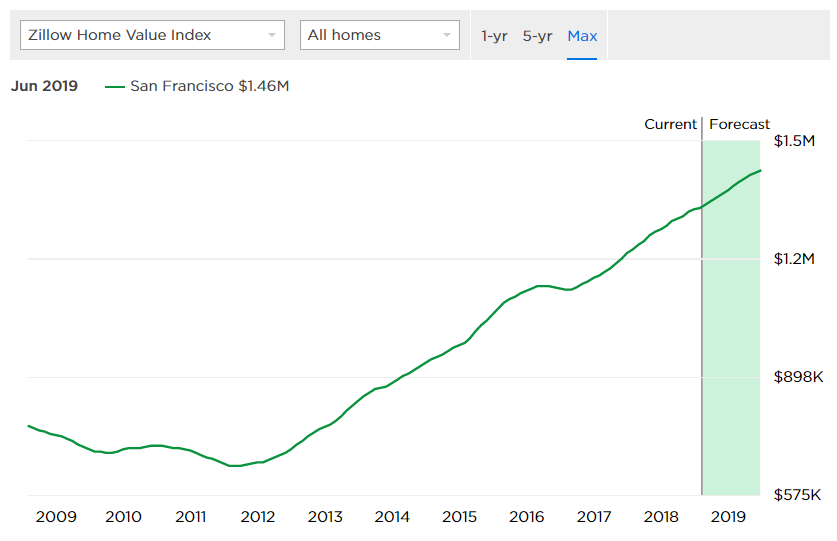
Housing prices, especially in superstar cities, could continue to rise. Home values in San Francisco have gone up 10 percent over the past year, reports Zillow, and are predicted to rise another 8 percent within the next year. Similar trends can be seen in popular urban areas across the country.

Bennet says building more affordable homes and more public transportation could ease the burden for many commuters. Some businesses and policymakers are working toward that.
 This 30 year old commutes 4 hours, and 140 miles, every day so he doesnt have to pay $4500 a month San Francisco ...

For its part, Facebook says it’s trying to address the problem in Silicon Valley. At the company’s annual shareholders meeting, its chief policy officer, Elliot Schrage, said: “If we can’t solve housing and transportation issues, Silicon Valley won’t be Silicon Valley. Companies like ours will expand elsewhere. So we feel a real sense of urgency around that.”

The company has dedicated more than $18 million to affordable and mixed-use housing, Schrage said, and is working with private partners and local governments for additional solutions. Elon Musk’s highly anticipated Hyperloop One, for instance, could one day whisk commuters from city hub to city hub in airless tubes at speeds equivalent to air travel.

In the meantime, though, Finlay accepts his commute. “I mean, I wish it was shorter,” he says. “But if I had the choice to live in Dixon and commute, or live in the city and not commute, I’d still commute.”

The long hours can give him time to catch up with his wife, since they sometimes commute together. Plus, “to be honest,” he says, “coming into a big city is fun — there’s a lot happening. But it’s a whole different element when I get home. It’s a small town, things are easy and I have that escape.”

In the grand scheme of things, he adds, “I could see myself doing this for the next 10 years.”

Like this story? Subscribe to CNBC Make It on YouTube!

Don’t miss:

This is the most expensive ZIP code in California—and it’s not in San Francisco or LA



8a534 104389967 makeit rent versus own Nerdwallet mezz.600x337 This 30 year old commutes 4 hours, and 140 miles, every day so he doesnt have to pay $4500 a month San Francisco ...


8a534 104778039 20171011 1297 2479.60x60 This 30 year old commutes 4 hours, and 140 miles, every day so he doesnt have to pay $4500 a month San Francisco ...

a:after {content: “203A”;font-size:1.25em;margin-left:1px;font-family:”Proxima Nova Semi Bold”}
@media screen and (max-width: 600px){
.video-wrapper {display: inline-block;width: 47%;}
}
@media screen and (max-width: 530px){
.wildcard .prime_promo_module {margin: 20px 10px!important;}
.wildcard .prime_promo_module .sourceName.top a {font-size: 14px;}
.video-wrapper { display: inline-block;width: 100%;}
.poster-wrapper {max-width: 100%;}
.video-info {margin-left: 0px;width: 100%;max-width: 530px;}
.prime_promo_module i.fa.fa-video {font-size: 3.5em;margin: 55px 105px;}
.prime_promo_module .top{margin:0px;}
body[id*=makeit] .show-name.top a {font-size: 14px;}
h3.content-title {font-size: 22px;line-height: 26px;}
.immersive article .tuneIn p {font-size: 15px;}
}
]]>


 This 30 year old commutes 4 hours, and 140 miles, every day so he doesnt have to pay $4500 a month San Francisco ...

Playing

Share this video…

Watch Next…

i_am_old_ie = true;

Data is a real-time snapshot *Data is delayed at least 15 minutes
Global Business and Financial News, Stock Quotes, and Market Data and Analysis

Data also provided by

© 2018 CNBC LLC. All Rights Reserved. A Division of NBCUniversal

Article source: https://www.cnbc.com/2018/08/20/pr-rep-commutes-4-hours-every-day-to-avoid-45000-dollar-san-francisco-rent.html

Posted in SF Bay Area News | Tagged | Leave a comment