This San Francisco account exec says making one lifestyle change saves him $18000 a year

<!– –>


VISIT CNBC.COM


Money

19 Hours Ago


a3b66 105390869 makeit 08032018 SanFrancommute mezz.940x528 This San Francisco account exec says making one lifestyle change saves him $18000 a year


With significant expenses like student loans, credit card bills and the cost of housing weighing millennials down, it isn’t easy to save money, especially in one of the most expensive cities in the country. But Danny Finlay, a 30-year-old account executive who works at public-relations firm SutherlandGold in San Francisco, says he’s found a way to save around $15,000 to $18,000 a year on housing and on miscellaneous everyday expenses like parking and groceries.

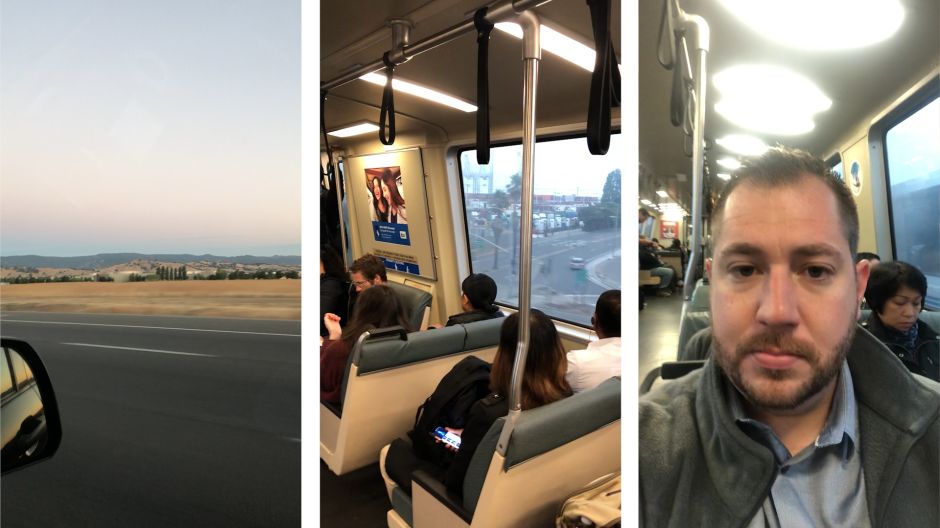
He doesn’t live in San Francisco. Instead, he commutes four hours and 140 miles each day to get there.

And he thinks it’s worth it.

For about a year, Finlay has been commuting from the small town of Dixon, California, to his Bay Area office, which is around two hours and 72 miles away. He wakes up at 4:30 a.m., leaves his house by 5:10 a.m. and takes a combination of car, bus and train to get to work around 7 a.m. Given a five-day workweek, he spends more than 1,000 hours commuting each year, or about 43 full days on the road.

“I mean, I wish [the commute] was shorter,” Finlay tells CNBC Make It. “But if I had the choice to live in Dixon and commute, or live in the city and not commute, I’d still commute.”

That’s, in part, due to the amount of money he saves. In San Francisco, the median rent for an apartment is $4,500 and the median price for a home is more than $1.3 million, according to real-estate website Zillow. In Dixon, by comparison, the median home costs just $460,000.

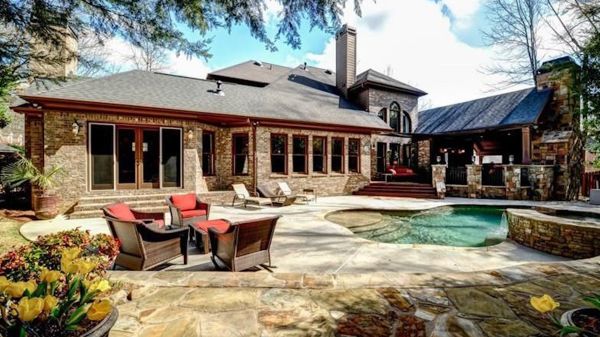
Finaly and his wife own a three-bedroom home with a swimming pool in Dixon and have mortgage payments of $1,600 a month.

That’s less than they’d have to pay to rent a studio in San Francisco. Real-estate site and listing service RENTCafé puts the median rental price for studio at $2,461, a one-bedroom at $3,261, a two-bedroom at $4,377 and a three-bedroom at a whopping $5,143 per month.



a3b66 104389967 makeit rent versus own Nerdwallet mezz.600x337 This San Francisco account exec says making one lifestyle change saves him $18000 a year


Finlay and his wife, Mireya, lived in Los Angeles while in college but decided to move to Dixon after graduation. “We started to think about where we really wanted to settle and where we wanted to buy a house,” he says. “The commute allowed us to let our money go further.” He says spends less than $150 a week on commuting costs, including gas and public transportation.

Factoring in everything from housing to miscellaneous expenses, Finlay says the choice to live in Dixon rather than the Bay Area saves him as little as $15,000, or as much as $18,000, a year.

Meanwhile, housing prices in major cities continue to rise, reports Zillow. In San Francisco, home values have gone up 7 percent over the past year and are predicted to rise another 6 percent within the next year. In New York, home values have gone up more than 5 percent over the past year and could go up another 6 percent within the next year.

Sydney Bennet, a senior research associate at Apartment List, thinks that’s why many Americans who work in expensive cities are opting to live in further away, more affordable places, and commute to work instead.

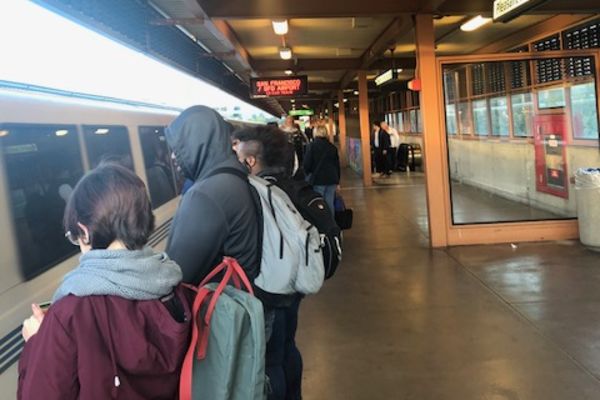
Nationwide, one in 36 commuters travel 90-plus minutes to work each day. In 2005, there were 3.1 million super-commuters, or about 2.4 percent of all commuters. In 2016, there were 4 million, or almost 3 percent of the total.
 This San Francisco account exec says making one lifestyle change saves him $18000 a year

Some workers find, Bennet tells CNBC Make It, that commuting “is the right trade-off for their lifestyles. So, maybe they don’t want to live in an urban city, but that’s where the jobs are, so they make that sacrifice to live where they want to live.”

If you’re looking to make a change that could help you save on housing, another expense or just stash away more money, consider re-evaluating your budget and living within your means.

By moving back home and restricting his spending, Phil Risher, for example, paid off $30,000 in student loan debt in one year and, in the following year, bought a $60,000 home with cash. Amber and Danny Masters took on odd jobs to try and pay off $600,000 in five years.

Whatever your goal may be, keep in mind that it may not happen overnight. But if you set a realistic plan and are proactive about reaching it, you’re more likely to succeed.

Like this story? Subscribe to CNBC Make It on YouTube!

Don’t miss:

This is the most expensive ZIP code in California—and it’s not in San Francisco or LA

Video by

Jonathan Fazio


a3b66 104381663 thumbnail.600x337 This San Francisco account exec says making one lifestyle change saves him $18000 a year


a3b66 104778039 20171011 1297 2479.60x60 This San Francisco account exec says making one lifestyle change saves him $18000 a year

a:after {content: “203A”;font-size:1.25em;margin-left:1px;font-family:”Proxima Nova Semi Bold”}
@media screen and (max-width: 600px){
.video-wrapper {display: inline-block;width: 47%;}
}
@media screen and (max-width: 530px){
.wildcard .prime_promo_module {margin: 20px 10px!important;}
.wildcard .prime_promo_module .sourceName.top a {font-size: 14px;}
.video-wrapper { display: inline-block;width: 100%;}
.poster-wrapper {max-width: 100%;}
.video-info {margin-left: 0px;width: 100%;max-width: 530px;}
.prime_promo_module i.fa.fa-video {font-size: 3.5em;margin: 55px 105px;}
.prime_promo_module .top{margin:0px;}
body[id*=makeit] .show-name.top a {font-size: 14px;}
h3.content-title {font-size: 22px;line-height: 26px;}
.immersive article .tuneIn p {font-size: 15px;}
}
]]>

 This San Francisco account exec says making one lifestyle change saves him $18000 a year

Playing

Share this video…

Watch Next…

i_am_old_ie = true;

Data is a real-time snapshot *Data is delayed at least 15 minutes
Global Business and Financial News, Stock Quotes, and Market Data and Analysis

Data also provided by

© 2018 CNBC LLC. All Rights Reserved. A Division of NBCUniversal

Article source: https://www.cnbc.com/2018/09/20/one-lifestyle-change-saves-san-francisco-account-exec-about-18000-dollars-a-year.html

Posted in SF Bay Area News | Tagged | Leave a comment

As San Francisco Real Estate Prices Spiral, Some Biotechs Look to the ‘Burbs

The two biggest areas for biotech startups in the U.S. are Cambridge in Boston and the San Francisco Bay Area. They’re also the locations of astonishingly expensive real estate. But they’re where biotechs seem to want to be because they’re close to talent, academic research institutions, and the attention of venture capital.

In the Bay Area, at least some startups are thinking about moving outside the area, at least a little bit, in order to control costs. The San Francisco Chronicle reports on several biotech companies that are settling some or all of their operations in Pleasanton, a suburb of San Francisco in Alameda County about 25 miles east of Oakland.

One of those companies is 10X Genomics, which has headquarters in Pleasanton, and decided to quadruple the company’s space to 200,000 square feet in the city rather than move it somewhere else. “Pleasanton is the sweet spot where you get the talent from all across the Bay Area and rents aren’t quite as expensive as San Francisco or the Peninsula,” said Serge Saxonov, co-founder and chief executive officer of 10x.

10x has a manufacturing plant in Germany, which it plans to keep, but the new site in Pleasanton will manufacture its products end-to-end, not just components, as in the German facility. This allows company executives to be more hands-on while having access to the region’s workforce that has the necessary specialized backgrounds in chemistry, biology, hardware and software.

This falls into the part of the Bay Area dubbed the East Bay, and it’s no stranger to biopharma companies. Others in the region include Roche Molecular, Bio-Rad Laboratories, and IntegenX, now owned by Thermo Fisher. The San Francisco Chronicle reports, “Lately, the region — though it doesn’t have the biotech cache of South San Francisco or the newness of San Francisco’s Mission Bay — has also been drawing smaller, newer and fast-growing firms that make critical hardware, software and technology used by biotech companies.”

Pleasanton is part of what is dubbed the Tri-Valley, which includes the cities of Pleasanton, Danville, Dublin, Livermore and San Ramon. From 2006 to 2016, these cities had a 35-percent job growth, higher than San Francisco’s 31 percent and Silicon Valley’s 19 percent.

Others in the area include Unchained Labs, which is a subsidiary of 10x, and Gritstone Oncology. Gritstone is located in Emeryville and in August, inked a collaboration deal with Cambridge, Massachusetts-based bluebird bio. It recently filed for an initial public offering (IPO) with plans to raise up to $91 million.

“We chose Pleasanton because I’ve been in life sciences for more than 20 years, and the whole time I was doing the crazy commute to the valley (Sunnyvale and Santa Clara),” Tim Harkness, founder and chief executive officer of Unchained Labs, told The San Francisco Chronicle. “I wanted to stop that craziness, and I didn’t think I was alone.”

The Chronicle writes, “It was risky to base the company in Pleasanton three years ago, said Harkness, who is also a founding partner at Tri-Valley Ventures, a venture fund created last year to back early-stage technology, IT and life sciences firms. But it turned out to be a competitive advantage, he said, because the location made it easier to recruit employees from Tracy and the Central Valley, where many Bay Area residents are seeking more affordable housing.”

For comparison, office space in San Francisco runs around $74 per square foot. Silicon Valley’s office space is about $52 per square foot, but the Tri-Valley real estate runs about $32 per square foot. In Cambridge, Massachusetts, the average is $65.35 per square foot as of 2017, with laboratory space typically running higher than the office space. For example, in mid-Cambridge, office space averaged $59.69 per square foot, but laboratory space averaged $76.08 per square feet, according to Lincoln Property Company’s Cambridge Office Lab Market Report, Second Quarter 2017.

Does this mean the hotspots of South San Francisco, Oyster Point and Kendall Square, Massachusetts are no longer the places to be? Probably not. But for the more budget conscious biotechs, the suburbs may be looking more attractive.

Article source: https://www.biospace.com/article/jc1n-as-san-francisco-real-estate-prices-spiral-some-biotechs-look-to-the-burbs/

Posted in SF Bay Area News | Tagged | Leave a comment

Housing prices are resegregating the Bay Area, UC Berkeley study finds

The Bay Area’s soaring housing costs are pushing poor people into neighborhoods where poverty and racial segregation are on the rise, a UC Berkeley study published Wednesday found.

As a result, the region’s low-income families — particularly minority families — are increasingly cut off from relatives, their children may face worse health outcomes and parents’ commutes to work can dramatically lengthen.

UC Berkeley researchers tracked migratory patterns and demographic changes across the region from 2000 to 2015. They found that movements caused by housing costs are intensifying racial disparities among neighborhoods.

Many neighborhoods in San Francisco, Oakland, Berkeley and Richmond saw declines in black population while farther-out areas of the East Bay and beyond saw increases. Neighborhoods such as San Francisco’s Bayview and Oakland’s flatlands lost thousands of low-income black households; places like unincorporated Cherryland in Alameda County and eastern Contra Costa County saw influxes.

Neighborhoods with low pollution, high-quality schools and other resources have become increasingly inaccessible for African Americans, according to the report. The study was a project by UC Berkeley’s Urban Displacement Project and the California Housing Partnership, a nonprofit that advocates expanding affordable housing.

“The housing market today is operating in the context of an architecture of segregation and vulnerability that was baked into cities and regions over a period of many decades,” said Dan Rinzler, a senior policy analyst with the group. “It’s more or less moving the pieces around to the detriment of people of color and low-income communities.”

Living in areas that give residents a better chance at educational success, good health and upward mobility often comes down to race, not class, the study said.

For instance, by 2015 in San Francisco, a low-income white family was three times more likely to live in a high-resource area than a moderate- or high-income black family, the research found. In Alameda County, low-income white households were seven times more likely to live in such a neighborhood compared to a wealthier black family. And in Contra Costa County, a low-income white family was 14 times more likely to live in a better-off neighborhood than a black family with moderate or high income.

“The disparities were shocking in some cases,” Rinzler said.

 Housing prices are resegregating the Bay Area, UC Berkeley study findsIlyich Sato, left, looks as Juana Ines Tello and Gustavo Lopez take down a portrait of Tello and her late husband, Jesse E. Tello, Sr., as the Tello family pack their belongings in their home of 18 years at 1778 Newcomb Ave., in the Bayview District, in San Francisco, Calif., on Tuesday, September 18, 2018. The family is facing a forced eviction, a battle they’ve been fighting for eight years. A new study shows the effects the Bay Area’s astronomic housing costs are having on racial and ethnic groups. UC Berkeley researchers looked at the demographics of every neighborhood in the Bay Area from 2000 to 2015. Increases in housing prices intensified racial disparities in access to neighborhoods with better environmental quality, educational resources, and economic opportunities, increasingly placing these neighborhoods out of reach for low-income people of color in San Francisco, Alameda and Contra Costa counties.

Miriam Zuk, director of the Urban Displacement Project, said the research was undertaken to look at granular, neighborhood-level changes. She said it was also important to break out various racial groups, rather than compare all people of color to white people.

“We talk about the reshuffling of people in spaces as if there are no consequences,” Zuk said. “There’s this trope of, ‘Oh, everyone is free to move where they want and maybe moving from a low-income area of the city to the suburbs is a good thing.’ What we see is that’s not happening. When people move, they are not necessarily moving to better-off places.”

Families that moved needed to use a higher share of their income to pay rent in their new home, the study found.

The analysis showed that across the Bay Area, a 30 percent increase in median rent in a given neighborhood corresponded with a more than 20 percent decrease in the number of low-income African Americans, Latinos and Asians living there. The researchers found no significant relationship between rent increases and losses of low-income white households.

 Housing prices are resegregating the Bay Area, UC Berkeley study finds

The research team drew from tract-level Census data, the annual American Community Survey and other sources. The study received funding from the San Francisco Foundation.

In three counties studied in the most detail — San Francisco, Alameda and Contra Costa — the researchers found “significant and uneven shifts” between 2000 and 2015 in the neighborhoods where low-income people of color lived. Demographic changes at the city level could be pinpointed to just a few neighborhoods where they were the most concentrated.

The Longfellow neighborhood in North Oakland, for instance, lost 400 low-income black households — more than any other in Alameda County — between 2000 and 2015, according to the study. Three East Oakland ZIP codes whose low-income Latino populations increased in that period saw the highest rates of child lead poisoning in the county.

In San Francisco, although the low-income Asian and Latino populations grew on an aggregate level, they decreased in historical cultural hubs such as Chinatown and the Mission.

The researchers found that Contra Costa County households that moved in 2015 tended to stay within the county, while those displaced from San Francisco usually settled somewhere else in the Bay Area.

But a large proportion of low-income families that moved out of their Alameda County homes left the region altogether: Black families often went to Stockton and areas of Contra Costa County, while Latino families primarily went to Tracy, San Jose and cities in San Mateo County, and Asian families typically went to parts of Santa Clara and Solano counties.

The costs of displacement can be destabilizing and multigenerational, said Tony Roshan Samara of Urban Habitat, an Oakland nonprofit that advocates policies to help low-income people and people of color.

The research “basically confirms what we suspected but couldn’t really prove” about household-level migratory patterns, said Samara, who wasn’t involved in the study but worked on a similar paper that was published in 2016.

“One of the riddles of displacement work is that it’s been near impossible to say, for instance, this person left the Mission and ended up in Antioch,” he said.

Matt Schwartz, CEO of the California Housing Partnership, said one clear solution to combat the trend of resegregation would be increasing and preserving affordable housing units.

“It’s pretty obvious that unequal access to capital in the housing market has played a significant role here,” Schwartz said. “Ignoring the racial dynamics in the housing market is only going to result in a continued trend toward resegregation.”

Kimberly Veklerov is a San Francisco Chronicle staff writer. Email: kveklerov@sfchronicle.com Twitter: @kveklerov

Article source: https://www.sfchronicle.com/bayarea/article/Housing-prices-are-re-segregating-the-Bay-Area-13239870.php

Posted in SF Bay Area News | Tagged | Leave a comment

San Francisco’s New Salesforce Park Is Prime Real Estate

Salesforce Park atop San Francisco’s new Salesforce Transit CenterPelli Clarke Pelli Architects, courtesy of the Transbay Joint Powers Authority

San Francisco’s newest public urban park, Salesforce Park located on Mission Street, South of Market, is prime real estate. The 5.4-acre rooftop park atop San Francisco’s new regional transportation hub, Salesforce Transit Center, which connects eight Bay Area counties through eleven transit systems, is now open. Salesforce Transit Center, part of the Transbay Joint Powers Authority, was designed by the internationally noted architecture firm of Pelli Clarke Pelli Architects. The project carries a $2.26 billion price tag, incorporating local, regional, state and federal funding.

Like New York’s Bryant Park, Salesforce Park is becoming a vibrant part of the community. Designed by PWP Landscape Architecture, Salesforce Park boasts 13 different gardens, a great lawn with mature trees, moveable tables and chairs, children’s play area, and an 800-seat amphitheater for concerts and performances. Park visitors are encouraged to use the half-mile walking/jogging trail.  A restaurant is also planned for the park.

There is a full menu of free events and programs for all ages and interests including fitness and wellness, arts and culture, music, theater and dance. “I think looking at Salesforce Park as a real estate asset is the proper way of viewing it. It’s a public open space in a city that lacks park spaces for residents, workers and visitors,” notes Mark Zabaneh, executive director of the Transbay Joint Powers Authority.

Dan Biederman, president of Biederman Redevelopment Ventures, the company chosen to run and manage Salesforce Park, knows first-hand about creating and running successful urban public parks. In 1992, BRV hit a home run with the redevelopment of the blighted crime-ridden and drug-dealer-infested Bryant Park in New York’s midtown. BRV is known internationally for award-winning projects including Dallas’ Klyde Warren Park, an aerial park built atop a downtown freeway. “As Bryant Park added value to the adjacent real estate, we expect to see the same from Salesforce Transit Center and Salesforce Park,” observes Biederman. “What we are doing here has not been done in San Francisco. All the programming we have in place now and in the future will make this a lively safe space the community wants to spend time at and draws people to live near there.”

According to the bryantpark.org website, “The park’s upgrade has generated over $2 billion in incremental real estate value for its 33 abutting properties.” Real estate values around Bryant Park rose dramatically thanks in part to the park’s great success. Today, a 650-square-foot one-bedroom condominium overlooking Bryant Park is listed at $990,000.

Area real estate professionals also expect Salesforce Park to increase the desirability of the local real estate and the community in a variety of ways. Listen to Matt Lituchy, chief investment officer for Jay Paul Company, developer of the mixed-use 181 Fremont. “As one of only two buildings that connect directly to Salesforce Park, we feel it is an important amenity for both our residents and office tenants and one that improves the quality of life for the entire neighborhood.” Sounds like real estate prices will be rising.

Salesforce Park Amphitheater: Free programming attracts park visitors Samuel Issac: Biederman Redevelopment Ventures

Charles Clinton, CEO of EquityMultiple, a commercial real estate investment startup, lives in San Francisco. “Significant developments, particularly those that drive attention and foot traffic, can provide significant value to the surrounding neighborhood and help drive up local real estate prices in the process,” Clinton explains. “The neighborhood surrounding Salesforce Park has already undergone an enormous wave of change and development. The park should help continue this trend and create a similar halo effect for surrounding real estate values to what we’ve seen with similar major projects in other cities,” Clinton adds.

BRV’s on-going responsibilities at Salesforce Park include overall park management, operations, programming, events, marketing, general administration and revenue development for the roof-top park. The key to Salesforce Park’s overall success and becoming a vibrant part of the community is the park’s on-going programming, according to Biederman. “You need active programming to make sure the park is always busy with both tourists and nearby residents. For those residents, we hope they make visiting the park a part of their daily routine.” That’s the news needed to attract attention to the area and spur additional development.

Article source: https://www.forbes.com/sites/ellenparis/2018/09/17/san-franciscos-new-salesforce-park-is-prime-real-estate/

Posted in SF Bay Area News | Tagged | Leave a comment

San Francisco’s New Salesforce Park Is Prime Real Estate – Forbes

Salesforce Park atop San Francisco’s new Salesforce Transit CenterPelli Clarke Pelli Architects, courtesy of the Transbay Joint Powers Authority

San Francisco’s newest public urban park, Salesforce Park located on Mission Street, South of Market, is prime real estate. The 5.4-acre rooftop park atop San Francisco’s new regional transportation hub, Salesforce Transit Center, which connects eight Bay Area counties through eleven transit systems, is now open. Salesforce Transit Center, part of the Transbay Joint Powers Authority, was designed by the internationally noted architecture firm of Pelli Clarke Pelli Architects. The project carries a $2.26 billion price tag, incorporating local, regional, state and federal funding.

Like New York’s Bryant Park, Salesforce Park is becoming a vibrant part of the community. Designed by PWP Landscape Architecture, Salesforce Park boasts 13 different gardens, a great lawn with mature trees, moveable tables and chairs, children’s play area, and an 800-seat amphitheater for concerts and performances. Park visitors are encouraged to use the half-mile walking/jogging trail.  A restaurant is also planned for the park.

There is a full menu of free events and programs for all ages and interests including fitness and wellness, arts and culture, music, theater and dance. “I think looking at Salesforce Park as a real estate asset is the proper way of viewing it. It’s a public open space in a city that lacks park spaces for residents, workers and visitors,” notes Mark Zabaneh, executive director of the Transbay Joint Powers Authority.

Dan Biederman, president of Biederman Redevelopment Ventures, the company chosen to run and manage Salesforce Park, knows first-hand about creating and running successful urban public parks. In 1992, BRV hit a home run with the redevelopment of the blighted crime-ridden and drug-dealer-infested Bryant Park in New York’s midtown. BRV is known internationally for award-winning projects including Dallas’ Klyde Warren Park, an aerial park built atop a downtown freeway. “As Bryant Park added value to the adjacent real estate, we expect to see the same from Salesforce Transit Center and Salesforce Park,” observes Biederman. “What we are doing here has not been done in San Francisco. All the programming we have in place now and in the future will make this a lively safe space the community wants to spend time at and draws people to live near there.”

According to the bryantpark.org website, “The park’s upgrade has generated over $2 billion in incremental real estate value for its 33 abutting properties.” Real estate values around Bryant Park rose dramatically thanks in part to the park’s great success. Today, a 650-square-foot one-bedroom condominium overlooking Bryant Park is listed at $990,000.

Area real estate professionals also expect Salesforce Park to increase the desirability of the local real estate and the community in a variety of ways. Listen to Matt Lituchy, chief investment officer for Jay Paul Company, developer of the mixed-use 181 Fremont. “As one of only two buildings that connect directly to Salesforce Park, we feel it is an important amenity for both our residents and office tenants and one that improves the quality of life for the entire neighborhood.” Sounds like real estate prices will be rising.

Salesforce Park Amphitheater: Free programming attracts park visitors Samuel Issac: Biederman Redevelopment Ventures

Charles Clinton, CEO of EquityMultiple, a commercial real estate investment startup, lives in San Francisco. “Significant developments, particularly those that drive attention and foot traffic, can provide significant value to the surrounding neighborhood and help drive up local real estate prices in the process,” Clinton explains. “The neighborhood surrounding Salesforce Park has already undergone an enormous wave of change and development. The park should help continue this trend and create a similar halo effect for surrounding real estate values to what we’ve seen with similar major projects in other cities,” Clinton adds.

BRV’s on-going responsibilities at Salesforce Park include overall park management, operations, programming, events, marketing, general administration and revenue development for the roof-top park. The key to Salesforce Park’s overall success and becoming a vibrant part of the community is the park’s on-going programming, according to Biederman. “You need active programming to make sure the park is always busy with both tourists and nearby residents. For those residents, we hope they make visiting the park a part of their daily routine.” That’s the news needed to attract attention to the area and spur additional development.

Article source: https://www.forbes.com/sites/ellenparis/2018/09/17/san-franciscos-new-salesforce-park-is-prime-real-estate/

Posted in SF Bay Area News | Tagged | Leave a comment